


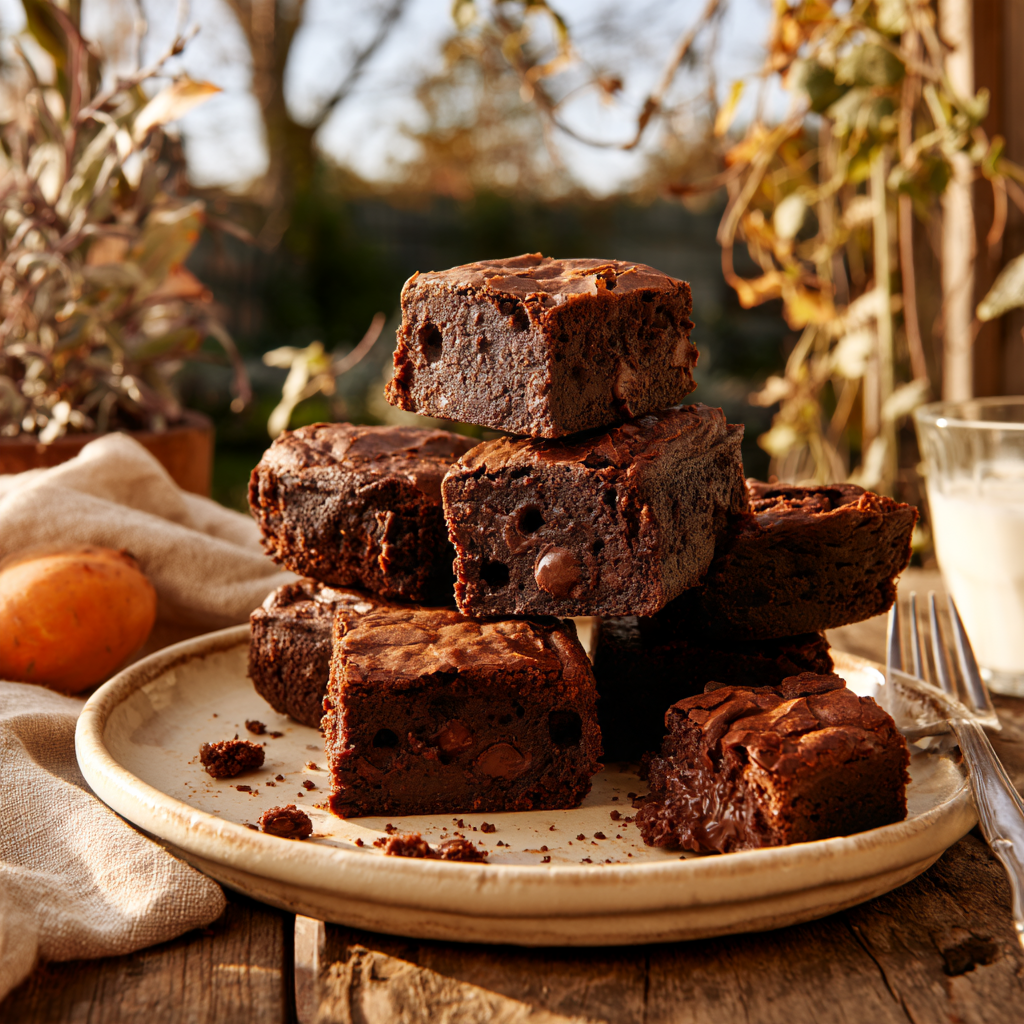
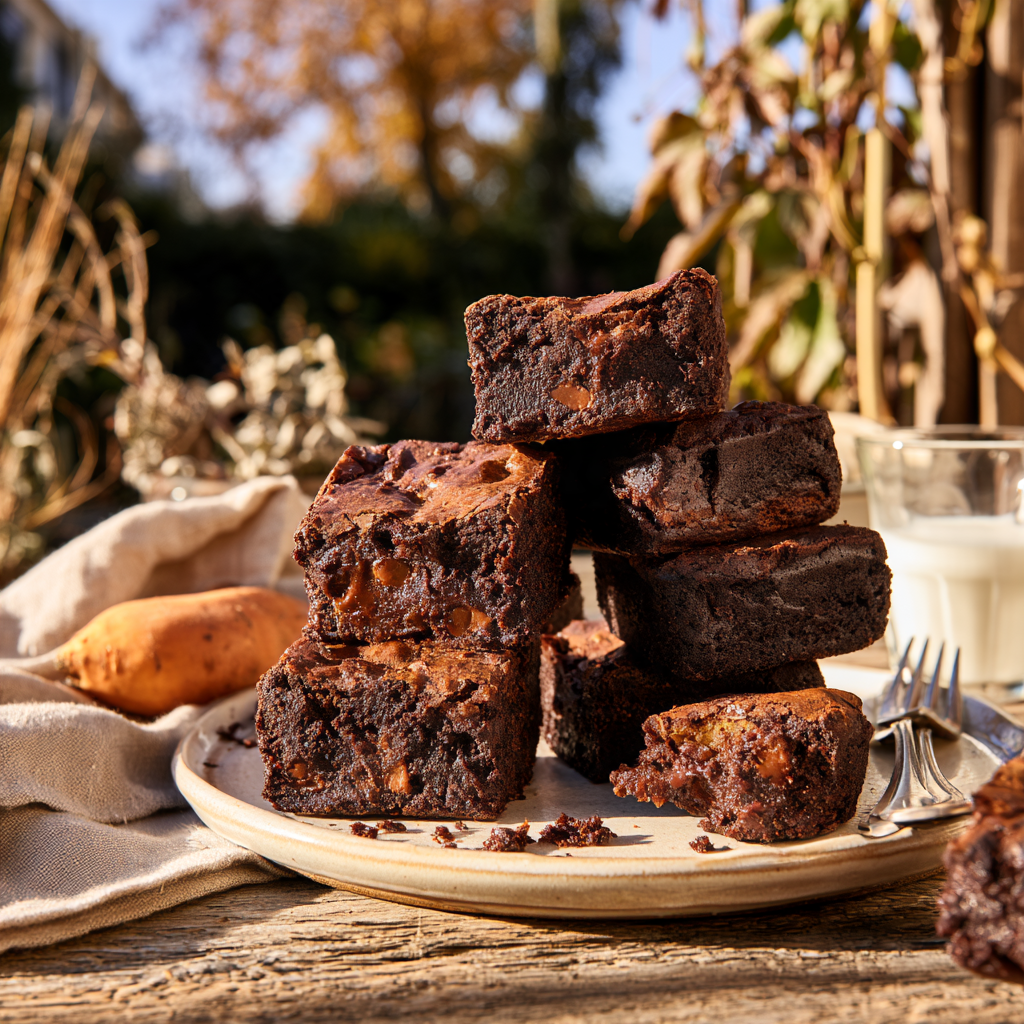
Imagine biting into a thick, chocolatey brownie with a soft, fudgy center, slightly chewy edges, and little pockets of melted chocolate chips. The top looks beautifully set, the chocolate flavor is deep and rich, and every bite has that irresistible, almost truffle-like texture.
Now imagine discovering that one of the secret ingredients is sweet potato!
Yes, sweet potato!
And before you start wondering whether these brownies taste like vegetables, here’s what makes them so interesting: smooth, cooked sweet potato adds moisture, gentle natural sweetness, and a wonderfully dense texture that works beautifully with chocolate.
That’s the idea behind this Sweet Potato Brownie Recipe, a delicious twist on homemade chocolate brownies that proves vegetables can have a place in dessert without stealing the spotlight.
Instead of relying on a traditional butter-and-egg brownie base, this OoohDelish version combines creamy sweet potato purée with almond butter, cocoa powder, maple syrup, oat flour, and chocolate chips.
The result is a rich chocolate dessert with a pleasantly soft, fudgy texture and just enough structure to cut into beautiful squares.
And the best part? You don’t need a stand mixer, complicated baking techniques, or a long list of hard-to-find ingredients.
Once your sweet potato is cooked and mashed, preparing the batter takes approximately 15 minutes. After about 30 minutes in the oven, all that’s left is the hardest part: allowing the brownies to cool before cutting into them!
These homemade sweet potato brownies are perfect for chocolate cravings, afternoon snacks, weekend baking, family gatherings, and make-ahead desserts.
You can enjoy them at room temperature for a softer bite or refrigerate them for a firmer, denser, almost fudge-like texture.
Whether you’re already a fan of vegetable-based baking or simply curious about making brownies with sweet potatoes, this recipe offers a delicious reason to try something different.
Sweet Potato Brownies Recipe
Equipment
- 8 × 8-inch (20 × 20 cm) square baking pan
- Large mixing bowl
- Medium mixing bowl
- Whisk or silicone spatula
- Measuring cups and spoons
- Digital kitchen scale
- Parchment paper
- Fork or potato masher
- Wire cooling rack
Ingredients
- 240 g cooked sweet potato purée smooth and cooled
- 125 g creamy almond butter unsweetened and well stirred
- 120 ml pure maple syrup
- 45 g unsweetened cocoa powder
- 80 g oat flour certified gluten-free if needed
- 85 g semisweet chocolate chips divided
Instructions
- Step 1: Prepare the Sweet Potato Purée. Peel and cut the sweet potatoes into evenly sized chunks, then steam or boil them until completely tender and easy to pierce with a fork, approximately 15–20 minutes depending on their size. If boiling, drain the sweet potatoes thoroughly and allow excess moisture to evaporate for a few minutes. Mash with a fork or blend in a food processor until completely smooth and free of lumps. Measure exactly 240 g of the finished purée and allow it to cool before mixing it with the remaining ingredients. Avoid adding milk, butter, or water because extra liquid may affect the brownie batter’s consistency.
- Step 2: Preheat the Oven and Prepare the Baking Pan. Preheat your oven to 350°F (175°C) and position the oven rack in the center for even baking. Line an 8 × 8-inch (20 × 20 cm) square baking pan with parchment paper, leaving a little overhang on two opposite sides so you can lift the brownies out after cooling. Lightly press the parchment into the corners and make sure it sits flat against the bottom of the pan. Set the prepared pan aside while you make the batter.
- Step 3: Combine the Wet Ingredients. Add the 240 g of cooled sweet potato purée, 125 g of creamy almond butter, and 120 ml of pure maple syrup to a large mixing bowl. Using a sturdy whisk or silicone spatula, stir the ingredients together until the mixture is smooth, thick, and evenly combined. Scrape down the sides and bottom of the bowl to incorporate any remaining streaks of almond butter. If the almond butter is particularly thick, stir it thoroughly in its container before measuring, but avoid adding extra liquid to thin the batter.
- Step 4: Incorporate the Dry Ingredients. Add 45 g of unsweetened cocoa powder and 80 g of oat flour directly to the bowl containing the wet mixture. Using a silicone spatula, gently fold the dry ingredients into the sweet potato mixture until no visible pockets of flour or cocoa remain. Scrape along the bottom and sides of the bowl several times to ensure the batter is evenly mixed. The batter should be relatively thick and spreadable rather than thin or pourable. Avoid excessive mixing once the dry ingredients are incorporated, as the goal is to maintain a tender brownie texture.
- Step 5: Fold in the Chocolate Chips. Reserve approximately 25 g of the chocolate chips for sprinkling over the top, then add the remaining 60 g to the brownie batter. Gently fold the chocolate chips into the mixture using a silicone spatula until they are distributed throughout. Make sure the chips are not concentrated in one area so that each brownie has chocolate in every bite. Scrape the sides of the bowl once more to incorporate any remaining batter.
- Step 6: Transfer the Batter to the Baking Pan. Spoon the prepared brownie batter into the parchment-lined baking pan, distributing it as evenly as possible. Because the mixture is thick, use the back of a spoon or an offset spatula to gently push the batter into the corners and smooth the surface into an even layer. Sprinkle the reserved 25 g of chocolate chips over the top, pressing them lightly into the batter so they remain in place during baking. Check that the batter is level to encourage even baking throughout the pan.
- Step 7: Bake the Sweet Potato Brownies. Place the baking pan on the center rack of the preheated 350°F (175°C) oven and bake for approximately 28–32 minutes, beginning to check around the 28-minute mark. Look for edges that appear set and a center that no longer looks wet or liquid. Insert a toothpick into the center, avoiding melted chocolate chips if possible; for a fudgy result, it should come out with moist crumbs rather than raw, flowing batter. Because sweet potato brownies contain significant moisture, the toothpick may not emerge completely clean. If the center remains visibly underbaked, continue baking in short 2–3-minute increments while monitoring the texture.
- Step 8: Cool the Brownies Completely. Remove the baking pan from the oven and place it on a wire cooling rack. Allow the brownies to cool in the pan for at least 30 minutes so the structure can begin to firm up. Once the pan is comfortable to handle, use the parchment overhang to carefully lift the brownies onto the rack and let them cool completely before slicing. For firmer, neater squares, refrigerate the cooled slab for approximately 30–60 minutes before cutting. Cutting while the brownies are still warm may cause the soft center to stick to the knife or break apart.
- Step 9: Slice and Serve. Once completely cooled, place the brownie slab on a clean cutting board and use a sharp knife to slice it into 12 evenly sized brownies, making three rows by four columns. Wipe the knife clean between cuts for neater edges, particularly if the chocolate chips are soft or slightly melted. Serve the brownies at room temperature for a softer texture or chilled for a
Notes
- Origins of Sweet Potato Brownie
- Health Benefits of Sweet Potato Brownie
- 1. Sweet Potatoes Are Naturally Rich in Beta-Carotene
- How Much Vitamin A Is in Sweet Potato Brownies?
- How Much Fiber Is in Sweet Potatoes?
- Does Fiber Make Sweet Potato Brownies Good for Digestion?
- 2. Almond Butter Provides Unsaturated Fats
- What Are Unsaturated Fats?
- Does Almond Butter Make Brownies Healthier Than Butter?
- 3. Almond Butter Also Contributes Protein and Vitamin E
- Are Sweet Potato Brownies High in Protein?
- 4. Oat Flour Adds Fiber and Whole-Grain Nutrients
- What Is Beta-Glucan?
- Is Oat Flour Better Than All-Purpose Flour?
- Are These Brownies Gluten-Free?
- 5. Cocoa Powder Contains Naturally Occurring Plant Compounds
- Are Cocoa Flavanols Good for You?
- Is Dark Chocolate Always Healthier?
- 6. Sweet Potato Adds Moisture Without Requiring Eggs
- Does Sweet Potato Replace Eggs Completely?
- Does Egg-Free Mean Healthier?
- 7. Are Sweet Potato Brownies Naturally Sweet?
- Is Maple Syrup Healthier Than White Sugar?
- Can You Reduce the Maple Syrup?
- 8. Sweet Potatoes Provide Potassium and Other Minerals
- 9. Sweet Potato Brownies Can Be Made Without Dairy Ingredients
- Are These Brownies Vegan?
- Are Dairy-Free Brownies Healthier?
- 10. Sweet Potato Brownies Can Be a Satisfying Dessert
- How to Make Sweet Potato Brownies Step by Step
- Step 1: Cook the Sweet Potato Until Completely Tender
- Step 2: Make a Smooth Sweet Potato Purée
- Step 3: Mix the Wet Ingredients Until Creamy
- Step 4: Combine the Dry Ingredients Separately
- Step 5: Add the Dry Ingredients to the Wet Mixture
- Step 6: Stir Until the Chocolate Batter Is Smooth
- Step 7: Fold in the Dark Chocolate Chips
Origins of Sweet Potato Brownie
What happens when one of the world’s oldest cultivated root vegetables meets one of America’s most beloved chocolate desserts?
You get something surprisingly delicious: Sweet Potato Brownies!
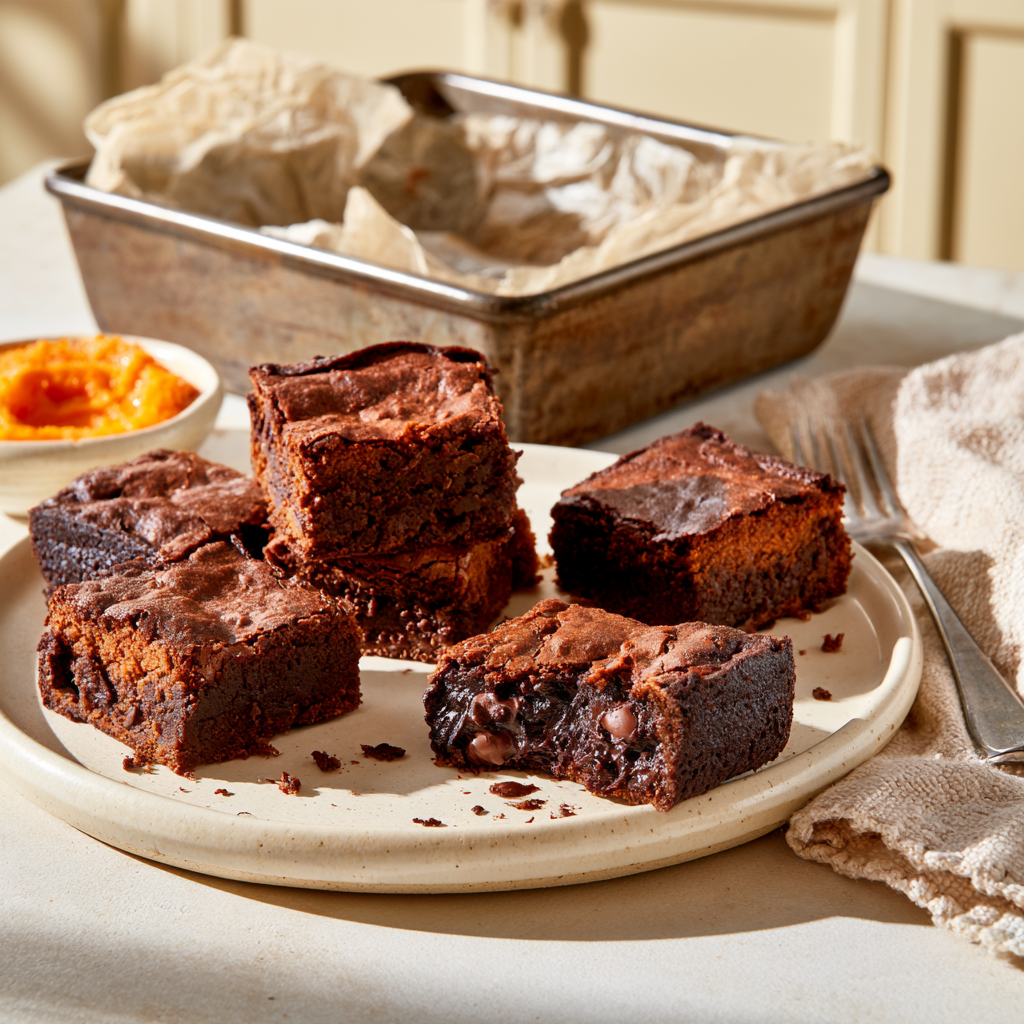
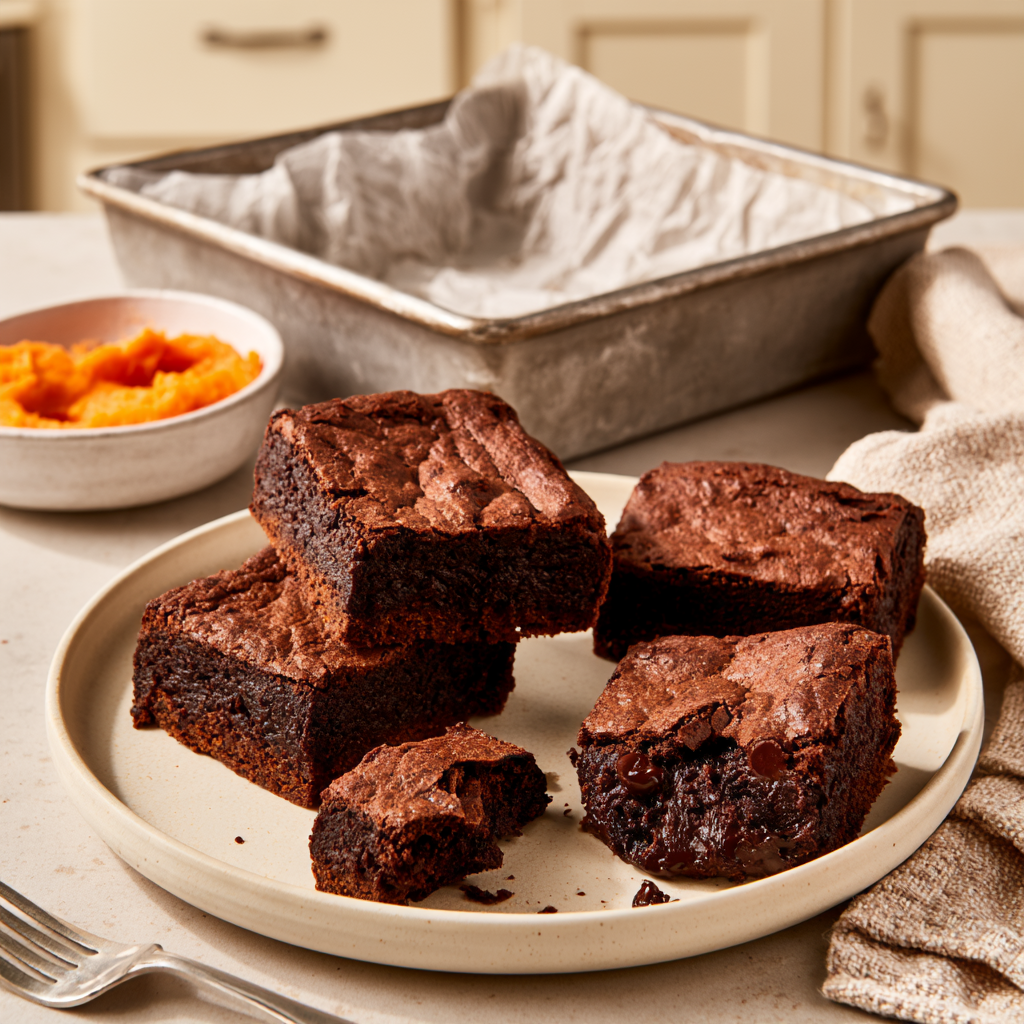
Imagine a thick, fudgy chocolate brownie with a soft center, slightly chewy edges, and rich chocolate flavor. It looks like a traditional homemade brownie, but hidden inside the batter is an ingredient that has been enjoyed for thousands of years: sweet potato.
The history of this Sweet Potato Brownie Recipe is especially fascinating because it brings together three different culinary stories: the ancient cultivation of sweet potatoes, the long history of cacao, and the development of chocolate brownies in American kitchens.
While traditional brownies have been enjoyed for more than a century, sweet potato brownies are a relatively modern adaptation. They reflect the creativity of home bakers who discovered that cooked vegetable purées could add moisture, structure, and a wonderfully dense texture to chocolate desserts.
But where did sweet potato brownies really come from? Who invented the original chocolate brownie? And why does sweet potato work so beautifully with cocoa powder?
Let’s explore the origins of this unique chocolate treat.
Where Did Sweet Potato Brownies Originally Come From?
Sweet Potato Brownies are a modern variation of American chocolate brownies, made by incorporating cooked sweet potato into the batter.
Unlike some traditional desserts associated with a particular town, bakery, or historical recipe, sweet potato brownies don’t have one universally documented inventor.
There is also no confirmed date when the first sweet potato brownie was created.
Instead, the recipe developed through the wider practice of experimenting with fruit and vegetable purées in baked goods.
For generations, home cooks have used ingredients such as pumpkin, applesauce, bananas, carrots, and sweet potatoes to add moisture, sweetness, or texture to cakes and other desserts.
Sweet potato offers an especially interesting combination of qualities.
When cooked until tender, it becomes smooth and creamy. Its naturally mild sweetness complements chocolate, while its starch and moisture help create a dense, tender batter.
These characteristics make it particularly useful in brownies designed to be fudgy rather than cakey.
Modern recipes often combine sweet potato with cocoa powder, nut butter, maple syrup, chocolate chips, and alternative flours.
Our OoohDelish version follows this approach, creating an egg-free, dairy-free brownie batter using sweet potato purée, almond butter, oat flour, and chocolate.
The result is a contemporary chocolate dessert inspired by a much older agricultural and culinary history.
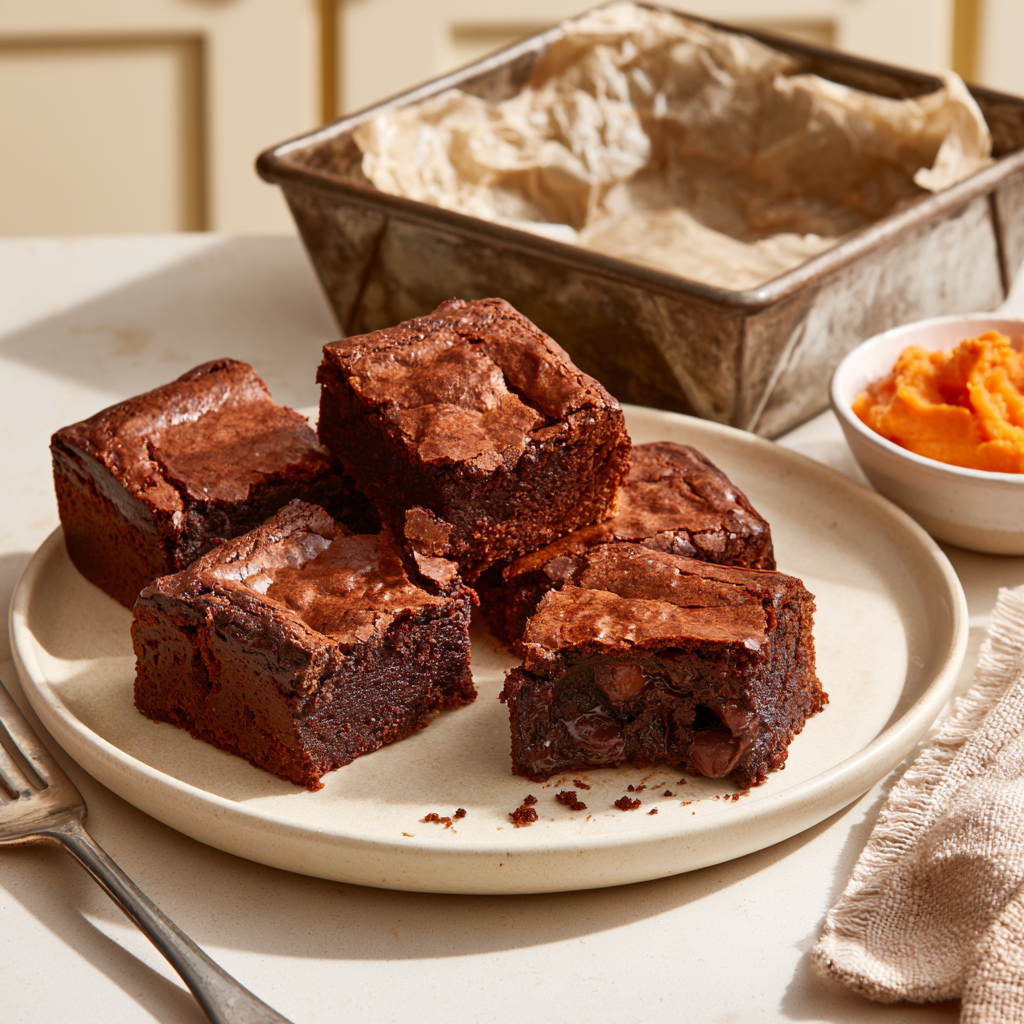
Health Benefits of Sweet Potato Brownie
1. Sweet Potatoes Are Naturally Rich in Beta-Carotene
One of the most interesting health benefits of our Sweet Potato Brownie Recipe comes from orange-fleshed sweet potatoes.
Their beautiful orange color comes largely from natural pigments called carotenoids.
One of the most important is beta-carotene.
Beta-carotene is a provitamin A carotenoid, meaning the body can convert some of it into vitamin A when needed.
Vitamin A contributes to several normal body functions.
It is important for vision, immune function, and the maintenance of healthy tissues.
Why Is Vitamin A Important?
Vitamin A helps maintain normal vision, particularly in low-light conditions.
It also plays roles in the immune system, growth, and the normal function of various tissues.
Orange-fleshed sweet potatoes are recognized as an excellent dietary source of provitamin A carotenoids.
That’s one reason they’re such a valuable ingredient beyond their naturally sweet flavor.
How Much Vitamin A Is in Sweet Potato Brownies?
Our recipe uses 1 cup (240 g) of cooked sweet potato purée, divided into 12 brownies.
That means each brownie contains approximately 20 g of sweet potato.
Even though sweet potato is a good source of beta-carotene, one brownie contains only a portion of the nutrients present in the whole recipe.
The exact vitamin A contribution depends on the variety of sweet potato, its preparation, and the amount retained after baking.
It’s reasonable to say that these brownies contribute some provitamin A carotenoids.
It’s not reasonable to claim that eating one brownie prevents vision problems or provides all the vitamin A your body needs.
OoohDelish Tip: Choose orange-fleshed sweet potatoes for this recipe. They provide the familiar golden-orange purée and are particularly rich in beta-carotene.
Another nutritional benefit of sweet potato brownies is their dietary fiber.
Fiber is an important component of a balanced diet.
It supports normal digestive function and contributes to bowel regularity.
Some types of fiber can also help slow digestion and contribute to feelings of fullness.
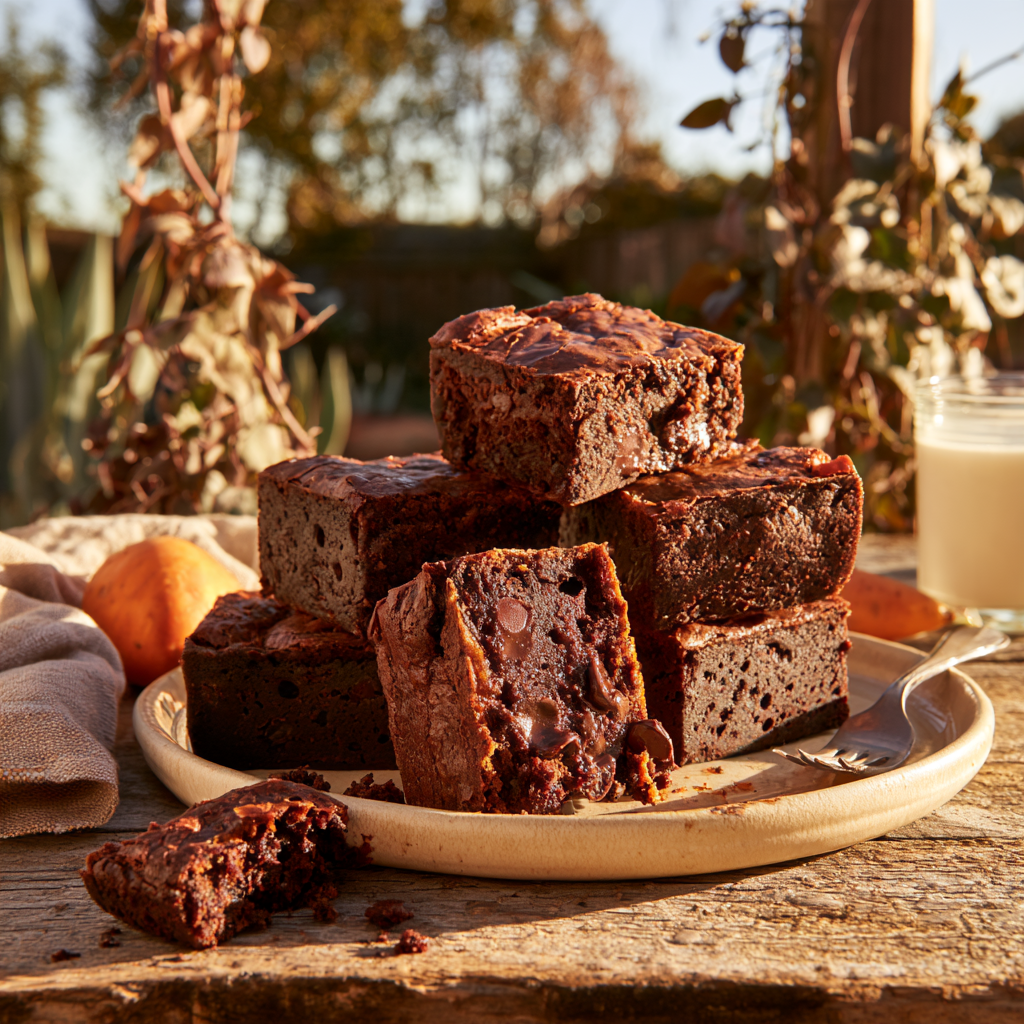
How Much Fiber Is in Sweet Potatoes?
According to USDA-derived nutrition data, 100 g of baked sweet potato flesh contains approximately 3.3 g of dietary fiber.
Our recipe uses 240 g of cooked sweet potato purée.
If prepared from comparable baked sweet potatoes, that represents approximately 8 g of fiber from the sweet potato portion before adding the other ingredients.
Because the recipe makes 12 brownies, the sweet potato alone contributes less than 1 g fiber to each square.
However, it’s not the only source.
Almond butter, oat flour, and cocoa powder also contribute dietary fiber.
Combined, these ingredients can make the brownies more fiber-containing than recipes made primarily with refined flour and sugar, although the exact difference depends on the recipes being compared.
Does Fiber Make Sweet Potato Brownies Good for Digestion?
These brownies provide some dietary fiber, but they aren’t a treatment for digestive problems.
The benefits of fiber are associated with overall dietary intake.
Eating a variety of fiber-containing foods, including vegetables, fruits, beans, and whole grains, is more important than relying on a single dessert.
Still, using sweet potato, almond butter, and oat flour gives this recipe an interesting combination of ingredients that contribute fiber.
The takeaway: Sweet potato brownies can provide dietary fiber while remaining a delicious dessert, but they shouldn’t replace more substantial everyday fiber sources.
2. Almond Butter Provides Unsaturated Fats
One of the ingredients responsible for the wonderfully rich texture of these brownies is almond butter.
Our OoohDelish recipe uses ½ cup (125 g) of smooth almond butter.
Almond butter contains fat, protein, and other nutrients naturally found in almonds.
Most of the fat in almonds is unsaturated, particularly monounsaturated fat.
What Are Unsaturated Fats?
Dietary fats are essential for normal body function.
They contribute energy, support cell structures, and help the body absorb fat-soluble vitamins.
Unsaturated fats are found in foods such as almonds, walnuts, avocados, seeds, and several vegetable oils.
Replacing some saturated fat with unsaturated fat is generally consistent with heart-healthy dietary recommendations.
This is one reason almond butter makes an interesting alternative to butter in certain baked goods.
However, almond butter is not low in calories.
It contains approximately nine calories per gram of fat, just like other fat sources.
Using a large quantity can make the brownies very energy-dense.
Does Almond Butter Make Brownies Healthier Than Butter?
It depends on the complete recipe.
Almond butter contributes unsaturated fats, protein, fiber, and micronutrients.
Butter provides a different mixture of fats and nutrients.
Replacing butter with almond butter changes the nutritional profile, but it doesn’t guarantee lower calories.
The overall effect depends on the amount used and the other ingredients.
For our recipe, almond butter contributes both flavor and structure.
It helps create a thick, cohesive batter and adds richness that complements the cocoa powder.
OoohDelish Secret: Use smooth, unsweetened almond butter and stir the jar well before measuring. This helps create a consistent batter without adding unnecessary sugar.
3. Almond Butter Also Contributes Protein and Vitamin E
Almond butter isn’t only a source of fat.
It also provides some plant-based protein and vitamin E.
Protein helps the body maintain and repair tissues and is involved in numerous normal physiological processes.
Vitamin E is a fat-soluble nutrient that functions as an antioxidant.
It helps protect cell components against certain types of oxidative damage.
Almonds are a recognized dietary source of vitamin E, and almond butter retains some of these nutrients.
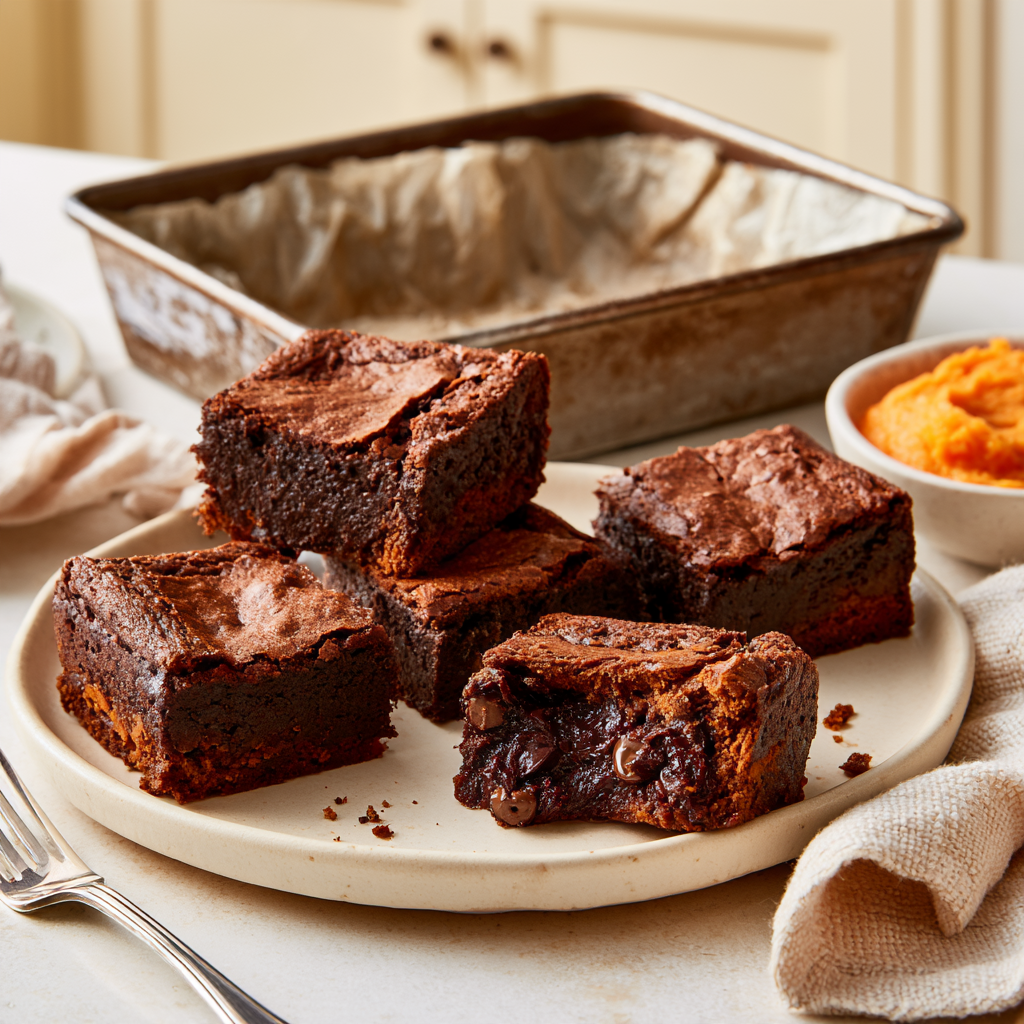
Are Sweet Potato Brownies High in Protein?
Not particularly.
The almond butter, oat flour, cocoa powder, and sweet potato all contribute some protein.
However, our recipe produces 12 brownies, and the ingredients are divided among those portions.
A brownie may contain approximately 4–6 g protein, depending on the actual ingredients.
That’s a useful contribution for a chocolate dessert, but it doesn’t make these brownies a high-protein food.
If you’re specifically looking for a protein-rich snack, foods such as plain Greek yogurt, tofu, legumes, or other substantial protein sources are generally more appropriate.
The value of our Sweet Potato Brownie Recipe is its delicious chocolate flavor combined with several nutrient-containing ingredients.
4. Oat Flour Adds Fiber and Whole-Grain Nutrients
Traditional brownies commonly use all-purpose flour.
Our recipe uses ⅔ cup (80 g) of oat flour instead.
Oat flour is made by grinding oats into a fine powder.
When made from whole oats, it retains components of the grain, including dietary fiber and some minerals.
One particularly interesting component of oats is beta-glucan.
What Is Beta-Glucan?
Beta-glucan is a type of soluble dietary fiber found in oats and barley.
Scientific research has investigated the relationship between oat beta-glucan intake and blood cholesterol levels.
Consuming appropriate amounts of beta-glucan as part of a diet low in saturated fat and cholesterol can contribute to lower blood cholesterol.
However, the quantity of oat flour in one brownie is relatively small.
This means it’s not appropriate to claim that eating a sweet potato brownie will significantly reduce cholesterol.
The more accurate benefit is that using whole-oat flour contributes dietary fiber and nutrients associated with oats.
Is Oat Flour Better Than All-Purpose Flour?
Not always.
Both flours can be used successfully in baking, but they behave differently.
Oat flour contributes a different texture and nutrient profile.
It may be useful for recipes designed without wheat flour.
However, it doesn’t contain gluten in the same way wheat flour does, which means it doesn’t develop the same structure.
In sweet potato brownies, this can actually be desirable.
The goal is a dense, fudgy texture rather than a light, fluffy cake.
Are These Brownies Gluten-Free?
They can be.
Oats are naturally free of wheat gluten, but regular oats and oat flour are frequently exposed to wheat, barley, or rye during growing and processing.
For a gluten-free version, use oat flour specifically labeled gluten-free and verify every other packaged ingredient.
People with celiac disease may also have individual tolerances regarding oats.
OoohDelish Tip: Avoid replacing the oat flour with another flour in the same quantity without testing. Different flours absorb liquid differently and can significantly change the brownie texture.
5. Cocoa Powder Contains Naturally Occurring Plant Compounds
Let’s talk about one of the most delicious ingredients in this recipe: chocolate.
Our Sweet Potato Brownie Recipe uses ½ cup (45 g) of unsweetened cocoa powder, along with dark chocolate chips.
Cocoa powder is made from processed cacao beans.
It contains naturally occurring polyphenols, including compounds known as flavanols.
These compounds have been studied for their potential effects on blood vessels and other aspects of cardiovascular health.
Are Cocoa Flavanols Good for You?
Research involving cocoa flavanols has identified certain physiological effects, particularly when the flavanols are consumed in studied quantities.
However, these findings should not be interpreted as evidence that eating chocolate brownies prevents heart disease.
The amount of cocoa flavanols in commercially available cocoa powders and chocolate products varies widely.
Processing can substantially reduce their concentration.
Furthermore, brownies contain other ingredients, including added sugars and fats.
A serving of chocolate brownies cannot be assumed to provide the same flavanol amount used in controlled research.
Is Dark Chocolate Always Healthier?
Not necessarily.
Dark chocolate can contain cocoa solids and associated plant compounds.
However, its nutritional characteristics depend on the percentage of cocoa, the sugar content, the added fats, and the actual serving size.
A high cocoa percentage doesn’t automatically make a chocolate product low-calorie or low-sugar.
For this recipe, dark chocolate chips are primarily included for flavor and texture.
They create little pockets of chocolate that make the brownies especially satisfying.
And that’s a perfectly good reason to enjoy them.
For another creative way to combine rich chocolate with nutty flavors, try our Tahini Swirl Brownies Recipe. The sesame-based swirl creates a delicious contrast to the traditional chocolate brownie base.
6. Sweet Potato Adds Moisture Without Requiring Eggs
One of the most useful characteristics of cooked sweet potato is its texture.
When fully cooked and mashed, sweet potato forms a thick, smooth purée.
Its combination of starch and moisture makes it valuable in certain baked goods.
In our recipe, the purée helps give the brownies a soft, dense consistency.
It works alongside almond butter and oat flour to create a batter that can hold together without eggs.
Does Sweet Potato Replace Eggs Completely?
Not in every recipe.
Eggs perform several functions in traditional baking.
They contribute protein, moisture, structure, and binding.
Sweet potato purée behaves differently.
It provides moisture and body, but it doesn’t reproduce every property of eggs.
That’s why our brownie recipe uses a carefully balanced combination of almond butter, oat flour, oil, and other ingredients.
Together, they help create the desired texture.
This makes the recipe suitable for people who prefer egg-free baking, provided all other ingredients meet their dietary needs.
Does Egg-Free Mean Healthier?
Not necessarily.
Eggs contain useful nutrients, including protein and choline.
Removing them doesn’t automatically improve a dessert’s nutritional quality.
The benefit of an egg-free recipe is dietary flexibility.
It offers another way to make brownies for people who avoid eggs or prefer plant-based ingredients.
The takeaway: Sweet potato contributes to the soft structure of these brownies, making it useful in egg-free baking, but it’s the complete formulation that determines the final texture.
7. Are Sweet Potato Brownies Naturally Sweet?
Sweet potatoes have a naturally sweet flavor, especially after cooking.
This can complement cocoa powder and other chocolate ingredients.
However, that doesn’t mean sweet potato alone provides enough sweetness for every brownie recipe.
Our version includes ½ cup (120 ml) of pure maple syrup.
Maple syrup adds sweetness and helps create a moist batter.
It also provides a pleasant flavor that works well with cocoa and almond butter.
Is Maple Syrup Healthier Than White Sugar?
Maple syrup contains small amounts of minerals and naturally occurring plant compounds.
However, it remains a concentrated source of sugar.
When added to a recipe, maple syrup counts as added sugar, even though it comes from a natural source.
It’s misleading to describe these brownies as sugar-free or as containing no added sugar.
The chocolate chips may also contribute added sugar.
Can You Reduce the Maple Syrup?
Possibly, but it’s important to understand how it affects the recipe.
Maple syrup contributes both sweetness and moisture.
Reducing it substantially can change the batter’s texture, baking time, and final consistency.
For a slightly less sweet variation, you can experiment with a modest reduction and use dark chocolate chips with a lower sugar content.
However, any change should be tested before being included in the final recipe card.
The established OoohDelish recipe uses ½ cup maple syrup to balance the bitterness of the cocoa powder and create a rich chocolate flavor.
8. Sweet Potatoes Provide Potassium and Other Minerals
Sweet potatoes contain several minerals needed for normal body function.
One of these is potassium.
Potassium contributes to normal nerve signaling, muscle contraction, and fluid balance.
It is also involved in blood pressure regulation.
Sweet potatoes contain potassium, although the amount varies by variety and preparation method.
The brownies also contain smaller contributions of minerals from almond butter, oat flour, and cocoa powder.
For example, almonds naturally contain magnesium, while cocoa products can provide iron and magnesium.
However, one brownie contains only a fraction of the ingredients in the entire recipe.
That means the nutritional contribution is more modest than eating a substantial serving of sweet potato or nuts on its own.
These brownies can contribute some minerals, but they shouldn’t be considered a primary dietary source.
9. Sweet Potato Brownies Can Be Made Without Dairy Ingredients
Another useful feature of our recipe is that it doesn’t require traditional dairy butter or milk.
Instead, richness comes primarily from almond butter, neutral oil, and chocolate.
The sweet potato purée contributes additional moisture.
This creates a fudgy dessert without using the conventional butter-and-egg combination found in many brownie recipes.
Are These Brownies Vegan?
The proposed recipe can be vegan.
Sweet potatoes, almond butter, maple syrup, cocoa powder, oat flour, neutral oil, baking powder, and salt are plant-derived ingredients.
However, chocolate chips sometimes contain milk ingredients.
Choose dairy-free dark chocolate chips and use alcohol-free, plant-based vanilla flavoring if preparing a vegan version.
Are Dairy-Free Brownies Healthier?
Not automatically.
Dairy-free recipes can still be high in calories, sugar, or saturated fat, depending on their ingredients.
The main advantage is that they offer an alternative for people who avoid dairy.
Our Sweet Potato Brownie Recipe combines that flexibility with a delicious chocolate flavor and a rich, fudgy texture.
10. Sweet Potato Brownies Can Be a Satisfying Dessert
There’s something wonderfully satisfying about a properly made chocolate brownie.
A rich chocolate flavor, soft center, and dense texture can make even a relatively small square feel like a substantial treat.
Our sweet potato brownies contain fat from almond butter and oil, carbohydrates from sweet potato and maple syrup, and fiber from several ingredients.
Together, these components create a different eating experience from a very light cake.
However, feelings of fullness vary between individuals.
It’s not possible to promise that these brownies will suppress cravings or prevent overeating.
How to Make Sweet Potato Brownies Step by Step
Step 1: Cook the Sweet Potato Until Completely Tender
The secret to soft, fudgy sweet potato brownies begins with properly cooked sweet potato.
Choose an orange-fleshed sweet potato with firm skin and no signs of spoilage.
Wash it thoroughly, then cook it until the flesh is completely tender.
Roasting method: Preheat the oven to 400°F (200°C). Pierce the sweet potato several times with a fork, place it on a lined baking sheet, and roast for approximately 40–55 minutes, depending on its size.
Step 2: Make a Smooth Sweet Potato Purée
Once the sweet potato is cooked, allow it to cool until it’s safe to handle.
Cut it open and scoop the soft flesh into a bowl, leaving the skin behind.
Mash thoroughly with a fork or potato masher until smooth.
For an especially silky consistency, you can briefly use a food processor.
Measure 1 cup (240 g) of the finished purée.
It should be thick, smooth, and easy to stir.
Preheat your oven to 350°F (175°C) if it isn’t already heated to the correct baking temperature.
Place the measured sweet potato purée in a large mixing bowl.
Step 3: Mix the Wet Ingredients Until Creamy
Add:
- ½ cup (125 g) smooth almond butter
- ½ cup (120 ml) pure maple syrup
- 2 tablespoons (30 ml) neutral oil
- 1 teaspoon alcohol-free vanilla flavoring
Stir with a sturdy whisk or spatula until the mixture becomes smooth and evenly combined.
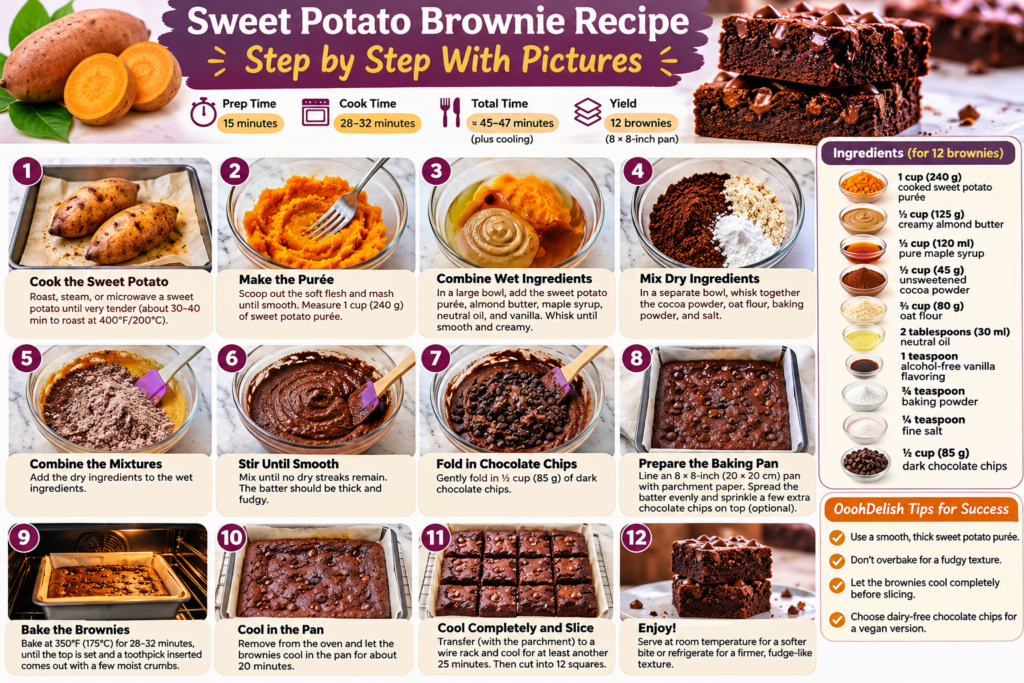
Step 4: Combine the Dry Ingredients Separately
In another mixing bowl, add:
- ½ cup (45 g) unsweetened cocoa powder
- ⅔ cup (80 g) oat flour
- ¾ teaspoon baking powder
- ¼ teaspoon fine salt
Whisk until all the dry ingredients are evenly distributed.
Break apart any noticeable cocoa powder lumps.
This step helps prevent pockets of dry cocoa or baking powder from remaining in the batter.
Step 5: Add the Dry Ingredients to the Wet Mixture
Pour the combined dry ingredients into the bowl containing the sweet potato mixture.
Using a sturdy spatula, gently fold the dry ingredients into the wet ingredients.
Scrape the sides and bottom of the bowl to incorporate everything evenly.
Continue mixing until you no longer see dry flour or cocoa powder.
The batter should become thick, dark brown, and richly chocolatey.
Unlike a traditional cake batter, it may not flow freely from the spatula.
That’s normal.
Step 6: Stir Until the Chocolate Batter Is Smooth
Give the batter a final gentle fold, making sure no dry ingredients remain along the bottom or sides of the bowl.
The mixture should now have a rich chocolate color and a thick consistency.
A spatula dragged through the batter should leave a temporary trail before the mixture slowly settles.
This is a good sign that the batter has enough structure to spread into the prepared pan.
Step 7: Fold in the Dark Chocolate Chips
Add ½ cup (85 g) of dark chocolate chips to the batter.
If you want chocolate chips visible on top, reserve approximately 2 tablespoons from this measured amount before folding in the rest.
Gently stir until the chips are distributed throughout the chocolate mixture.
You want chocolate in every brownie without needing to overload the batter.
Frequently Asked Questions About Sweet Potato Brownie Recipe
Want rich, fudgy sweet potato brownies with deep chocolate flavor, tender centers, and delicious chocolate chips? These practical answers explain how to prepare sweet potato purée, choose the right almond butter, prevent gummy or dry brownies, understand egg-free baking, and recognize when your brownies are ready. Whether you’re baking with sweet potatoes for the first time or perfecting a familiar chocolate treat, these tips will help you make better homemade brownies.
1. What are sweet potato brownies, and how are they different from regular brownies?
Sweet potato brownies are chocolate brownies made with cooked sweet potato purée as a key ingredient. The purée provides moisture, natural sweetness, and a soft texture that can help create a rich, fudgy center. This OoohDelish version combines sweet potatoes with almond butter, maple syrup, cocoa powder, oat flour, and chocolate chips instead of using a traditional butter, egg, and wheat-flour brownie formula. For a classic chocolate dessert with a different texture, explore our King Arthur Brownie Recipe .
2. What ingredients do you need for this Sweet Potato Brownie Recipe?
The proposed OoohDelish recipe uses 240 g cooked sweet potato purée, 125 g almond butter, 120 ml maple syrup, 45 g unsweetened cocoa powder, 80 g oat flour, and 85 g chocolate chips. Together, these six ingredients create a chocolate-rich batter without requiring eggs or dairy butter. The sweet potato provides moisture, the almond butter contributes richness, and the oat flour helps give the brownies structure. The formula is designed to yield 12 brownies, although its exact baking performance should be confirmed through kitchen testing.
3. Do you need to cook sweet potatoes before making brownies?
Yes. Use fully cooked, cooled, and mashed sweet potato purée rather than raw sweet potato. Raw sweet potatoes are too firm to blend smoothly into this brownie batter. You can bake or steam the potatoes until completely tender, then remove the skins and mash the flesh until smooth. Let the purée cool before measuring the required 240 g. Avoid adding milk, butter, sugar, or extra liquid because these additions change the recipe’s moisture and sweetness balance.
4. Can I use canned sweet potato purée instead of fresh sweet potatoes?
Yes, plain canned sweet potato purée may be a convenient substitute for homemade purée. Choose an unsweetened product made primarily from sweet potatoes, without added sugar, syrup, spices, or dairy ingredients. Measure 240 g for this formulation. If the canned purée is noticeably watery, its moisture content may affect the brownie texture. Avoid substituting sweet potato pie filling, which typically contains added ingredients. Different purée brands may produce slightly different baking results.
5. Do sweet potato brownies actually taste like sweet potatoes?
Chocolate should be the dominant flavor in a well-balanced sweet potato brownie. Sweet potato purée contributes a gentle earthy sweetness, but the 45 g of cocoa powder and 85 g of chocolate chips give this recipe its rich chocolate character. Almond butter adds a mild nutty background flavor, while maple syrup rounds out the cocoa’s bitterness. The finished brownies may taste slightly different from a traditional butter-based brownie, but they should still feel like a satisfying chocolate dessert.
6. Why is almond butter used in sweet potato brownies?
Almond butter contributes fat, richness, and structure to the brownie batter. In this recipe, 125 g of smooth almond butter helps balance the moisture from the sweet potato purée and maple syrup. It also gives the brownies a satisfying, dense texture without requiring dairy butter. Choose unsweetened, well-stirred almond butter whenever possible so the fat and nut solids are evenly mixed. Avoid using a heavily sweetened almond spread, which can alter the recipe’s overall sweetness.
7. Can I replace almond butter with peanut butter or sunflower seed butter?
Peanut butter or sunflower seed butter may work as alternatives, but they can change the flavor, thickness, and final brownie texture. Smooth peanut butter creates a more pronounced peanut-chocolate flavor. Sunflower seed butter can be useful when avoiding tree nuts, provided it is suitable for the person’s allergies. Start by considering an equal weight of 125 g, but treat it as a variation requiring testing, not a guaranteed identical substitution. Always check ingredient labels and allergen cross-contact information.
8. Can you make oat flour from rolled oats for sweet potato brownies?
Yes! You can prepare homemade oat flour by blending plain rolled oats into a fine, flour-like powder. Use a high-speed blender or food processor and process until the oats look evenly ground. For this recipe, measure 80 g of finished oat flour rather than measuring a loosely packed cup of whole oats. A finer texture helps the flour mix evenly with the sweet potato and cocoa powder. If gluten avoidance is important, use oats certified gluten-free and prevent cross-contact during preparation.
9. Can I replace maple syrup with honey or another sweetener?
Maple syrup provides both sweetness and liquid moisture in this formulation. The recipe uses 120 ml, so reducing or replacing it can noticeably change the batter. Honey may be an alternative in a modified recipe, but it has a different flavor, viscosity, and sweetness. Using honey also means the brownies are no longer vegan. Granulated sweeteners cannot necessarily replace maple syrup directly because they don’t provide the same liquid. For the first batch, keep the specified amount unchanged.
10. Are these sweet potato brownies vegan, dairy-free, and egg-free?
The six-ingredient base recipe contains no eggs, milk, or dairy butter. That makes it suitable for an egg-free preparation without having to substitute conventional brownie ingredients. It can also be vegan and dairy-free if the chocolate chips contain no milk ingredients and all packaged products meet those requirements. Check labels carefully, especially when serving someone with a milk allergy. Keep in mind that this recipe contains almond butter and is not suitable for people allergic to almonds.
11. Are sweet potato brownies gluten-free and suitable for a gluten-free diet?
This formulation doesn’t require wheat flour, since it uses 80 g of oat flour instead. However, the brownies are only appropriate for a strict gluten-free diet when every ingredient is suitable. Choose certified gluten-free oats or oat flour and check the cocoa powder, almond butter, and chocolate chips for relevant cross-contact warnings. Some people with celiac disease also need to avoid oats. Never assume ordinary oat flour is automatically free from gluten contamination.
12. What temperature and how long should you bake sweet potato brownies?
The proposed OoohDelish Sweet Potato Brownie Recipe uses 350°F (175°C) for 28–32 minutes and is portioned into 12 brownies. Preheat the oven fully, prepare the baking pan as directed in the recipe card, and spread the batter into an even layer. Begin checking near the end of the proposed baking window, since pan dimensions, oven calibration, and purée moisture can affect timing. These settings still require kitchen validation before being treated as a tested baking schedule.
13. How do you know when sweet potato brownies are fully baked?
The brownies should have set edges and a center that no longer resembles liquid batter. Insert a toothpick near the center. A few moist crumbs can be appropriate for a fudgy brownie, but a coating of visibly raw batter means more baking is needed. Melted chocolate chips can leave streaks on the toothpick, so consider the overall appearance and firmness too. Allow the brownies to cool thoroughly before slicing, since their texture continues to settle as they cool.
14. Why are my sweet potato brownies gummy, wet, or not setting properly?
A gummy or excessively wet texture can result from very watery sweet potato purée, too little oat flour, uneven mixing, or insufficient baking. Measure the 240 g of purée and 80 g of oat flour accurately. Avoid adding extra water or milk to the batter. If the purée contains obvious excess liquid, address that before mixing. Spread the batter evenly and allow the finished brownies to cool completely before judging whether the center has set properly.
15. Why are my sweet potato brownies dry, crumbly, or not fudgy?
Dry sweet potato brownies may contain too much oat flour or cocoa powder, or they may have baked too long. Both oat flour and cocoa powder absorb moisture, so using more than the specified 80 g and 45 g can noticeably change the texture. The 125 g of almond butter also contributes important richness. Avoid substituting low-fat nut powders for regular almond butter without reformulating the recipe. For another rich brownie variation, explore our Heavenly Hash Brownies .
16. How do you store, freeze, and serve sweet potato brownies?
Allow sweet potato brownies to cool completely before storing them. Because they contain moist vegetable purée, refrigeration is a sensible storage choice. Keep the brownies in an airtight container at 40°F (4°C) or below and enjoy within approximately 3–4 days. For longer storage, freeze individual wrapped portions for up to 2–3 months for best quality. Thaw in the refrigerator and serve chilled or gently warmed. Fresh raspberries make a delicious topping. For a different creamy chocolate dessert, explore our Cottage Cheese Chocolate Mousse Recipe .