
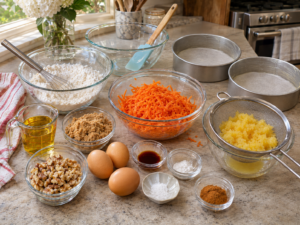
Ingredients
Equipment
Method
- Step 1: Preheat the Oven and Prepare the Cake Pans. Preheat your oven to 350°F (175°C) and position a rack in the center. Lightly grease two 8-inch (20 cm) round cake pans, line the bottoms with circles of parchment paper, and lightly grease the parchment as well. If desired, dust the exposed sides with a small amount of flour, tapping away any excess to prevent a thick floury coating on the finished cake. Place both pans on a stable work surface and make sure they are ready before mixing the batter. Preparing the pans carefully helps the delicate, moist carrot cake layers release cleanly after baking. Gather your ingredients and equipment, then allow the eggs to approach room temperature so they combine smoothly with the oil and sugars.
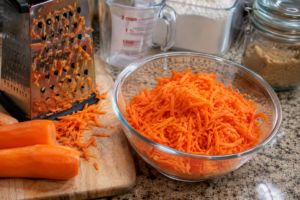
- Step 2: Prepare the Fresh Carrots. Wash and peel enough fresh carrots to obtain 2 cups (250 g) of lightly packed grated carrot. Using the medium or fine holes of a box grater, shred the carrots into thin, tender strands that will soften evenly during baking. Avoid using large, coarse pieces, which may remain noticeably firm in the finished cake. Freshly grated carrots generally provide a better texture than packaged pre-shredded carrots, which can be relatively dry and thick. Do not squeeze the moisture from the grated carrots, because their natural moisture helps create the signature tender crumb of this Carrot Cake Recipe With Pineapple. Place the measured carrots in a clean bowl and set them aside while preparing the pineapple.
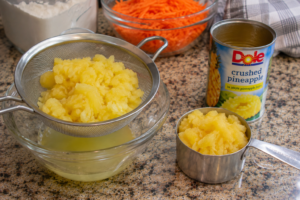
- Step 3: Drain and Measure the Crushed Pineapple. Open a can of crushed pineapple packed in juice and transfer the fruit into a fine-mesh sieve positioned over a bowl. Allow the excess liquid to drain naturally for a few minutes, pressing very lightly with the back of a spoon only if necessary. Measure 1 cup (180 g) of drained crushed pineapple for the cake batter, ensuring the pineapple remains pleasantly moist rather than completely dry. Too much extra juice can affect the cake's structure and make the center excessively wet, while over-draining can reduce the fruit's contribution to tenderness. Set the drained pineapple aside with the grated carrots. You can refrigerate the reserved juice for another use, but do not add it to this cake batter unless specifically adjusting and testing the formula.
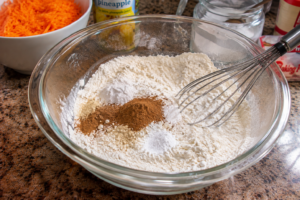
- Step 4: Combine the Dry Ingredients. In a medium mixing bowl, add 2 cups (250 g) all-purpose flour, 1½ teaspoons baking powder, ½ teaspoon baking soda, 2 teaspoons ground cinnamon, ¼ teaspoon ground nutmeg, and ½ teaspoon fine salt. Whisk the ingredients thoroughly for approximately 30 seconds to distribute the leavening agents and warm spices evenly throughout the flour. Break apart any visible lumps of cinnamon or baking powder so the baked cake develops a consistent flavor and rise. The flour provides structure, while baking powder and baking soda help produce a tender crumb without making the cake overly dense. Set the bowl of dry ingredients aside and avoid adding the grated carrots or pineapple at this stage, since they will be folded into the finished batter.
- Step 5: Whisk the Eggs and Sugars. Crack 3 large eggs into a large, clean mixing bowl, then add ¾ cup (150 g) packed light brown sugar and ½ cup (100 g) granulated sugar. Whisk vigorously by hand for approximately 1–2 minutes until the ingredients become evenly combined and the mixture looks smooth, slightly thickened, and lighter in color. The brown sugar contributes a mild caramel flavor and helps give the finished carrot cake a soft, moist texture, while the granulated sugar balances the sweetness. Scrape down the sides of the bowl as needed to ensure no dry sugar remains around the edges. You do not need to whip the eggs until they become extremely fluffy, as this cake uses a straightforward oil-based mixing method rather than relying on whipped eggs for its primary rise.
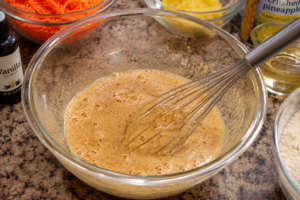
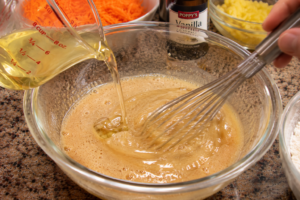
- Step 6: Add the Vegetable Oil and Vanilla. Slowly pour ¾ cup (180 ml) neutral vegetable oil into the egg-and-sugar mixture while whisking steadily, then add 2 teaspoons (10 ml) nonalcoholic vanilla flavoring. Continue whisking until the mixture becomes glossy, smooth, and well combined, with no obvious puddles of oil floating on the surface. The oil is essential to the tender texture of this homemade pineapple carrot cake because it remains liquid at room temperature, helping the cake feel soft even after refrigeration. Choose a mild-flavored oil, such as canola or sunflower oil, that will not overpower the carrots, cinnamon, and pineapple. Scrape the bottom and sides of the mixing bowl with a spatula before moving to the next stage.
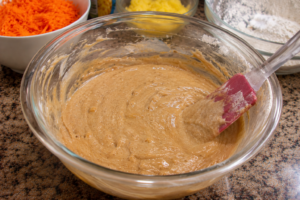
- Step 7: Fold the Dry Ingredients Into the Wet Mixture. Add approximately half of the prepared flour mixture to the bowl of wet ingredients and fold gently with a large silicone spatula until mostly incorporated. Add the remaining dry ingredients and continue folding just until the flour disappears and a thick, smooth batter forms. Scrape along the bottom and sides of the bowl to incorporate any remaining dry patches, but avoid stirring vigorously or mixing for longer than necessary. Excessive mixing after adding flour can encourage gluten development and produce a tougher cake. A few small lumps are acceptable at this stage, provided no pockets of dry flour remain. The batter should look thick yet spreadable, ready to receive the freshly grated carrots and drained pineapple.
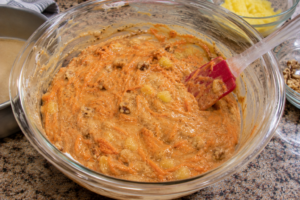
- Step 8: Fold in the Carrots, Pineapple, and Optional Nuts. Add the prepared 2 cups (250 g) freshly grated carrots and 1 cup (180 g) drained crushed pineapple directly to the cake batter. If using the optional ½ cup (60 g) chopped walnuts or pecans, add them now as well. Fold everything together with a silicone spatula using broad, gentle movements until the carrots, pineapple, and optional nuts are evenly distributed. The batter will become slightly more textured and moist as the fruit and vegetables are incorporated. Avoid overmixing, and do not add extra pineapple juice if the mixture seems thick, because the carrots and crushed pineapple release moisture during baking. The finished batter should be thick enough to spoon into the pans while remaining soft and easy to spread.
- Step 9: Divide the Batter Between the Cake Pans. Divide the finished cake batter as evenly as possible between the two prepared 8-inch round cake pans, using a kitchen scale for precision if available. Gently spread the batter toward the edges with a silicone spatula, smoothing the tops into reasonably even layers without pressing down excessively. Tap each pan once or twice lightly against the countertop to remove unusually large trapped air pockets, but avoid forceful tapping that could disturb the batter's structure. Check that neither pan is filled beyond a comfortable baking level and that the batter is evenly distributed from the center to the sides. Place the pans into the preheated oven promptly so the baking soda and baking powder can work effectively during baking.
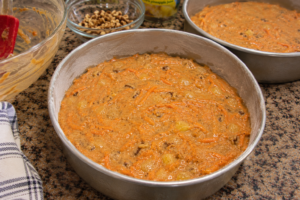
- Step 10: Bake Until Golden and Fully Cooked. Place both cake pans on the center oven rack, leaving enough space between them for hot air to circulate. Bake at 350°F (175°C) for approximately 30–35 minutes, beginning to check for doneness near the 28-minute mark because oven temperatures and pan materials can vary. The cakes should rise gently, develop a golden-brown surface, and feel set near the center. Insert a toothpick into the middle of each cake; it should come out clean or with a few moist crumbs rather than wet batter. If the centers are still underbaked, continue baking in short increments and check again. Avoid repeatedly opening the oven early in the baking period because sudden temperature changes can affect the cake's rise. Once done, carefully remove the pans from the oven.
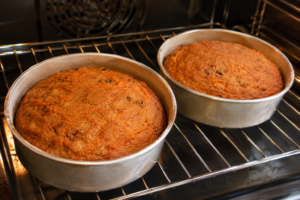
- Step 11: Cool the Cake Layers Completely. Place the baked cake pans on wire cooling racks and allow them to rest for approximately 15 minutes so the layers become firm enough to handle without breaking. Carefully run a thin knife around the edges if necessary, then invert each cake onto a rack, remove the parchment paper, and turn the layers right side up. Allow them to cool completely for approximately 60–90 minutes before applying cream cheese frosting. The cake may feel especially tender because of the carrots and pineapple, so avoid moving it repeatedly while it is still warm. Frosting warm cake will cause the cream cheese mixture to soften, slide, or melt, resulting in an uneven appearance. If the layers are especially delicate, chill them briefly after cooling to make assembly easier.
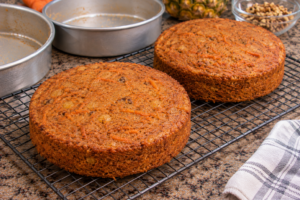
- Step 12: Beat the Butter and Cream Cheese. While the cake layers cool, prepare the frosting by placing ½ cup (113 g) softened unsalted butter into a clean mixing bowl. Beat with an electric mixer for approximately 1–2 minutes until smooth and creamy, then add 8 oz (225 g) full-fat block cream cheese that is softened but still slightly cool. Mix on low to medium speed just until the butter and cream cheese form a smooth, uniform mixture. Scrape down the bowl as needed to eliminate unmixed pockets around the edges. Avoid extended high-speed beating, which can make cream cheese frosting overly loose. Use full-fat block cream cheese rather than a very soft spreadable tub product, because the firmer block-style ingredient usually produces frosting with better structure for a layered cake.
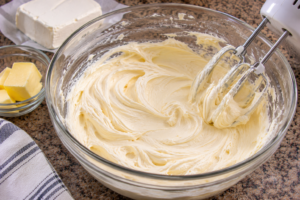
- Step 13: Add Powdered Sugar and Vanilla to the Frosting. Gradually add 2 cups (240 g) sifted powdered sugar to the cream cheese and butter mixture, mixing initially on low speed to prevent sugar from scattering outside the bowl. Once incorporated, add 1 teaspoon (5 ml) nonalcoholic vanilla flavoring and an optional small pinch of fine salt, then beat briefly until the frosting becomes smooth, creamy, and spreadable. Scrape the sides and bottom of the bowl to ensure the ingredients are evenly mixed. The finished frosting should form soft peaks and spread easily without running off a spatula. If it becomes too warm or loose, refrigerate it briefly before using rather than adding excessive powdered sugar. Taste a small amount with a clean spoon and adjust the sweetness only if necessary.
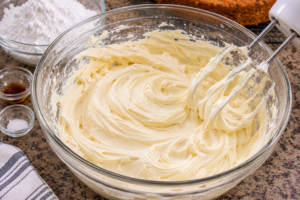
- Step 14: Assemble the Pineapple Carrot Cake Layers. Place one fully cooled carrot cake layer onto a cake stand or serving plate with its flat side facing down. If the top has a noticeable dome, carefully trim it with a serrated knife so the second layer can sit evenly. Spoon approximately one-third of the cream cheese frosting onto the first cake layer and spread it across the surface with an offset spatula, leaving a small margin near the outer edge. Place the second layer carefully on top, aligning the edges without pressing down too firmly. Add the remaining frosting to the top and sides, spreading it into a smooth or gently swirled finish according to your preference. Work carefully because carrot cake with pineapple is naturally moist and tender, making the layers more delicate than some traditional sponge cakes.
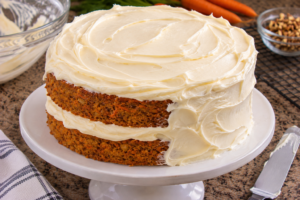
- Step 15: Decorate and Chill Before Slicing. Finish the frosted carrot cake with a small sprinkle of ground cinnamon or optional chopped walnuts or pecans for an attractive homemade presentation. Use an offset spatula to create simple swirls across the top, or leave the frosting smooth for a classic look. Transfer the assembled cake to the refrigerator and chill for approximately 20–30 minutes before slicing if the frosting is particularly soft; this helps the layers settle and makes cleaner slices easier to cut. Because the frosting contains cream cheese, the cake should be kept refrigerated when not being served. Avoid leaving the finished cake in a warm kitchen for extended periods, and do not place heavy decorations on the frosting that could compress the tender cake layers.
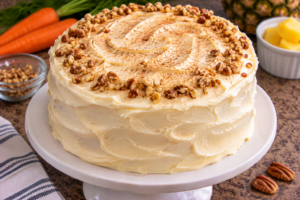
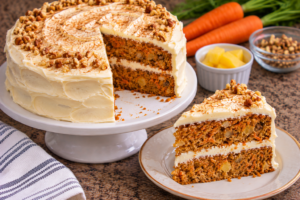
- Step 16: Slice, Serve, and Store the Cake Safely. Use a clean, sharp cake knife to divide the finished Carrot Cake Recipe With Pineapple into 12 even slices, wiping the blade between cuts for the neatest presentation. For a softer texture, allow individual slices to stand briefly at room temperature before serving, while keeping the remaining cake refrigerated. The combination of sweet carrots, juicy pineapple, cinnamon, and tangy cream cheese frosting is especially delicious with tea or coffee. Store leftovers in a covered container in the refrigerator at 40°F (4°C) or below and enjoy within approximately 3–4 days for best quality. Do not leave cream cheese-frosted cake unrefrigerated for more than 2 hours, or 1 hour in temperatures above 90°F (32°C). For longer storage, individual slices may be wrapped and frozen, although the frosting texture can change after thawing.
Notes
1. Use Freshly Grated Carrots.
2. Drain the Crushed Pineapple Properly.
3. Choose Pineapple Packed in Juice.
4. Use Neutral Vegetable Oil.
5. Balance Brown and White Sugar.
6. Measure Flour Accurately.
7. Avoid Overmixing the Batter.
8. Use Fresh Baking Powder and Baking Soda.
9. Add Nuts for Extra Crunch.
10. Use Two 8-Inch Cake Pans.
11. Check Doneness Before Removing the Cake.
12. Cool the Layers Before Frosting.
13. Choose Full-Fat Block Cream Cheese.
14. Chill Soft Frosting Before Decorating.
15. Refrigerate the Finished Cake.
16. Store or Freeze Leftovers Carefully.
Freshly grated carrots give homemade carrot cake a softer, more consistent texture than thick packaged carrot shreds. Use the fine or medium holes of a box grater and measure 250 g after grating. Do not squeeze out their natural moisture, which helps keep the finished cake tender.
Measure 180 g of crushed pineapple after draining excess juice through a fine-mesh sieve. The pineapple should remain slightly moist but should not carry large amounts of loose liquid into the batter. Too much extra juice can make the cake heavy or leave a wet center.
Canned crushed pineapple packed in its own juice provides convenient, consistent fruit pieces. Pineapple packed in heavy syrup can change the sweetness and moisture of the cake. Drain and weigh the fruit before adding it to the batter.
Neutral oils such as canola or sunflower oil help produce a moist carrot cake without competing with the flavors of cinnamon, vanilla, and pineapple. Measure 180 ml carefully, since too much oil may leave the cake greasy while too little can make it dry.
Using both brown and granulated sugar gives the cake sweetness with subtle caramel notes. The brown sugar contributes moisture and flavor, while the granulated sugar helps keep the sweetness balanced. Keep the stated amounts for the proposed formulation.
Use 250 g all-purpose flour for consistent results. If using cups instead of a digital scale, spoon flour loosely into the measuring cup and level it without packing. Excess flour can make the carrot cake dry or dense.
Once the dry ingredients are added to the wet mixture, fold only until the flour is incorporated. Overmixing develops gluten and can make the cake tougher. Fold in the carrots and pineapple gently using a spatula.
Check that your baking powder and baking soda are within their recommended freshness periods. These ingredients help the moist carrot cake rise and set properly. Measure carefully rather than adding extra leavening, which can cause an uneven rise.
Chopped walnuts or pecans are optional but add a pleasant contrast to the soft carrot and pineapple crumb. Fold in 60 g if desired. Nuts can also be sprinkled over the frosting, but additional garnish is not included in the base nutrition estimate.
Divide the batter evenly between two prepared 8-inch round pans for the intended two-layer cake. This helps the layers bake consistently and gives the assembled dessert a balanced height. Different pan sizes will require adjustments to baking time and may change the cake's appearance.
Begin checking the cakes near 28 minutes at 350°F (175°C). A toothpick inserted into the center should come out clean or with a few moist crumbs, not uncooked batter. If necessary, continue baking in short increments until the center is fully set.
Let the baked cakes rest in their pans for about 15 minutes before transferring them to wire racks. Allow them to cool completely before frosting. Warm layers can soften the cream cheese frosting and make assembly difficult.
For the best frosting consistency, use full-fat block cream cheese rather than a soft spreadable tub product. Combine it with softened butter, sifted powdered sugar, and nonalcoholic vanilla flavoring. Avoid overbeating after the mixture becomes smooth.
If the cream cheese frosting becomes too loose during preparation, refrigerate it briefly until spreadable. Frost the completely cooled cake layers with an offset spatula, creating gentle swirls rather than applying excessive pressure to the delicate cake.
Because the frosting contains cream cheese, store the cake covered at 40°F (4°C) or below. Do not leave it out for more than 2 hours, or 1 hour in temperatures above 90°F (32°C). For the best texture, serve slices after a brief period out of the refrigerator.
Keep leftover cake covered in the refrigerator and enjoy within approximately 3–4 days for best quality. Individual slices can be tightly wrapped and frozen for longer storage, although the cream cheese frosting may change in texture after thawing. Thaw frozen portions in the refrigerator.