
Ingredients
Equipment
Method
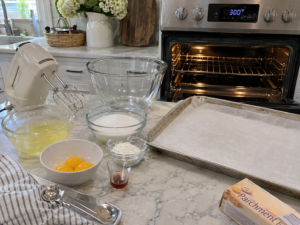
- Step 1: Preheat the Oven and Prepare the Baking Tray. Preheat your oven to 300°F (150°C) using the conventional baking setting and position a rack in the center. Line a flat baking sheet with parchment paper, making sure the paper lies smoothly against the surface. Avoid greasing the parchment because additional fat is unnecessary and may affect the delicate cake's shape. Gather all ingredients and equipment before starting so the whipped egg whites can go directly into the oven after shaping. This recipe relies on trapped air rather than baking powder, so preparing the oven and tray first helps prevent the foam from sitting too long and losing volume.
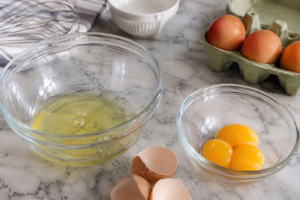
- Step 2: Separate the Egg Whites Carefully. Separate 3 large eggs while they are cold, placing the whites into a small clean bowl one at a time before transferring them into your main mixing bowl. Make sure no yolk enters the whites, since even a small amount of yolk fat can interfere with whipping. Use a spotless glass or stainless-steel bowl with no traces of grease, water droplets, or leftover batter. You should have approximately 90–100 g of egg whites. Save the yolks separately for another recipe and refrigerate them promptly. If you are using pasteurized liquid egg whites, check the label to ensure they are suitable for whipping, as some products do not produce a stable foam.
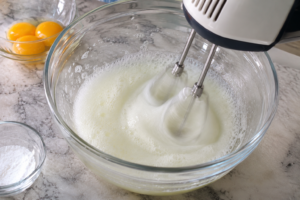
- Step 3: Begin Whipping the Egg Whites. Place the egg whites in the clean mixing bowl and use an electric mixer at medium speed to beat them until they look pale, foamy, and filled with small bubbles. This usually takes around 1–2 minutes, depending on your mixer. If using the optional ⅛ teaspoon cream of tartar, add it once the whites become foamy to help stabilize the mixture. Continue beating until the foam begins to hold very soft peaks when the whisk is lifted. Do not add all the sugar immediately because gradual incorporation helps build a smoother, more stable meringue. The mixture should look airy and white but will not yet be stiff enough to hold the cake's shape.
- Step 4: Add the Sugar Gradually. With the mixer running at medium speed, add the 30 g superfine sugar gradually, approximately one teaspoon at a time, allowing each addition to become incorporated before adding more. Once all the sugar has been added, increase the mixer speed to medium-high and continue whipping. The mixture should progressively become thicker, brighter white, and glossier as the sugar dissolves and the egg-white foam develops structure. This may take several minutes, depending on your equipment. Avoid rushing this step or dumping the sugar in at once, since undissolved sugar can produce a grainier texture and weaken the foam. Scrape down the bowl only if necessary and keep mixing until the meringue is glossy.
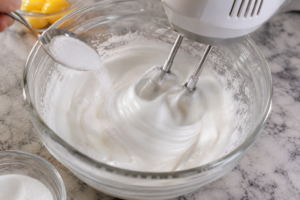
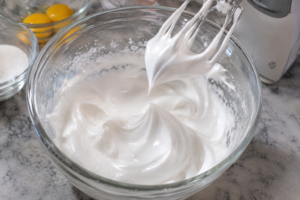
- Step 5: Whip Until Stiff, Glossy Peaks Form. Continue beating the sweetened egg whites until they form firm, glossy peaks that stand upright when you lift the whisk, with only a slight bend at the tip. The foam should look smooth and dense with tiny bubbles rather than dry, separated, or chunky. Stop the mixer as soon as stable stiff peaks form, since overbeating can cause the meringue to become grainy and difficult to shape. To check the texture, lift the whisk slowly and observe the peak without aggressively shaking the bowl. Properly whipped egg whites are the most important ingredient in achieving a tall, fluffy Cloud Cake Recipe because they supply the air that creates its signature texture.
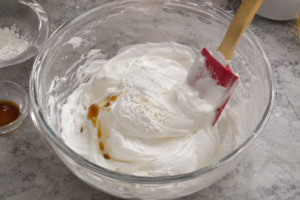
- Step 6: Sift in the Cornstarch and Add Vanilla. Sift 10 g cornstarch over the whipped egg whites and add ½ teaspoon nonalcoholic vanilla flavoring. Use a large silicone spatula to fold the ingredients into the meringue with gentle movements, cutting down through the center, sweeping across the bottom, and lifting the mixture over itself. Rotate the bowl as you fold until no obvious pockets of dry cornstarch remain. Work carefully to preserve as much trapped air as possible, since vigorous stirring will deflate the foam and produce a flatter cake. The finished mixture should remain thick, glossy, and fluffy, with enough structure to hold a rounded mound. If using a tiny amount of food coloring, fold it in now.
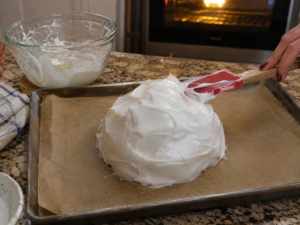
- Step 7: Shape the Cloud Cake. Transfer the whipped mixture onto the center of the parchment-lined baking sheet using a silicone spatula. Gently pile it into one tall, rounded dome approximately 5–6 inches (13–15 cm) across, smoothing the sides lightly while keeping the top softly rounded. Avoid spreading the mixture thinly across the tray, because the cake needs height to develop its fluffy, cloud-like interior. A few small swirls and natural surface imperfections are perfectly fine and will give your homemade cake an appealing rustic look. Handle the mixture as little as possible and place it into the preheated oven promptly so it does not lose volume before baking.
- Step 8: Bake Until Lightly Golden and Set. Place the baking sheet on the center oven rack and bake at 300°F (150°C) for approximately 25–35 minutes. Avoid opening the oven during the early part of baking because sudden temperature changes may cause the delicate foam to collapse. As the cake bakes, the exterior should become lightly golden and the center should gradually set while remaining tender. Begin checking near 25 minutes without repeatedly opening the door. Because this cake contains eggs, use a food thermometer where practical to confirm that the center reaches at least 160°F (71°C), taking care not to compress the delicate cake. If the top is browning too quickly while the center remains undercooked, reduce the oven temperature slightly and continue baking until properly set.
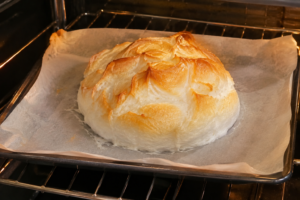
- Step 9: Rest Briefly After Baking. Remove the baking sheet carefully from the oven and place it on a heat-resistant surface or wire cooling rack. Let the cloud cake rest for approximately 5 minutes so it becomes easier to handle while still retaining its soft interior. Expect the cake to shrink or settle somewhat as it cools; this is normal for a whipped-egg-white dessert and does not necessarily mean the recipe failed. Avoid pressing the top or moving the cake repeatedly, because its airy structure is fragile. The best cloud cake has a lightly golden exterior and a tender, foamy center, more like a soft meringue than a conventional sponge cake.
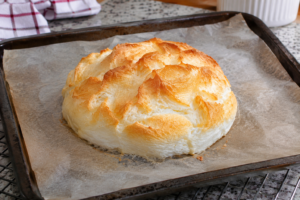
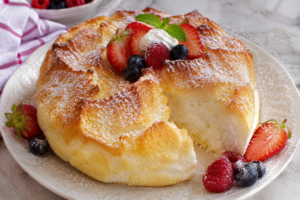
- Step 10: Add Toppings and Serve Fresh. Carefully slide the cloud cake onto a serving plate or lift it using the parchment paper, supporting its delicate structure from underneath. Cut or gently pull the cake into four servings and serve while fresh, when its texture is at its lightest and most appealing. If desired, add fresh strawberries, blueberries, or raspberries, a light dusting of powdered sugar, or a small spoonful of whipped cream immediately before serving. Keep toppings modest because heavy fillings or wet fruit placed directly on the cake can compress the foam and make the surface soggy. Enjoy the dessert soon after baking for the best combination of soft center, delicate sweetness, and airy texture.
Notes
1. Use a Clean, Grease-Free Bowl.
2. Separate Eggs Carefully.
3. Choose Superfine Sugar.
4. Add Sugar Gradually.
5. Avoid Overbeating.
6. Sift the Cornstarch.
7. Use Nonalcoholic Vanilla Flavoring.
8. Optional Cream of Tartar.
9. Shape a Tall Dome.
10. Bake at a Moderate Temperature.
11. Expect Some Shrinkage.
12. Avoid Heavy Toppings.
13. Serve Soon After Baking.
14. Make a Naturally Flourless Dessert.
15. Use Safe Egg Handling.
16. Store Leftovers Carefully.
Egg whites whip best in a completely clean glass or stainless-steel bowl. Any traces of oil, butter, or egg yolk can make it harder to form stable peaks.
Separate cold eggs one at a time and check each white before adding it to the mixing bowl. This prevents one broken yolk from contaminating the entire batch.
Superfine or caster sugar dissolves more easily into whipped egg whites than coarse granulated sugar. Weigh 30 g for consistent sweetness and meringue structure.
Sprinkle sugar into foamy egg whites a little at a time while the mixer runs. This encourages smoother incorporation and helps produce a glossy meringue.
Stop whipping when stiff, smooth, glossy peaks form. Egg whites that become dry or grainy can be difficult to fold and may produce an uneven cloud cake.
Sifting 10 g cornstarch over the whipped whites helps prevent dry pockets and lumps. Fold gently until just incorporated rather than stirring vigorously.
A small amount of nonalcoholic vanilla flavoring adds sweetness and aroma without overpowering the delicate taste of the cake.
A small amount of cream of tartar can improve egg-white foam stability. The recipe can also be prepared without it when the whites are beaten properly.
Pile the mixture into one rounded mound instead of spreading it into a thin circle. Keeping height in the batter helps produce the signature cloud-like appearance.
Bake at approximately 300°F (150°C) and check near the end of the recommended baking window. Excessively high heat may brown the outside before the center sets.
Cloud cake naturally loses some height as it cools because its structure depends largely on whipped egg whites. A slight collapse is normal for this style of dessert.
Fresh berries and a light dusting of powdered sugar complement the delicate cake. Heavy frosting or wet toppings may compress the airy interior.
This cloud cake tastes best shortly after baking when its exterior is lightly golden and its interior remains soft. The texture changes as it sits.
The base recipe contains no wheat flour. For a gluten-free version, confirm that the cornstarch, vanilla flavoring, and any toppings are suitable for your dietary requirements.
Keep eggs refrigerated until needed, avoid cross-contamination, and bake the egg-white dessert thoroughly. A food thermometer can help verify that the center reaches 160°F (71°C).
Refrigerate leftovers promptly in a covered container and consume within 3–4 days for food safety, although the cake's texture is best on the first day. Refrigeration can cause additional shrinkage and moisture changes.