
Ingredients
Equipment
Method
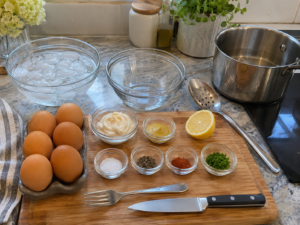
- Step 1: Gather the Ingredients and Prepare Your Workspace. Begin your Devilled Eggs Recipe by gathering 6 large eggs, mayonnaise, Dijon mustard, fresh lemon juice, salt, black pepper, paprika, and optional chives. Place the eggs on a clean work surface and prepare a medium saucepan large enough to hold them in a single layer without crowding. Have a large bowl, ice, and cold water ready for cooling the eggs immediately after cooking. Set out a slotted spoon, sharp knife, small mixing bowl, and fork so the preparation process moves smoothly. Keeping the equipment organized also helps prevent unnecessary handling of the cooked eggs. Choose refrigerated eggs that are within their recommended use date, and avoid using eggs with cracked shells.
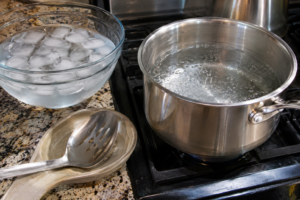
- Step 2: Bring the Water to a Gentle Boil. Fill a medium saucepan with enough water to cover the eggs by approximately 1 inch (2.5 cm) once they are added, then bring the water to a steady but gentle boil over medium-high heat. Avoid an extremely vigorous boil, which can cause the eggs to bump against one another and increase the chance of cracked shells. While waiting for the water to heat, fill a separate large bowl with cold water and plenty of ice cubes to create an ice bath. Using hot water from the beginning of cooking can make the eggs easier to time consistently once they are submerged. Work carefully around the boiling water and keep a slotted spoon nearby for lowering the eggs safely.
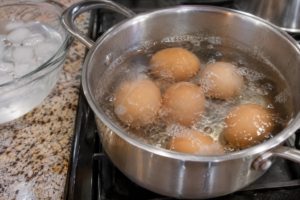
- Step 3: Cook the Eggs Until the Yolks Are Fully Set. Using a slotted spoon, gently lower the 6 large refrigerated eggs into the boiling water one at a time, taking care not to drop them against the bottom of the saucepan. Reduce the heat slightly to maintain a gentle boil and cook for approximately 11–12 minutes, adjusting as needed for egg size and starting temperature. For devilled eggs, the yolks should be fully set rather than runny, so they can be mashed into a smooth filling. Avoid excessively long cooking, which may produce dry, chalky yolks or a gray-green ring around the yolks. When the cooking time is complete, remove the saucepan from the heat and prepare to transfer the eggs into the ice bath immediately.
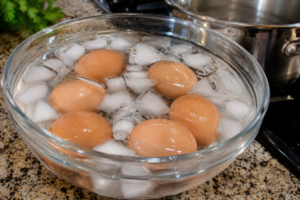
- Step 4: Cool the Hard-Boiled Eggs in Ice Water. Carefully remove the cooked eggs with a slotted spoon and transfer them directly into the prepared bowl of ice water. Allow the eggs to cool for approximately 10–15 minutes, adding more ice if the water becomes too warm. This cooling step stops additional cooking, makes the eggs more comfortable to handle, and can help loosen the membranes beneath the shells. Gently move the eggs once or twice so all sides are surrounded by cold water. Do not leave cooked eggs sitting in warm water for an extended period, since prolonged residual heat may affect the yolk texture. Once the eggs are cool enough to handle, remove them from the ice bath and pat them dry with a clean paper towel.
- Step 5: Peel the Eggs Carefully. Place one cooled egg on a clean cutting board and gently tap the shell against the surface to create several small cracks. Roll the egg lightly under your palm without pressing hard enough to damage the cooked white, then begin removing the shell from the wider end, where an air pocket often makes peeling easier. Peel slowly, using cool running water if needed to loosen stubborn shell fragments. Repeat with the remaining eggs, taking care to preserve smooth, intact egg whites because they will hold the creamy filling. If small pieces of shell remain attached, rinse them away gently and dry the peeled eggs with clean paper towels. Set the peeled eggs aside on a clean plate until all six are ready to slice.
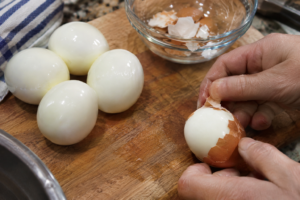
- Step 6: Slice the Eggs and Remove the Yolks. Using a clean, sharp knife, cut each peeled hard-boiled egg lengthwise from end to end to create two evenly shaped halves. Wipe the knife blade between cuts if necessary to keep the edges neat and prevent yolk residue from smearing across the egg whites. Gently remove each firm yolk with a small spoon or your fingers, placing all six yolks in a separate mixing bowl. Arrange the twelve hollow egg-white halves on a serving platter or clean tray with the cut sides facing upward. Handle them carefully to avoid tearing the thin edges of the whites. Any small imperfections can usually be hidden when the creamy yolk mixture is added later, so prioritize keeping the halves intact rather than making every cut perfectly symmetrical.
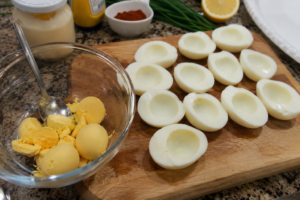
- Step 7: Mash the Egg Yolks Until Smooth. Use a fork to mash the six cooked egg yolks in the mixing bowl, pressing them firmly against the sides until they become fine, loose crumbs with no large lumps. For an especially silky filling, press the mashed yolks through a fine-mesh sieve using the back of a spoon, then return them to the bowl. This optional technique produces a finer texture that is particularly helpful when using a piping bag with a decorative star tip. Take your time with this stage because larger yolk pieces can make the final filling grainy or clog the piping nozzle. Avoid adding excessive liquid to soften the yolks before they are properly mashed, since the mayonnaise and mustard will provide moisture during the next step.
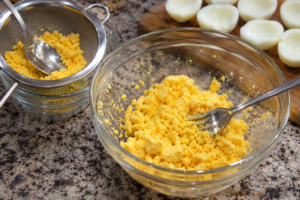
- Step 8: Add the Mayonnaise and Dijon Mustard. Add 3 tablespoons (45 g) of mayonnaise and 1 teaspoon (5 g) of Dijon mustard to the mashed egg yolks. Stir thoroughly with a fork or small spatula, pressing the mixture against the bowl as needed until the filling becomes smooth, thick, and creamy. The mayonnaise provides richness and a soft consistency, while Dijon mustard brings a pleasant tanginess that balances the naturally rich flavor of the yolks. Scrape down the sides of the bowl to make sure the ingredients are evenly incorporated. The filling should be thick enough to hold its shape when spooned or piped but soft enough to spread smoothly. Avoid adding extra mayonnaise immediately if the mixture seems stiff; it will loosen slightly after the lemon juice is mixed in.
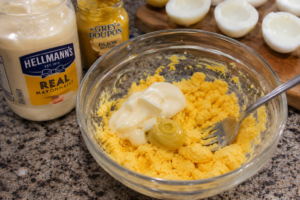
- Step 9: Season With Lemon Juice, Salt, and Pepper. Pour 1 teaspoon (5 ml) of fresh lemon juice into the creamy yolk mixture, then add approximately ⅛ teaspoon fine salt and ⅛ teaspoon freshly ground black pepper. Stir gently until the seasonings are evenly distributed, then taste a small amount using a clean spoon and adjust cautiously if necessary. Lemon juice brightens the filling and adds a little acidity without overwhelming the eggs, while salt and pepper enhance the overall flavor. If you prefer a slightly sharper filling, add just a few additional drops of lemon juice rather than pouring in a large quantity, which could make the mixture too loose. The finished filling should taste creamy, mildly tangy, and well balanced, with enough structure to remain neatly inside the egg-white halves.
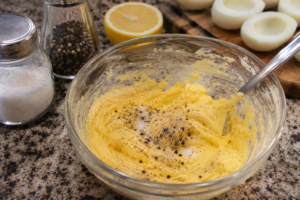
- Step 10: Fill the Egg-White Halves. Arrange the twelve egg-white halves on a stable platter or tray, keeping the hollow centers facing upward. For a simple homemade presentation, use a small spoon to divide the filling evenly among the cavities, creating soft, rounded mounds. For a more elegant appearance, transfer the yolk mixture into a piping bag fitted with a medium star tip, gently squeeze out any trapped air, and pipe the filling in small decorative swirls. Use approximately one-twelfth of the prepared filling for each half so the finished devilled eggs look evenly portioned. If using a piping bag, avoid forcing thick filling through a very narrow tip because this may cause uneven piping. Keep the eggs refrigerated if you are not serving them promptly.
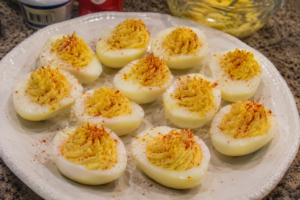
- Step 11: Garnish With Paprika and Fresh Herbs. Once all twelve egg-white halves have been filled, sprinkle approximately ¼ teaspoon sweet paprika lightly over the tops, distributing it evenly for a beautiful reddish-orange finish. Add a few finely chopped fresh chives if desired for a delicate green contrast and a mild onion flavor. Avoid using too much paprika because the seasoning should enhance the appearance and taste rather than overpower the creamy filling. If you prefer a slightly smokier variation, substitute a modest amount of smoked paprika for the sweet paprika. Add herbs and other delicate garnishes shortly before serving to keep them fresh and attractive. Arrange the finished devilled eggs neatly on the platter, leaving enough space between them so the filling stays intact when guests pick up individual portions.
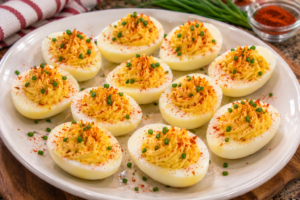
- Step 12: Chill and Serve the Devilled Eggs Safely. Cover the finished devilled eggs carefully without pressing directly against the piped filling, then refrigerate at 40°F (4°C) or below until ready to serve. Although the eggs can be enjoyed shortly after assembly, a brief chill of about 15–30 minutes can help the filling firm slightly and allow the flavors to come together. Serve the devilled eggs cold on a clean platter as an appetizer for Easter, Thanksgiving, Christmas, brunch, or family gatherings. For the best presentation, keep the platter refrigerated until serving rather than allowing the eggs to sit out while other dishes are prepared. Perishable egg dishes should not remain at room temperature for more than 2 hours, or more than 1 hour when the temperature exceeds 90°F (32°C).
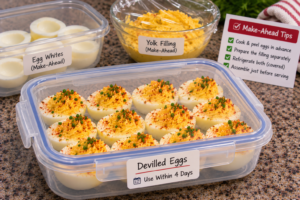
- Step 13: Store Leftovers and Prepare Ahead. Transfer any leftover devilled eggs into a shallow, airtight container and refrigerate promptly at 40°F (4°C) or below. Properly handled devilled eggs should be eaten within 4 days of cooking the eggs, although their texture and appearance are generally best during the first 1–2 days. For a make-ahead version, cook and peel the eggs in advance, prepare the filling separately, and store both components covered in the refrigerator until assembly. Spoon or pipe the filling into the whites shortly before serving for the freshest presentation. Avoid freezing assembled devilled eggs because cooked egg whites often become rubbery and the mayonnaise-based filling may separate after thawing. Discard portions that have remained outside safe refrigeration for too long.
Notes
1. Choose Good-Quality Eggs.
2. Cook the Yolks Completely.
3. Use an Ice-Water Bath.
4. Peel Gently for Attractive Egg Halves.
5. Slice the Eggs Lengthwise.
6. Press Yolks Through a Fine-Mesh Sieve.
7. Measure the Mayonnaise Accurately.
8. Balance the Filling With Dijon Mustard.
9. Use Fresh Lemon Juice Sparingly.
10. Season Gently With Salt and Pepper.
11. Pipe the Filling for Beautiful Presentation.
12. Add Paprika Just Before Serving.
13. Try a Greek Yogurt Variation.
14. Prepare the Eggs Ahead of Time.
15. Keep Devilled Eggs Refrigerated.
16. Store Leftovers and Avoid Freezing.
Use six large refrigerated eggs with clean, uncracked shells. Eggs that are slightly older, but still within their safe use date, may be easier to peel than very fresh eggs. Keep them refrigerated until cooking and avoid using eggs with damaged shells, since cracks can allow contamination. Consistent egg size also helps produce evenly cooked yolks and similar serving portions.
For creamy devilled egg filling, the yolks need to be fully cooked but not excessively dry. Lower the eggs gently into boiling water and cook for approximately 11–12 minutes, adjusting for size and temperature. Avoid prolonged boiling, which can create dry, crumbly yolks and a greenish ring around the outside. Fully set yolks mash more predictably and make it easier to prepare a smooth filling.
Immediately transfer the cooked eggs into a generous bowl of ice water and allow them to cool for approximately 10–15 minutes. Rapid cooling helps stop residual cooking and makes the eggs easier to handle. Keep enough ice in the bowl that the water remains cold. Cooling also makes peeling more manageable, although the ease of peeling depends on the eggs themselves.
Lightly crack each cooled egg, roll it gently, and begin peeling from the wider end. Using a little cool running water may help loosen the shell membrane and remove stubborn fragments. Avoid pressing too firmly, which can tear the cooked egg whites. A smooth, intact white gives your homemade devilled eggs a cleaner presentation and provides a sturdy cavity for holding the filling.
Cut each peeled egg from end to end using a sharp knife, creating two matching halves. Wipe the blade between cuts if necessary so yolk residue does not smear across the whites. Remove the yolks carefully with a small spoon or clean fingers and place the whites cut-side up on a platter. Six eggs will produce twelve devilled egg halves, which is the established serving yield for this recipe.
For an exceptionally smooth devilled egg filling, press the cooked yolks through a fine-mesh sieve before adding the mayonnaise and mustard. This breaks the yolks into fine particles and minimizes lumps that can interfere with decorative piping. If you do not have a sieve, mash thoroughly with a fork until the yolks resemble fine crumbs. Take time with this stage because the final texture depends heavily on how smoothly the yolks are prepared.
Use approximately 3 tablespoons (45 g) of regular mayonnaise for six large egg yolks. The mayonnaise supplies creamy richness and helps bind the yolks into a smooth filling. Adding too much can make the mixture runny and difficult to pipe, while using too little may produce a dry texture. Mix thoroughly before deciding whether any additional moisture is necessary.
Add approximately 1 teaspoon (5 g) of Dijon mustard for a gentle tanginess that complements the rich egg yolks and mayonnaise. Dijon gives the filling a smooth, slightly sharp flavor without overpowering the eggs. Yellow mustard can be substituted for a more traditional American-style taste. Begin with the specified quantity and adjust only after tasting the completed filling.
Fresh lemon juice brightens the filling and balances its richness. One teaspoon (5 ml) provides a modest amount of acidity for this batch of six eggs. Avoid adding several tablespoons of juice, which can loosen the filling and make it difficult to hold a decorative shape. If you prefer more tanginess, add a few drops at a time until the flavor suits your taste.
Egg yolks, mayonnaise, and Dijon mustard already contribute savory flavors, so start with approximately ⅛ teaspoon each of fine salt and freshly ground black pepper. Taste the finished filling before adding more seasoning, using a clean spoon. Over-salting is difficult to correct once the filling has been prepared. A modest amount of seasoning allows the creamy egg flavor to remain the focus.
For elegant homemade devilled eggs, transfer the prepared yolk mixture into a piping bag fitted with a medium star tip. Pipe the filling evenly into each egg-white cavity using gentle, steady pressure. If you do not have a piping bag, a small spoon works perfectly well. Avoid using a very narrow piping tip if the filling contains chopped herbs or other additions, as these may clog the opening.
A light sprinkle of sweet paprika gives devilled eggs their classic reddish-orange appearance and a subtle warm flavor. Smoked paprika is a delicious alternative if you prefer a slightly smoky finish. Sprinkle evenly over the filling shortly before serving rather than applying an excessive amount. Fresh chives, parsley, or dill can also add color and a delicate herbal note.
For a lighter variation, replace 1 tablespoon of the mayonnaise with 1 tablespoon of thick, plain Greek yogurt. This adds tanginess and may reduce the total fat content depending on the products used. Full replacement is possible in some recipes, but the texture and flavor will differ from the classic version. Add yogurt gradually and check that the filling remains thick enough for spooning or piping.
To simplify party preparation, cook and peel the eggs in advance and refrigerate them in a covered container. Prepare the creamy filling separately and keep it chilled, ideally in a piping bag or airtight container. Assemble the devilled eggs shortly before serving for the best appearance. If you assemble them ahead, keep the platter covered and refrigerated. Count storage time from the day the eggs were originally cooked.
Devilled eggs contain cooked eggs and mayonnaise-based filling, so they require proper temperature control. Keep them refrigerated at 40°F (4°C) or below and do not leave them unrefrigerated for more than two hours, or one hour when the surrounding temperature exceeds 90°F (32°C). For outdoor gatherings, place the serving dish over ice and replenish it as needed. Refrigerate leftovers promptly.
Store leftover devilled eggs in a shallow, airtight container in the refrigerator and consume within four days of cooking the eggs. Their texture and appearance are generally best within the first one or two days. Freezing assembled devilled eggs is not recommended because cooked whites may become rubbery and mayonnaise-based filling can separate. Discard leftovers that have remained outside safe refrigeration limits.