Ingredients
Equipment
Method
- Prepare the Pork Shoulder: Rinse the pork shoulder and pat dry with paper towels. Pierce the pork all over using a sharp knife, making a few deep incisions so that the marinade can permeate.
- Make the Marinade: Mix the minced garlic, olive oil, salt, black pepper, dried oregano, cumin, paprika, sour orange juice (or orange and lime juices), apple cider vinegar and cilantro. Mix everything well.
- Marinate the Pork: Wipe the marinade over the pork shoulder, rubbing it into the nooks, crannies, and deep cuts. Wrap the pork and refrigerate for at least 12 hours, preferably overnight, for the most flavor.
- Preheat the Oven: Preheat the oven to 300°F (150°C).
- Roast the Pernil: Transfer the marinated pork shoulder to a roasting pan, scoring the skin side up. Scatter the sliced onion around the pork in the pan. Tightly cover the pan loosely with aluminum foil, then roast for 3-4 hours or until meat shreds quickly and the internal temperature is 190°F (88°C).
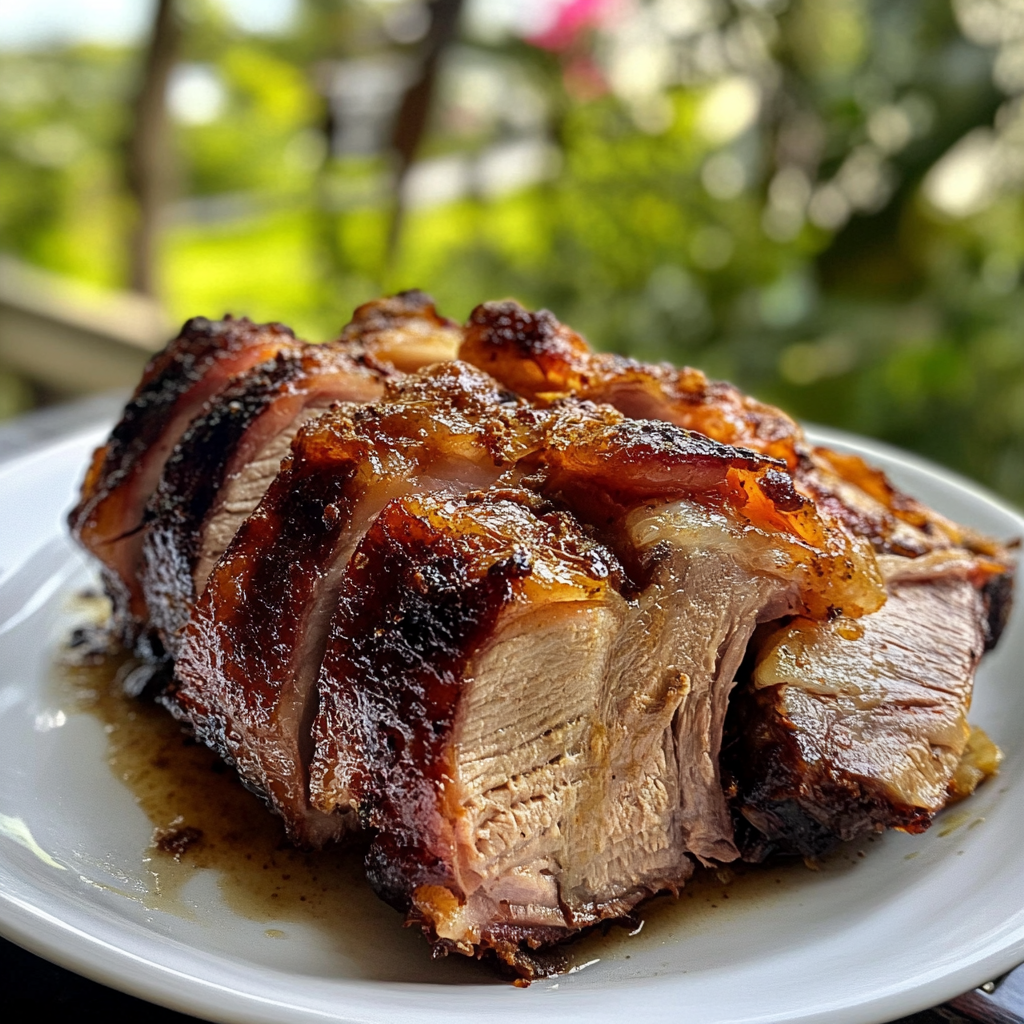
- Crisp the Skin: After tender pork, raise the oven temperature to 450°F (230°C) and roast the pork for another 30-45 minutes or until the skin is crispy and golden brown. Baste the pork with the pan drippings (every 15-20 minutes) to crust up the skin.
- Rest and Serve: When the pernil is finished, allow it to rest for 15 to 20 minutes before carving. Accompany it with rice, beans, or your favorite Puerto Rican sides.
Notes
Marinating: The longer you marinate the pork, the more flavorful it will be. Ideally, marinate for 12-24 hours.
Slow Cooking: For the best results, slow roast the pork at a low temperature to ensure the meat becomes tender and juicy.
Crisping the Skin: The key to crispy skin is high heat toward the end of the cooking process. Don't skip this step!
Adobo Seasoning: If you can't find Puerto Rican adobo seasoning, you can make your own by combining salt, garlic powder, oregano, and pepper.
Leftovers: Leftover Puerto Rican Pernil is perfect for sandwiches, tacos, or adding to soups and stews.
Slow Cooking: For the best results, slow roast the pork at a low temperature to ensure the meat becomes tender and juicy.
Crisping the Skin: The key to crispy skin is high heat toward the end of the cooking process. Don't skip this step!
Adobo Seasoning: If you can't find Puerto Rican adobo seasoning, you can make your own by combining salt, garlic powder, oregano, and pepper.
Leftovers: Leftover Puerto Rican Pernil is perfect for sandwiches, tacos, or adding to soups and stews.