Ingredients
Equipment
Method
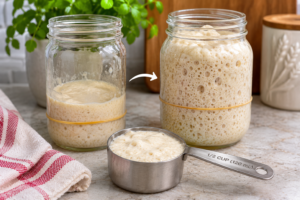
- Step 1: Activate Your Sourdough Starter – Feed your sourdough starter several hours before making the dough and allow it to become bubbly, visibly expanded, and near peak activity. Measure 120 g (about 1/2 cup) of active sourdough starter. A strong starter is essential because this recipe does not use commercial yeast.
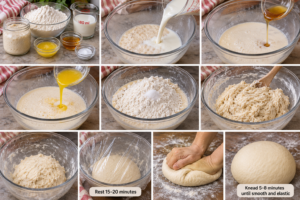
- Step 2: Mix the Sourdough English Muffin Dough – In a large bowl, combine 120 g active sourdough starter, 180 ml (3/4 cup) lukewarm whole milk, and 15 g honey or sugar. Stir in 28 g melted and slightly cooled unsalted butter, then add 375 g all-purpose flour and 6 g fine salt. Mix until a soft, slightly tacky dough forms. Rest for 15–20 minutes, then knead by hand for 5–8 minutes or with a stand mixer for 4–6 minutes until smooth and elastic.
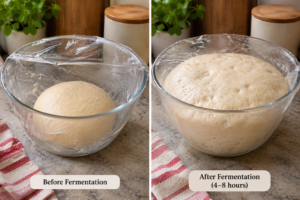
- Step 3: Allow the Dough to Ferment – Transfer the dough to a lightly greased bowl, cover, and leave at room temperature for approximately 4–8 hours until visibly puffy, airy, and noticeably expanded. Fermentation time varies depending on starter strength and room temperature. Avoid overfermenting until the dough collapses or becomes excessively sticky.
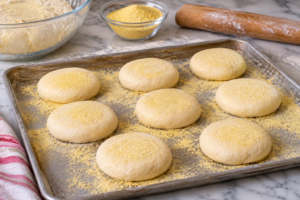
- Step 4: Shape the English Muffins – Transfer the fermented dough to a lightly floured surface and divide into 8 equal portions of approximately 90 g each. Shape each portion into a smooth ball and gently flatten into a disk about 3/4 inch (19 mm) thick. Arrange on a tray dusted with some of the 35–40 g cornmeal or fine semolina, leaving space between the muffins, and lightly dust their tops.
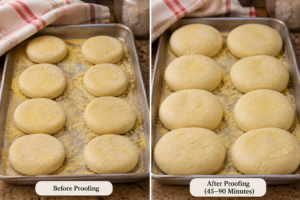
- Step 5: Proof the Shaped Muffins – Cover the shaped muffins loosely with a clean towel or lightly greased wrap and allow them to rise at room temperature for approximately 45–90 minutes until visibly puffy and slightly lighter. Handle gently to preserve the air bubbles and avoid overproofing, which may cause the muffins to flatten during cooking.
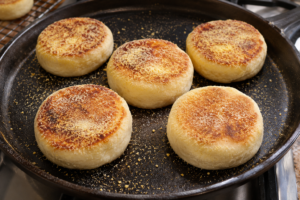
- Step 6: Cook the English Muffins on a Griddle – Preheat a cast-iron skillet or electric griddle to approximately 300–325°F (149–163°C), or use medium-low stovetop heat. Carefully place the muffins on the cooking surface and cook for approximately 6–10 minutes per side until golden brown and fully cooked. Work in batches if necessary. The centers should be cooked through, with an internal temperature around 190–200°F (88–93°C) as a useful doneness reference. Reduce the heat or finish briefly in a moderate oven if the outsides brown before the centers cook.
- Step 7: Cool and Split for Classic Nooks and Crannies – Transfer the cooked English muffins to a wire rack and cool for at least 15–20 minutes to allow the crumb to set. Insert the tines of a fork around the circumference of each muffin, then gently pull the halves apart to preserve the classic nooks and crannies. Avoid cutting completely through with a knife.

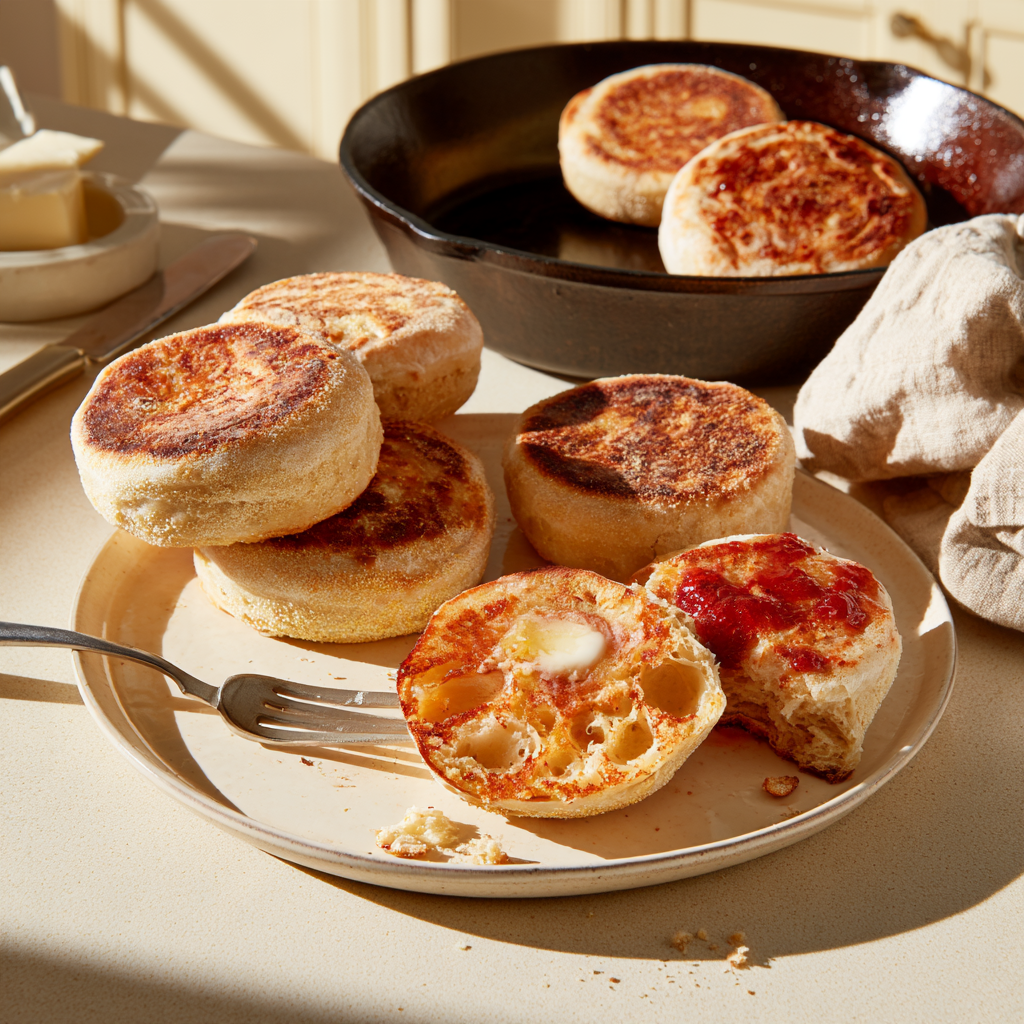
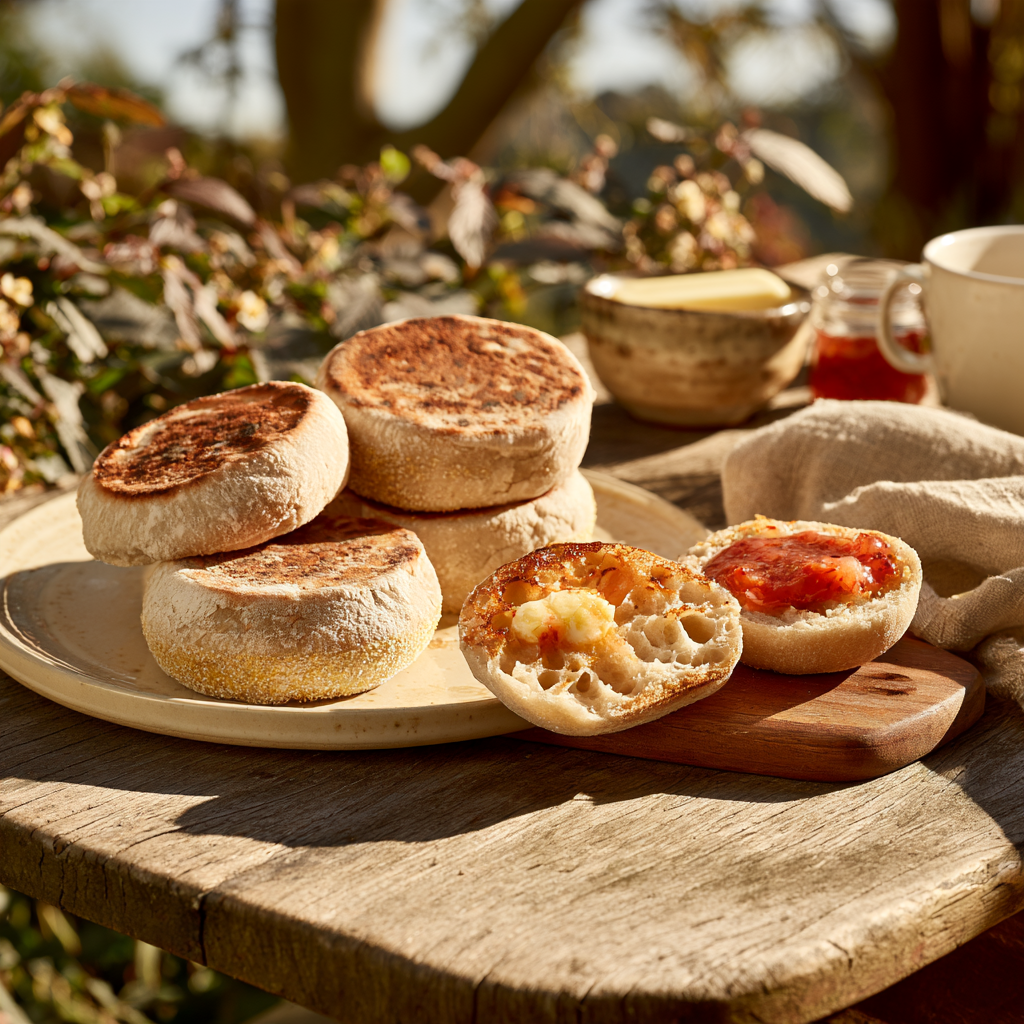
- Step 8: Toast, Serve, and Store – Toast the split English muffins until lightly golden and crisp, then serve with butter, honey, jam, cream cheese, avocado, eggs, or breakfast sandwich fillings. Store completely cooled muffins in an airtight container at room temperature for approximately 2–3 days, or freeze in freezer-safe packaging for 2–3 months for best quality. Toast directly from frozen or thaw before reheating.

Notes
Active Sourdough Starter: Use 120 g of active, bubbly sourdough starter near peak activity. A 100% hydration starter is recommended for consistent dough texture.
No Commercial Yeast: This recipe relies entirely on an active sourdough starter for natural leavening. No additional commercial yeast or baking soda is required.
Best Flour: All-purpose flour creates soft English muffins. Bread flour may produce a chewier texture and may require minor adjustments.
Milk Temperature: Use lukewarm milk rather than hot milk to avoid damaging the sourdough culture.
Honey or Sugar: Use 15 g honey or granulated sugar. Either option balances the tangy sourdough flavor and supports browning.
Dough Texture: The dough should feel soft, smooth, and slightly tacky. Avoid adding excessive flour during kneading or shaping.
Bulk Fermentation: Allow approximately 4–8 hours at room temperature. Fermentation may take longer in a cool kitchen or when the starter is less active.
Overnight Variation: Refrigerate the dough in a covered container for an overnight rest after fermentation has begun. Allow enough time for the dough to become appropriately puffy before shaping or cooking. Exact timing depends on starter activity and refrigerator temperature.
Shaping Thickness: Shape the muffins approximately 3/4 inch (19 mm) thick for an even rise and proper cooking.
Cornmeal or Semolina: Dust the dough with cornmeal or fine semolina to prevent sticking and create the classic textured exterior.
Final Proof: Let the shaped muffins rise for approximately 45–90 minutes, or until noticeably puffy. Avoid overproofing.
Griddle Temperature: Cook at approximately 300–325°F (149–163°C), or use medium-low heat on a stovetop skillet. Avoid excessive heat that can burn the outside before the inside cooks.
Cooking Time: Cook approximately 6–10 minutes per side. Cooking time varies with muffin thickness, griddle temperature, and pan type.
Checking Doneness: The centers should be fully cooked and not gummy. An internal temperature around 190–200°F (88–93°C) is a useful bread-baking doneness reference.
Uneven Browning: If the muffins become too dark before the centers cook, reduce the heat and continue cooking gently or finish briefly in a moderate oven.
Classic Nooks and Crannies: Cool the muffins before splitting. Use a fork to separate the halves rather than cutting them completely through with a knife.
Make-Ahead Preparation: Prepare the dough in advance and use refrigerated fermentation when convenient. Monitor dough development rather than following time estimates rigidly.
Room-Temperature Storage: Cool completely and store in an airtight container at room temperature for approximately 2–3 days for best quality.
Freezing: Split the cooled muffins, wrap them well, and freeze in freezer-safe packaging for approximately 2–3 months for best quality.
Reheating: Toast the muffins directly from frozen or thaw before warming. Avoid prolonged reheating, which can dry them out.
Serving Suggestions: Serve with butter, jam, honey, cream cheese, scrambled eggs, avocado, or use as the base for homemade breakfast sandwiches.