Ingredients
Equipment
Method
- Step 1: Prepare the Bread for Homemade Turkey Stuffing. Begin by cutting enough white country bread into evenly sized ¾–1-inch cubes to obtain approximately 12 cups after drying. For the best texture, choose sturdy bread that can absorb flavorful broth without completely breaking down. If the bread is already thoroughly dried and safe to use, you can proceed directly to the next preparation stage. If you're working with fresh bread, arrange the cubes in an even layer on rimmed baking sheets, avoiding overcrowding. Consistently sized cubes are important because they absorb liquid and bake more evenly, helping the finished Turkey Stuffing Recipe develop tender centers without turning into a dense, pasty mixture.
- Step 2: Dry the Bread Cubes in the Oven. Preheat the oven to 275°F (135°C) and spread the bread cubes in a single layer over two large baking sheets. Place them in the oven for approximately 20–25 minutes, stirring or turning halfway through, until the pieces feel dry throughout but remain pale or only lightly toasted. The objective is to remove moisture rather than develop a deeply browned crust, since the stuffing will brown again during the final baking stage. Remove the trays and allow the bread to cool briefly while preparing the vegetables. Measure approximately 12 cups of the dried cubes and transfer them to a large mixing bowl. Once the bread is finished drying, increase the oven temperature to 350°F (175°C) for baking the assembled stuffing.
- Step 3: Prepare the Onions, Celery, Garlic, and Fresh Herbs. Finely dice 2 medium yellow onions and 4 medium celery stalks into small, relatively even pieces so they soften uniformly during cooking and distribute throughout the bread mixture. Mince 3 garlic cloves, finely chop 2 tablespoons of fresh sage, remove and measure 1 tablespoon of fresh thyme leaves, and chop ¼ cup of flat-leaf parsley. Keep the garlic and herbs separate from the onions and celery because they require less cooking time. If using dried sage or thyme, measure the specified substitutions rather than using the same volume as fresh herbs. Prepare 2½ cups of reduced-sodium turkey or chicken broth and warm it gently so it can be absorbed more evenly by the dried bread.
- Step 4: Sauté the Onions and Celery in Butter. Place a large skillet over medium heat and add ½ cup (113 g) of unsalted butter, allowing it to melt gently without browning. Add the diced onions and celery, then cook for approximately 8–10 minutes, stirring frequently, until the onions become translucent and lightly sweet and the celery begins to soften. Avoid cooking over excessively high heat, which can burn the butter or brown the vegetables before they become tender. This slow sautéing step is important because the softened vegetables create the savory foundation of the stuffing and prevent large, crunchy pieces of onion or celery from interrupting its tender texture.
- Step 5: Add Garlic and Aromatic Thanksgiving Herbs. Stir the minced garlic into the softened onion-and-celery mixture and cook for approximately 30–60 seconds, just until fragrant. Add the chopped sage, thyme leaves, ½ teaspoon of black pepper, and ½ teaspoon of fine salt, then stir gently for another 30 seconds to distribute the seasonings through the melted butter and vegetables. Remove the skillet from the heat and fold in most of the chopped parsley, reserving a small amount for the finished dish if desired. The herbs should smell fragrant and savory without becoming scorched. If your broth is already well seasoned, you can reduce the added salt and adjust later after tasting the fully cooked stuffing.
- Step 6: Combine the Seasoned Vegetables With the Dried Bread. Pour the warm butter, onion, celery, garlic, and herb mixture over the 12 cups of dried bread cubes in the large mixing bowl. Use a broad wooden spoon or silicone spatula to fold everything together gently, lifting the bread from the bottom of the bowl so the flavorful butter and vegetables are distributed throughout. Avoid stirring aggressively or pressing the cubes into a compact mass because the goal is to preserve recognizable bread pieces rather than create a mashed mixture. Continue folding until the bread looks lightly coated and the vegetables and herbs appear evenly distributed, creating an aromatic base ready to absorb the warm poultry broth.
- Step 7: Add Warm Turkey or Chicken Broth Gradually. Begin by pouring approximately 1½ cups (360 ml) of warm reduced-sodium turkey or chicken broth evenly over the seasoned bread mixture, then fold gently to distribute the moisture. Allow the bread to stand briefly for a minute or two, then add the remaining 1 cup (240 ml) of the initial broth in smaller additions while checking the texture. The cubes should become pleasantly moist, tender, and flexible while still maintaining their shape, with no large pool of liquid forming at the bottom of the bowl. Depending on the dryness and density of your bread, you may need some or all of the additional reserved ½ cup (120 ml) of broth. Stop adding liquid as soon as the mixture is evenly moistened, since too much broth can make the finished turkey stuffing soggy.
- Step 8: Transfer the Stuffing to the Baking Dish. Lightly grease a 9 × 13-inch (23 × 33 cm) baking dish with the optional tablespoon of unsalted butter, then spoon the prepared stuffing mixture into the dish. Spread it into a reasonably even layer with a spatula, distributing the onions, celery, and herbs throughout the casserole. Avoid packing the stuffing down tightly; keeping the bread relatively loose allows it to maintain some individual texture and gives the exposed cubes an opportunity to become lightly crisp during baking. If a few bread pieces on the surface appear completely dry, moisten them lightly with a spoonful of the remaining broth rather than saturating the entire casserole. Cover the dish securely with aluminum foil and prepare to bake it immediately after assembly.
- Step 9: Bake the Stuffing Covered Until Heated Through. Place the covered baking dish on the center rack of the preheated 350°F (175°C) oven and bake for approximately 30 minutes. The covered baking period helps limit surface drying while the broth heats and the bread becomes tender. After approximately 30 minutes, carefully lift one edge of the foil away from your face to release steam and check the center with an instant-read food thermometer. The stuffing may not yet have reached its final temperature, which is normal. Keep in mind that the exact cooking time depends on casserole depth, the initial temperature of the ingredients, and oven performance. The dish must continue baking until its center reaches a safe internal temperature of 165°F (74°C).
- Step 10: Uncover and Bake Until Beautifully Golden. Remove the aluminum foil and continue baking for approximately 15–20 additional minutes, or until the top develops an appetizing golden color with lightly crisp bread edges and the interior remains moist. Check the stuffing's internal temperature by inserting an instant-read thermometer into the center of the casserole, away from the baking dish. The center must reach at least 165°F (74°C) before the stuffing is considered safely cooked. If the top browns too quickly while the center remains below this temperature, loosely replace the foil and continue baking until the required temperature is reached. If the surface looks dry before the center is cooked, add a small drizzle of warm broth to the driest areas, taking care not to flood the dish.
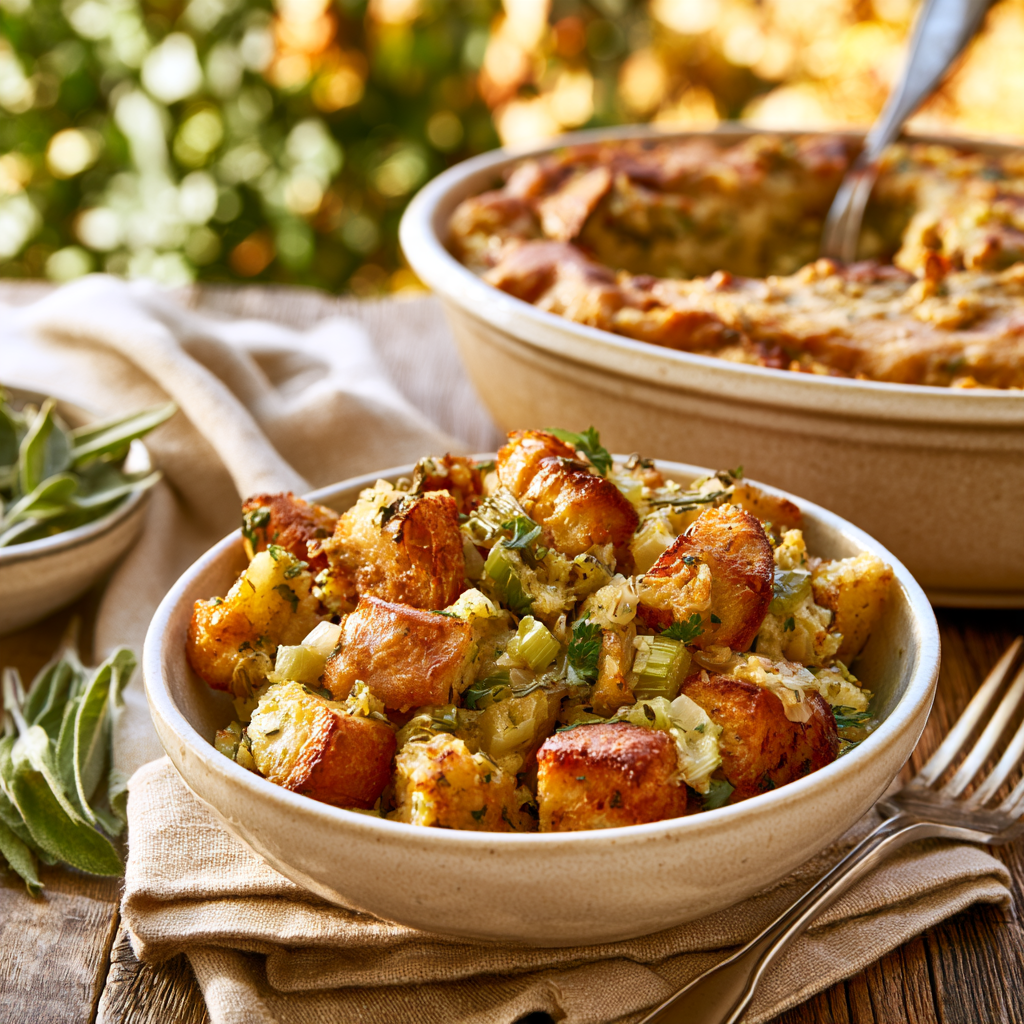
- Step 11: Rest, Garnish, and Serve Warm. Once the center of the Turkey Stuffing Recipe has reached 165°F (74°C) and the top is lightly golden, carefully remove the casserole from the oven and place it on a heat-resistant surface. Let the stuffing rest for approximately 5–10 minutes so the moisture settles and the bread structure becomes easier to serve. Sprinkle the reserved fresh parsley over the surface for a little color and freshness, then spoon the warm stuffing onto individual plates. Serve alongside roasted turkey, homemade gravy, mashed potatoes, cranberry sauce, green beans, or roasted vegetables. The finished stuffing should have a soft, savory center with distinct bread pieces and a lightly crisp, buttery top.
- Step 12: Store Leftover Turkey Stuffing Safely. After serving, transfer leftover cooked stuffing to shallow, clean, airtight containers and refrigerate within two hours of cooking, or within one hour if the surrounding temperature is above 90°F (32°C). Store at or below 40°F (4°C) and use refrigerated leftovers within 3–4 days. To reheat, place the stuffing in an oven-safe dish with a small splash of broth if needed, cover loosely to preserve moisture, and heat until the center reaches 165°F (74°C). For longer storage, freeze promptly cooled stuffing in freezer-safe containers for approximately 2–3 months for best quality. Thaw in the refrigerator or reheat safely from frozen, and avoid leaving cooked stuffing at room temperature for extended periods.
Notes
1. Use the Right Bread for the Best Texture
For traditional homemade turkey stuffing, choose sturdy white country bread, French bread, or a combination of white bread and sourdough. Bread that holds its structure absorbs broth more evenly and produces a pleasant contrast between tender pieces and golden edges. Avoid using extremely soft fresh bread without drying it first, because it can become pasty when mixed with poultry broth. Never use moldy bread, even if you plan to dry it in the oven. For a heartier variation, replace some white bread with whole-grain bread, keeping in mind that different breads may require different amounts of broth.
2. Dry the Bread Cubes Thoroughly
Properly dried bread is one of the most important secrets to a successful Turkey Stuffing Recipe. Cut the bread into approximately ¾–1-inch cubes, spread them over baking sheets, and dry at 275°F (135°C) for around 20–25 minutes, stirring halfway through. The bread should feel dry without becoming heavily browned. Dried bread absorbs the butter and herb-infused broth more evenly while preserving distinct pieces in the finished casserole. If your bread is already completely dry, you can skip the drying stage.
3. Sauté the Onions and Celery Slowly
Take time to soften the onions and celery in unsalted butter before combining them with the bread. Cooking the vegetables for approximately 8–10 minutes over medium heat develops a mellow, savory flavor and prevents large pieces of raw onion or crunchy celery from interrupting the stuffing's tender texture. Add the minced garlic near the end because it cooks much faster and can turn bitter if burned. The finished vegetables should be soft, fragrant, and lightly sweet rather than deeply browned.
4. Balance Sage, Thyme, and Parsley
Sage gives classic turkey stuffing its recognizable Thanksgiving aroma, while thyme contributes earthy, savory notes and parsley adds freshness. Use the quantities listed in the recipe as a starting point, then adjust future batches according to your preferences. If replacing fresh herbs with dried herbs, use the specified smaller amounts because dried herbs are generally more concentrated. Avoid adding too much sage, which can overpower the other ingredients. For additional flavor, a small pinch of rosemary may be added without changing the basic recipe.
5. Add Broth Gradually to Avoid Soggy Stuffing
Begin with 2½ cups of warm reduced-sodium turkey or chicken broth, adding it in stages and folding the bread gently between additions. Allow the cubes a little time to absorb the moisture before deciding whether more broth is needed. If the bread remains noticeably dry, add some of the optional extra ½ cup. The mixture should be uniformly moist but should never sit in a pool of liquid. Different bread varieties absorb liquid at different rates, so the final amount of broth is determined by texture rather than a rigid measurement.
6. Choose Reduced-Sodium Broth for Better Seasoning Control
Using reduced-sodium turkey or chicken broth makes it easier to control the final salt level of homemade stuffing. The bread, broth, and butter may already contain sodium, so avoid adding extra salt automatically. Use unsalted butter and begin with the measured ½ teaspoon of fine salt, reducing it if your broth is already well seasoned. Fresh herbs, onions, garlic, and black pepper provide substantial flavor without requiring an overly salty mixture. Taste the cooked stuffing before adding additional seasoning at the table.
7. Bake the Stuffing Separately for Safety and Crispy Edges
Although traditional stuffing may be associated with filling the turkey cavity, baking it separately in a casserole dish is the recommended approach for more uniform cooking and easier temperature monitoring. This method also creates a delicious golden surface with lightly crisp bread edges. Bake at 350°F (175°C), covering initially to preserve moisture and uncovering toward the end to promote browning. Always use a food thermometer to confirm that the center reaches at least 165°F (74°C) before serving, regardless of the appearance of the top.
8. Avoid Packing the Stuffing Into the Baking Dish
When transferring the seasoned bread mixture into the casserole dish, spread it gently into an even layer without pressing it down firmly. Overpacking can create a dense texture and make it harder for the bread pieces to remain distinct. A loosely arranged stuffing offers a pleasant combination of moist, tender interior pieces and lightly golden edges. If you prefer more crispy surfaces, use a reasonably shallow baking dish rather than a deep, narrow container, while still checking that the entire center cooks to 165°F (74°C).
9. Make a Vegetarian Version Without Poultry Broth
To prepare a vegetarian variation, replace the turkey or chicken broth with the same amount of flavorful reduced-sodium vegetable broth. Sautéed mushrooms, caramelized onions, and fresh herbs can contribute additional savory depth without using meat ingredients. Use the same gradual broth-adding technique to control moisture. If preparing the stuffing for vegan guests, replace the butter with a suitable plant-based fat and verify that the bread and broth contain no animal-derived ingredients. This produces a separate vegetarian or vegan variation rather than changing the standard poultry-broth recipe.
10. Add Apples, Mushrooms, or Cranberries for Variety
The classic Turkey Stuffing Recipe is delicious on its own, but you can create seasonal variations with complementary ingredients. Add approximately 1 cup of diced firm apples for gentle sweetness, 1 cup of sautéed mushrooms for deeper savory flavor, or ⅓ cup of dried cranberries for sweet-tart contrast. Cook mushrooms first to evaporate excess moisture, and reduce broth slightly if additions introduce significant liquid. Introduce changes in moderate quantities so the traditional combination of bread, sage, thyme, onions, and celery remains recognizable.
11. Prepare Ingredients Ahead Without Storing Uncooked Mixed Stuffing
For easier Thanksgiving preparation, dry the bread cubes one or two days ahead and store them in an airtight container after cooling. Chop the onions and celery in advance and refrigerate them in separate covered containers. Measure dry herbs ahead of time and keep them ready for cooking day. Do not refrigerate fully assembled uncooked stuffing for baking the next day. Keep wet and dry ingredients separate until ready to combine and bake immediately. If you need a completely prepared casserole ahead of time, cook it thoroughly first, refrigerate promptly, and reheat to 165°F (74°C) before serving.
12. Reheat Leftovers Without Drying Them Out
To reheat leftover Turkey Stuffing Recipe, place the cooked stuffing in an oven-safe dish, add a small splash of turkey or chicken broth if it seems dry, and cover loosely with foil. Heat until the center reaches 165°F (74°C), then uncover briefly if you want to restore some golden edges. Refrigerate leftovers within two hours of cooking, or within one hour above 90°F (32°C), and use refrigerated portions within 3–4 days. Properly cooled cooked stuffing can also be frozen for approximately 2–3 months for best quality. Never rely on smell alone to determine whether leftovers are safe.
13. Use the Correct Internal Temperature
A golden-brown surface does not guarantee that the center of the stuffing is fully cooked. Insert a clean instant-read thermometer into the middle of the casserole, avoiding contact with the baking dish. The stuffing must reach a minimum internal temperature of 165°F (74°C). If the surface is browning too quickly, loosely cover it with foil and continue baking until the center reaches the required temperature. This step is especially important for thick casseroles and dishes made with ingredients that were chilled before assembly.
14. Serve With Classic Thanksgiving Side Dishes
Homemade turkey stuffing is especially delicious with roasted turkey, homemade turkey gravy, buttery mashed potatoes, cranberry sauce, green beans, and roasted carrots. The savory sage-and-thyme flavor also complements roasted chicken and other poultry dishes. For a family-style presentation, serve the stuffing directly from its baking dish, garnished with freshly chopped parsley. A small drizzle of warm gravy adds extra richness, while cranberry sauce brings a pleasant sweet-tart contrast. This stuffing can also be enjoyed throughout the year as a comforting side dish.
15. Create More Crispy Edges Without Drying the Center
If you love the golden, slightly crunchy edges of holiday stuffing, spread the prepared mixture loosely into the baking dish and avoid covering it for longer than necessary. After the initial covered baking period, remove the foil and allow the surface to brown while monitoring the internal temperature. If the top needs extra color after the center reaches 165°F (74°C), continue baking briefly while watching carefully. Do not leave the casserole uncovered for excessive periods, as this may dry the interior. A balance of moisture, oven heat, and exposed surface area gives the best texture.
16. Avoid Common Turkey Stuffing Mistakes
The most common causes of disappointing turkey stuffing are using bread that is too fresh, adding all the broth at once, undercooking the vegetables, packing the mixture tightly, and relying only on oven time rather than internal temperature. Begin with thoroughly dried bread cubes, sauté the aromatics until tender, add warm broth gradually, and fold gently to preserve the bread's structure. Bake the stuffing immediately after assembly and check that the center reaches 165°F (74°C). These simple techniques help create stuffing that is moist, savory, and lightly crisp rather than dry, dense, or soggy.