Ingredients
Equipment
Method
- Step 1: Reduce the Apple Cider. Pour 1 1/2 cups (360 ml) of pasteurized apple cider into a medium saucepan and bring it to a gentle simmer over medium heat. Reduce the heat slightly and continue simmering uncovered for approximately 20–30 minutes, or until the liquid has reduced to exactly 1/2 cup (120 ml). Stir occasionally and monitor the cider closely as it concentrates to prevent scorching. The finished reduction should have a deeper amber color and a noticeably stronger apple aroma. Measure the reduction rather than relying on cooking time alone, then transfer it to a heatproof bowl and allow it to cool to room temperature before using it in the batter.
- Step 2: Preheat the Oven and Prepare the Loaf Pan. Preheat your oven to 350°F (175°C) and position a rack in the center. Lightly grease a standard 9 × 5-inch loaf pan with butter or nonstick baking spray, then line it with parchment paper, allowing a little overhang along the long sides to make removal easier. Make sure the oven has fully reached the required temperature before baking, and set the prepared pan aside while you mix the batter.
- Step 3: Combine the Dry Ingredients. In a medium mixing bowl, whisk together 2 cups of all-purpose flour, baking powder, baking soda, salt, ground cinnamon, nutmeg, and ginger until the mixture is evenly combined. Whisking the dry ingredients separately helps distribute the leavening agents and warm spices throughout the batter, producing a more consistent rise and flavor. Break up any visible flour lumps with the whisk, then set the bowl aside.
- Step 4: Mix the Butter, Sugars, and Eggs. In a large mixing bowl, combine the melted and slightly cooled unsalted butter with the granulated sugar and light brown sugar. Whisk until the sugars are thoroughly moistened and the mixture appears smooth. Add the eggs one at a time, whisking well after each addition until fully incorporated. Continue mixing for approximately 30 seconds after the second egg to produce a uniform mixture. Make sure the melted butter is not hot, as excessive heat can begin cooking the eggs before the batter is prepared.
- Step 5: Add the Apple Cider, Sour Cream, and Vanilla. Add the cooled 1/2 cup of reduced apple cider, full-fat sour cream, and pure vanilla extract to the egg-and-butter mixture. Whisk gently until all the wet ingredients are combined into a smooth, creamy batter. The reduced cider contributes concentrated apple flavor, while the sour cream helps create the tender, moist texture associated with bakery-style loaf cakes. If the sour cream is very cold, allow it to sit briefly at room temperature before mixing for easier incorporation.
- Step 6: Combine the Wet and Dry Ingredients. Gradually add the flour mixture to the wet ingredients in two additions, gently folding with a rubber spatula after each addition. Continue mixing only until the flour is incorporated and no large dry streaks remain. The finished batter should be thick, smooth, and spoonable rather than runny. Avoid vigorous mixing at this stage, as overworking the flour can develop excess gluten and produce a dense, tough loaf instead of the desired soft, cake-like crumb. If using optional chopped walnuts or pecans, gently fold them in at the end.
- Step 7: Transfer the Batter to the Pan. Spoon the apple cider batter into the prepared loaf pan, scraping the mixing bowl with a rubber spatula to transfer the entire mixture. Spread the batter evenly into the corners and smooth the top with the back of the spatula. The pan should have enough empty space above the batter to allow the loaf to rise without overflowing. Gently tap the pan once or twice against the countertop to settle large air pockets, but do not repeatedly bang it, as this may unnecessarily deflate the mixture.
- Step 8: Bake Until Golden and Fully Cooked. Place the filled loaf pan on the center rack of the preheated oven and bake at 350°F (175°C) for approximately 55–70 minutes, with 60 minutes as a useful initial estimate. Begin checking around the 50–55-minute mark, since ovens and loaf pans vary. The loaf is ready when its surface is golden brown, the center feels set, and a toothpick inserted into the middle comes out clean or with a few moist crumbs but no wet batter. If the surface starts browning too quickly before the center is cooked, loosely cover the loaf with aluminum foil and continue baking. Avoid opening the oven unnecessarily during the early stages of baking.
- Step 9: Cool the Loaf Before Coating. Carefully remove the baked apple cider donut loaf from the oven and place the pan on a wire cooling rack. Allow the bread to rest inside the pan for approximately 15 minutes so the structure can firm up. Then use the parchment paper overhang to lift the loaf out and transfer it directly onto the wire rack. The loaf should still be slightly warm when the cinnamon-sugar coating is added, but it should no longer be releasing excessive steam. This short cooling period helps prevent the coating from becoming wet or dissolving immediately.
- Step 10: Prepare the Cinnamon-Sugar Mixture. While the loaf is cooling, combine 1/4 cup granulated sugar with 1 teaspoon ground cinnamon in a small bowl. Add the optional pinch of nutmeg if you prefer a warmer spice flavor, then stir until the mixture is evenly blended. Melt the remaining 2 tablespoons of unsalted butter separately and allow it to cool just enough to handle comfortably. Keep the sugar mixture and melted butter ready so you can coat the loaf while it is still slightly warm.
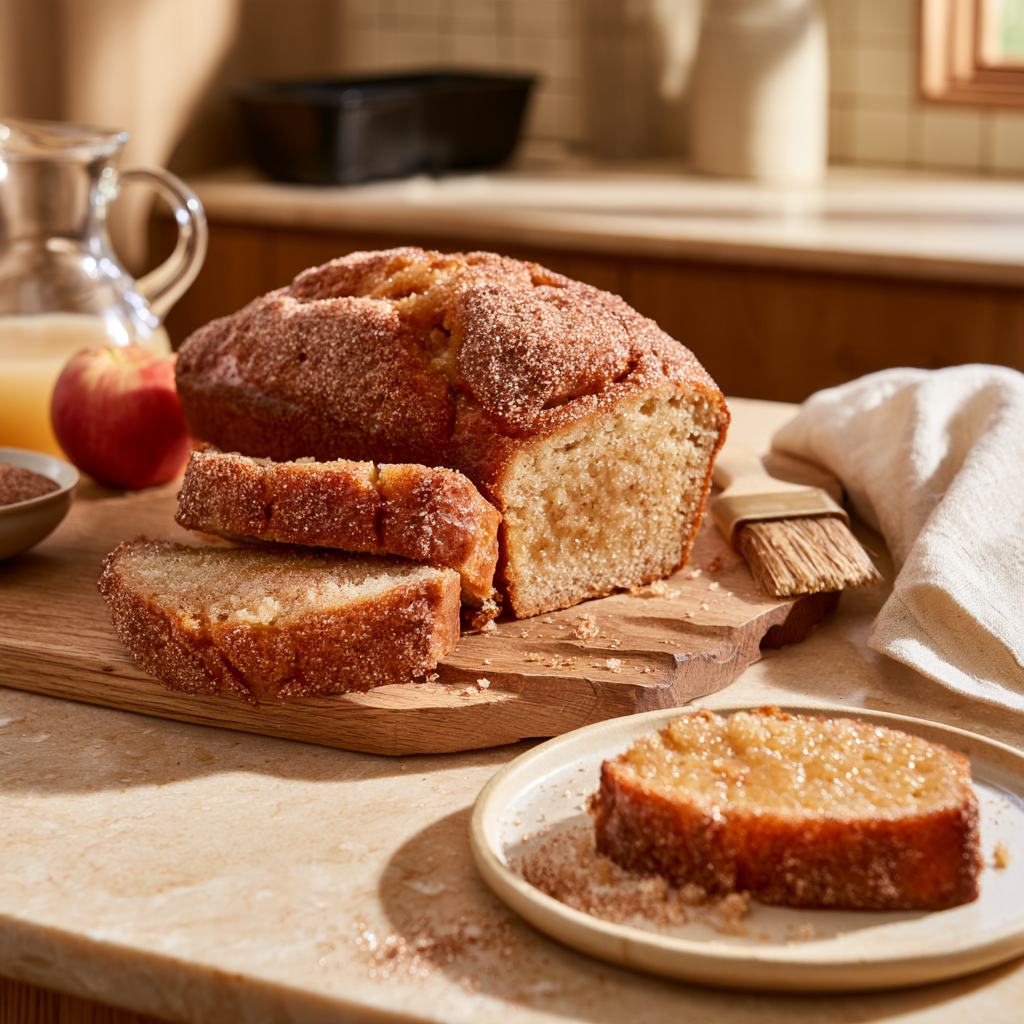
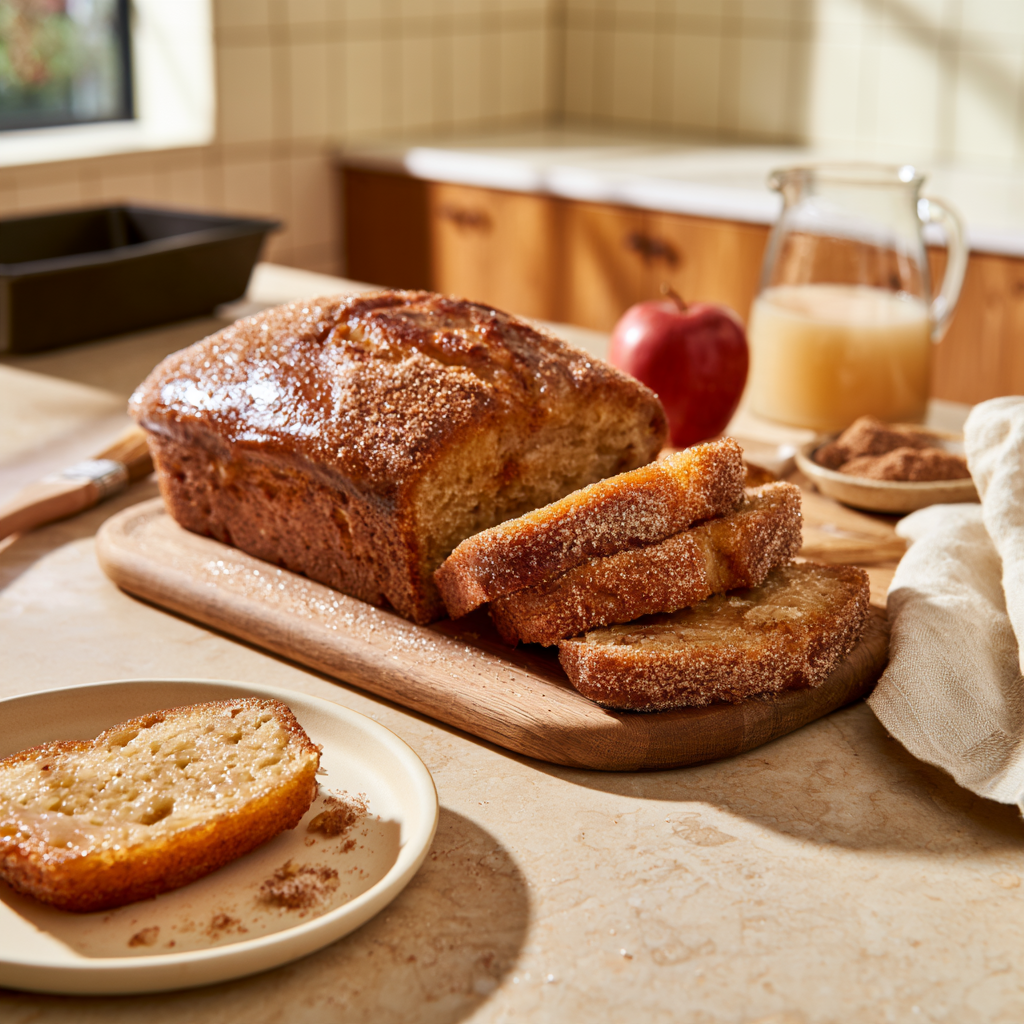
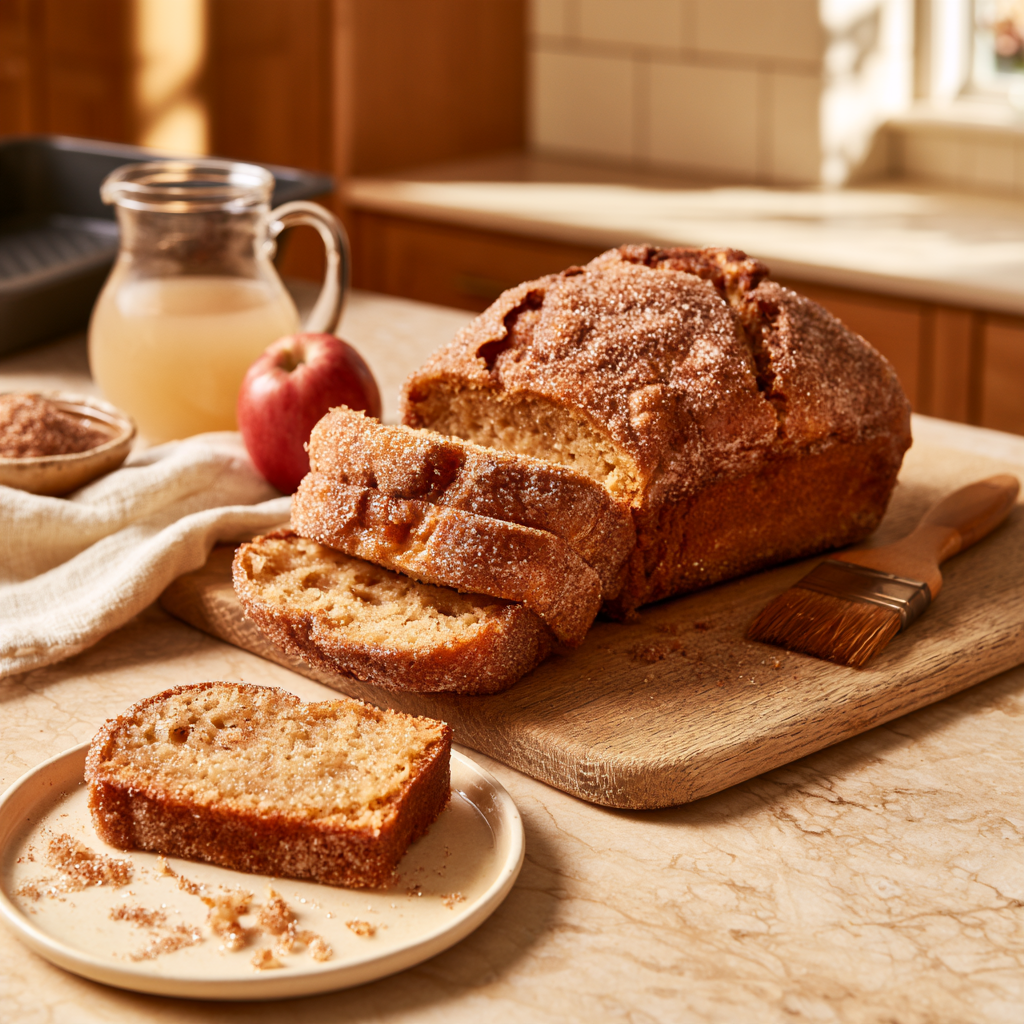
- Step 11: Coat the Apple Cider Donut Loaf. Using a pastry brush, lightly brush the top and exposed sides of the warm loaf with the melted butter, working carefully to cover the surface without soaking the bread. Immediately sprinkle the prepared cinnamon-sugar mixture over the buttered top and sides, gently pressing the sugar into place where necessary. Rotate the loaf carefully to distribute the coating as evenly as possible. Some cinnamon sugar may fall onto the tray beneath the cooling rack, which is normal. The finished loaf should have a fragrant, lightly textured cinnamon-sugar crust reminiscent of traditional apple cider donuts.
- Step 12: Allow the Coating to Set and Serve. Return the coated loaf to the wire cooling rack and allow it to cool for approximately 30 more minutes, or longer if you prefer completely cooled, clean slices. Use a sharp serrated knife to cut the loaf into approximately 12 even slices, taking care not to crush the tender crumb. Serve slightly warm or at room temperature with coffee, tea, or a glass of milk. For the best cinnamon-sugar texture, enjoy the loaf on the day it is baked. Store any leftovers only after the bread has cooled completely.
Notes
Use real, pasteurized, nonalcoholic apple cider for the best flavor. Fresh American-style apple cider generally has a fuller apple taste than ordinary filtered apple juice. Do not substitute apple cider vinegar, as it is much more acidic and unsuitable for this recipe.
Always reduce the apple cider before adding it to the batter. Simmer 1 1/2 cups of cider until exactly 1/2 cup remains. This concentrates the apple flavor without introducing excessive liquid that could make the loaf dense or gummy.
Measure the reduced cider carefully and let it cool completely before mixing it with the eggs and sour cream. Hot cider can affect the wet ingredients and change the batter's consistency.
Do not over-reduce the cider into a thick, sticky syrup. Stop when the specified 1/2 cup remains and remove it from the heat. If the cider reduces too far, its flavor may become overly concentrated or develop scorched notes.
For a moist, tender crumb, use full-fat sour cream. Plain full-fat Greek yogurt may be substituted in the same quantity, although its acidity and moisture content can produce a slightly different result.
Melt the unsalted butter gently and allow it to cool slightly before combining it with the sugar and eggs. The butter should be liquid but not hot.
Use room-temperature eggs whenever possible. They incorporate more evenly with the other wet ingredients and help create a uniform batter.
Avoid overmixing after adding the flour. Fold the ingredients together only until the flour disappears. Excessive mixing can make quick bread dense, chewy, or tough.
For a stronger apple flavor, choose naturally aromatic apple cider and reduce it carefully. Avoid overwhelming the batter with extra cinnamon, nutmeg, or cloves, which can mask the apple taste.
Use a standard 9 × 5-inch loaf pan for the recipe. A smaller pan may create a taller loaf that needs additional baking time and may overflow if filled too high.
Bake the loaf on the center rack at 350°F (175°C). Start checking around 50–55 minutes, but remember that the actual baking time may range from approximately 55–70 minutes depending on your oven and pan.
If the top becomes deeply golden before the center finishes baking, loosely cover it with aluminum foil and continue baking until a toothpick inserted into the center shows no raw batter.
For the classic apple cider donut finish, brush the slightly warm loaf with melted butter before applying cinnamon sugar. This helps the coating stick and creates a delicious donut-style crust.
Do not wrap the bread while it is warm. Trapped steam can make the cinnamon-sugar coating sticky and soften the outer crust.
If making the loaf ahead, consider waiting to apply the cinnamon-sugar coating until shortly before serving. A freshly applied coating generally provides a better texture than one stored overnight.
For extra texture, add up to 1/4 cup of finely chopped walnuts or pecans. Fold them into the batter at the end of mixing, and avoid adding excessive amounts that could alter the loaf's structure.
For a dairy-free variation, use suitable dairy-free baking butter and a compatible plant-based sour cream alternative. Results may vary, so a tested dairy-free formulation is preferable when consistency is important.
For a gluten-free variation, use a gluten-free all-purpose baking blend formulated for quick breads. Different blends absorb moisture differently, so direct substitution may require testing.
Storage: Allow the loaf to cool completely before storing. Keep it in an airtight container at room temperature for approximately 1–2 days in a cool kitchen. Refrigerate for longer storage and enjoy within approximately 4–5 days.
Freezing: For best quality, freeze the cooled loaf without the cinnamon-sugar coating. Wrap individual slices tightly and place them in a freezer-safe container for up to 2–3 months. Thaw and apply a fresh butter and cinnamon-sugar coating before serving.
Serve Apple Cider Donut Loaf with hot coffee, tea, or warm milk. It also makes a lovely homemade gift or addition to a Thanksgiving brunch or fall dessert table.