

Imagine the irresistible aroma of freshly baked apple cider donuts filling your kitchen, but in the form of a beautifully soft, buttery loaf! This Apple Cider Donut Loaf brings together everything you love about classic apple cider donuts: warm cinnamon, sweet apple flavor, a tender crumb, and a deliciously crunchy cinnamon-sugar coating. It’s the ultimate homemade fall treat, perfect for cozy mornings, afternoon coffee breaks, and holiday gatherings.
The secret to this Apple Cider Donut Loaf Recipe is reducing fresh apple cider to concentrate its naturally sweet, fruity flavor. Combined with melted butter, brown sugar, vanilla, and warm fall spices, it creates an incredibly moist cake-like bread that tastes just like your favorite apple orchard donuts. After baking, the golden loaf is brushed with butter and generously coated in cinnamon sugar for that signature donut-shop finish.
If you love comforting apple desserts, our Double Apple Cake is another delicious way to celebrate apple season. For more cozy autumn baking inspiration, try our Pumpkin Bread with Brownie Chunks, combining tender pumpkin bread with fudgy chocolate pieces.
Best of all, this easy apple cider donut bread requires no yeast, frying, or complicated techniques. Simply mix, bake, coat, and slice! Whether served warm with coffee or prepared for a festive brunch, every bite delivers the comforting flavors of fall in one irresistible homemade loaf.
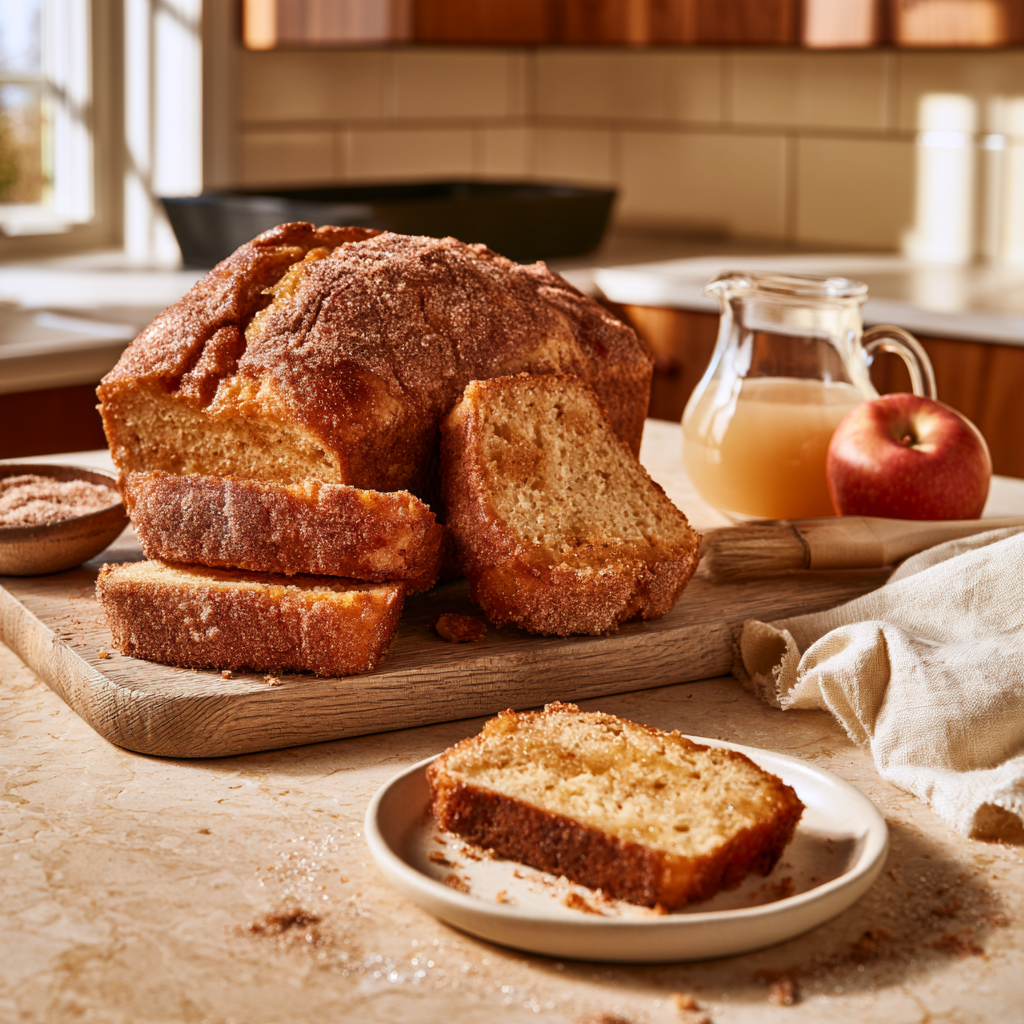
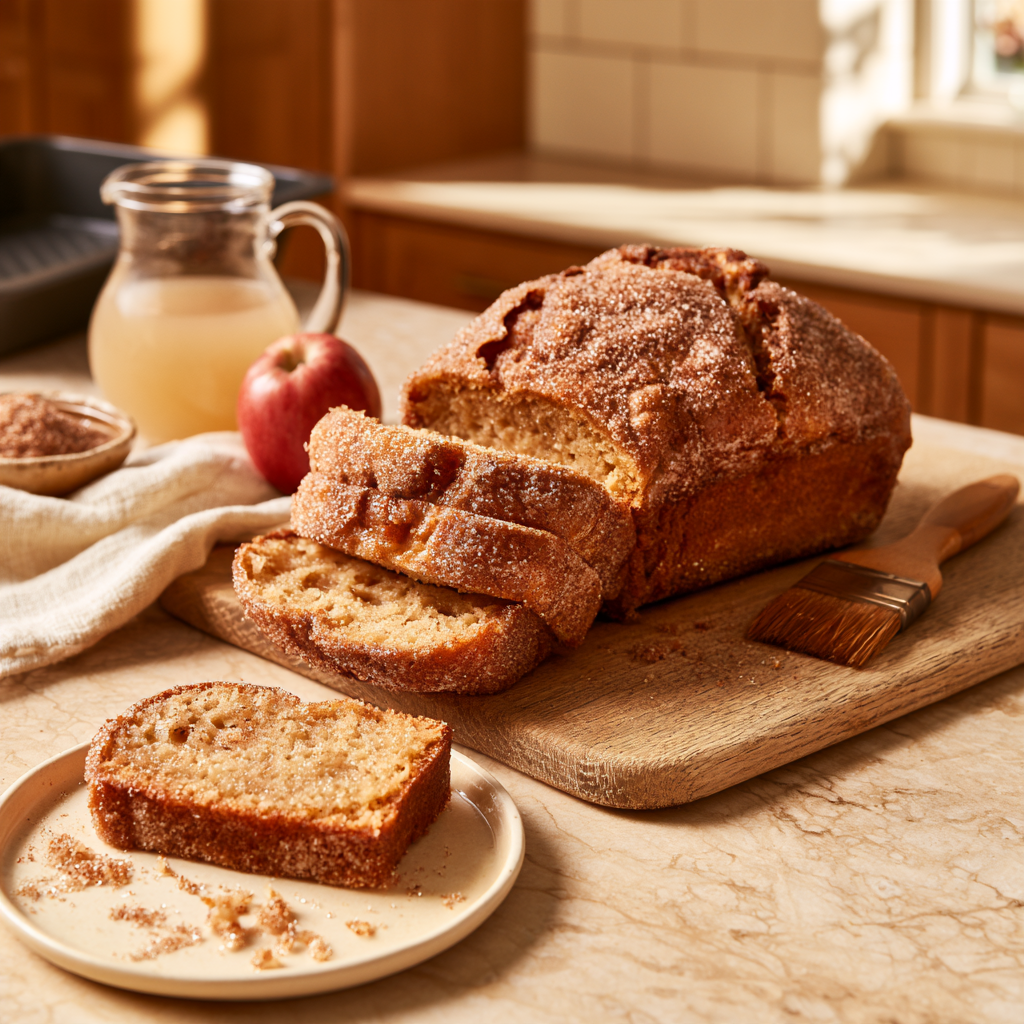
Apple Cider Donut Loaf
Equipment
- 9 × 5-inch loaf pan
- Medium saucepan
- Large mixing bowl
- Medium mixing bowl
- Whisk
- Rubber spatula
- Electric hand mixer (optional)
- Measuring cups
- Measuring spoons
- Kitchen scale (optional)
- Fine-mesh sieve (optional)
- Parchment paper
- Pastry brush
- Small bowl for cinnamon-sugar topping
- Toothpick or wooden skewer
- Wire cooling rack
- Serrated knife
Ingredients
- For the Apple Cider Reduction:
- 1 1/2 cups 360 ml pasteurized, nonalcoholic apple cider, reduced to 1/2 cup (120 ml)
- For the Apple Cider Donut Loaf:
- 2 cups 250 g all-purpose flour
- 1 teaspoon baking powder
- 1/2 teaspoon baking soda
- 1/2 teaspoon fine salt
- 1 1/2 teaspoons ground cinnamon
- 1/4 teaspoon ground nutmeg
- 1/4 teaspoon ground ginger
- 1/2 cup 113 g unsalted butter, melted and slightly cooled
- 3/4 cup 150 g granulated sugar
- 1/4 cup 50 g packed light brown sugar
- 2 large eggs room temperature
- 1/2 cup 120 g full-fat sour cream
- 1/2 cup 120 ml reduced apple cider, cooled
- 1 teaspoon pure vanilla extract
- For the Cinnamon-Sugar Coating:
- 1/4 cup 50 g granulated sugar
- 1 teaspoon ground cinnamon
- 2 tablespoons 28 g unsalted butter, melted
- Optional:
- 1/8 teaspoon ground nutmeg for the cinnamon-sugar coating
- 1/4 cup finely chopped walnuts or pecans
Instructions
- Step 1: Reduce the Apple Cider. Pour 1 1/2 cups (360 ml) of pasteurized apple cider into a medium saucepan and bring it to a gentle simmer over medium heat. Reduce the heat slightly and continue simmering uncovered for approximately 20–30 minutes, or until the liquid has reduced to exactly 1/2 cup (120 ml). Stir occasionally and monitor the cider closely as it concentrates to prevent scorching. The finished reduction should have a deeper amber color and a noticeably stronger apple aroma. Measure the reduction rather than relying on cooking time alone, then transfer it to a heatproof bowl and allow it to cool to room temperature before using it in the batter.
- Step 2: Preheat the Oven and Prepare the Loaf Pan. Preheat your oven to 350°F (175°C) and position a rack in the center. Lightly grease a standard 9 × 5-inch loaf pan with butter or nonstick baking spray, then line it with parchment paper, allowing a little overhang along the long sides to make removal easier. Make sure the oven has fully reached the required temperature before baking, and set the prepared pan aside while you mix the batter.
- Step 3: Combine the Dry Ingredients. In a medium mixing bowl, whisk together 2 cups of all-purpose flour, baking powder, baking soda, salt, ground cinnamon, nutmeg, and ginger until the mixture is evenly combined. Whisking the dry ingredients separately helps distribute the leavening agents and warm spices throughout the batter, producing a more consistent rise and flavor. Break up any visible flour lumps with the whisk, then set the bowl aside.
- Step 4: Mix the Butter, Sugars, and Eggs. In a large mixing bowl, combine the melted and slightly cooled unsalted butter with the granulated sugar and light brown sugar. Whisk until the sugars are thoroughly moistened and the mixture appears smooth. Add the eggs one at a time, whisking well after each addition until fully incorporated. Continue mixing for approximately 30 seconds after the second egg to produce a uniform mixture. Make sure the melted butter is not hot, as excessive heat can begin cooking the eggs before the batter is prepared.
- Step 5: Add the Apple Cider, Sour Cream, and Vanilla. Add the cooled 1/2 cup of reduced apple cider, full-fat sour cream, and pure vanilla extract to the egg-and-butter mixture. Whisk gently until all the wet ingredients are combined into a smooth, creamy batter. The reduced cider contributes concentrated apple flavor, while the sour cream helps create the tender, moist texture associated with bakery-style loaf cakes. If the sour cream is very cold, allow it to sit briefly at room temperature before mixing for easier incorporation.
- Step 6: Combine the Wet and Dry Ingredients. Gradually add the flour mixture to the wet ingredients in two additions, gently folding with a rubber spatula after each addition. Continue mixing only until the flour is incorporated and no large dry streaks remain. The finished batter should be thick, smooth, and spoonable rather than runny. Avoid vigorous mixing at this stage, as overworking the flour can develop excess gluten and produce a dense, tough loaf instead of the desired soft, cake-like crumb. If using optional chopped walnuts or pecans, gently fold them in at the end.
- Step 7: Transfer the Batter to the Pan. Spoon the apple cider batter into the prepared loaf pan, scraping the mixing bowl with a rubber spatula to transfer the entire mixture. Spread the batter evenly into the corners and smooth the top with the back of the spatula. The pan should have enough empty space above the batter to allow the loaf to rise without overflowing. Gently tap the pan once or twice against the countertop to settle large air pockets, but do not repeatedly bang it, as this may unnecessarily deflate the mixture.
- Step 8: Bake Until Golden and Fully Cooked. Place the filled loaf pan on the center rack of the preheated oven and bake at 350°F (175°C) for approximately 55–70 minutes, with 60 minutes as a useful initial estimate. Begin checking around the 50–55-minute mark, since ovens and loaf pans vary. The loaf is ready when its surface is golden brown, the center feels set, and a toothpick inserted into the middle comes out clean or with a few moist crumbs but no wet batter. If the surface starts browning too quickly before the center is cooked, loosely cover the loaf with aluminum foil and continue baking. Avoid opening the oven unnecessarily during the early stages of baking.
- Step 9: Cool the Loaf Before Coating. Carefully remove the baked apple cider donut loaf from the oven and place the pan on a wire cooling rack. Allow the bread to rest inside the pan for approximately 15 minutes so the structure can firm up. Then use the parchment paper overhang to lift the loaf out and transfer it directly onto the wire rack. The loaf should still be slightly warm when the cinnamon-sugar coating is added, but it should no longer be releasing excessive steam. This short cooling period helps prevent the coating from becoming wet or dissolving immediately.
- Step 10: Prepare the Cinnamon-Sugar Mixture. While the loaf is cooling, combine 1/4 cup granulated sugar with 1 teaspoon ground cinnamon in a small bowl. Add the optional pinch of nutmeg if you prefer a warmer spice flavor, then stir until the mixture is evenly blended. Melt the remaining 2 tablespoons of unsalted butter separately and allow it to cool just enough to handle comfortably. Keep the sugar mixture and melted butter ready so you can coat the loaf while it is still slightly warm.
- Step 11: Coat the Apple Cider Donut Loaf. Using a pastry brush, lightly brush the top and exposed sides of the warm loaf with the melted butter, working carefully to cover the surface without soaking the bread. Immediately sprinkle the prepared cinnamon-sugar mixture over the buttered top and sides, gently pressing the sugar into place where necessary. Rotate the loaf carefully to distribute the coating as evenly as possible. Some cinnamon sugar may fall onto the tray beneath the cooling rack, which is normal. The finished loaf should have a fragrant, lightly textured cinnamon-sugar crust reminiscent of traditional apple cider donuts.
- Step 12: Allow the Coating to Set and Serve. Return the coated loaf to the wire cooling rack and allow it to cool for approximately 30 more minutes, or longer if you prefer completely cooled, clean slices. Use a sharp serrated knife to cut the loaf into approximately 12 even slices, taking care not to crush the tender crumb. Serve slightly warm or at room temperature with coffee, tea, or a glass of milk. For the best cinnamon-sugar texture, enjoy the loaf on the day it is baked. Store any leftovers only after the bread has cooled completely.
Notes
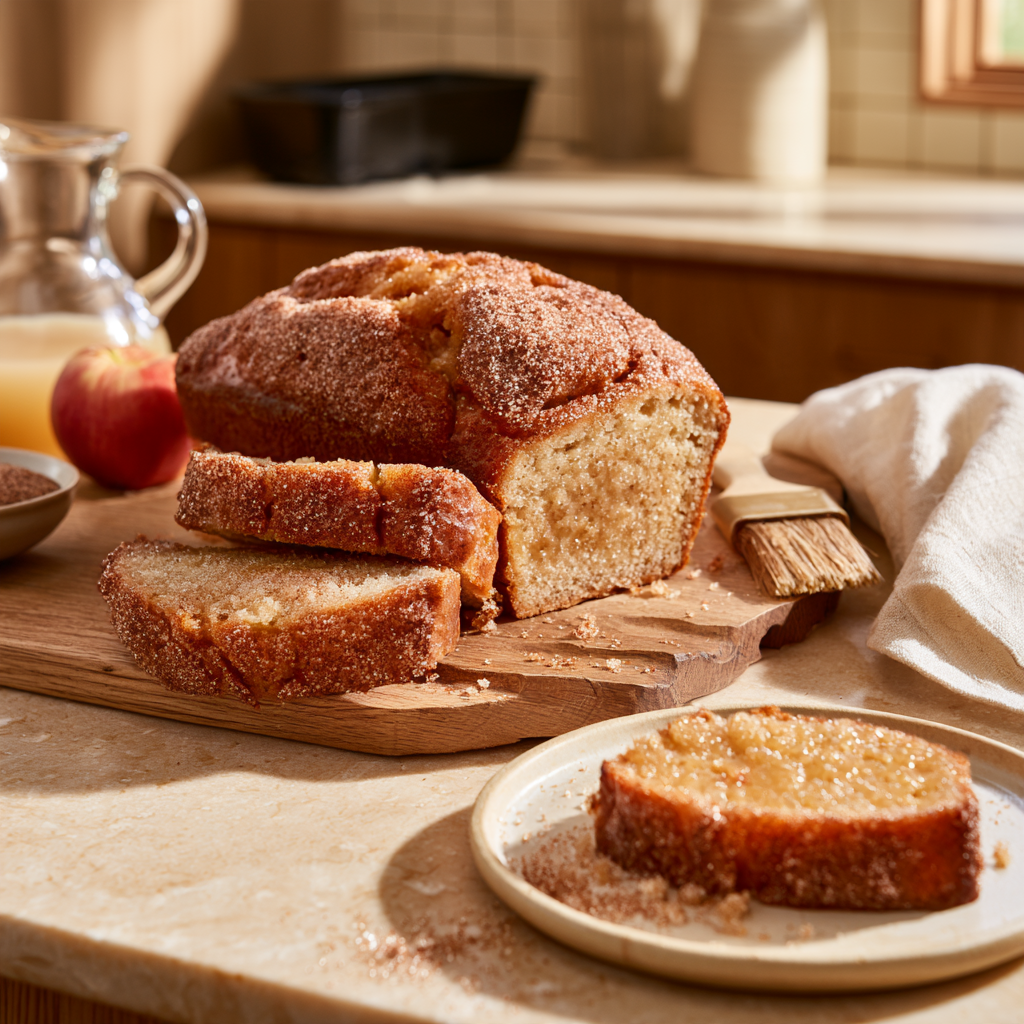
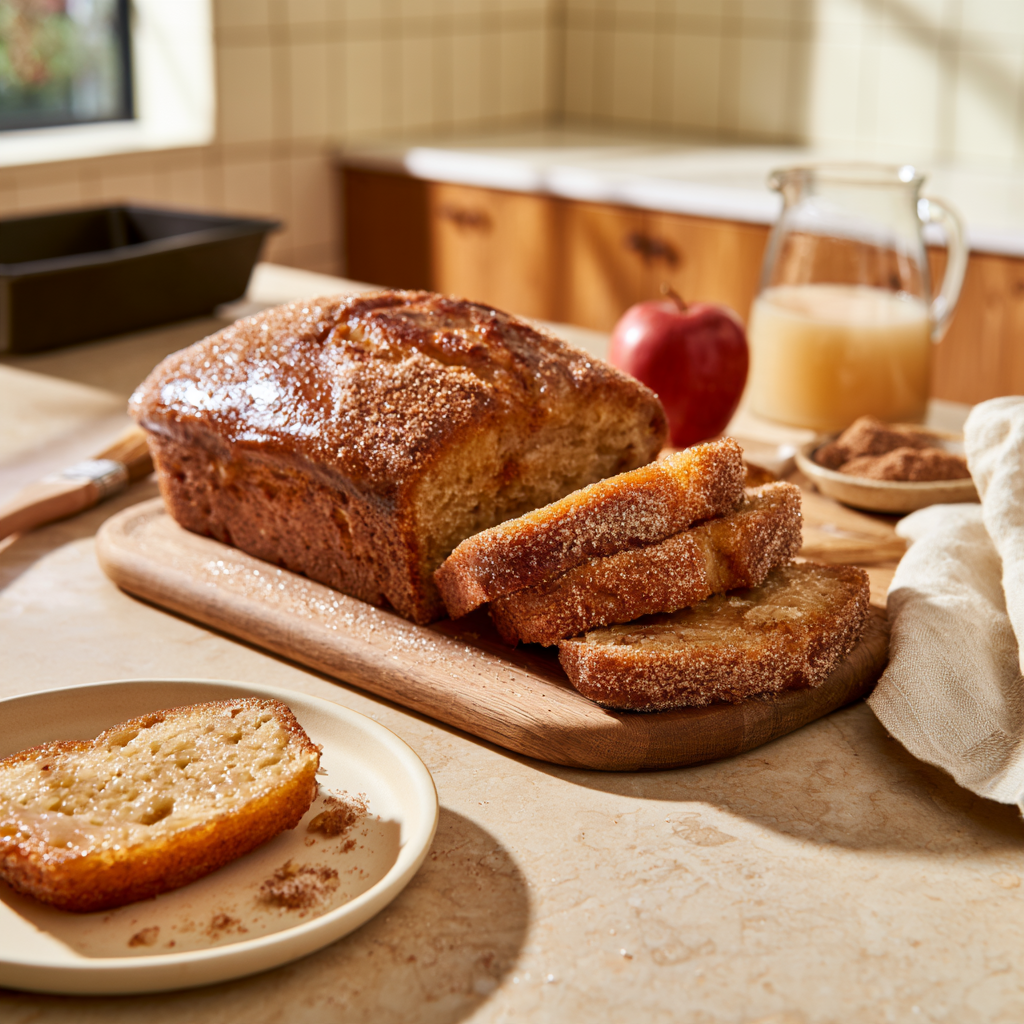
- Origins of Apple Cider Donut Loaf: From New England Orchards to Modern Fall Baking
- The Early History of Apple Cider in America
- How Apple Cider Donuts Became an American Fall Tradition
- From Fried Apple Cider Donuts to Baked Loaf Cakes
- When Was Apple Cider Donut Loaf Invented?
- Why Reducing Apple Cider Makes Such a Difference
- Why Apple Cider Donut Loaf Is So Popular During Fall
- Apple Cider Donuts vs. Apple Cider Donut Loaf: What's the Difference?
- The OoohDelish Take on Apple Cider Donut Loaf
- Health Benefits of Apple Cider Donut Loaf: Nutrition, Ingredients & Healthier Baking Tips
- Apple Cider Donut Loaf Nutrition and Potential Benefits
- 1. Apple Cider Provides Naturally Occurring Plant Compounds
- 2. Baking Instead of Frying Can Change the Fat Content
- 3. Cinnamon Adds Flavor Without Requiring Extra Sugar
- 4. Eggs Contribute Protein and Choline
- 5. Homemade Baking Gives You Greater Control Over Sugar
- 6. Whole-Grain Ingredients Can Add Dietary Fiber
- 7. Homemade Portions Make This Fall Dessert Easier to Enjoy Mindfully
- Is Apple Cider Donut Loaf Healthy?
Origins of Apple Cider Donut Loaf: From New England Orchards to Modern Fall Baking
The Apple Cider Donut Loaf has its roots in one of America’s most beloved autumn traditions: the warm, cinnamon-sugar-coated apple cider donut. Long associated with apple orchards, cider mills, and fall harvest festivals, this classic treat inspired a new generation of homemade desserts that capture its signature flavor without requiring a deep fryer or donut pan.
Although the exact origin of the Apple Cider Donut Loaf isn’t attributed to a single baker, its story combines three important American food traditions: fresh-pressed apple cider, old-fashioned cake donuts, and homemade quick breads. Together, they helped inspire the tender, apple-flavored, cinnamon-sugar-coated loaf that home bakers enjoy today.
The Early History of Apple Cider in America
Long before apple cider donuts appeared in bakeries, apple cider was an important part of North American food culture.
European settlers brought cultivated apple varieties to North America, where orchards became increasingly common. Apples were pressed into cider, used in cooking, and preserved for the colder months.
In early American communities, cider often referred to fermented apple beverages. Over time, fresh, nonalcoholic apple cider also became widely popular, particularly during the autumn harvest.
Today, American apple cider is typically associated with freshly pressed, unfiltered apple juice that retains a fuller apple flavor than many commercially filtered juices.
Its naturally sweet, slightly tart character makes it an excellent ingredient for fall baking.
Apple cider eventually found its way into cakes, glazes, sauces, and donuts, creating some of the comforting seasonal flavors we recognize today.
If you enjoy traditional apple desserts, our Double Apple Cake is another wonderful example of how apples bring moisture, natural sweetness, and comforting flavor to homemade baked goods.
How Apple Cider Donuts Became an American Fall Tradition
The familiar apple cider donut has a surprisingly modern commercial history.
Although Americans had enjoyed fried doughnuts and cider for generations, the combination became especially recognizable during the twentieth century.
A major milestone occurred in 1951, when the Doughnut Corporation of America introduced a product called the Sweet Cider Doughnut.
The company’s concept was simple but appealing: incorporate apple cider directly into a spiced cake donut batter rather than merely serving cider alongside ordinary donuts.
Historical newspaper coverage shows that cider donuts were enjoyed before this commercial introduction, so the company should not necessarily be credited with inventing the very first one.
However, its 1951 promotion helped bring the concept to a broader audience.
Apple cider donuts became especially associated with the northeastern United States, where apple-growing regions in New England and New York developed strong traditions of selling freshly prepared seasonal treats.
Today, visiting an apple orchard often means enjoying warm cider donuts, fresh apple cider, pumpkin displays, and the unmistakable aroma of cinnamon sugar.
That nostalgic experience is exactly what inspired the modern Apple Cider Donut Loaf Recipe.
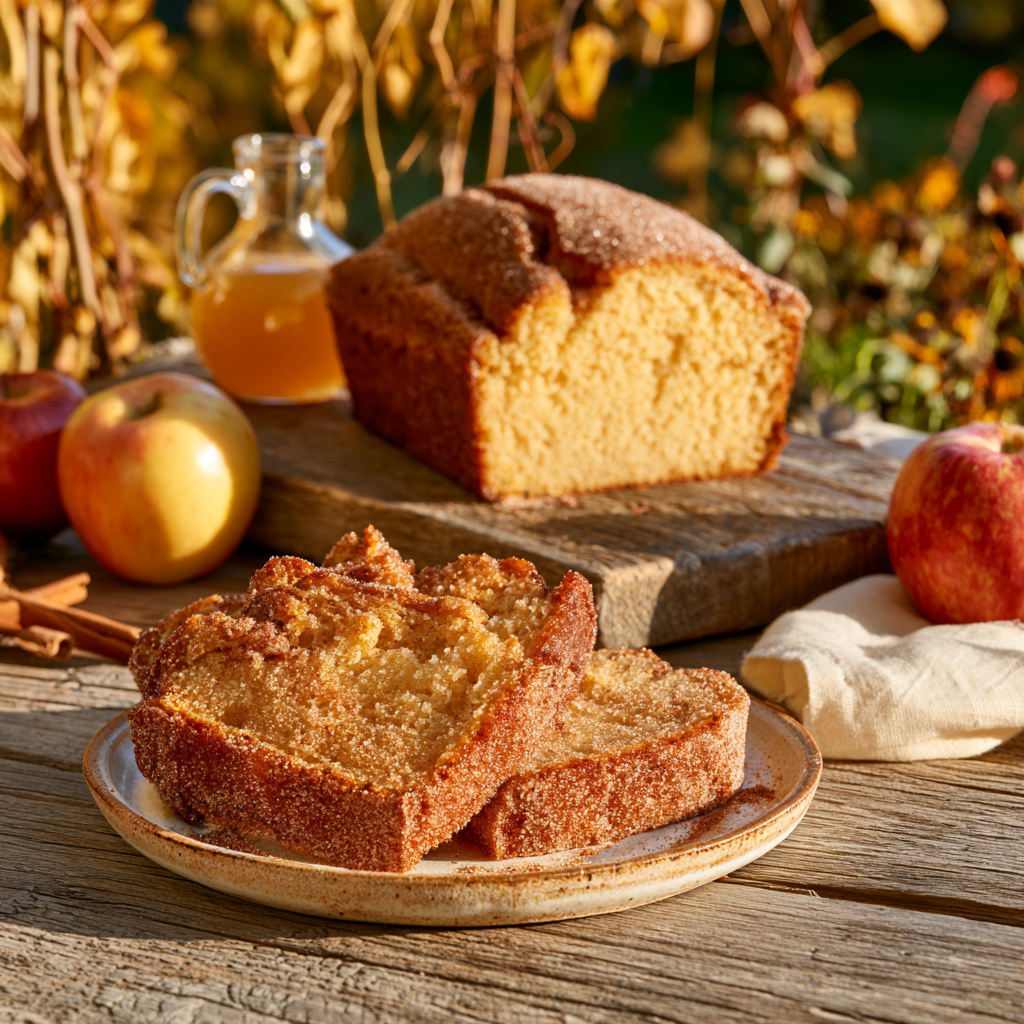
From Fried Apple Cider Donuts to Baked Loaf Cakes
Traditional apple cider donuts are generally made from a cake-style batter containing apple cider, flour, sugar, eggs, spices, and chemical leavening ingredients.
Unlike yeast-raised donuts, cake donuts rely on baking powder or baking soda to create their characteristic texture.
This similarity to quick breads makes apple cider donut flavors particularly suitable for adaptation into a loaf cake.
Instead of shaping individual donuts and frying them in oil, home bakers can prepare a thick, spiced batter and bake it in a standard loaf pan.
The result is a soft, tender bread with the same comforting flavors as an orchard-style cider donut.
The finishing touch is especially important.
A freshly baked loaf can be brushed with melted butter and coated in cinnamon sugar, creating a sweet, lightly textured exterior reminiscent of classic cider donuts.
That’s what makes Apple Cider Donut Loaf different from ordinary apple bread: it isn’t simply flavored with apples. It’s designed to recreate the distinctive taste and cinnamon-sugar finish of a traditional apple cider donut.
When Was Apple Cider Donut Loaf Invented?
There is no widely documented single inventor of Apple Cider Donut Loaf.
Instead, the recipe appears to have developed through modern adaptations of traditional apple cider donuts and American quick breads.
A notable example appeared in October 2020, when Sarah Jampel published an Apple Cider Doughnut Loaf Cake recipe in Bon Appétit.
That version emphasized concentrated apple cider flavor and the nostalgic experience of eating a fresh farmstand donut.
Its publication illustrates how the concept had become an appealing alternative for home bakers who wanted orchard-style flavor in a convenient loaf format.
However, it should not be interpreted as definitive evidence that the loaf was first invented in 2020.
The underlying techniques—baking spiced quick breads, reducing apple cider, and finishing cakes with cinnamon sugar—were already familiar in American baking.
The loaf’s appeal lies in bringing these techniques together in one delicious dessert.
Why Reducing Apple Cider Makes Such a Difference
One of the most important techniques in modern apple cider donut loaf recipes is reducing apple cider before adding it to the batter.
Fresh apple cider contains a large amount of water. When it is gently simmered, some of that water evaporates, concentrating the cider’s sweetness, acidity, and apple flavor.
This produces a more intense apple taste without adding excessive liquid to the loaf batter.
The reduction is particularly useful because the flavors of cinnamon, nutmeg, vanilla, butter, and sugar can otherwise overwhelm a subtle apple flavor.
For the best result, use fresh, nonalcoholic apple cider and simmer it until it reaches the quantity specified in your recipe. Allow it to cool before combining it with ingredients that could be affected by heat.
The goal is a loaf that tastes distinctly of apple cider rather than simply resembling a cinnamon cake.
Why Apple Cider Donut Loaf Is So Popular During Fall
The appeal of Apple Cider Donut Loaf goes beyond its delicious flavor.
It captures the atmosphere of autumn in a recipe that can be prepared at home without specialized equipment.
The smell of cinnamon, apples, and butter filling the kitchen recalls apple picking, countryside farmstands, and cozy weekend baking.
Its soft texture also makes it wonderfully versatile.
Enjoy a thick slice with morning coffee, serve it as part of an autumn brunch, or prepare it for Thanksgiving gatherings.
Unlike traditional fried donuts, which are often at their best shortly after cooking, a properly stored loaf can be sliced and enjoyed over several days.
The cinnamon-sugar coating brings the characteristic donut experience, while the tender interior makes it easy to serve and share.
For another creative fall baking idea, our Pumpkin Bread with Brownie Chunks combines warm pumpkin spices with rich chocolate pieces, offering a different but equally comforting seasonal dessert.
Apple Cider Donuts vs. Apple Cider Donut Loaf: What’s the Difference?
| Feature | Traditional Apple Cider Donuts | Apple Cider Donut Loaf |
|---|---|---|
| Origins | American donut tradition, strongly associated with northeastern orchards | Modern adaptation of cider donuts and quick breads |
| Preparation | Usually fried, although baked versions exist | Baked in a loaf pan |
| Main Flavor | Apple cider, cinnamon, and nutmeg | Concentrated apple cider and warm spices |
| Texture | Tender cake donut with a characteristic exterior | Moist, soft, cake-like crumb |
| Finishing | Cinnamon sugar or glaze | Butter and cinnamon-sugar coating |
| Equipment | Fryer or donut pan, depending on method | Standard loaf pan |
| Best Occasion | Orchard visits, autumn snacks, festivals | Brunch, holidays, afternoon coffee, homemade gifts |
The OoohDelish Take on Apple Cider Donut Loaf
At OoohDelish, our Apple Cider Donut Loaf celebrates the familiar flavors of American apple orchard baking while keeping the preparation convenient for home cooks.
Instead of making individual donuts, we bring together concentrated apple cider, warm fall spices, a tender loaf batter, and a buttery cinnamon-sugar coating.
The result is a homemade treat that combines the best qualities of two favorites: the unmistakable flavor of apple cider donuts and the satisfying softness of a freshly baked quick bread.
The real secret is balance. The apple cider should remain noticeable, the spices should complement rather than overpower it, and the cinnamon-sugar coating should provide just enough sweetness to recreate that classic donut-shop experience.
The bottom line: Apple Cider Donut Loaf may be a modern baking adaptation, but its flavors are deeply connected to American orchard traditions. Every slice celebrates the comforting combination of fresh apple cider, cinnamon, butter, and homemade baking that has made cider donuts an enduring fall favorite.
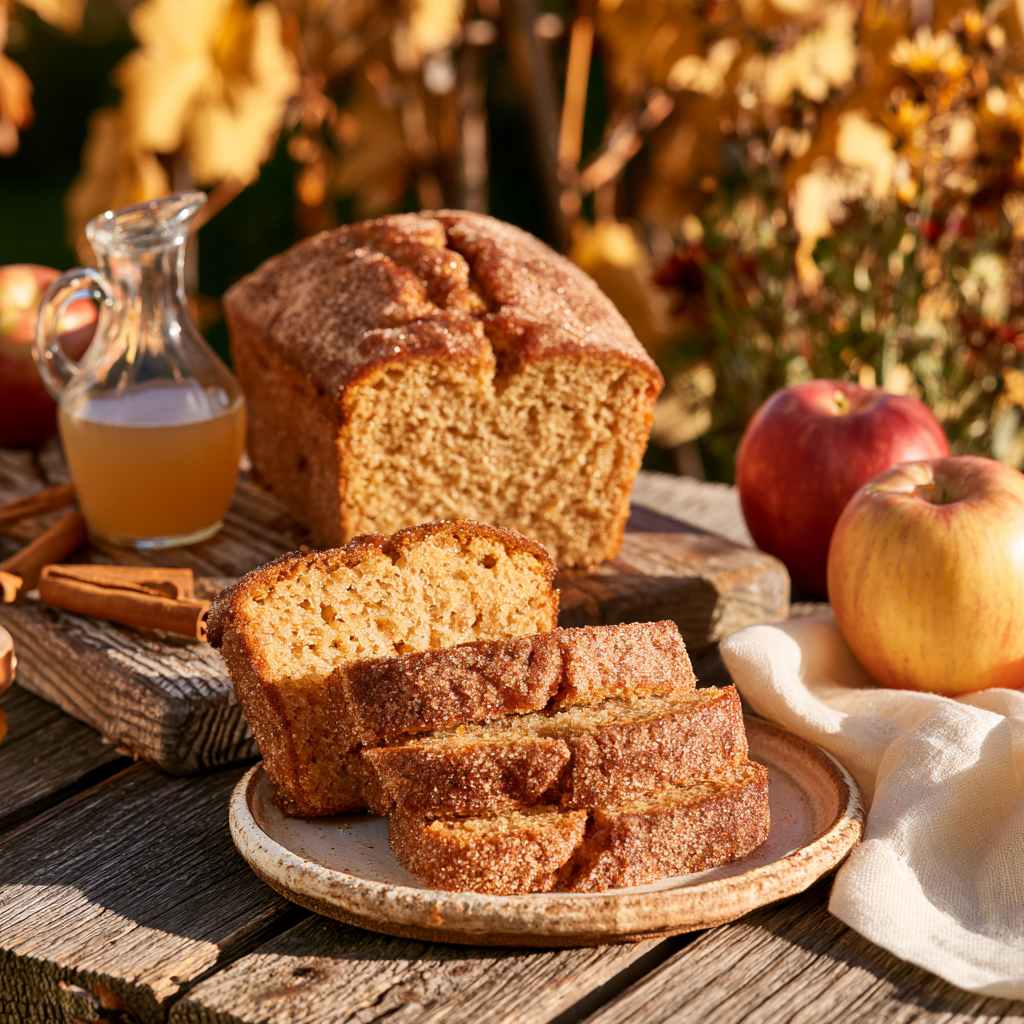
Health Benefits of Apple Cider Donut Loaf: Nutrition, Ingredients & Healthier Baking Tips
There’s something irresistible about a warm slice of Apple Cider Donut Loaf, especially when it’s packed with concentrated apple cider flavor, fragrant cinnamon, and a buttery cinnamon-sugar coating. While this cozy fall favorite is primarily a sweet treat, several of its ingredients contribute nutrients and make it an interesting alternative to traditional fried apple cider donuts.
Fresh apple cider contains naturally occurring plant compounds and small amounts of minerals, while eggs provide protein and essential nutrients. Warm spices, including cinnamon and nutmeg, create a rich flavor without requiring additional sweeteners. And because this homemade Apple Cider Donut Loaf is baked rather than fried, you can control the ingredients, fat content, and portion sizes.
However, it’s important to understand that Apple Cider Donut Loaf is still a dessert, typically containing flour, sugar, butter or oil, and a sweet cinnamon-sugar topping. Its nutritional value depends on the specific recipe and how much you enjoy at a time.
Let’s explore what makes this delicious autumn loaf special, the nutrients its ingredients provide, and simple ways to make it a little more balanced.
Apple Cider Donut Loaf Nutrition and Potential Benefits
| Ingredient | Nutritional Contribution | Why It Matters |
|---|---|---|
| Apple Cider | Contains natural apple sugars, small amounts of potassium, and apple-derived plant compounds. | Provides the signature fruity flavor and some micronutrients. |
| Cinnamon | Contains aromatic plant compounds and polyphenols. | Adds warm flavor without contributing significant sugar or calories in typical recipe quantities. |
| Nutmeg | Contains naturally occurring aromatic compounds. | Enhances sweetness perception and adds depth of flavor. |
| Eggs | Supply protein, choline, and other essential nutrients. | Help create structure while contributing modest nutritional value. |
| Milk or Yogurt, if used | May supply protein, calcium, and other nutrients. | Adds moisture and tenderness to the loaf. |
| Unsaturated Vegetable Oil, if used | Supplies fats needed for normal body functions. | Can provide a different fat profile from a recipe made entirely with butter. |
| Optional Whole-Wheat Flour | Provides more dietary fiber than refined white flour. | Can improve fiber content when substituted appropriately. |
| Homemade Preparation | Allows you to adjust sugar, toppings, and ingredient quantities. | Offers flexibility to suit your preferences and dietary needs. |
1. Apple Cider Provides Naturally Occurring Plant Compounds
The defining ingredient in an authentic Apple Cider Donut Loaf is fresh apple cider.
Unlike apple cider vinegar, which is fermented into an acidic condiment, the apple cider used in this recipe is a sweet, nonalcoholic beverage made from pressed apples.
Apples naturally contain plant compounds called polyphenols. Some of these compounds may remain in apple cider, although their amounts depend on the apple varieties, processing methods, and storage conditions.
Polyphenols are studied for their antioxidant properties, but that doesn’t mean eating a slice of apple cider loaf has been proven to prevent disease.
Apple cider also supplies small amounts of certain minerals, including potassium.
However, it contains far less fiber than a whole apple because much of the fruit’s fibrous material is removed during pressing.
OoohDelish Tip: Choose unsweetened, pasteurized apple cider with a pronounced apple flavor. Reducing it gently before baking concentrates its flavor, allowing the apple taste to stand out alongside the cinnamon and sugar. Reduction also concentrates its natural sugars, so it doesn’t turn cider into a low-sugar ingredient.
If you enjoy baking with whole apples, our Double Apple Cake combines fresh apples and applesauce for a deliciously moist dessert with additional fruit texture.
2. Baking Instead of Frying Can Change the Fat Content
Traditional apple cider donuts are commonly deep-fried, giving them a tender interior and distinctive golden exterior.
Apple Cider Donut Loaf takes a different approach.
Instead of immersing individual donuts in hot oil, the batter is baked in a loaf pan until tender and fully cooked.
This eliminates the deep-frying stage and the oil absorbed during that process.
A baked loaf may contain less fat than a comparable fried donut recipe, although this isn’t guaranteed. The actual difference depends on how much butter or oil goes into the batter and how generously the loaf is coated afterward.
For example, a loaf made with substantial quantities of butter and a thick cinnamon-sugar coating can still be calorie-dense.
The practical benefit of home baking is being able to measure each ingredient rather than relying on an unknown amount of frying oil.
3. Cinnamon Adds Flavor Without Requiring Extra Sugar
Cinnamon is one of the ingredients that gives Apple Cider Donut Loaf its unmistakable autumn flavor.
Its warm, slightly sweet aroma complements the fruitiness of apple cider and the richness of butter.
Cinnamon contains naturally occurring plant compounds, including polyphenols, but the small amounts typically used in a loaf are primarily valuable for flavor.
Some studies investigate cinnamon’s potential effects on blood glucose regulation. However, research findings are mixed, and eating cinnamon-flavored desserts is not an established way to control blood sugar.
The more useful advantage is that cinnamon, vanilla, and nutmeg can create a satisfying impression of sweetness without requiring large amounts of additional sugar.
For another cozy seasonal dessert featuring warm spices, try our Pumpkin Bread with Brownie Chunks, which combines tender pumpkin bread with rich, fudgy chocolate pieces.
4. Eggs Contribute Protein and Choline
Most homemade apple cider donut loaf recipes include eggs.
Besides helping the batter hold together, eggs provide protein and several important nutrients.
Protein supports normal tissue maintenance, while choline contributes to cell membrane structure and normal nervous system function.
Eggs also help create the soft, cake-like texture that distinguishes this loaf from traditional yeast bread.
However, because the eggs are distributed throughout an entire loaf, a single slice generally provides only a modest amount of protein.
Apple Cider Donut Loaf is therefore better enjoyed as a sweet baked treat rather than relied upon as a high-protein breakfast.
For a more balanced brunch, consider serving a moderate slice alongside plain Greek yogurt and fresh fruit.
5. Homemade Baking Gives You Greater Control Over Sugar
One of the most practical advantages of making Apple Cider Donut Loaf from scratch is controlling the sweetness.
Many recipes use sugar in both the batter and the cinnamon-sugar coating.
Apple cider also contains naturally occurring sugars, and reducing it concentrates those sugars along with its flavor.
This means apple cider donut loaf should not automatically be described as low-sugar simply because it contains fruit.
However, you can make thoughtful adjustments.
For example, a modest reduction in the sugar added to the batter may still produce a delicious loaf, particularly when the cider has a strong flavor.
You can also apply a lighter cinnamon-sugar coating rather than covering the bread with a thick layer.
Remember that sugar affects more than sweetness. It also influences moisture, browning, and tenderness, so significant reductions may change the finished texture.
6. Whole-Grain Ingredients Can Add Dietary Fiber
Traditional Apple Cider Donut Loaf is commonly made with all-purpose flour, which creates a soft, delicate crumb.
While refined flour works beautifully for texture, it generally contains less fiber than whole-grain flour.
If you’re interested in increasing the fiber content, consider replacing approximately one-quarter of the all-purpose flour with whole-wheat pastry flour.
Whole-wheat pastry flour is milled from softer wheat varieties and can provide a more delicate texture than regular whole-wheat flour.
However, whole-grain flour absorbs liquid differently, so the loaf may become slightly denser or require small adjustments.
OoohDelish Tip: Start with a partial flour substitution rather than replacing all the flour at once. This helps preserve the signature soft, cake-like texture of apple cider donut bread.
7. Homemade Portions Make This Fall Dessert Easier to Enjoy Mindfully
Apple Cider Donut Loaf has another practical advantage: it’s easy to slice and share.
Unlike individual bakery donuts, which come in predetermined serving sizes, a homemade loaf lets you decide how large each portion should be.
Cutting a standard loaf into 10–12 slices can make it convenient for family gatherings, brunches, or afternoon snacks.
A smaller slice paired with fresh fruit or a protein-rich food can be a satisfying way to enjoy the dessert as part of a varied diet.
The goal isn’t to eliminate favorite seasonal treats. It’s to enjoy them in portions that fit your appetite and nutritional needs.
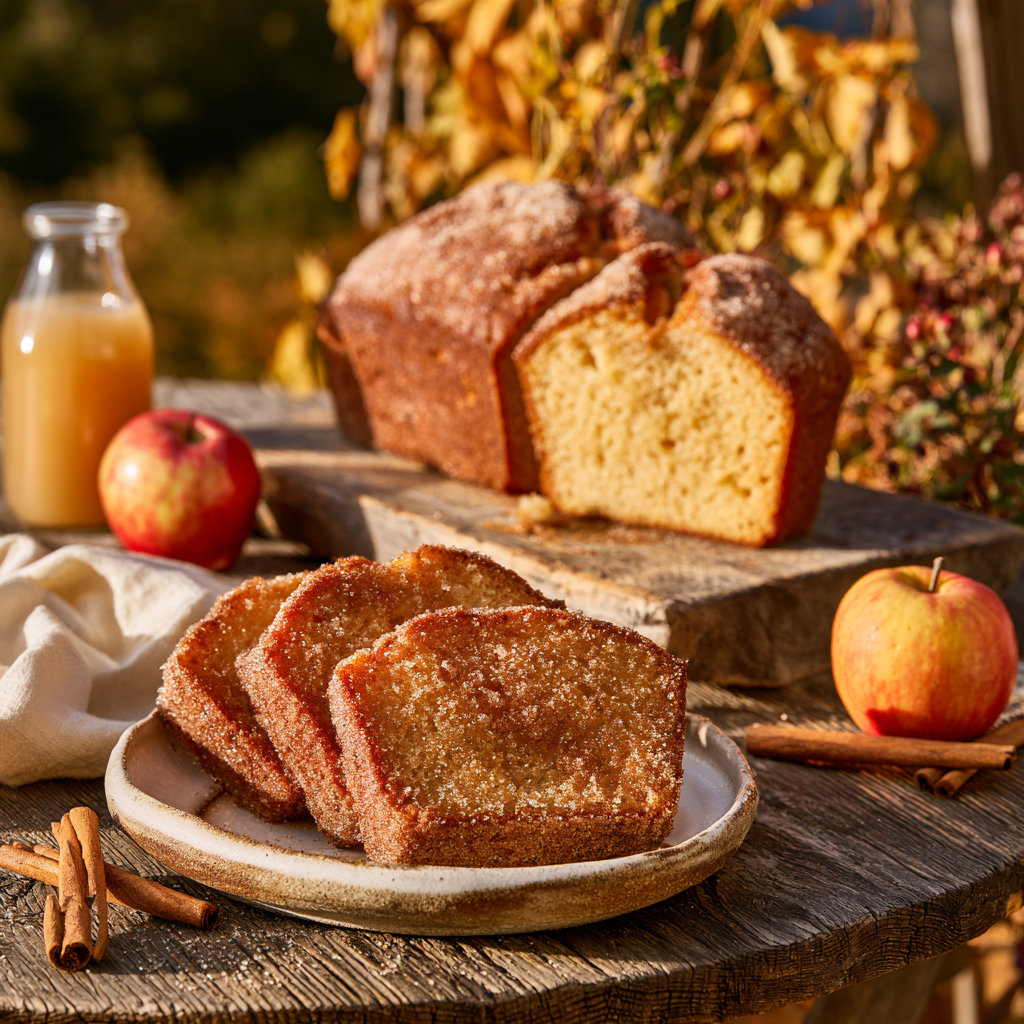
Is Apple Cider Donut Loaf Healthy?
Apple Cider Donut Loaf can fit into a balanced diet, but it shouldn’t be classified as a health food simply because it contains apple cider.
Its main nutritional characteristics depend on the quantities of sugar, butter or oil, flour, eggs, and cider used.
Here is what to consider before enjoying a slice.
| Nutritional Factor | What You Should Know |
|---|---|
| Calories | Depend on the recipe and serving size; a large slice with generous coating will contain more. |
| Carbohydrates | Come primarily from flour, apple cider, and sugar. |
| Natural Sugars | Apple cider contributes fruit-derived sugars. |
| Added Sugars | Usually come from the batter and cinnamon-sugar topping. |
| Fat | Depends on butter, oil, and finishing ingredients. |
| Protein | Eggs and flour provide modest amounts. |
| Fiber | Typically limited when made with white flour and strained cider. |
| Potassium | Apple cider contributes some, but the amount per slice is generally modest. |
The precise nutritional values should be calculated using the finished recipe and the actual number of servings. Without those measurements, assigning specific calories or grams of sugar would be unreliable.
How to Make Apple Cider Donut Loaf a Little Healthier Without Losing Flavor
You don’t need to completely transform this traditional fall dessert to make a few meaningful improvements.
- Use real, unsweetened apple cider. It gives the loaf a more authentic flavor without unnecessary added sweeteners.
- Reduce the cider for flavor, not for health claims. Simmering concentrates apple flavor, but also concentrates natural sugars.
- Try a modest sugar reduction. Reducing a small portion of the batter’s added sugar may work without dramatically changing texture.
- Experiment with whole-wheat pastry flour. Replacing a portion of refined flour can increase fiber while retaining a relatively tender crumb.
- Choose a lighter cinnamon-sugar coating. A thin, evenly distributed coating can provide the classic donut flavor without excess topping.
- Consider unsaturated vegetable oil where appropriate. Replacing some butter in a compatible recipe can change the fat profile, although butter contributes characteristic flavor.
- Serve with nutritious accompaniments. Plain yogurt, fresh apples, or other fruit can make a brunch or snack more balanced.
For a delicious alternative that incorporates fresh fruit directly into the batter, explore our Double Apple Cake, made with chopped apples and unsweetened applesauce.
Apple Cider Donut Loaf vs. Traditional Apple Cider Donuts
| Feature | Apple Cider Donut Loaf | Traditional Fried Apple Cider Donuts |
|---|---|---|
| Cooking Method | Baked | Typically deep-fried |
| Apple Flavor | Often uses reduced cider | Uses apple cider in the dough or batter |
| Added Fat | Comes from the batter and finishing ingredients | Comes from the dough and absorbed frying oil |
| Texture | Moist, soft, cake-like | Tender interior with a fried exterior |
| Sugar Coating | Applied to the finished loaf | Typically applied to individual donuts |
| Portion Control | Can be sliced into different sizes | Usually served as individual donuts |
| Overall Nutrition | Depends on ingredients and slice size | Depends on ingredients, frying method, and donut size |
Neither version is automatically healthier in every situation. Compare their complete ingredients and portion sizes rather than assuming baking always produces fewer calories.
Can You Enjoy Apple Cider Donut Loaf While Watching Your Weight?
Yes. A slice of homemade Apple Cider Donut Loaf can fit into a weight-management eating plan when it aligns with your overall nutritional needs.
What matters most is your broader eating pattern, including total energy intake, dietary variety, and portion sizes.
Because this loaf contains flour, cider, and added sugar, it can be a substantial source of carbohydrates. People managing diabetes or monitoring blood glucose may need to account for the portion’s total carbohydrate content.
Enjoying it alongside protein-rich foods and other nutritious ingredients may create a more balanced meal, but doing so does not cancel out the loaf’s sugar or carbohydrate content.
If you’re preparing the recipe for children, pregnant people, or others more vulnerable to foodborne illness, choose pasteurized apple cider or cider otherwise treated for safety.
OoohDelish Verdict: Is Apple Cider Donut Loaf Good for You?
At OoohDelish, we believe the best way to enjoy Apple Cider Donut Loaf is to appreciate it as a delicious homemade dessert with some nutritional contributions from its ingredients.
Apple cider supplies natural apple flavor and small amounts of plant compounds and minerals. Eggs contribute protein and choline, while cinnamon and nutmeg create the comforting aroma that makes this recipe so special.
Baking the loaf rather than frying individual donuts also offers greater control over the ingredients and preparation.
However, the finished bread still contains added sugar and fat, particularly when generously coated with cinnamon sugar.
Our recommendation: Use good-quality apple cider, balance the sweetness, enjoy a sensible portion, and serve the loaf as part of a varied eating pattern.
The bottom line: Apple Cider Donut Loaf isn’t a superfood or a low-calorie snack, but it can be a wonderfully satisfying homemade fall treat. Its greatest appeal is the combination of concentrated apple flavor, tender crumb, fragrant spices, and that irresistible cinnamon-sugar finish.
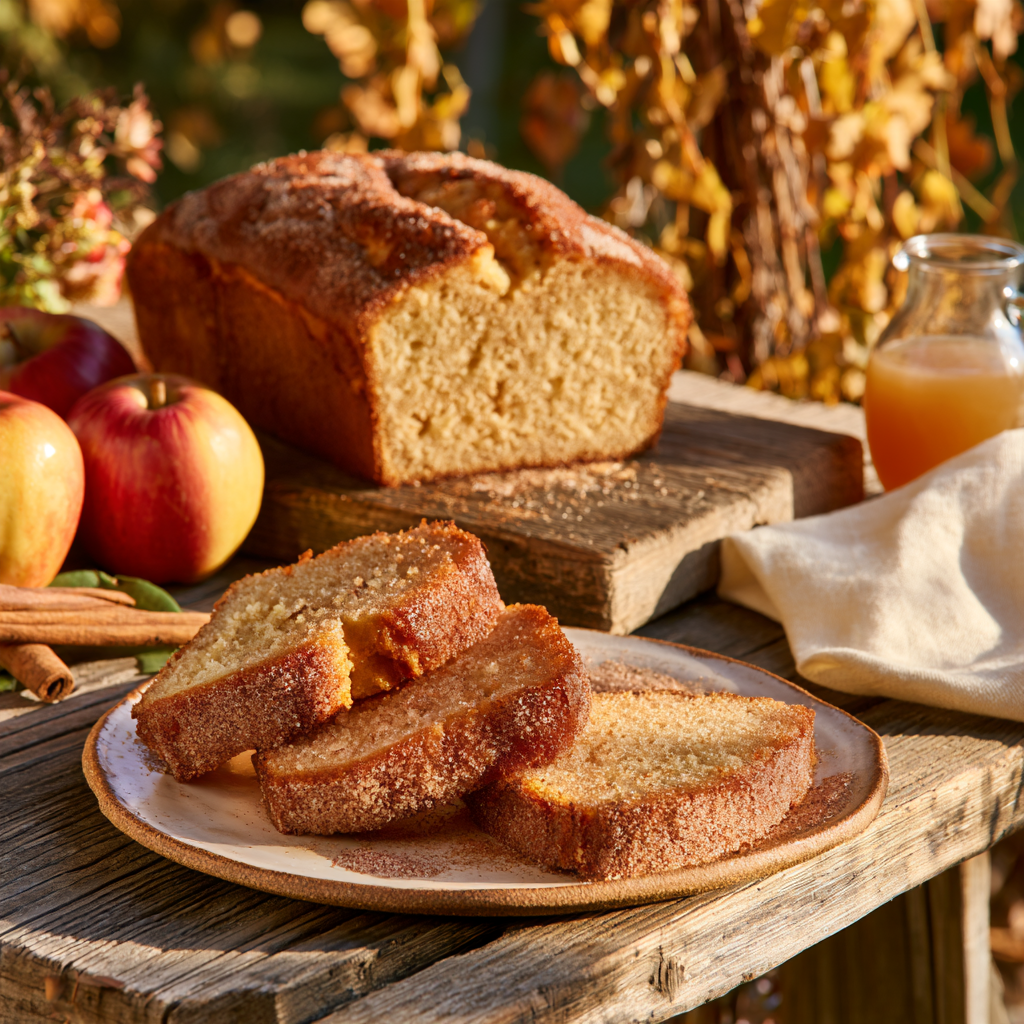
Frequently Asked Questions About Apple Cider Donut Loaf
Want to make a perfectly moist Apple Cider Donut Loaf with rich apple flavor and a delicious cinnamon-sugar coating? These frequently asked questions explain everything from reducing fresh apple cider and choosing the right ingredients to preventing dense bread, checking doneness, and storing your homemade fall treat.
1. What is an Apple Cider Donut Loaf?
Apple Cider Donut Loaf is a moist, cake-like quick bread inspired by traditional American apple cider donuts. It combines apple cider, flour, eggs, sugar, warm spices, and butter or oil to create a tender loaf with comforting autumn flavors. After baking, the bread is typically brushed with melted butter and coated in cinnamon sugar to recreate the signature flavor of orchard-style donuts. Unlike traditional donuts, this recipe is baked in a loaf pan rather than fried.
2. What is the difference between Apple Cider Donut Loaf and apple cider donuts?
The main difference is their shape and cooking method. Traditional apple cider donuts are usually shaped into rings and fried, although baked versions also exist. Apple Cider Donut Loaf is baked in a loaf pan, creating a soft, sliceable quick bread. Both desserts feature apple cider, cinnamon, and a sweet coating, but the loaf has a more cake-like crumb and is easier to prepare without specialized equipment. It’s especially convenient for brunch and family gatherings.
3. Can I use apple juice instead of apple cider in this loaf?
Yes, unsweetened apple juice can be used if fresh apple cider is unavailable, but the finished loaf may have a milder apple flavor. Fresh American-style apple cider is usually less filtered than ordinary apple juice, giving it a fuller fruit flavor. Choose juice without added sugar when possible. Do not substitute apple cider vinegar: it is much more acidic and is not interchangeable with the sweet apple cider used in this baking recipe.
4. Why do you reduce apple cider for Apple Cider Donut Loaf?
Reducing apple cider concentrates its apple flavor by evaporating some of the water. This helps the cider remain noticeable alongside cinnamon, nutmeg, vanilla, and sugar. To prepare a reduction, gently simmer the cider in a saucepan until it reaches the final quantity specified in your recipe. Depending on the starting amount and pan size, this may take approximately 15–25 minutes or longer. Measure the reduced cider and allow it to cool before adding it to the batter.
5. Can I make Apple Cider Donut Loaf without reducing the cider?
You can use unreduced apple cider in a recipe specifically designed for it, but skipping the reduction in a recipe that requires concentrated cider may change the moisture balance and flavor. Simply replacing reduced cider with the same volume of ordinary cider often produces a less intense apple taste. For the most authentic cider-donut flavor, follow the recipe’s reduction instructions and use the measured amount of cooled concentrate.
6. Is unpasteurized apple cider safe to use for baking?
Fresh cider sold at orchards or farmers’ markets may be unpasteurized and can contain harmful bacteria. For dependable food safety, choose pasteurized apple cider or cider that has otherwise been treated to eliminate pathogens. This is especially important for children, pregnant people, older adults, and individuals with weakened immune systems. Follow safe food-handling practices, and don’t assume that a brief reduction step is an adequate substitute for using safely processed cider.
7. Why doesn’t my Apple Cider Donut Loaf taste strongly of apples?
A weak apple flavor usually occurs when the cider hasn’t been reduced sufficiently, the original cider has a mild flavor, or too much cinnamon and other spices overpower the fruit. Use good-quality pasteurized apple cider and reduce it according to the recipe. Avoid adding excessive nutmeg or cloves. Concentrated cider should provide a noticeable apple aroma without needing artificial apple flavoring. For another apple-rich dessert, try our Double Apple Cake , made with fresh apples and applesauce.
8. What temperature should Apple Cider Donut Loaf be baked at?
Many Apple Cider Donut Loaf recipes are baked at 350°F (175°C) in a standard 9-by-5-inch loaf pan. Depending on the ingredients, batter depth, and oven, baking can take roughly 45–70 minutes. Always follow the time specified in your recipe card and begin checking near the lower end of the range. If the loaf browns too quickly, loosely cover the top with aluminum foil while the center finishes baking.
9. How do I know when Apple Cider Donut Loaf is fully baked?
Insert a wooden toothpick or thin skewer into the center of the loaf. It should come out clean or with a few moist crumbs, but without wet batter. The top should appear set, and the bread should spring back gently when touched. If raw batter remains, continue baking and check again after approximately 5 minutes. Avoid relying only on the golden-brown surface because the outside may finish before the center.
10. Why is my Apple Cider Donut Loaf dense, dry, or gummy?
A dense loaf can result from overmixing the batter, adding too much flour, or using expired leavening ingredients. A dry loaf may have baked too long or contained insufficient moisture. A gummy center can indicate underbaking, excessive liquid, or cutting the loaf before it has cooled enough to set. For a tender crumb, measure ingredients accurately, fold the dry ingredients into the wet mixture only until combined, and check the center before removing the loaf from the oven.
11. When should I add the cinnamon-sugar coating?
The cinnamon-sugar coating is usually applied after baking, while the loaf is still slightly warm. Allow the bread to rest in its pan for approximately 10–15 minutes, then carefully transfer it to a wire rack. Brush the top and exposed sides lightly with melted butter before sprinkling or gently pressing on the cinnamon-sugar mixture. The butter helps the sugar adhere, creating the familiar apple cider donut finish without requiring frying.
12. How do you keep the cinnamon-sugar topping from becoming soggy?
To preserve the delicate cinnamon-sugar coating, avoid applying an excessive amount of melted butter or coating the loaf while it’s steaming hot. Let the bread rest briefly, apply a thin butter layer, and allow the topping to settle on a wire rack before wrapping or storing. Covering the loaf while it’s still warm traps steam and can dissolve the sugar. The coating will naturally soften over time, especially during refrigeration, so it’s most appealing on the day of baking.
13. Can I add fresh apples, nuts, or other ingredients?
Yes! Finely diced apples, chopped walnuts, pecans, or a small amount of apple pie spice can create delicious variations. However, fresh apples release moisture during baking, so adding large quantities may make the loaf denser or change the baking time. Start with a modest amount and adjust carefully. For more seasonal baking inspiration, our Libby’s Pumpkin Bread Recipe offers another wonderfully moist loaf featuring warm autumn spices.
14. Can Apple Cider Donut Loaf be made dairy-free or gluten-free?
Both adaptations are possible, although substitutions may affect the finished texture. For a dairy-free version, use a suitable dairy-free baking butter and replace milk, sour cream, or yogurt with compatible plant-based alternatives. For a gluten-free loaf, choose a gluten-free flour blend intended for quick breads. Because different flour blends absorb moisture differently, results may vary. A specifically tested gluten-free or dairy-free formulation will give the most reliable outcome.
15. How long does Apple Cider Donut Loaf last, and can I make it ahead?
Apple Cider Donut Loaf can be prepared ahead of time, making it convenient for autumn brunches and gatherings. Let the loaf cool completely before storing it. A loaf without perishable toppings can generally be kept in an airtight container at room temperature for approximately 1–2 days in a cool kitchen. Refrigerate for longer storage, preferably using within 4–5 days. The cinnamon-sugar coating may soften during storage. If making the loaf in advance, consider applying a fresh coating shortly before serving.
16. Can you freeze Apple Cider Donut Loaf?
Absolutely! Allow the loaf to cool completely, then wrap the whole loaf or individual slices tightly in plastic wrap and place them in an airtight freezer-safe container or bag. Freeze for up to 2–3 months for best quality. Thaw in the refrigerator or at room temperature before serving. For the best texture, freeze the loaf before adding the cinnamon-sugar coating, then brush with melted butter and apply fresh cinnamon sugar after thawing. For another freezer-friendly fall baking idea, explore our Pumpkin Bread with Brownie Chunks .