Ingredients
Equipment
Method
- Step 1: Gather and Prepare the Ingredients. Before beginning, measure all ingredients accurately and arrange them on a clean kitchen counter. Allow the unsalted butter to soften until it is cool, pliable, and easy to cream without becoming melted or greasy. For the best results, the butter should be approximately 65–68°F (18–20°C). Confirm that your flour is commercially heat treated and clearly labeled as appropriate for ready to eat cookie dough; never substitute ordinary untreated flour or assume that microwaving or baking it at home makes it safe for raw consumption. Measure the light brown sugar, granulated sugar, vanilla extract, fine salt, pasteurized milk, and mini chocolate chips separately. Prepare a large mixing bowl, electric mixer, rubber spatula, and airtight container so that everything is ready before mixing.
- Step 2: Cream the Unsalted Butter and Sugars. Place 1 cup (226 g) of softened unsalted butter into a large mixing bowl, then add ¾ cup (150 g) of packed light brown sugar and ½ cup (100 g) of granulated sugar. Using an electric hand mixer or a stand mixer fitted with the paddle attachment, beat the ingredients on medium speed for approximately 2–3 minutes, until the mixture becomes creamy, lighter in color, and visibly smoother. Stop the mixer occasionally to scrape down the sides and bottom of the bowl with a rubber spatula, ensuring that the butter and sugars are evenly combined. The brown sugar adds a subtle caramel-like richness, while granulated sugar gives the dough its familiar sweet cookie flavor. Do not overwhip the mixture because the goal is a smooth, rich edible dough rather than a particularly airy cake-like texture.
- Step 3: Add Vanilla Extract, Salt, and Milk. Pour 2 teaspoons of pure vanilla extract and ½ teaspoon of fine salt into the creamed butter and sugar mixture, followed by 3 tablespoons (45 ml) of pasteurized milk. Mix on low speed for approximately 30–45 seconds until the ingredients are evenly distributed and the mixture looks creamy. The vanilla enhances the warm, bakery style cookie flavor, while the salt balances the sweetness and intensifies the taste of the chocolate. The milk replaces some of the moisture normally supplied by eggs in conventional cookie dough and helps create a soft, spoonable consistency. If the mixture initially appears slightly separated, continue mixing briefly at low speed, scraping the bowl as necessary, until it is as smooth and uniform as possible.
- Step 4: Incorporate the Ready-to-Eat Heat-Treated Flour. Add 2 cups (250 g) of commercially heat-treated all-purpose flour suitable for ready-to-eat use to the butter mixture in two or three additions. Mix on the lowest speed after each addition until the flour begins to disappear into the mixture, then stop and scrape the bowl before adding more. Once nearly all the flour has been incorporated, switch to a rubber spatula and gently fold the dough until no dry flour remains. The mixture should become thick, soft, and slightly dense while remaining smooth enough to scoop. Avoid excessive mixing, which can make the texture less pleasant, and never taste the mixture until you have confirmed that every ingredient is appropriate for no bake consumption. Properly prepared ready to eat flour provides the familiar cookie dough texture without requiring the finished dessert to be baked.
- Step 5: Adjust the Cookie Dough Consistency. Examine the dough after all the flour has been incorporated. It should hold together when scooped but remain soft and creamy enough to eat comfortably with a spoon. If the dough seems dry, crumbly, or excessively stiff, add an additional tablespoon of pasteurized milk and gently fold it into the mixture. Repeat with a second tablespoon only if necessary, adjusting gradually to avoid making the dough runny. If the mixture seems too soft because the butter has warmed significantly, refrigerate it briefly rather than immediately adding extra flour. Keep in mind that the dough will become firmer after chilling, so stop adjusting when it reaches a pleasantly soft texture that can easily be scooped into a bowl or shaped into small portions.
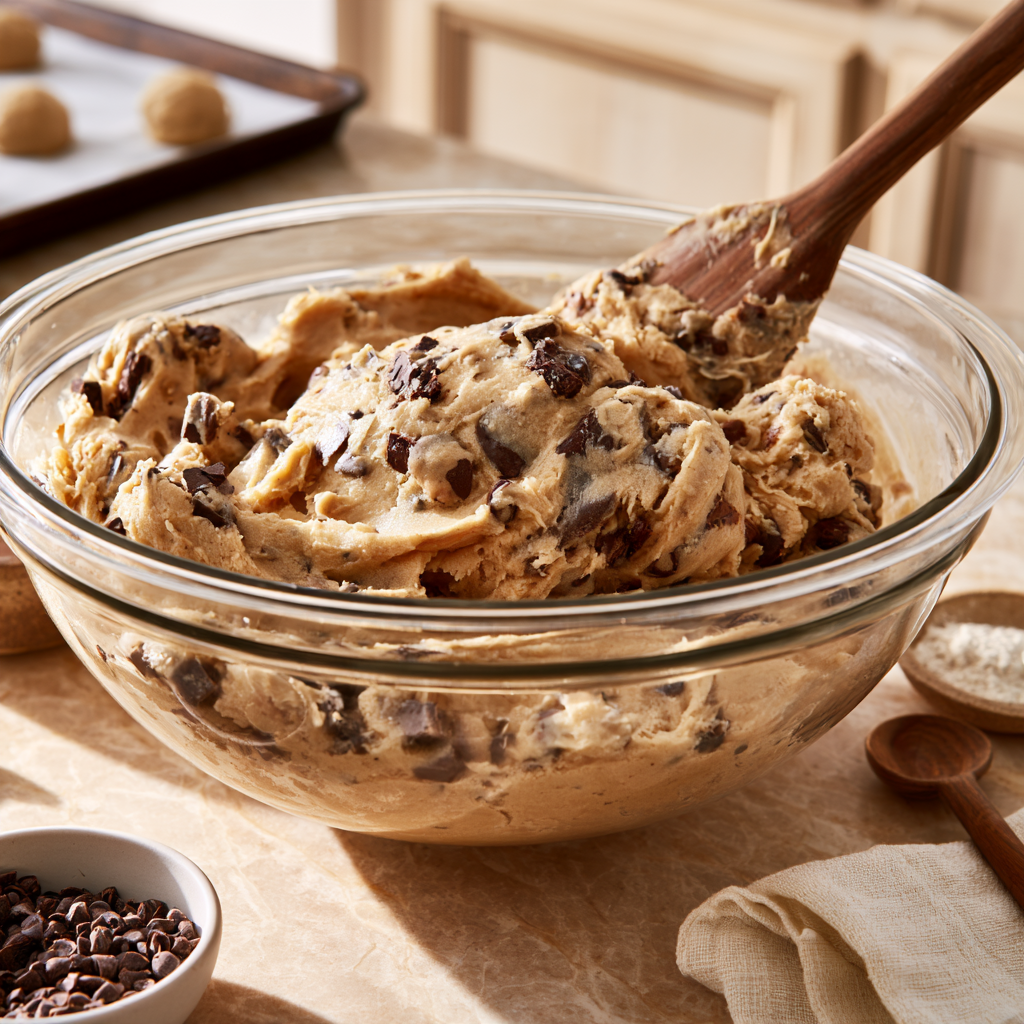
- Step 6: Fold in the Mini Chocolate Chips. Add 1 cup (170 g) of mini semi-sweet chocolate chips to the prepared edible cookie dough. Using a rubber spatula, gently fold the chocolate chips into the mixture with slow, deliberate movements until they are distributed throughout the dough. Scrape along the bottom and sides of the bowl to make sure no chocolate chips remain concentrated in one area. Mini chocolate chips are especially convenient because they provide a balanced chocolate flavor in nearly every bite, but regular semi sweet chips or finely chopped chocolate can also be used. Avoid aggressive mixing once the chocolate has been added, since a gentle folding motion helps preserve the soft consistency and creates an attractive, evenly chocolate-studded finished dessert.
- Step 7: Chill the Dough for a Firmer, Scoopable Texture. For a slightly firmer cookie dough that can be neatly scooped or rolled, transfer the finished mixture to a covered bowl or airtight food-storage container and refrigerate for approximately 15 minutes. Chilling allows the softened butter to firm up, making the dough easier to portion while allowing the vanilla, brown sugar, and chocolate flavors to come together. This step is optional if you prefer very soft cookie dough served immediately after mixing. If refrigerating for several hours, the dough may become noticeably firmer because of the butter content. Allow it to stand at room temperature for approximately 5–10 minutes before serving if necessary, without leaving the dairy-based dough unrefrigerated for extended periods.
- Step 8: Scoop and Serve the Edible Chocolate Chip Cookie Dough. Once the edible chocolate chip cookie dough reaches your preferred consistency, use a small cookie scoop or spoon to portion it into individual dessert bowls, small glass jars, or serving cups. For a decorative finish, sprinkle the optional 2 tablespoons of mini chocolate chips over the top and gently press a few pieces into the surface. Serve the dough chilled or slightly softened, depending on your preferred texture. This creamy, buttery treat can be enjoyed by the spoonful, shaped into small dessert bites, or crumbled over ice cream and other ready to eat desserts. Use a clean serving spoon, keep any unused portions refrigerated, and remember that this egg-free recipe is designed specifically for eating without baking rather than for making traditional oven baked chocolate chip cookies.
- Step 9: Store Leftovers Properly. Transfer any leftover edible chocolate chip cookie dough into a clean, airtight container and place it in the refrigerator promptly. For best freshness and quality, consume the refrigerated dough within approximately 3–4 days, keeping it at or below 40°F (4°C). When serving again, allow an individual portion to soften briefly if it has become too firm, then return the remaining dough to the refrigerator. For longer storage, divide the dough into small portions, arrange them on a parchment-lined tray, and freeze until solid before transferring them to a freezer-safe container. Frozen dough can be kept for approximately 2 months for best quality and thawed in the refrigerator before serving. Discard any dough that develops an unusual odor, visible mold, or other signs of spoilage.
Notes
1. Always Use Flour Suitable for Raw Consumption
2. Use Softened Unsalted Butter for the Best Texture
3. Choose Light Brown Sugar for Classic Cookie Dough Flavor
4. Avoid Grainy Cookie Dough
5. Add Milk Gradually
6. Experiment with Different Chocolate Chips
7. Make Cookie Dough Bites
8. Customize Your Homemade Cookie Dough
9. Store and Freeze Correctly
10. Remember That Edible Cookie Dough Is Not Designed for Baking
For edible chocolate chip cookie dough, choose commercially heat-treated flour clearly labeled for ready-to-eat or edible cookie dough use. Ordinary all-purpose flour can contain harmful bacteria, including E. coli and Salmonella, even when it looks completely clean. The FDA advises that attempting to heat-treat ordinary flour at home may not reliably eliminate these risks. Never use untreated raw flour in a dessert that will not be baked.
Softened unsalted butter creates a rich, creamy foundation for homemade edible cookie dough while allowing you to control the salt content. Ideally, the butter should be cool and pliable rather than melted. Butter that is too warm can make the dough greasy and overly soft, while butter that is too cold may leave small lumps. Allow it to soften naturally before creaming it with the sugars for a smoother, more luxurious consistency.
Light brown sugar contributes moisture, subtle caramel notes, and the signature flavor associated with chocolate chip cookie dough. You can substitute dark brown sugar for a deeper molasses flavor, although the resulting dough will have a darker color and more pronounced richness. For a classic bakery-inspired taste, combine light brown sugar with granulated sugar rather than relying exclusively on one type.
Edible cookie dough may have a slightly grainy texture because granulated sugar does not dissolve completely without baking. To minimize this, cream the butter and sugars thoroughly and use fine granulated sugar if available. Allowing the dough to rest in the refrigerator can also help the ingredients hydrate and blend. For an exceptionally smooth variation, replace part of the granulated sugar with powdered sugar, keeping in mind that this will slightly change the traditional cookie dough flavor and consistency.
The correct amount of milk depends on the consistency of your butter, the flour you use, and your desired serving texture. Begin with the amount listed in the recipe and add more only if necessary. For soft, spoonable cookie dough, the mixture should hold together easily without appearing dry or crumbly. If you plan to roll the dough into small balls, use slightly less additional milk to maintain a firmer consistency.
Mini semi-sweet chocolate chips are excellent for edible cookie dough because they distribute evenly and deliver chocolate flavor in every spoonful. For a sweeter dessert, use milk chocolate chips; for a less sweet and more intense flavor, choose dark chocolate chunks. You can also combine chocolate chips with finely chopped chocolate for a more interesting texture. Check that any added ingredients are suitable for ready to eat consumption.
Transform the finished edible cookie dough into bite-sized treats by refrigerating it until firm enough to handle, then rolling it into small balls using a teaspoon or mini cookie scoop. Arrange the cookie dough bites on a parchment-lined tray and chill until they hold their shape. For an extra-special dessert, dip them into melted chocolate and allow the coating to set in the refrigerator. They make convenient portioned treats for parties, dessert platters, and homemade sweet gifts when kept properly chilled.
Once you've mastered the basic edible chocolate chip cookie dough recipe, experiment with different flavor combinations. Try adding colorful sprinkles for a birthday-inspired variation, a small amount of almond extract for additional flavor, or a little flaky sea salt for a sweet-and-salty finish. Chopped toasted nuts, crushed ready-to-eat cookies, and white chocolate chips can also add exciting texture and flavor. Incorporate additional ingredients gradually so that the dough remains creamy and balanced.
Because this edible cookie dough contains butter and milk, it should be stored in an airtight container in the refrigerator at 40°F (4°C) or colder. For best quality, enjoy it within approximately 3–4 days. To freeze, portion the dough into individual servings or small balls and store them in a freezer-safe container for up to 2 months for best quality. Thaw frozen portions in the refrigerator before eating. Avoid leaving the dough at room temperature for more than 2 hours, or 1 hour when temperatures exceed 90°F (32°C).
This recipe is specifically developed for enjoying without baking, so it does not contain the eggs or leavening agents commonly used in traditional chocolate chip cookies. Baking this dough may produce an unusually dense, crumbly, or flat result rather than properly structured cookies. If you want freshly baked chocolate chip cookies, use a dedicated cookie recipe instead. This edible dough is best served as a chilled dessert, formed into bite-sized treats, or incorporated into other ready to eat creations.