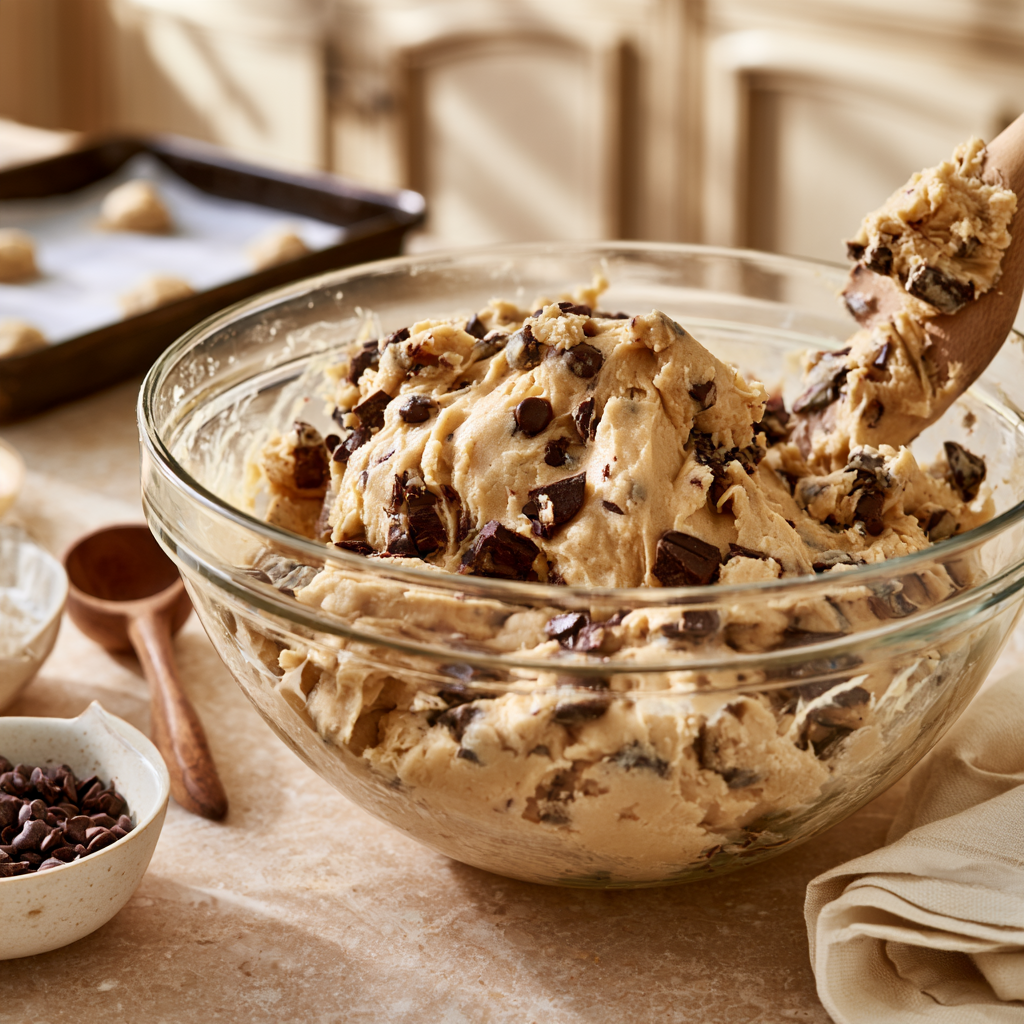

Few desserts are as irresistible as Chocolate Chip Cookie Dough: buttery, sweet, soft, and packed with little bursts of chocolate in every bite. This homemade version captures everything you love about classic chocolate chip cookies, but transforms the dough into a creamy, scoopable treat you can enjoy without switching on the oven. It’s the perfect answer to those moments when you’re craving a cookie before the cookies are even baked.
The secret to delicious edible chocolate chip cookie dough is using simple ingredients the right way. Softened butter, brown sugar, vanilla extract, and mini chocolate chips create that familiar bakery-style flavor, while commercially heat-treated flour and an egg-free recipe make it suitable for eating unbaked. Unlike ordinary raw cookie dough, which can contain harmful bacteria from raw flour or eggs, this version is designed specifically for snacking.
Love homemade cookies? Our Amish Monster Cookie Recipe offers another chocolate-studded favorite, while our Cornflake Cookie Recipe adds an irresistible crispy twist. For an even richer chocolate fix, try our King Arthur Brownie Recipe.
Best of all, this Chocolate Chip Cookie Dough Recipe is endlessly customizable. Fold in chopped nuts, swap in dark chocolate, add colorful sprinkles, or roll the mixture into bite-sized cookie dough balls. Enjoy it by the spoonful, crumble it over ice cream, or serve it as a party dessert. Below, you’ll discover how to make it smooth, safe, and delicious every time. With no baking required and minimal cleanup, it’s a make-ahead treat for birthdays, movie nights, or cravings.
- The Origins of Chocolate Chip Cookie Dough: From a Classic American Cookie to a No Bake Dessert Sensation
- The Birth of the Chocolate Chip Cookie in the 1930s
- How Chocolate Chip Cookie Dough Became a Favorite Before Baking
- The Rise of Edible Chocolate Chip Cookie Dough
- Why Edible Cookie Dough Became So Popular
- How Modern Edible Cookie Dough Became Different From Traditional Dough
- Chocolate Chip Cookie Dough in Today's Dessert Culture
- Health Benefits of Chocolate Chip Cookie Dough: Nutritional Value, Ingredients, and What You Should Know
- Nutritional Benefits of Chocolate Chip Cookie Dough Ingredients
- 1. Provides a Quick Source of Dietary Energy
- 2. Chocolate Chips Contain Cocoa-Derived Compounds
- 3. Homemade Cookie Dough Offers Greater Ingredient Control
- 4. Small Portions Can Fit Into a Balanced Eating Pattern
- 5. Optional Nuts Can Add Fiber and Healthy Fats
- 6. Edible Cookie Dough Can Be Adapted for Different Dietary Needs
- How to Make Chocolate Chip Cookie Dough a More Balanced Treat
- Why You Should Try Chocolate Chip Cookie Dough: 8 Irresistible Reasons to Make This Homemade Treat
- 1. All the Delicious Flavor of Chocolate Chip Cookies Without Baking
- 2. An Easy No-Bake Dessert That Requires Minimal Preparation
- 3. Rich, Creamy Texture With Chocolate in Every Bite
- 4. Made With Simple, Familiar Ingredients
- 5. Perfect for Parties, Celebrations, and Dessert Tables
- 6. A Fun Recipe for Making Desserts With Kids
- 7. Make-Ahead Friendly and Easy to Freeze
- 8. A Nostalgic Homemade Treat That Feels Special
- What Makes This OoohDelish Chocolate Chip Cookie Dough Special?
chocolate chip cookie dough
Equipment
- Large mixing bowl
- Medium mixing bowl
- Electric hand mixer or stand mixer
- Measuring cups and measuring spoons
- Digital kitchen scale
- Rubber spatula
- Fine-mesh sieve (optional)
- Cookie scoop
- Airtight storage container
- Serving bowls or dessert cups
Ingredients
- Copy-Paste Ingredients
- Copy ingredients
- 1 cup 226 g unsalted butter, softened to cool room temperature
- ¾ cup 150 g packed light brown sugar
- ½ cup 100 g granulated sugar
- 2 teaspoons pure vanilla extract
- 2 cups 250 g commercially heat-treated all-purpose flour, labeled safe for ready-to-eat use
- ½ teaspoon fine salt
- 3 tablespoons 45 ml pasteurized milk, plus 1–2 tablespoons if needed
- 1 cup 170 g mini semi-sweet chocolate chips
- 2 tablespoons mini chocolate chips for topping (optional)
Instructions
- Step 1: Gather and Prepare the Ingredients. Before beginning, measure all ingredients accurately and arrange them on a clean kitchen counter. Allow the unsalted butter to soften until it is cool, pliable, and easy to cream without becoming melted or greasy. For the best results, the butter should be approximately 65–68°F (18–20°C). Confirm that your flour is commercially heat treated and clearly labeled as appropriate for ready to eat cookie dough; never substitute ordinary untreated flour or assume that microwaving or baking it at home makes it safe for raw consumption. Measure the light brown sugar, granulated sugar, vanilla extract, fine salt, pasteurized milk, and mini chocolate chips separately. Prepare a large mixing bowl, electric mixer, rubber spatula, and airtight container so that everything is ready before mixing.
- Step 2: Cream the Unsalted Butter and Sugars. Place 1 cup (226 g) of softened unsalted butter into a large mixing bowl, then add ¾ cup (150 g) of packed light brown sugar and ½ cup (100 g) of granulated sugar. Using an electric hand mixer or a stand mixer fitted with the paddle attachment, beat the ingredients on medium speed for approximately 2–3 minutes, until the mixture becomes creamy, lighter in color, and visibly smoother. Stop the mixer occasionally to scrape down the sides and bottom of the bowl with a rubber spatula, ensuring that the butter and sugars are evenly combined. The brown sugar adds a subtle caramel-like richness, while granulated sugar gives the dough its familiar sweet cookie flavor. Do not overwhip the mixture because the goal is a smooth, rich edible dough rather than a particularly airy cake-like texture.
- Step 3: Add Vanilla Extract, Salt, and Milk. Pour 2 teaspoons of pure vanilla extract and ½ teaspoon of fine salt into the creamed butter and sugar mixture, followed by 3 tablespoons (45 ml) of pasteurized milk. Mix on low speed for approximately 30–45 seconds until the ingredients are evenly distributed and the mixture looks creamy. The vanilla enhances the warm, bakery style cookie flavor, while the salt balances the sweetness and intensifies the taste of the chocolate. The milk replaces some of the moisture normally supplied by eggs in conventional cookie dough and helps create a soft, spoonable consistency. If the mixture initially appears slightly separated, continue mixing briefly at low speed, scraping the bowl as necessary, until it is as smooth and uniform as possible.
- Step 4: Incorporate the Ready-to-Eat Heat-Treated Flour. Add 2 cups (250 g) of commercially heat-treated all-purpose flour suitable for ready-to-eat use to the butter mixture in two or three additions. Mix on the lowest speed after each addition until the flour begins to disappear into the mixture, then stop and scrape the bowl before adding more. Once nearly all the flour has been incorporated, switch to a rubber spatula and gently fold the dough until no dry flour remains. The mixture should become thick, soft, and slightly dense while remaining smooth enough to scoop. Avoid excessive mixing, which can make the texture less pleasant, and never taste the mixture until you have confirmed that every ingredient is appropriate for no bake consumption. Properly prepared ready to eat flour provides the familiar cookie dough texture without requiring the finished dessert to be baked.
- Step 5: Adjust the Cookie Dough Consistency. Examine the dough after all the flour has been incorporated. It should hold together when scooped but remain soft and creamy enough to eat comfortably with a spoon. If the dough seems dry, crumbly, or excessively stiff, add an additional tablespoon of pasteurized milk and gently fold it into the mixture. Repeat with a second tablespoon only if necessary, adjusting gradually to avoid making the dough runny. If the mixture seems too soft because the butter has warmed significantly, refrigerate it briefly rather than immediately adding extra flour. Keep in mind that the dough will become firmer after chilling, so stop adjusting when it reaches a pleasantly soft texture that can easily be scooped into a bowl or shaped into small portions.
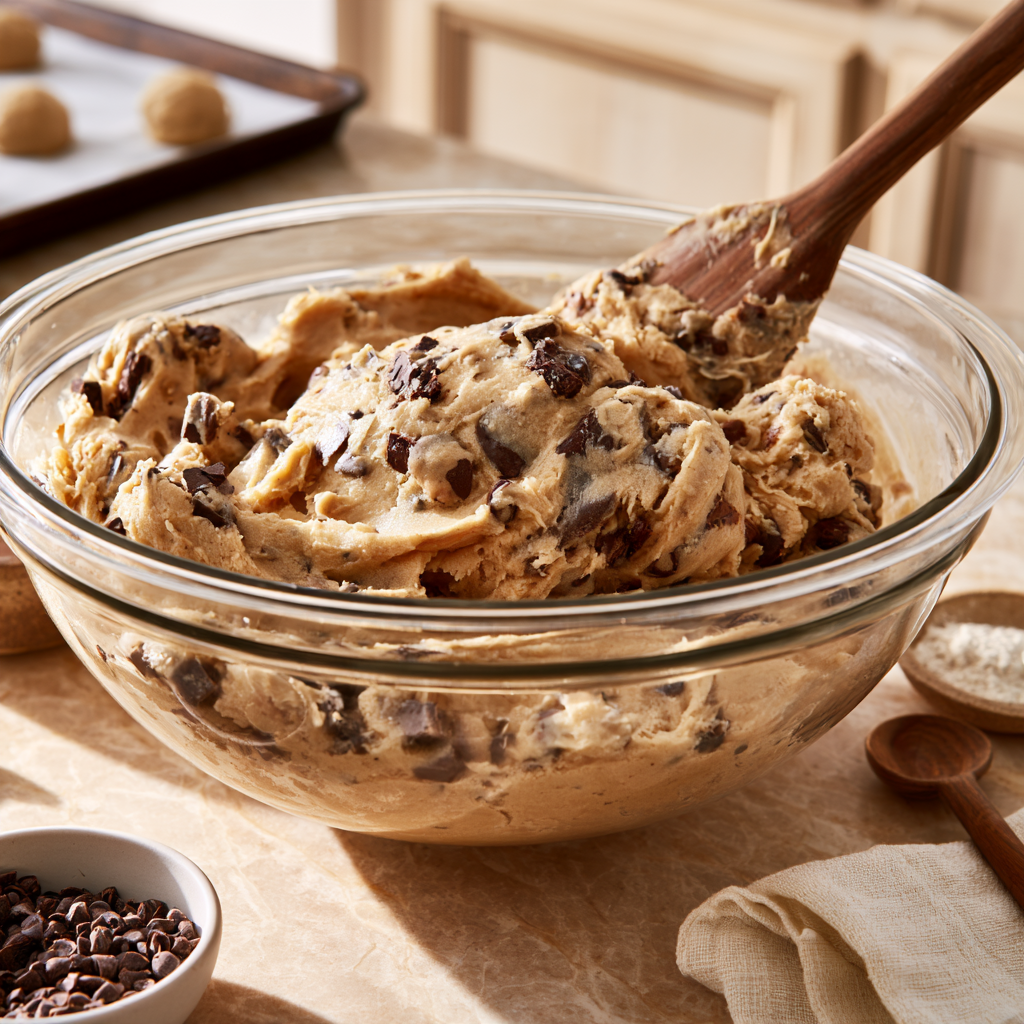
- Step 6: Fold in the Mini Chocolate Chips. Add 1 cup (170 g) of mini semi-sweet chocolate chips to the prepared edible cookie dough. Using a rubber spatula, gently fold the chocolate chips into the mixture with slow, deliberate movements until they are distributed throughout the dough. Scrape along the bottom and sides of the bowl to make sure no chocolate chips remain concentrated in one area. Mini chocolate chips are especially convenient because they provide a balanced chocolate flavor in nearly every bite, but regular semi sweet chips or finely chopped chocolate can also be used. Avoid aggressive mixing once the chocolate has been added, since a gentle folding motion helps preserve the soft consistency and creates an attractive, evenly chocolate-studded finished dessert.
- Step 7: Chill the Dough for a Firmer, Scoopable Texture. For a slightly firmer cookie dough that can be neatly scooped or rolled, transfer the finished mixture to a covered bowl or airtight food-storage container and refrigerate for approximately 15 minutes. Chilling allows the softened butter to firm up, making the dough easier to portion while allowing the vanilla, brown sugar, and chocolate flavors to come together. This step is optional if you prefer very soft cookie dough served immediately after mixing. If refrigerating for several hours, the dough may become noticeably firmer because of the butter content. Allow it to stand at room temperature for approximately 5–10 minutes before serving if necessary, without leaving the dairy-based dough unrefrigerated for extended periods.
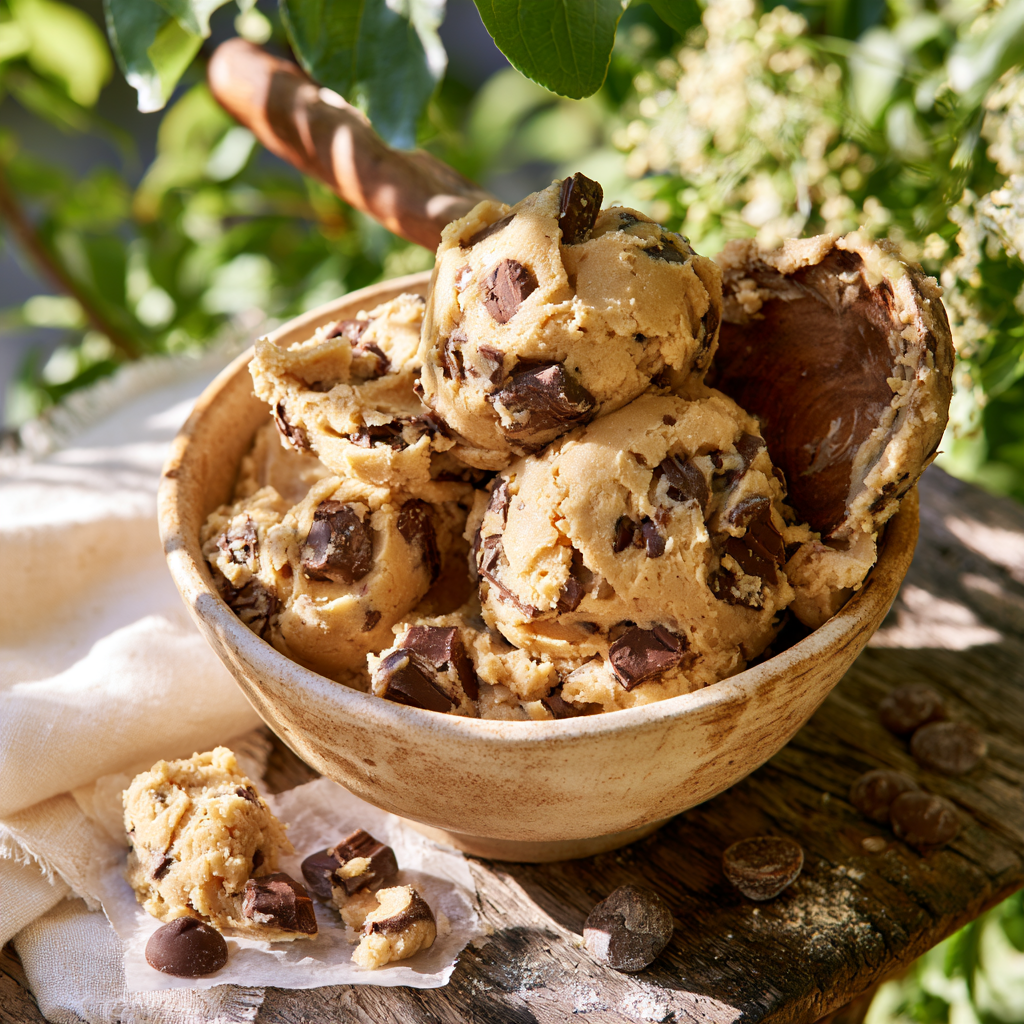
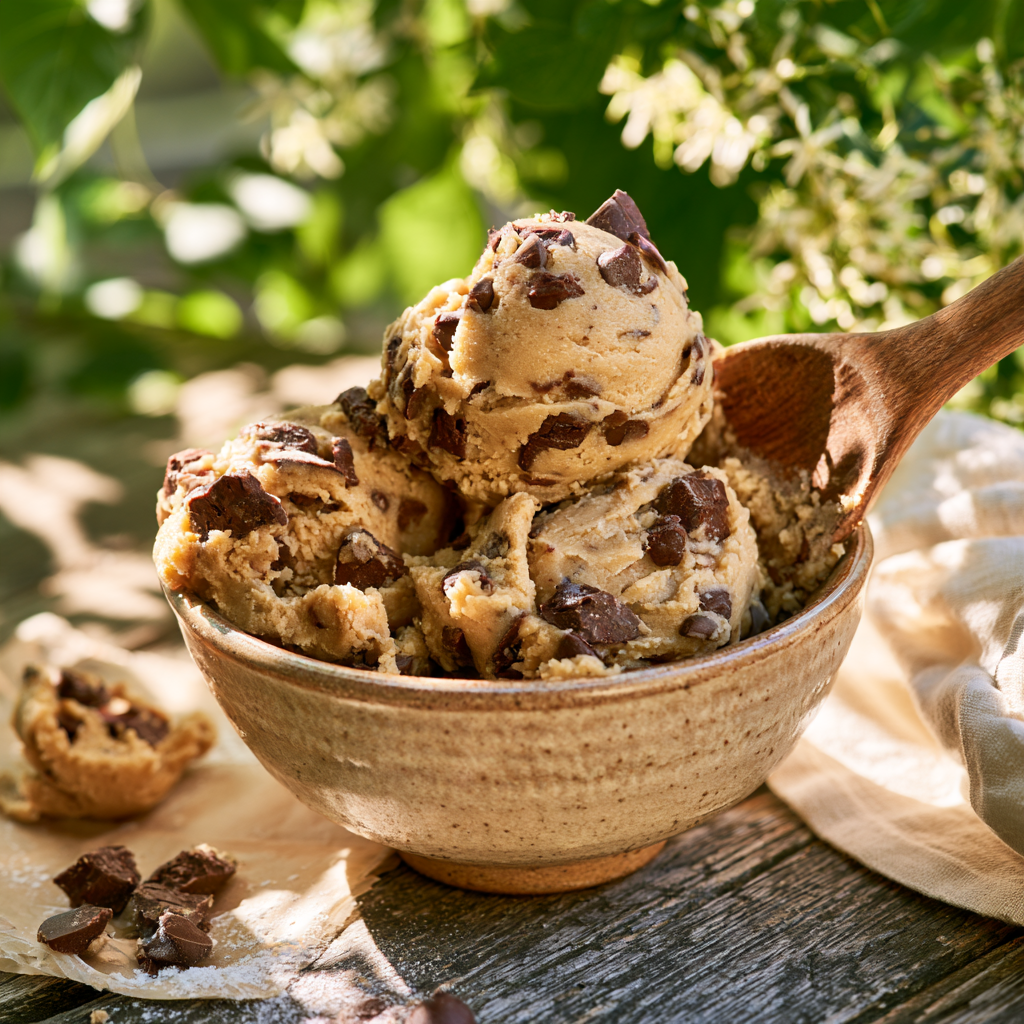
- Step 8: Scoop and Serve the Edible Chocolate Chip Cookie Dough. Once the edible chocolate chip cookie dough reaches your preferred consistency, use a small cookie scoop or spoon to portion it into individual dessert bowls, small glass jars, or serving cups. For a decorative finish, sprinkle the optional 2 tablespoons of mini chocolate chips over the top and gently press a few pieces into the surface. Serve the dough chilled or slightly softened, depending on your preferred texture. This creamy, buttery treat can be enjoyed by the spoonful, shaped into small dessert bites, or crumbled over ice cream and other ready to eat desserts. Use a clean serving spoon, keep any unused portions refrigerated, and remember that this egg-free recipe is designed specifically for eating without baking rather than for making traditional oven baked chocolate chip cookies.
- Step 9: Store Leftovers Properly. Transfer any leftover edible chocolate chip cookie dough into a clean, airtight container and place it in the refrigerator promptly. For best freshness and quality, consume the refrigerated dough within approximately 3–4 days, keeping it at or below 40°F (4°C). When serving again, allow an individual portion to soften briefly if it has become too firm, then return the remaining dough to the refrigerator. For longer storage, divide the dough into small portions, arrange them on a parchment-lined tray, and freeze until solid before transferring them to a freezer-safe container. Frozen dough can be kept for approximately 2 months for best quality and thawed in the refrigerator before serving. Discard any dough that develops an unusual odor, visible mold, or other signs of spoilage.
Notes
The Origins of Chocolate Chip Cookie Dough: From a Classic American Cookie to a No Bake Dessert Sensation
The story of chocolate chip cookie dough begins with one of America’s most beloved baking traditions: the classic chocolate chip cookie. Long before edible cookie dough became a popular no bake dessert, home bakers were combining butter, brown sugar, flour, vanilla, eggs, and chocolate to create rich, golden cookies with irresistible flavor. Over time, something unexpected happened. People discovered that the soft, sweet dough itself was almost as tempting as the cookies coming out of the oven. What began as a familiar part of homemade baking eventually inspired an entirely new dessert category: edible chocolate chip cookie dough, specially formulated to be enjoyed without baking.
The Birth of the Chocolate Chip Cookie in the 1930s
The origins of modern chocolate chip cookie dough are closely connected to Ruth Graves Wakefield, an American baker and entrepreneur who operated the Toll House Inn in Whitman, Massachusetts, with her husband, Kenneth Wakefield.
During the 1930s, Ruth developed the famous Toll House Chocolate Crunch Cookie, a recipe that would become a defining part of American home baking. By incorporating pieces of chocolate into a buttery cookie mixture, she created a dessert that combined the comforting sweetness of traditional cookies with pockets of rich chocolate.
The original Toll House cookies were made to be baked, rather than eaten as raw dough. Nevertheless, the combination of butter, sugar, vanilla, flour, and chocolate established the flavor profile that continues to define chocolate chip cookies and edible cookie dough today.
As the Toll House recipe gained popularity, chocolate chip cookies became a familiar presence in American households. Their simple ingredients, approachable preparation, and delicious taste made them a favorite for family gatherings, holidays, lunchboxes, and homemade desserts.
How Chocolate Chip Cookie Dough Became a Favorite Before Baking
For generations, preparing chocolate chip cookies involved a familiar kitchen ritual: creaming butter with sugar, adding vanilla and eggs, mixing in flour, and folding chocolate chips into the finished dough.
The resulting mixture had an appeal all its own. Brown sugar contributed a subtle caramel-like flavor, butter gave the dough its creamy richness, and chocolate chips added bursts of sweetness and texture.
Many people developed nostalgic memories of tasting cookie dough from a mixing spoon or scraping the remaining mixture from a bowl while baking with family members.
However, traditional cookie dough was never intended to be consumed raw. It commonly contains uncooked flour and raw eggs, both of which can carry harmful bacteria. Modern edible cookie dough recipes were developed to preserve the familiar taste while addressing these food safety concerns.
This distinction is essential: classic chocolate chip cookie dough is designed to be baked, while edible chocolate chip cookie dough is formulated specifically for no bake consumption.
The Rise of Edible Chocolate Chip Cookie Dough
Although tasting cookie dough has been a longstanding home baking habit, commercial edible cookie dough became especially visible during the 2010s.
Dessert entrepreneurs began experimenting with recipes that could be served by the scoop, packaged in containers, or incorporated into ice cream, milkshakes, and other sweet treats.
One notable example was DŌ, Cookie Dough Confections, founded by Kristen Tomlan. The business began selling edible cookie dough online in 2015 and opened a Manhattan storefront in early 2017. Its popularity helped demonstrate that cookie dough could become a dessert experience in its own right, rather than simply an intermediate step in baking cookies.
Specialty dessert shops introduced creative presentations, including cookie dough served in cups, topped with chocolate sauce, or combined with ice cream. These innovations helped establish edible cookie dough as a recognizable modern American dessert.
Why Edible Cookie Dough Became So Popular
The growing popularity of edible chocolate chip cookie dough can be explained by its combination of nostalgia, convenience, and creativity.
Unlike traditional cookies, which require baking and cooling, edible cookie dough can be enjoyed after the ingredients have been properly prepared and mixed. Its soft, creamy texture offers a different eating experience from a baked cookie, while its recognizable chocolate chip flavor evokes familiar homemade desserts.
Social media also helped bring cookie dough creations to wider audiences. Beautifully presented scoops, colorful toppings, miniature cookie dough bites, and elaborate dessert cups are especially appealing in short recipe videos and food photography.
Another important factor is customization. Edible cookie dough can be prepared with dark chocolate chips, white chocolate, colorful sprinkles, crushed cookies, peanut butter, or chopped nuts. These additions make it easy to develop new combinations from one basic dough.
For chocolate lovers, the same rich flavor inspiration can be found in other homemade favorites, such as our King Arthur Brownie Recipe, which celebrates the deep chocolate flavor and comforting appeal of traditional American baking.
How Modern Edible Cookie Dough Became Different From Traditional Dough
One of the most significant developments in edible cookie dough recipes was the increased attention given to ingredient safety.
Traditional chocolate chip cookie dough generally includes raw eggs and ordinary flour because the finished cookies will be baked. However, those ingredients can present food safety risks when consumed uncooked.
Modern recipes intended specifically for eating without baking usually eliminate raw eggs and use flour that has been commercially heat-treated for ready-to-eat applications. The FDA advises against consuming ordinary raw flour and notes that home heat-treatment methods may not reliably eliminate harmful bacteria.
With these adjustments, edible cookie dough retains much of the beloved flavor of classic chocolate chip cookies while becoming a distinct no-bake dessert.
The consistency can also be customized. A little milk helps create a softer, smoother texture, while the balance of brown sugar and granulated sugar influences sweetness and flavor. Mini chocolate chips distribute chocolate more evenly, giving each spoonful a satisfying combination of creamy dough and chocolate.
Chocolate Chip Cookie Dough in Today’s Dessert Culture
Today, homemade chocolate chip cookie dough has become much more than an ingredient waiting to be baked. It is enjoyed as a standalone dessert and used as a flavorful addition to many creative sweet treats.
From edible cookie dough balls and chocolate-dipped bites to cookie dough ice cream toppings and layered dessert cups, its versatility continues to inspire home bakers and dessert enthusiasts.
Despite these modern variations, the essential flavor remains connected to Ruth Wakefield’s original chocolate chip cookie tradition: rich butter, sweet brown sugar, fragrant vanilla, and generous pieces of chocolate.
That’s what makes edible chocolate chip cookie dough so appealing. It brings together the familiar flavors of a classic American cookie with the convenience and creativity of a modern no-bake dessert.
Whether you’re making a small batch for yourself, preparing a sweet treat for friends, or experimenting with creative dessert combinations, every spoonful celebrates a baking tradition that has delighted generations.
From the kitchens of 1930s Massachusetts to today’s edible cookie dough creations, chocolate chip cookie dough has evolved into a dessert with its own identity while keeping the buttery, chocolate-filled flavor that made the original cookie famous.
Health Benefits of Chocolate Chip Cookie Dough: Nutritional Value, Ingredients, and What You Should Know
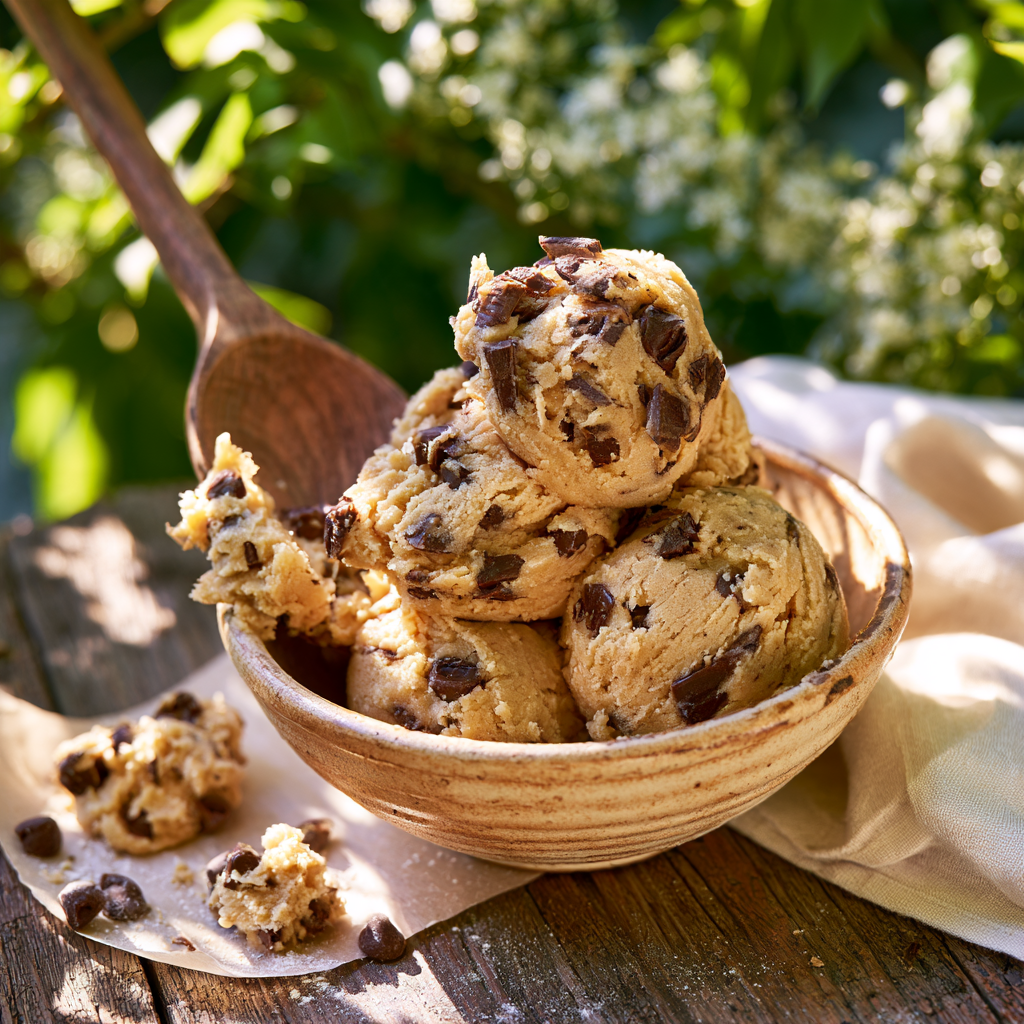
When you think about chocolate chip cookie dough, the first things that probably come to mind are its rich buttery flavor, creamy texture, sweet brown sugar, and delicious chocolate chips. While this classic treat is primarily enjoyed as an indulgent dessert, certain ingredients contribute small amounts of beneficial nutrients. Understanding the nutritional value of homemade edible chocolate chip cookie dough can help you enjoy your favorite sweet treat while making informed choices about ingredients, serving sizes, and dietary preferences.
Unlike traditional cookie dough prepared with raw eggs and untreated flour, edible chocolate chip cookie dough is specifically formulated for no-bake consumption. When made with commercially heat-treated flour labeled safe for ready-to-eat use, no raw eggs, and other suitable ingredients, it offers a convenient way to enjoy the familiar flavor of homemade chocolate chip cookies without baking. However, it is important to distinguish food safety from nutritional benefits: making cookie dough suitable for raw consumption does not automatically make it a nutritious or low-calorie dessert.
Although chocolate chip cookie dough is not considered a health food, ingredients such as chocolate, butter, and flour contain nutrients that can contribute to your overall daily intake. The key is enjoying the dough in reasonable portions as part of a varied, balanced diet.
Nutritional Benefits of Chocolate Chip Cookie Dough Ingredients
| Ingredient | Nutritional contribution | What it means |
|---|---|---|
| Semi-sweet chocolate chips | Small amounts of iron, magnesium, and cocoa polyphenols | Cocoa provides potentially beneficial plant compounds, although chocolate chips also contain added sugar and saturated fat. |
| Unsalted butter | Contains vitamin A and small amounts of other fat-soluble vitamins | Contributes nutrients and rich flavor, but is also a concentrated source of calories and saturated fat. |
| Heat-treated all-purpose flour | Provides carbohydrates, with iron and certain B vitamins when enriched | Supplies energy and contributes to the dough’s texture; refined flour generally contains less fiber than whole-grain alternatives. |
| Light brown sugar | Provides carbohydrates for energy | Adds sweetness and caramel-like flavor, but its trace mineral content is nutritionally insignificant. |
| Milk | Can provide calcium, protein, and vitamin B12 | The small amount used in this recipe contributes only modest quantities of these nutrients. |
| Vanilla extract | Contains aromatic plant compounds | Primarily enhances flavor; the quantity used offers negligible nutritional benefits. |
| Nuts (optional) | Can provide unsaturated fats, fiber, protein, and minerals | Adding chopped walnuts or almonds can improve the nutritional profile, although they also increase calories. |
1. Provides a Quick Source of Dietary Energy
Chocolate chip cookie dough contains carbohydrates from flour, brown sugar, granulated sugar, and chocolate chips. Carbohydrates are a major source of energy for the body, supporting everyday physical activities and normal brain function.
Because cookie dough contains substantial amounts of added sugar and refined carbohydrates, however, it should not be considered an ideal everyday energy source. Foods such as fruit, whole grains, and legumes typically offer more fiber and micronutrients alongside their carbohydrates.
2. Chocolate Chips Contain Cocoa-Derived Compounds
One of the most interesting ingredients in chocolate chip cookie dough is chocolate itself. Cocoa naturally contains flavanols, a group of polyphenols investigated for their potential effects on blood vessel function and cardiovascular health.
However, the amount of cocoa flavanols in chocolate chips varies considerably depending on the chocolate formulation and processing method. Ordinary semi-sweet chocolate chips are not equivalent to cocoa products studied in clinical research.
Choosing chocolate with a higher cocoa percentage may provide more cocoa solids and a richer chocolate flavor, although the overall nutritional value depends on the specific product. It does not make the finished cookie dough a heart-health treatment.
3. Homemade Cookie Dough Offers Greater Ingredient Control
One practical advantage of preparing homemade edible chocolate chip cookie dough is the ability to choose ingredients according to your preferences.
You can adjust the amount of added sugar, select chocolate chips with a higher cocoa percentage, or include chopped nuts for additional fiber and unsaturated fats. You can also control portion sizes and avoid particular ingredients when suitable alternatives are available.
Reducing the sugar significantly may change the texture, so recipe adjustments should be made carefully rather than assuming every substitution will produce the same results.
4. Small Portions Can Fit Into a Balanced Eating Pattern
Enjoying a favorite dessert can be part of a balanced relationship with food. Chocolate chip cookie dough is a sweet treat that many people associate with childhood baking, family gatherings, celebrations, and comforting homemade desserts.
Rather than labeling it entirely good or bad, it is more useful to consider how frequently you eat it and how much you serve.
For example, the OoohDelish edible chocolate chip cookie dough recipe provides approximately 370 calories per serving when divided into 12 portions. Choosing a smaller serving lets you enjoy its distinctive buttery and chocolatey flavor while reducing the amount of added sugar and saturated fat consumed at once.
5. Optional Nuts Can Add Fiber and Healthy Fats
For an ingredient variation with a stronger nutritional contribution, consider adding a modest amount of finely chopped walnuts or almonds to the edible cookie dough.
Walnuts provide polyunsaturated fats, including plant-derived omega-3 alpha-linolenic acid (ALA), while almonds contain monounsaturated fats, vitamin E, and fiber.
These ingredients can also provide a pleasant crunchy contrast to the creamy dough and mini chocolate chips.
However, nuts are calorie-dense and are common food allergens. Use appropriate portions, check for allergies, and account for the additional calories.
6. Edible Cookie Dough Can Be Adapted for Different Dietary Needs
Another benefit of homemade chocolate chip cookie dough is its adaptability. Since the OoohDelish version contains no eggs, it may suit people avoiding eggs, provided the remaining ingredients meet their dietary needs.
A dairy-free version can use suitable plant-based butter, milk alternatives, and dairy-free chocolate chips. A gluten-free variation requires a gluten-free flour product specifically processed and labeled for ready-to-eat consumption.
These substitutions make the dessert more accessible to different dietary preferences, but they do not necessarily reduce calories or added sugar.
How to Make Chocolate Chip Cookie Dough a More Balanced Treat
If you love the rich, buttery flavor of chocolate chip cookie dough but want to make thoughtful nutritional adjustments, a few simple changes can help improve its overall composition without sacrificing everything that makes it delicious.
- Use a smaller serving: Enjoy two or three tablespoons rather than a large bowl to manage calories, added sugar, and saturated fat.
- Choose darker chocolate: Semi-sweet or dark chocolate chips with a higher cocoa percentage can provide a richer flavor, allowing you to enjoy a satisfying chocolate taste in smaller quantities.
- Reduce added sugar gradually: Experiment with slightly less brown or granulated sugar. Large reductions may affect sweetness, texture, and moisture.
- Add chopped nuts: Walnuts or almonds can contribute fiber, unsaturated fats, and minerals while introducing a satisfying crunch.
- Pair with fresh fruit: Serve a small amount of edible cookie dough alongside strawberries, banana slices, or raspberries to add fiber and other nutrients to the overall dessert.
- Use properly treated ingredients: Choose commercially heat-treated flour intended for ready-to-eat foods, omit raw eggs, and refrigerate your prepared dough promptly.
Is Chocolate Chip Cookie Dough Healthy?
Chocolate chip cookie dough is best described as an occasional indulgent dessert rather than a health-promoting food. Although certain ingredients contain small amounts of vitamins, minerals, and plant compounds, the finished recipe is typically high in added sugar, calories, and saturated fat.
The good news is that enjoying an occasional serving of your favorite sweet treat can fit within an otherwise balanced eating pattern. Homemade preparation also gives you more control over ingredients and portion sizes.
For anyone preparing edible chocolate chip cookie dough at home, food safety remains especially important. The CDC recommends purchasing products specifically manufactured for consumption without baking, rather than eating conventional raw cookie dough.
Ultimately, the greatest appeal of homemade chocolate chip cookie dough is its comforting flavor, creamy texture, and versatility. By choosing appropriate ingredients, paying attention to food safety, and enjoying sensible portions, you can make this classic American-inspired dessert a delicious part of your occasional homemade treats.
OoohDelish Nutrition Note: The nutritional information in this section is provided for general educational purposes. Exact nutrient values depend on ingredient brands, preparation methods, and serving sizes. Edible cookie dough should not be considered a treatment or preventive measure for any medical condition.
Why You Should Try Chocolate Chip Cookie Dough: 8 Irresistible Reasons to Make This Homemade Treat
If you’ve ever found yourself sneaking a spoonful of chocolate chip cookie dough before the cookies even make it into the oven, you’re certainly not alone. There’s something wonderfully comforting about the combination of creamy butter, sweet brown sugar, fragrant vanilla, and little pieces of chocolate. With this homemade edible chocolate chip cookie dough recipe, you can enjoy that nostalgic flavor in a dessert specifically designed to be eaten without baking.
Unlike traditional cookie dough, this version contains no raw eggs and uses commercially heat-treated flour labeled suitable for ready-to-eat recipes. The result is a rich, soft, and delightfully chocolatey dessert that can be scooped into bowls, rolled into bite-sized treats, or incorporated into your favorite sweet creations.
Whether you’re searching for a quick no-bake dessert, planning a family movie night, or looking for a fun alternative to traditional cookies, here are ten reasons why this easy homemade chocolate chip cookie dough deserves a place in your recipe collection.

1. All the Delicious Flavor of Chocolate Chip Cookies Without Baking
One of the biggest reasons to try edible chocolate chip cookie dough is that it captures the familiar flavor of homemade chocolate chip cookies without requiring you to bake a single cookie.
The combination of softened unsalted butter, light brown sugar, granulated sugar, and pure vanilla extract creates a rich, sweet foundation reminiscent of traditional cookie dough. Mini semi-sweet chocolate chips add delicious bursts of chocolate, making every spoonful satisfying.
Unlike baked cookies, which develop crisp edges and a firmer structure in the oven, edible cookie dough maintains its soft, creamy consistency. This gives you an entirely different way to experience a familiar dessert.
It’s particularly appealing when you’re craving the flavor of homemade cookies but prefer something cool, smooth, and ready to enjoy with a spoon.
And if you love the contrast between creamy cookie dough and rich chocolate desserts, try serving a small scoop alongside our King Arthur Brownie Recipe. The combination of fudgy brownies and chocolate-studded cookie dough creates an indulgent dessert that is especially appealing to chocolate lovers.
2. An Easy No-Bake Dessert That Requires Minimal Preparation
Not every homemade dessert needs a complicated recipe, specialized equipment, or hours in the kitchen. One of the greatest advantages of this no-bake chocolate chip cookie dough recipe is how straightforward it is to prepare.
Once your ingredients are measured and your commercially heat-treated, ready-to-eat flour is available, the process involves a few familiar steps: creaming the butter and sugars, adding vanilla and milk, incorporating the flour, and gently folding in the chocolate chips.
There’s no oven temperature to monitor, no concern about cookies spreading across the baking sheet, and no need to wait for baked cookies to cool before enjoying them.
The dough can be prepared in approximately 15 minutes, with an optional 15-minute refrigeration period if you prefer a firmer texture.
This makes it a convenient choice for busy afternoons, casual gatherings, weekend dessert preparation, or those moments when you want something homemade without spending too much time cooking.
For another fun homemade cookie idea with a completely different texture, explore our Cornflake Cookie Recipe, which combines familiar cookie flavors with a delightful cereal crunch.
3. Rich, Creamy Texture With Chocolate in Every Bite
While the flavor is undoubtedly delicious, the texture is what makes homemade edible chocolate chip cookie dough especially appealing.
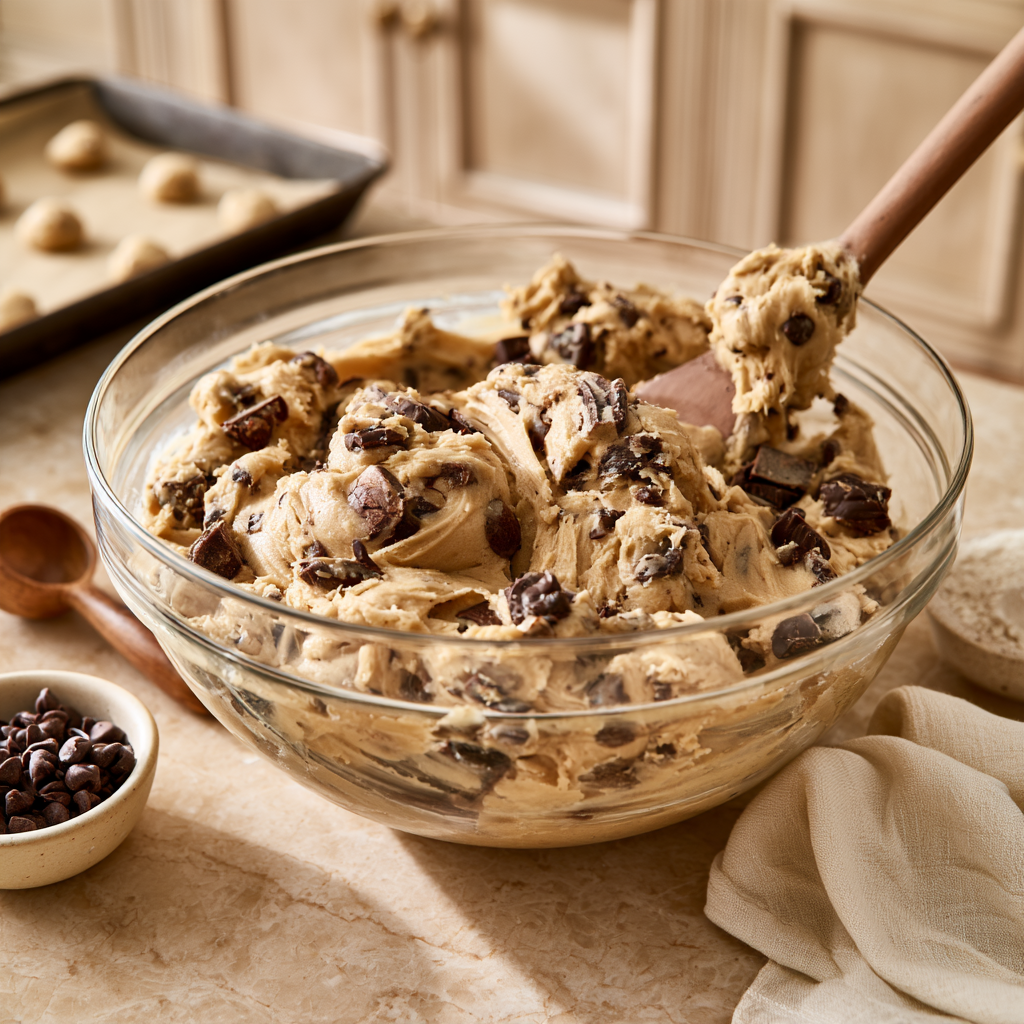
A properly prepared batch should be thick enough to hold its shape on a spoon while remaining soft, creamy, and easy to scoop. The softened butter creates a smooth, rich base, while brown sugar contributes moisture and subtle caramel-like notes.
Mini chocolate chips are particularly useful because they distribute more evenly throughout the dough than larger pieces, giving you a pleasant chocolate flavor in nearly every bite.
You can also control the final texture to match your personal preferences.
For a softer, creamier dessert, gradually incorporate a little additional pasteurized milk until the dough becomes easily spoonable. For a firmer texture that works well for cookie dough balls or dessert bites, refrigerate the finished mixture briefly before shaping.
The flexibility makes this recipe easy to adapt, whether you prefer soft cookie dough served directly from a bowl or chilled portions that hold their shape.
4. Made With Simple, Familiar Ingredients
Another excellent reason to try homemade chocolate chip cookie dough is that the recipe relies on familiar baking ingredients rather than an elaborate selection of specialty products.
The basic mixture includes unsalted butter, brown sugar, granulated sugar, vanilla extract, salt, milk, ready-to-eat heat-treated flour, and chocolate chips.
Each ingredient serves a specific purpose:
- Unsalted butter creates the rich, creamy foundation and allows you to control the salt content.
- Light brown sugar adds moisture and a subtle caramel-like flavor.
- Granulated sugar contributes classic cookie sweetness.
- Pure vanilla extract gives the dough its familiar bakery-style aroma.
- Heat-treated flour suitable for ready-to-eat use creates the traditional cookie dough consistency.
- Pasteurized milk adjusts the moisture and makes the dough easier to scoop.
- Mini chocolate chips provide little pockets of chocolate throughout the mixture.
The one ingredient you should never compromise on is the flour. Ordinary untreated flour is not appropriate for raw cookie dough, and home heating is not a reliably validated substitute for commercially treated flour.
Using the correct ingredients ensures that the recipe is designed for no-bake enjoyment while preserving the flavor and texture that make cookie dough so popular.
5. Perfect for Parties, Celebrations, and Dessert Tables
Chocolate chip cookie dough isn’t just a dessert for enjoying alone. It’s also a fun and versatile option for birthdays, family gatherings, holiday celebrations, and casual get-togethers.
Because the dough can be portioned into individual servings, it is easy to transform into attractive party desserts without complicated decorating techniques.
For example, you can fill miniature dessert cups with chilled cookie dough, sprinkle additional chocolate chips on top, and finish with a little chocolate drizzle.
Another creative option is to roll the dough into small balls and dip them in melted chocolate, creating homemade cookie dough truffles that can be arranged on a serving platter.
For a more elaborate dessert table, combine your cookie dough bites with brownies and other chocolate treats. Our Heavenly Hash Brownies are a particularly indulgent pairing, bringing together rich chocolate, marshmallows, and crunchy nuts.
A colorful dessert display featuring chocolate-covered cookie dough bites, brownies, and small dessert cups can be both inviting and easy for guests to enjoy.
Keep the edible cookie dough refrigerated until shortly before serving, and return leftovers promptly to the refrigerator.
6. A Fun Recipe for Making Desserts With Kids
Homemade edible cookie dough can also be an enjoyable family kitchen activity, especially when children are interested in learning about simple dessert preparation.
Because the recipe does not require baking, many tasks are approachable for younger helpers under adult supervision.
Children can help measure ingredients, count chocolate chips, stir the cooled mixture, choose toppings, or decorate individual dessert cups.
Preparing the recipe together also provides an opportunity to explain the difference between conventional raw cookie dough and edible cookie dough made with ingredients specifically suitable for consumption without baking.
An adult should handle ingredient selection, ensure that the flour is appropriate for ready-to-eat use, supervise equipment, and maintain good kitchen hygiene.
For an extra-fun presentation, divide the finished dough into small portions and let everyone choose from toppings such as sprinkles, mini chocolate chips, or crushed ready-to-eat cookies.
The result is more than a simple sweet treat: it’s an opportunity to create something together while introducing useful kitchen skills.
7. Make-Ahead Friendly and Easy to Freeze
If you enjoy preparing desserts in advance, edible chocolate chip cookie dough is a convenient option to keep in your recipe collection.
After mixing, the dough can be transferred to a clean, airtight container and refrigerated for approximately 3–4 days at 40°F (4°C) or colder.
For longer storage, divide the mixture into individual portions or small balls and freeze them in a freezer-safe container for approximately two months for best quality.
This approach makes serving easier because you can thaw only the portion you plan to enjoy instead of repeatedly handling the entire batch.
Frozen cookie dough bites can also be useful for preparing dessert platters or special treats ahead of celebrations.
Keep in mind that this recipe contains dairy ingredients and should not be stored at room temperature for extended periods. Thaw frozen portions in the refrigerator and handle them with clean utensils.
8. A Nostalgic Homemade Treat That Feels Special
The final reason to try chocolate chip cookie dough may be the simplest: it brings back the familiar feeling of homemade baking.
For many people, chocolate chip cookies are associated with family kitchens, warm afternoons, holiday gatherings, and the wonderful smell of butter, sugar, and vanilla.
Edible cookie dough captures that recognizable flavor in a different form.
Instead of waiting for cookies to emerge from the oven, you can enjoy a cool, creamy dessert with little pieces of chocolate throughout. It feels playful and familiar while offering something distinct from a conventional baked cookie.
It’s also the kind of recipe that can become a personal favorite because you can easily adjust the chocolate, sweetness, and texture to suit your taste.
Whether you’re making it for the first time or returning to a familiar treat, edible chocolate chip cookie dough is a delicious reminder that simple homemade ingredients can create something memorable.
What Makes This OoohDelish Chocolate Chip Cookie Dough Special?
| Feature | Why you’ll love it |
|---|---|
| No baking required | No oven time or baked-cookie cooling period |
| Rich buttery flavor | Unsalted butter and vanilla create a classic cookie taste |
| Chocolate in every bite | Mini chocolate chips distribute throughout the creamy dough |
| Egg-free formulation | Designed without raw eggs |
| Customizable texture | Add milk gradually or chill for a firmer consistency |
| Simple preparation | Approximately 15 minutes of hands-on preparation |
| Versatile dessert | Serve in bowls, dessert cups, milkshakes, or ice cream |
| Make-ahead convenience | Refrigerate or freeze individual portions |
| Family-friendly activity | Fun ingredient mixing and decorating with supervision |
| Endless variations | Experiment with chocolate, nuts, and colorful toppings |
The Bottom Line: Is Chocolate Chip Cookie Dough Worth Trying?
Absolutely especially if you love the flavor of classic chocolate chip cookies but want a creamy, no-bake dessert that can be enjoyed in several different ways.
What makes this recipe so appealing isn’t a complicated technique or an unusual ingredient. It’s the combination of sweet brown sugar, rich unsalted butter, fragrant vanilla, and plenty of chocolate chips, brought together in a soft, spoonable treat.
From quick individual desserts to party-ready cookie dough bites, this recipe offers plenty of opportunities to get creative without spending hours in the kitchen.
For the best experience, follow the edible cookie dough preparation instructions carefully, use commercially heat-treated flour labeled for ready-to-eat consumption, and enjoy moderate portions as part of a balanced diet.
OoohDelish Tip: For a particularly delicious result, prepare the dough with mini semi-sweet chocolate chips, refrigerate it for 15 minutes, and serve small scoops topped with a few extra chocolate pieces and a tiny pinch of flaky sea salt. The combination of creamy vanilla dough, chocolate, and a subtle salty finish makes every bite especially satisfying.