Ingredients
Equipment
Method
- Step 1: Prepare and Organize All the Ingredients. Before beginning your homemade Fettuccine Carbonara, carefully measure the dried fettuccine, guanciale, pasteurized eggs, egg yolks, Pecorino Romano, and freshly ground black pepper so everything is ready when needed. Remove the tough outer skin from the guanciale, if present, and cut the meat into small, evenly sized strips or cubes approximately 1/4 inch thick. Finely grate the Pecorino Romano using a Microplane or the smallest holes of a cheese grater, as finely grated cheese incorporates more easily into the egg mixture and helps create a smooth, glossy sauce. Separate the additional egg yolks into a clean bowl and keep the pasteurized eggs refrigerated until shortly before use. Carbonara comes together very quickly once the pasta finishes cooking, so preparing all the ingredients in advance helps prevent the pasta from cooling excessively or the delicate egg sauce from becoming overheated during the final mixing stage.
- Step 2: Bring the Pasta Water to a Boil. Fill a large pasta pot with approximately 3 liters of water and place it over high heat until the water reaches a rolling boil. Add approximately 1 1/2 teaspoons of fine sea salt, stirring briefly to distribute it evenly throughout the water, but remember that guanciale and Pecorino Romano already contribute considerable saltiness to the finished dish. Using sufficient water allows the fettuccine ribbons to move freely as they cook and helps prevent them from sticking together. Keep the pot covered while the water heats if you want to reduce the time required to reach boiling. Do not add olive oil or butter to the water, as neither ingredient is necessary for properly cooked pasta, and the traditional carbonara sauce relies on the natural starch released by the fettuccine. While the water heats, prepare the guanciale and egg-and-cheese mixture so the components can be combined as soon as the pasta reaches al dente.
- Step 3: Cook the Guanciale Until Golden and Crispy. Place the prepared guanciale strips or cubes in a large, preferably heavy-bottomed skillet while the pan is still cool, then set it over medium-low heat and cook gradually for approximately 7–10 minutes, stirring occasionally until the fat begins to render and the meat develops lightly golden, crispy edges. Starting with a cool skillet allows the fat to melt gradually rather than causing the guanciale to burn before it becomes properly crisp. Avoid adding extra oil or butter because guanciale naturally releases enough flavorful fat for this preparation. As the meat cooks, the rendered fat becomes the savory foundation of the carbonara sauce, contributing richness and helping the eggs, cheese, and pasta water combine into a silky emulsion. Once the guanciale is golden and pleasantly crisp, remove the skillet from direct heat and leave the rendered fat in the pan, keeping the guanciale warm while the fettuccine finishes cooking. If the guanciale releases an unusually large quantity of fat, you may remove a small amount, but reserve enough to flavor the pasta.
- Step 4: Prepare the Egg and Pecorino Romano Mixture. In a large heatproof mixing bowl, combine the 2 whole pasteurized eggs, 2 additional pasteurized egg yolks, and 80 g of finely grated Pecorino Romano cheese, then add approximately 3/4 teaspoon of freshly ground black pepper and whisk thoroughly until the ingredients form a thick, creamy, uniform mixture. The extra egg yolks contribute richness and help create the smooth texture associated with traditional Roman-style carbonara, while the Pecorino Romano provides its distinctive sharp, salty flavor. The mixture may appear relatively thick or slightly paste-like at this stage, which is completely normal because the cheese has not yet been loosened with pasta cooking water. Set the bowl aside while the pasta cooks, and avoid placing it directly over the hot stove, as excessive heat may cause the eggs to begin coagulating before they are incorporated into the pasta. Using finely grated cheese and whisking thoroughly will make it easier to develop a smooth sauce during the final mixing stage.
- Step 5: Cook the Fettuccine Until Al Dente. Add the dried fettuccine to the pot of boiling salted water and gently stir with kitchen tongs during the first minute to prevent the long pasta ribbons from sticking together. Cook according to the package instructions, usually approximately 9–12 minutes for dried fettuccine, checking the pasta a minute or two before the suggested cooking time ends. The goal is an al dente texture, meaning the pasta should be tender enough to eat but retain a slight firmness in the center rather than becoming excessively soft or mushy. Stir occasionally throughout cooking to keep the strands separated and encourage even cooking. If using fresh fettuccine instead of dried pasta, reduce the cooking time according to its thickness and the package instructions, as fresh pasta often cooks in only a few minutes. Avoid overcooking because the fettuccine will continue absorbing some moisture during the final sauce preparation, and the ribbons should remain firm enough to hold their shape when tossed with the creamy egg-and-cheese mixture.
- Step 6: Reserve the Starchy Pasta Cooking Water. Before draining the cooked fettuccine, carefully scoop approximately 1 cup (240 ml) of the hot, cloudy pasta cooking water into a heatproof measuring jug using a ladle or heatproof cup. This reserved water is essential to creating the signature creamy texture of Fettuccine Carbonara because the starch released by the pasta helps distribute the cheese, eggs, and rendered guanciale fat into a smooth coating. You may not need to use the entire cup, but keeping enough available allows you to adjust the sauce without adding cream or extra butter. Take care when collecting the water because it will be extremely hot, and avoid pouring it directly into the egg mixture all at once, as sudden exposure to excessive heat can cause the eggs to coagulate. Once the water has been reserved, drain the fettuccine using a colander, but do not rinse it under cold running water because rinsing removes surface starch that helps the carbonara sauce cling to the pasta.
- Step 7: Combine the Hot Fettuccine With the Guanciale. Transfer the freshly drained fettuccine directly into the skillet containing the cooked guanciale and its flavorful rendered fat, then use kitchen tongs to toss the pasta gently for approximately 30–60 seconds until the ribbons are evenly coated with the savory fat and the guanciale pieces are distributed throughout. If the pasta appears dry or difficult to move, add approximately 1–2 tablespoons of reserved pasta cooking water to loosen the strands and make tossing easier. Keep the skillet away from high heat during this stage, as the hot pasta and rendered fat already provide sufficient warmth for the next steps. The purpose of this initial mixing is to coat the fettuccine with guanciale flavor before introducing the delicate egg-and-cheese mixture. The pasta should appear lightly glossy rather than greasy, and the guanciale should remain pleasantly crisp without becoming burned or overly hard. Once the ingredients are combined, prepare to reduce the temperature before adding the eggs.
- Step 8: Remove the Skillet From Direct Heat and Control the Temperature. Remove the skillet completely from the stovetop and place it on a heat-resistant surface, allowing excessive heat to dissipate briefly while continuing to toss the pasta with kitchen tongs. This temperature-control step is one of the most important parts of preparing homemade Fettuccine Carbonara because adding eggs to an excessively hot skillet can cause them to coagulate rapidly, producing scrambled egg pieces instead of a silky sauce. The residual warmth of the pasta should be sufficient to help the egg-and-cheese mixture coat the noodles, but the skillet must not be so hot that the mixture cooks immediately upon contact. If using a heavy cast-iron skillet that retains substantial heat, transferring the pasta and guanciale into a large heatproof mixing bowl may provide better control. Keep a little warm pasta cooking water nearby so you can regulate the texture as the sauce forms. Remember that residual heat alone does not guarantee that the eggs reach a food-safe temperature, which is why this recipe specifies pasteurized eggs.
- Step 9: Add the Egg and Cheese Mixture to the Fettuccine. With the skillet removed from direct heat and the pasta no longer exposed to an excessively hot pan, gradually pour the prepared egg-and-Pecorino mixture over the warm fettuccine while using kitchen tongs to toss continuously. Work steadily and carefully, lifting and turning the pasta ribbons so the mixture distributes evenly rather than collecting in one spot. The combination of eggs, finely grated cheese, rendered guanciale fat, and residual pasta warmth should begin forming a creamy coating around the noodles. If the sauce initially appears thick or slightly sticky, add approximately 1 tablespoon of reserved pasta cooking water and continue tossing to loosen it. Avoid returning the skillet directly to high heat, as this can cause the eggs to scramble and the cheese to clump. Continue mixing until the egg mixture has spread throughout the pasta and there are no large concentrations of unmixed cheese, allowing the ingredients to begin forming the smooth texture that makes carbonara so distinctive.
- Step 10: Create the Silky Carbonara Sauce With Pasta Water. Continue tossing the fettuccine gently while adding reserved warm pasta cooking water approximately 1 tablespoon at a time, allowing each addition to incorporate before adding more. As the moisture combines with the egg mixture, finely grated Pecorino Romano, and rendered guanciale fat, the sauce should gradually become smoother, glossier, and more fluid, coating the pasta ribbons in a delicate creamy layer rather than forming a heavy pool at the bottom of the skillet. The exact amount of pasta water required depends on the pasta's starch content, the quantity of fat released by the guanciale, and the temperature of the ingredients, so add it slowly and judge the texture visually. A successful carbonara sauce should cling beautifully to each strand of fettuccine while remaining soft enough for the pasta to move freely when tossed. Avoid using heavy cream to correct the consistency, as gradual additions of pasta water are sufficient for properly prepared traditional-style carbonara.
- Step 11: Adjust the Consistency and Finish the Seasoning. Once the fettuccine is evenly coated with the creamy carbonara sauce, inspect the texture and make any final adjustments before serving. If the sauce appears too thick or the noodles begin sticking together, add another tablespoon of warm reserved pasta cooking water and toss gently until the mixture becomes glossy and fluid again. If the sauce seems slightly loose, continue tossing to distribute the moisture rather than immediately exposing the eggs to strong heat. Add the remaining freshly ground black pepper according to your preference, then taste a small amount and adjust the seasoning only if necessary, remembering that guanciale and Pecorino Romano already provide a considerable amount of salt. The finished dish should have a rich, savory flavor, a pleasantly peppery aroma, tender al dente pasta, and a smooth coating that does not resemble scrambled eggs or a thick cheese paste. Work promptly during this final stage because carbonara is best served immediately while the sauce retains its silky consistency.
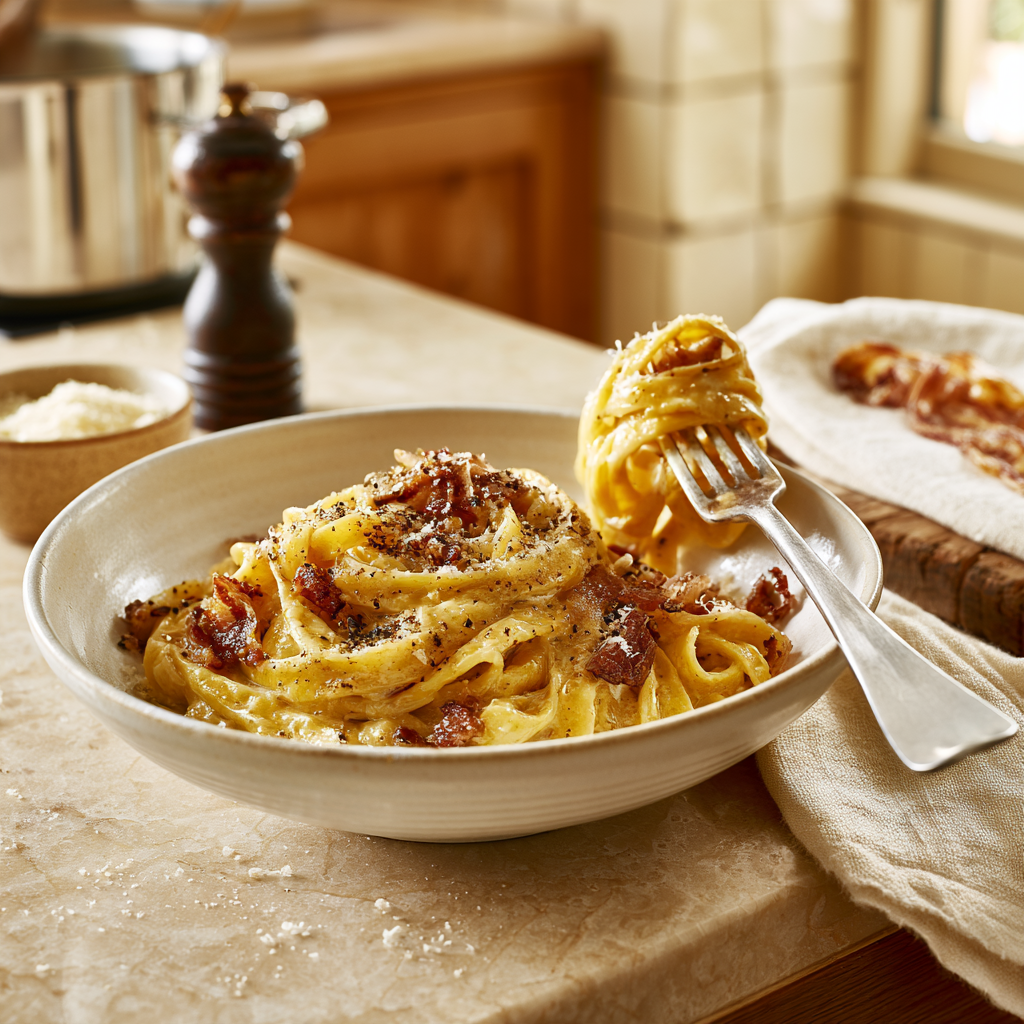
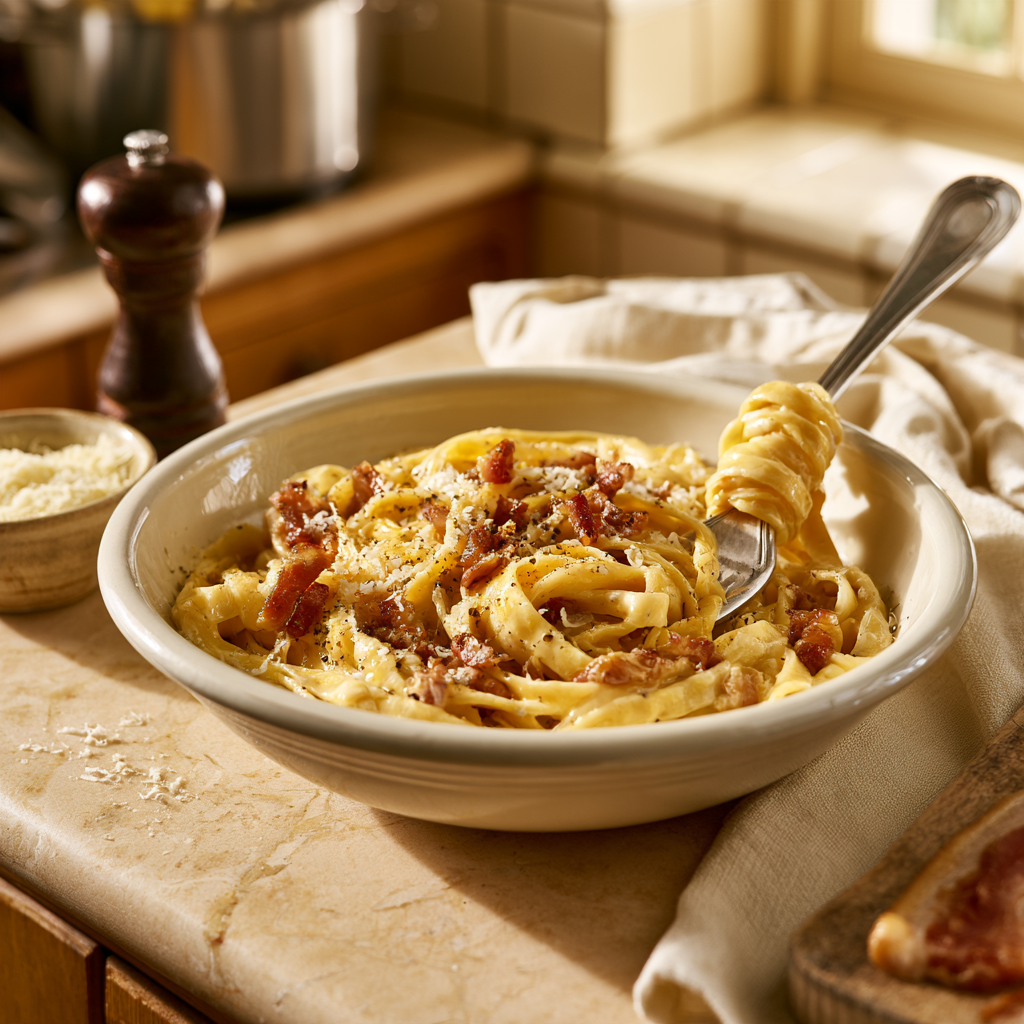
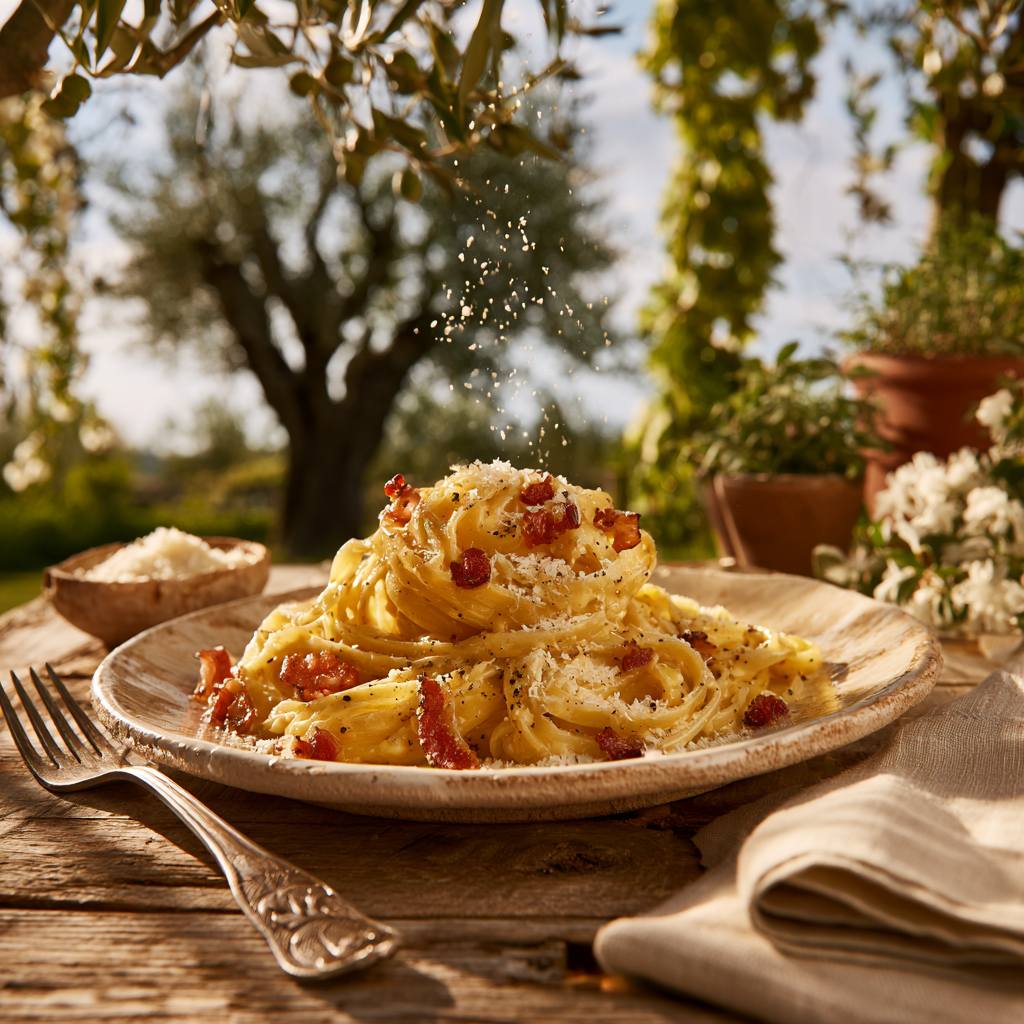
- Step 12: Serve the Fettuccine Carbonara Immediately. Divide the freshly prepared Fettuccine Carbonara evenly among four warmed pasta bowls, using kitchen tongs to twist the ribbons into attractive portions while ensuring each serving receives a generous distribution of golden guanciale pieces and creamy sauce. Sprinkle a little additional freshly grated Pecorino Romano over each bowl, if desired, and finish with freshly cracked black pepper to enhance the dish's distinctive Roman-inspired flavor. Serve immediately while the pasta is warm and the sauce remains smooth, glossy, and beautifully emulsified, as carbonara can become noticeably thicker and less creamy when allowed to sit for too long. For a balanced dinner, pair the pasta with roasted broccoli, sautéed asparagus, or a fresh green salad, allowing the vegetables to contrast with the richness of the cheese and cured pork. If leftovers remain, refrigerate them promptly in a clean, airtight container and reheat thoroughly before eating, although freshly prepared carbonara offers the best texture and flavor.
Notes
For the most traditional Roman-inspired flavor, use guanciale rather than bacon or pancetta. Guanciale is cured pork jowl that provides a distinctive savory richness and flavorful rendered fat essential to the classic character of carbonara.
If guanciale is unavailable, substitute an equal weight of pancetta. Pancetta offers a similar cured pork flavor, although the finished carbonara will taste slightly different from a traditional guanciale-based preparation.
Bacon can be used as a convenient alternative when guanciale and pancetta are unavailable, but its smoky flavor will change the character of the finished dish. Choose thick-cut bacon without excessive added sweetness for a savory result.
Use freshly grated Pecorino Romano cheese for the sharp, salty flavor associated with Roman carbonara. Finely grated cheese blends more smoothly with the eggs and warm pasta than thick shreds.
For a slightly milder cheese flavor, replace part of the Pecorino Romano with freshly grated Parmigiano Reggiano. Keep the total cheese quantity approximately the same to maintain a balanced sauce.
Avoid relying exclusively on pre-shredded cheese because some packaged varieties contain anti-caking ingredients and may not incorporate as smoothly into the carbonara sauce.
For a rich, silky sauce, use a combination of whole eggs and additional egg yolks. The yolks contribute a luxurious texture, while whole eggs provide moisture and help balance the consistency.
Use pasteurized eggs or pasteurized egg products for carbonara, particularly when the sauce will not be cooked thoroughly. Residual pasta heat alone does not guarantee that ordinary shell eggs reach a food-safe temperature.
For the greatest protection against foodborne illness, egg dishes should reach 160°F (71°C). Traditional carbonara may not reach this temperature without changes to its texture, so using pasteurized eggs is particularly important when preparing the traditional creamy version.
Prepare all the ingredients before cooking the pasta. Carbonara comes together quickly, and having the guanciale, grated cheese, eggs, and reserved pasta water ready makes the final mixing process much easier.
Start cooking guanciale in a cool skillet over medium-low heat. Gradual heating encourages the fat to render evenly and helps create golden, crispy pieces without burning the meat.
Avoid adding extra butter or olive oil when cooking guanciale. The cured pork naturally releases enough flavorful fat to contribute to the creamy carbonara sauce.
If the guanciale releases an excessive amount of fat, remove a small portion before combining it with the pasta. Keeping some of the rendered fat is important because it contributes to the sauce's signature savory flavor.
Cook fettuccine until al dente rather than overly soft. The pasta should be tender with a slight firmness so it holds its shape when tossed with the warm carbonara sauce.
Fresh fettuccine can replace dried fettuccine, but its cooking time is generally much shorter. Follow the product instructions and monitor the pasta carefully to avoid overcooking.
Reserve approximately 1 cup of starchy pasta cooking water before draining. You may not use the entire amount, but it is essential for adjusting the consistency of the carbonara sauce.
Do not rinse cooked fettuccine under cold water. The starch coating the pasta helps the carbonara sauce cling to the ribbons and contributes to the creamy texture.
Remove the skillet from direct heat before adding the egg-and-cheese mixture. Excessively hot cookware can cause the eggs to coagulate too quickly, creating scrambled egg pieces instead of a smooth sauce.
If using a cast-iron skillet or another heavy pan that retains substantial heat, transfer the pasta into a large heatproof bowl before adding the egg mixture to gain better temperature control.
Toss the pasta continuously while incorporating the egg mixture. Consistent movement helps distribute the sauce evenly and reduces the risk of isolated hot spots causing the eggs to curdle.
Add reserved pasta cooking water gradually, beginning with approximately 1 tablespoon at a time. Continue tossing until the sauce becomes glossy and coats the fettuccine without forming a thick paste.
For the best texture, the carbonara sauce should coat the pasta in a thin, creamy layer. Avoid making it excessively thick or allowing large pools of liquid to collect at the bottom of the serving bowl.
If the carbonara sauce becomes too thick, add a small amount of warm reserved pasta water and toss gently until the desired consistency returns. Avoid adding large quantities at once because the sauce may become watery.
If the eggs begin forming visible curds, immediately remove the mixture from any remaining heat and continue tossing. A small amount of warm pasta water may improve the texture, although heavily scrambled eggs cannot always be restored to a smooth sauce.
If the cheese forms clumps, check that it was grated finely and that the pasta was not excessively hot when the cheese mixture was added. Gradual mixing and careful temperature control help promote smooth incorporation.
Use freshly ground black pepper rather than pre-ground pepper whenever possible. Its bold aroma provides the characteristic warm, peppery finish associated with traditional carbonara.
Toast freshly ground black pepper briefly in the warm guanciale fat if you prefer a deeper pepper aroma. Avoid leaving it over high heat because scorched pepper can create bitterness.
Taste the completed pasta before adding more salt. Guanciale and Pecorino Romano are already salty ingredients, so additional seasoning may be unnecessary.
Traditional Roman-style carbonara does not require heavy cream, garlic, or onions. Its luxurious texture develops from eggs, cheese, rendered cured pork fat, and starchy pasta water.
For a gluten-free variation, substitute gluten-free fettuccine and verify that the remaining packaged ingredients are suitable for your dietary requirements. Gluten-free pasta can release different amounts of starch, so add cooking water gradually.
For a vegetarian-inspired variation, replace guanciale with sautéed mushrooms and use a vegetarian-compatible hard cheese. This creates a different pasta dish rather than traditional Roman carbonara.
For extra vegetables, serve carbonara with roasted broccoli, sautéed asparagus, or a fresh green salad. These sides provide a refreshing contrast to the rich egg-and-cheese sauce.
For an elegant presentation, twist the cooked fettuccine into individual portions using kitchen tongs, then top each serving with golden guanciale, a light sprinkling of Pecorino Romano, and freshly ground black pepper.
Serve Fettuccine Carbonara immediately after preparing the sauce. Its creamy texture is at its best when freshly mixed, before the pasta absorbs additional moisture and the sauce begins to thicken.
Make Ahead: Prepare and grate the cheese, cut the guanciale, and organize the other ingredients in advance. Refrigerate perishable ingredients appropriately and cook the pasta and sauce just before serving for the best texture.
Storage: If the carbonara has been prepared with appropriately cooked eggs, refrigerate leftovers promptly in a shallow, airtight container at 40°F (4°C) or below. Use properly stored leftovers within approximately 3–4 days.
Reheating: Add a splash of water to leftover carbonara and reheat gently while stirring to reduce sticking and drying. For food safety, reheat leftovers thoroughly to 165°F (74°C), recognizing that the sauce may lose some of its original silky texture.
Freezing: Fettuccine Carbonara is not ideal for freezing because the egg-and-cheese sauce may separate and the pasta can become soft or grainy after thawing. Fresh preparation or short-term refrigerated storage is preferable.
For smaller portions, divide the finished dish into four equal servings and accompany each plate with vegetables. This provides a more balanced meal while preserving the rich flavors of the traditional carbonara ingredients.
OoohDelish Italian Cooking Secret: The secret to beautifully creamy Fettuccine Carbonara is controlling the temperature while combining eggs, finely grated Pecorino Romano, rendered guanciale fat, and starchy pasta water. Remove the pan from direct heat, toss continuously, add the water gradually, and serve immediately while the sauce is glossy and perfectly coats every ribbon of fettuccine.