

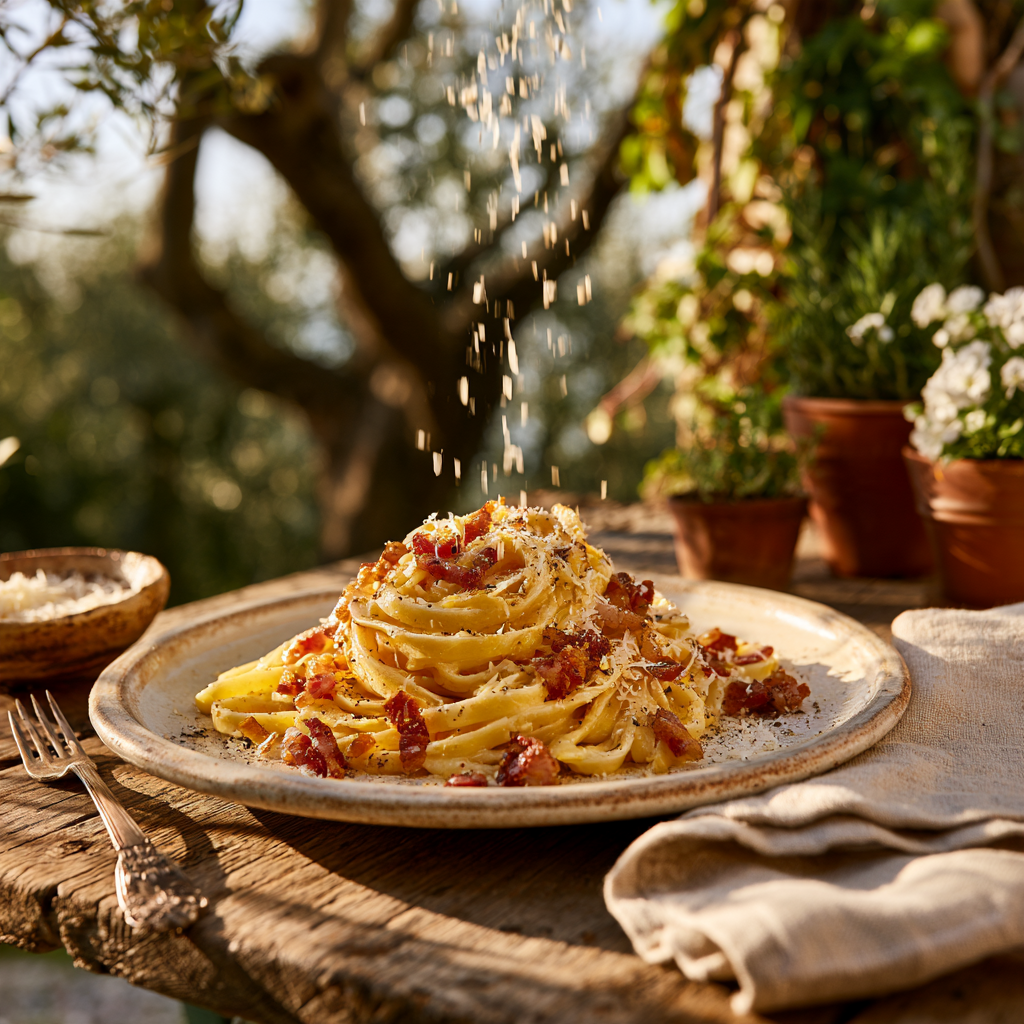
There’s something undeniably irresistible about a generous plate of Fettuccine Carbonara, where tender ribbons of pasta are wrapped in a beautifully silky, creamy sauce, topped with golden, crispy guanciale, freshly grated Pecorino Romano, and a generous sprinkle of aromatic black pepper. Imagine lifting your fork and watching the glossy sauce cling perfectly to each strand of fettuccine, creating a rich, savory, and wonderfully comforting bite. This easy Fettuccine Carbonara recipe brings the elegance of Italian restaurant cooking straight into your kitchen, transforming a handful of simple ingredients into a satisfying pasta dinner. Whether you’re preparing a romantic meal, a quick weeknight dinner, or something special for your family, this classic Italian-inspired dish delivers impressive flavor without requiring complicated techniques or hours of preparation.
What makes homemade Fettuccine Carbonara so special is the remarkable way a few carefully selected ingredients work together to create an exceptionally rich and flavorful sauce. Inspired by traditional Roman carbonara, this recipe combines eggs, freshly grated Pecorino Romano cheese, crispy guanciale, and freshly ground black pepper with perfectly cooked fettuccine. Unlike many modern pasta sauces, authentic Roman-style carbonara doesn’t require heavy cream to achieve its luxurious texture. Instead, the creamy consistency develops when the egg-and-cheese mixture gently combines with warm pasta, rendered guanciale fat, and a little reserved starchy pasta cooking water. The result is a beautifully emulsified sauce that coats the pasta without feeling excessively heavy or greasy. Each ingredient plays an important role, from the salty richness of the cured pork to the sharp, savory character of the cheese and the delicate warmth of freshly cracked black pepper.
- Origins of Fettuccine Carbonara: The Fascinating History Behind This Creamy Italian Pasta
- The World War II Theory: Did American Soldiers Help Inspire Carbonara?
- The Charcoal Workers Theory: Why Is It Called Carbonara?
- The First Documented Carbonara Recipes: A Surprising History
- How Carbonara Evolved Into the Classic Roman Recipe
- Why Fettuccine Became a Delicious Alternative to Traditional Carbonara Pasta
- The Influence of Fettuccine Alfredo on Modern Creamy Pasta Dishes
- From Roman Trattorias to International Restaurant Menus
- The Historical Evolution of Carbonara: Key Milestones
- What Makes Fettuccine Carbonara Different From the Original Roman Dish?
- Why the Origins of Fettuccine Carbonara Still Matter Today
- Health Benefits of Fettuccine Carbonara: Nutritional Value, Protein, Energy & Healthier Variations
- 1. Fettuccine Provides Carbohydrates for Energy
- 2. Eggs Provide High-Quality Protein and Essential Nutrients
- 3. Pecorino Romano Contributes Calcium and Phosphorus
- 4. Guanciale Adds Protein and Flavor, but Portion Size Matters
- 5. Traditional Carbonara Can Be Creamy Without Heavy Cream
- 6. Black Pepper Provides Flavor and Naturally Occurring Plant Compounds
- 7. A Combination of Carbohydrates, Protein, and Fat Makes It a Satisfying Meal
- 8. Homemade Carbonara Gives You Greater Control Over Ingredients and Portions
- Health Benefits of Fettuccine Carbonara: Nutritional Breakdown
- How to Make Fettuccine Carbonara Healthier Without Sacrificing Flavor
- 1. Choose Whole Wheat Fettuccine for Additional Fiber
- 2. Use a Moderate Amount of Guanciale
- 3. Measure the Pecorino Romano Carefully
- 4. Skip the Heavy Cream
- 5. Add a Generous Serving of Vegetables
- 6. Avoid Adding Extra Salt Before Tasting
- 7. Serve an Appropriate Pasta Portion
- 8. Prepare and Serve the Egg-Based Sauce Safely
- Is Fettuccine Carbonara Healthy?
- Can You Eat Fettuccine Carbonara While Trying to Maintain a Balanced Diet?
- Final Thoughts: Enjoying the Nutritional Benefits of Homemade Fettuccine Carbonara
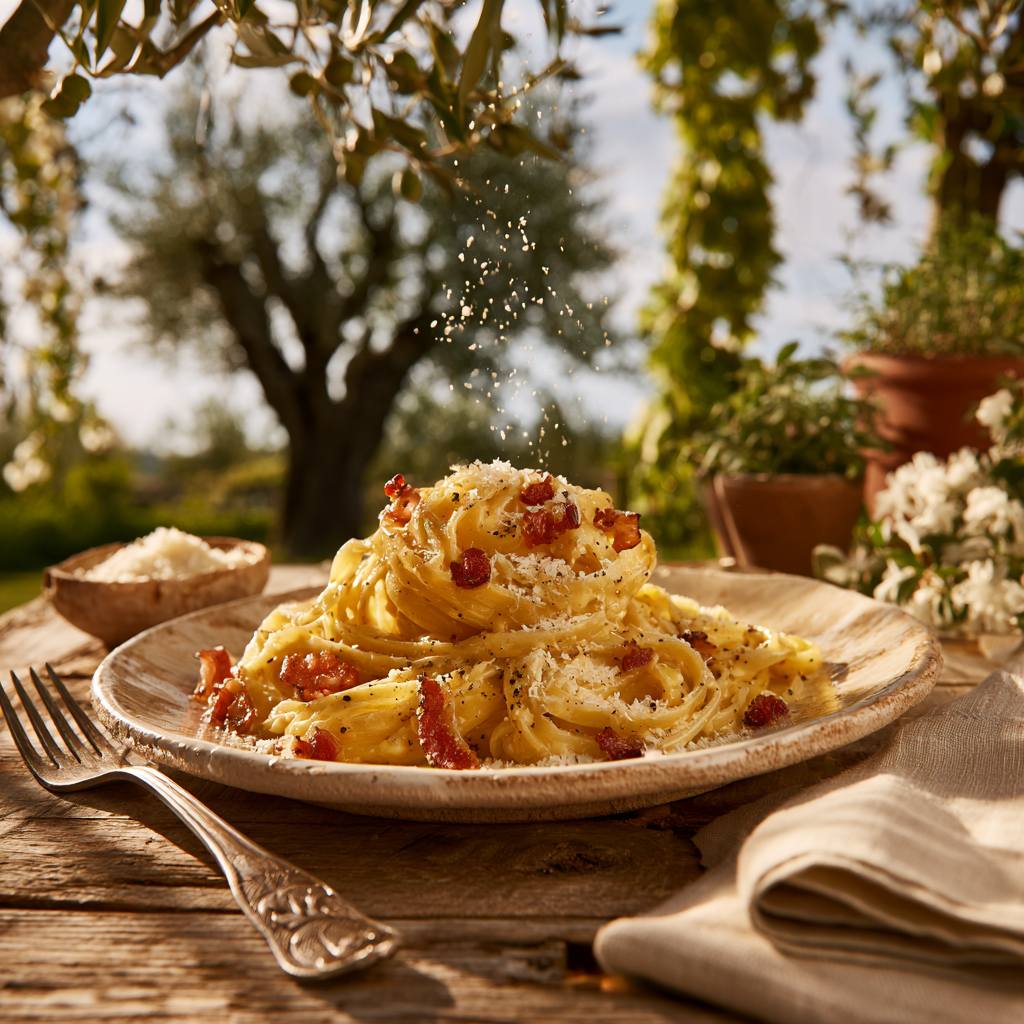
Fettuccine Carbonara
Equipment
- Large pasta pot
- Large deep skillet or frying pan
- Large heatproof mixing bowl
- Colander
- Kitchen tongs
- Whisk
- Fine cheese grater or Microplane
- Sharp kitchen knife
- Cutting board
- Measuring cups
- Measuring spoons
- Digital kitchen scale
- Heatproof silicone spatula
- Ladle
- Food thermometer (optional)
- 4 Pasta serving bowls
Ingredients
- 12 oz 340 g dried fettuccine pasta
- 4 1/4 oz 120 g guanciale, skin removed and cut into small strips or cubes
- 2 large pasteurized eggs at room temperature
- 2 large pasteurized egg yolks at room temperature
- 3/4 cup 80 g finely grated Pecorino Romano cheese
- 1 teaspoon freshly ground black pepper or to taste
- 1 1/2 teaspoons fine sea salt for approximately 3 liters of pasta cooking water, adjust to taste
Instructions
- Step 1: Prepare and Organize All the Ingredients. Before beginning your homemade Fettuccine Carbonara, carefully measure the dried fettuccine, guanciale, pasteurized eggs, egg yolks, Pecorino Romano, and freshly ground black pepper so everything is ready when needed. Remove the tough outer skin from the guanciale, if present, and cut the meat into small, evenly sized strips or cubes approximately 1/4 inch thick. Finely grate the Pecorino Romano using a Microplane or the smallest holes of a cheese grater, as finely grated cheese incorporates more easily into the egg mixture and helps create a smooth, glossy sauce. Separate the additional egg yolks into a clean bowl and keep the pasteurized eggs refrigerated until shortly before use. Carbonara comes together very quickly once the pasta finishes cooking, so preparing all the ingredients in advance helps prevent the pasta from cooling excessively or the delicate egg sauce from becoming overheated during the final mixing stage.
- Step 2: Bring the Pasta Water to a Boil. Fill a large pasta pot with approximately 3 liters of water and place it over high heat until the water reaches a rolling boil. Add approximately 1 1/2 teaspoons of fine sea salt, stirring briefly to distribute it evenly throughout the water, but remember that guanciale and Pecorino Romano already contribute considerable saltiness to the finished dish. Using sufficient water allows the fettuccine ribbons to move freely as they cook and helps prevent them from sticking together. Keep the pot covered while the water heats if you want to reduce the time required to reach boiling. Do not add olive oil or butter to the water, as neither ingredient is necessary for properly cooked pasta, and the traditional carbonara sauce relies on the natural starch released by the fettuccine. While the water heats, prepare the guanciale and egg-and-cheese mixture so the components can be combined as soon as the pasta reaches al dente.
- Step 3: Cook the Guanciale Until Golden and Crispy. Place the prepared guanciale strips or cubes in a large, preferably heavy-bottomed skillet while the pan is still cool, then set it over medium-low heat and cook gradually for approximately 7–10 minutes, stirring occasionally until the fat begins to render and the meat develops lightly golden, crispy edges. Starting with a cool skillet allows the fat to melt gradually rather than causing the guanciale to burn before it becomes properly crisp. Avoid adding extra oil or butter because guanciale naturally releases enough flavorful fat for this preparation. As the meat cooks, the rendered fat becomes the savory foundation of the carbonara sauce, contributing richness and helping the eggs, cheese, and pasta water combine into a silky emulsion. Once the guanciale is golden and pleasantly crisp, remove the skillet from direct heat and leave the rendered fat in the pan, keeping the guanciale warm while the fettuccine finishes cooking. If the guanciale releases an unusually large quantity of fat, you may remove a small amount, but reserve enough to flavor the pasta.
- Step 4: Prepare the Egg and Pecorino Romano Mixture. In a large heatproof mixing bowl, combine the 2 whole pasteurized eggs, 2 additional pasteurized egg yolks, and 80 g of finely grated Pecorino Romano cheese, then add approximately 3/4 teaspoon of freshly ground black pepper and whisk thoroughly until the ingredients form a thick, creamy, uniform mixture. The extra egg yolks contribute richness and help create the smooth texture associated with traditional Roman-style carbonara, while the Pecorino Romano provides its distinctive sharp, salty flavor. The mixture may appear relatively thick or slightly paste-like at this stage, which is completely normal because the cheese has not yet been loosened with pasta cooking water. Set the bowl aside while the pasta cooks, and avoid placing it directly over the hot stove, as excessive heat may cause the eggs to begin coagulating before they are incorporated into the pasta. Using finely grated cheese and whisking thoroughly will make it easier to develop a smooth sauce during the final mixing stage.
- Step 5: Cook the Fettuccine Until Al Dente. Add the dried fettuccine to the pot of boiling salted water and gently stir with kitchen tongs during the first minute to prevent the long pasta ribbons from sticking together. Cook according to the package instructions, usually approximately 9–12 minutes for dried fettuccine, checking the pasta a minute or two before the suggested cooking time ends. The goal is an al dente texture, meaning the pasta should be tender enough to eat but retain a slight firmness in the center rather than becoming excessively soft or mushy. Stir occasionally throughout cooking to keep the strands separated and encourage even cooking. If using fresh fettuccine instead of dried pasta, reduce the cooking time according to its thickness and the package instructions, as fresh pasta often cooks in only a few minutes. Avoid overcooking because the fettuccine will continue absorbing some moisture during the final sauce preparation, and the ribbons should remain firm enough to hold their shape when tossed with the creamy egg-and-cheese mixture.
- Step 6: Reserve the Starchy Pasta Cooking Water. Before draining the cooked fettuccine, carefully scoop approximately 1 cup (240 ml) of the hot, cloudy pasta cooking water into a heatproof measuring jug using a ladle or heatproof cup. This reserved water is essential to creating the signature creamy texture of Fettuccine Carbonara because the starch released by the pasta helps distribute the cheese, eggs, and rendered guanciale fat into a smooth coating. You may not need to use the entire cup, but keeping enough available allows you to adjust the sauce without adding cream or extra butter. Take care when collecting the water because it will be extremely hot, and avoid pouring it directly into the egg mixture all at once, as sudden exposure to excessive heat can cause the eggs to coagulate. Once the water has been reserved, drain the fettuccine using a colander, but do not rinse it under cold running water because rinsing removes surface starch that helps the carbonara sauce cling to the pasta.
- Step 7: Combine the Hot Fettuccine With the Guanciale. Transfer the freshly drained fettuccine directly into the skillet containing the cooked guanciale and its flavorful rendered fat, then use kitchen tongs to toss the pasta gently for approximately 30–60 seconds until the ribbons are evenly coated with the savory fat and the guanciale pieces are distributed throughout. If the pasta appears dry or difficult to move, add approximately 1–2 tablespoons of reserved pasta cooking water to loosen the strands and make tossing easier. Keep the skillet away from high heat during this stage, as the hot pasta and rendered fat already provide sufficient warmth for the next steps. The purpose of this initial mixing is to coat the fettuccine with guanciale flavor before introducing the delicate egg-and-cheese mixture. The pasta should appear lightly glossy rather than greasy, and the guanciale should remain pleasantly crisp without becoming burned or overly hard. Once the ingredients are combined, prepare to reduce the temperature before adding the eggs.
- Step 8: Remove the Skillet From Direct Heat and Control the Temperature. Remove the skillet completely from the stovetop and place it on a heat-resistant surface, allowing excessive heat to dissipate briefly while continuing to toss the pasta with kitchen tongs. This temperature-control step is one of the most important parts of preparing homemade Fettuccine Carbonara because adding eggs to an excessively hot skillet can cause them to coagulate rapidly, producing scrambled egg pieces instead of a silky sauce. The residual warmth of the pasta should be sufficient to help the egg-and-cheese mixture coat the noodles, but the skillet must not be so hot that the mixture cooks immediately upon contact. If using a heavy cast-iron skillet that retains substantial heat, transferring the pasta and guanciale into a large heatproof mixing bowl may provide better control. Keep a little warm pasta cooking water nearby so you can regulate the texture as the sauce forms. Remember that residual heat alone does not guarantee that the eggs reach a food-safe temperature, which is why this recipe specifies pasteurized eggs.
- Step 9: Add the Egg and Cheese Mixture to the Fettuccine. With the skillet removed from direct heat and the pasta no longer exposed to an excessively hot pan, gradually pour the prepared egg-and-Pecorino mixture over the warm fettuccine while using kitchen tongs to toss continuously. Work steadily and carefully, lifting and turning the pasta ribbons so the mixture distributes evenly rather than collecting in one spot. The combination of eggs, finely grated cheese, rendered guanciale fat, and residual pasta warmth should begin forming a creamy coating around the noodles. If the sauce initially appears thick or slightly sticky, add approximately 1 tablespoon of reserved pasta cooking water and continue tossing to loosen it. Avoid returning the skillet directly to high heat, as this can cause the eggs to scramble and the cheese to clump. Continue mixing until the egg mixture has spread throughout the pasta and there are no large concentrations of unmixed cheese, allowing the ingredients to begin forming the smooth texture that makes carbonara so distinctive.
- Step 10: Create the Silky Carbonara Sauce With Pasta Water. Continue tossing the fettuccine gently while adding reserved warm pasta cooking water approximately 1 tablespoon at a time, allowing each addition to incorporate before adding more. As the moisture combines with the egg mixture, finely grated Pecorino Romano, and rendered guanciale fat, the sauce should gradually become smoother, glossier, and more fluid, coating the pasta ribbons in a delicate creamy layer rather than forming a heavy pool at the bottom of the skillet. The exact amount of pasta water required depends on the pasta’s starch content, the quantity of fat released by the guanciale, and the temperature of the ingredients, so add it slowly and judge the texture visually. A successful carbonara sauce should cling beautifully to each strand of fettuccine while remaining soft enough for the pasta to move freely when tossed. Avoid using heavy cream to correct the consistency, as gradual additions of pasta water are sufficient for properly prepared traditional-style carbonara.
- Step 11: Adjust the Consistency and Finish the Seasoning. Once the fettuccine is evenly coated with the creamy carbonara sauce, inspect the texture and make any final adjustments before serving. If the sauce appears too thick or the noodles begin sticking together, add another tablespoon of warm reserved pasta cooking water and toss gently until the mixture becomes glossy and fluid again. If the sauce seems slightly loose, continue tossing to distribute the moisture rather than immediately exposing the eggs to strong heat. Add the remaining freshly ground black pepper according to your preference, then taste a small amount and adjust the seasoning only if necessary, remembering that guanciale and Pecorino Romano already provide a considerable amount of salt. The finished dish should have a rich, savory flavor, a pleasantly peppery aroma, tender al dente pasta, and a smooth coating that does not resemble scrambled eggs or a thick cheese paste. Work promptly during this final stage because carbonara is best served immediately while the sauce retains its silky consistency.
- Step 12: Serve the Fettuccine Carbonara Immediately. Divide the freshly prepared Fettuccine Carbonara evenly among four warmed pasta bowls, using kitchen tongs to twist the ribbons into attractive portions while ensuring each serving receives a generous distribution of golden guanciale pieces and creamy sauce. Sprinkle a little additional freshly grated Pecorino Romano over each bowl, if desired, and finish with freshly cracked black pepper to enhance the dish’s distinctive Roman-inspired flavor. Serve immediately while the pasta is warm and the sauce remains smooth, glossy, and beautifully emulsified, as carbonara can become noticeably thicker and less creamy when allowed to sit for too long. For a balanced dinner, pair the pasta with roasted broccoli, sautéed asparagus, or a fresh green salad, allowing the vegetables to contrast with the richness of the cheese and cured pork. If leftovers remain, refrigerate them promptly in a clean, airtight container and reheat thoroughly before eating, although freshly prepared carbonara offers the best texture and flavor.
Notes
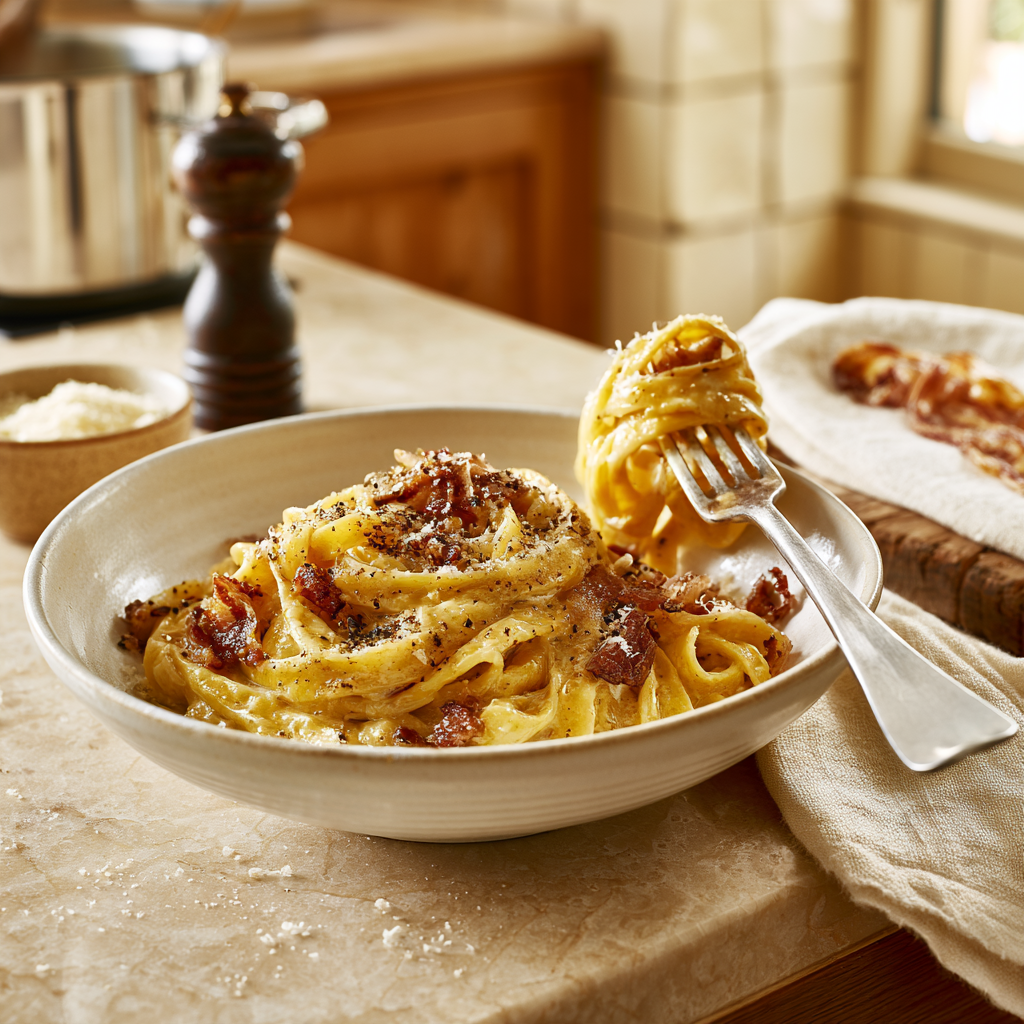
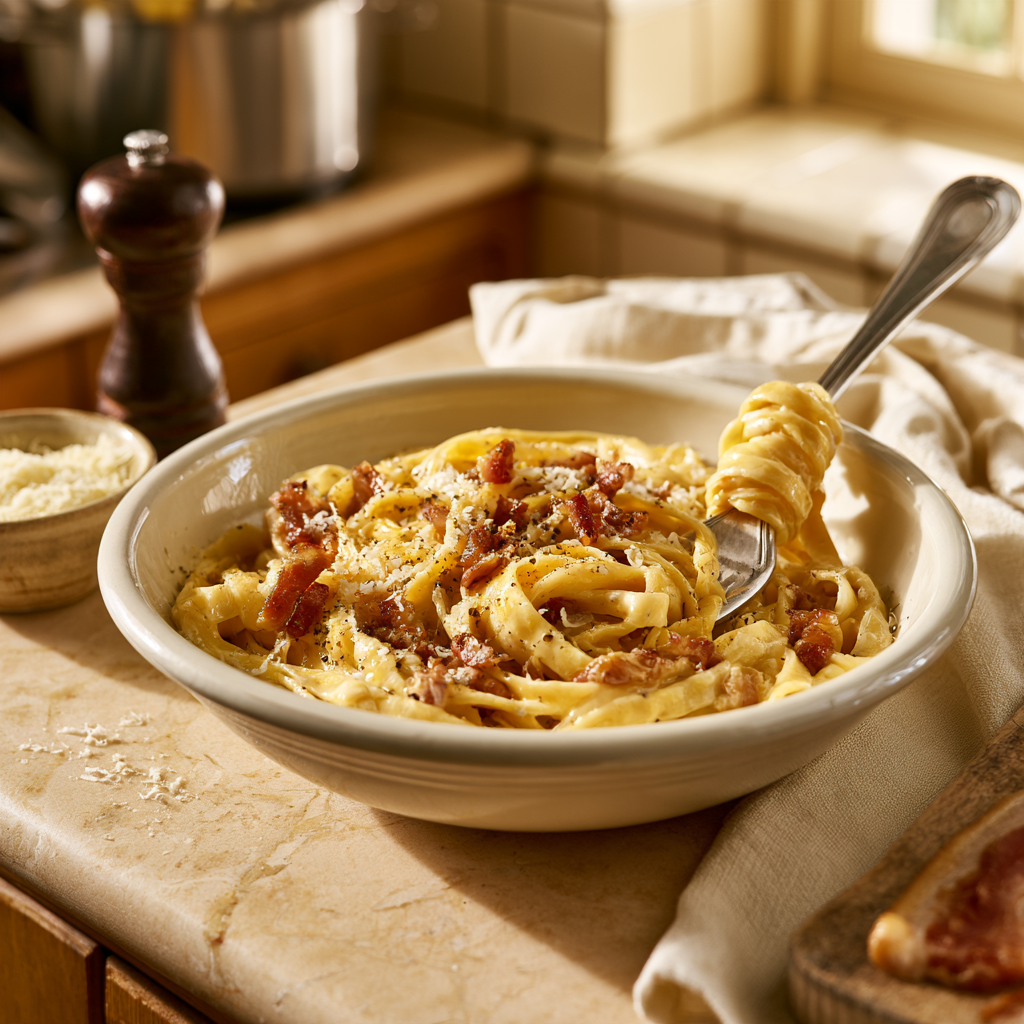
Origins of Fettuccine Carbonara: The Fascinating History Behind This Creamy Italian Pasta
cal connections to central Italian food traditions. Its sharp, salty character provides an important contrast to the richness of the eggs and guanciale.
Guanciale, traditionally prepared from cured pork jowl, contributes another essential flavor. As it cooks, its fat renders into the pan, creating a savory foundation that can be incorporated into the pasta sauce.
Although carbonara is now closely identified with Roman cooking, historians continue to debate exactly how these ingredients first came together in the dish we recognize today.
The World War II Theory: Did American Soldiers Help Inspire Carbonara?
One of the most widely discussed explanations for the origins of carbonara connects the dish to the final years of World War II and the period immediately afterward.
According to this theory, American soldiers stationed in Italy introduced or helped popularize ingredients such as bacon and eggs, which were familiar elements of American breakfasts. Italian cooks may then have combined these ingredients with locally available pasta and cheese, producing an early version of carbonara.
This explanation is particularly interesting because bacon and eggs are central ingredients in many American breakfast traditions, while pasta and aged cheese were already familiar components of Italian cooking.
Some accounts suggest that Italian cooks working with Allied troops adapted available provisions into satisfying pasta meals. The resulting combination could have appealed to both American servicemen and Italian diners, encouraging its popularity during the postwar years.
However, the American military theory remains a historical hypothesis rather than an established account of carbonara’s invention. No universally accepted document identifies a single soldier, restaurant, or chef as its creator.
What makes the theory plausible is the historical setting: the movement of Allied troops, changing food supplies, and cultural exchanges that influenced everyday cooking during and after the war.
Whether or not American soldiers directly inspired the original preparation, the story illustrates how recipes can develop when culinary traditions encounter unfamiliar ingredients and new dining preferences.
The Charcoal Workers Theory: Why Is It Called Carbonara?
Another popular explanation connects carbonara to Italian charcoal workers, historically known as carbonai.
The Italian word carbone means coal or charcoal, and some traditional accounts suggest that carbonara may have been associated with workers who prepared simple, filling meals while spending long periods away from home.
According to this interpretation, ingredients such as dried pasta, cured pork, aged cheese, and eggs could provide the basis for a substantial meal.
The dish’s generous use of black pepper has also inspired a picturesque explanation: the dark pepper specks scattered across the pale pasta supposedly resemble particles of charcoal.
Although this story adds a memorable element to carbonara’s identity, historians have not established that charcoal workers invented the modern recipe.
The charcoal connection is therefore best understood as one of several theories surrounding the dish’s name, rather than a confirmed historical fact.
Regardless of which explanation is correct, the name carbonara has become inseparable from the dish’s distinctive combination of savory cured pork, creamy sauce, and black pepper.
The First Documented Carbonara Recipes: A Surprising History
One of the most fascinating details about the origins of pasta carbonara is that early documented recipes were not identical to the version considered traditional today.
Although carbonara was being discussed in the postwar period, a published recipe appeared in a Chicago restaurant guide in 1952. This is among the earliest widely documented recipes associated with the dish.
Even more interestingly, an early Italian recipe appeared in the August 1954 issue of the culinary magazine La Cucina Italiana.
That historical version used spaghetti, pancetta, eggs, Gruyère cheese, garlic, and black pepper. These ingredients differ noticeably from the modern Roman combination of guanciale, Pecorino Romano, eggs, and pepper.
The presence of Gruyère and garlic is particularly revealing because it demonstrates that the recipe had not yet become standardized.
During the following decades, carbonara continued to evolve, with different cooks and restaurants experimenting with cheese combinations, cured meats, and preparation methods.
The emergence of these early recipes is important because it shows that carbonara was not necessarily created in one fixed form. Instead, the dish gradually developed its recognizable identity through changing tastes, regional preferences, and culinary experimentation.
How Carbonara Evolved Into the Classic Roman Recipe
As carbonara became more popular throughout Italy, the recipe gradually moved toward the ingredient combination most closely associated with traditional Roman cooking today.
Guanciale became a particularly important component, replacing or taking precedence over pancetta in many preparations. Its distinctive cured flavor and rendered fat contribute much of the savory richness that makes carbonara memorable.
Pecorino Romano also became strongly associated with the dish, providing a sharper, saltier flavor than many other cheeses.
Meanwhile, cooks refined the method of combining eggs, cheese, rendered pork fat, and hot pasta to create a smooth sauce.
This technique became one of carbonara’s defining characteristics.
Rather than relying on cream to produce a rich consistency, traditional carbonara creates its creamy texture through the careful emulsification of eggs, cheese, fat, and starchy pasta cooking water.
The temperature of the ingredients plays an essential role. If the pasta mixture is too hot when the eggs are added, they can coagulate into noticeable curds. If the mixture is too cool, the sauce may not develop the desired consistency.
Through careful mixing and temperature control, the ingredients form a glossy coating that clings to the pasta.
This combination of simplicity, technique, and flavor eventually helped carbonara establish itself as one of Rome’s most recognizable pasta specialties.
Why Fettuccine Became a Delicious Alternative to Traditional Carbonara Pasta
Although traditional Roman carbonara is most commonly associated with spaghetti, other pasta shapes have become popular as the dish has spread around the world.
Fettuccine Carbonara is one of these adaptations, combining the familiar flavors of classic carbonara with broad, flat pasta ribbons.
The word fettuccine comes from the Italian word fettuccia, referring to a small ribbon. This pasta shape has historical roots in central Italian cooking, particularly in Lazio and neighboring regions, where ribbon-shaped egg pasta has long been appreciated.
Unlike spaghetti, which has a thin, rounded shape, fettuccine consists of wider, flatter strands that create a distinctive texture.
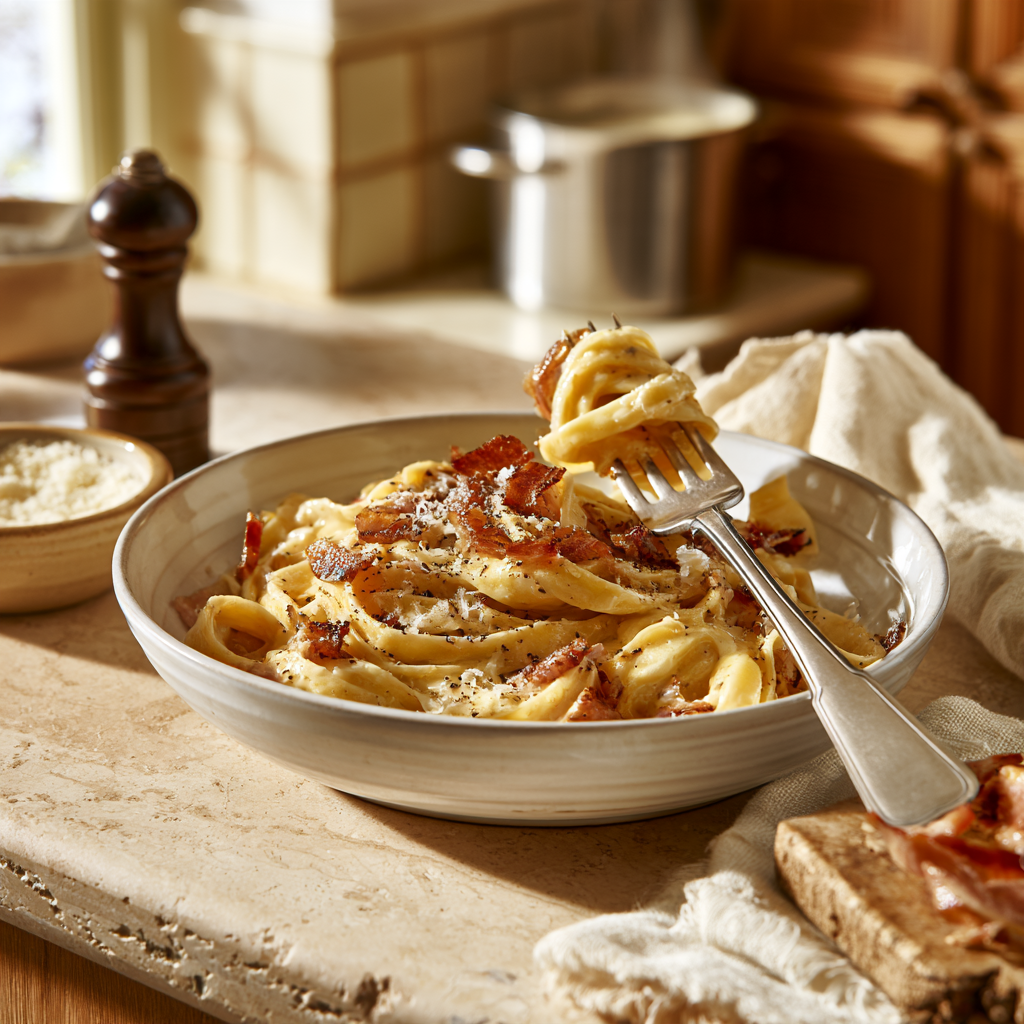
These ribbons provide plenty of surface area for the silky carbonara sauce to coat, allowing the eggs, cheese, and rendered guanciale fat to form a delicious layer around the pasta.
The result is a slightly different eating experience from classic spaghetti carbonara. Fettuccine often feels more substantial, with a tender, ribbon-like texture that makes the rich sauce particularly enjoyable.
However, it’s important to distinguish between the historical origins of carbonara and the later use of fettuccine in carbonara-style preparations.
Fettuccine Carbonara is best described as an Italian-inspired variation of Roman carbonara, rather than the original historical pasta shape used for the dish.
This distinction doesn’t diminish its appeal. Instead, it demonstrates how traditional recipes can inspire new combinations while preserving the flavors and techniques that made them famous.
The Influence of Fettuccine Alfredo on Modern Creamy Pasta Dishes
Another interesting chapter in the development of Fettuccine Carbonara involves the international popularity of fettuccine itself.
One of the most famous fettuccine preparations is Fettuccine Alfredo, associated with the Roman restaurateur Alfredo di Lelio during the early twentieth century.
The original preparation became known for its combination of pasta, butter, and Parmesan cheese, which could be mixed into a smooth coating around the fettuccine.
As Italian pasta dishes gained popularity outside Italy, particularly in the United States, fettuccine became closely associated with rich, creamy sauces.
This familiarity may help explain why fettuccine became an appealing choice for carbonara-inspired recipes, although it does not establish a direct historical connection between Alfredo and the invention of Fettuccine Carbonara.
Both dishes demonstrate how careful mixing can create a creamy pasta coating, but their ingredients and traditional methods are different.
Fettuccine Alfredo relies on butter and cheese, whereas Roman-style carbonara includes eggs, cured pork, aged cheese, and black pepper.
Modern adaptations sometimes combine ideas from both dishes, adding cream or other ingredients to create a richer sauce.
However, when preparing Fettuccine Carbonara without cream, the recipe remains closer to the traditional carbonara technique while offering the broad texture of fettuccine.
From Roman Trattorias to International Restaurant Menus
During the second half of the twentieth century, carbonara gained increasing recognition beyond Rome and eventually became one of Italy’s most internationally recognizable pasta dishes.
Italian restaurants, migration, tourism, cookbooks, and later television cooking programs helped introduce carbonara to audiences around the world.
As the dish entered new culinary environments, different versions began appearing on restaurant menus and in home kitchens.
Some preparations used pancetta or bacon when guanciale was difficult to find. Others combined Pecorino Romano with Parmesan to create a milder cheese flavor.
In several countries, cooks also added heavy cream, garlic, mushrooms, chicken, or other ingredients, producing variations that differed significantly from traditional Roman carbonara.
While these versions can be delicious, they reflect adaptation rather than the historical Roman preparation.
Fettuccine became one of the pasta shapes associated with these international interpretations, particularly in restaurants and home kitchens where wide pasta ribbons were already popular.
For readers interested in exploring other Italian-American pasta adaptations, our Pink Sauce Pasta Recipe offers a different approach to creamy pasta, combining tomato sauce, cream, and Parmesan for a smooth, rosy finish.
If you prefer pasta with a bolder, spicier flavor, our Carbone Spicy Rigatoni Recipe is another delicious example of how Italian-inspired pasta traditions continue to influence modern cooking.
These dishes reflect a broader culinary pattern: familiar pasta shapes and classic Italian flavors are constantly being adapted to suit different preferences, ingredients, and occasions.
The Historical Evolution of Carbonara: Key Milestones
The following timeline highlights important developments in the history of carbonara and explains how its modern identity emerged.
| Historical Period | Development | Culinary Significance |
|---|---|---|
| Before the 1940s | Italian cooks prepared pasta dishes using eggs, cheese, pepper, and cured pork in different combinations | These traditions provided possible culinary foundations for carbonara |
| 1940s | Carbonara’s emergence is often associated with wartime and postwar Italy | Its precise inventor and birthplace remain debated |
| 1950 | Carbonara was mentioned in Italian newspaper reporting about Roman restaurants | Demonstrates that the dish was already recognized by name |
| 1952 | An early documented carbonara recipe appeared in a Chicago restaurant guide | Shows that carbonara had reached international culinary publications |
| 1954 | La Cucina Italiana published a carbonara recipe using pancetta, Gruyère, eggs, garlic, and pepper | Illustrates how early recipes differed from today’s familiar version |
| 1960s–1980s | Carbonara appeared in different forms, sometimes including cream or alternative cheeses | Reflects the continued evolution and internationalization of the dish |
| Late 20th century | The guanciale, Pecorino Romano, egg, and black pepper preparation became increasingly recognized as the traditional Roman style | Helped establish the dish’s familiar modern identity |
| Modern Day | Carbonara is prepared with spaghetti, rigatoni, fettuccine, and other pasta shapes | Shows how a Roman specialty continues to inspire new variations worldwide |
What Makes Fettuccine Carbonara Different From the Original Roman Dish?
Although both preparations share many of the same flavors, the most noticeable distinction is the pasta shape.
Traditional carbonara is strongly associated with spaghetti, although rigatoni and other shapes are also used in Roman cooking. Fettuccine Carbonara replaces these with wide, flat ribbons of pasta.
This substitution changes the texture and presentation without necessarily requiring significant changes to the sauce.
The broad surface of fettuccine allows the glossy egg-and-cheese mixture to coat the pasta generously, while the ribbons create satisfying folds and layers as they are twirled around a fork.
When prepared with guanciale, Pecorino Romano, eggs, and black pepper, the result preserves the flavor profile of classic carbonara.
For cooks who prefer a softer, ribbon-style pasta texture, fettuccine provides a particularly enjoyable alternative.
The key is understanding that changing the pasta shape is a creative variation, while adding heavy cream or other ingredients moves the dish further away from traditional Roman preparation.
Why the Origins of Fettuccine Carbonara Still Matter Today
The history of Fettuccine Carbonara offers more than an interesting culinary story. It helps explain why certain cooking techniques and ingredient combinations are so important to the finished dish.
Understanding the Roman tradition encourages home cooks to appreciate the flavors of guanciale, Pecorino Romano, eggs, and black pepper rather than relying on unnecessary ingredients to create richness.
Learning about the evolution of carbonara also reveals that many foods considered timeless classics have undergone considerable changes over relatively short periods.
Early published carbonara recipes contained ingredients that traditionalists might reject today, demonstrating that culinary traditions are often more flexible and complex than they initially appear.
The popularity of Fettuccine Carbonara reflects this same process of adaptation. By pairing the familiar carbonara sauce with wide fettuccine ribbons, home cooks can enjoy a dish that respects its Italian inspiration while offering a distinctive texture.
Ultimately, Fettuccine Carbonara represents a delicious meeting of Roman culinary tradition and modern pasta creativity. From the debated origins of carbonara during the twentieth century to the international popularity of creamy pasta dishes, its story celebrates the evolution of Italian-inspired home cooking.
And while historians may continue discussing exactly where carbonara began, one thing is certain: the combination of silky pasta, savory cured pork, aged cheese, eggs, and freshly ground black pepper has earned a lasting place in kitchens around the world.
Health Benefits of Fettuccine Carbonara: Nutritional Value, Protein, Energy & Healthier Variations
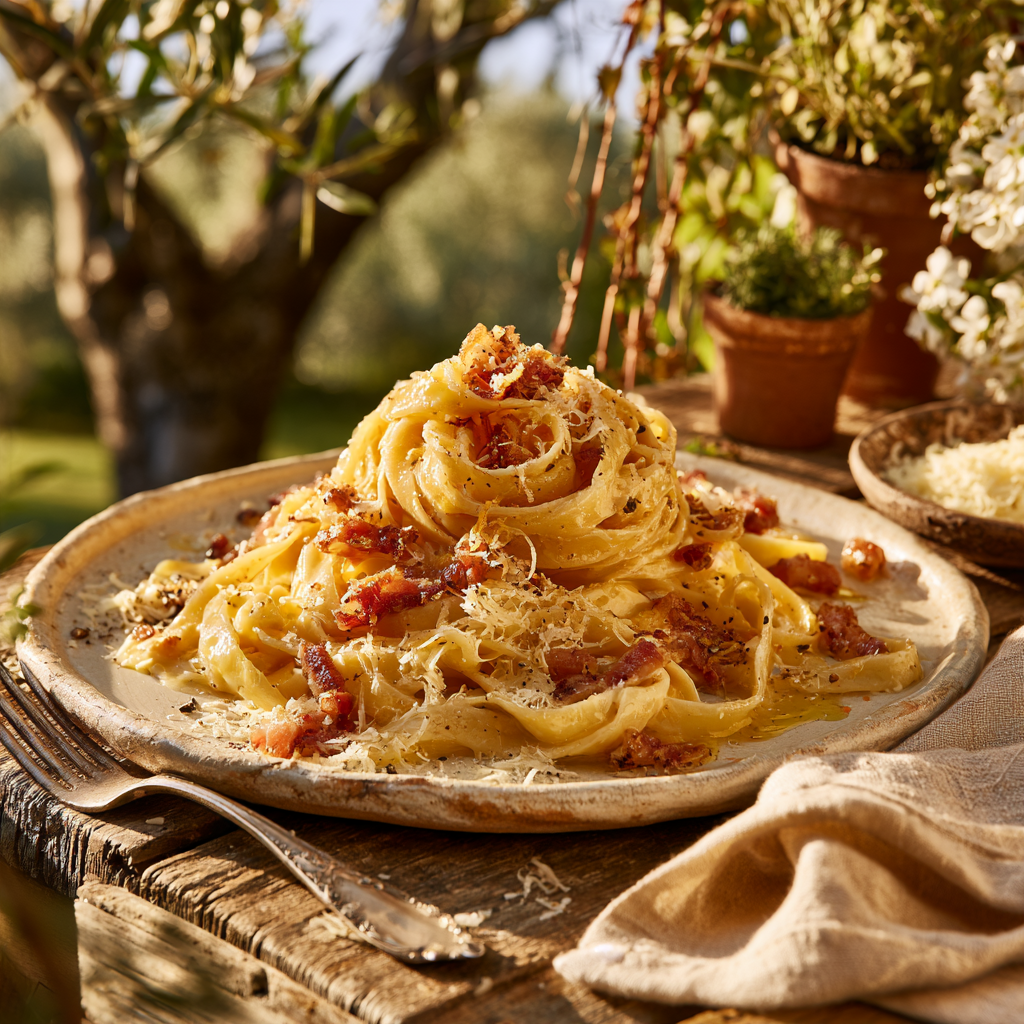
When you think about Fettuccine Carbonara, the first things that probably come to mind are tender ribbons of pasta, a beautifully creamy egg-and-cheese sauce, crispy guanciale, and the irresistible aroma of freshly ground black pepper. This famous Italian-inspired pasta dish is celebrated for its rich flavor and comforting texture, but you might also wonder whether homemade Fettuccine Carbonara offers any nutritional benefits. Although carbonara is a relatively rich meal that can contain substantial amounts of saturated fat and sodium, its traditional ingredients also provide valuable nutrients, including protein, carbohydrates, calcium, phosphorus, vitamin B12, and choline.
One of the most interesting aspects of traditional Fettuccine Carbonara is that its creamy texture doesn’t require heavy cream. Instead, the sauce develops naturally from eggs, aged cheese, rendered guanciale fat, and a small amount of starchy pasta cooking water. This combination creates a silky coating around the fettuccine while supplying a mixture of carbohydrates, fats, and protein. The nutritional quality of the finished meal depends on the amount of pasta, cured pork, cheese, and eggs used, as well as the size of each serving.
Preparing Fettuccine Carbonara from scratch also allows you to control the ingredients, adjust the serving size, and make thoughtful changes according to your dietary preferences. You can use slightly less guanciale, experiment with whole wheat pasta, measure the cheese carefully, or accompany the dish with vegetables to create a more balanced meal. While carbonara shouldn’t automatically be considered a health food, understanding its ingredients can help you enjoy this classic pasta dish as part of a varied and satisfying diet.
1. Fettuccine Provides Carbohydrates for Energy
One of the main nutritional contributions of Fettuccine Carbonara comes from the pasta itself. Fettuccine is traditionally made from wheat flour and, in some preparations, eggs, making it a substantial source of carbohydrates.
Carbohydrates are an important energy source for the body. During digestion, starches are broken down into glucose, which cells can use to support everyday activities, physical movement, and normal brain function.
This makes fettuccine a satisfying component of a main meal, particularly when combined with the protein and fat provided by the other carbonara ingredients.
The pasta’s nutritional composition depends on whether you choose fresh egg fettuccine, traditional dried pasta, or a whole wheat variety. Regular pasta generally contains less fiber than whole wheat pasta, while enriched varieties may provide additional nutrients such as iron and certain B vitamins.
For a more fiber-rich variation, consider using whole wheat fettuccine. Its slightly nutty flavor can complement the savory cheese and black pepper while adding whole-grain nutrients.
However, carbohydrates contribute to the overall calorie content of the meal, so portion size remains important. Pairing a moderate serving of carbonara with vegetables can create a more varied plate without sacrificing the dish’s comforting appeal.
2. Eggs Provide High-Quality Protein and Essential Nutrients
Eggs are among the most important ingredients in authentic-style Fettuccine Carbonara, contributing both nutritional value and the creamy texture that makes the sauce so distinctive.
Eggs contain high-quality protein, meaning they provide all nine essential amino acids required by the body. These amino acids support normal tissue maintenance, muscle repair, enzyme production, and various other biological functions.
Eggs also contain several useful nutrients, including vitamin B12, selenium, riboflavin, and choline.
Choline is particularly important because it contributes to normal cell membrane structure and plays a role in nervous system function. Vitamin B12 supports red blood cell formation and neurological health, while selenium contributes to normal antioxidant defenses.
The egg yolks also contain fat, which helps give carbonara its characteristic richness.
When mixed carefully with grated cheese and warm pasta, the eggs help form a smooth, glossy sauce without requiring additional cream.
However, the amount of egg-derived protein in one serving depends on the recipe and how many portions it produces. Carbonara shouldn’t automatically be treated as a high-protein meal simply because it contains eggs.
For food safety, remember that the residual heat of pasta does not guarantee that the eggs reach a temperature sufficient to eliminate harmful bacteria. Using pasteurized eggs is a prudent choice, particularly for pregnant people, young children, older adults, and anyone with a weakened immune system.
3. Pecorino Romano Contributes Calcium and Phosphorus
One of the defining flavors of Fettuccine Carbonara comes from Pecorino Romano, a firm Italian cheese traditionally made from sheep’s milk.
Its sharp, salty flavor is essential to many Roman-style carbonara recipes, but it also provides certain nutrients.
Pecorino Romano contains calcium and phosphorus, two minerals that contribute to maintaining normal bones and teeth. Calcium is also involved in muscle contraction and nerve signaling, while phosphorus plays a role in energy metabolism and cellular structure.
Aged cheese also supplies protein and vitamin B12, although the exact amounts depend on the variety and serving size.
Because Pecorino Romano has a pronounced flavor, a relatively modest quantity can provide a satisfying cheesy finish.
This can be helpful when preparing a balanced pasta dish, since you don’t necessarily need to add large amounts of cheese to achieve a delicious result.
However, Pecorino Romano is also relatively high in sodium and saturated fat. Using excessive amounts can substantially increase the saltiness and richness of the meal.
The best approach is to use enough freshly grated cheese to create the characteristic carbonara flavor while allowing the eggs, guanciale, and black pepper to contribute their own distinctive qualities.
4. Guanciale Adds Protein and Flavor, but Portion Size Matters
Guanciale is a traditional Italian cured pork product made from pork jowl. Its rich flavor and rendered fat are central to the distinctive taste of Roman carbonara.
Like other pork products, guanciale provides some protein and certain B vitamins. However, its nutritional contribution should be considered alongside its relatively high fat and sodium content.
During cooking, the guanciale releases flavorful fat that combines with the eggs, cheese, and pasta water to help form the carbonara sauce.
This rendered fat contributes greatly to the finished dish’s mouthfeel and flavor.
From a nutritional perspective, however, guanciale is a processed meat, and regularly consuming large quantities of processed meat is not generally recommended as part of a health-focused dietary pattern.
Fortunately, you don’t need an enormous amount of guanciale to create a deeply flavorful dish.
A smaller portion can still provide satisfying crispy pieces and savory richness, especially when paired with freshly grated Pecorino Romano and aromatic black pepper.
You can also remove some excess rendered fat from the skillet before combining the pasta and sauce, although doing so will slightly change the traditional texture and flavor.
For occasional enjoyment, a thoughtfully portioned serving of guanciale can be incorporated into carbonara without making it the dominant ingredient on the plate.
5. Traditional Carbonara Can Be Creamy Without Heavy Cream
One of the most distinctive characteristics of Fettuccine Carbonara without cream is its ability to achieve a wonderfully silky consistency through cooking technique rather than the addition of heavy cream.
Traditional carbonara typically relies on eggs, finely grated cheese, rendered guanciale fat, and reserved pasta cooking water.
When these ingredients are combined correctly, they form a creamy emulsion that coats the fettuccine.
This preparation can avoid the additional saturated fat and calories that heavy cream would contribute if added to the same recipe.
However, it is important to understand that cream-free carbonara is not automatically low in fat or calories. Eggs, aged cheese, and guanciale already provide considerable richness, and the nutritional value depends on the actual quantities used.
The advantage of this traditional technique is that it creates a luxurious texture without requiring another rich dairy ingredient.
For a different creamy pasta experience, our Pink Sauce Pasta Recipe combines tomato sauce, cream, and Parmesan for a deliciously smooth alternative. Exploring different pasta preparations can help you appreciate how ingredients and cooking methods influence both flavor and nutritional composition.
6. Black Pepper Provides Flavor and Naturally Occurring Plant Compounds
Freshly ground black pepper is an essential ingredient in carbonara, contributing the distinctive warmth and aromatic character that balance the rich eggs, cheese, and cured pork.
Black pepper contains piperine, a naturally occurring compound responsible for much of its pungency.
Piperine and other pepper compounds have been investigated in laboratory and experimental research for potential antioxidant and biological effects.
However, these findings don’t establish that eating ordinary culinary quantities of black pepper provides specific medical benefits.
In homemade Fettuccine Carbonara, the primary advantage of black pepper is its ability to enhance flavor without introducing substantial amounts of calories.
Its bold, aromatic character can also help make the dish satisfying without requiring excessive additional cheese or salt.
For the most enjoyable result, grind the pepper immediately before cooking or serving. Freshly cracked black pepper generally offers a stronger aroma than pepper that has been sitting in a container for a long time.
A generous but balanced amount complements the sharp Pecorino Romano and savory guanciale, creating the distinctive flavor that makes carbonara so memorable.
7. A Combination of Carbohydrates, Protein, and Fat Makes It a Satisfying Meal
One of the practical nutritional characteristics of Fettuccine Carbonara is that it contains all three major macronutrients: carbohydrates, protein, and fat.
The pasta provides carbohydrates, while eggs and cheese contribute protein and fat. Guanciale supplies additional fat and some protein.
Together, these ingredients create a calorie-dense, satisfying main dish.
Protein and fat can influence how satisfying a meal feels, while carbohydrates provide a readily available source of energy.
However, whether carbonara keeps you feeling full for a long time depends on many factors, including serving size, individual appetite, and what else is eaten during the meal.
Traditional carbonara also contains relatively little dietary fiber when prepared with refined wheat pasta and without vegetables.
Adding a vegetable side dish can help improve the overall meal by contributing fiber, vitamins, minerals, and additional food volume.
Our Parmesan Roasted Broccoli Recipe makes a particularly delicious accompaniment. The tender roasted broccoli, lightly golden edges, and subtle garlic flavor complement the creamy pasta while adding vegetables to the plate.
8. Homemade Carbonara Gives You Greater Control Over Ingredients and Portions
Preparing easy Fettuccine Carbonara at home allows you to decide how much pasta, guanciale, cheese, and seasoning to use.
This flexibility is valuable because restaurant portions can vary considerably, and some modern carbonara preparations contain additional cream, butter, or large amounts of cheese.
When cooking at home, you can follow a traditional cream-free method, measure the pasta portions before cooking, and avoid adding unnecessary salt to an already savory dish.
You can also choose whole wheat pasta, reduce the quantity of cured pork, or serve smaller pasta portions alongside vegetables.
One particularly useful strategy is to taste the dish before adding extra salt. Guanciale and Pecorino Romano both contribute sodium, so the finished carbonara may already contain enough seasoning.
Home cooking doesn’t automatically guarantee a healthier meal, but it does give you greater control over the recipe’s nutritional composition.
This can make it easier to enjoy the classic flavors of carbonara while making adjustments that suit your dietary preferences.
Health Benefits of Fettuccine Carbonara: Nutritional Breakdown
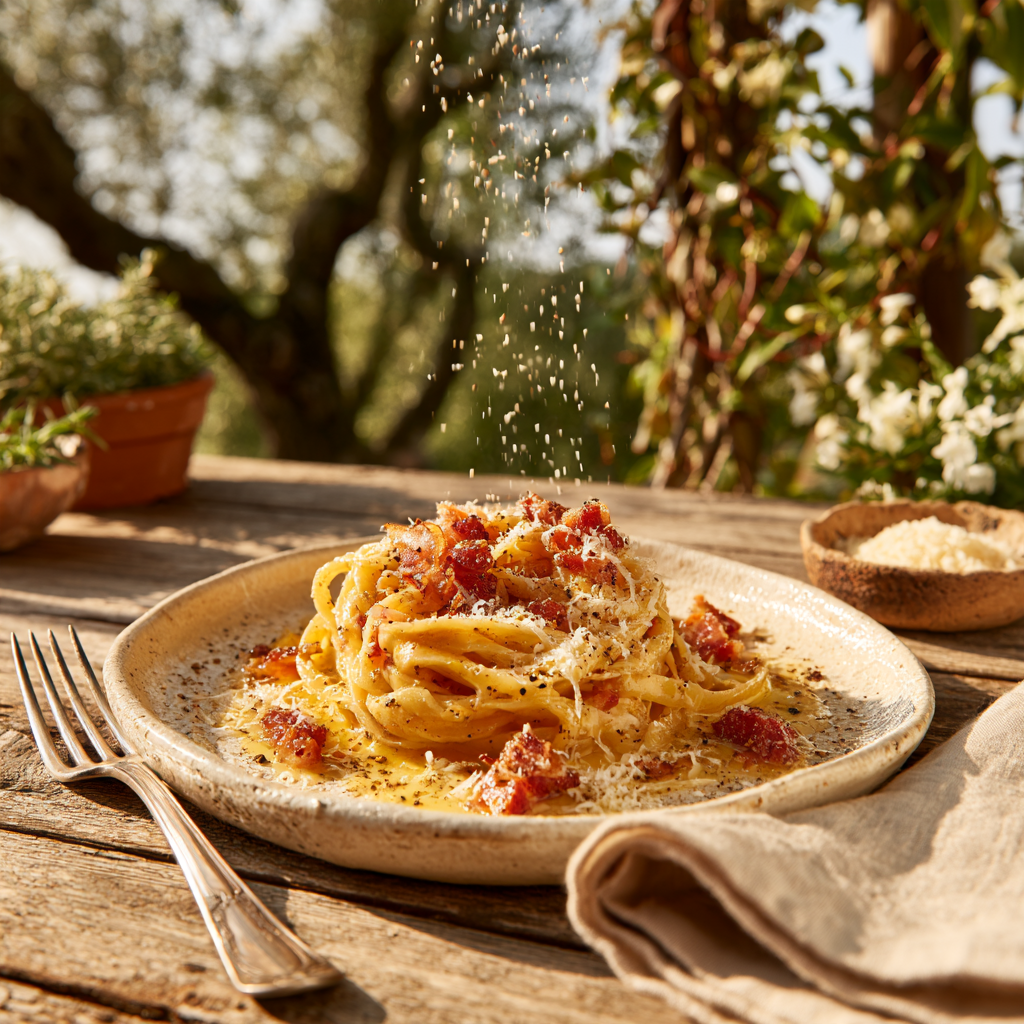
The following table highlights the nutritional contributions of traditional carbonara ingredients, along with important considerations about how they influence the finished meal.
| Ingredient | Important Nutrients | Potential Nutritional Contribution |
|---|---|---|
| Fettuccine pasta | Carbohydrates, some protein, B vitamins depending on flour | Provides energy for normal body functions and everyday activity |
| Eggs | High-quality protein, choline, vitamin B12, selenium | Contribute nutrients involved in tissue maintenance, cell function, and nervous system health |
| Egg yolks | Choline, fat, fat-soluble vitamins | Supply richness and important nutrients while helping create the creamy sauce |
| Pecorino Romano | Calcium, phosphorus, protein, vitamin B12 | Contributes minerals involved in bone health, along with protein |
| Guanciale | Fat, some protein, B vitamins | Provides energy and flavor but also contributes substantial saturated fat and sodium |
| Black pepper | Piperine and aromatic plant compounds | Enhances flavor; potential biological effects are still being studied |
| Whole wheat fettuccine (optional) | Fiber, carbohydrates, magnesium, B vitamins | Adds whole grains and dietary fiber |
| Parmesan (optional) | Calcium, phosphorus, protein | Adds savory flavor and nutrients but also sodium and saturated fat |
| Broccoli (optional side dish) | Fiber, vitamin C, vitamin K, folate | Adds important nutrients and dietary variety |
| Olive oil (optional modification) | Mainly monounsaturated fat | Can provide an unsaturated fat source when used in place of some saturated-fat-rich ingredients |
Important: These nutritional contributions describe the ingredients individually. The amount of each nutrient in a serving of carbonara depends on the quantities used, type of pasta, cooking method, and portion size. The dish should not be considered a significant source of every listed nutrient without a recipe-specific nutritional analysis.
How to Make Fettuccine Carbonara Healthier Without Sacrificing Flavor
Although traditional Fettuccine Carbonara is naturally rich and satisfying, you can make a few thoughtful modifications to improve the balance of your meal while retaining the flavors that make carbonara so appealing.
1. Choose Whole Wheat Fettuccine for Additional Fiber
Replacing traditional refined wheat pasta with whole wheat fettuccine can increase the fiber content of the dish. Whole wheat pasta also contributes nutrients naturally present in the grain, although the exact nutritional differences depend on the products being compared.
Fiber supports normal digestive function and can contribute to feelings of fullness.
Whole wheat fettuccine has a slightly different flavor and texture from traditional pasta, so you may need to experiment with cooking time to achieve the consistency you prefer.
2. Use a Moderate Amount of Guanciale
Guanciale provides the characteristic savory flavor of carbonara, but it also contributes saturated fat and sodium.
Instead of using excessive quantities, measure the guanciale carefully and distribute the crispy pieces evenly throughout the pasta.
A modest amount can still deliver the distinctive flavor without making cured pork the largest component of the dish.
3. Measure the Pecorino Romano Carefully
Freshly grated Pecorino Romano has a wonderfully intense flavor, which means a smaller amount can go a long way.
Measure the cheese according to your recipe rather than adding it without checking the quantity.
If the pasta needs more sauce, use a little reserved starchy pasta water rather than automatically adding more cheese.
This technique can help maintain a creamy texture while limiting unnecessary increases in sodium and saturated fat.
4. Skip the Heavy Cream
For a more traditional preparation, use eggs, cheese, guanciale fat, and pasta water to produce the sauce.
This method avoids adding heavy cream, which would increase the total amount of fat and calories.
Remember that traditional carbonara remains a rich dish, so portion sizes and overall ingredient quantities still matter.
5. Add a Generous Serving of Vegetables
One of the simplest ways to make a carbonara meal more nutritionally balanced is to serve it alongside vegetables.
Roasted broccoli, sautéed spinach, asparagus, green beans, or a fresh salad can introduce dietary fiber and a variety of vitamins and minerals.
Vegetables also provide a refreshing contrast to the creamy pasta.
Try pairing carbonara with our Parmesan Roasted Broccoli Recipe, which combines roasted broccoli, garlic, and a light Parmesan finish.
For a cool, crunchy side dish with a tangy dressing, our Asian Cucumber Salad Recipe offers another option, although its Asian-inspired flavors create a less traditional pairing.
6. Avoid Adding Extra Salt Before Tasting
Guanciale and Pecorino Romano are naturally salty ingredients, and the pasta cooking water may also contribute sodium.
Adding additional salt without tasting the finished dish can make it unnecessarily salty.
A useful approach is to salt the pasta water moderately, prepare the sauce, and taste the combined dish before making any final seasoning adjustments.
Freshly ground black pepper can provide additional flavor without requiring more salt.
7. Serve an Appropriate Pasta Portion
Carbonara can be relatively calorie-dense, particularly when made with large quantities of pasta, cheese, and cured pork.
A practical starting point for many adults is approximately 2–3 ounces (55–85 g) of dry pasta per person, adjusting according to appetite, energy needs, and the rest of the meal.
Remember that pasta expands as it cooks, so the cooked portion will weigh considerably more than the original dry quantity.
Serving a moderate portion alongside vegetables can help create a satisfying meal with greater nutritional variety.
8. Prepare and Serve the Egg-Based Sauce Safely
Traditional carbonara relies on residual heat to thicken its egg-and-cheese sauce without scrambling it.
However, a sauce that looks creamy isn’t necessarily heated enough to eliminate foodborne pathogens.
For greater safety, particularly when serving pregnant people, young children, older adults, or individuals with weakened immune systems, use pasteurized eggs or pasteurized egg products and follow appropriate food-safety practices.
Keep eggs refrigerated before preparation, avoid cross-contamination, and serve the pasta promptly after cooking.
Is Fettuccine Carbonara Healthy?
Fettuccine Carbonara can fit into a balanced diet, but it is best understood as a rich, energy-dense pasta dish rather than an inherently healthy or low-calorie meal.
Its traditional ingredients provide carbohydrates, protein, calcium, phosphorus, vitamin B12, and choline. At the same time, guanciale and Pecorino Romano can contribute substantial saturated fat and sodium, while regular fettuccine generally provides relatively little fiber compared with whole wheat alternatives.
The healthiest way to enjoy carbonara isn’t necessarily to remove all the ingredients that give it its distinctive character. Instead, focus on portions, ingredient quality, cooking technique, and the overall balance of the meal.
A smaller serving of traditional carbonara accompanied by vegetables may offer a more satisfying and nutritionally varied experience than an oversized portion of pasta alone.
For people managing specific health conditions or following medically prescribed diets, the appropriate serving size and ingredient choices may differ.
Can You Eat Fettuccine Carbonara While Trying to Maintain a Balanced Diet?
Absolutely. Enjoying homemade Fettuccine Carbonara occasionally does not automatically conflict with a balanced eating pattern.
What matters most is the overall quality of your diet and how frequently you consume foods high in saturated fat, sodium, and calories.
If carbonara is one of your favorite comfort foods, you can continue enjoying it while making simple adjustments.
Use a reasonable pasta portion, distribute the guanciale evenly rather than adding an excessive amount, measure the cheese, and include vegetables in the meal.
You can also choose whole wheat pasta when you want additional fiber, although traditional fettuccine is perfectly reasonable to enjoy occasionally.
The goal is to appreciate the flavor and culinary tradition of the dish while making informed choices about how it fits into your everyday meals.
Final Thoughts: Enjoying the Nutritional Benefits of Homemade Fettuccine Carbonara
The beauty of Fettuccine Carbonara lies in its extraordinary ability to transform a few simple ingredients into a rich, comforting, and memorable meal. Beneath its silky egg-and-cheese sauce and savory guanciale, the dish also provides a combination of nutrients that contribute to everyday dietary needs.
The fettuccine supplies carbohydrates for energy, eggs contribute protein and choline, and Pecorino Romano provides calcium and phosphorus. Meanwhile, freshly ground black pepper enhances the flavor without contributing meaningful additional calories.
However, these advantages should be considered alongside the dish’s saturated fat, sodium, and calorie content, particularly when prepared in large portions.
By choosing quality ingredients, following traditional cream-free cooking techniques, moderating the quantities of guanciale and cheese, and serving vegetables alongside your pasta, you can create a delicious meal with a more balanced nutritional profile.
Ultimately, homemade Fettuccine Carbonara is a wonderful example of how comforting food and mindful eating can coexist. You don’t need to sacrifice its signature creamy texture, bold Roman-inspired flavors, or satisfying pasta ribbons to enjoy it thoughtfully. A well-prepared serving, made with care and enjoyed as part of a varied diet, can bring both delicious flavor and nutritional value to your dinner table.
Frequently Asked Questions About Fettuccine Carbonara
Want to know the secret to perfectly creamy Fettuccine Carbonara without using heavy cream? From choosing authentic Italian ingredients and preventing scrambled eggs to preparing silky carbonara sauce and reheating leftovers, these frequently asked questions will help you make a delicious, restaurant-style pasta dish at home.
1. What is Fettuccine Carbonara?
Fettuccine Carbonara is an Italian-inspired pasta dish that combines wide fettuccine noodles with a silky sauce made from eggs, Pecorino Romano cheese, freshly ground black pepper, and the flavorful fat released by crispy guanciale. Inspired by traditional Roman carbonara, this version uses fettuccine instead of the more commonly associated spaghetti or rigatoni. The creamy texture comes from emulsifying the eggs, cheese, rendered fat, and starchy pasta water, rather than adding heavy cream.
2. What is the difference between Fettuccine Carbonara and Spaghetti Carbonara?
The primary difference is the type of pasta. Spaghetti Carbonara uses long, thin, round noodles, while Fettuccine Carbonara uses wider, flat pasta ribbons. Both can be prepared with the same traditional Roman-inspired combination of eggs, Pecorino Romano, guanciale, and black pepper. Fettuccine offers a broader surface that holds the creamy sauce beautifully, creating a rich, satisfying texture. Spaghetti remains one of the most familiar choices for traditional carbonara in Rome.
3. Does authentic Carbonara contain heavy cream?
No. Traditional Roman-style carbonara does not require heavy cream. Its luxurious consistency comes from a carefully combined mixture of eggs, finely grated Pecorino Romano, rendered guanciale fat, and starchy pasta cooking water. When these ingredients are mixed at an appropriate temperature, they form a smooth, glossy sauce that clings to the pasta. Although some modern adaptations include cream, it changes the texture and moves away from the classic Roman preparation.
4. What ingredients do you need for homemade Fettuccine Carbonara?
For the OoohDelish recipe serving four people, use 12 ounces (340 g) dried fettuccine, 4 1/4 ounces (120 g) guanciale, 2 whole pasteurized eggs, 2 additional pasteurized egg yolks, 3/4 cup (80 g) freshly grated Pecorino Romano, and approximately 1 teaspoon freshly ground black pepper. You’ll also need lightly salted pasta cooking water. These simple ingredients create a flavorful sauce without requiring garlic, butter, or heavy cream.
5. How many eggs should I use for Fettuccine Carbonara?
Our Fettuccine Carbonara recipe uses 2 whole pasteurized eggs and 2 additional pasteurized egg yolks for 4 servings. The whole eggs contribute moisture and help create a fluid sauce, while the extra yolks add richness and a velvety texture. Combine the eggs with finely grated Pecorino Romano and black pepper before adding the mixture to the warm pasta. Using pasteurized eggs is important because the traditional off-heat method may not cook the eggs fully.
6. How do you make Fettuccine Carbonara creamy without scrambling the eggs?
The secret is controlling the temperature. After cooking the fettuccine and guanciale, remove the skillet completely from direct heat before adding the egg-and-cheese mixture. Toss continuously while gradually incorporating small amounts of reserved starchy pasta water. This helps create a smooth, glossy coating instead of separate pieces of scrambled egg. A very hot skillet, especially cast iron, may require extra cooling or transferring the pasta to a heatproof bowl. Use pasteurized eggs when the sauce will not be cooked thoroughly.
7. Are the eggs in Carbonara safe to eat?
Traditional carbonara is often prepared by combining eggs with hot pasta away from direct heat, but residual heat alone does not guarantee the eggs become fully cooked. For a creamy preparation like our Fettuccine Carbonara, use pasteurized eggs or pasteurized egg products to reduce the risk of foodborne illness. The standard safe cooking temperature for egg dishes is 160°F (71°C). Anyone at increased risk from foodborne illness should avoid preparations containing inadequately cooked, unpasteurized eggs.
8. Why is pasta water important in Fettuccine Carbonara?
Reserved pasta cooking water is essential because it contains starch released by the pasta. When added gradually to the egg, cheese, and guanciale mixture, it helps form a creamy emulsion that coats the fettuccine without becoming overly thick or greasy. Before draining the pasta, reserve approximately 1 cup of cooking water. Add it one tablespoon at a time while tossing until you reach the desired consistency. You may not need the entire cup.
9. Can I make Fettuccine Carbonara with bacon instead of guanciale?
Yes! Bacon can be used when guanciale is unavailable, although the flavor will differ from traditional Roman carbonara. Guanciale is cured pork jowl, known for its rich fat and distinctive savory taste. Pancetta, made from cured pork belly, is another useful alternative that generally comes closer to guanciale’s flavor than smoked bacon. If using bacon, choose an unsweetened variety and cook it until golden and crisp before combining it with the pasta.
10. Can I use Parmesan cheese instead of Pecorino Romano?
Absolutely! While Pecorino Romano is traditionally associated with Roman carbonara, freshly grated Parmigiano Reggiano can create a delicious variation. Pecorino Romano has a sharper, saltier flavor, while Parmesan tends to be milder and nuttier. For a balanced result, try combining equal portions of both cheeses while keeping the total quantity close to the recipe’s 80 grams. Finely grate the cheese yourself to help it incorporate smoothly.
11. Can I use fresh fettuccine instead of dried pasta?
Yes. Fresh fettuccine works well for homemade Carbonara and often provides a softer, more delicate texture. However, fresh pasta generally cooks much faster than dried fettuccine, sometimes requiring only a few minutes depending on its thickness. Cook according to the package instructions and check frequently for an al dente texture. Reserve some cooking water before draining, and make sure the guanciale and egg mixture are ready so you can assemble the dish promptly.
12. Why is my Carbonara sauce too thick, dry, or clumpy?
Carbonara sauce can become thick or clumpy when the pasta cools too much, the cheese does not incorporate smoothly, or there isn’t enough moisture in the mixture. Overheating can also cause the eggs to coagulate and produce a grainy texture. For a thick but otherwise smooth sauce, add warm reserved pasta water one tablespoon at a time while tossing. If the eggs have already scrambled, adding water may improve moisture but cannot fully restore the original silky texture.
13. Can you make Fettuccine Carbonara without guanciale or pork?
Yes, although the finished dish will be a variation rather than traditional Roman carbonara. For a pork-free version, you can use cooked, crisp turkey bacon or sautéed mushrooms for a savory flavor. Add a modest amount of olive oil if needed to replace some of the richness normally provided by guanciale fat. Keep the egg, cheese, black pepper, and pasta water technique the same. If avoiding pork for dietary or religious reasons, also check whether your cheese contains animal rennet.
14. Can I prepare Fettuccine Carbonara ahead of time?
Fettuccine Carbonara is best enjoyed immediately after preparation because its egg-and-cheese sauce becomes thicker as it cools. However, you can save time by preparing the ingredients in advance. Grate the Pecorino Romano, measure the pasta, cut the guanciale, and organize your equipment before cooking. Keep perishable ingredients refrigerated until needed. Prepare the sauce and combine everything just before serving for the best creamy texture.
15. How do you store and reheat leftover Fettuccine Carbonara?
Refrigerate leftovers promptly in a shallow, airtight container at 40°F (4°C) or below, within two hours of cooking. Properly refrigerated leftovers can generally be kept for 3–4 days. Reheat gently in a skillet with a small splash of water, stirring frequently to prevent drying or uneven heating. For food safety, reheat leftovers thoroughly to 165°F (74°C). The egg-based sauce may become less creamy during reheating, so freshly prepared Carbonara remains the best option.
16. What should I serve with Fettuccine Carbonara?
Fettuccine Carbonara pairs beautifully with vegetables and simple sides that complement its rich, savory sauce. For an especially delicious combination, serve it with our Parmesan Roasted Broccoli Recipe , featuring crispy roasted broccoli, garlic, and golden Parmesan cheese. If you enjoy exploring Italian-inspired dishes, try our Italian Zucchini Scarpaccia Recipe or our cozy Easy Lasagna Soup Recipe for another comforting meal idea.