
Ingredients
Equipment
Method
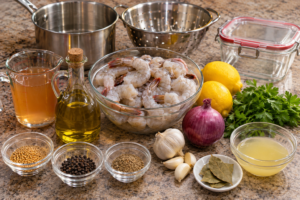
- Step 1: Gather and Prepare All the Ingredients. Begin by gathering everything needed for your homemade Pickled Shrimp Recipe, including 1½ pounds (680 g) of raw medium or large shrimp, apple cider vinegar, fresh lemons, extra virgin olive oil, red onion, garlic, parsley, mustard seeds, peppercorns, celery seeds, and bay leaves. Prepare a large saucepan for poaching, a colander for draining the shrimp, and a clean glass container with a tight-fitting lid for marinating. Measure the vinegar, olive oil, and lemon juice separately so the marinade can be assembled efficiently after cooking. Keep raw shrimp refrigerated at 40°F (4°C) or below until you are ready to prepare them. If using frozen shrimp, thaw them safely in the refrigerator before beginning, and avoid leaving raw seafood at room temperature while organizing the remaining ingredients.
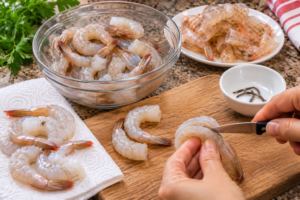
- Step 2: Clean, Peel, and Devein the Shrimp. If your shrimp are not already peeled and deveined, carefully remove the shells while leaving the tails attached if you prefer a more decorative appetizer presentation. Using a small, sharp knife, make a shallow slit along the back of each shrimp and remove the dark intestinal tract when present. Rinse the shrimp briefly under cold running water if needed, then drain thoroughly and pat dry with clean paper towels. Medium or large shrimp work especially well for this recipe because their size makes them easy to serve as individual appetizers while maintaining a pleasantly tender texture after marinating. Keep the prepared shrimp chilled until the poaching water is ready, and thoroughly wash your hands and any surfaces that have come into contact with raw seafood.
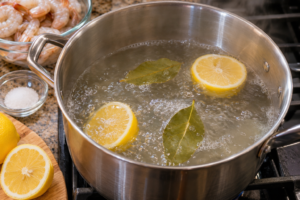
- Step 3: Prepare the Aromatic Poaching Water. Pour 6 cups (1.4 L) of water into a large saucepan or medium stockpot and add 1 teaspoon (6 g) of fine salt, one lemon cut in half, and two bay leaves. Place the saucepan over medium-high heat and bring the water to a gentle boil, allowing the lemon and bay leaves to release their subtle flavors into the liquid. Once the water is boiling, reduce the heat slightly so the liquid maintains a gentle simmer rather than a vigorous rolling boil. This lightly seasoned poaching liquid adds flavor to the shrimp without overpowering their naturally sweet seafood taste. Avoid using excessive salt because the shrimp will also absorb seasoning from the marinade during refrigeration.
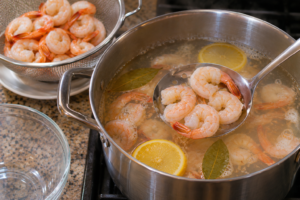
- Step 4: Gently Poach the Shrimp Until Fully Cooked. Carefully add the prepared shrimp to the gently simmering poaching water, stirring once or twice to ensure they are evenly submerged and separated. Cook for approximately 2–4 minutes, depending on their size, until the shrimp turn pink on the outside and the flesh becomes pearly, opaque, and firm throughout. Smaller shrimp may cook more quickly, while larger shrimp may need slightly more time. Avoid prolonged boiling because shrimp can become tough and rubbery when overcooked. If using an instant-read thermometer and the shrimp are large enough to measure accurately, a center temperature of 145°F (63°C) is a useful seafood cooking target. Once the shrimp are fully cooked, immediately remove the saucepan from the heat and transfer the shrimp to a colander using a slotted spoon or carefully drain them, discarding the poaching liquid.
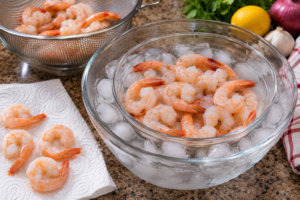
- Step 5: Cool the Cooked Shrimp Promptly. After draining, transfer the fully cooked shrimp to a clean, shallow bowl and cool them promptly before combining them with the pickling marinade. To speed up cooling, place the bowl over a larger bowl filled with ice, or briefly chill the shrimp in an ice-water bath using clean water and ice, then drain them thoroughly. Pat the shrimp gently with clean paper towels if necessary to remove excess water that could dilute the marinade. Aim to complete this cooling stage within approximately 15 minutes, although the exact time depends on the shrimp size and cooling method. Do not leave cooked shrimp sitting at room temperature for extended periods, and keep them properly chilled while preparing the remaining ingredients. Prompt cooling helps preserve their tender texture and reduces unnecessary time in the temperature range where bacteria can multiply.
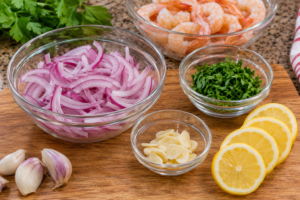
- Step 6: Slice the Red Onion and Prepare the Fresh Aromatics. Peel one medium red onion, approximately 150 g, and slice it into very thin half-moons using a sharp knife or mandoline. Thin slices work particularly well because they soften slightly in the acidic marinade while retaining a pleasant crispness. Peel and finely slice or mince three garlic cloves, approximately 9 g, then wash, dry, and chop ¼ cup (10 g) of fresh flat-leaf parsley. If using optional fresh dill, chop it separately and reserve it for serving. Prepare the lemon slices for garnish if desired, keeping them refrigerated until needed. The combination of red onion, garlic, and parsley gives Southern pickled shrimp their characteristic aromatic freshness while adding attractive color and texture to the finished appetizer.
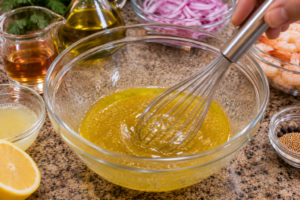
- Step 7: Combine the Vinegar, Lemon Juice, and Olive Oil. In a large, clean mixing bowl, pour ½ cup (120 ml) of apple cider vinegar and ¼ cup (60 ml) of freshly squeezed lemon juice, then add ⅓ cup (80 ml) of extra virgin olive oil. Whisk the ingredients together vigorously for approximately 20–30 seconds until they form a temporarily combined, lightly emulsified dressing. The olive oil will not remain permanently mixed with the acidic ingredients, which is completely normal for this style of marinade. The vinegar provides a pleasantly sharp tanginess, the lemon juice contributes fresh citrus flavor, and the olive oil adds richness that balances the acidity. Avoid substituting large quantities of water for the vinegar because it would weaken the flavor and change the character of the recipe. Remember that this is a refrigerated marinade intended to flavor fully cooked shrimp rather than a shelf-stable preservation solution.
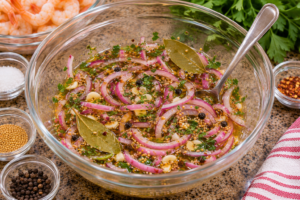
- Step 8: Add the Onions, Garlic, Herbs, and Aromatic Spices. Add the thinly sliced red onion, minced garlic, and chopped parsley to the bowl containing the vinegar, lemon juice, and olive oil. Sprinkle in 1 teaspoon (2 g) of yellow mustard seeds, ½ teaspoon (1 g) of whole black peppercorns, ½ teaspoon (1 g) of celery seeds, ¼ teaspoon of optional crushed red pepper flakes, and ½ teaspoon (3 g) of fine salt. Add the remaining two bay leaves, then stir thoroughly with a clean spoon until the onion slices are separated and evenly coated in the dressing. The combination of mustard seeds, peppercorns, celery seeds, and bay leaves creates a gently aromatic Southern-inspired flavor without overwhelming the shrimp. If you prefer a milder appetizer, omit the crushed red pepper flakes. Taste a small amount of the marinade using a clean spoon and adjust the seasoning slightly if desired, remembering that the flavor will develop as the shrimp chill.
- Step 9: Combine the Cooked Shrimp with the Pickling Marinade. Add the fully cooked, promptly cooled, and thoroughly drained shrimp to the bowl containing the prepared marinade. Using a large spoon or silicone spatula, gently fold the shrimp through the dressing until each piece is coated with the vinegar, lemon juice, olive oil, onions, garlic, and herbs. Avoid stirring too aggressively because excessive handling may damage the delicate shrimp or break smaller pieces apart. The marinade should coat the shrimp generously, although the shrimp do not need to be completely submerged in liquid at all times. Make sure the onion slices and aromatic spices are distributed throughout the mixture rather than collecting in one area of the bowl. The shrimp should remain firm, opaque, and tender, ready to absorb the marinade's bright, savory flavors during refrigeration.
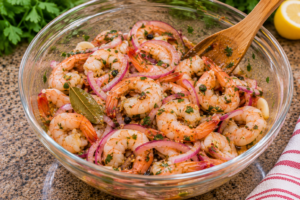
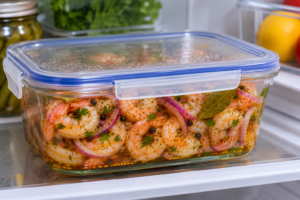
- Step 10: Transfer the Shrimp to a Clean Marinating Container. Carefully spoon the marinated shrimp and accompanying onions into a clean glass container or glass bowl with a tight-fitting lid, preferably one with enough room to hold approximately 1½–2 quarts. Pour the remaining vinegar-and-oil marinade over the shrimp, using a spatula to transfer the herbs, garlic, and spices from the mixing bowl. Arrange the shrimp and onions in relatively even layers so the flavorful dressing can reach the ingredients throughout the container. If using a wide bowl rather than a jar, cover it securely with an airtight lid or food-safe wrap. Avoid using reactive containers made from materials that may interact with acidic ingredients; glass or suitable food-grade plastic is a convenient choice. Label the container with the preparation date if making the appetizer ahead of time.
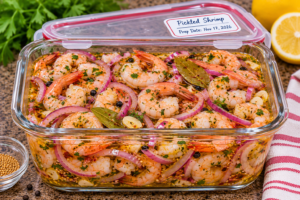
- Step 11: Refrigerate the Pickled Shrimp for Flavor Development. Place the covered container immediately into the refrigerator and allow the shrimp to marinate at 40°F (4°C) or below for approximately 4–8 hours. During this time, the vinegar, lemon juice, olive oil, garlic, onions, herbs, and aromatic spices gradually flavor the cooked shrimp, creating the refreshing combination of acidity and savory seasoning associated with Southern pickled shrimp. If convenient, gently turn or stir the shrimp once or twice during marination using a clean utensil to redistribute the dressing, then return the container to the refrigerator promptly. Four hours is a useful starting point for developing flavor, while longer marination may create a more pronounced tanginess. Avoid leaving the shrimp at room temperature to marinate, and keep in mind that extended exposure to a strongly acidic dressing may eventually produce a firmer texture.
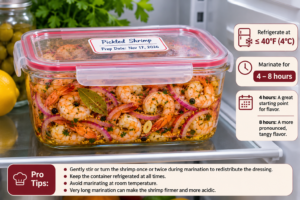
- Step 12: Taste and Adjust the Flavor Before Serving. After approximately four hours of refrigeration, remove the container briefly and use a clean spoon to taste a small piece of shrimp along with some of the marinade. The flavor should be pleasantly tangy, with noticeable lemon, vinegar, garlic, onion, and herbal notes that complement rather than overpower the seafood. If the mixture tastes too sharp, you may balance an individual serving with a small amount of additional olive oil rather than significantly diluting the full batch. If it needs more brightness, add a small squeeze of fresh lemon juice, or sprinkle in a little extra chopped parsley for a fresher finish. Avoid adding excessive salt because the marinade already contains seasoning. Once adjustments are complete, cover the container and return it to the refrigerator until ready to serve.
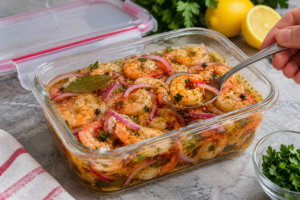
- Step 13: Prepare the Serving Platter and Garnishes. Shortly before serving, prepare a shallow glass serving bowl or attractive seafood platter, along with fresh lemon slices, additional chopped parsley, and any optional dill. Arrange crisp crackers, toasted baguette slices, or crusty bread nearby so guests can easily enjoy the shrimp as an appetizer. For a lighter presentation, line a serving platter with clean lettuce leaves or fresh salad greens and reserve space for the chilled shrimp and marinated onions. If the appetizer will be displayed for an extended gathering, prepare a larger bowl of ice to hold the serving dish and help keep the seafood cold. Avoid placing the shrimp on the serving platter too far in advance because they should remain refrigerated until shortly before guests are ready to eat.
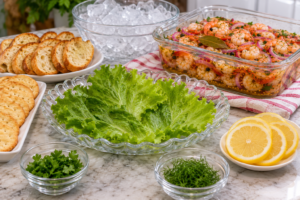
- Step 14: Arrange and Serve the Pickled Shrimp Chilled. Remove the marinated shrimp from the refrigerator immediately before serving and gently stir the mixture to redistribute the flavorful dressing. Using a slotted spoon, transfer the shrimp and a generous portion of the marinated red onions to the prepared serving bowl or platter, allowing some of the excess liquid to drain away. Spoon a small amount of the marinade over the shrimp for extra flavor if desired, then garnish with chopped parsley, fresh lemon slices, and optional dill. Serve the shrimp thoroughly chilled with crackers, toasted baguette, crusty bread, or fresh vegetables. For an elegant presentation, arrange the shrimp neatly around the bowl with the colorful onions and herbs visible between them. Keep the remaining shrimp refrigerated rather than leaving the full batch on the table throughout the gathering.
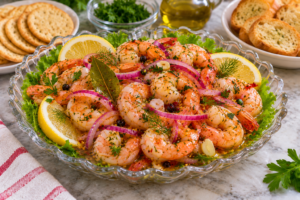
- Step 15: Store Any Leftover Pickled Shrimp Safely. Transfer leftover pickled shrimp into a clean airtight container and refrigerate promptly at 40°F (4°C) or below. Because this recipe contains fully cooked seafood, it should be treated as a perishable refrigerated appetizer rather than a shelf-stable preserved food. For the best flavor and texture, aim to enjoy the shrimp within approximately 1–2 days of preparation, although properly handled cooked shrimp may generally remain refrigerated for 3–4 days, counting from the original cooking time. Discard any shrimp that have been left unrefrigerated for more than two hours, or one hour when the surrounding temperature exceeds 90°F (32°C). Do not rely on the vinegar or lemon juice to preserve the shrimp safely at room temperature. Freezing the completed marinated dish is not recommended for optimal texture, although plain cooked shrimp may be frozen separately for future use.
Notes
Best Shrimp Size: Medium to large shrimp, such as 21/25 or 26/30 count per pound, are convenient for this recipe because they remain tender and are easy to serve.
Fresh or Frozen Shrimp: Both work well. Thaw frozen shrimp safely in the refrigerator before cooking.
Cooking the Shrimp: Gently poach until the flesh becomes pearly, opaque, and firm. Avoid overcooking, which can make shrimp rubbery.
Poaching Time: Approximately 2–4 minutes depending on shrimp size. The WPRM cook time of 5 minutes provides a practical allowance for the poaching stage once the water is hot; bringing the water to a boil may require extra elapsed time.
Cooling: Cool the shrimp promptly, ideally using an ice-water bath, before combining them with the marinade.
Vinegar Selection: Apple cider vinegar offers a pleasantly fruity tang. White wine vinegar may be substituted for a somewhat cleaner flavor.
Lemon Juice: Freshly squeezed lemon juice provides bright citrus flavor and complements the vinegar.
Olive Oil: Extra virgin olive oil balances the acidity and helps coat the cooked shrimp with a flavorful dressing.
Marination Time: Refrigerate for approximately 4–8 hours. Overnight marination may produce a stronger flavor and firmer texture.
Red Onion: Slice the onion very thinly so it absorbs the marinade and remains pleasantly crisp.
Aromatic Spices: Mustard seeds, celery seeds, peppercorns, and bay leaves provide a Southern-inspired flavor.
Spicy Variation: Add crushed red pepper flakes according to your preferred heat level.
No Raw Shrimp Marination: Fully cook the shrimp before adding them to the marinade. Acid alone is not a reliable substitute for cooking.
Make-Ahead Preparation: The appetizer can be prepared the day before serving, but extended marination may affect texture.
Serving Suggestions: Serve chilled with crackers, crusty bread, crostini, lettuce cups, or salad greens.
Refrigeration: Keep at 40°F (4°C) or below and use within 1–2 days for best quality.
Maximum Storage Guidance: Properly handled cooked shrimp generally keep for 3–4 days refrigerated, counting from the initial cooking time.
Freezing: The finished pickled shrimp are best enjoyed fresh. Freezing the completed marinade may negatively affect the texture.
Food Safety: This recipe is not suitable for shelf-stable storage, water-bath canning, or room-temperature preservation.

