Ingredients
Equipment
Method
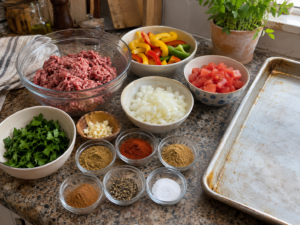
- Step 1: Gather and Prepare All the Ingredients. Begin by gathering everything needed for your homemade Sheet Pan Kebab Recipe so the preparation process is smooth and efficient. Measure 1½ pounds (680 g) of ground beef and place it in the refrigerator until you are ready to mix the kebab ingredients. Prepare the fresh parsley, garlic, onions, bell peppers, and tomatoes, then measure the cumin, paprika, coriander, cinnamon, black pepper, and salt into separate small bowls or a combined seasoning mixture. Choose a large rimmed baking sheet, ideally approximately 13 × 18 inches (33 × 46 cm), with enough room for the meat and vegetables. Having the ingredients prepared before mixing prevents unnecessary handling of the ground beef and makes it easier to keep the kebabs at a safe temperature until cooking.
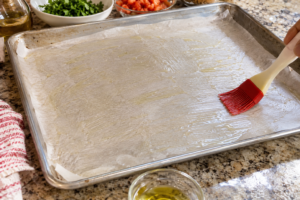
- Step 2: Preheat the Oven and Prepare the Baking Sheet. Position an oven rack in the middle of the oven and preheat to 425°F (220°C), allowing sufficient time for the oven to reach the correct temperature before roasting. Lightly grease a large rimmed metal baking sheet with a small amount of oil or line it with parchment paper that is specifically rated for use at 425°F (220°C). If using parchment paper, make sure the paper lies flat and does not extend beyond the edges of the pan, where it could come into contact with heating elements. A sturdy metal baking sheet is ideal because it distributes heat effectively and encourages the beef to develop flavorful browned edges. Keep the prepared pan nearby while you assemble the seasoned beef mixture and vegetables.
- Step 3: Grate the Onion and Prepare the Aromatics. Peel one medium yellow onion, approximately 120 g, and grate it finely using the small or medium holes of a box grater. Transfer the grated onion to a small bowl, and if it releases an excessive amount of liquid, gently drain off some of the free liquid while retaining the moist onion pulp. This prevents the meat mixture from becoming overly wet while preserving the onion flavor that helps keep the kebabs tender. Peel and finely mince four garlic cloves, approximately 12 g, then finely chop ½ cup (20 g) of fresh flat-leaf parsley. The onion should be finely grated rather than roughly chopped so it distributes evenly throughout the ground beef without creating large pieces that may interfere with shaping.
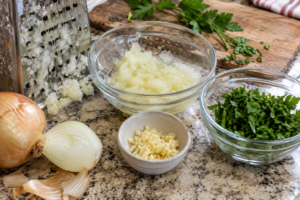
- Step 4: Combine the Ground Beef with the Seasonings. Place the 1½ pounds (680 g) of ground beef in a large mixing bowl and add the prepared grated onion, minced garlic, and chopped parsley. Sprinkle in 1½ teaspoons (3 g) of ground cumin, 1½ teaspoons (3 g) of sweet paprika, 1 teaspoon (2 g) of ground coriander, ½ teaspoon (1 g) of ground black pepper, ¼ teaspoon (0.5 g) of cinnamon, and 1 teaspoon (6 g) of fine salt. Using clean hands or a sturdy spoon, gently combine the ingredients until the vegetables, herbs, and spices are evenly distributed throughout the meat. Avoid kneading excessively or compressing the mixture tightly, as overworking ground beef can produce dense, firm kebabs. The finished mixture should hold together when pressed while remaining moist and easy to shape. Wash your hands and clean any utensils or surfaces that have contacted raw beef before proceeding.
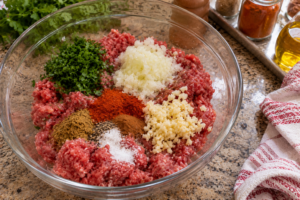
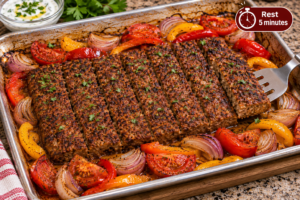
- Step 5: Shape the Beef Mixture on the Sheet Pan. Transfer the seasoned beef mixture onto the prepared baking sheet and gently press it into a rectangular slab approximately ¾ inch (2 cm) thick, positioning it in the center of the pan and leaving space around the edges for the vegetables. Aim for a relatively even thickness so the beef cooks consistently from one end to the other. Using a bench scraper or the back of a butter knife, lightly score the surface into eight elongated rectangular kebab portions without necessarily cutting all the way through the meat. This creates a kebab-inspired appearance and makes it easier to divide the cooked meat into individual portions later. Avoid pressing the meat too thin because the edges may dry out before the center finishes cooking. If the beef mixture feels unusually soft, refrigerate the shaped meat briefly while preparing the vegetables.
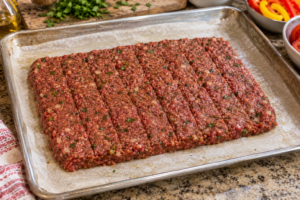
- Step 6: Slice and Season the Vegetables. Wash and dry the red and yellow or green bell peppers, remove their stems and seeds, and cut them into strips approximately ½–¾ inch (1.25–2 cm) wide. Peel the red onion and slice it into medium wedges, keeping some of the layers attached so they roast without falling apart completely. Cut the tomatoes into thick wedges rather than small pieces to reduce how much moisture they release during cooking. Transfer the prepared vegetables to a large bowl, then drizzle with 1 tablespoon (15 ml) of olive oil. Add ½ teaspoon (1 g) of paprika, ¼ teaspoon of black pepper, and ¼ teaspoon of fine salt, tossing gently until the vegetables are lightly and evenly coated. Keeping the pieces relatively uniform helps them soften and roast at a similar rate.
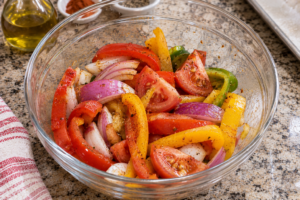
- Step 7: Arrange the Vegetables Around the Beef. Carefully distribute the seasoned bell pepper strips, red onion wedges, and tomato pieces around the beef slab on the baking sheet, arranging them in a mostly single layer wherever space allows. Leave a small amount of space between the vegetables and the meat when possible to encourage airflow and reduce excessive steaming. Avoid piling the vegetables directly over the beef because this may interfere with browning and make it more difficult to monitor the meat's cooking progress. If your baking sheet is too crowded, transfer some vegetables to a second pan rather than forcing everything into a tightly packed layer. The goal is to create a colorful arrangement where the vegetables roast in the oven while the ground beef develops a flavorful, lightly browned exterior.
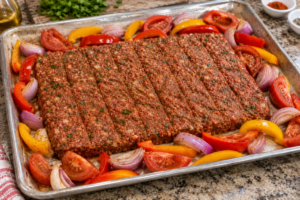
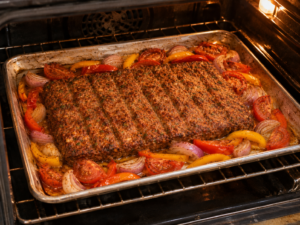
- Step 8: Roast the Sheet Pan Kebabs in the Oven. Place the prepared baking sheet on the middle oven rack and roast at 425°F (220°C) for approximately 15–25 minutes, using 20 minutes as an initial planning estimate. During roasting, the seasoned ground beef should gradually become firmer and develop browned surfaces, while the bell peppers and onions soften and the tomatoes release some of their juices. Begin checking the beef around 15 minutes, especially if the meat slab is thinner than ¾ inch (2 cm). The actual roasting time depends on the thickness of the meat, oven performance, and how densely the vegetables are arranged. If the vegetables release a significant amount of liquid, carefully avoid spilling the hot pan juices when moving the baking sheet. Do not rely on browning alone to determine whether the meat is safely cooked.
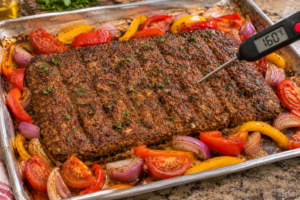
- Step 9: Check the Beef for Safe Doneness. When the kebabs appear nearly cooked, insert an instant-read meat thermometer horizontally into the thickest central portion of the ground beef, avoiding contact with the metal baking sheet. The beef must reach an internal temperature of at least 160°F (71°C) before serving. If the thermometer reads below this temperature, return the pan to the oven and continue roasting, checking again after a few minutes. The surface should be nicely browned, and the center should be cooked through without appearing raw. If the meat reaches its safe temperature before the vegetables are sufficiently tender, carefully transfer the beef to a clean serving plate and return the vegetables to the oven for several additional minutes. Using a thermometer is the most reliable way to avoid undercooking the meat while minimizing unnecessary moisture loss from overcooking.
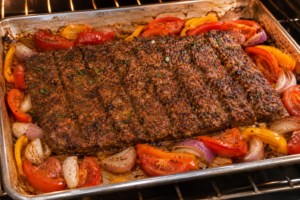
- Step 10: Add Extra Browning if Desired. If the kebabs have reached 160°F (71°C) internally but you would like slightly darker, more caramelized edges, you can use the oven's broiler briefly to improve their appearance. First, confirm that the baking sheet and any liner are approved for broiler use; if you used parchment paper, remove it before broiling because parchment can ignite under direct broiler heat. Move the kebabs to a suitable unlined, broiler-safe metal pan if necessary, then place them under the broiler for approximately 1–2 minutes while watching continuously. The goal is a lightly browned surface rather than a heavily charred exterior. Remove the pan immediately once the edges develop the desired color, taking care when handling the hot baking sheet and accumulated cooking juices. This step is optional and should be skipped if the kebabs are already well browned.
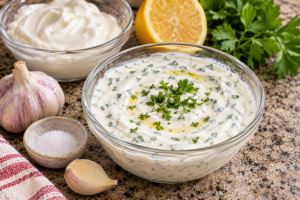
- Step 11: Prepare the Optional Garlic Yogurt Sauce. While the kebabs finish roasting, prepare a simple garlic yogurt sauce to complement the rich, aromatic beef. In a small mixing bowl, combine ½ cup (120 g) of plain Greek yogurt, one small finely grated garlic clove, 1 teaspoon (5 ml) of fresh lemon juice, 1 tablespoon (4 g) of chopped fresh parsley, and approximately ⅛ teaspoon of fine salt. Stir until the mixture becomes smooth and the garlic and herbs are evenly distributed throughout the yogurt. Taste and adjust the lemon juice or salt slightly according to preference, keeping the sauce pleasantly tangy rather than overly sharp. Cover and refrigerate until ready to serve, especially if preparing it ahead of time. The cool, creamy yogurt provides a refreshing contrast to the hot, spiced beef and roasted vegetables.
- Step 12: Allow the Kebabs to Rest Briefly. Once the ground beef reaches the required internal temperature and the vegetables are tender, carefully remove the baking sheet from the oven and place it on a heat-resistant surface. Allow the kebabs to rest for approximately 5 minutes before cutting them into individual portions. This short resting period allows the meat to cool slightly and makes it easier to handle without breaking apart. Some cooking juices may collect around the beef and vegetables, which is normal for ground meat and moisture-rich vegetables such as tomatoes. Use a clean spatula to separate the portions along the previously scored lines, cutting through the meat where necessary. Avoid leaving the cooked kebabs at room temperature for extended periods, and prepare to serve them while they are still warm.
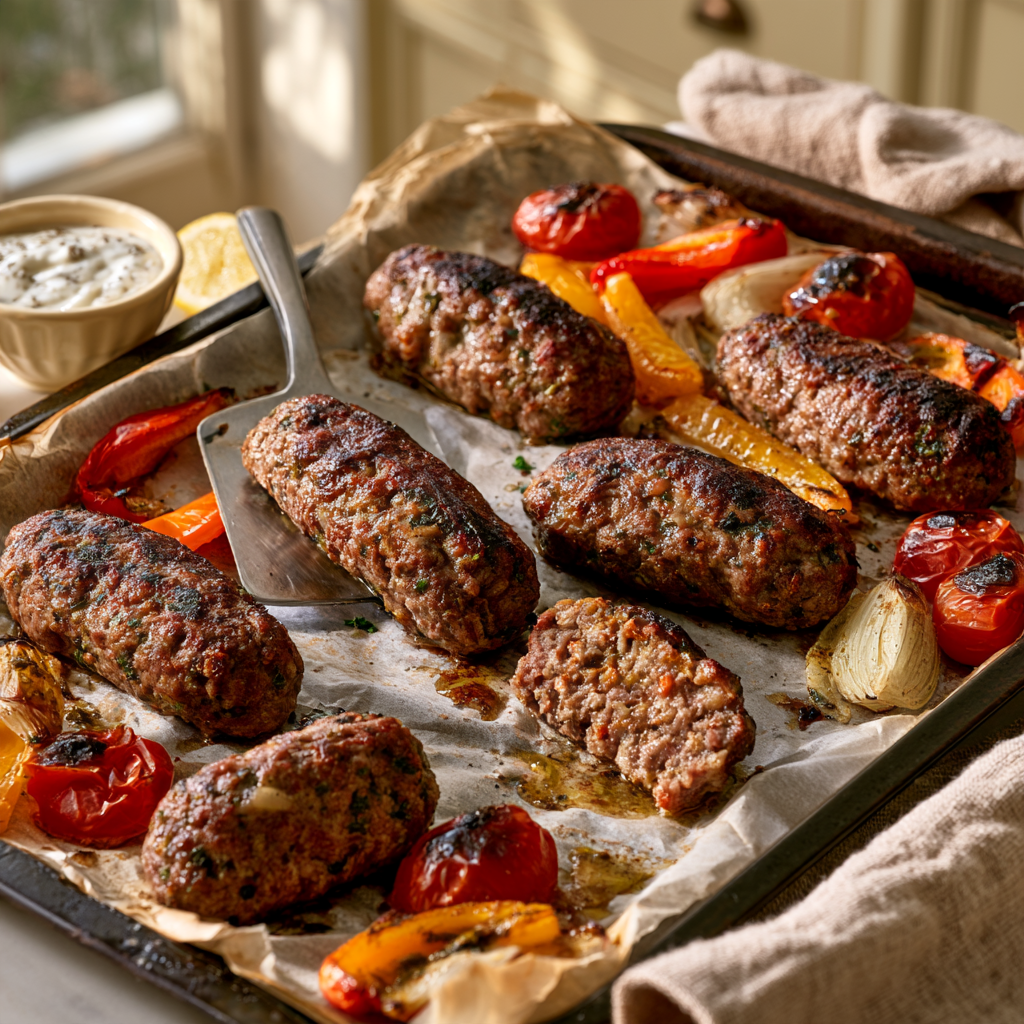
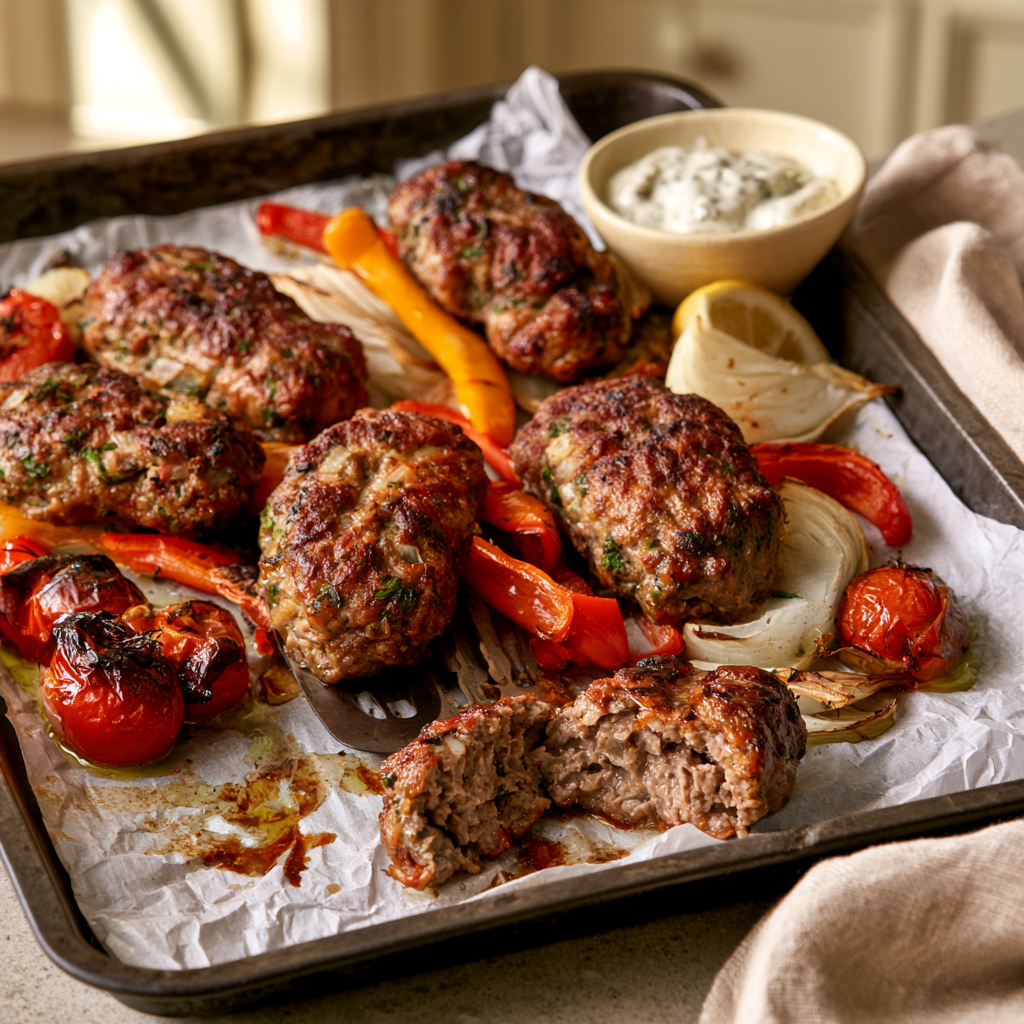
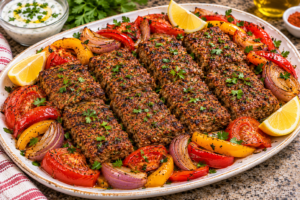
- Step 13: Cut and Arrange the Beef Kebabs for Serving. Using a clean knife or wide spatula, divide the rested beef into eight elongated kebab-style portions, giving each serving approximately two pieces. Transfer the kebabs carefully to a large serving platter and arrange the roasted bell peppers, red onions, and tomatoes alongside them. If the baking sheet contains flavorful juices, spoon a small amount over the meat for additional moisture, avoiding excessive grease if the beef released a significant amount of fat. Sprinkle freshly chopped parsley over the finished platter and add several lemon wedges for a bright, fresh garnish. The combination of golden-brown beef, colorful roasted vegetables, and fresh green herbs creates a delicious presentation that's ideal for both family dinners and casual entertaining.
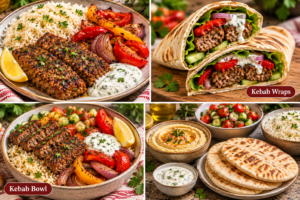
- Step 14: Serve with Your Favorite Side Dishes. Serve the warm sheet pan beef kebabs immediately with fluffy basmati rice, soft pita bread, hummus, or a fresh cucumber and tomato salad. For a complete Mediterranean-inspired meal, arrange two kebab portions and a generous serving of roasted vegetables on each plate, then add a spoonful of the homemade garlic yogurt sauce. You can also create homemade kebab wraps by placing pieces of beef inside warm pita bread with lettuce, cucumber slices, roasted peppers, and a little yogurt sauce. Another delicious option is to prepare kebab bowls using rice or bulgur as the base, followed by beef, vegetables, fresh parsley, and lemon juice. Adjust the accompaniments to your family's preferences and enjoy the kebabs while the meat remains tender and flavorful.
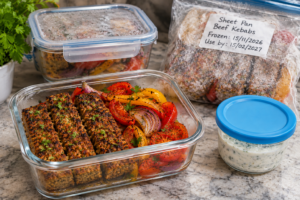
- Step 15: Store and Reheat Any Leftover Kebabs Safely. Transfer leftover sheet pan beef kebabs and roasted vegetables into shallow airtight containers and refrigerate promptly at 40°F (4°C) or below, within two hours of cooking or within one hour if the surrounding temperature exceeds 90°F (32°C). Properly refrigerated cooked beef kebabs generally keep for 3–4 days. For longer storage, divide the cooled kebabs into individual freezer-safe portions, seal tightly, and freeze at 0°F (-18°C) or below, aiming to use them within approximately 2–3 months for best quality. Thaw frozen kebabs safely in the refrigerator before reheating, then warm them in a covered baking dish or microwave until the center reaches 165°F (74°C). Store the optional yogurt sauce separately, refrigerate it promptly, and do not freeze it with the meat because its texture may change after thawing.
Notes
Best Ground Beef: Use approximately 85% lean ground beef for juicy, flavorful kebabs. For a leaner option, 90% lean ground beef also works, but it may become drier if overcooked.
Grated Onion: Finely grated onion adds moisture and distributes flavor evenly throughout the meat. Drain excess liquid if the onion is especially juicy.
Mixing the Meat: Gently combine the ingredients until evenly incorporated. Avoid excessive kneading, which can make the kebabs firm or tough.
Shaping the Kebabs: Press the seasoned beef into an even slab approximately ¾ inch (2 cm) thick. Lightly score the surface before baking to make dividing the kebabs easier.
Oven Temperature: Preheat the oven to 425°F (220°C) for roasting the kebabs and vegetables.
Cooking Time: Roast for approximately 15–25 minutes, depending on meat thickness, oven performance, and vegetable quantity. Always verify doneness with a food thermometer.
Safe Internal Temperature: Ground beef must reach an internal temperature of 160°F (71°C), measured in the thickest central portion.
Vegetable Selection: Bell peppers, onions, and tomatoes complement the kebabs beautifully. Zucchini, eggplant, and mushrooms are delicious alternatives, although their cooking times and moisture levels may differ.
Avoid Overcrowding: Arrange the kebabs and vegetables on a large rimmed baking sheet, leaving enough space for proper roasting. Use a second baking sheet if necessary.
Extra Browning: For more golden-brown edges, briefly broil the cooked kebabs while watching closely. Use only broiler-safe equipment, and never place parchment paper under the broiler.
Ground Lamb Variation: Substitute ground lamb for ground beef if desired. Cook until the internal temperature reaches 160°F (71°C).
Ground Chicken or Turkey Variation: Ground chicken or turkey may be used as an alternative, but the mixture may require adjustments to prevent dryness. Cook ground poultry to 165°F (74°C).
Make-Ahead Instructions: Prepare the seasoned raw beef mixture up to one day in advance. Keep refrigerated at 40°F (4°C) or below and within the original ground beef's safe storage period.
Refrigeration: Store cooked kebabs in airtight containers in the refrigerator at 40°F (4°C) or below. Use within 3–4 days.
Freezing: Freeze fully cooked and cooled kebabs in airtight, freezer-safe containers for approximately 2–3 months for best quality. Thaw overnight in the refrigerator before reheating.
Reheating: Reheat leftover kebabs in the oven, skillet, or microwave until the internal temperature reaches 165°F (74°C).
Serving Suggestions: Serve Sheet Pan Kebabs with warm pita bread, fluffy basmati rice, hummus, roasted vegetables, cucumber salad, or homemade garlic yogurt sauce.