


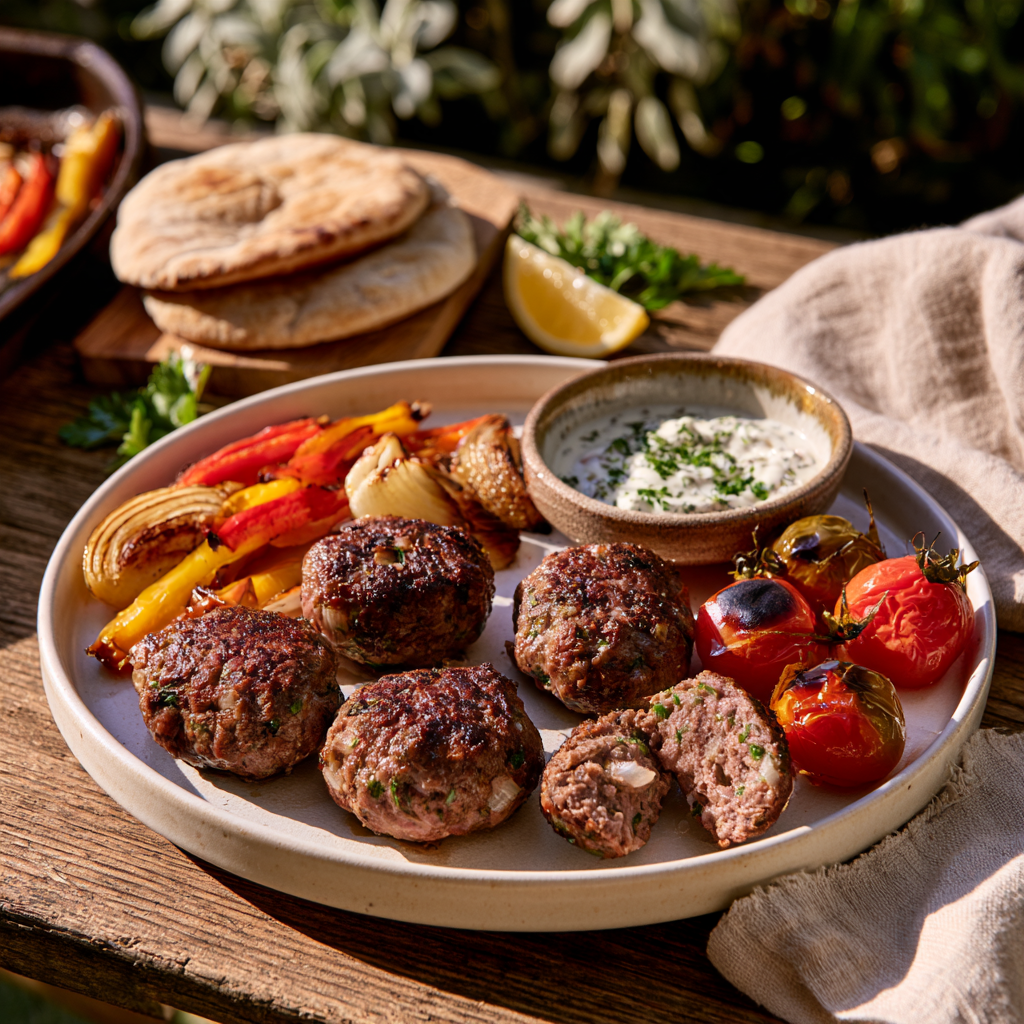
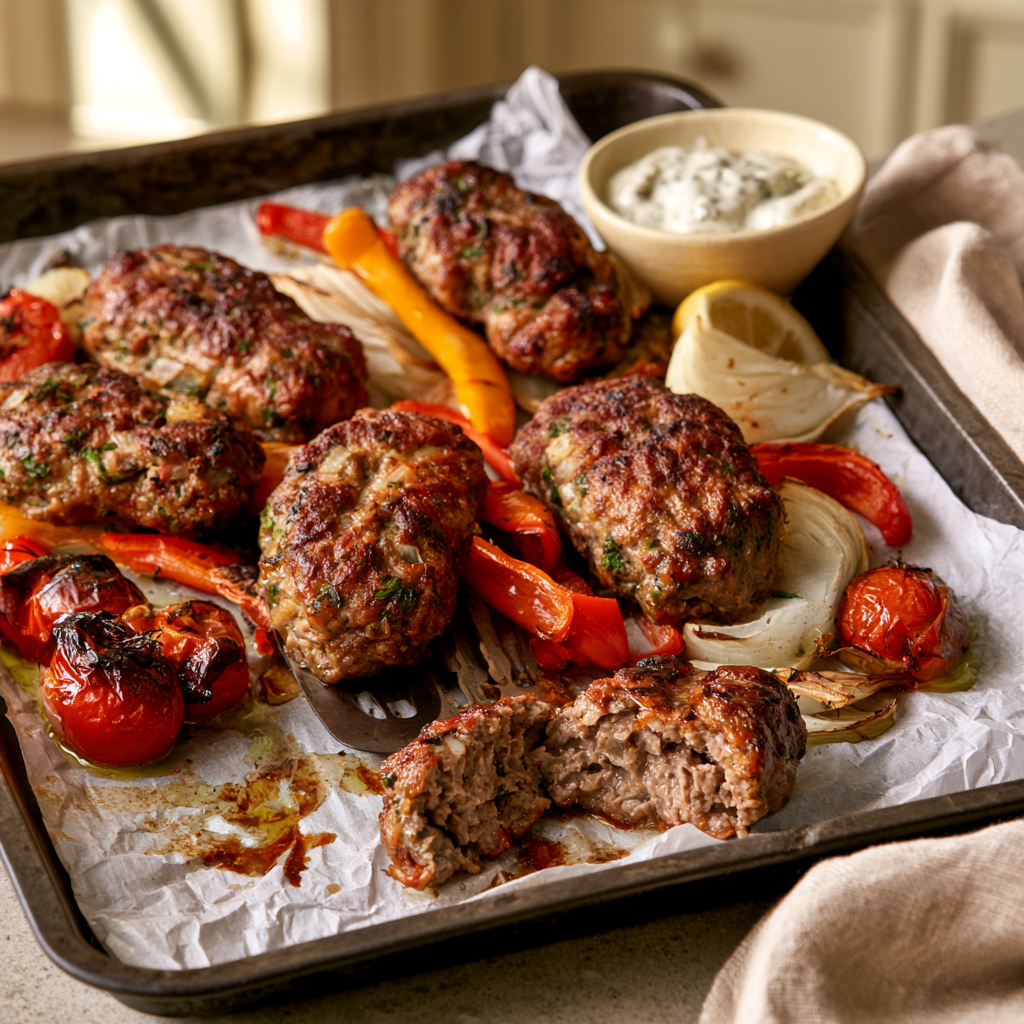
There’s something absolutely irresistible about the sizzling aroma of perfectly seasoned kebabs, especially when they’re juicy, packed with warm spices, and served alongside beautifully roasted vegetables! But what if you could enjoy all those delicious, Middle Eastern-inspired flavors without firing up the grill, threading individual skewers, or spending hours in the kitchen? That’s exactly what makes this Sheet Pan Kebab Recipe such a game-changer! Imagine tender, flavorful ground beef kebabs seasoned with garlic, onion, fresh parsley, cumin, paprika, and aromatic spices, then baked in the oven until beautifully browned and irresistibly juicy. Paired with colorful bell peppers, sweet onions, and juicy tomatoes, this easy sheet pan dinner delivers everything you love about traditional kebabs with a fraction of the effort. Whether you’re preparing a quick weeknight family meal or looking for a satisfying dinner to share with friends, these homemade oven-baked kebabs bring incredible flavor straight to your table.
What makes this easy Sheet Pan Kebab Recipe so special is its simplicity and versatility. Instead of shaping meat around skewers or carefully watching a hot grill, you simply combine ground beef with fresh herbs and fragrant spices, press the seasoned mixture into a baking sheet, and roast it alongside your favorite vegetables. As the kebab cooks, the meat develops deliciously browned edges while remaining tender and juicy inside, and the vegetables soften and caramelize, soaking up the savory juices and spices. The result is a wonderfully satisfying sheet pan beef kebab that’s perfect for serving with warm pita bread, fluffy basmati rice, creamy hummus, fresh cucumber salad, or a generous spoonful of homemade garlic yogurt sauce. Best of all, everything cooks in one pan, making preparation easy and cleanup even easier!
Sheet Pan Kebab Recipe
Equipment
- Large rimmed baking sheet, approximately 13 × 18 inches (33 × 46 cm)
- Large mixing bowl
- Cutting board
- Sharp kitchen knife
- box grater
- Measuring spoons
- Digital kitchen scale
- Silicone spatula or wooden spoon
- Parchment paper, optional and rated for the oven temperature
- Instant-read meat thermometer
- Small mixing bowl, for optional yogurt sauce
- Serving platter
Ingredients
- For the Beef Kebabs
- Quantity Ingredient
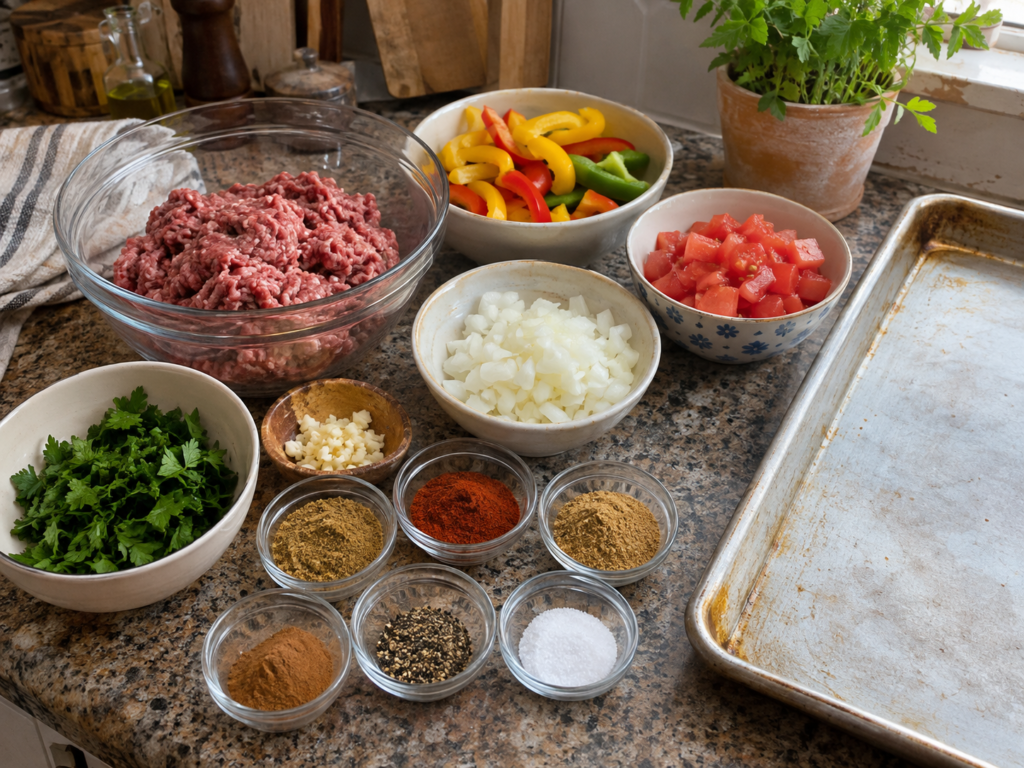
- 1½ lb 680 g Ground beef, preferably 85% lean
- 1 medium 120 g Yellow onion, finely grated
- 4 cloves 12 g Garlic, minced
- ½ cup 20 g Fresh flat-leaf parsley, finely chopped
- 1½ teaspoons 3 g Ground cumin
- 1½ teaspoons 3 g Sweet paprika
- 1 teaspoon 2 g Ground coriander
- ½ teaspoon 1 g Ground black pepper
- ¼ teaspoon 0.5 g Ground cinnamon
- 1 teaspoon 6 g Fine salt
- For the Roasted Vegetables
- Quantity Ingredient
- 1 large 160 g Red bell pepper, sliced
- 1 large 160 g Yellow or green bell pepper, sliced
- 1 medium 150 g Red onion, sliced into wedges
- 2 medium 240 g Tomatoes, cut into thick wedges
- 1 tablespoon 15 ml Olive oil
- ½ teaspoon 1 g Sweet paprika
- ¼ teaspoon Ground black pepper
- ¼ teaspoon Fine salt
Instructions
- Step 1: Gather and Prepare All the Ingredients. Begin by gathering everything needed for your homemade Sheet Pan Kebab Recipe so the preparation process is smooth and efficient. Measure 1½ pounds (680 g) of ground beef and place it in the refrigerator until you are ready to mix the kebab ingredients. Prepare the fresh parsley, garlic, onions, bell peppers, and tomatoes, then measure the cumin, paprika, coriander, cinnamon, black pepper, and salt into separate small bowls or a combined seasoning mixture. Choose a large rimmed baking sheet, ideally approximately 13 × 18 inches (33 × 46 cm), with enough room for the meat and vegetables. Having the ingredients prepared before mixing prevents unnecessary handling of the ground beef and makes it easier to keep the kebabs at a safe temperature until cooking.

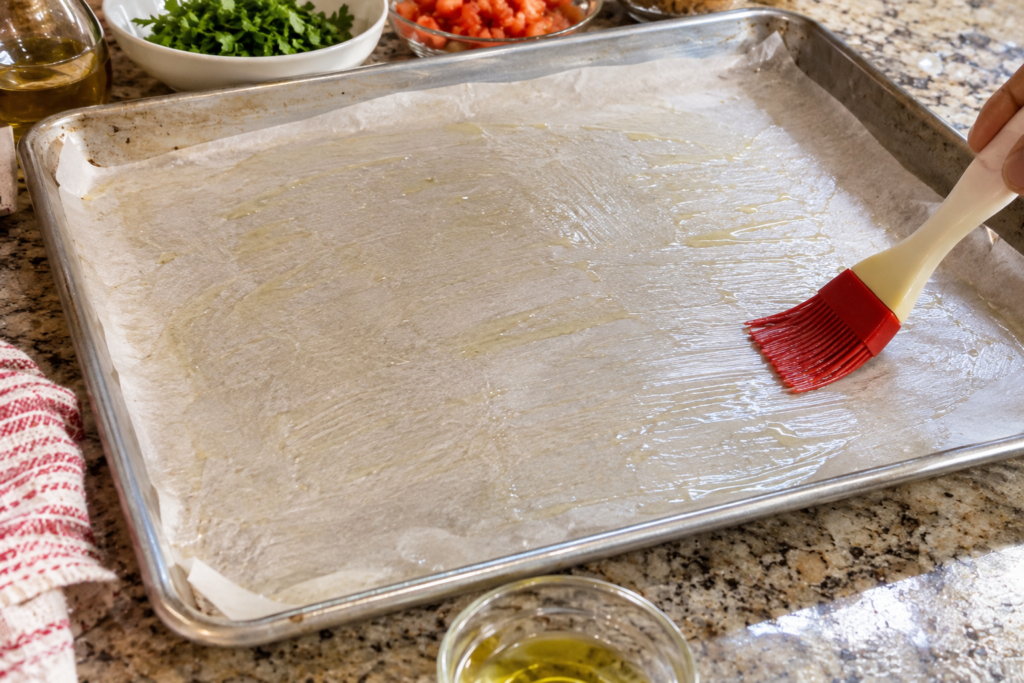
- Step 2: Preheat the Oven and Prepare the Baking Sheet. Position an oven rack in the middle of the oven and preheat to 425°F (220°C), allowing sufficient time for the oven to reach the correct temperature before roasting. Lightly grease a large rimmed metal baking sheet with a small amount of oil or line it with parchment paper that is specifically rated for use at 425°F (220°C). If using parchment paper, make sure the paper lies flat and does not extend beyond the edges of the pan, where it could come into contact with heating elements. A sturdy metal baking sheet is ideal because it distributes heat effectively and encourages the beef to develop flavorful browned edges. Keep the prepared pan nearby while you assemble the seasoned beef mixture and vegetables.

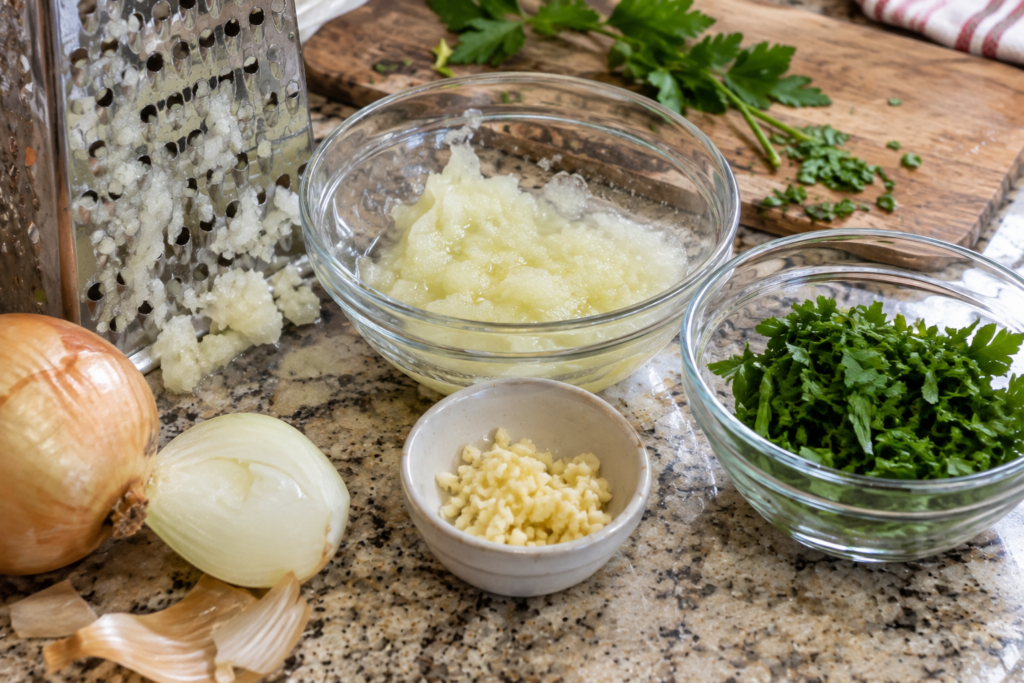
- Step 3: Grate the Onion and Prepare the Aromatics. Peel one medium yellow onion, approximately 120 g, and grate it finely using the small or medium holes of a box grater. Transfer the grated onion to a small bowl, and if it releases an excessive amount of liquid, gently drain off some of the free liquid while retaining the moist onion pulp. This prevents the meat mixture from becoming overly wet while preserving the onion flavor that helps keep the kebabs tender. Peel and finely mince four garlic cloves, approximately 12 g, then finely chop ½ cup (20 g) of fresh flat-leaf parsley. The onion should be finely grated rather than roughly chopped so it distributes evenly throughout the ground beef without creating large pieces that may interfere with shaping.
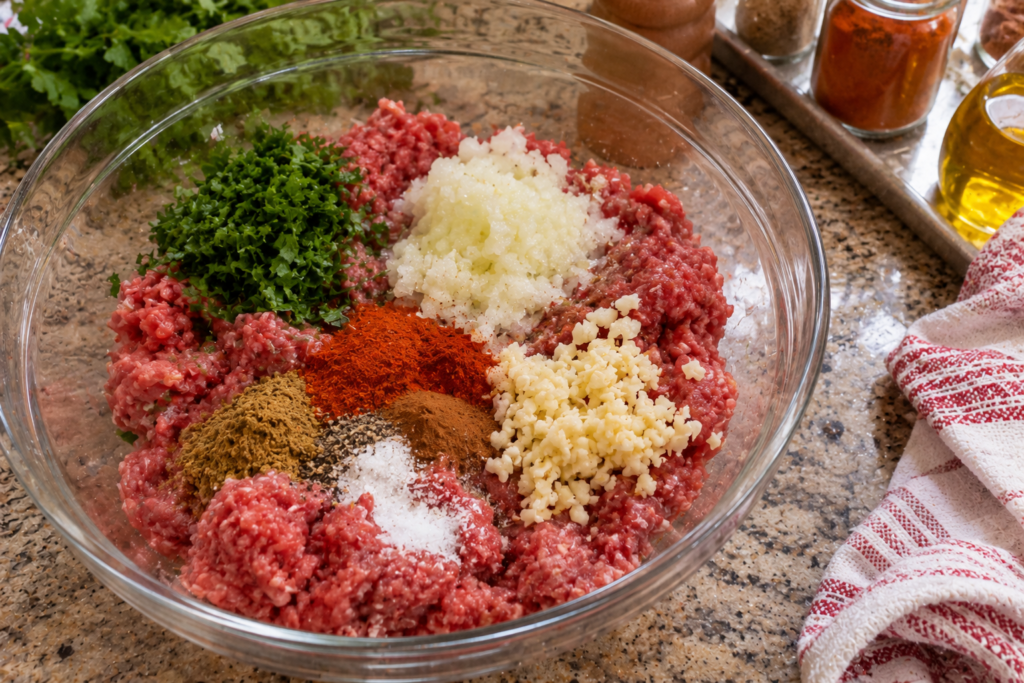
- Step 4: Combine the Ground Beef with the Seasonings. Place the 1½ pounds (680 g) of ground beef in a large mixing bowl and add the prepared grated onion, minced garlic, and chopped parsley. Sprinkle in 1½ teaspoons (3 g) of ground cumin, 1½ teaspoons (3 g) of sweet paprika, 1 teaspoon (2 g) of ground coriander, ½ teaspoon (1 g) of ground black pepper, ¼ teaspoon (0.5 g) of cinnamon, and 1 teaspoon (6 g) of fine salt. Using clean hands or a sturdy spoon, gently combine the ingredients until the vegetables, herbs, and spices are evenly distributed throughout the meat. Avoid kneading excessively or compressing the mixture tightly, as overworking ground beef can produce dense, firm kebabs. The finished mixture should hold together when pressed while remaining moist and easy to shape. Wash your hands and clean any utensils or surfaces that have contacted raw beef before proceeding.
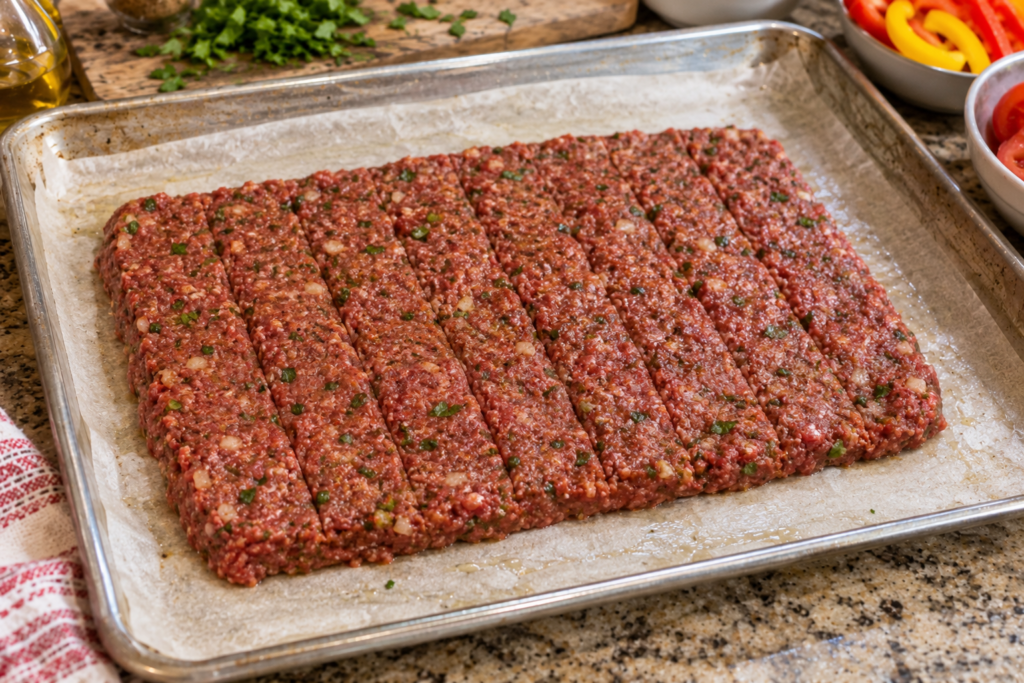
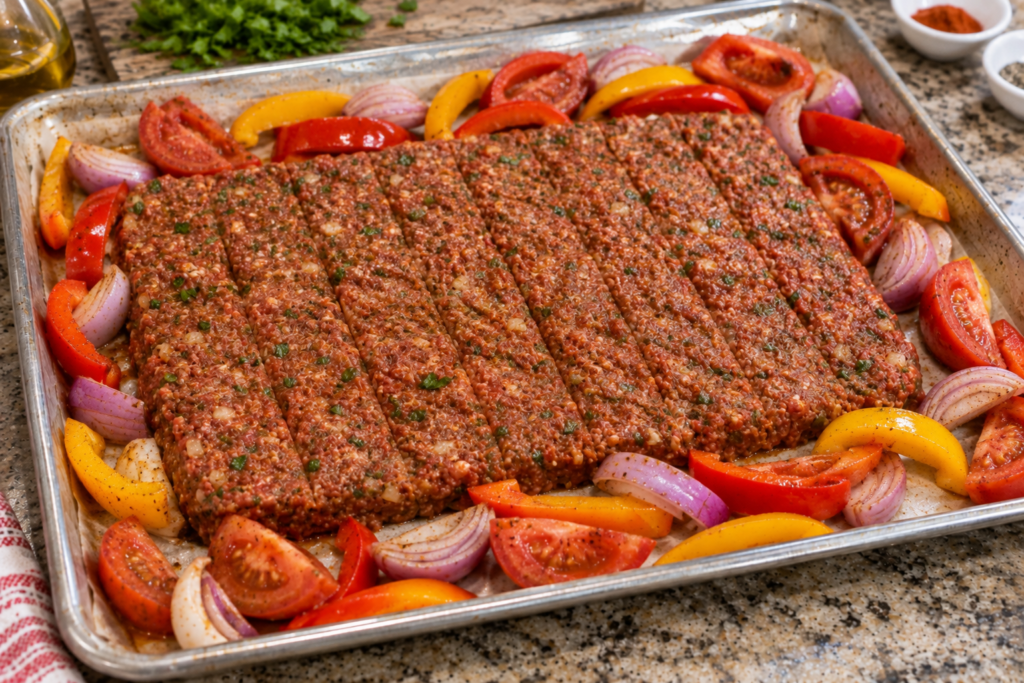
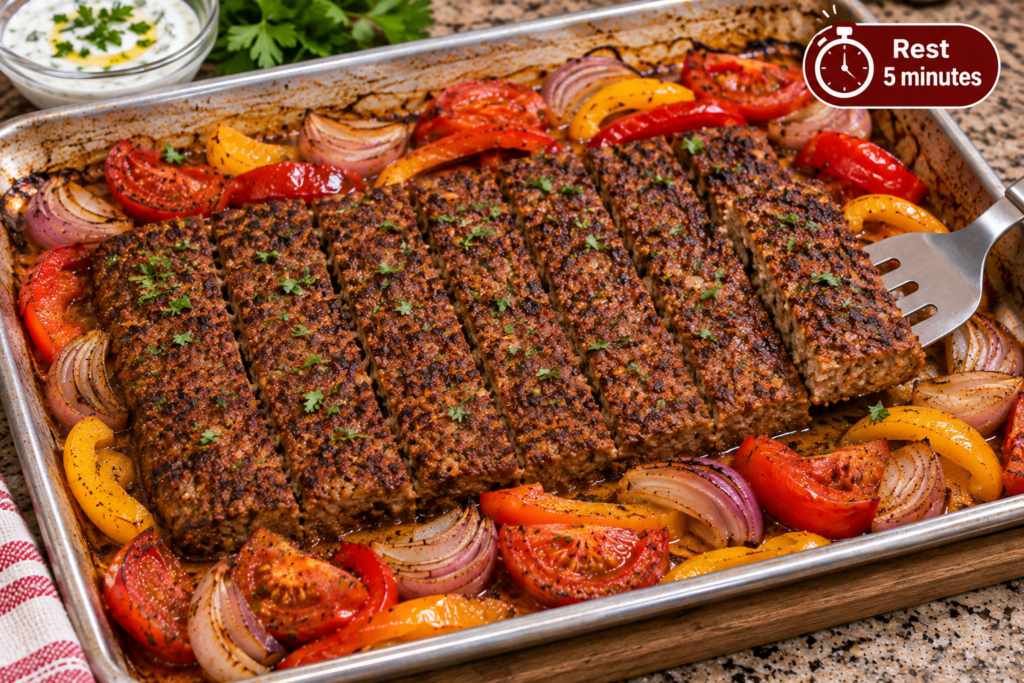
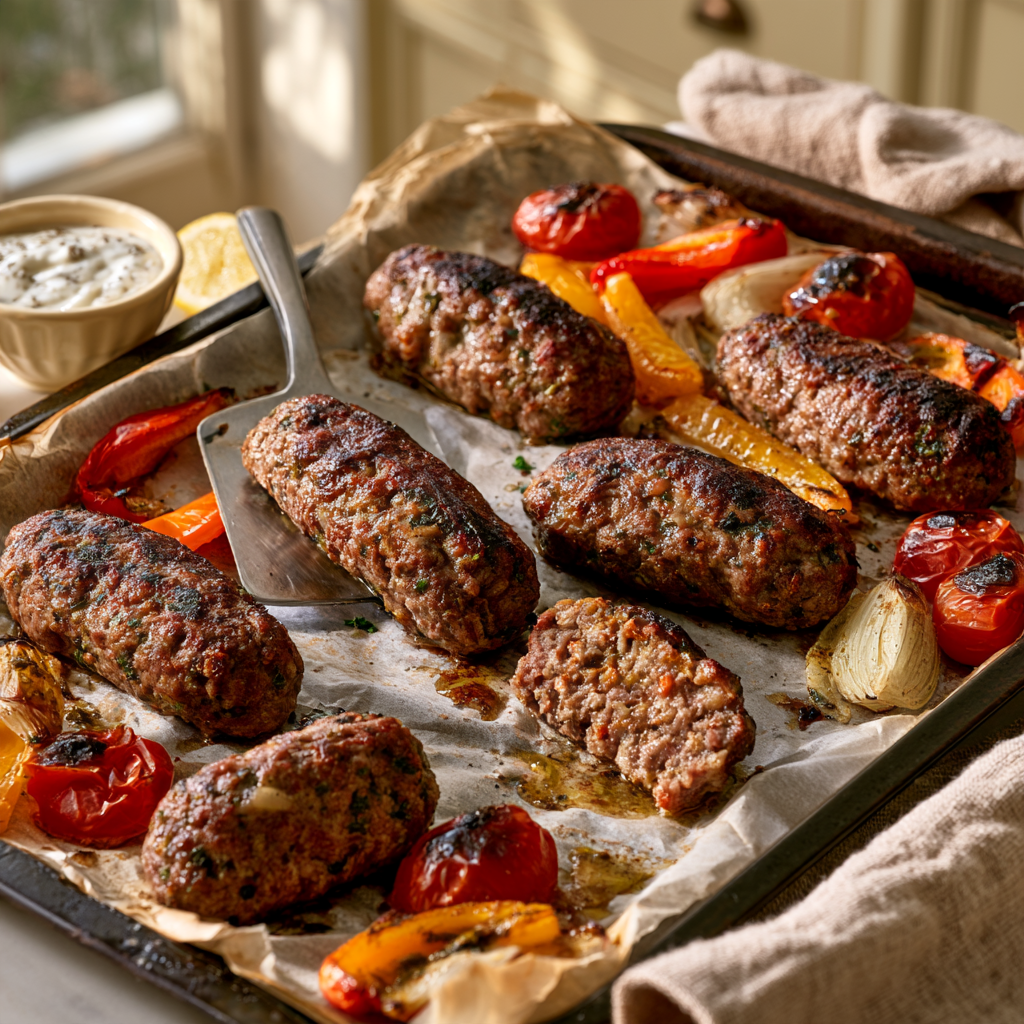
- Step 5: Shape the Beef Mixture on the Sheet Pan. Transfer the seasoned beef mixture onto the prepared baking sheet and gently press it into a rectangular slab approximately ¾ inch (2 cm) thick, positioning it in the center of the pan and leaving space around the edges for the vegetables. Aim for a relatively even thickness so the beef cooks consistently from one end to the other. Using a bench scraper or the back of a butter knife, lightly score the surface into eight elongated rectangular kebab portions without necessarily cutting all the way through the meat. This creates a kebab-inspired appearance and makes it easier to divide the cooked meat into individual portions later. Avoid pressing the meat too thin because the edges may dry out before the center finishes cooking. If the beef mixture feels unusually soft, refrigerate the shaped meat briefly while preparing the vegetables.
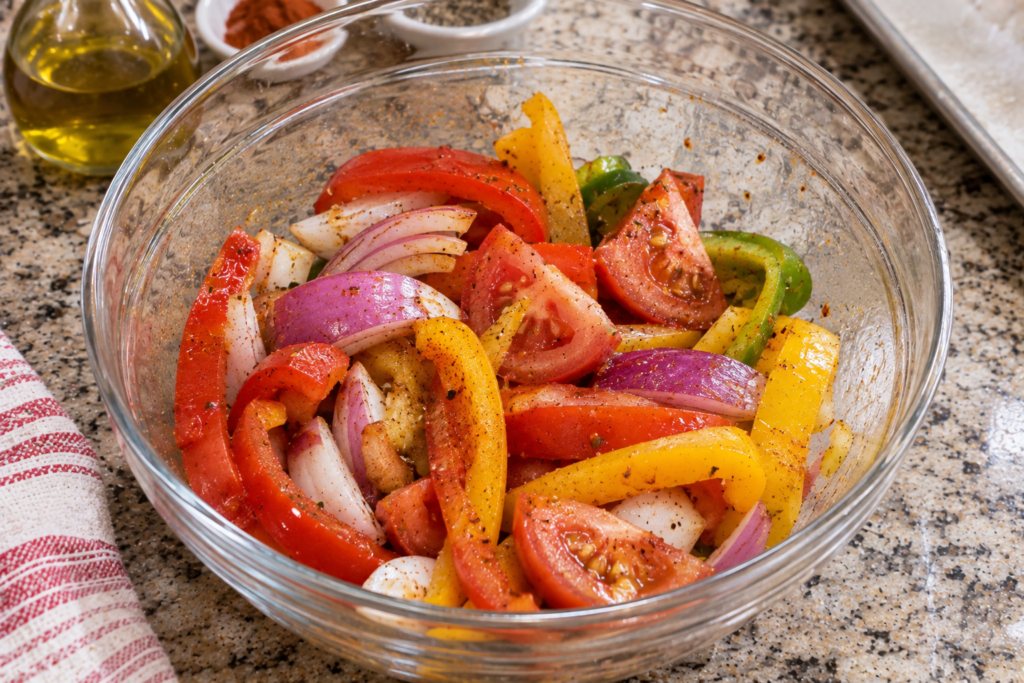
- Step 6: Slice and Season the Vegetables. Wash and dry the red and yellow or green bell peppers, remove their stems and seeds, and cut them into strips approximately ½–¾ inch (1.25–2 cm) wide. Peel the red onion and slice it into medium wedges, keeping some of the layers attached so they roast without falling apart completely. Cut the tomatoes into thick wedges rather than small pieces to reduce how much moisture they release during cooking. Transfer the prepared vegetables to a large bowl, then drizzle with 1 tablespoon (15 ml) of olive oil. Add ½ teaspoon (1 g) of paprika, ¼ teaspoon of black pepper, and ¼ teaspoon of fine salt, tossing gently until the vegetables are lightly and evenly coated. Keeping the pieces relatively uniform helps them soften and roast at a similar rate.
- Step 7: Arrange the Vegetables Around the Beef. Carefully distribute the seasoned bell pepper strips, red onion wedges, and tomato pieces around the beef slab on the baking sheet, arranging them in a mostly single layer wherever space allows. Leave a small amount of space between the vegetables and the meat when possible to encourage airflow and reduce excessive steaming. Avoid piling the vegetables directly over the beef because this may interfere with browning and make it more difficult to monitor the meat's cooking progress. If your baking sheet is too crowded, transfer some vegetables to a second pan rather than forcing everything into a tightly packed layer. The goal is to create a colorful arrangement where the vegetables roast in the oven while the ground beef develops a flavorful, lightly browned exterior.
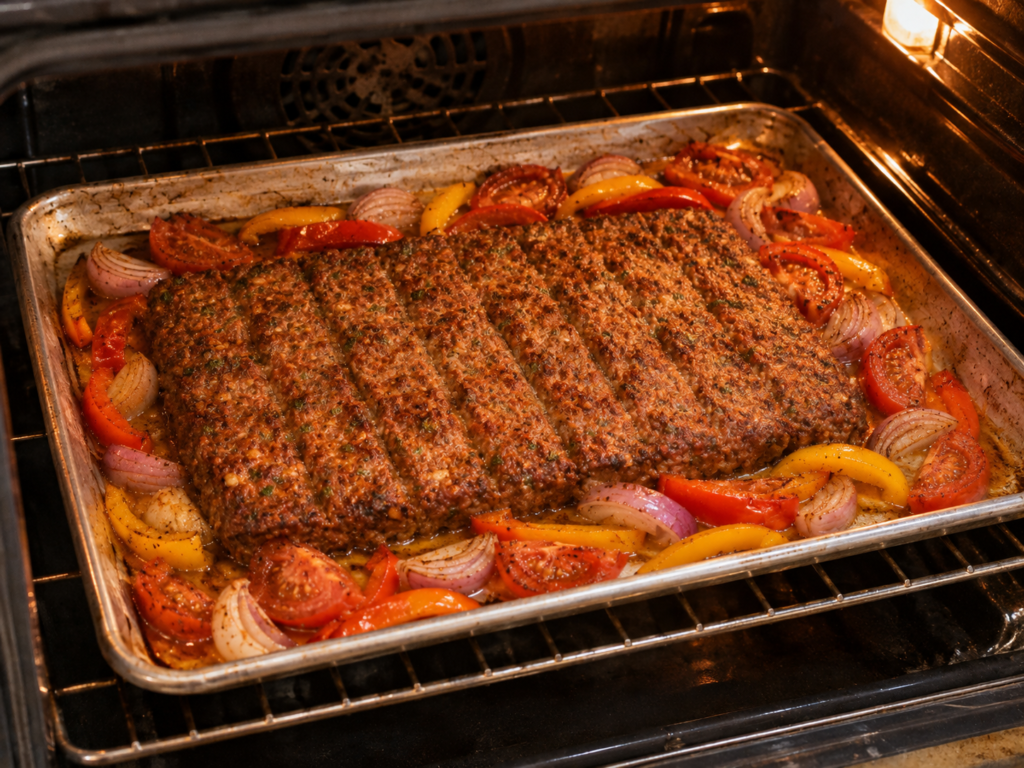
- Step 8: Roast the Sheet Pan Kebabs in the Oven. Place the prepared baking sheet on the middle oven rack and roast at 425°F (220°C) for approximately 15–25 minutes, using 20 minutes as an initial planning estimate. During roasting, the seasoned ground beef should gradually become firmer and develop browned surfaces, while the bell peppers and onions soften and the tomatoes release some of their juices. Begin checking the beef around 15 minutes, especially if the meat slab is thinner than ¾ inch (2 cm). The actual roasting time depends on the thickness of the meat, oven performance, and how densely the vegetables are arranged. If the vegetables release a significant amount of liquid, carefully avoid spilling the hot pan juices when moving the baking sheet. Do not rely on browning alone to determine whether the meat is safely cooked.
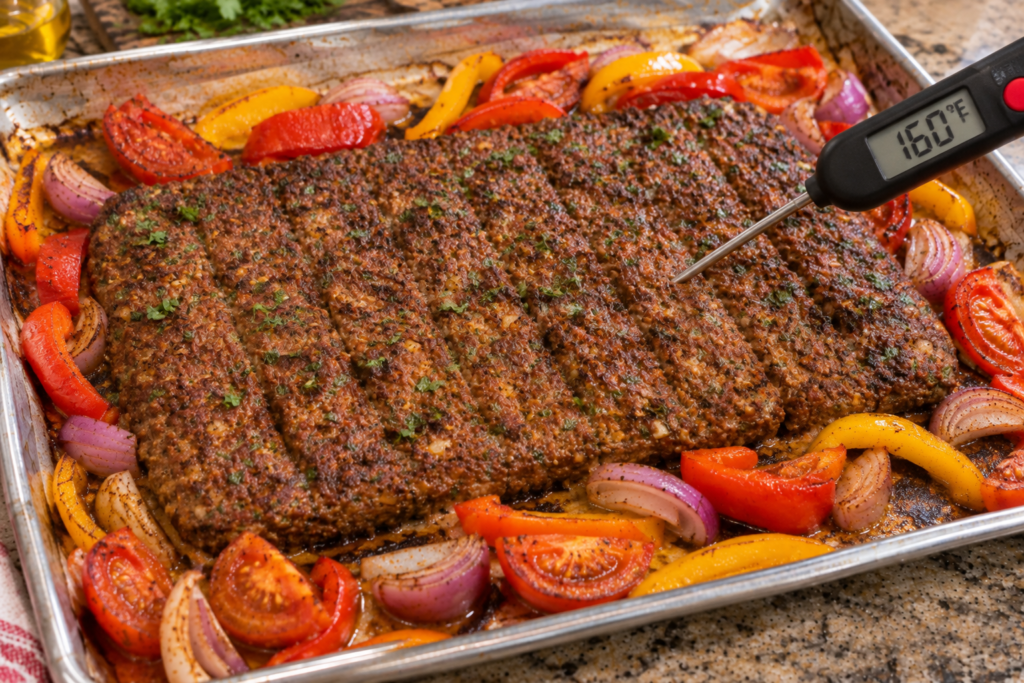
- Step 9: Check the Beef for Safe Doneness. When the kebabs appear nearly cooked, insert an instant-read meat thermometer horizontally into the thickest central portion of the ground beef, avoiding contact with the metal baking sheet. The beef must reach an internal temperature of at least 160°F (71°C) before serving. If the thermometer reads below this temperature, return the pan to the oven and continue roasting, checking again after a few minutes. The surface should be nicely browned, and the center should be cooked through without appearing raw. If the meat reaches its safe temperature before the vegetables are sufficiently tender, carefully transfer the beef to a clean serving plate and return the vegetables to the oven for several additional minutes. Using a thermometer is the most reliable way to avoid undercooking the meat while minimizing unnecessary moisture loss from overcooking.
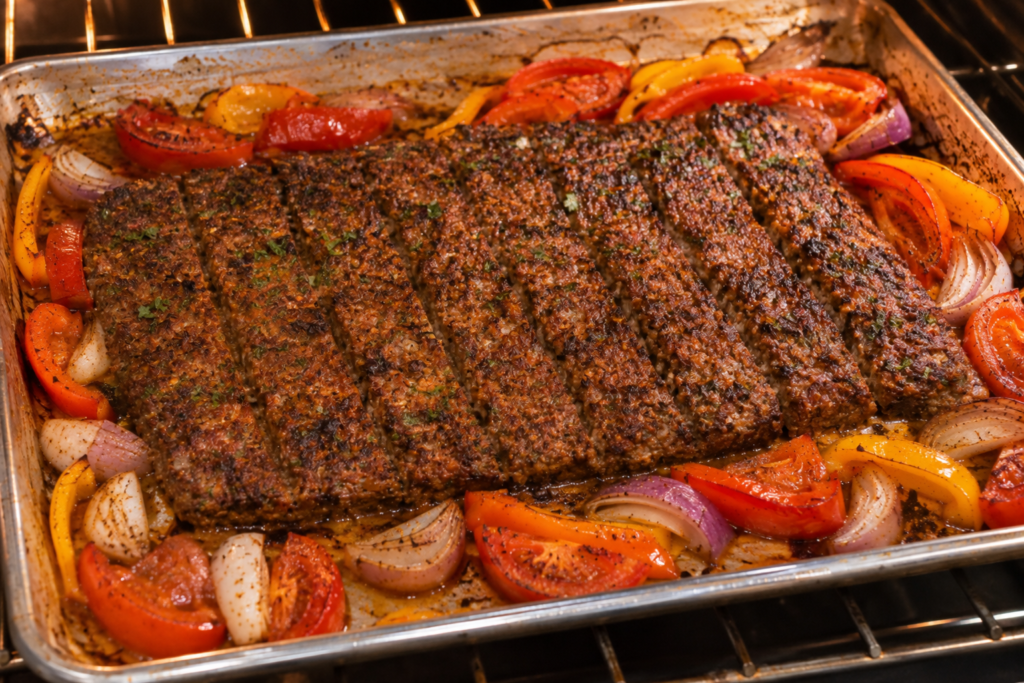
- Step 10: Add Extra Browning if Desired. If the kebabs have reached 160°F (71°C) internally but you would like slightly darker, more caramelized edges, you can use the oven's broiler briefly to improve their appearance. First, confirm that the baking sheet and any liner are approved for broiler use; if you used parchment paper, remove it before broiling because parchment can ignite under direct broiler heat. Move the kebabs to a suitable unlined, broiler-safe metal pan if necessary, then place them under the broiler for approximately 1–2 minutes while watching continuously. The goal is a lightly browned surface rather than a heavily charred exterior. Remove the pan immediately once the edges develop the desired color, taking care when handling the hot baking sheet and accumulated cooking juices. This step is optional and should be skipped if the kebabs are already well browned.
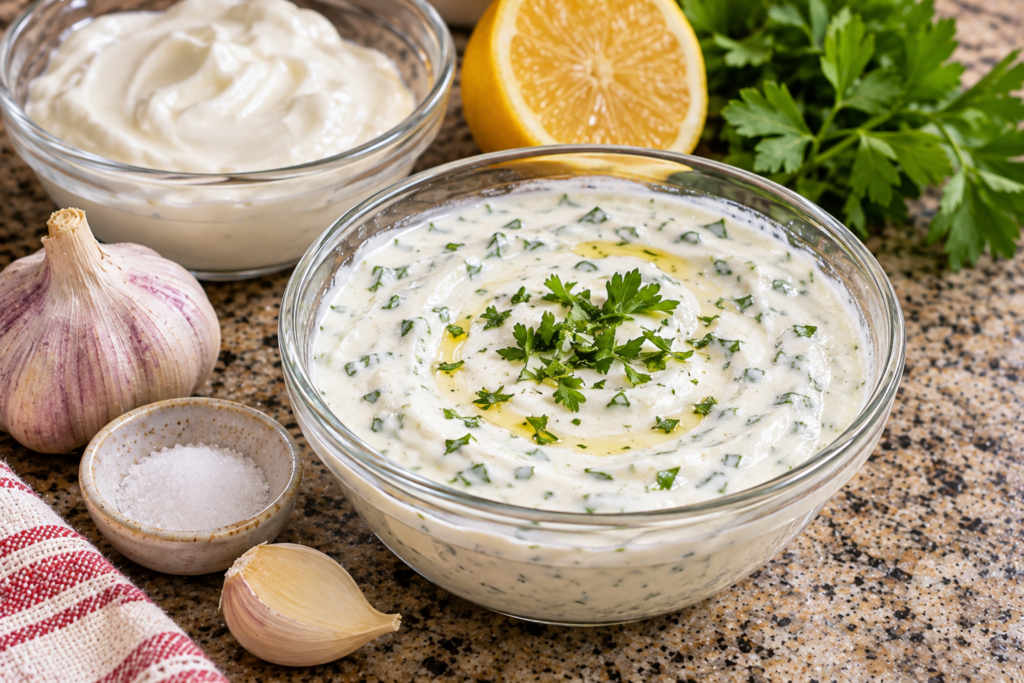
- Step 11: Prepare the Optional Garlic Yogurt Sauce. While the kebabs finish roasting, prepare a simple garlic yogurt sauce to complement the rich, aromatic beef. In a small mixing bowl, combine ½ cup (120 g) of plain Greek yogurt, one small finely grated garlic clove, 1 teaspoon (5 ml) of fresh lemon juice, 1 tablespoon (4 g) of chopped fresh parsley, and approximately ⅛ teaspoon of fine salt. Stir until the mixture becomes smooth and the garlic and herbs are evenly distributed throughout the yogurt. Taste and adjust the lemon juice or salt slightly according to preference, keeping the sauce pleasantly tangy rather than overly sharp. Cover and refrigerate until ready to serve, especially if preparing it ahead of time. The cool, creamy yogurt provides a refreshing contrast to the hot, spiced beef and roasted vegetables.
- Step 12: Allow the Kebabs to Rest Briefly. Once the ground beef reaches the required internal temperature and the vegetables are tender, carefully remove the baking sheet from the oven and place it on a heat-resistant surface. Allow the kebabs to rest for approximately 5 minutes before cutting them into individual portions. This short resting period allows the meat to cool slightly and makes it easier to handle without breaking apart. Some cooking juices may collect around the beef and vegetables, which is normal for ground meat and moisture-rich vegetables such as tomatoes. Use a clean spatula to separate the portions along the previously scored lines, cutting through the meat where necessary. Avoid leaving the cooked kebabs at room temperature for extended periods, and prepare to serve them while they are still warm.
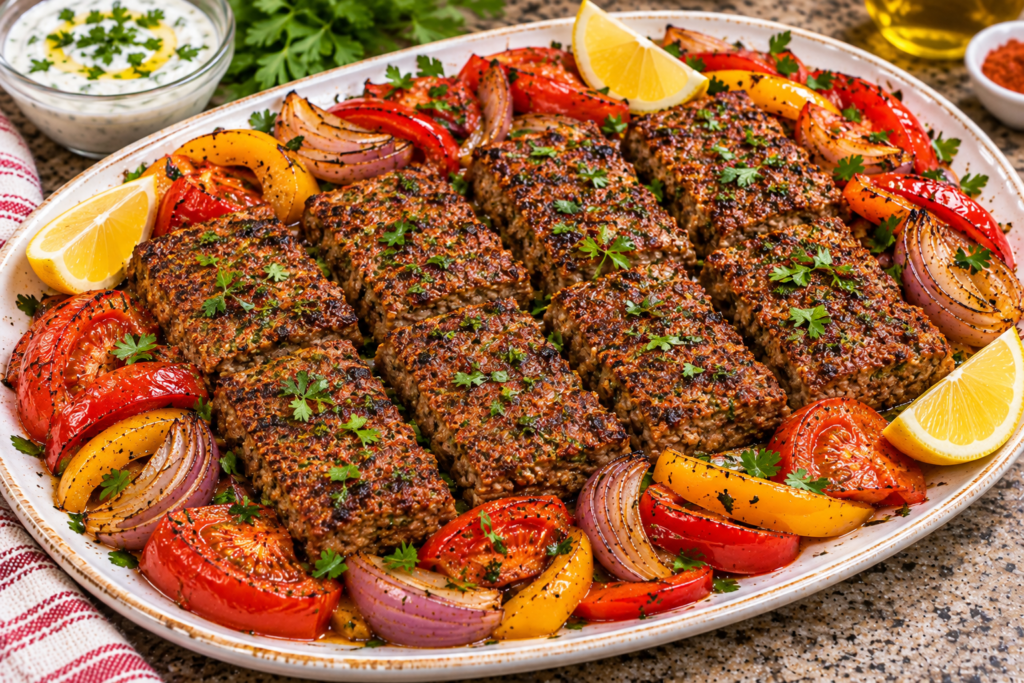
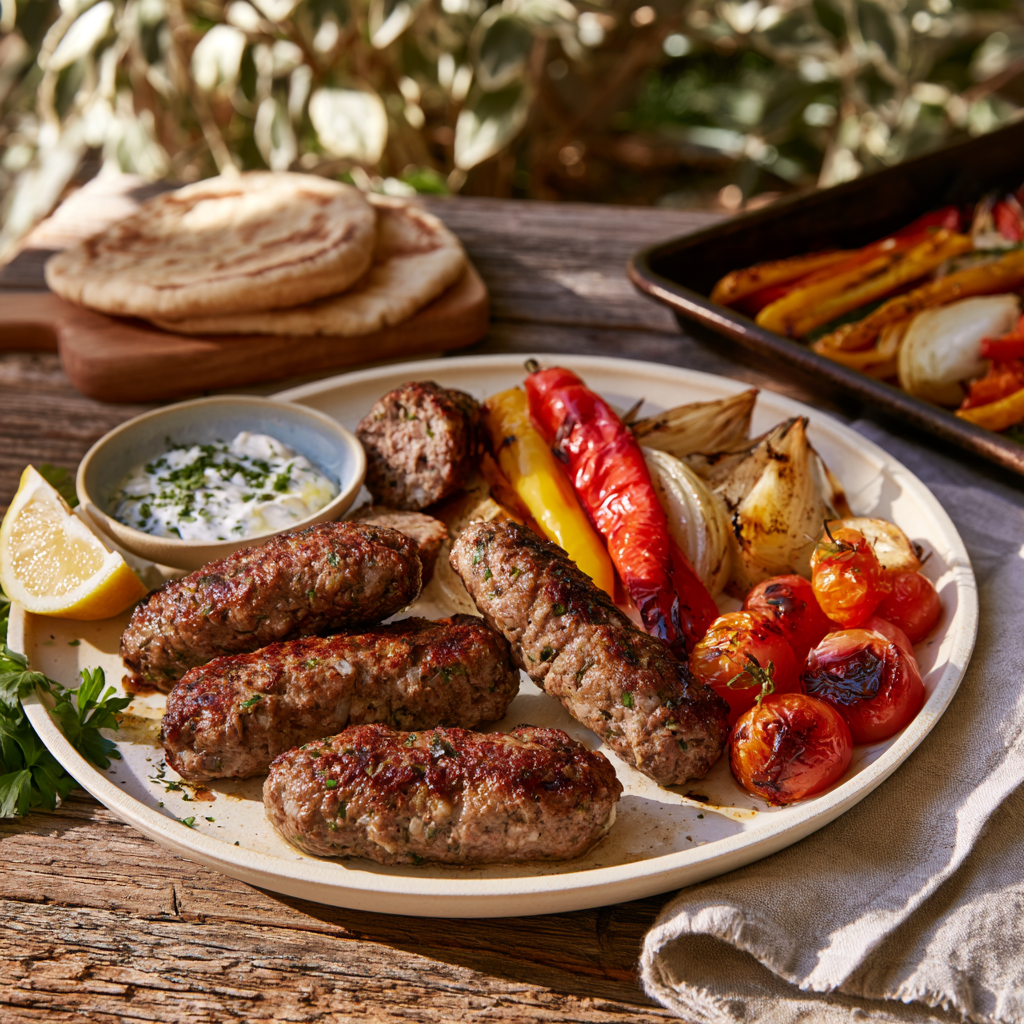
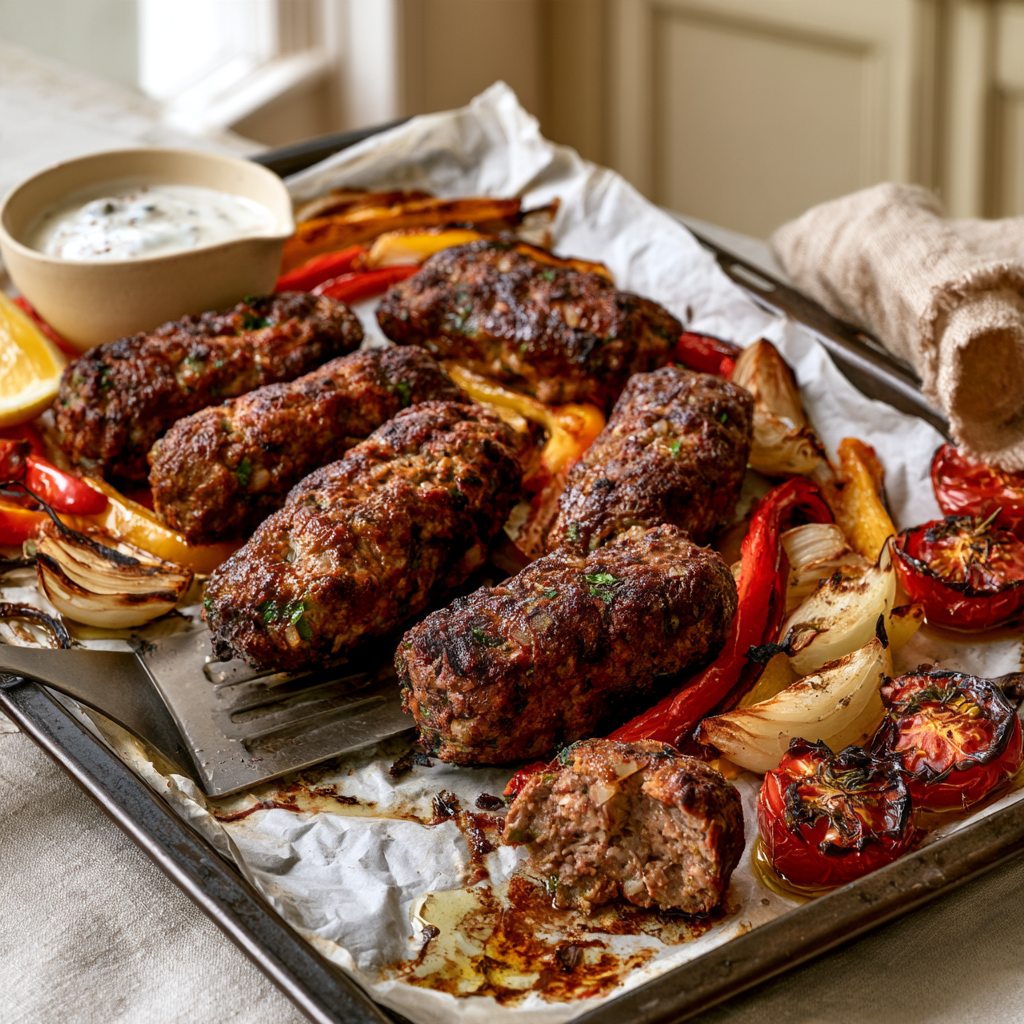
- Step 13: Cut and Arrange the Beef Kebabs for Serving. Using a clean knife or wide spatula, divide the rested beef into eight elongated kebab-style portions, giving each serving approximately two pieces. Transfer the kebabs carefully to a large serving platter and arrange the roasted bell peppers, red onions, and tomatoes alongside them. If the baking sheet contains flavorful juices, spoon a small amount over the meat for additional moisture, avoiding excessive grease if the beef released a significant amount of fat. Sprinkle freshly chopped parsley over the finished platter and add several lemon wedges for a bright, fresh garnish. The combination of golden-brown beef, colorful roasted vegetables, and fresh green herbs creates a delicious presentation that's ideal for both family dinners and casual entertaining.
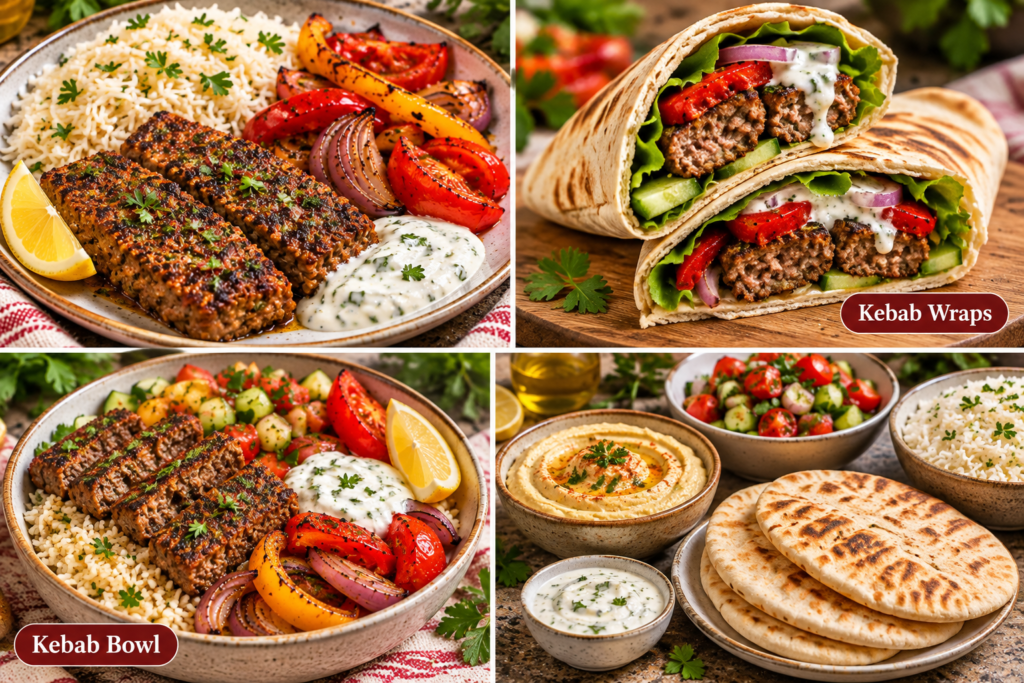
- Step 14: Serve with Your Favorite Side Dishes. Serve the warm sheet pan beef kebabs immediately with fluffy basmati rice, soft pita bread, hummus, or a fresh cucumber and tomato salad. For a complete Mediterranean-inspired meal, arrange two kebab portions and a generous serving of roasted vegetables on each plate, then add a spoonful of the homemade garlic yogurt sauce. You can also create homemade kebab wraps by placing pieces of beef inside warm pita bread with lettuce, cucumber slices, roasted peppers, and a little yogurt sauce. Another delicious option is to prepare kebab bowls using rice or bulgur as the base, followed by beef, vegetables, fresh parsley, and lemon juice. Adjust the accompaniments to your family's preferences and enjoy the kebabs while the meat remains tender and flavorful.
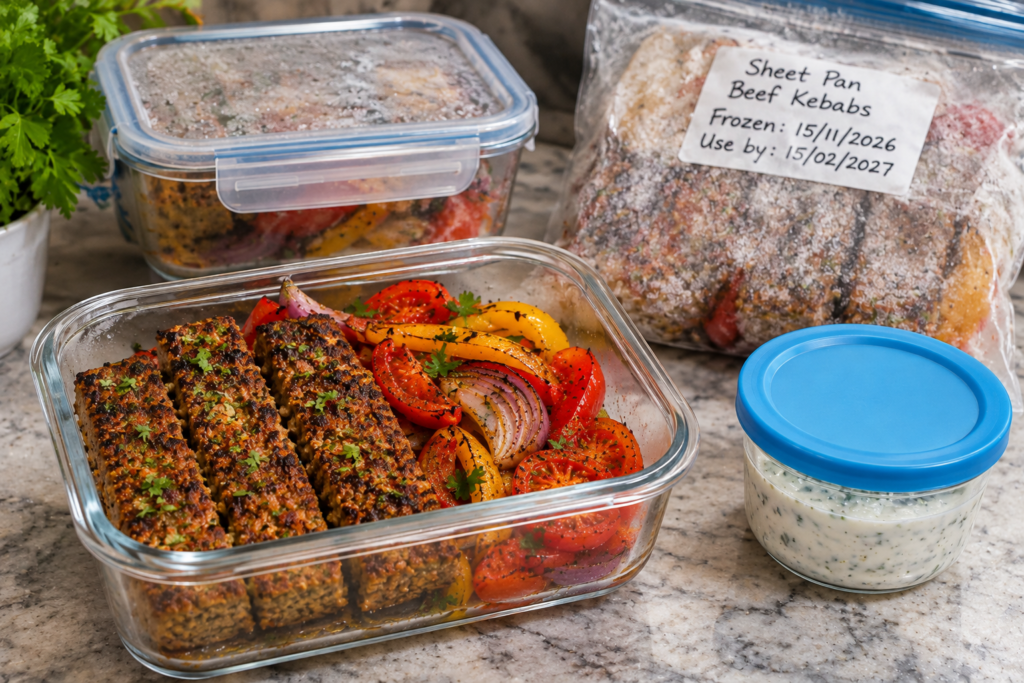
- Step 15: Store and Reheat Any Leftover Kebabs Safely. Transfer leftover sheet pan beef kebabs and roasted vegetables into shallow airtight containers and refrigerate promptly at 40°F (4°C) or below, within two hours of cooking or within one hour if the surrounding temperature exceeds 90°F (32°C). Properly refrigerated cooked beef kebabs generally keep for 3–4 days. For longer storage, divide the cooled kebabs into individual freezer-safe portions, seal tightly, and freeze at 0°F (-18°C) or below, aiming to use them within approximately 2–3 months for best quality. Thaw frozen kebabs safely in the refrigerator before reheating, then warm them in a covered baking dish or microwave until the center reaches 165°F (74°C). Store the optional yogurt sauce separately, refrigerate it promptly, and do not freeze it with the meat because its texture may change after thawing.
Notes

- Origins of the Sheet Pan Kebab
- Health Benefits of the Sheet Pan Kebab
- Nutritional Benefits of Sheet Pan Kebab Ingredients
- 1. Provides High-Quality Protein for Muscle Maintenance
- 2. Supplies Iron and Vitamin B12
- 3. Contains Zinc to Support Normal Immune Function
- 4. Adds Vitamins and Antioxidants from Roasted Vegetables
- 5. Can Be Prepared with Less Added Fat
- 6. Offers a Convenient Way to Eat More Vegetables
- 7. Aromatic Herbs and Spices Add Flavor Without Excessive Salt
- What to Serve with These Beef Kebabs
Origins of the Sheet Pan Kebab
The history of the Sheet Pan Kebab Recipe is rooted in the rich culinary traditions of the Middle East, Central Asia, and the Eastern Mediterranean, where seasoned meat dishes have been prepared and enjoyed for centuries. The word kebab is commonly associated with roasted or grilled meat, although its meaning and preparation vary widely across different cultures. From the smoky charcoal grills of Türkiye to the fragrant spice markets of Persia and the traditional kitchens of the Levant, kebabs have long been celebrated for their bold flavors, tender textures, and versatility. Historically, cooks prepared kebabs using lamb, beef, or other meats, often seasoning them with aromatic spices, onions, and fresh herbs before roasting them over open flames or cooking them on skewers. These techniques produced flavorful, satisfying dishes that became an important part of family meals, celebrations, and regional food traditions.
One of the most recognizable influences behind today’s Sheet Pan Kebab Recipe is the family of minced-meat kebabs known by names such as kofta, köfte, and kabab koobideh, depending on the region and culinary tradition. These dishes commonly feature ground or finely minced meat mixed with ingredients such as onion, parsley, garlic, cumin, coriander, or paprika, although authentic recipes differ significantly from one country to another. In Persian cuisine, kabab koobideh is traditionally made with seasoned minced meat shaped around wide skewers and grilled over charcoal. Across the Levant, varieties of kafta are often prepared with parsley, onion, and warm spices, then grilled, pan-cooked, or baked. Turkish köfte encompasses numerous preparations of seasoned minced meat, including patties, meatballs, and grilled varieties. Together, these regional traditions help explain why ground-meat kebabs have become so popular around the world, offering countless ways to transform simple ingredients into richly seasoned, comforting meals.
Health Benefits of the Sheet Pan Kebab
Who says a delicious, comforting dinner can’t also be packed with valuable nutrients? This Sheet Pan Kebab Recipe brings together juicy, perfectly seasoned ground beef, colorful roasted vegetables, fresh herbs, and aromatic spices to create a satisfying meal that’s as nourishing as it is flavorful. Inspired by the bold flavors of Middle Eastern and Mediterranean cooking, these homemade oven-baked kebabs provide high-quality protein, essential minerals, and a variety of vitamins from simple, everyday ingredients. The combination of tender beef, sweet bell peppers, onions, tomatoes, and fresh parsley makes this recipe a wonderful option for families looking to enjoy a homemade dinner with plenty of flavor and nutritional variety.
One of the biggest advantages of making sheet pan beef kebabs at home is the ability to control the ingredients, portion sizes, and cooking method. Unlike some restaurant-style kebabs that may contain higher amounts of saturated fat, salt, or rich sauces, this homemade version allows you to choose leaner ground beef, adjust the seasoning, and include generous portions of vegetables. Roasting everything on a single baking sheet also means you can develop delicious flavors without deep-frying or using excessive amounts of oil. While the exact nutritional value depends on the beef’s fat content and the quantities used, this recipe can fit comfortably into a balanced eating pattern.
Nutritional Benefits of Sheet Pan Kebab Ingredients
| Ingredient | Nutritional Benefits |
|---|---|
| Ground Beef | Provides complete protein, iron, zinc, vitamin B12, and other essential nutrients. |
| Bell Peppers | Rich in vitamin C and provide carotenoids, particularly in red and orange varieties. |
| Tomatoes | Supply vitamin C, potassium, and lycopene, a naturally occurring antioxidant compound. |
| Onions | Provide small amounts of fiber and naturally occurring sulfur-containing plant compounds. |
| Fresh Parsley | Contains vitamin K, vitamin C, and plant-based antioxidants. |
| Garlic | Contains organosulfur compounds that contribute to its distinctive aroma and flavor. |
| Cumin and Paprika | Add aromatic plant compounds and flavor, helping make heavily salted seasoning unnecessary. |
| Olive Oil (If Used) | Provides primarily monounsaturated fats and may contribute vitamin E. |
1. Provides High-Quality Protein for Muscle Maintenance
One of the most important nutritional benefits of this Sheet Pan Kebab Recipe comes from its ground beef. Beef is a source of complete protein, meaning it provides all nine essential amino acids that the body cannot produce on its own.
Protein plays an important role in maintaining and repairing muscles, supporting normal tissue growth, and producing enzymes and other essential compounds. This makes homemade beef kebabs a satisfying option for a protein-containing lunch or dinner.
For a more balanced meal, serve the kebabs with roasted vegetables and a moderate portion of whole-grain rice, bulgur, or whole-wheat pita bread. The combination provides protein, carbohydrates, fiber, and additional micronutrients.
If you’d like to reduce the amount of saturated fat in your meal, choose lean ground beef, such as 90% lean or leaner, rather than higher-fat varieties.
2. Supplies Iron and Vitamin B12
Beef is a valuable dietary source of iron and vitamin B12, two nutrients that support important functions throughout the body.
Iron is required for the production of hemoglobin, the protein in red blood cells that carries oxygen. Beef contains heme iron, a form that is generally more readily absorbed than the non-heme iron found in many plant foods.
Vitamin B12 supports normal nerve function, DNA synthesis, and red blood cell formation. It occurs naturally in animal-derived foods, making beef a useful source for people who include meat in their diet.
The bell peppers and tomatoes in this oven-baked kebab recipe also provide vitamin C, which supports the absorption of non-heme iron from plant-based foods eaten alongside the meal.
3. Contains Zinc to Support Normal Immune Function
Another nutritional advantage of homemade sheet pan kebabs is their zinc content. Ground beef naturally provides zinc, an essential mineral involved in immune function, wound healing, cell division, and the activity of numerous enzymes.
Zinc also plays a role in maintaining normal growth and development and supports the body’s ability to produce proteins and DNA.
Although eating zinc-rich foods is an important part of meeting daily nutritional requirements, consuming additional zinc beyond your body’s needs doesn’t necessarily improve immunity.
Including a variety of zinc-containing foods, such as meat, beans, nuts, seeds, and whole grains, is a practical approach to maintaining an adequate intake.
4. Adds Vitamins and Antioxidants from Roasted Vegetables
Colorful vegetables are one of the most appealing features of this Sheet Pan Kebab Recipe. Bell peppers, tomatoes, and onions contribute different vitamins, minerals, and naturally occurring plant compounds that complement the nutrients found in beef.
Bell peppers are particularly noteworthy for their vitamin C content, while red peppers also provide carotenoid pigments. Tomatoes contain lycopene, a carotenoid associated with their bright red color.
Cooking tomatoes can improve the accessibility of some lycopene, especially when the meal contains a little fat. However, roasting may also reduce certain heat-sensitive nutrients, including vitamin C.
This combination of fresh and roasted vegetables contributes nutritional variety and makes the meal more colorful, flavorful, and satisfying.
5. Can Be Prepared with Less Added Fat
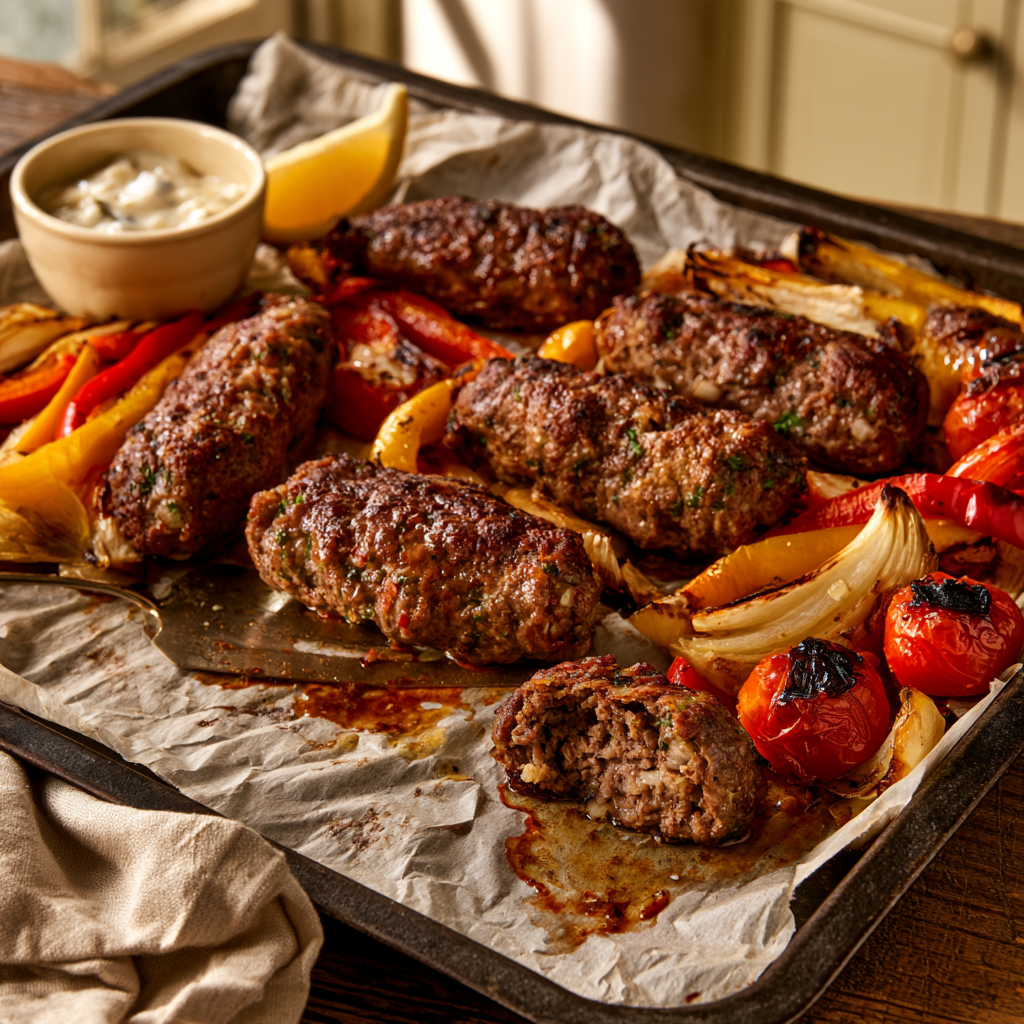
Unlike deep-fried dishes, this easy sheet pan kebab recipe relies on oven roasting to cook the meat and vegetables.
Because ground beef naturally contains fat, additional cooking oil may be unnecessary for the meat itself. A small amount of olive oil can be used to coat the vegetables, helping them roast evenly and develop appealing browned edges.
The total amount of fat in the finished meal depends largely on the type of beef used. Choosing lean ground beef can lower the recipe’s saturated fat content compared with using fattier ground beef.
For a lighter meal, pair the kebabs with fresh salad and a yogurt-based sauce instead of large quantities of buttery rice or rich dressings.
6. Offers a Convenient Way to Eat More Vegetables
Preparing sheet pan kebabs with vegetables is a practical way to include more produce in a family dinner without requiring several separate side dishes.
Bell peppers, onions, and tomatoes become naturally sweeter as they roast, creating a delicious contrast to the savory, spiced beef. Their flavors also complement fresh parsley, garlic, cumin, and paprika.
You can increase the vegetable portion by adding zucchini, mushrooms, or other vegetables that roast well, although you may need to adjust cooking times to prevent excess moisture or overcooking.
For an even more balanced plate, consider serving the kebabs with a fresh cucumber and tomato salad or a side of leafy greens.
7. Aromatic Herbs and Spices Add Flavor Without Excessive Salt
The distinctive flavor of this Sheet Pan Kebab Recipe comes from its blend of garlic, onion, parsley, cumin, paprika, and other aromatic seasonings.
These ingredients contain naturally occurring plant compounds, but their most practical culinary benefit is the depth of flavor they bring to the dish.
Using fragrant herbs and spices can make it easier to prepare an enjoyable meal without relying heavily on salt or commercial seasoning mixes.
If you’re monitoring sodium intake, measure the salt carefully and choose individual spices rather than blends containing substantial added sodium.
What to Serve with These Beef Kebabs
One of the best things about this Sheet Pan Kebab Recipe is how easily it pairs with a variety of delicious side dishes! With their juicy, perfectly seasoned ground beef, aromatic Middle Eastern-inspired spices, and colorful roasted vegetables, these homemade beef kebabs are incredibly versatile. Whether you’re planning a cozy family dinner, preparing a quick weeknight meal, or serving guests for a special gathering, the right side dishes can turn these oven-baked beef kebabs into a complete, satisfying feast. From fluffy rice and warm flatbread to refreshing salads and creamy homemade sauces, there are plenty of wonderful ways to enjoy every flavorful bite.
1. Fluffy Basmati Rice or Mediterranean-Style Rice
Few side dishes complement sheet pan beef kebabs better than a generous serving of fluffy basmati rice. The delicate texture and mild flavor of the rice provide the perfect contrast to the richly seasoned beef, allowing the warm spices, garlic, and fresh herbs to shine. For extra flavor, cook the rice with a little olive oil, a pinch of turmeric, or a small amount of cumin. You can also add chopped parsley and a squeeze of fresh lemon juice just before serving. Spoon the roasted vegetables and their delicious pan juices over the rice for an easy, comforting kebab bowl that feels hearty without requiring complicated preparation.
2. Warm Pita Bread or Homemade Flatbread
If you love the experience of enjoying kebabs from a traditional street-food stand, serving these homemade beef kebabs with warm pita bread or soft flatbread is an excellent choice. The tender bread is perfect for wrapping around pieces of juicy kebab, roasted peppers, onions, and fresh vegetables. Add a spoonful of garlic yogurt sauce, sliced cucumbers, shredded lettuce, and a little lemon juice to create a flavorful homemade kebab wrap. For the best texture, warm the pita briefly in a dry skillet or wrap it in foil and heat it in the oven until soft and pliable. This serving option is especially convenient for family dinners because everyone can assemble their own wrap with their favorite fillings.
3. Creamy Garlic Yogurt Sauce
A cool, creamy garlic yogurt sauce is one of the most delicious accompaniments for this Sheet Pan Kebab Recipe. The refreshing tanginess of yogurt balances the savory richness of the ground beef, while fresh garlic and lemon juice enhance the aromatic spices. To prepare a simple sauce, combine ½ cup of plain Greek yogurt with one small grated garlic clove, 1 teaspoon of fresh lemon juice, a pinch of salt, and a tablespoon of finely chopped parsley or mint. Stir until smooth, then refrigerate until ready to serve. Spoon the sauce over the finished kebabs or serve it on the side for dipping. The contrast between warm, flavorful meat and cool, creamy yogurt makes every bite especially satisfying.
4. Fresh Cucumber and Tomato Salad
For a lighter, refreshing side dish, pair your oven-baked beef kebabs with a simple cucumber and tomato salad. The crisp texture of cucumbers, juicy sweetness of ripe tomatoes, and bright acidity of lemon dressing balance the richness of the meat beautifully. Combine diced cucumber, chopped tomatoes, finely sliced red onion, and fresh parsley in a bowl, then toss with olive oil, fresh lemon juice, salt, and black pepper. For an extra burst of freshness, add a little chopped mint. This colorful salad is particularly appealing during warmer months and creates a wonderful contrast to the deeply seasoned kebabs and roasted vegetables.
5. Homemade Hummus
Smooth, creamy hummus is another wonderful pairing for sheet pan kebabs with ground beef. Made from chickpeas, tahini, lemon juice, and garlic, hummus offers a mild, nutty flavor that complements the warm cumin and paprika in the kebabs. Spread a generous spoonful onto a serving plate, arrange the cooked beef kebabs over the top, and finish with chopped parsley and a drizzle of olive oil. Serve alongside warm pita bread and fresh vegetable slices for a Mediterranean-inspired dinner that’s both comforting and colorful. Hummus also adds plant-based protein and fiber to the meal, making it an appealing addition to your dinner table.
6. Roasted Potatoes or Crispy Potato Wedges
If you’re looking for a hearty, family-friendly side dish, roasted potatoes are an excellent choice. Their golden, crispy edges and soft interiors pair wonderfully with the tender, spiced beef. Cut potatoes into wedges or bite-sized cubes, toss them with olive oil, paprika, garlic powder, salt, and black pepper, then roast until golden and cooked through. Finish with chopped parsley and a squeeze of lemon juice for a fresh, flavorful touch. Because the kebabs already cook on a sheet pan, you can prepare the potatoes on a separate baking sheet and adjust their cooking time so everything is ready together. Serve with garlic yogurt sauce for dipping.
7. Tabbouleh or Fresh Herb Salad
A bright, herb-filled tabbouleh salad adds a fresh contrast to the bold flavors of Middle Eastern-inspired beef kebabs. Traditional Lebanese-style tabbouleh is made with plenty of finely chopped parsley, tomatoes, mint, lemon juice, olive oil, and a smaller amount of bulgur wheat. Its vibrant flavor and refreshing texture work especially well alongside grilled or roasted meats. You can prepare the salad ahead of time and refrigerate it until dinner, allowing the ingredients to become well combined. Serve a spoonful next to the kebabs, warm pita, and creamy hummus for a colorful plate inspired by the flavors of the Eastern Mediterranean.
8. Pickled Red Onions and Fresh Vegetables
For an extra burst of tangy flavor, try serving your Sheet Pan Kebab Recipe with quick-pickled red onions. Their sharp, slightly sweet acidity cuts through the richness of the beef and makes the finished meal feel especially fresh. Thinly slice a red onion and cover it with a mixture of vinegar, water, a little sugar, and salt, then refrigerate until the onions become pleasantly tangy. Pair them with fresh cucumber slices, shredded lettuce, and chopped tomatoes for a delicious kebab platter or homemade wrap. Quick-pickled onions are especially useful for preparing ahead because they add plenty of flavor without requiring last-minute cooking.
Frequently Asked Questions About Sheet Pan Kebab Recipe
Want to make juicy, flavorful homemade Sheet Pan Kebabs without firing up the grill? This easy oven-baked kebab recipe combines seasoned ground beef with fresh parsley, garlic, warm spices, and colorful roasted vegetables for a delicious family dinner. These practical answers explain how to choose the best ground beef, shape kebabs without skewers, prevent dry meat, achieve golden-brown roasted edges, and prepare a creamy garlic yogurt sauce. Whether you’re planning a quick weeknight dinner, preparing meals ahead, or serving homemade Mediterranean-inspired kebabs, these tips will help you get the best results.
1. What are Sheet Pan Kebabs, and how are they different from traditional grilled kebabs?
Sheet Pan Kebabs are seasoned ground beef kebabs cooked in the oven rather than on an outdoor grill. This OoohDelish version combines ground beef, grated onion, garlic, parsley, and aromatic spices before pressing the mixture onto a baking sheet. The meat is scored into elongated kebab portions and baked alongside colorful vegetables. Traditional kebabs are often shaped around skewers and cooked over direct heat, while this method requires no skewers, charcoal, or special grilling equipment. The result is a convenient, flavorful, one-pan dinner.
2. What ingredients do you need for this homemade Sheet Pan Kebab Recipe?
The recipe uses 1 1/2 pounds (680 g) of 85% lean ground beef, 120 g grated yellow onion, 4 minced garlic cloves, and 1/2 cup (20 g) chopped fresh parsley. Season with 1 1/2 teaspoons cumin, 1 1/2 teaspoons paprika, 1 teaspoon ground coriander, 1/2 teaspoon black pepper, 1/4 teaspoon cinnamon, and 1 teaspoon fine salt. For roasting, add two bell peppers (160 g each), 150 g red onion, and two tomatoes (240 g total). Toss the vegetables with 1 tablespoon olive oil, 1/2 teaspoon paprika, and 1/4 teaspoon each salt and black pepper.
3. What kind of ground beef is best for juicy Sheet Pan Kebabs?
Ground beef containing approximately 15% fat is a practical choice for tender, flavorful kebabs. This recipe specifically uses 85% lean ground beef, which provides some fat without being excessively greasy. Very lean ground beef can produce a firmer, drier result if it is overcooked, while much fattier beef may release more grease onto the baking sheet. Keep the beef refrigerated until preparation and avoid leaving it at room temperature for extended periods. Always cook ground beef to 160°F (71°C).
4. Why do you add grated onion to ground beef kebab mixture?
Grated onion adds moisture, flavor, and a softer texture to homemade beef kebabs. This OoohDelish recipe uses approximately 120 g grated yellow onion mixed directly into the ground beef. Grating produces smaller pieces that distribute evenly throughout the meat, helping avoid large onion chunks inside the kebabs. However, excessively watery onion can make the mixture difficult to shape. If the grated onion releases a large amount of liquid, gently drain off the excess before combining it with the other ingredients.
5. What spices give Sheet Pan Kebabs their signature flavor?
Cumin, paprika, coriander, black pepper, and a little cinnamon create the warm, savory flavor of these oven-baked kebabs. Cumin contributes an earthy note, paprika provides color and gentle sweetness, and coriander adds a subtle citrus-like aroma. The small quantity of cinnamon adds warmth without making the beef taste like dessert. Fresh parsley and garlic brighten the mixture. For balanced results, use the recipe’s measured seasonings before experimenting with additional spices. Avoid tasting raw ground beef to check its seasoning.
6. How do you shape Sheet Pan Kebabs without using skewers?
Press the seasoned beef onto the prepared baking sheet in an even rectangle approximately 3/4 inch (2 cm) thick. Use a knife or bench scraper to lightly score the mixture into eight elongated kebab portions, without cutting all the way through. This creates the appearance of traditional kebabs while keeping preparation simple. Try to maintain an even thickness so the pieces cook consistently. After baking and resting, separate the eight portions along the scored lines before serving.
7. How do you keep Sheet Pan Kebabs from falling apart or becoming tough?
Mix the ground beef until the ingredients are evenly distributed and the mixture holds together, but avoid excessive kneading. Grated onion, minced garlic, and finely chopped parsley should be spread throughout the meat rather than concentrated in one area. Press the mixture into an even slab and score it gently without separating the portions before baking. Excessive handling can produce a dense texture, while very wet vegetables mixed into the beef may weaken its structure. Let the cooked kebabs rest briefly before separating.
8. What vegetables are best for Sheet Pan Kebabs, and how should you cut them?
Bell peppers, red onion, and tomatoes are the vegetables used in this OoohDelish recipe. Prepare two bell peppers weighing approximately 160 g each, one red onion weighing about 150 g, and two tomatoes totaling approximately 240 g. Cut the vegetables into reasonably even pieces so they roast consistently. Toss them with olive oil, paprika, salt, and pepper. Arrange them around the beef in a single layer, leaving enough space to promote browning. Avoid crowding, which encourages steaming rather than roasting.
9. What oven temperature and cooking time should you use for Sheet Pan Kebabs?
The proposed OoohDelish recipe uses a preheated oven at 425°F (220°C) for approximately 15–25 minutes. The initial cooking estimate is around 20 minutes, but the final time depends on the thickness of the beef, baking sheet, and oven performance. Spread the seasoned vegetables around the kebab mixture and roast until the vegetables become tender and lightly browned. Most importantly, check the thickest part of the ground beef with a food thermometer. It must reach 160°F (71°C) before serving.
10. How do you know when oven-baked beef kebabs are fully cooked?
The safest way to check doneness is with an instant-read food thermometer. Insert the probe into the thickest part of the ground beef, avoiding contact with the baking sheet. The internal temperature must reach at least 160°F (71°C). Do not rely solely on browned edges, cooking time, or the color of the meat juices. Once cooked, remove the sheet pan from the oven and let the kebabs rest for approximately five minutes. Separate the scored portions and serve warm.
11. Why are my Sheet Pan Kebabs dry, rubbery, or lacking flavor?
Dry kebabs often result from using extremely lean ground beef, overmixing the meat, or cooking longer than necessary. The original recipe uses 85% lean ground beef to balance tenderness and fat content. Grated onion also contributes moisture. Mix the ingredients until combined, press the meat to an even thickness, and avoid unnecessary additional baking once the center reaches 160°F (71°C). For the best flavor, measure the spices accurately and serve the kebabs with their roasted vegetables and optional yogurt sauce.
12. Why are my roasted vegetables watery instead of golden and caramelized?
Vegetables release moisture as they cook, especially tomatoes and onions. If the baking sheet is crowded, this liquid can accumulate and cause steaming instead of browning. Cut the peppers and onions into similar-sized pieces, pat them dry after washing, and spread them in a single layer. Use the measured tablespoon of olive oil rather than adding excessive liquid. A sturdy baking sheet with enough space helps promote roasted edges. Expect some natural juices from the beef and tomatoes.
13. How do you make the creamy garlic yogurt sauce for Sheet Pan Kebabs?
Mix 1/2 cup (120 g) plain Greek yogurt with one finely grated garlic clove, 1 teaspoon fresh lemon juice, 1 tablespoon chopped fresh parsley, and approximately 1/8 teaspoon salt. Stir the ingredients until smooth and taste for balance. Keep the sauce refrigerated until ready to serve. It provides a cool, tangy contrast to the warmly spiced beef and roasted vegetables. For a homemade kebab wrap, spoon the sauce over the cooked meat and serve with our Cottage Cheese Flatbread .
14. What should you serve with homemade Sheet Pan Beef Kebabs?
Sheet Pan Kebabs pair wonderfully with warm flatbread, rice, fresh salads, and creamy yogurt sauce. For a colorful dinner plate, serve two kebab portions per person alongside the roasted peppers, tomatoes, and red onion. Add a refreshing Healthy Jicama Salad for crunch and citrus flavor. If you prefer another roasted vegetable side, try our Parmesan Roasted Broccoli . These accompaniments make a balanced, satisfying homemade dinner without requiring a complicated menu.
15. Can you prepare Sheet Pan Kebabs ahead of time or freeze them for meal prep?
Yes, Sheet Pan Kebabs can be prepared in advance for convenient weeknight meals. You can combine the raw beef and seasonings shortly before cooking and keep the mixture refrigerated until needed. Raw ground beef should generally be cooked or frozen within 1–2 days of purchase. Cooked kebabs can be cooled promptly and frozen in airtight containers for approximately 2–3 months for best quality. Freeze the cooked vegetables separately when possible, since they may soften during thawing. Keep the yogurt sauce refrigerated and prepare it fresh when practical.
16. How do you store and reheat leftover Sheet Pan Kebabs, and can you substitute another meat?
Refrigerate cooked beef kebabs promptly in airtight containers at 40°F (4°C) or below and use within 3–4 days. Reheat leftovers thoroughly to 165°F (74°C) using an oven, skillet, or microwave. If desired, the ground beef may be replaced in a modified recipe with ground lamb or ground poultry, but flavor, fat content, and cooking behavior will change. Ground lamb requires 160°F (71°C), while ground poultry requires 165°F (74°C). For a delicious bread accompaniment, try our Stecca Bread Recipe .