Ingredients
Equipment
Method
- Step 1: Cream the Butter, Sugars, and Ube. In a large mixing bowl, combine 1/2 cup (113 g) of softened unsalted butter, 1/2 cup (100 g) of granulated sugar, and 1/4 cup (50 g) of packed light brown sugar. Using an electric hand mixer or stand mixer, beat on medium speed for approximately 2–3 minutes, until the mixture becomes lighter, creamy, and well combined. Add the room-temperature egg and beat until fully incorporated. Next, add 1/2 cup (120 g) of smooth ube halaya, 1 teaspoon of vanilla extract, and 1 teaspoon of ube extract if using. Continue mixing on low to medium speed until the ingredients form a thick, fairly uniform purple mixture, scraping down the sides of the bowl with a rubber spatula when needed. Small streaks from the ube halaya are normal, but avoid leaving large unmixed lumps. The butter should be soft enough to cream but not melted, as excessively warm butter can cause the cookies to spread too much during baking.
- Step 2: Make and Chill the Purple Cookie Dough. In a separate medium bowl, whisk together 1 3/4 cups (220 g) of all-purpose flour, 1 1/4 teaspoons of baking powder, and 1/4 teaspoon of fine salt. Add the dry ingredients gradually to the purple ube mixture, using a rubber spatula to fold everything together until no visible dry flour remains. The dough should be thick, soft, and slightly sticky, with a rich purple appearance. Avoid excessive mixing, which can develop too much gluten and make the cookies tough rather than tender. Cover the bowl tightly with plastic wrap or a reusable lid and refrigerate for at least 60 minutes, or until the dough becomes firm enough to scoop and roll comfortably. If your ube halaya contains more moisture than expected, the dough may require an additional 30 minutes of chilling. Properly chilled dough is easier to shape and helps the finished cookies maintain their thick, soft centers.
- Step 3: Shape the Ube Cookies into Even Balls. About 15 minutes before removing the dough from the refrigerator, preheat your oven to 350°F (175°C) and position a rack in the center. Line two baking sheets with parchment paper. Remove the chilled purple dough from the refrigerator and divide it into approximately 20 evenly sized portions using a heaping 1 1/2-tablespoon cookie scoop, aiming for around 30–35 g per cookie. Gently roll each portion between your palms to create a smooth, round ball without compressing the dough excessively. Arrange the cookie balls on the prepared baking sheets, leaving approximately 2 inches between them to allow for spreading during baking. Aim for about 10 cookies per sheet, depending on its size. Keep the second tray refrigerated while the first tray is being prepared and baked so the remaining dough stays cool and maintains its shape.
- Step 4: Coat Generously with Powdered Sugar. Place the optional 1/4 cup of granulated sugar in one small bowl and the 2/3 cup of powdered sugar in another. For a more defined white crinkle coating, lightly roll each chilled dough ball in granulated sugar first, then transfer it to the powdered sugar and roll until the entire surface is covered in a generous, even white layer. The first sugar coating can help reduce how quickly moisture from the dough dissolves the powdered sugar, while the final coating creates the beautiful contrast against the purple interior. If you prefer to use only powdered sugar, simply skip the granulated sugar and coat each ball thoroughly in the powdered sugar. Do not flatten or press the dough balls after coating. Return them to the lined baking sheet and transfer the tray to the oven promptly, before the coating begins absorbing too much moisture.
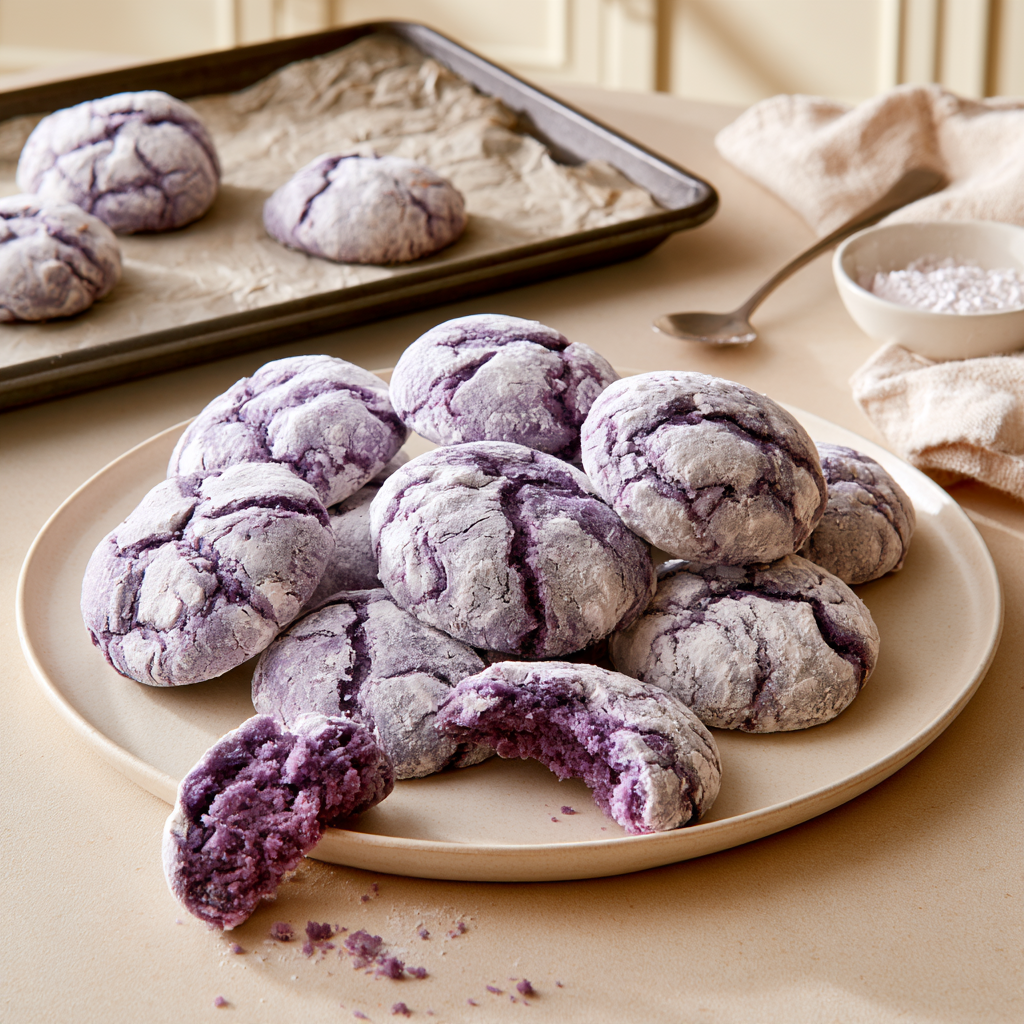
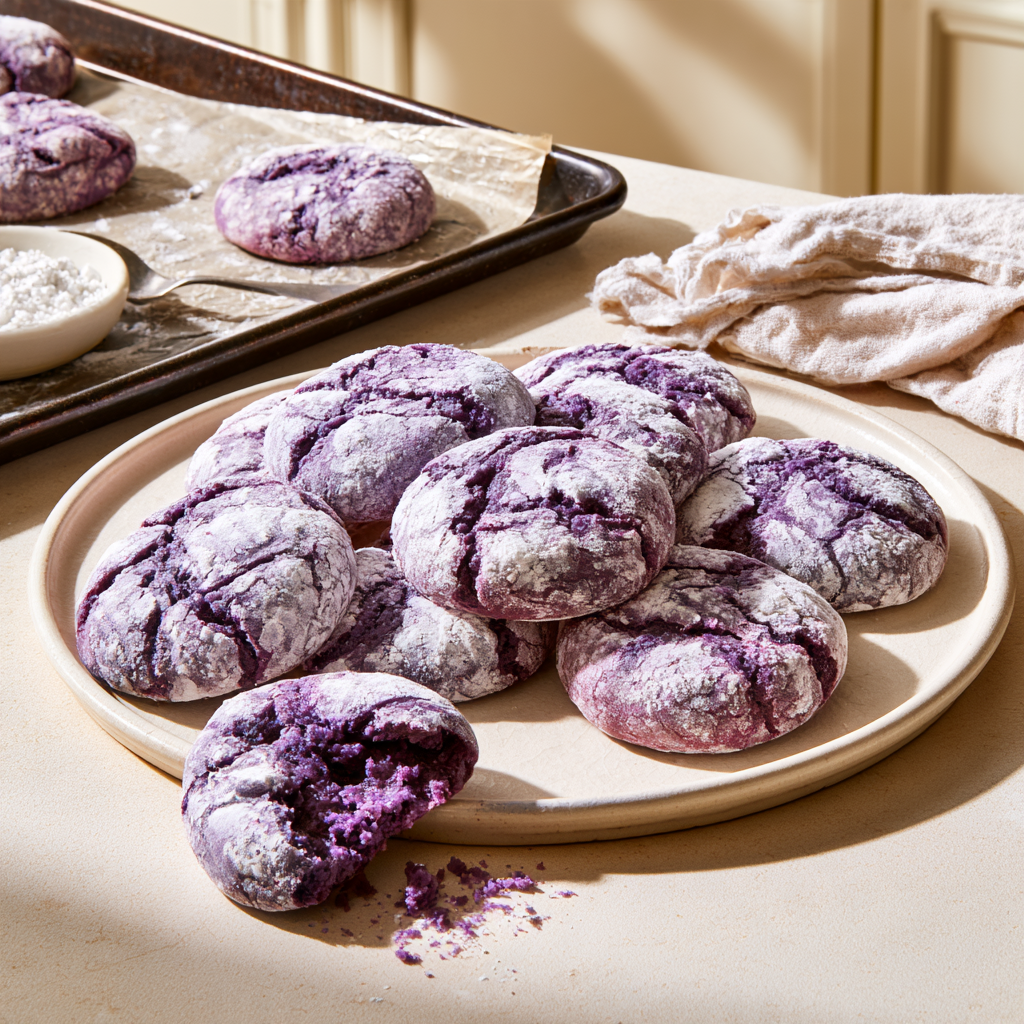
- Step 5: Bake Until Beautifully Cracked and Set. Place the first baking sheet on the center rack of the preheated oven and bake at 350°F (175°C) for approximately 10–12 minutes, beginning to check the cookies around the 10-minute mark. During baking, the dough should gently expand, creating irregular cracks in the white powdered sugar coating and revealing the purple surface underneath. The cookies are ready when their edges look set, their tops have developed visible cracks, and their centers are no longer shiny or visibly raw. They should still feel slightly soft in the middle because they will continue setting as they cool. Avoid baking until the entire cookie feels firm, which can result in a dry, cakey texture. Remove the first tray from the oven and bake the second batch following the same procedure, adjusting the timing slightly if your cookie portions are larger or smaller.
- Step 6: Cool, Serve, and Enjoy Your Homemade Ube Crinkle Cookies. Allow the freshly baked ube crinkle cookies to rest on their baking sheet for approximately 5 minutes so their delicate structure can firm up without becoming overbaked. Carefully transfer them to a wire cooling rack using a thin spatula and let them cool for at least another 5 minutes before serving, or completely before packing them for storage. As they cool, the exterior should become lightly set while the centers remain tender and chewy. Arrange the finished cookies on a simple serving plate to showcase their beautiful white-and-purple crinkle patterns. Break one cookie open to reveal its soft purple interior, and serve with cold milk, coffee, or tea. For the prettiest powdered sugar coating and most enjoyable texture, serve the cookies on the day they're baked.
Notes
Use real ube halaya for the most authentic purple yam flavor. Choose a thick, smooth, sweetened purple yam jam rather than plain watery mashed yam. Different brands vary in moisture and sugar content, so the final dough consistency may differ slightly.
Ube halaya and ube extract serve different purposes. Halaya provides real purple yam flavor, sweetness, and moisture, while extract strengthens the aroma and may deepen the purple color. Read the extract label and adjust if using a highly concentrated product.
Use softened butter rather than melted butter for this recipe. Butter that is too warm may make the dough overly soft and encourage excessive spreading during baking.
Measure flour accurately. For this recipe, use 220 g of all-purpose flour. If measuring by volume, fluff the flour, spoon it gently into the measuring cup, and level the top instead of scooping directly from the bag.
Chill the cookie dough for at least 60 minutes before shaping. If it remains too sticky to handle because of your particular ube halaya, refrigerate it for another 30 minutes rather than immediately adding more flour.
For a more dramatic white-and-purple crinkle pattern, lightly coat each dough ball with granulated sugar before applying a generous layer of powdered sugar. The granulated sugar creates a partial barrier that can help prevent the powdered sugar from dissolving during baking.
Do not flatten the cookie balls. Keep them rounded so they can expand naturally in the oven and develop beautiful, irregular cracks across the powdered sugar surface.
If the cookies do not crack properly, check that your baking powder is fresh, your dough is not excessively stiff, and your powdered sugar coating is thick enough. The appearance will naturally vary from cookie to cookie.
Avoid excessive ube extract or artificial coloring. The natural purple color of ube halaya varies by brand and yam variety. Beautiful crinkle cookies do not need to be neon purple to look appetizing.
Bake at 350°F (175°C) for approximately 10–12 minutes per batch, adjusting as needed for cookie size. The edges should be set, the crinkle pattern visible, and the centers no longer visibly raw. Overbaking can make the cookies dry.
For a softer texture, let the cookies finish setting on the baking sheet for approximately 5 minutes before transferring them to a wire rack. Moving them immediately may cause the delicate centers to break.
If the cookie dough spreads excessively, confirm that the butter was not melted, the flour was measured correctly, and the dough was properly chilled. Always use a cool baking sheet rather than placing chilled dough onto a hot tray.
Make-ahead option: Prepare the dough in advance and refrigerate in a covered container for up to 24 hours. If the dough becomes very firm, allow it to soften slightly in the refrigerator or briefly at room temperature until it can be portioned without cracking.
Freezing unbaked dough: Shape into balls, freeze on a parchment-lined tray until solid, then transfer to a freezer-safe container. Freeze for up to 2–3 months for best quality. Coat in sugar just before baking and add baking time as necessary.
Storage: Allow baked cookies to cool completely before placing them in an airtight container. For best texture and powdered sugar appearance, enjoy within approximately 3–4 days at room temperature in a cool, dry kitchen. Refrigerate if required by the perishable ingredients in your particular ube halaya or filling.
Freezing baked cookies: Place completely cooled cookies in a freezer-safe container with parchment between layers. Freeze for up to 2–3 months for best quality. Thaw before serving, remembering that the powdered sugar coating may soften slightly after freezing.
For food safety, do not taste the uncooked cookie dough. It contains raw flour and egg, which should be properly baked before consumption.
Serving suggestion: Arrange the cookies on a simple plate with cold milk, coffee, or tea. Their beautiful purple centers and naturally cracked powdered sugar coating make them ideal for holiday cookie boxes, birthdays, parties, and afternoon snacks.