Ingredients
Equipment
Method
- Step 1: Measure and Prepare the Ingredients. Before beginning your homemade vanilla sauce for bread pudding, carefully measure the whole milk, heavy cream, granulated sugar, cornstarch, unsalted butter, pure vanilla extract, and fine sea salt. Set aside 1/2 cup (120 ml) of the measured cold milk for mixing with the cornstarch, keeping the remaining 1 1/2 cups (360 ml) of milk for the saucepan. Cut the butter into small pieces so it melts quickly when added to the warm sauce, and keep the vanilla extract nearby for the final stage of cooking. Using accurately measured ingredients is particularly important for achieving the ideal consistency, because too much cornstarch can produce an overly thick, pudding-like texture, while insufficient thickening may leave the finished sauce watery. A heavy-bottomed saucepan and a sturdy whisk will help distribute heat evenly and prevent lumps, giving your homemade vanilla sauce a beautifully smooth and creamy finish.
- Step 2: Prepare the Cornstarch Mixture. Pour the reserved 1/2 cup (120 ml) of cold whole milk into a small mixing bowl, then add the 2 tablespoons of cornstarch and whisk thoroughly until the mixture becomes completely smooth, with no visible lumps or dry starch remaining. This simple technique creates a cornstarch slurry, which allows the thickening ingredient to disperse evenly throughout the warm dairy mixture without forming clumps. Always use cold milk for this step, because adding cornstarch directly to hot liquid can cause it to thicken unevenly and create small lumps that are difficult to remove. Continue whisking until the mixture has a uniform, milky appearance, then set it aside temporarily while preparing the remaining ingredients. Give the slurry another quick stir immediately before adding it to the saucepan, as cornstarch naturally settles toward the bottom when left standing.
- Step 3: Warm the Milk, Cream, and Sugar. In a medium heavy-bottomed saucepan, combine the remaining 1 1/2 cups (360 ml) of whole milk, the 1/2 cup (120 ml) of heavy cream, the granulated sugar, and the fine sea salt, then place the saucepan over medium-low heat. Stir gently and continuously with a whisk or silicone spatula for approximately 3–4 minutes, allowing the sugar to dissolve completely while the milk and cream gradually become warm and begin producing a little steam. Avoid bringing the mixture to a vigorous boil, as excessive heat can cause the dairy to scorch against the bottom of the saucepan or develop an unpleasant cooked flavor. The combination of milk and heavy cream creates a balanced foundation that is rich enough to complement bread pudding without becoming excessively heavy, while the small amount of salt helps round out the sweetness and enhances the warm vanilla flavor that will be added later.
- Step 4: Add the Cornstarch Slurry to the Warm Dairy Mixture. Once the milk and cream are hot and steaming but not boiling vigorously, whisk the prepared cornstarch slurry again to make sure no starch has settled at the bottom of the bowl, then slowly pour it into the saucepan in a thin, steady stream while whisking continuously. Keep the heat at medium-low and move the whisk across the bottom and around the edges of the saucepan to ensure that the cornstarch distributes evenly throughout the warm liquid. Adding the slurry gradually helps prevent lumps and allows the mixture to thicken uniformly as the temperature rises. At first, the sauce may still appear quite thin, but this is normal because cornstarch requires sufficient heat to develop its thickening properties. Continue stirring patiently rather than increasing the heat too aggressively, as gentle, controlled cooking is the key to creating a silky vanilla cream sauce with a smooth, pourable consistency.
- Step 5: Cook Until the Vanilla Sauce Becomes Smooth and Creamy. Continue cooking the mixture over medium-low heat, whisking frequently and scraping the bottom and sides of the saucepan, until the sauce begins to thicken and reaches a gentle simmer with small bubbles appearing at the surface. Allow it to bubble gently for approximately 1–2 minutes while stirring continuously, ensuring that the cornstarch is properly cooked and the finished sauce develops a pleasant, smooth texture rather than a raw, starchy taste. The sauce should become glossy and creamy, lightly coating the back of a spoon while remaining fluid enough to drizzle over warm bread pudding. To check the consistency, dip a clean spoon into the sauce and lift it out; a thin, even layer should cling to the spoon before slowly flowing away. Remember that the mixture will thicken slightly as it cools, so avoid cooking it until it resembles a very thick custard or pudding. Once the desired consistency is reached, remove the saucepan from the heat immediately.
- Step 6: Add the Butter for a Rich, Velvety Finish. With the saucepan removed from the heat, add the tablespoon of unsalted butter to the hot vanilla sauce base and whisk gently until the butter melts completely and becomes fully incorporated. The butter adds a delicate richness, a smooth mouthfeel, and a subtle buttery flavor that complements the sweetness of traditional bread pudding. Continue whisking for approximately 30–60 seconds until the sauce appears uniform, glossy, and free from visible streaks of melted butter. Because the sauce is already hot, the butter should melt naturally without requiring additional cooking. Avoid returning the mixture to high heat, as unnecessary boiling can affect the sauce's consistency and increase the risk of scorching. At this stage, the sauce should look smooth and inviting, with enough body to coat a spoon while remaining beautifully pourable.
- Step 7: Stir in the Vanilla and Adjust the Consistency. Add the 2 teaspoons of pure vanilla extract to the warm sauce and whisk thoroughly until the vanilla is evenly incorporated throughout the mixture, releasing its wonderfully fragrant aroma. Adding vanilla toward the end of cooking helps preserve its delicate flavor and creates the familiar warm, sweet scent that makes homemade vanilla sauce for bread pudding so irresistible. Taste a small amount once it has cooled enough to do so safely, then adjust the flavor if necessary with a tiny additional pinch of salt or a few drops of vanilla extract. If the sauce seems thicker than you prefer, whisk in 1 tablespoon of warm milk at a time until it reaches a smooth, pourable consistency. If the mixture contains any small lumps, pass it through a fine-mesh strainer into a clean heatproof bowl or measuring jug. The finished sauce should be creamy, lightly sweet, rich with vanilla flavor, and fluid enough to drizzle over bread pudding without overwhelming its delicate texture.
- Step 8: Allow the Vanilla Sauce to Rest Briefly. Transfer the prepared vanilla sauce to a heatproof serving jug or leave it in the saucepan away from the heat, then allow it to rest for approximately 5 minutes while stirring occasionally to maintain an even consistency. This brief resting period allows the sauce to cool from its cooking temperature to a pleasantly warm serving temperature, while the flavors become more evenly distributed throughout the mixture. As the sauce rests, it may become slightly thicker, which is normal for a cornstarch-based dessert topping. If necessary, add a small splash of warm milk and whisk gently until the texture becomes smooth and pourable again. Avoid leaving the finished dairy-based sauce at room temperature for extended periods, particularly in a warm kitchen, and prepare to serve it while still pleasantly warm for the most comforting bread pudding experience.
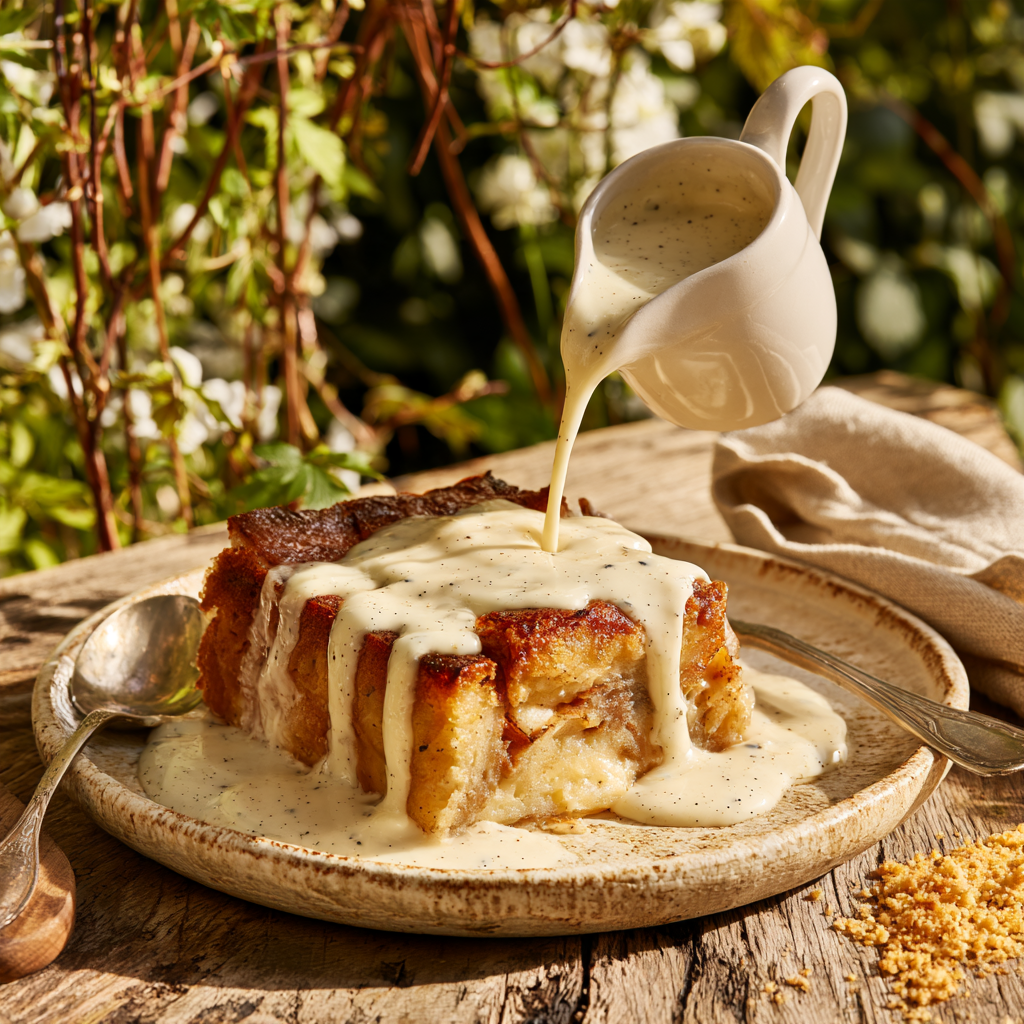
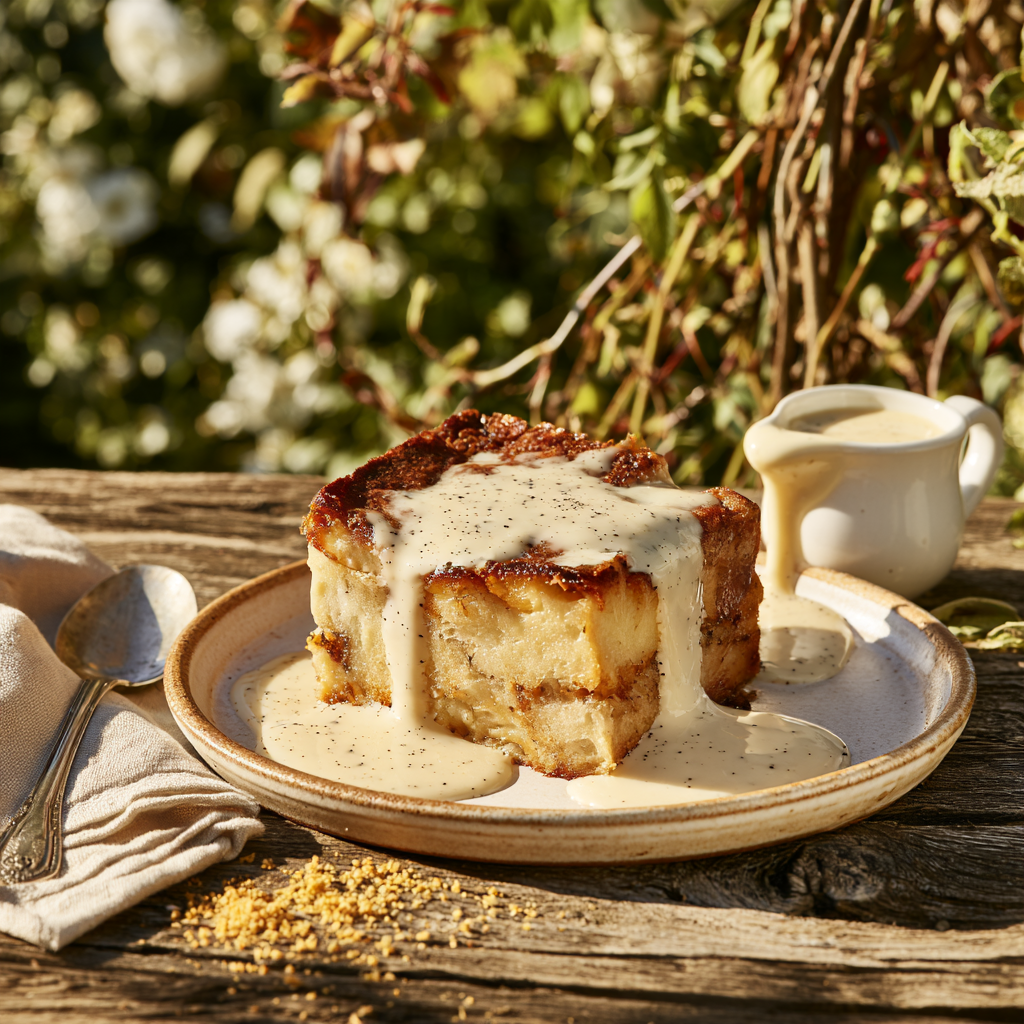
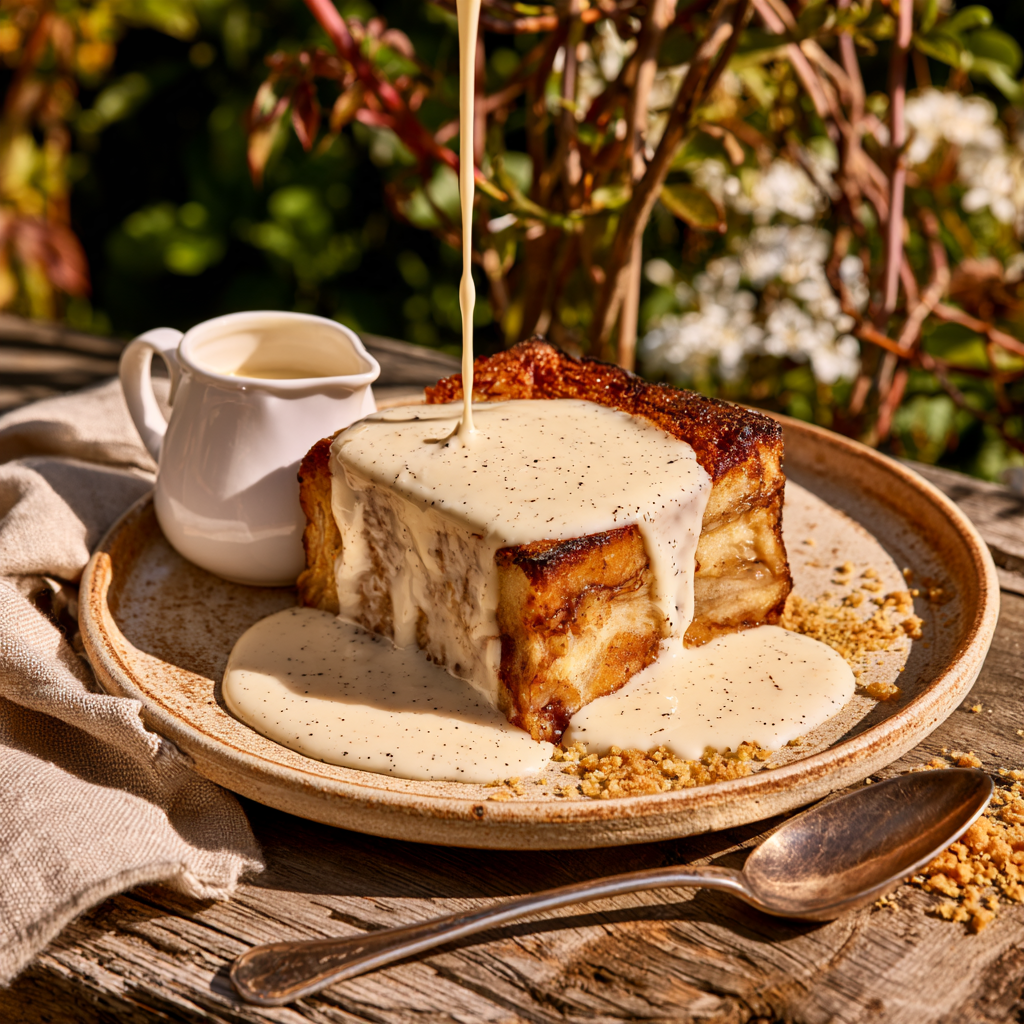
- Step 9: Serve Over Warm Bread Pudding. Arrange individual portions of freshly baked bread pudding on dessert plates or in shallow serving bowls, then slowly drizzle approximately 1/4 cup (60 ml) of the warm homemade vanilla sauce over each portion, allowing it to flow naturally across the golden surface and gently settle into the soft, custardy bread. The creamy sauce adds moisture, buttery richness, and fragrant vanilla flavor while complementing the lightly caramelized edges of the pudding. For an elegant presentation, serve additional sauce in a small pitcher so guests can adjust the amount according to their preferences. If desired, finish the dessert with a delicate dusting of cinnamon, a few fresh berries, or a very small pinch of freshly grated nutmeg. This sauce is also delicious with brioche bread pudding, apple cake, pound cake, waffles, and other comforting homemade desserts. Refrigerate any leftovers promptly in a clean, airtight container, and reheat gently when needed.
Notes
Tip text
For the richest homemade vanilla sauce, choose whole milk and good-quality heavy cream. This combination creates a smooth, creamy foundation that complements bread pudding without making the sauce excessively thick or heavy.
Use pure vanilla extract instead of artificial vanilla flavoring whenever possible. Pure vanilla contributes a warm, delicate aroma that enhances the richness of the milk, cream, and butter.
For a more luxurious vanilla flavor, replace the vanilla extract with 2 teaspoons of vanilla bean paste. The tiny vanilla specks create an attractive appearance and give the sauce a distinctive homemade character.
If using a whole vanilla bean, split the pod lengthwise and scrape out the seeds. Add the seeds and pod to the milk while warming, then remove the pod before thickening the sauce. Omit the vanilla extract when using this variation.
Always mix cornstarch with cold milk before adding it to the saucepan. This prevents dry starch from forming lumps when it comes into contact with hot liquid and helps create a beautifully smooth sauce.
For a sauce that pours easily over bread pudding, use the recommended 2 tablespoons of cornstarch for the 2 1/2 cups of dairy in this recipe. Increasing the cornstarch significantly may create a thick, pudding-like consistency.
Use a heavy-bottomed saucepan whenever possible. It distributes heat more evenly and helps reduce the risk of scorching the milk or cream during cooking.
Heat the milk and cream gently over medium-low heat rather than using high heat. Slow, controlled cooking helps preserve the delicate dairy flavor and makes it easier to monitor the sauce as it thickens.
Whisk frequently while cooking, especially after adding the cornstarch slurry. Stir along the bottom and around the edges of the saucepan to prevent thickened sauce from sticking or forming lumps.
For proper thickening, allow the cornstarch-based sauce to reach a gentle simmer and cook for approximately 1–2 minutes while stirring. This activates the starch and helps eliminate a raw, floury taste.
The finished vanilla sauce should lightly coat the back of a spoon while remaining pourable. Remember that the sauce thickens slightly as it cools, so avoid cooking it until it becomes as thick as pastry cream.
If the vanilla sauce becomes too thick, whisk in additional warm milk 1 tablespoon at a time until you reach the desired consistency. Add the milk gradually to avoid making the sauce overly thin.
If your vanilla sauce is too thin, make sure the cornstarch has reached a gentle simmer and cooked sufficiently. If necessary, mix a small amount of additional cornstarch with cold milk and incorporate it gradually, then simmer briefly until thickened.
If small lumps develop during cooking, whisk the sauce thoroughly and pass it through a fine-mesh strainer while warm. This simple technique can help restore a beautifully smooth texture.
Add the unsalted butter after removing the saucepan from the heat. The residual warmth will melt the butter gently and allow it to blend into the sauce for a rich, velvety finish.
For the most fragrant vanilla flavor, add pure vanilla extract toward the end of cooking. This helps preserve its delicate aroma instead of allowing it to dissipate during prolonged heating.
For a lighter vanilla sauce, replace the heavy cream with an equal amount of whole milk or 2% milk. The finished sauce will be less rich and may have a slightly thinner consistency.
For an extra-rich version, replace 1/2 cup of the whole milk with additional heavy cream. This produces a more indulgent sauce, although it also increases the saturated fat and calorie content.
For a warm cinnamon variation, add approximately 1/4 teaspoon of ground cinnamon while heating the milk and cream. This creates a comforting flavor that pairs especially well with apple or raisin bread pudding.
For a traditional spiced variation, add a small pinch of freshly grated nutmeg. Use it sparingly because its strong aroma can easily overpower the delicate vanilla flavor.
For a fragrant citrus variation, add approximately 1 teaspoon of finely grated orange zest to the warm dairy mixture. The citrus aroma provides a refreshing contrast to the richness of the sauce.
For a caramel-inspired vanilla sauce, replace a portion of the granulated sugar with light brown sugar. Brown sugar contributes subtle molasses notes that complement cinnamon-raisin and brioche bread puddings.
For a maple vanilla variation, replace approximately 1 tablespoon of the granulated sugar with 1 tablespoon of pure maple syrup. The finished sauce will have a delicate maple aroma and may be slightly thinner.
For a slightly less sweet sauce, begin by reducing the granulated sugar by approximately 10–20%. This works particularly well when serving vanilla sauce over bread pudding that already contains sweetened fruit, chocolate, or caramel.
For a dairy-free variation, experiment with unsweetened soy milk or another suitable plant-based milk and replace the butter with a dairy-free alternative. The texture and thickening requirements may differ depending on the product used.
This recipe is naturally egg-free because it uses cornstarch instead of egg yolks for thickening. It is a convenient alternative for anyone who wants a simple stovetop vanilla sauce without preparing a traditional egg-based custard.
For a gluten-free vanilla sauce, use certified gluten-free cornstarch and check the labels of the vanilla extract and other packaged ingredients, particularly when cooking for someone with celiac disease or gluten sensitivity.
For the best bread pudding pairing, serve the vanilla sauce slightly warm over warm bread pudding. The sauce gently settles into the bread while leaving a smooth, creamy coating on the surface.
For an attractive restaurant-style presentation, place a slice of bread pudding in a shallow dessert bowl and spoon warm vanilla sauce around the base. Finish with a light dusting of cinnamon or a few fresh berries.
Serving Suggestion: This homemade vanilla sauce is also delicious with pound cake, apple cake, French toast, waffles, pancakes, baked pears, and buttery brioche desserts.
Make Ahead: Prepare the vanilla sauce in advance, cool it promptly, and transfer it to a clean, airtight container. Refrigerate at 40°F (4°C) or below and use within approximately 3–4 days.
Storage: Never leave dairy-based vanilla sauce at room temperature for more than 2 hours, or more than 1 hour when the surrounding temperature exceeds 90°F (32°C). Refrigerate leftovers promptly to maintain food safety.
Reheating: Transfer refrigerated vanilla sauce to a saucepan and warm gently over low heat, stirring frequently. Add a small splash of milk if necessary to restore its smooth, pourable consistency.
Avoid boiling leftover vanilla sauce repeatedly during reheating, as excessive heat can affect its texture and may cause it to become too thick or develop an unpleasant cooked flavor.
Freezing: Cornstarch-thickened vanilla sauce is not ideal for freezing because it may separate, become watery, or develop a grainy texture after thawing. Refrigeration is generally preferable for maintaining its smooth consistency.
For a smaller batch, divide all ingredients equally to prepare approximately 1 1/4 cups of vanilla sauce. Use a smaller saucepan and monitor the mixture carefully because a reduced quantity may heat and thicken more quickly.
For a larger gathering, double the ingredients to make approximately 5 cups of vanilla sauce. Use a larger heavy-bottomed saucepan and allow additional cooking time as needed, stirring thoroughly to prevent scorching.
OoohDelish Baking Secret: The secret to irresistible vanilla sauce for bread pudding is a smooth cornstarch slurry, gentle stovetop heating, high-quality vanilla, and careful attention to consistency. Remove the sauce from the heat once it lightly coats a spoon, stir in the butter and vanilla, and serve slightly warm for a beautifully silky dessert topping.