

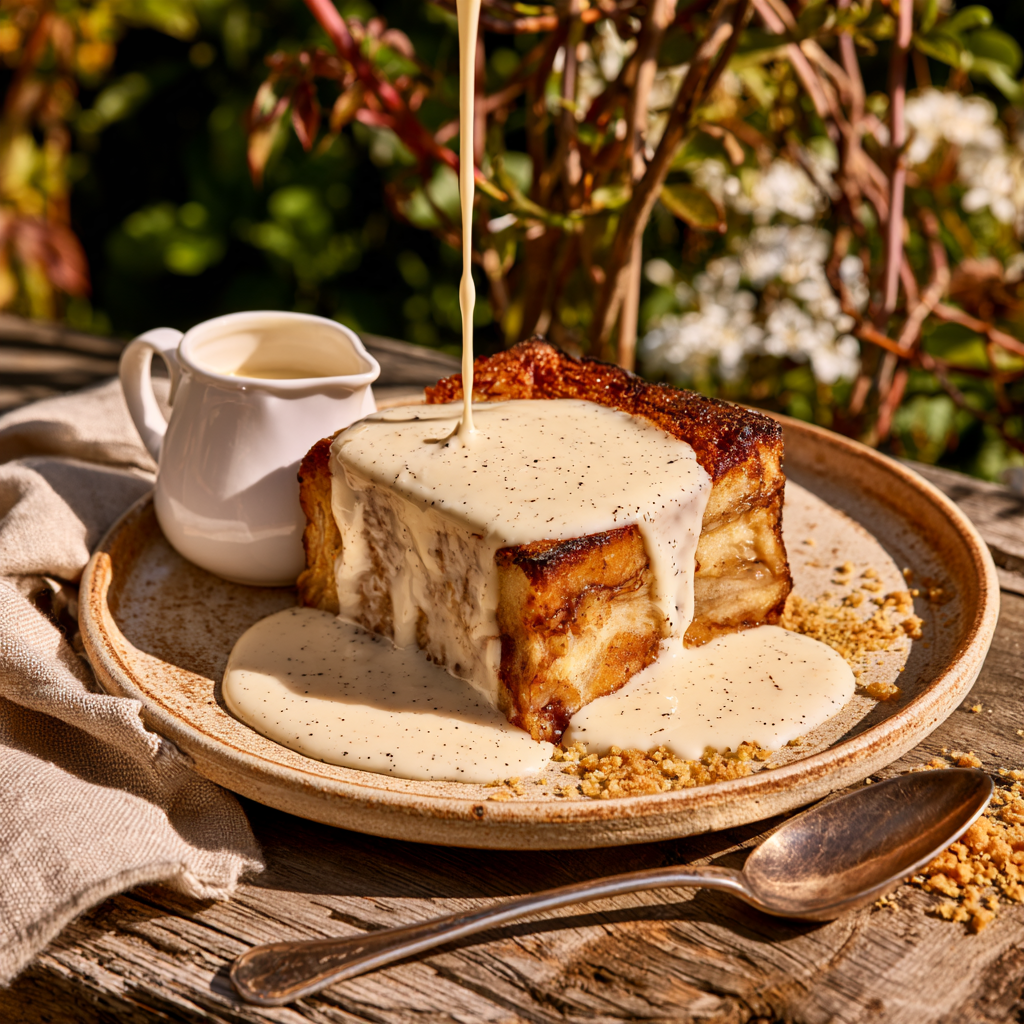
Imagine serving a warm, golden slice of homemade bread pudding, perfectly soft in the center with beautifully caramelized edges, and finishing it with a generous drizzle of silky, buttery vanilla sauce for bread pudding. As the warm sauce slowly sinks into the tender bread, every bite becomes irresistibly moist, creamy, and filled with the comforting sweetness of real vanilla. This simple addition transforms an ordinary dessert into something truly special, giving homemade bread pudding that luxurious, bakery-style finish everyone loves. Whether you’re preparing a cozy family dessert, hosting a holiday gathering, or simply craving something sweet after dinner, this easy vanilla sauce for bread pudding is the perfect finishing touch.
The secret to an unforgettable homemade vanilla sauce for bread pudding lies in its beautiful balance of rich dairy, delicate sweetness, and fragrant vanilla. Made with everyday ingredients such as milk or cream, butter, sugar, and vanilla extract, this classic dessert sauce develops a smooth, velvety consistency that coats each spoonful without overwhelming the pudding itself. Unlike thick frosting or overly sugary glazes, a well-prepared vanilla sauce should be luxuriously pourable, allowing it to gently soak into the bread while leaving a glossy, creamy layer on top. Depending on your preferred recipe, you can prepare a simple egg-free vanilla sauce thickened with cornstarch or a richer custard-style version made with egg yolks. Both offer delicious results, but the best choice depends on whether you prefer a lighter, silky drizzle or a more indulgent, traditional dessert topping.
One of the reasons this vanilla sauce recipe for bread pudding deserves a permanent place in your dessert collection is its remarkable versatility. Although bread pudding is its most famous companion, this delicious homemade sauce can elevate French toast, pancakes, waffles, pound cake, apple desserts, and even a simple bowl of fresh berries. It’s especially wonderful when poured over buttery baked goods, where its warm vanilla flavor complements delicate caramel notes and golden crusts. For an extra-special variation, try serving it alongside slices of our Braided Chocolate Chip Brioche Recipe, or use day-old brioche as the foundation for a decadent bread pudding finished with this creamy vanilla topping. The combination of buttery bread, chocolate, and smooth vanilla sauce creates a memorable dessert that’s perfect for sharing.
Another wonderful advantage of making vanilla sauce for bread pudding from scratch is the freedom to adjust its flavor, sweetness, and consistency. Prefer a thinner sauce that soaks effortlessly into warm bread pudding? Add a little extra milk or cream until you reach your desired texture. Want a thicker, more luxurious vanilla cream sauce? Gently cook it until it coats the back of a spoon, following the thickening method used in your recipe. You can also personalize the flavor with a touch of cinnamon, freshly grated nutmeg, orange zest, or a small pinch of sea salt to balance the sweetness. For a particularly fragrant finish, real vanilla bean seeds or vanilla bean paste can introduce beautiful specks of vanilla and a more pronounced aroma, making even the simplest homemade bread pudding feel like an elegant restaurant dessert.
What makes this best vanilla sauce for bread pudding recipe especially appealing is that it doesn’t require elaborate equipment, expensive ingredients, or advanced pastry-making experience. With a saucepan, a whisk, and a little attention to temperature, you can create a beautifully smooth dessert sauce in just a few minutes. The key is gentle heating and consistent stirring, which help the ingredients blend evenly while preventing scorching, lumps, or unwanted separation. Once prepared, the sauce can be served warm for a comforting, freshly made dessert experience, or cooled and refrigerated for convenient make-ahead preparation. A quick, gentle reheating with a splash of milk can help restore its pourable consistency before serving.
Whether you’re making a traditional old-fashioned bread pudding, a cinnamon-raisin variation, or a rich brioche bread pudding, this creamy vanilla sauce for bread pudding brings all the flavors together with a deliciously smooth finishing touch. Its buttery richness, fragrant vanilla aroma, and comforting sweetness make it a wonderful alternative to store-bought toppings, while its simple preparation means you can enjoy homemade flavor without spending hours in the kitchen. Once you discover how beautifully this warm vanilla sauce complements soft, custardy bread pudding, you may find yourself making an extra little batch just to drizzle over your favorite desserts. So grab your saucepan, bring out the vanilla, and get ready to turn an already delicious bread pudding into a truly irresistible homemade treat!
Vanilla Sauce for Bread Pudding
Equipment
- Medium heavy-bottomed saucepan
- Whisk
- Small mixing bowl
- Measuring cups
- Measuring spoons
- Silicone Spatula
- Wooden spoon
- Heatproof measuring jug or serving pitcher
- fine mesh strainer (optional)
- Digital kitchen scale (optional)
- Airtight glass storage container
Ingredients
- 2 cups 480 ml whole milk
- 1/2 cup 120 ml heavy cream
- 1/3 cup 67 g granulated sugar
- 2 tablespoons 16 g cornstarch
- 1 tablespoon 14 g unsalted butter
- 2 teaspoons 10 ml pure vanilla extract
- 1/8 teaspoon fine sea salt
Instructions
- Step 1: Measure and Prepare the Ingredients. Before beginning your homemade vanilla sauce for bread pudding, carefully measure the whole milk, heavy cream, granulated sugar, cornstarch, unsalted butter, pure vanilla extract, and fine sea salt. Set aside 1/2 cup (120 ml) of the measured cold milk for mixing with the cornstarch, keeping the remaining 1 1/2 cups (360 ml) of milk for the saucepan. Cut the butter into small pieces so it melts quickly when added to the warm sauce, and keep the vanilla extract nearby for the final stage of cooking. Using accurately measured ingredients is particularly important for achieving the ideal consistency, because too much cornstarch can produce an overly thick, pudding-like texture, while insufficient thickening may leave the finished sauce watery. A heavy-bottomed saucepan and a sturdy whisk will help distribute heat evenly and prevent lumps, giving your homemade vanilla sauce a beautifully smooth and creamy finish.
- Step 2: Prepare the Cornstarch Mixture. Pour the reserved 1/2 cup (120 ml) of cold whole milk into a small mixing bowl, then add the 2 tablespoons of cornstarch and whisk thoroughly until the mixture becomes completely smooth, with no visible lumps or dry starch remaining. This simple technique creates a cornstarch slurry, which allows the thickening ingredient to disperse evenly throughout the warm dairy mixture without forming clumps. Always use cold milk for this step, because adding cornstarch directly to hot liquid can cause it to thicken unevenly and create small lumps that are difficult to remove. Continue whisking until the mixture has a uniform, milky appearance, then set it aside temporarily while preparing the remaining ingredients. Give the slurry another quick stir immediately before adding it to the saucepan, as cornstarch naturally settles toward the bottom when left standing.
- Step 3: Warm the Milk, Cream, and Sugar. In a medium heavy-bottomed saucepan, combine the remaining 1 1/2 cups (360 ml) of whole milk, the 1/2 cup (120 ml) of heavy cream, the granulated sugar, and the fine sea salt, then place the saucepan over medium-low heat. Stir gently and continuously with a whisk or silicone spatula for approximately 3–4 minutes, allowing the sugar to dissolve completely while the milk and cream gradually become warm and begin producing a little steam. Avoid bringing the mixture to a vigorous boil, as excessive heat can cause the dairy to scorch against the bottom of the saucepan or develop an unpleasant cooked flavor. The combination of milk and heavy cream creates a balanced foundation that is rich enough to complement bread pudding without becoming excessively heavy, while the small amount of salt helps round out the sweetness and enhances the warm vanilla flavor that will be added later.
- Step 4: Add the Cornstarch Slurry to the Warm Dairy Mixture. Once the milk and cream are hot and steaming but not boiling vigorously, whisk the prepared cornstarch slurry again to make sure no starch has settled at the bottom of the bowl, then slowly pour it into the saucepan in a thin, steady stream while whisking continuously. Keep the heat at medium-low and move the whisk across the bottom and around the edges of the saucepan to ensure that the cornstarch distributes evenly throughout the warm liquid. Adding the slurry gradually helps prevent lumps and allows the mixture to thicken uniformly as the temperature rises. At first, the sauce may still appear quite thin, but this is normal because cornstarch requires sufficient heat to develop its thickening properties. Continue stirring patiently rather than increasing the heat too aggressively, as gentle, controlled cooking is the key to creating a silky vanilla cream sauce with a smooth, pourable consistency.
- Step 5: Cook Until the Vanilla Sauce Becomes Smooth and Creamy. Continue cooking the mixture over medium-low heat, whisking frequently and scraping the bottom and sides of the saucepan, until the sauce begins to thicken and reaches a gentle simmer with small bubbles appearing at the surface. Allow it to bubble gently for approximately 1–2 minutes while stirring continuously, ensuring that the cornstarch is properly cooked and the finished sauce develops a pleasant, smooth texture rather than a raw, starchy taste. The sauce should become glossy and creamy, lightly coating the back of a spoon while remaining fluid enough to drizzle over warm bread pudding. To check the consistency, dip a clean spoon into the sauce and lift it out; a thin, even layer should cling to the spoon before slowly flowing away. Remember that the mixture will thicken slightly as it cools, so avoid cooking it until it resembles a very thick custard or pudding. Once the desired consistency is reached, remove the saucepan from the heat immediately.
- Step 6: Add the Butter for a Rich, Velvety Finish. With the saucepan removed from the heat, add the tablespoon of unsalted butter to the hot vanilla sauce base and whisk gently until the butter melts completely and becomes fully incorporated. The butter adds a delicate richness, a smooth mouthfeel, and a subtle buttery flavor that complements the sweetness of traditional bread pudding. Continue whisking for approximately 30–60 seconds until the sauce appears uniform, glossy, and free from visible streaks of melted butter. Because the sauce is already hot, the butter should melt naturally without requiring additional cooking. Avoid returning the mixture to high heat, as unnecessary boiling can affect the sauce’s consistency and increase the risk of scorching. At this stage, the sauce should look smooth and inviting, with enough body to coat a spoon while remaining beautifully pourable.
- Step 7: Stir in the Vanilla and Adjust the Consistency. Add the 2 teaspoons of pure vanilla extract to the warm sauce and whisk thoroughly until the vanilla is evenly incorporated throughout the mixture, releasing its wonderfully fragrant aroma. Adding vanilla toward the end of cooking helps preserve its delicate flavor and creates the familiar warm, sweet scent that makes homemade vanilla sauce for bread pudding so irresistible. Taste a small amount once it has cooled enough to do so safely, then adjust the flavor if necessary with a tiny additional pinch of salt or a few drops of vanilla extract. If the sauce seems thicker than you prefer, whisk in 1 tablespoon of warm milk at a time until it reaches a smooth, pourable consistency. If the mixture contains any small lumps, pass it through a fine-mesh strainer into a clean heatproof bowl or measuring jug. The finished sauce should be creamy, lightly sweet, rich with vanilla flavor, and fluid enough to drizzle over bread pudding without overwhelming its delicate texture.
- Step 8: Allow the Vanilla Sauce to Rest Briefly. Transfer the prepared vanilla sauce to a heatproof serving jug or leave it in the saucepan away from the heat, then allow it to rest for approximately 5 minutes while stirring occasionally to maintain an even consistency. This brief resting period allows the sauce to cool from its cooking temperature to a pleasantly warm serving temperature, while the flavors become more evenly distributed throughout the mixture. As the sauce rests, it may become slightly thicker, which is normal for a cornstarch-based dessert topping. If necessary, add a small splash of warm milk and whisk gently until the texture becomes smooth and pourable again. Avoid leaving the finished dairy-based sauce at room temperature for extended periods, particularly in a warm kitchen, and prepare to serve it while still pleasantly warm for the most comforting bread pudding experience.
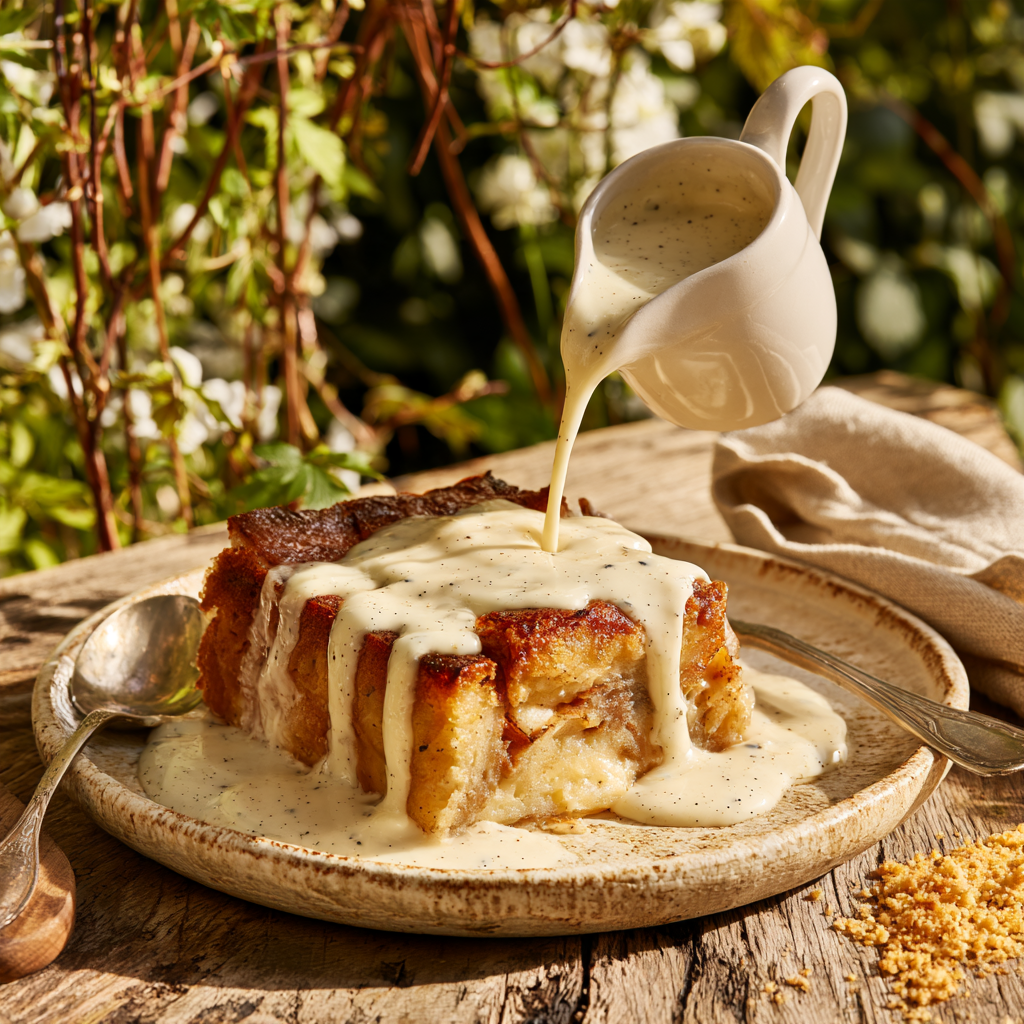
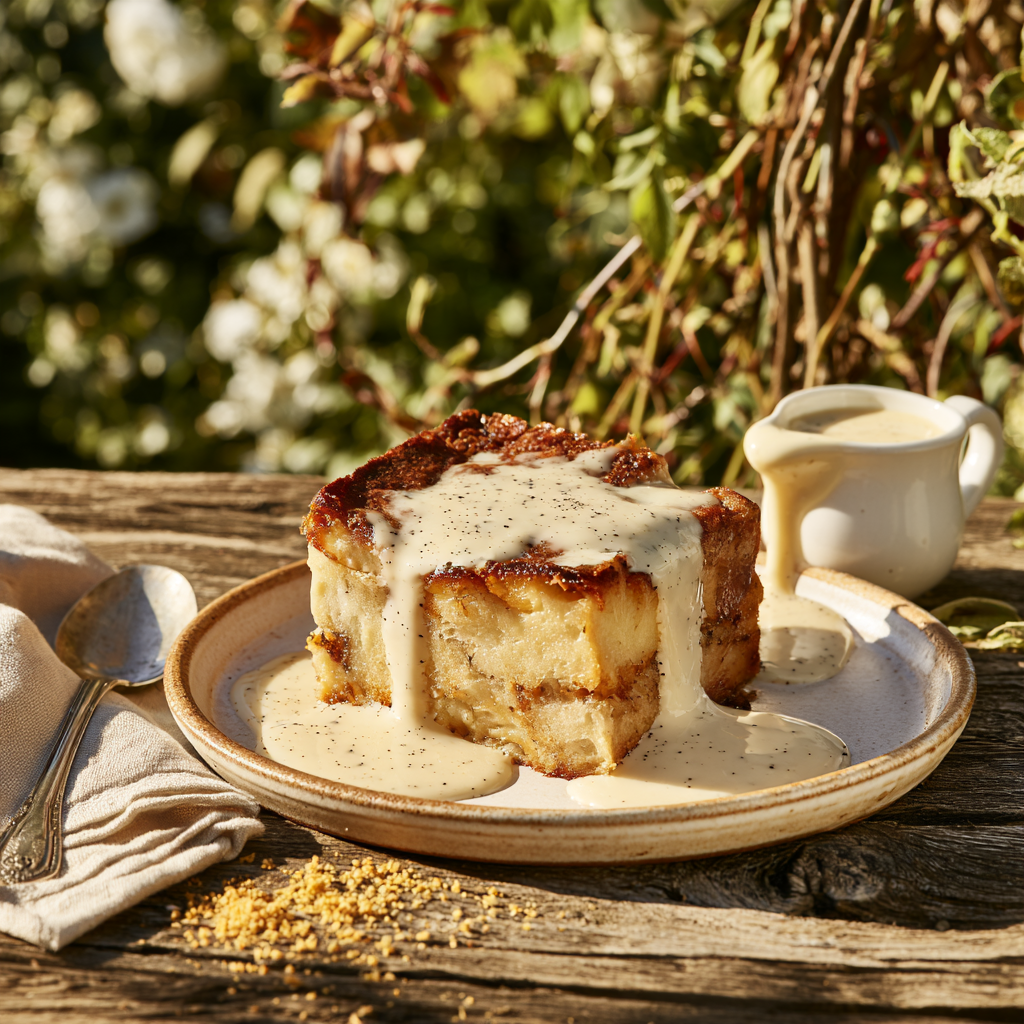
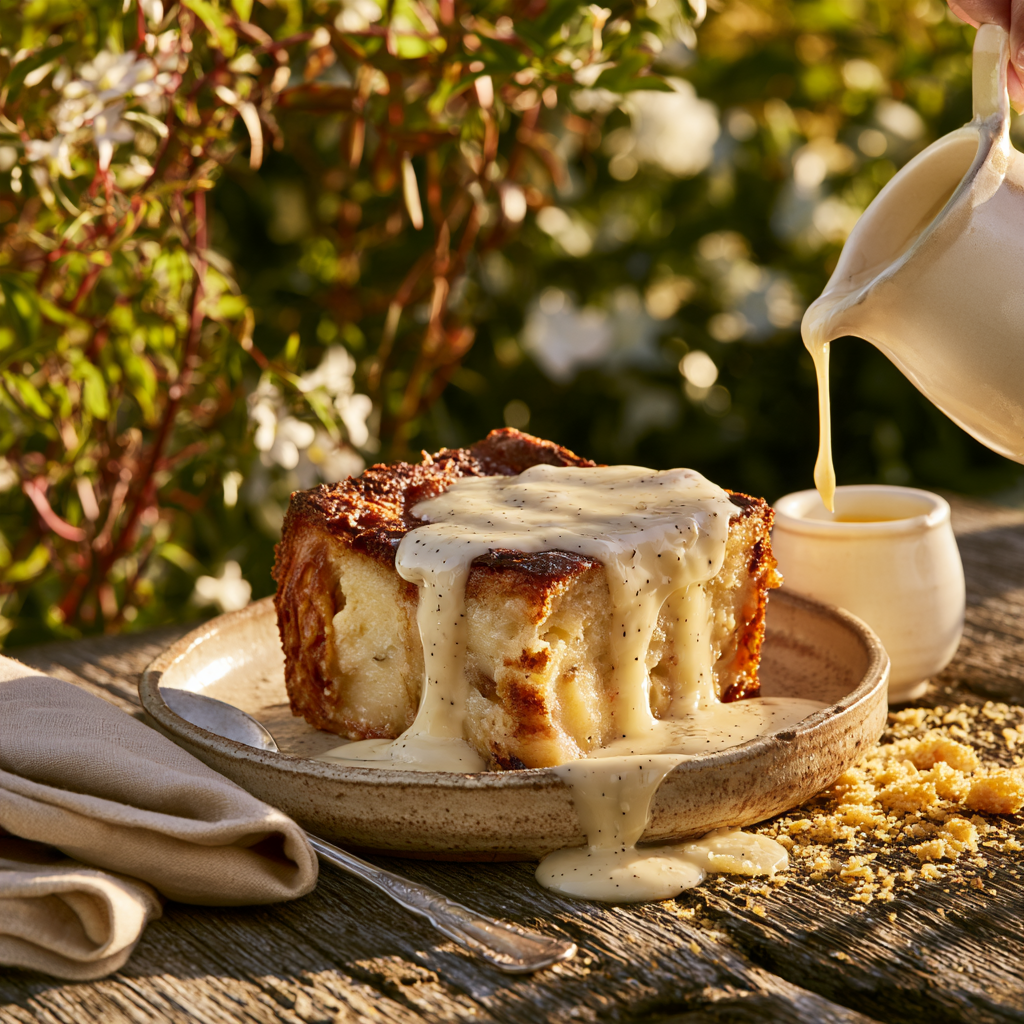
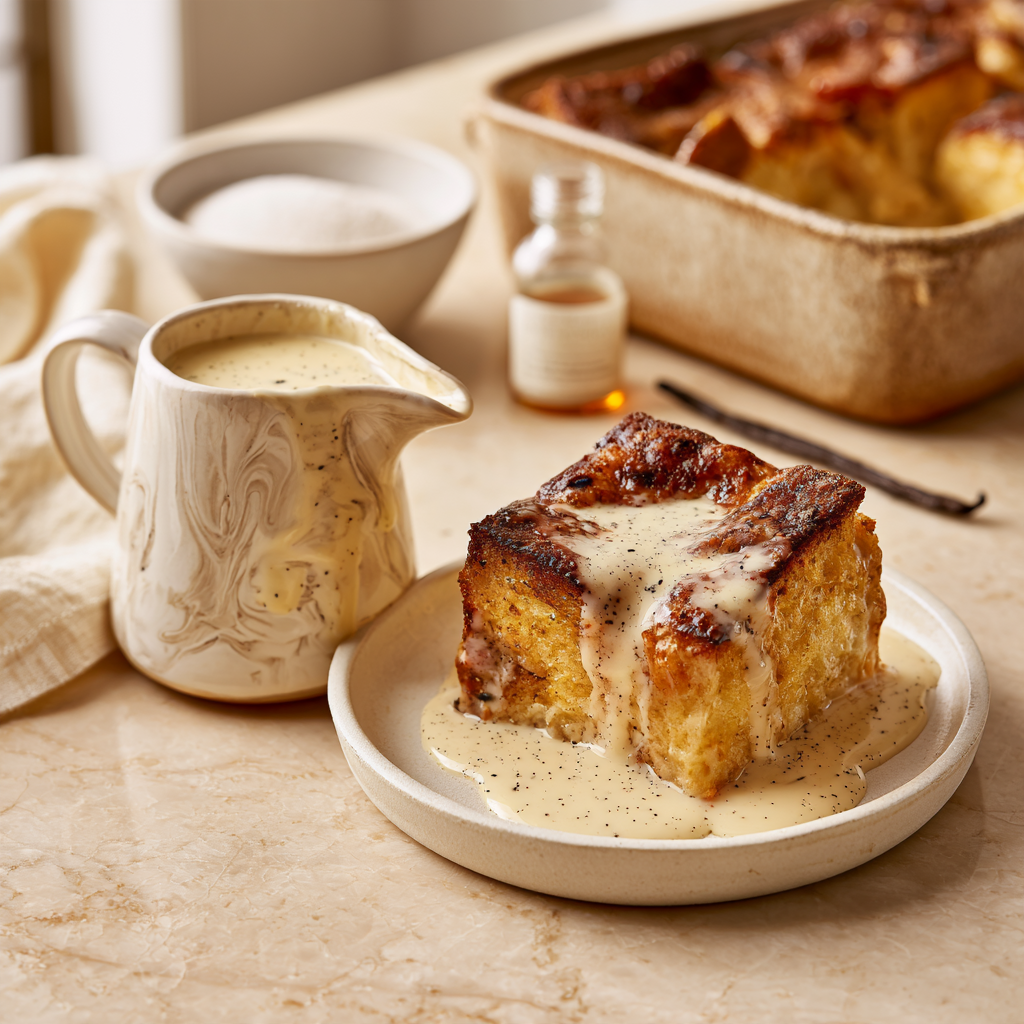
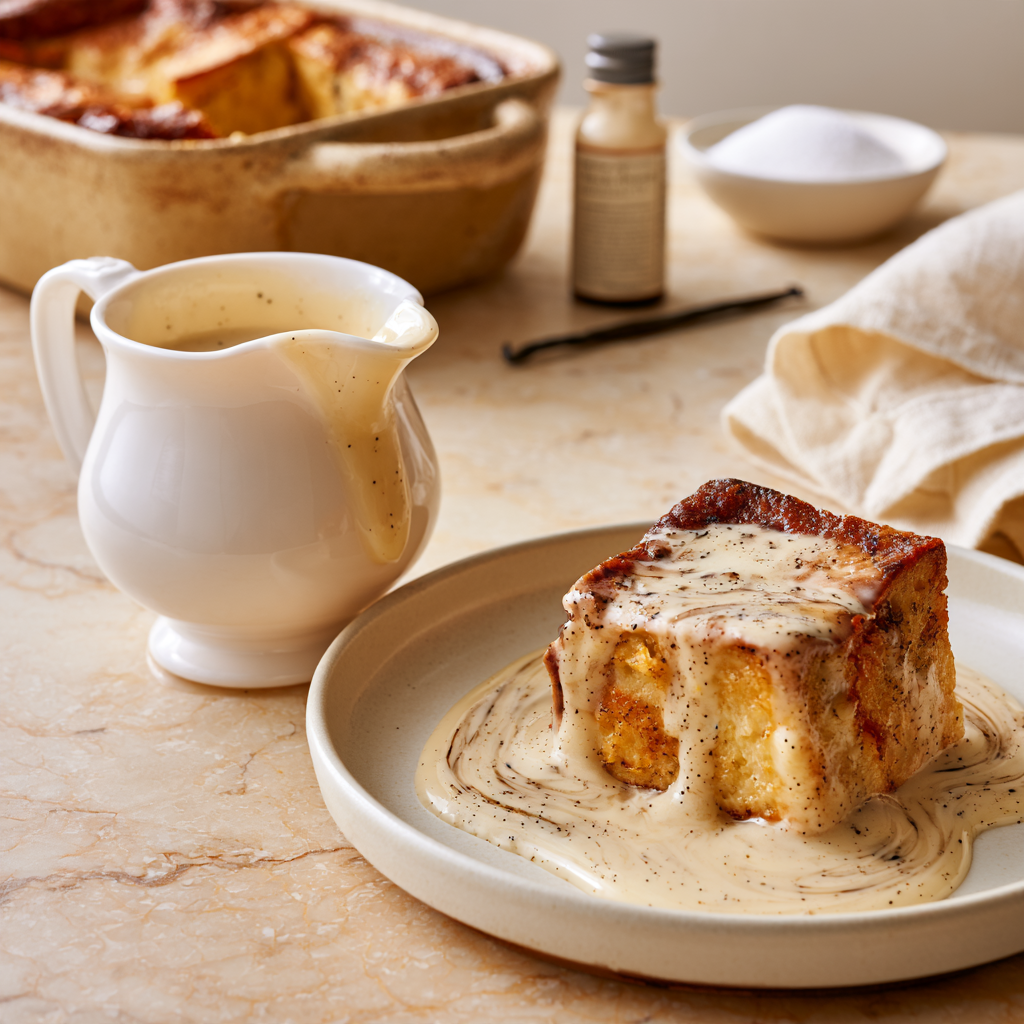
- Step 9: Serve Over Warm Bread Pudding. Arrange individual portions of freshly baked bread pudding on dessert plates or in shallow serving bowls, then slowly drizzle approximately 1/4 cup (60 ml) of the warm homemade vanilla sauce over each portion, allowing it to flow naturally across the golden surface and gently settle into the soft, custardy bread. The creamy sauce adds moisture, buttery richness, and fragrant vanilla flavor while complementing the lightly caramelized edges of the pudding. For an elegant presentation, serve additional sauce in a small pitcher so guests can adjust the amount according to their preferences. If desired, finish the dessert with a delicate dusting of cinnamon, a few fresh berries, or a very small pinch of freshly grated nutmeg. This sauce is also delicious with brioche bread pudding, apple cake, pound cake, waffles, and other comforting homemade desserts. Refrigerate any leftovers promptly in a clean, airtight container, and reheat gently when needed.
Notes
- Origins of Vanilla Sauce for Bread Pudding: A Delicious History of Classic Comfort Desserts
- The Early History of Custard Sauces in European Kitchens
- The French Influence: Crème Anglaise and the Birth of Elegant Vanilla Sauces
- How Vanilla Sauce Became a Classic Topping for Bread Pudding
- The Arrival of Vanilla in European Dessert Traditions
- From European Custards to Southern American Bread Pudding
- The Evolution of Old-Fashioned Vanilla Sauce Into Modern Homemade Recipes
- Why Vanilla Sauce for Bread Pudding Remains Popular Today
- Health Benefits of Vanilla Sauce for Bread Pudding: Nutritional Value, Ingredients & Healthier Variations
- 1. Milk Provides Calcium and Essential Nutrients
- 2. Eggs Can Contribute Protein, Choline, and Vitamin B12
- 3. Vanilla Creates Rich Flavor Without Requiring Large Amounts
- 4. Homemade Preparation Allows Better Control Over Added Sugar
- 5. Dairy-Based Vanilla Sauce Can Contribute Small Amounts of Protein
- 6. Choosing the Right Dairy Can Help Manage Saturated Fat
- 7. Enjoying Homemade Desserts Can Support a Balanced Approach to Eating
- Health Benefits of Vanilla Sauce for Bread Pudding: Nutritional Breakdown
- How to Make Vanilla Sauce for Bread Pudding a Little Healthier
- Is Vanilla Sauce for Bread Pudding Healthy?
- Why You Should Try Vanilla Sauce for Bread Pudding: 12 Delicious Reasons to Make It at Home
- 1. It Transforms Ordinary Bread Pudding Into an Irresistible Dessert
- 2. A Rich, Silky Texture That Makes Every Bite More Delicious
- 3. Simple Pantry Ingredients Create an Elegant Homemade Sauce
- 4. Perfect for Beginner Cooks and Experienced Home Bakers
- 5. Ready Quickly When You Need an Easy Dessert Topping
- 6. You Can Customize the Flavor to Suit Any Dessert
- 7. It Pairs Beautifully With Much More Than Bread Pudding
- 8. A Wonderful Make-Ahead Option for Holidays and Family Gatherings
- 9. You Control the Sweetness, Richness, and Ingredients
- 10. It Creates a Beautiful Restaurant-Style Presentation
- 11. It Complements Both Traditional and Modern Bread Pudding Recipes
- 12. It Brings the Comfort of Homemade Cooking to Every Occasion
- What Makes Homemade Vanilla Sauce Better Than Store-Bought Dessert Toppings?
- Delicious Ways to Serve Vanilla Sauce for Bread Pudding
- What Is the Secret to the Best Vanilla Sauce for Bread Pudding?
- Why This Vanilla Sauce for Bread Pudding Deserves a Place in Your Recipe Collection
Origins of Vanilla Sauce for Bread Pudding: A Delicious History of Classic Comfort Desserts
The history of vanilla sauce for bread pudding is a fascinating journey through centuries of European cooking traditions, classic custard recipes, and the evolution of comforting homemade desserts. Although today we recognize vanilla sauce as a smooth, sweet, and creamy topping that makes bread pudding even more irresistible, its origins are closely connected to the development of traditional English custards and French dessert sauces. What began as a simple combination of milk, eggs, and sugar gradually evolved into the beautifully fragrant homemade vanilla sauce for bread pudding that continues to grace dessert tables around the world.
The Early History of Custard Sauces in European Kitchens
Long before vanilla sauce became a popular accompaniment to bread pudding, European cooks were preparing sweet creams and custards using milk, eggs, and natural flavorings. Early forms of custard can be traced to ancient cooking traditions, but their development into recognizable dessert sauces took place over many centuries, particularly in England and France.
During the medieval period, cooks experimented with thickening milk or cream using eggs, creating preparations that could be served independently or incorporated into elaborate desserts. These early custards were often flavored with ingredients such as cinnamon, nutmeg, rosewater, or other available aromatics. Vanilla was not yet a common ingredient in European kitchens, so the flavors of these historical preparations differed considerably from the sweet vanilla sauces enjoyed today.
As European dessert-making techniques became more refined, custards gradually developed into several distinct preparations. Some were baked until firm, others were cooked into thick pastry creams, and lighter versions were served as pourable sauces over cakes, puddings, and fruit desserts. This last tradition became particularly important in the history of vanilla custard sauce for bread pudding, establishing the idea that a warm, creamy sauce could enhance the texture and flavor of a simple baked dessert.
The French Influence: Crème Anglaise and the Birth of Elegant Vanilla Sauces
One of the closest culinary relatives of modern vanilla sauce for bread pudding is the famous French dessert sauce known as crème anglaise, which literally translates to “English cream.” Despite its French name, the preparation reflects the long culinary relationship between English custards and French pastry-making traditions.
Traditional crème anglaise is prepared by gently cooking milk or cream with sugar and egg yolks until the mixture thickens enough to lightly coat the back of a spoon. Vanilla is one of its most familiar flavorings, contributing a delicate aroma and gentle sweetness that complement the richness of the dairy.
Unlike thick pastry cream, crème anglaise remains fluid and pourable, making it especially suitable for serving over warm desserts. Its silky consistency allows it to flow around cakes, puddings, and baked fruit without completely hiding their texture.
By the nineteenth and early twentieth centuries, this style of sauce had become firmly established in classical European cooking. French chefs helped formalize the preparation of delicate custard sauces, while English households continued their longstanding tradition of serving sweet custards with warm puddings.
However, not every modern vanilla sauce is a traditional crème anglaise. Many easy homemade versions use butter, sugar, milk, cream, and sometimes cornstarch instead of egg yolks. These simpler variations belong to the broader family of sweet dessert sauces inspired by traditional custard-making techniques.
How Vanilla Sauce Became a Classic Topping for Bread Pudding
The connection between vanilla sauce and bread pudding developed naturally from the long history of using leftover bread to prepare economical, satisfying desserts.
Bread pudding has strong roots in European home cooking, especially in Britain, where stale bread was traditionally softened with milk and combined with ingredients such as eggs, sugar, dried fruit, and spices. Rather than wasting bread that had become too dry for everyday eating, households could transform it into a warm, nourishing pudding.
As bread puddings became more established in home kitchens, serving them with sweet cream or custard added richness and moisture. The warm sauce complemented the bread’s tender interior while softening any firmer or more toasted edges.
One particularly interesting historical example appears in Isabella Beeton’s Book of Household Management, published in 1861. The cookbook includes a recipe for vanilla custard sauce specifically intended to accompany puddings, including bread pudding. The preparation uses milk, eggs, sugar, and vanilla essence, gently heated until thickened without boiling.
This nineteenth-century recipe provides clear evidence that serving a vanilla-flavored custard sauce with bread pudding was already an established household practice during the Victorian era. It also reveals how closely the essential ingredients resemble those found in many modern homemade vanilla sauces.
The pairing remains popular for a simple culinary reason: bread pudding absorbs sauce exceptionally well. Its soft, porous texture allows a warm vanilla topping to settle into the baked bread, creating a delicious combination of creamy sweetness, buttery richness, and comforting warmth.
For a particularly luxurious homemade variation, you can transform leftover slices of our Braided Chocolate Chip Brioche Recipe into a rich bread pudding. The buttery brioche and delicate chocolate pieces pair beautifully with a smooth vanilla sauce.
The Arrival of Vanilla in European Dessert Traditions
Although milk-based custards existed long before vanilla became widely available in Europe, the introduction of vanilla dramatically influenced the flavor of sweet sauces and baked desserts.
Vanilla originates from tropical regions of Mesoamerica, particularly present-day Mexico, where Indigenous communities cultivated and used the aromatic orchid long before its introduction to European markets. Following contact between Europe and the Americas, vanilla gradually entered European culinary traditions, initially as an expensive and relatively exclusive flavoring.
As vanilla cultivation and international trade expanded over subsequent centuries, the ingredient became increasingly accessible to professional pastry chefs and home cooks. Its naturally warm, floral, and sweet aroma made it particularly suitable for dairy-based desserts, where it could enhance the flavor without overwhelming delicate ingredients.
By the nineteenth century, vanilla had become a recognizable flavor in custards, creams, puddings, and sweet sauces. The development of commercially available vanilla extracts later made it easier for households to enjoy a consistent vanilla flavor without purchasing whole vanilla beans.
Today, home cooks can prepare old-fashioned vanilla sauce for bread pudding using pure vanilla extract, vanilla bean paste, or the seeds of a whole vanilla pod. Each option creates a slightly different flavor experience, but all maintain the fragrant character that helped vanilla become one of the world’s most familiar dessert ingredients.
From European Custards to Southern American Bread Pudding
As European cooking traditions spread and evolved in North America, bread pudding became part of many regional dessert traditions, especially in the American South.
Southern-style bread pudding often developed a distinctive personality, incorporating ingredients such as cinnamon, nutmeg, raisins, pecans, and rich dairy mixtures. In Louisiana, particularly around New Orleans, bread pudding became closely associated with local restaurant and home-cooking traditions, where it was frequently served with a generous dessert sauce.
Some Southern recipes feature bourbon, rum, or whiskey sauces, while others use butter, cream, brown sugar, or vanilla to create a rich, family-friendly topping without alcohol. These different preparations reflect the adaptability of bread pudding and the influence of regional preferences.
The popularity of creamy vanilla sauce for bread pudding in American kitchens also reflects a broader preference for comforting desserts made from familiar pantry ingredients. A simple vanilla sauce can add moisture and sweetness to bread pudding without introducing strong flavors that compete with cinnamon, raisins, or buttery bread.
The result is a dessert combination that feels both traditional and adaptable, equally suitable for an everyday family meal or a festive holiday gathering.
The Evolution of Old-Fashioned Vanilla Sauce Into Modern Homemade Recipes
Over time, vanilla sauce recipes evolved to accommodate changing cooking habits, ingredient availability, and preferences for convenience.
Traditional egg-based custard sauces require careful temperature control because excessive heat can cause the eggs to curdle. While the resulting sauce can be wonderfully delicate and creamy, preparing it correctly demands some attention and technique.
To simplify the process, home cooks developed alternative methods using ingredients such as cornstarch to thicken milk and sugar. Other variations use melted butter and cream to produce a rich sauce without eggs.
These approaches made easy vanilla sauce for bread pudding more accessible to beginner cooks and anyone looking for a quick dessert topping.
Modern recipes generally fall into three broad styles: classic egg-yolk custard sauces, milk-based sauces thickened with starch, and buttery cream sauces that rely on gentle reduction or their ingredient proportions for consistency.
Although their methods differ, they share the same basic purpose: creating a smooth, sweet, pourable topping that complements bread pudding without overpowering its delicate texture.
This versatility also explains why vanilla sauce works so beautifully with other comforting desserts. Our Rice Pudding Recipe celebrates a similar combination of creamy dairy, delicate sweetness, and warm vanilla flavor, showing how these familiar ingredients have remained central to homemade comfort desserts across generations.
Why Vanilla Sauce for Bread Pudding Remains Popular Today
Despite centuries of changing culinary trends, vanilla sauce for bread pudding continues to hold a special place in home kitchens because it represents everything people love about traditional comfort desserts: simple ingredients, satisfying textures, familiar aromas, and the pleasure of sharing something homemade.
Its popularity also comes from its remarkable ability to enhance desserts without requiring an elaborate preparation. A relatively simple bread pudding becomes richer and more appealing when finished with a warm drizzle of fragrant vanilla sauce. The creaminess complements the pudding’s soft center, while the gentle sweetness balances the toasted flavors that develop during baking.
Modern home cooks have also embraced the sauce’s flexibility, experimenting with vanilla beans, brown sugar, cinnamon, maple syrup, and other flavorings to create personalized variations.
Whether served with a traditional raisin bread pudding, an elegant brioche pudding, or a simple homemade dessert made from leftover bread, vanilla sauce continues to bring together the comforting flavors of European custard traditions and American home baking.
From its historical connections to English puddings and French crème anglaise to its place in Southern American dessert culture, homemade vanilla sauce for bread pudding has evolved through generations of culinary creativity. Its lasting appeal is proof that some of the most memorable dessert combinations are also the simplest: warm bread, creamy vanilla, and a little sweetness coming together in every delicious spoonful.
Health Benefits of Vanilla Sauce for Bread Pudding: Nutritional Value, Ingredients & Healthier Variations
When you think about vanilla sauce for bread pudding, the first things that probably come to mind are its beautifully creamy texture, delicate vanilla aroma, and irresistible buttery sweetness. This classic dessert topping transforms an ordinary slice of bread pudding into something wonderfully rich and comforting. But beyond its delicious flavor, you might be wondering whether homemade vanilla sauce for bread pudding offers any nutritional benefits. Although traditional vanilla sauce is primarily an indulgent dessert accompaniment, certain ingredients, particularly milk and eggs, can contribute useful nutrients when enjoyed as part of a balanced diet.
One of the biggest advantages of preparing homemade vanilla sauce is having control over exactly what goes into your saucepan. Depending on the recipe, this creamy topping may contain whole milk, heavy cream, butter, sugar, vanilla extract, egg yolks, or cornstarch. Each ingredient contributes something different, whether it’s calcium from milk, protein from dairy and eggs, or the comforting flavor of natural vanilla. By choosing appropriate ingredients and adjusting the proportions, you can create a sauce that suits your preferences without sacrificing the silky consistency and delicious vanilla flavor that make this recipe so appealing.
It’s important to remember, however, that vanilla sauce is not a health food or a significant source of essential nutrients in typical dessert-sized portions. Traditional versions can contain considerable amounts of added sugar and saturated fat, especially when prepared with heavy cream and butter. The key is enjoying moderate portions and understanding how thoughtful ingredient choices can improve the overall nutritional balance of your dessert.
1. Milk Provides Calcium and Essential Nutrients
One of the most meaningful nutritional benefits of vanilla sauce for bread pudding comes from the milk used to create its smooth, creamy foundation. Cow’s milk naturally provides several nutrients that contribute to normal bodily functions, including calcium, protein, phosphorus, riboflavin, and vitamin B12.
Calcium is particularly important for maintaining healthy bones and teeth, while phosphorus works alongside calcium to support normal skeletal structure. Vitamin B12 contributes to red blood cell formation and proper nervous system function, and riboflavin helps the body release energy from the food we eat.
When whole milk is used in a homemade vanilla sauce, it also contributes to the rich, comforting texture that pairs beautifully with warm bread pudding. However, because vanilla sauce is typically served in small amounts, its calcium and protein contribution may be modest compared with drinking a full glass of milk.
For a lighter alternative, you can replace some or all of the whole milk with 2% milk. This adjustment generally reduces the amount of saturated fat while retaining much of the dairy’s calcium and protein, although the finished sauce may be slightly less rich.
The familiar combination of milk, vanilla, and gentle sweetness also appears in other traditional desserts. Our Rice Pudding Recipe is another delicious example of how simple dairy ingredients can create a wonderfully creamy homemade treat.
2. Eggs Can Contribute Protein, Choline, and Vitamin B12
Some traditional versions of vanilla custard sauce for bread pudding, particularly those inspired by classic crème anglaise, use egg yolks to create a naturally smooth and velvety consistency.
Eggs contain high-quality protein and several important micronutrients, including vitamin B12, selenium, and choline. Choline contributes to normal cell membrane function and supports processes involved in nervous system activity, while vitamin B12 plays a role in red blood cell production and neurological health.
Egg yolks are especially useful in custard sauces because their proteins help thicken the mixture during gentle heating, creating a luxurious texture without requiring large quantities of flour or cornstarch.
However, the nutritional contribution depends on how many eggs are used and the number of servings. A small spoonful of vanilla sauce may contain only a fraction of an egg yolk.
If you prefer an egg-free vanilla sauce for bread pudding, you can use a milk-based version thickened with cornstarch instead. It will have a different nutritional profile, but it can still provide the creamy consistency needed to complement warm bread pudding.
3. Vanilla Creates Rich Flavor Without Requiring Large Amounts
Pure vanilla extract and real vanilla beans are among the most important ingredients in a delicious homemade dessert sauce. Their warm, fragrant aroma gives creamy vanilla sauce for bread pudding its recognizable flavor and helps balance the richness of milk, cream, and butter.
Vanilla contains naturally occurring aromatic compounds, including vanillin, which is responsible for much of its characteristic scent and flavor. Some vanilla compounds have demonstrated antioxidant activity in laboratory studies, but these findings do not establish meaningful health benefits from consuming ordinary culinary amounts of vanilla.
In practice, the main advantage of vanilla in this recipe is culinary rather than medicinal.
A small quantity of pure vanilla extract or vanilla bean paste can create a wonderfully fragrant sauce, potentially allowing you to enjoy a satisfying dessert without relying entirely on intense sweetness.
Using real vanilla bean seeds can also add beautiful dark specks and a more complex aroma, making a simple homemade topping feel especially elegant.
For the best flavor, add vanilla extract toward the end of cooking when appropriate for your recipe, particularly if prolonged heating would cause some of its delicate aroma to dissipate.
4. Homemade Preparation Allows Better Control Over Added Sugar
One practical advantage of making easy vanilla sauce for bread pudding from scratch is the freedom to adjust the amount and type of sugar used.
Traditional dessert sauces often contain granulated sugar, which provides sweetness and contributes to the overall flavor balance. However, added sugar supplies energy without offering meaningful amounts of vitamins, minerals, or fiber.
Consistently consuming excessive amounts of added sugar can contribute to an unhealthy dietary pattern, particularly when combined with other calorie-dense foods.
Preparing your sauce at home allows you to experiment with a slightly lower sugar content while preserving the delicious vanilla aroma and creamy consistency.
For example, if your usual recipe uses 1/3 cup of sugar, you might begin by reducing it to 1/4 cup and evaluating the result. This is a practical starting point for experimentation rather than a guaranteed substitution for every recipe, since sugar can influence texture and consistency.
You can also enhance the perceived sweetness and complexity of the sauce with vanilla bean paste, a pinch of cinnamon, or a small amount of freshly grated nutmeg.
The goal isn’t to remove every trace of sweetness. It’s to find a balance where the sauce complements your bread pudding instead of overpowering it.
5. Dairy-Based Vanilla Sauce Can Contribute Small Amounts of Protein
Although vanilla sauce is not typically considered a protein-rich food, versions prepared with cow’s milk and eggs do contain some protein.
Protein contributes to the body’s normal growth, maintenance, and repair of tissues. It also plays a role in producing enzymes and supporting various physiological functions.
The amount of protein in an individual serving of vanilla sauce is generally small because the finished sauce is divided into multiple portions.
A recipe made primarily with milk may provide more protein than one made largely with butter, sugar, and heavy cream, depending on the exact proportions.
If you’re looking to make your dessert a little more balanced, serving a modest amount of vanilla sauce over bread pudding with fresh fruit or alongside an otherwise nutritious meal is often more practical than trying to turn the sauce itself into a major protein source.
6. Choosing the Right Dairy Can Help Manage Saturated Fat
Butter and heavy cream give many old-fashioned vanilla sauce recipes their luxurious richness. Their fat content contributes to a smooth mouthfeel and helps carry the delicate flavors of vanilla and other aromatics.
However, butter and heavy cream also contain substantial amounts of saturated fat. For people who need to manage their saturated fat intake, especially those following heart-health dietary recommendations, the quantity used in a dessert sauce can be worth considering.
Fortunately, a delicious vanilla sauce doesn’t necessarily require a large amount of butter or cream.
You can experiment with a milk-forward preparation, use reduced-fat milk, or replace part of the cream with milk to create a lighter sauce.
If the recipe becomes too thin after reducing its fat content, a small amount of cornstarch may help achieve the desired consistency without adding more butter.
These changes can produce a different flavor and mouthfeel from traditional custard sauce, but they can still create an enjoyable, pourable topping.
7. Enjoying Homemade Desserts Can Support a Balanced Approach to Eating
Not every food needs to serve a specific nutritional purpose. Sometimes, preparing and enjoying a favorite homemade dessert is simply a pleasurable part of everyday life.
The familiar aroma of warm vanilla sauce, the soft texture of freshly baked bread pudding, and the experience of sharing dessert with family or friends can make a meal feel especially satisfying.
Baking and cooking at home also provide opportunities to develop practical kitchen skills, experiment with ingredients, and enjoy preparing food together.
Rather than thinking of vanilla sauce for bread pudding as something that must be avoided entirely or eaten without limits, it can be enjoyed as an occasional addition to an otherwise varied diet.
A spoonful or two of homemade vanilla sauce drizzled over warm bread pudding may be all you need to enjoy its creamy texture and fragrant flavor.
For another comforting baked dessert, try using leftover slices of our Braided Chocolate Chip Brioche Recipe to create a rich homemade bread pudding. The buttery brioche and chocolate pieces pair beautifully with a modest drizzle of vanilla sauce.
Health Benefits of Vanilla Sauce for Bread Pudding: Nutritional Breakdown
The following table explains the nutritional contributions of ingredients commonly found in homemade vanilla sauce, along with considerations that can help you make informed ingredient choices.
| Ingredient | Important Nutrients or Compounds | Potential Nutritional Contribution |
|---|---|---|
| Whole milk | Calcium, protein, phosphorus, vitamin B12, riboflavin | Contributes nutrients involved in bone health, tissue maintenance, and normal metabolism |
| 2% milk | Calcium, protein, vitamin B12 | Offers many of the same dairy nutrients with less saturated fat than whole milk |
| Heavy cream | Fat, small amounts of fat-soluble vitamins | Adds richness and energy but is relatively high in saturated fat |
| Egg yolks (if used) | Choline, vitamin B12, selenium, protein | Contributes nutrients involved in cellular function and normal metabolism |
| Pure vanilla extract | Vanillin and other aromatic compounds | Provides characteristic flavor; typical culinary quantities do not supply meaningful amounts of essential nutrients |
| Unsalted butter | Fat and vitamin A | Contributes richness and small amounts of vitamin A but increases saturated fat |
| Granulated sugar | Carbohydrates | Provides sweetness and energy without significant vitamins, minerals, or fiber |
| Cornstarch (if used) | Starch carbohydrates | Thickens the sauce without requiring additional egg yolks or butter |
| Cinnamon (optional) | Aromatic plant compounds | Adds flavor and aroma; the small amounts used in sauces provide limited nutritional value |
| Nutmeg (optional) | Aromatic plant compounds | Enhances warmth and flavor when used in tiny culinary amounts |
Important nutritional note: These benefits describe the ingredients individually. The finished sauce’s nutritional profile depends on the recipe, portion size, and proportion of milk, cream, butter, sugar, or eggs used. Not every vanilla sauce contains all the ingredients listed above.
How to Make Vanilla Sauce for Bread Pudding a Little Healthier
If you love the smooth, buttery flavor of classic vanilla sauce but want to create a lighter homemade version, a few thoughtful adjustments can help improve its nutritional balance without sacrificing its comforting character.
- Use milk instead of large amounts of heavy cream: Whole milk provides a creamy foundation while generally containing less saturated fat than heavy cream. For an even lighter variation, experiment with 2% milk.
- Reduce added sugar gradually: Try a modest reduction rather than removing the sugar entirely. The natural aroma of vanilla can help maintain a satisfying dessert flavor, even when the sauce is slightly less sweet.
- Choose pure vanilla extract or real vanilla beans: These ingredients provide a distinctive vanilla flavor and allow you to avoid relying on additional flavored syrups or sugary toppings.
- Use cornstarch for thickening when appropriate: A small amount of cornstarch can help create a silky texture in an egg-free, milk-based vanilla sauce without needing extra butter or cream.
- Experiment with fortified plant-based milk: Unsweetened soy milk can provide protein, while fortified soy, almond, or oat milks may supply calcium and vitamin B12. Nutritional values differ significantly between products, so check the label.
- Avoid unnecessary extra toppings: Bread pudding with vanilla sauce already provides plenty of sweetness and richness. Additional caramel, icing, or sugary syrup may not be needed.
- Serve a modest portion: Start with approximately 1–2 tablespoons of vanilla sauce per serving of bread pudding, then adjust according to your preference.
- Pair your dessert with fresh fruit: Strawberries, blueberries, raspberries, or sliced peaches add color, fiber, and naturally occurring nutrients to the overall dessert.
- Keep dietary needs in mind: Traditional dairy sauces may contain milk and sometimes eggs. Anyone with relevant allergies or intolerances should use suitable alternatives and check all ingredient labels.
Is Vanilla Sauce for Bread Pudding Healthy?
Vanilla sauce for bread pudding is best enjoyed as an occasional dessert topping rather than a health-focused food. Traditional recipes can contain added sugar and saturated fat, especially when made with butter, whole milk, and heavy cream. However, milk-based and egg-containing versions can also contribute small amounts of protein, calcium, and certain vitamins.
Homemade preparation allows you to decide how sweet, rich, or light you want your sauce to be. Using more milk, moderating the sugar, choosing flavorful vanilla, and serving smaller portions are practical ways to make it fit more comfortably into a balanced eating pattern.
Ultimately, the greatest appeal of homemade vanilla sauce for bread pudding is the pleasure it brings to a simple dessert. With its silky texture, delicate vanilla aroma, and comforting sweetness, this classic sauce can turn warm bread pudding into an especially satisfying homemade treat. Whether you prefer a rich custard-style sauce or a lighter milk-based variation, the best approach is to choose ingredients you enjoy, pay attention to portions, and appreciate the delicious simplicity of a homemade dessert.
Why You Should Try Vanilla Sauce for Bread Pudding: 12 Delicious Reasons to Make It at Home
There’s something truly magical about pouring warm, silky vanilla sauce for bread pudding over a freshly baked dessert. As the creamy sauce slowly flows across the golden surface and settles into the soft, custardy bread, it creates an irresistible combination of buttery richness, delicate vanilla sweetness, and comforting homemade flavor. But what makes this classic dessert topping so special isn’t simply its delicious taste. It’s the remarkable way a few everyday ingredients can transform a simple bread pudding into a beautiful, restaurant-style dessert without requiring complicated techniques or expensive equipment.
Whether you’re preparing an old-fashioned family recipe, experimenting with a rich brioche bread pudding, or looking for an easy way to elevate your favorite homemade desserts, homemade vanilla sauce for bread pudding is absolutely worth trying. From its luxurious texture and versatility to its convenient preparation and endless flavor possibilities, this timeless sauce offers plenty of reasons to become a regular addition to your dessert collection.
Here are twelve wonderful reasons why this easy vanilla sauce recipe for bread pudding deserves a place in your kitchen.
1. It Transforms Ordinary Bread Pudding Into an Irresistible Dessert
One of the biggest reasons to try vanilla sauce for bread pudding is its ability to completely transform the eating experience. Bread pudding is already a comforting dessert, combining tender bread, creamy custard, and warm flavors such as cinnamon, nutmeg, or vanilla. However, adding a generous drizzle of homemade vanilla sauce introduces an entirely new layer of flavor and moisture.
When poured over warm bread pudding, the sauce gently spreads across the surface and settles into its soft interior. Each spoonful becomes a delicious combination of tender bread, creamy sweetness, and fragrant vanilla. The sauce also complements the slightly caramelized edges that develop during baking, balancing their deeper toasted flavor with smooth dairy richness.
This is particularly helpful when serving a bread pudding that has cooled or developed a slightly firmer texture. A little warm sauce can make the dessert feel softer and more luxurious without changing the original recipe.
The result is a comforting, beautifully finished dessert that feels special enough for guests but remains simple enough for an ordinary family dinner.
2. A Rich, Silky Texture That Makes Every Bite More Delicious
The texture of a well-prepared creamy vanilla sauce for bread pudding is one of its most appealing qualities. Unlike thick icing or sticky caramel toppings, vanilla sauce can be wonderfully smooth and pourable, allowing it to coat the dessert gently rather than sitting on top in a heavy layer.
The secret lies in creating the right consistency. A lighter milk-based sauce flows easily into the bread pudding, while a richer custard-style sauce provides a more luxurious coating. Both can be delicious, depending on the type of bread pudding you’re serving.
For a classic result, the sauce should be thick enough to lightly coat the back of a spoon but still fluid enough to drizzle naturally over each serving. If the sauce is too thin, it may disappear into the pudding without leaving a noticeable creamy finish. If it’s too thick, it may resemble pudding or pastry cream rather than a traditional dessert sauce.
Finding that balance creates a particularly satisfying contrast between the bread pudding’s tender interior and the sauce’s silky texture.
3. Simple Pantry Ingredients Create an Elegant Homemade Sauce
You don’t need a collection of specialty ingredients to prepare a delicious homemade vanilla sauce for bread pudding. Many recipes begin with ingredients commonly found in home kitchens, such as milk, cream, sugar, butter, and vanilla extract.
Depending on the variation, egg yolks or cornstarch may be used to create additional thickness. Some recipes rely on gently cooked custard, while others use a simple starch-thickened milk mixture.
What makes this sauce remarkable is how these familiar ingredients come together. Milk provides the creamy foundation, vanilla creates a delicate aroma, sugar supplies sweetness, and butter or cream can contribute additional richness.
The quality and proportions of the ingredients make a noticeable difference. Pure vanilla extract offers a familiar, warm flavor, while vanilla bean paste or the seeds of a vanilla pod create a more pronounced aroma and attractive vanilla specks.
Because the ingredient list is relatively straightforward, you can enjoy a beautifully prepared dessert topping without purchasing expensive sauces or specialized baking products.
4. Perfect for Beginner Cooks and Experienced Home Bakers
If you’re relatively new to dessert making, easy vanilla sauce for bread pudding is an excellent recipe for developing confidence in the kitchen.
Many egg-free versions require little more than a saucepan, whisk, and a few minutes of gentle cooking. The process usually involves combining the ingredients, warming the mixture, and stirring until the desired consistency develops.
You don’t need complicated decorating skills, advanced pastry equipment, or an elaborate preparation process to achieve an attractive result.
Experienced home bakers can also enjoy experimenting with more traditional techniques, such as preparing a classic egg-yolk custard sauce or infusing warm milk with a split vanilla bean.
The most important technique is controlling the heat. Gentle cooking helps prevent scorching, excessive thickening, and unwanted lumps. Custard-style preparations require particular care because egg yolks can curdle if overheated.
This combination of simplicity and versatility makes vanilla sauce a useful recipe for cooks at almost every experience level.
5. Ready Quickly When You Need an Easy Dessert Topping
Another excellent reason to make vanilla sauce for bread pudding from scratch is that many versions can be prepared in approximately 10–15 minutes, depending on the ingredients, quantities, and method.
This makes it especially convenient when you’ve already baked your bread pudding and want to add a delicious finishing touch shortly before serving.
While the pudding rests, you can prepare the sauce on the stovetop, allowing both components to reach a pleasant serving temperature at roughly the same time.
A simple milk-based sauce may come together particularly quickly, while a traditional egg-yolk custard requires more careful heating and monitoring.
Unlike desserts that need several hours to chill or set, a warm vanilla sauce can often be served shortly after cooking.
This convenience makes it useful for spontaneous family desserts, holiday meals, and occasions when you want to add something homemade without spending additional hours in the kitchen.
6. You Can Customize the Flavor to Suit Any Dessert
One of the most exciting features of homemade vanilla sauce is its ability to adapt to different flavor preferences.
The classic version highlights the sweet, floral aroma of vanilla, but a few thoughtful additions can create entirely new variations while preserving the smooth, creamy character of the original sauce.
For a warm, comforting flavor, try adding a small pinch of ground cinnamon or freshly grated nutmeg. These spices pair especially well with bread pudding containing raisins, apples, or brown sugar.
A little orange zest can introduce a fragrant citrus note, while a small amount of maple syrup can lend deeper sweetness. For a more caramel-like flavor, you can experiment with replacing some white sugar with light brown sugar.
If you love the flavor of real vanilla, use vanilla bean paste or freshly scraped vanilla seeds for a more pronounced aroma.
The possibilities are almost endless, making this a wonderfully flexible dessert sauce that can change with the seasons, occasions, and ingredients available in your kitchen.
7. It Pairs Beautifully With Much More Than Bread Pudding
Although its name highlights bread pudding, vanilla sauce for bread pudding is far more versatile than you might expect.
Its smooth consistency and delicate sweetness make it a delicious accompaniment to a wide variety of baked goods and comforting desserts.
Try spooning it over warm pound cake, serving it alongside apple cake, drizzling it over French toast, or pairing it with homemade waffles. Its creamy texture also works beautifully with fruit-based desserts, especially those featuring apples, pears, peaches, or berries.
For a particularly delicious pairing, serve a little warm vanilla sauce with our Double Apple Cake. The combination of tender apples, warm spices, and silky vanilla creates a comforting dessert with layers of complementary flavor.
You can also use leftover slices of our Braided Chocolate Chip Brioche Recipe as the foundation for a rich homemade bread pudding, then finish it with a warm vanilla drizzle.
The delicate vanilla flavor complements buttery breads and chocolate without overpowering their natural sweetness.
Once you discover how many desserts benefit from a spoonful of homemade vanilla sauce, you may find yourself making it even when bread pudding isn’t on the menu.
8. A Wonderful Make-Ahead Option for Holidays and Family Gatherings
When preparing a large family meal or holiday dessert table, convenience can be just as important as flavor.
One reason old-fashioned vanilla sauce for bread pudding is worth keeping in your recipe collection is that many versions can be prepared ahead of time and gently reheated before serving.
After cooking, cool the sauce promptly, transfer it to a clean, airtight container, and refrigerate it. For best quality, many homemade dairy-based versions are suitable for approximately 3–4 days of refrigerated storage, although the exact period depends on the ingredients and handling.
When you’re ready to serve, warm the sauce gently over low heat, stirring frequently to restore its smooth consistency. If the mixture thickened during refrigeration, a small splash of milk can help make it pourable again.
For egg-based custard sauces, avoid boiling during reheating, as excessive heat may cause curdling.
Preparing the sauce in advance means you can focus on baking the bread pudding, organizing the meal, or spending time with your guests rather than preparing every component at the last moment.
9. You Control the Sweetness, Richness, and Ingredients
Making vanilla sauce for bread pudding at home gives you the freedom to choose exactly how rich or sweet you want the finished topping to be.
Some people prefer a traditional, buttery vanilla sauce made with cream and sugar, while others enjoy a lighter milk-based version with a more delicate sweetness.
If your bread pudding is already quite sweet, you may prefer a sauce with slightly less added sugar. On the other hand, a relatively plain bread pudding may benefit from a richer topping.
You can also adjust the dairy according to your preferences. Whole milk provides a creamy base, while a combination of milk and heavy cream creates a more indulgent texture. Reduced-fat milk can be used in suitable recipes for a lighter alternative.
For those avoiding dairy, certain unsweetened plant-based milks can also work, although the sauce may require adjustments to its thickener or fat content.
These options make homemade vanilla sauce especially appealing because you’re not limited to the sweetness, flavor, or consistency of a packaged product.
10. It Creates a Beautiful Restaurant-Style Presentation
A delicious dessert should taste wonderful, but an attractive presentation can make the experience even more memorable.
One of the simplest ways to give homemade bread pudding an elegant finish is to add a smooth drizzle of warm vanilla sauce just before serving.
The pale, creamy color creates a lovely visual contrast against the golden-brown crust of baked bread pudding. When poured slowly over the top, the sauce highlights the dessert’s texture and adds a glossy, inviting appearance.
For a special dinner, place an individual portion of bread pudding in a shallow dessert bowl, spoon warm vanilla sauce around the base, and finish with a light dusting of cinnamon or nutmeg.
A few fresh berries or thinly sliced strawberries can add a beautiful touch of color without overwhelming the dessert.
You can even serve the sauce in a small pitcher beside the bread pudding, allowing guests to pour their preferred amount over each serving.
These simple presentation techniques can make a familiar homemade dessert feel especially polished and inviting.
11. It Complements Both Traditional and Modern Bread Pudding Recipes
Bread pudding is remarkably adaptable, with variations ranging from old-fashioned cinnamon-raisin recipes to rich chocolate brioche puddings and fruit-filled versions.
Fortunately, creamy vanilla sauce for bread pudding is versatile enough to complement many of these different preparations.
For classic raisin bread pudding, vanilla sauce enhances the warm spices and balances the natural sweetness of the dried fruit.
With brioche bread pudding, it emphasizes the buttery richness of the bread and creates an especially luxurious consistency.
For chocolate bread pudding, a lighter vanilla sauce introduces a gentle contrast that prevents the dessert from tasting one-dimensional.
Apple and cinnamon bread puddings benefit from the sauce’s warm vanilla aroma, while bread puddings made with croissants or other enriched breads become even more indulgent when finished with a modest drizzle.
This versatility makes the sauce a dependable addition to your dessert collection, regardless of which bread pudding variation you choose to prepare.
12. It Brings the Comfort of Homemade Cooking to Every Occasion
Perhaps the most memorable reason to try homemade vanilla sauce for bread pudding is the comforting experience it creates.
Few things feel quite as inviting as the aroma of warm vanilla filling the kitchen while a homemade bread pudding rests nearby.
The process itself is satisfying: a few simple ingredients gradually become a smooth, fragrant sauce that adds something special to a familiar dessert.
Preparing this sauce also provides an opportunity to create meaningful food traditions. It can become the finishing touch for a family holiday bread pudding, a favorite addition to weekend baking, or a sweet accompaniment to a dessert shared with friends.
The beauty of the recipe is that it doesn’t need elaborate decoration or complicated techniques to feel special.
Sometimes, all it takes is a warm dessert, a spoonful of creamy vanilla sauce, and a little time around the table to create a memorable homemade experience.
What Makes Homemade Vanilla Sauce Better Than Store-Bought Dessert Toppings?
Although ready-made dessert sauces can be convenient, preparing vanilla sauce from scratch offers several advantages, especially when you want to control its flavor and texture.
| Feature | Homemade Vanilla Sauce | Store-Bought Dessert Topping |
|---|---|---|
| Vanilla flavor | Choose pure vanilla extract, vanilla bean paste, or fresh vanilla seeds | Flavor depends on the product and formulation |
| Sweetness | Adjustable to complement your bread pudding | Usually fixed by the manufacturer |
| Texture | Can be prepared thin, pourable, or moderately thick | Consistency is generally predetermined |
| Ingredients | You select the ingredients and quantities | Depends on the product label |
| Freshness | Can be served freshly prepared and warm | May require reheating or adjustment |
| Customization | Easy to add cinnamon, citrus zest, or other flavors | Limited without modifying the product |
| Dietary preferences | Can be adapted using suitable alternatives | Requires finding a product that meets your needs |
| Preparation | Requires measuring, heating, and stirring | Usually ready to serve or warm |
| Convenience | Can often be made ahead and reheated | Usually offers greater immediate convenience |
Homemade vanilla sauce isn’t automatically more nutritious or less expensive than every store-bought option. However, it gives you the flexibility to create a topping that tastes exactly the way you want.
Delicious Ways to Serve Vanilla Sauce for Bread Pudding
One of the greatest advantages of this recipe is how easily it works with both simple family desserts and more elaborate presentations.
| Dessert | Why Vanilla Sauce Works So Well | Serving Suggestion |
|---|---|---|
| Classic Bread Pudding | Adds moisture and complements the custardy bread | Pour warm sauce over an individual serving |
| Brioche Bread Pudding | Enhances buttery richness and soft texture | Serve with a light vanilla drizzle |
| Cinnamon-Raisin Bread Pudding | Balances warm spices and sweet raisins | Add warm sauce immediately before serving |
| Chocolate Bread Pudding | Provides a creamy contrast to deep cocoa flavors | Spoon vanilla sauce around the pudding |
| Apple Bread Pudding | Pairs beautifully with cooked apples and cinnamon | Finish with vanilla sauce and a pinch of spice |
| French Toast | Adds sweetness and a smooth, creamy finish | Drizzle lightly instead of using a heavy syrup |
| Pound Cake | Softens and enriches individual slices | Serve sauce warm with room-temperature cake |
| Apple Cake | Complements tender fruit and warm baking spices | Spoon sauce over each slice |
| Fresh Berries | Offers a sweet contrast to naturally tart fruit | Serve a small amount of chilled sauce alongside |
| Waffles or Pancakes | Creates a dessert-style alternative to traditional toppings | Drizzle sparingly and serve immediately |
For another comforting homemade dessert featuring delicate sweetness and a creamy texture, explore our Rice Pudding Recipe. Its familiar milk-and-vanilla flavors make it a wonderful addition to your collection of traditional comfort desserts.
What Is the Secret to the Best Vanilla Sauce for Bread Pudding?
The real secret to a delicious vanilla sauce for bread pudding isn’t an unusual ingredient or a complicated cooking technique. It’s achieving the right balance between flavor, sweetness, temperature, and consistency.
A good vanilla sauce should have a fragrant vanilla aroma, a smooth texture without noticeable lumps, and enough body to lightly coat the dessert while remaining easy to pour.
The milk or cream should be heated gently, and any thickening ingredient should be incorporated carefully. For cornstarch-based versions, whisking the starch into a suitable amount of cold liquid before heating helps prevent lumps. For egg-yolk custard sauces, gradually warming the eggs and cooking over gentle heat helps avoid curdling.
It’s also important to consider the temperature of the bread pudding itself. Warm sauce over warm pudding creates an especially comforting dessert, while a slightly cooled vanilla sauce can provide a pleasant contrast when served with a freshly baked portion.
If your sauce becomes thicker than expected, a small amount of additional milk may help restore its pourable consistency. If it’s too thin, the appropriate correction depends on the original thickening method.
Finally, remember that vanilla should be the defining flavor. A good-quality extract, vanilla bean paste, or carefully infused vanilla pod can make a noticeable difference in the finished sauce.
Why This Vanilla Sauce for Bread Pudding Deserves a Place in Your Recipe Collection
A truly memorable dessert doesn’t always require complicated ingredients, hours of preparation, or elaborate decorations. Sometimes, the simplest finishing touch makes the greatest difference, and homemade vanilla sauce for bread pudding is a perfect example.
Its silky texture, comforting vanilla aroma, and adjustable sweetness make it an exceptionally useful recipe for home cooks. You can prepare it for a special occasion, make it ahead for a family gathering, or use it to transform leftover cake and bread into something delicious.
Best of all, the same basic concept can be adapted to suit your personal preferences, whether you enjoy a rich custard-style sauce, a buttery old-fashioned variation, or a lighter milk-based topping.
Frequently Asked Questions About Vanilla Sauce for Bread Pudding
Wondering how to make the perfect homemade vanilla sauce for bread pudding? From choosing the right ingredients and achieving a silky, creamy consistency to preventing lumps, adjusting thickness, making dairy-free variations, and storing leftovers, these detailed answers will help you prepare a wonderfully smooth vanilla dessert sauce every time.
1. What is vanilla sauce for bread pudding?
Vanilla sauce for bread pudding is a smooth, sweet, creamy dessert sauce traditionally poured over warm bread pudding to add moisture, richness, and fragrant vanilla flavor. Depending on the recipe, it may be made with milk, heavy cream, sugar, butter, vanilla, and either cornstarch or egg yolks for thickening. The best vanilla sauce is silky and pourable rather than as thick as pudding. It gently coats the bread and settles into its soft interior, creating a delicious contrast with the golden, lightly caramelized crust.
2. What ingredients do you need to make homemade vanilla sauce?
Our easy homemade vanilla sauce uses 2 cups of whole milk, 1/2 cup of heavy cream, 1/3 cup of granulated sugar, 2 tablespoons of cornstarch, 1 tablespoon of unsalted butter, 2 teaspoons of pure vanilla extract, and a small pinch of salt. The milk provides a creamy foundation, while heavy cream and butter add richness. Cornstarch thickens the sauce without eggs, and vanilla supplies its signature aroma. These simple ingredients create approximately 2 1/2 cups of sauce, enough for 10 generous dessert servings.
3. Is vanilla sauce the same as vanilla custard or crème anglaise?
Vanilla sauce and vanilla custard are closely related, but they are not necessarily prepared the same way. Traditional crème anglaise is a classic pourable custard made by gently heating milk or cream, egg yolks, sugar, and vanilla until thickened. Many modern vanilla sauces use cornstarch instead of egg yolks, making them easier to prepare without the risk of scrambling eggs. Our vanilla sauce for bread pudding is an egg-free, cornstarch-thickened variation. Both styles work beautifully with warm desserts, although they have slightly different flavors and textures.
4. How do you thicken vanilla sauce for bread pudding without eggs?
The easiest method is using a cornstarch slurry. For our recipe, whisk 2 tablespoons of cornstarch into 1/2 cup of cold milk until completely smooth, then gradually add the mixture to the warm milk, cream, and sugar while whisking continuously. Allow the sauce to reach a gentle simmer and cook for approximately 1–2 minutes until it becomes creamy and lightly coats the back of a spoon. Always mix cornstarch with cold liquid first, because adding it directly to hot milk can create stubborn lumps.
5. Why is my homemade vanilla sauce too thin or watery?
Thin vanilla sauce usually results from insufficient thickening, incorrect ingredient measurements, or not heating the cornstarch mixture enough. Cornstarch must reach a gentle simmer to activate its thickening properties. If the sauce remains watery, continue heating briefly while stirring. If necessary, mix a small amount of additional cornstarch with cold milk and incorporate it gradually. Avoid adding dry cornstarch directly to the saucepan. Remember that the finished sauce thickens slightly as it cools, so aim for a consistency that remains smooth and pourable.
6. How do you fix vanilla sauce that is too thick?
If your vanilla sauce becomes too thick, remove the saucepan from the heat and whisk in a small amount of warm milk, approximately 1 tablespoon at a time, until the consistency becomes smooth and pourable. Stir thoroughly between additions to avoid making the sauce too thin. Cornstarch-thickened sauces naturally become firmer during cooling and refrigeration, so a little extra milk may also be needed when reheating leftovers. The ideal sauce should coat a spoon lightly while flowing easily over warm bread pudding.
7. Why does vanilla sauce become lumpy or grainy?
Lumps commonly develop when cornstarch is added directly to hot milk or when the mixture is not stirred sufficiently during thickening. To prevent lumpy vanilla sauce, dissolve the cornstarch completely in cold milk before adding it to the saucepan. Use a whisk and cook over controlled heat, stirring across the bottom and edges of the pan. If small lumps still appear, whisk vigorously while the sauce is warm or pass it through a fine-mesh strainer. Avoid prolonged high heat, which may affect the finished texture and cause scorching.
8. Can I use milk instead of heavy cream in vanilla sauce?
Yes! You can prepare a lighter vanilla sauce for bread pudding using milk instead of heavy cream. Replace the 1/2 cup of heavy cream with an equal amount of whole milk or 2% milk. The finished sauce will be less rich and may have a slightly thinner consistency, but it can still be smooth, creamy, and delicious. Because this recipe already contains cornstarch, it should retain some body even without cream. For a more indulgent version, keep the original combination of whole milk and heavy cream.
9. What type of vanilla is best for homemade vanilla sauce?
Pure vanilla extract, vanilla bean paste, or fresh vanilla beans are excellent choices for homemade vanilla sauce. Pure vanilla extract provides a familiar, balanced flavor and is convenient for everyday preparation. Vanilla bean paste creates a richer aromatic impression and attractive dark vanilla specks. For a traditional variation, split a vanilla pod and infuse it gently in warm milk before thickening the sauce. If using extract, add it near the end of cooking to help preserve its delicate aroma. Good-quality vanilla makes a noticeable difference.
10. How long does homemade vanilla sauce take to make?
Our easy vanilla sauce for bread pudding takes approximately 20 minutes from start to finish. Allow about 5 minutes to measure the ingredients, 10 minutes for gently heating and thickening the mixture, and 5 minutes for resting before serving. The exact cooking time depends on your saucepan, stovetop, and starting temperature of the milk. Watch the consistency rather than relying only on the clock. Once the sauce lightly coats the back of a spoon and remains smooth and pourable, it is ready to finish with butter and vanilla.
11. Can I make dairy-free or gluten-free vanilla sauce?
Yes. To prepare a dairy-free vanilla sauce, use an unsweetened plant-based milk, such as soy or almond milk, and substitute dairy-free butter for regular butter. Because plant-based milks differ in fat and protein content, the sauce’s consistency may change slightly. For a gluten-free variation, use suitable gluten-free cornstarch and check that your vanilla extract and other packaged ingredients meet your dietary requirements. This recipe contains no wheat flour or eggs, but anyone with food allergies should check all ingredient labels and potential cross-contact.
12. Can you make vanilla sauce for bread pudding less sweet?
Absolutely. Homemade vanilla sauce allows you to control the sweetness according to your preferences. Our recipe uses 1/3 cup of granulated sugar for approximately 10 servings. If your bread pudding already contains raisins, chocolate, or caramel, try reducing the sugar by approximately 10–20%. Vanilla bean paste, a little cinnamon, or a tiny pinch of salt can create additional flavor without increasing sweetness. Make adjustments gradually because sugar contributes to the overall balance and texture of the sauce.
13. Should vanilla sauce for bread pudding be served warm or cold?
Warm vanilla sauce is especially delicious over freshly baked bread pudding because it gently settles into the soft bread and creates a comforting contrast with the golden baked edges. However, chilled vanilla sauce can also be enjoyable, particularly with fruit desserts or cakes. If your sauce has been refrigerated, warm it gently over low heat while stirring frequently, adding a little milk if it has become too thick. Avoid overheating, and serve the sauce at whichever temperature best complements your chosen dessert.
14. How should you store homemade vanilla sauce, and how long does it last?
Allow the finished vanilla sauce to cool promptly before transferring it to a clean, airtight container. Refrigerate within 2 hours of cooking, or within 1 hour if the surrounding temperature exceeds 90°F (32°C). Keep the refrigerator at 40°F (4°C) or below. Properly handled dairy-based vanilla sauce is generally best used within approximately 3–4 days. The sauce may thicken during refrigeration because cornstarch continues to set as it cools. Stir before reheating and discard leftovers if spoilage is suspected.
15. Can you freeze or reheat vanilla sauce for bread pudding?
Vanilla sauce can be reheated gently, but freezing is generally not recommended for this cornstarch-thickened recipe. Freezing and thawing may cause the sauce to separate, become watery, or develop a grainy consistency. For the best results, refrigerate leftovers and reheat only the amount you intend to serve. Warm the sauce in a small saucepan over low heat, whisking until smooth. If necessary, add a splash of milk to restore its creamy, pourable texture. Avoid vigorous boiling or repeated reheating.
16. What other desserts can you serve with homemade vanilla sauce?
Homemade vanilla sauce is wonderfully versatile and tastes delicious with more than traditional bread pudding. For a fruity dessert, drizzle it over our Double Apple Cake , which combines fresh apples, applesauce, and warm spices. For a more indulgent treat, use leftover slices of our Braided Chocolate Chip Brioche Recipe to prepare a buttery brioche bread pudding. If you love creamy, vanilla-flavored comfort desserts, our Rice Pudding Recipe is another homemade favorite worth exploring.