


There’s something truly comforting about the warm, cozy flavors of pumpkin, cinnamon, and fall spices filling your kitchen. This homemade Pumpkin Butter Recipe brings all those delicious autumn flavors together in one smooth, creamy, and irresistibly fragrant spread. Whether you’re looking for a tasty addition to your morning toast or a sweet topping for your favorite desserts, pumpkin butter is a simple way to make everyday treats feel extra special.
Made with pumpkin purée, apple cider, brown sugar, and a delightful blend of cinnamon, nutmeg, ginger, and cloves, this easy pumpkin butter develops a rich, velvety texture as it gently simmers on the stovetop. Unlike traditional fruit butter, it doesn’t contain dairy butter. Instead, the name comes from its beautifully thick, spreadable consistency that makes every spoonful taste like a little celebration of fall.
One of the best things about this easy Pumpkin Butter Recipe is how versatile it is. Spread it over warm biscuits, swirl it into oatmeal or yogurt, spoon it onto pancakes, or use it as a flavorful filling for homemade pastries. It also makes a thoughtful seasonal gift when packaged in a pretty jar and kept refrigerated.
Best of all, you don’t need any complicated ingredients or special equipment to prepare this homemade fall favorite. With just a few pantry staples and a little stirring, you can create a delicious pumpkin spread that’s perfect for cozy breakfasts, autumn gatherings, and satisfying those pumpkin spice cravings all season long.


Pumpkin Butter Recipe
Equipment
- Medium heavy-bottomed saucepan
- Wooden spoon or silicone spatula
- Measuring cups and spoons
- Digital kitchen scale (optional)
- Whisk
- Clean heat-resistant containers
- Airtight refrigerator-safe jars or containers
- Freezer-safe containers for longer storage
Ingredients
- 1 can 15 oz / 425 g pure pumpkin purée, not pumpkin pie filling
- ½ cup 120 ml unsweetened apple cider or unfiltered apple juice
- ½ cup 100 g packed light brown sugar
- ¼ cup 60 ml pure maple syrup
- 1½ teaspoons ground cinnamon
- ½ teaspoon ground ginger
- ¼ teaspoon ground nutmeg
- ⅛ teaspoon ground cloves
- ¼ teaspoon fine salt
- 1 teaspoon 5 ml nonalcoholic vanilla flavoring
- Ingredient Tips: Use 100% pure pumpkin purée not pumpkin pie filling, because the latter already contains added sugar and spices. Unsweetened apple cider provides a pleasant fruitiness, while pure maple syrup adds a mild caramel-like sweetness.
Instructions
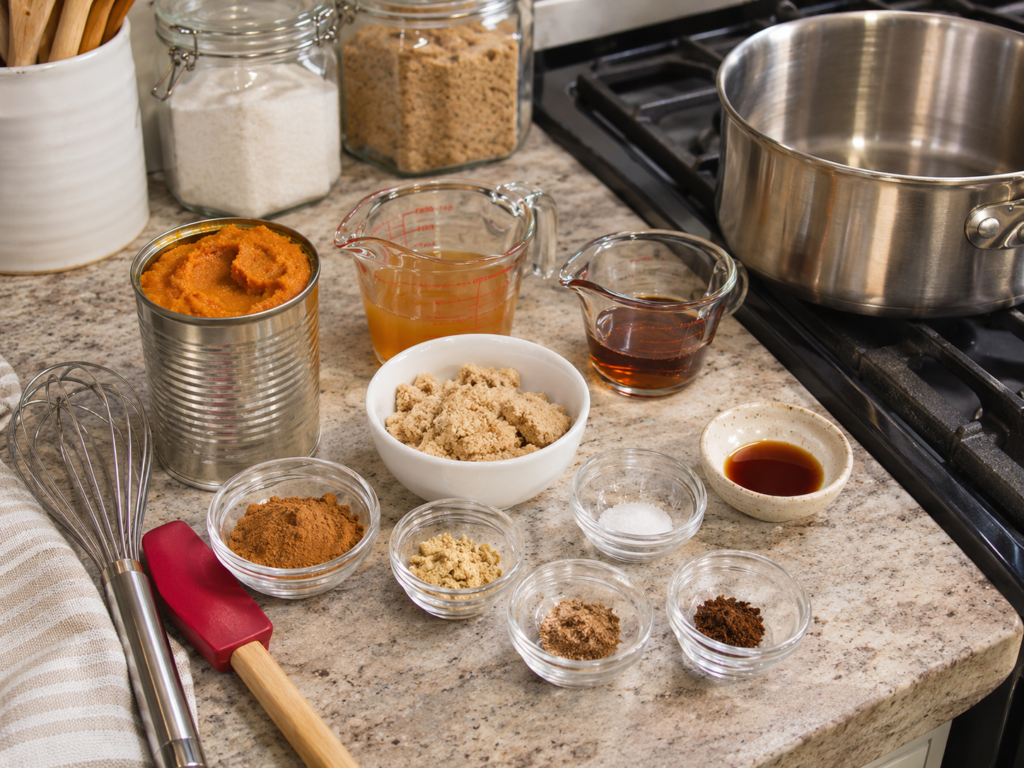
- Step 1: Gather and Measure the Ingredients. Begin your homemade Pumpkin Butter Recipe by gathering 1 can (15 oz / 425 g) pure pumpkin purée, ½ cup (120 ml) unsweetened apple cider, ½ cup (100 g) light brown sugar, ¼ cup (60 ml) pure maple syrup, 1½ teaspoons ground cinnamon, ½ teaspoon ground ginger, ¼ teaspoon ground nutmeg, ⅛ teaspoon ground cloves, ¼ teaspoon fine salt, and 1 teaspoon nonalcoholic vanilla flavoring. Measure each ingredient carefully before cooking so the flavors remain balanced. Choose plain pumpkin purée rather than sweetened pumpkin pie filling, which already contains sugar and spices. Set a medium heavy-bottomed saucepan on the stovetop, gather a whisk and silicone spatula, and prepare clean containers for storing the finished spread.

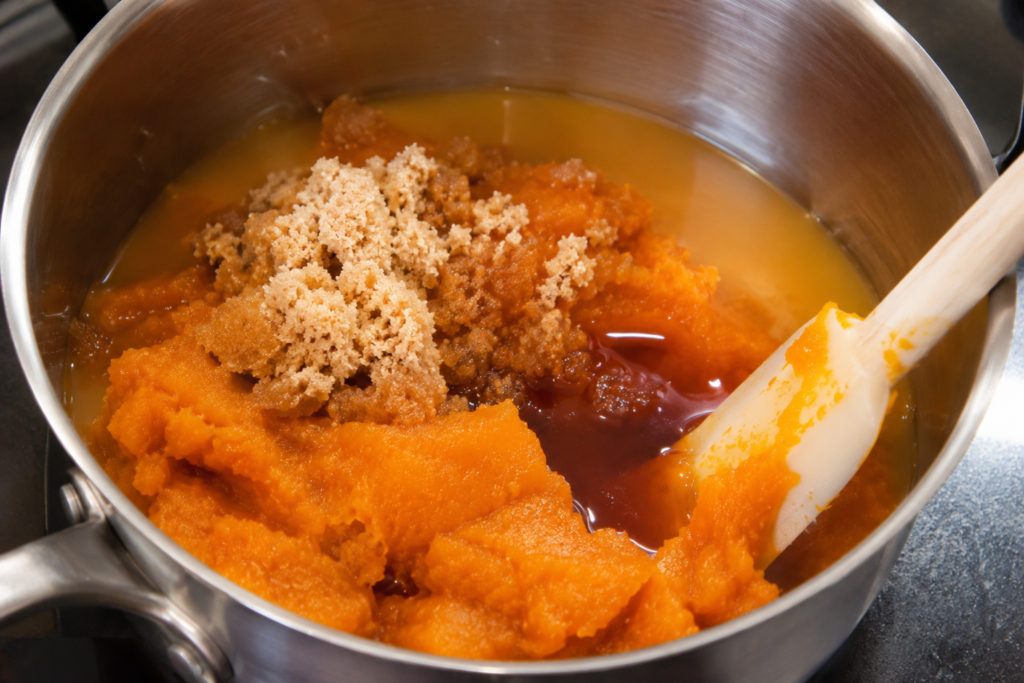
- Step 2: Combine the Pumpkin, Cider, and Sweeteners. Place the pumpkin purée into the heavy-bottomed saucepan, then pour in the unsweetened apple cider, brown sugar, and pure maple syrup. Stir slowly with a sturdy spoon or silicone spatula until the sugar begins to dissolve and the ingredients form a thick, evenly combined mixture. Scrape the bottom and sides of the saucepan to incorporate any concentrated pockets of brown sugar. The apple cider adds gentle fruity acidity and helps loosen the pumpkin so it can heat more evenly, while the brown sugar and maple syrup contribute sweetness and a rich fall flavor. The mixture should look smooth and spoonable rather than watery. Keep the saucepan off the heat while adding the spices so everything can be mixed thoroughly before simmering.

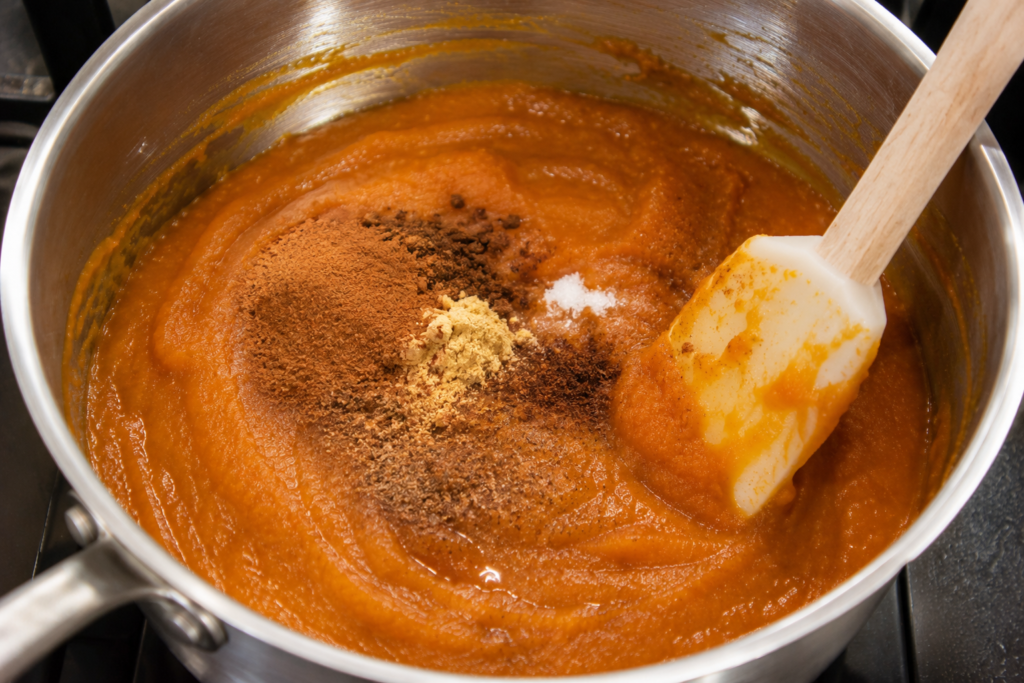
- Step 3: Add the Warm Spices and Salt. Sprinkle the ground cinnamon, ginger, nutmeg, cloves, and fine salt over the pumpkin mixture. Use a whisk or silicone spatula to stir thoroughly until the spices are evenly distributed and no dry clumps remain. The cinnamon provides a cozy sweetness, ginger adds gentle warmth, and nutmeg and cloves contribute a deeper, aromatic flavor. Because ground cloves are especially strong, use only the measured ⅛ teaspoon to avoid overpowering the pumpkin. Scrape the sides and bottom of the saucepan so the spices do not remain concentrated in one area. The mixture should have an inviting warm-orange color with tiny specks of spice throughout. Reserve the nonalcoholic vanilla flavoring until the end of cooking, when its delicate aroma will be better preserved.
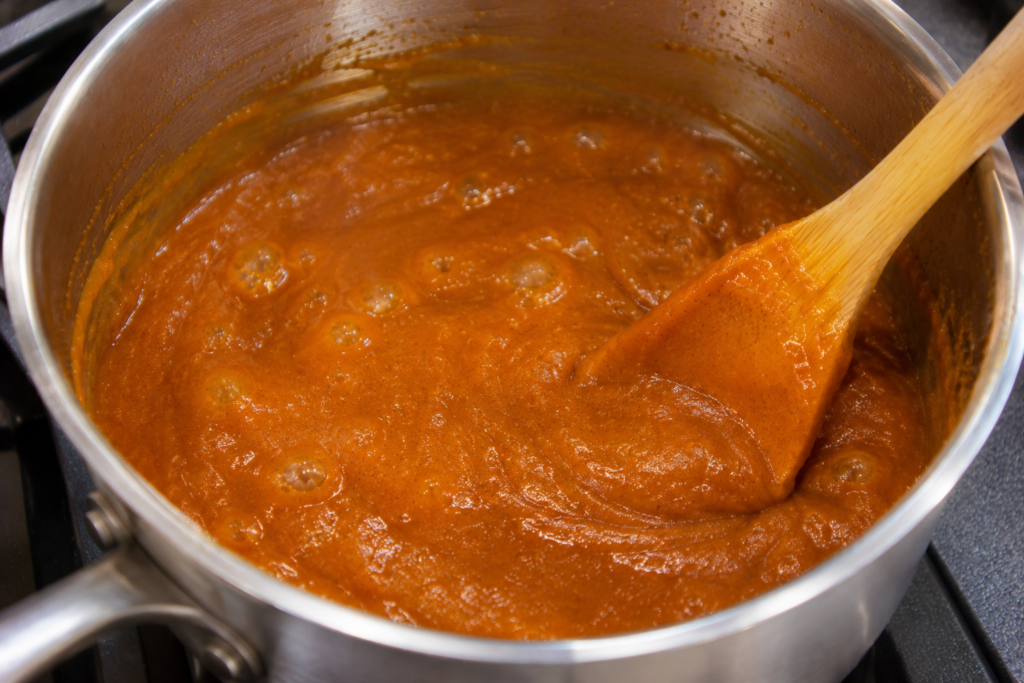
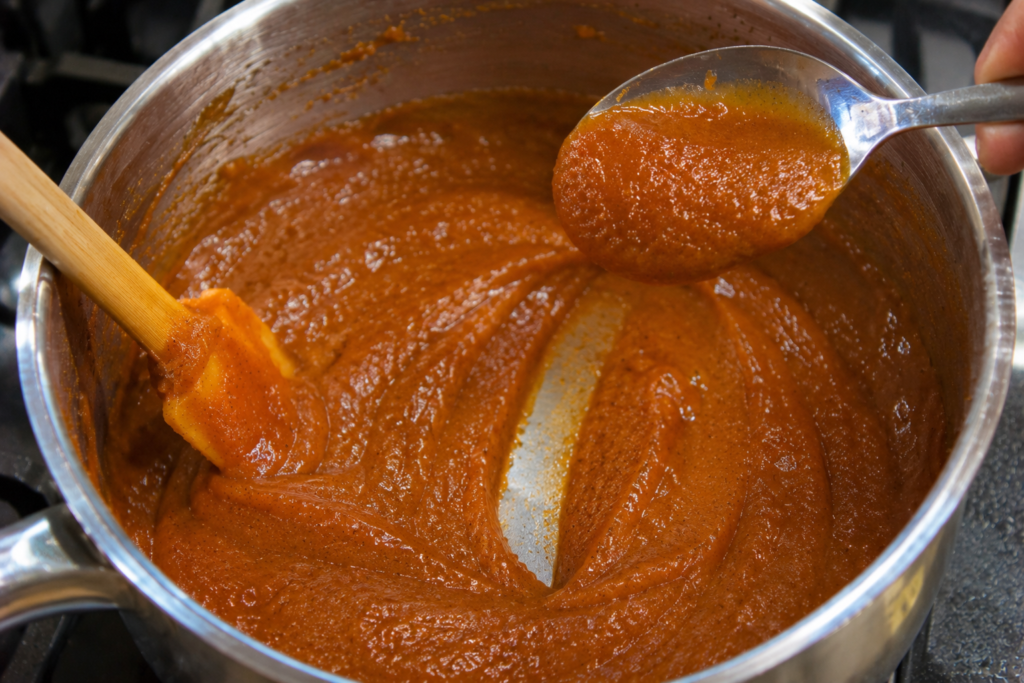
- Step 4: Simmer Gently. Place the saucepan over medium-low heat and stir occasionally until the pumpkin mixture begins to bubble gently. Reduce the heat to low and cook uncovered for approximately 25–30 minutes, stirring frequently and scraping across the bottom and corners of the pan to prevent sticking or scorching. Pumpkin purée is thick and may splatter as it heats, so use a sufficiently deep saucepan, maintain a gentle simmer rather than a vigorous boil, and protect your hands when stirring. The mixture will gradually become darker, thicker, and more concentrated as excess moisture evaporates. If it begins sticking or bubbling aggressively, lower the heat immediately. Avoid leaving the saucepan unattended because pumpkin butter can burn quickly once it thickens.
- Step 5: Check the Consistency. After approximately 25 minutes, lift a small amount of pumpkin butter with a clean spoon and check its texture carefully, allowing the sample to cool before tasting. The spread should be noticeably thicker than the original pumpkin purée mixture, hold soft ridges when stirred, and coat the back of a spoon without dripping immediately. Draw the spatula through the saucepan; the mixture should briefly leave a visible trail before settling back together. If it still looks thin, continue simmering over low heat for several minutes, stirring frequently. If it becomes excessively thick or starts sticking, stir in a small splash of apple cider, approximately 1 teaspoon at a time, until the consistency is comfortably spreadable. The finished pumpkin butter should be smooth and richly flavored rather than dry or paste-like.
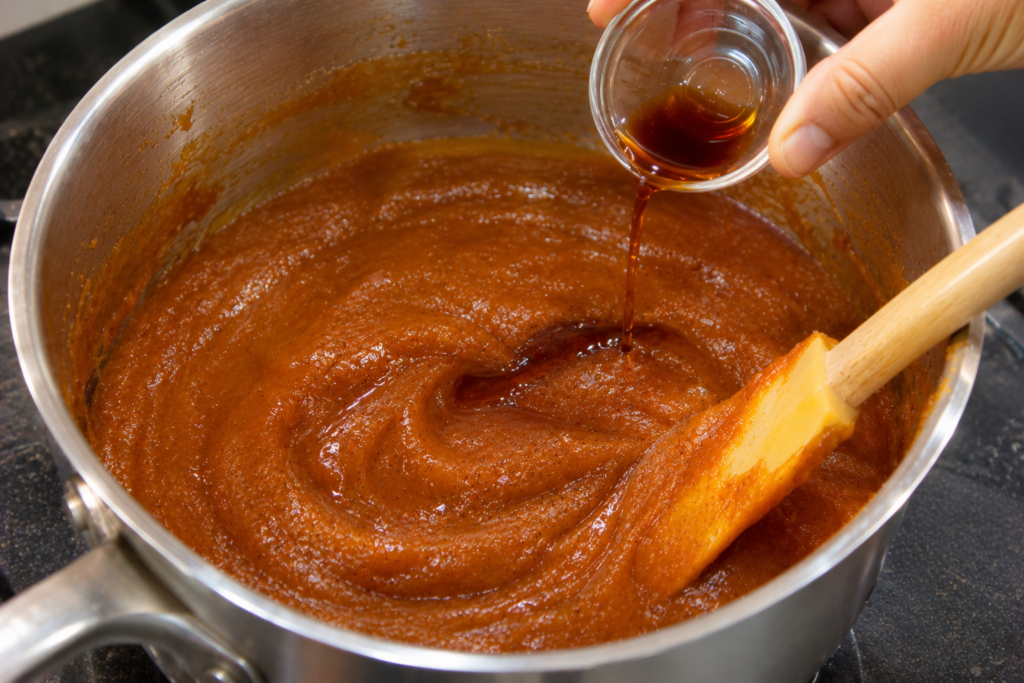
- Step 6: Stir in the Vanilla and Adjust the Flavor. Remove the saucepan from the heat and add 1 teaspoon (5 ml) nonalcoholic vanilla flavoring. Stir thoroughly until the vanilla is evenly incorporated into the warm pumpkin butter. Let a small sample cool before tasting, since the mixture will be very hot immediately after cooking. If needed, adjust the flavor with a tiny additional pinch of cinnamon or a few drops of maple syrup, keeping in mind that the sweetness will be more noticeable once the spread cools. Avoid adding large quantities of liquid at this stage because they can thin the finished consistency. The pumpkin butter should taste warm, gently spiced, naturally earthy, and pleasantly sweet, with a subtle apple-and-maple finish. This is a refrigerated spread, not a tested shelf-stable preserve.
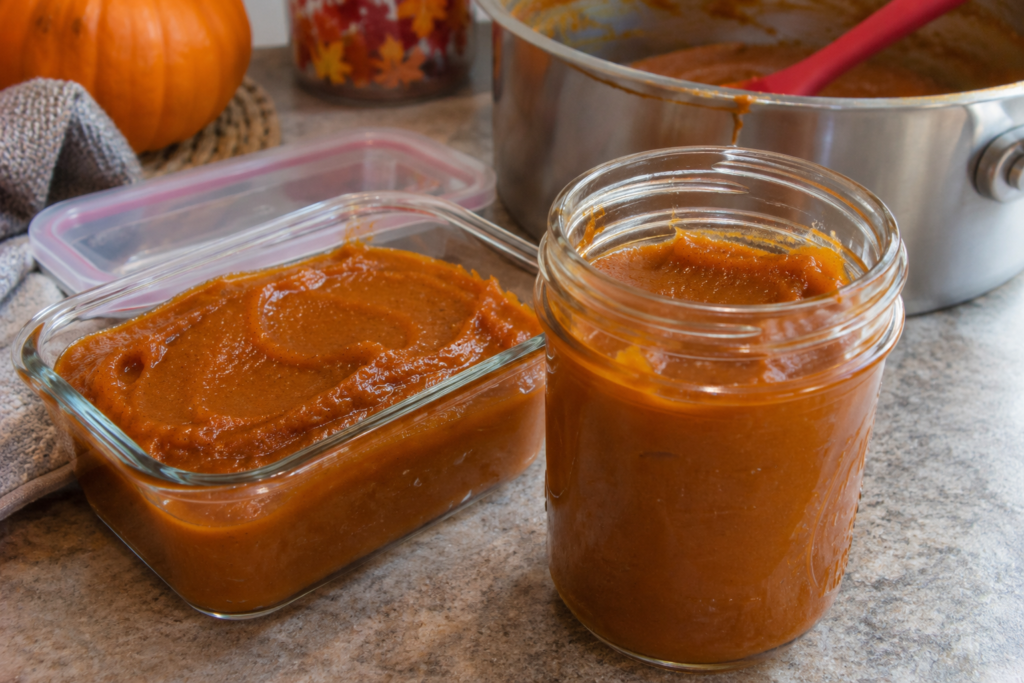
- Step 7: Cool and Store Safely. Allow the pumpkin butter to cool briefly in the saucepan, stirring occasionally to release heat, then transfer it into clean, shallow, heat-safe food containers. Refrigerate promptly, within 2 hours of finishing cooking, at 40°F (4°C) or below. Do not leave the finished pumpkin butter sitting on the countertop until completely cold, since prolonged room-temperature storage is unsafe. For a conservative storage recommendation, use refrigerated homemade pumpkin butter within 3–4 days, or freeze portions in suitable freezer-safe containers for up to 3 months for best quality. Leave appropriate space for expansion when freezing and thaw frozen portions in the refrigerator. Never attempt to make this homemade pumpkin butter shelf-stable using boiling-water canning, pressure canning, or by simply sealing hot jars; no validated home-canning process is available for pumpkin butter.
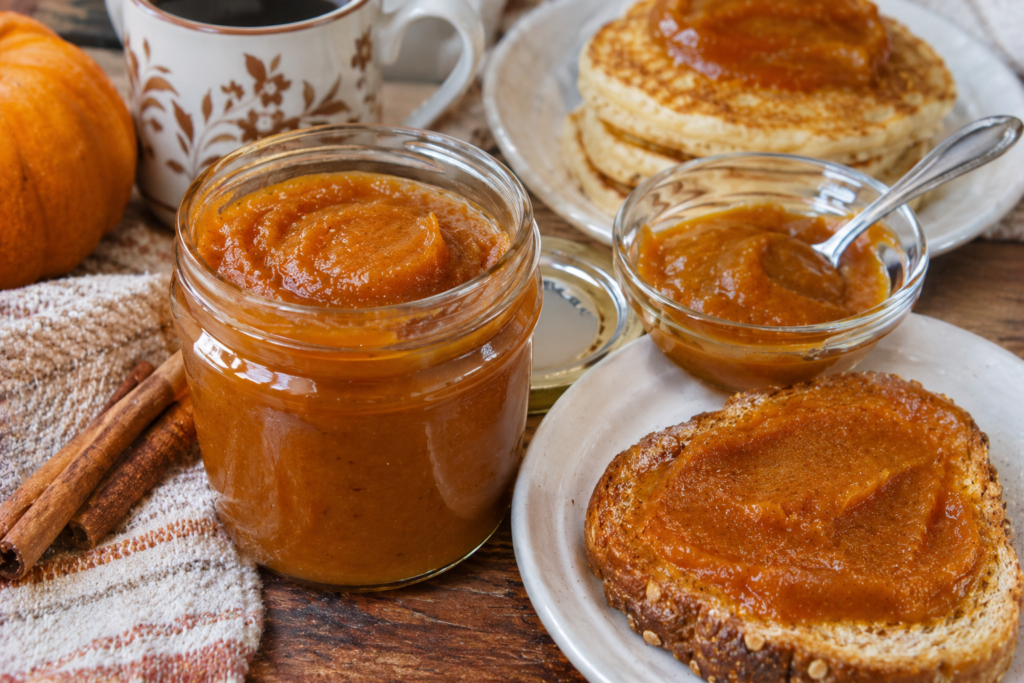
- Step 8: Serve and Enjoy. Once chilled, spoon the homemade pumpkin butter into a small serving bowl or spread a generous but manageable amount over warm toast, freshly baked biscuits, English muffins, pancakes, or waffles. You can also swirl it into oatmeal, plain yogurt, or a bowl of overnight oats for a cozy fall flavor, or use it as a filling in suitable baked desserts. Because pumpkin butter is naturally thick and sweet, a small spoonful can add plenty of flavor without overwhelming other ingredients. Always serve it with clean utensils and return any remaining spread to the refrigerator promptly. Avoid leaving it unrefrigerated during long breakfasts or gatherings. Enjoy its silky texture, fragrant cinnamon aroma, and delicious pumpkin-maple sweetness throughout the fall season.
Notes
Origins of Pumpkin Butter Recipe
The Pumpkin Butter Recipe has its roots in traditional American cooking, where pumpkins have been an important ingredient for centuries. Long before pumpkin spice became a seasonal favorite, Indigenous peoples of North America cultivated pumpkins and other squash varieties, using them in a wide range of dishes.
As European settlers adapted their cooking traditions to ingredients available in North America, pumpkins became popular in soups, pies, puddings, and preserves. Over time, cooks began experimenting with different ways to enjoy pumpkin’s naturally sweet, earthy flavor.
The idea behind homemade pumpkin butter is closely related to traditional fruit butters, especially apple butter, which has a long history in American kitchens. Fruit butters were traditionally prepared by slowly cooking fruit with sugar and spices until the mixture became thick, smooth, and spreadable.
Pumpkin butter follows a similar technique, combining pumpkin purée with warm spices such as cinnamon, ginger, nutmeg, and cloves. Although the exact origin of pumpkin butter is not well documented, it likely developed as a variation of these traditional sweet spreads.
Today, Pumpkin Butter Recipe is especially popular during autumn, when pumpkin-flavored foods take center stage. Its comforting aroma and rich texture make it a favorite for spreading on toast, biscuits, muffins, and pancakes.
Modern versions often include apple cider, maple syrup, or brown sugar to enhance the pumpkin’s natural flavor. Some recipes use slow cookers, while others rely on a simple stovetop method.
From its connection to traditional American fruit preserves to its modern popularity as a fall-inspired treat, pumpkin butter celebrates the comforting flavors of the harvest season.
Whether homemade or given as a seasonal gift, this delicious spread continues to bring a little autumn warmth to kitchens everywhere.

Health Benefits of Pumpkin Butter Recipe
This homemade Pumpkin Butter Recipe isn’t just a delicious fall-inspired spread. When made with real pumpkin purée and a balanced amount of sweetener, it can also provide several beneficial nutrients. Here are some reasons to enjoy this cozy autumn favorite.
1. Rich in Vitamin A for Eye Health
Pumpkin is naturally rich in beta-carotene, a plant pigment that the body converts into vitamin A. This essential nutrient supports healthy vision, immune function, and normal cell growth.
2. Provides Antioxidants
Pumpkin contains antioxidants, including carotenoids, that help protect cells from oxidative damage. Spices such as cinnamon, ginger, and cloves also contain beneficial plant compounds.
3. Supports Healthy Digestion
Pumpkin purée provides dietary fiber, which supports regular bowel movements and overall digestive health. Although pumpkin butter contains some fiber, the amount per serving depends on the recipe and portion size.
4. Contains Important Minerals
Pumpkin naturally supplies minerals such as potassium, which contributes to normal muscle function, nerve signaling, and healthy blood pressure regulation.
5. Naturally Low in Fat
Traditional pumpkin butter contains no dairy butter or added oils, making it naturally low in fat. It’s a flavorful alternative to some higher-fat spreads, although its sugar content should still be considered.
6. Easy to Customize for Less Sugar
One advantage of preparing a homemade Pumpkin Butter Recipe is controlling the ingredients. You can reduce the brown sugar, use a smaller amount of maple syrup, or let the pumpkin and warm spices provide more of the flavor.
7. Adds Flavor to Nutritious Meals
A spoonful of pumpkin butter can make plain Greek yogurt, oatmeal, or whole-grain toast more enjoyable without requiring complicated toppings.
Nutrition Tip: For a healthier pumpkin butter, choose 100% pure pumpkin purée, avoid unnecessary additives, and adjust the sweetener to your taste. Remember that pumpkin butter is a sweet condiment, so moderate portions are best.
Homemade pumpkin butter offers a delicious way to enjoy pumpkin’s nutrients while bringing comforting autumn flavor to everyday meals.

Frequently Asked Questions About Pumpkin Butter Recipe
Discover how to make rich, creamy homemade pumpkin butter with real pumpkin purée, apple cider, maple syrup, and warm fall spices. These helpful answers cover ingredients, consistency, cooking tips, storage, freezing, and important food safety advice.
1. What is pumpkin butter?
Pumpkin butter is a thick, sweet, spiced spread made by gently cooking pumpkin purée with sweeteners and warming spices until the mixture becomes smooth and concentrated. Despite its name, pumpkin butter does not contain dairy butter. This homemade version combines pumpkin, apple cider, brown sugar, maple syrup, cinnamon, ginger, nutmeg, and cloves for a delicious fall flavor. It’s perfect for toast, pancakes, oatmeal, and baked goods.
2. How do you make homemade pumpkin butter?
To make this easy Pumpkin Butter Recipe, combine one 15-ounce (425 g) can of pure pumpkin purée with ½ cup unsweetened apple cider, ½ cup light brown sugar, ¼ cup maple syrup, cinnamon, ginger, nutmeg, cloves, and a little salt. Simmer gently over low heat for approximately 25–30 minutes, stirring frequently until thick and spreadable. Remove from the heat, stir in 1 teaspoon nonalcoholic vanilla flavoring, and transfer to clean containers. Refrigerate promptly.
3. Can I make pumpkin butter with canned pumpkin?
Yes! Canned pumpkin purée is an excellent choice for homemade pumpkin butter because it’s convenient and provides a relatively consistent texture. Use one standard 15-ounce (425 g) can labeled 100% pure pumpkin. Avoid pumpkin pie filling, which already contains sugar and spices and would change the flavor of this recipe. You can also use homemade pumpkin purée, although its moisture content may affect the cooking time.
4. What is the difference between pumpkin butter and pumpkin purée?
Pumpkin purée is plain cooked, mashed pumpkin without the added sweeteners and spices found in pumpkin butter. Pumpkin butter is made by simmering pumpkin purée with ingredients such as brown sugar, maple syrup, apple cider, and cinnamon until it develops a thicker consistency and richer flavor. Pumpkin butter is generally used as a sweet spread or topping, while plain pumpkin purée is a versatile ingredient for both sweet and savory dishes.
5. How long does it take to make pumpkin butter?
This homemade Pumpkin Butter Recipe takes approximately 25–30 minutes of gentle simmering, plus about 5 minutes to prepare the ingredients. Cooking time can vary depending on the thickness of your pumpkin purée, the size of your saucepan, and the cooking temperature. The finished spread should coat the back of a spoon and briefly hold its shape when stirred. Allow time for safe cooling and refrigeration before serving chilled.
6. How do I thicken homemade pumpkin butter?
If your homemade pumpkin butter is too thin, continue simmering it uncovered over low heat for a few additional minutes, stirring frequently to prevent sticking. As excess moisture evaporates, the pumpkin mixture becomes thicker and more concentrated. It should hold soft ridges when stirred and coat a spoon without running off immediately. Avoid cooking over high heat, since thick pumpkin mixtures can splatter and burn easily.
7. Why is my pumpkin butter too thick?
Pumpkin butter can become overly thick if it simmers too long or if the starting pumpkin purée contains relatively little moisture. To adjust the consistency, stir in a small splash of unsweetened apple cider, approximately 1 teaspoon at a time, until the spread becomes smooth and easy to spoon. Add liquid gradually rather than pouring in too much at once. The finished pumpkin butter should be thick and creamy, not dry or paste-like.
8. Can I make pumpkin butter without maple syrup?
Yes, you can make a variation without maple syrup, although the flavor and sweetness will change. Maple syrup adds a subtle caramel-like richness that complements the pumpkin and cinnamon. You may replace it with another suitable sweetener, but its moisture and sweetness can differ, so the cooking time and texture may need adjustment. For the intended flavor of this Pumpkin Butter Recipe, pure maple syrup is recommended.
9. Can I use apple juice instead of apple cider?
Yes! Unsweetened, unfiltered apple juice is a convenient substitute for nonalcoholic apple cider in homemade pumpkin butter. Both add gentle fruity sweetness and help loosen the pumpkin mixture before simmering. Use ½ cup (120 ml) of your chosen ingredient. Avoid heavily sweetened apple drinks, which can make the finished spread sweeter than intended. For this recipe, apple cider means the nonalcoholic beverage, not apple cider vinegar.
10. What spices are best for pumpkin butter?
The best spices for classic homemade Pumpkin Butter Recipe are cinnamon, ginger, nutmeg, and cloves. This recipe uses 1½ teaspoons ground cinnamon, ½ teaspoon ground ginger, ¼ teaspoon ground nutmeg, and ⅛ teaspoon ground cloves. Cinnamon creates the familiar cozy fall flavor, while ginger, nutmeg, and cloves add warmth and complexity. Measure the cloves carefully because their flavor is especially strong.
11. Does homemade pumpkin butter need to be refrigerated?
Yes. Homemade pumpkin butter is not shelf-stable and must be refrigerated. Transfer the cooked spread into clean, shallow, heat-safe containers and refrigerate within 2 hours of finishing cooking. Keep it at 40°F (4°C) or below and use within approximately 3–4 days as a conservative home-storage recommendation. Do not leave pumpkin butter on the counter overnight or assume that sealing it in a jar makes it safe for pantry storage.
12. How long does homemade pumpkin butter last?
For this homemade recipe, enjoy refrigerated pumpkin butter within approximately 3–4 days for a conservative storage recommendation. Keep it in a clean, airtight container at 40°F (4°C) or below and use clean utensils when serving. If you want to keep it longer, freeze portions promptly. Always discard pumpkin butter that develops mold, an unusual odor, or other signs of spoilage.
13. Can you freeze pumpkin butter?
Absolutely! Homemade pumpkin butter freezes well and is a convenient way to enjoy its cozy flavor beyond the fall season. Divide the cooled spread into freezer-safe containers, leaving enough space for expansion, and label each container with the preparation date. Freeze for up to approximately 3 months for best quality. Thaw overnight in the refrigerator and stir gently before serving if the texture changes slightly.
14. Can you can pumpkin butter for shelf-stable storage?
No. Home canning pumpkin butter is not recommended. The National Center for Home Food Preservation does not provide a validated home-canning process for pumpkin butter because its thickness, acidity, and heat penetration can vary significantly. Neither boiling-water canning nor improvised pressure canning should be used. For safe home storage, refrigerate the finished pumpkin butter or freeze it in suitable containers instead.
15. How many calories are in homemade pumpkin butter?
This OoohDelish Pumpkin Butter Recipe is estimated to contain approximately 25 calories per tablespoon, assuming a finished yield of about 2 cups or 32 tablespoons. Most of the calories come from the brown sugar, maple syrup, pumpkin, and apple cider. The exact amount will vary depending on ingredient brands and how much the mixture reduces during cooking. These values are estimates rather than laboratory-tested measurements.
16. What can I serve with pumpkin butter?
Homemade pumpkin butter tastes delicious spread over toast, warm biscuits, English muffins, pancakes, waffles, and freshly baked bread. You can also swirl it into oatmeal, yogurt, or overnight oats for a cozy fall breakfast. For dessert, try adding a spoonful to suitable cake fillings, pastries, or creamy dessert bowls. Its sweet pumpkin-maple flavor pairs beautifully with cinnamon, apples, and toasted nuts.
