

There’s nothing quite like pulling a freshly baked Sourdough Focaccia Recipe from the oven, with its beautifully golden crust, fluffy interior, and irresistible aroma of olive oil, rosemary, and naturally fermented bread. Every bite offers the perfect contrast between crispy edges, a soft, airy center, and those signature dimples filled with rich olive oil and fragrant herbs. Whether you’re an experienced sourdough baker or exploring homemade focaccia for the first time, this delicious Italian-inspired bread is guaranteed to make your kitchen smell like a neighborhood bakery.
What makes this homemade Sourdough Focaccia Recipe special is its naturally fermented dough, prepared with an active sourdough starter instead of commercial yeast. The slow fermentation develops a pleasantly tangy flavor, an open, bubbly crumb, and a wonderfully tender texture that traditional quick breads cannot always replicate. Best of all, you don’t need complicated kneading techniques or professional baking equipment to achieve impressive results.
With simple ingredients like bread flour, water, sourdough starter, extra-virgin olive oil, and sea salt, you can create beautiful, bakery-style focaccia at home. Finish it with fresh rosemary, flaky sea salt, cherry tomatoes, or roasted garlic for a delicious personal touch.
Serve your sourdough focaccia warm alongside soups, salads, pasta, or your favorite Mediterranean dishes. It also makes an incredible sandwich bread, perfect for soaking up flavorful sauces.
In this OoohDelish guide, you’ll discover how to make Sourdough Focaccia Recipe from scratch, develop those beautiful air bubbles, master fermentation, and achieve a crispy, golden crust with an irresistibly soft center.
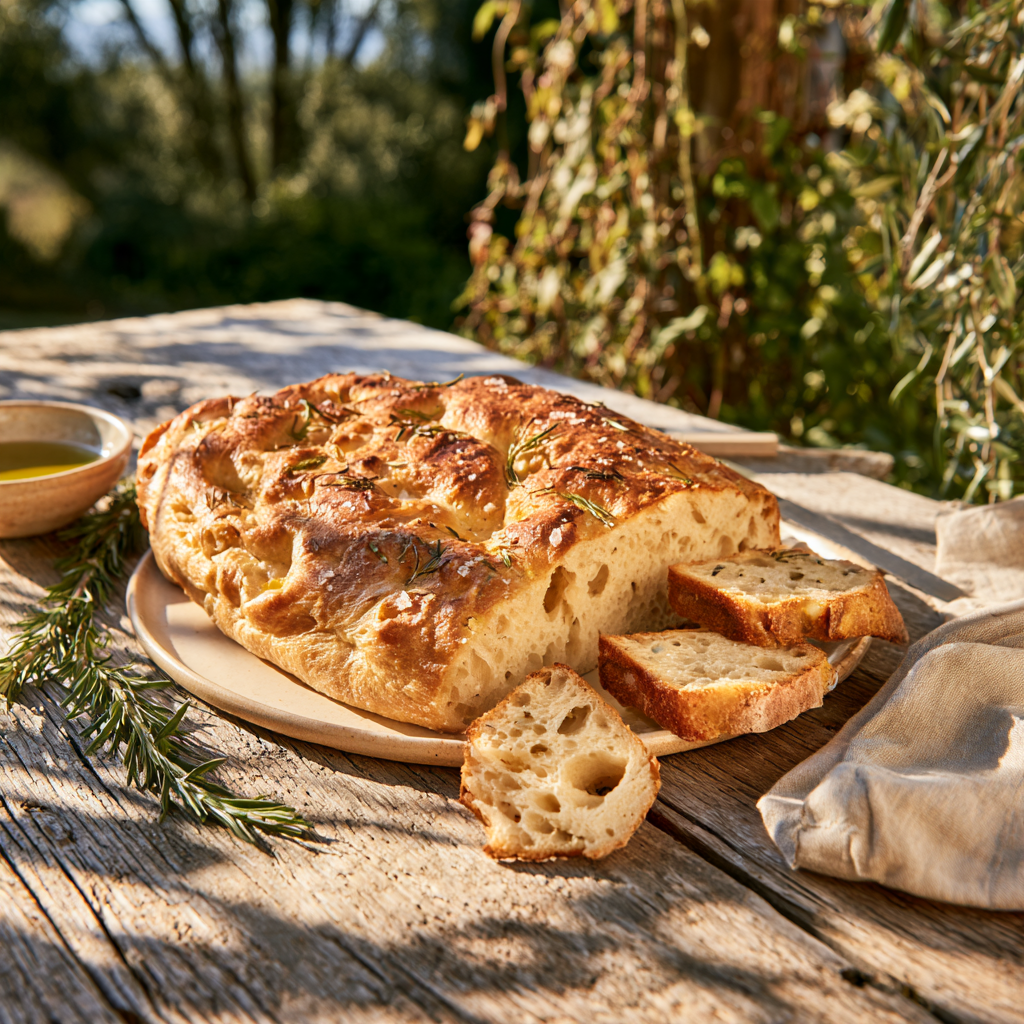
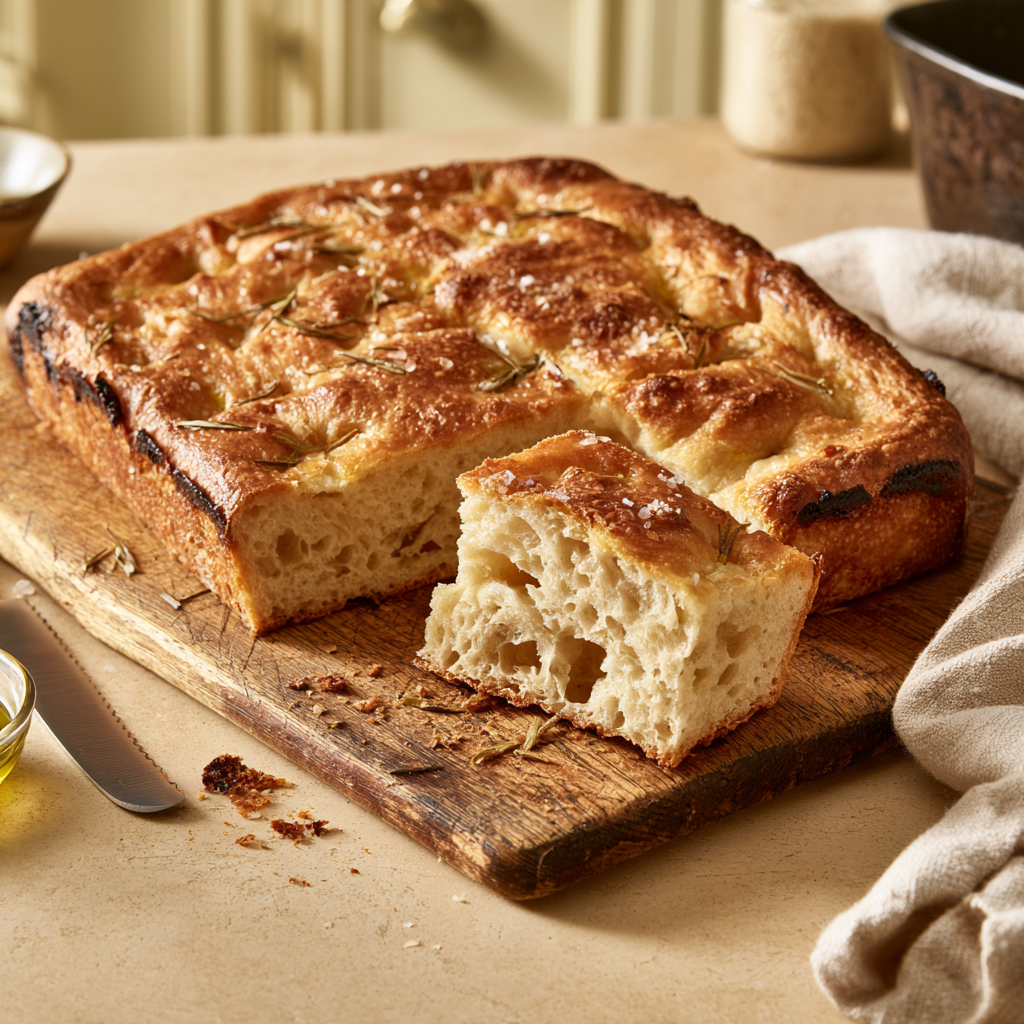
Sourdough Focaccia Recipe
Equipment
- Large mixing bowl
- Digital kitchen scale
- Dough scraper or silicone spatula
- 9 × 13-inch (23 × 33 cm) metal baking pan
- Measuring spoons
- Clean kitchen towel or reusable bowl cover
- Small bowl for olive oil
- Plastic or reusable food-safe dough cover
- Wire cooling rack
- Oven mitts
- Serrated bread knife
- Instant-Read Thermometer (optional)
Ingredients
- For the Sourdough Focaccia Dough
- DOUGH INGREDIENTS
- 500 g approximately 4 cups, spooned and leveled bread flour
- 400 g 1⅔ cups plus 1 teaspoon water, room temperature
- 100 g approximately ⅓ cup plus 1 tablespoon active sourdough starter, 100% hydration
- 11 g approximately 1¾ teaspoons fine sea salt
- 25 g 2 tablespoons extra-virgin olive oil, for the dough
- For the Baking Pan and Rosemary Topping
- TOPPING INGREDIENTS
- 25 g approximately 2 tablespoons extra-virgin olive oil, for greasing the pan
- 30 g approximately 2 tablespoons plus ½ teaspoon extra-virgin olive oil, for drizzling and dimpling
- 2 tablespoons fresh rosemary leaves roughly chopped
- ½ teaspoon flaky sea salt or to taste
Instructions
- Step 1: Prepare the Active Sourdough Starter. Before beginning your Sourdough Focaccia Recipe, make sure your sourdough starter is healthy, bubbly, and capable of rising reliably after feeding. For this recipe, use 100 g of active starter at 100% hydration, meaning equal weights of flour and water. Ideally, use the starter when it has expanded significantly and is near its usual peak of activity, with numerous bubbles visible throughout. A weak, recently refrigerated, or severely underfed starter may require one or more refreshments before baking. Do not rely exclusively on the float test, as some perfectly active starters may sink. Use visible expansion, bubbles, and your starter’s usual rising behavior as the most useful signs of readiness. Once the starter is active, weigh all the remaining ingredients with a digital kitchen scale and prepare a large mixing bowl.
- Step 2: Mix the Flour, Water, and Sourdough Starter. Add 500 g of bread flour, 400 g of room-temperature water, and 100 g of active sourdough starter to a large mixing bowl. Use a dough scraper, wooden spoon, or sturdy spatula to combine the ingredients until no pockets of dry flour remain. The mixture will be sticky, shaggy, and relatively wet, which is normal for a high-hydration focaccia dough. Scrape down the sides of the bowl to make sure all the flour has been incorporated, then cover the bowl and let the dough rest for approximately 20–30 minutes. This initial rest allows the flour to absorb moisture and helps the gluten network begin developing without vigorous kneading. The dough may still look rough at this stage, but it should gradually become easier to handle during the subsequent folds.
- Step 3: Add the Sea Salt and Olive Oil. After the initial rest, sprinkle 11 g of fine sea salt over the dough and drizzle in 25 g of extra-virgin olive oil. With lightly wet hands, gently squeeze, pinch, and fold the dough until the salt and oil are incorporated throughout. At first, the dough may feel slippery and seem to separate as the oil coats the surface, but continue folding gently until it becomes cohesive again. Scrape down the bowl and gather the dough into a loose mound. Avoid adding extra flour to correct its stickiness, since the relatively high hydration is intentional and contributes to the finished focaccia’s tender, airy texture. Cover the bowl and allow the dough to rest for approximately 20–30 minutes before beginning the first stretch-and-fold set.
- Step 4: Perform the First Stretch-and-Fold Set. With clean, lightly wet hands, reach under one edge of the rested dough, lift it slowly until it stretches without tearing, and fold it over the center. Turn the bowl approximately one-quarter turn and repeat the movement, continuing around the bowl until you have completed four gentle folds. The dough may initially feel loose and sticky, but the folds help strengthen the gluten network without requiring traditional countertop kneading. Avoid pulling so forcefully that the dough tears, and don’t try to create a tight, dry ball. After completing the first set, cover the bowl and let the dough rest for approximately 30 minutes at room temperature. This resting period allows the gluten to relax while fermentation continues, making the next set of folds more effective.
- Step 5: Complete the Remaining Stretch-and-Folds. Repeat the stretch-and-fold process two or three additional times, allowing approximately 30 minutes between sets. During each set, lift a section of dough, stretch it gently, and fold it over itself, working around the bowl until all sides have been folded. Over time, you should notice that the dough becomes smoother, more elastic, and better able to hold its shape, although it will still feel soft and somewhat sticky. If the dough becomes resistant to stretching, let it rest rather than forcing it. Small bubbles may begin forming beneath the surface as the sourdough starter becomes more active. After the final set, gather the dough gently into the center of the bowl, cover it, and leave it to continue its bulk fermentation undisturbed.
- Step 6: Allow the Dough to Complete Bulk Fermentation. Leave the covered dough at a comfortable room temperature, ideally around 73–77°F (23–25°C), until it becomes noticeably expanded, aerated, and bubbly. For an active starter, the total bulk fermentation may take approximately 4–7 hours from the initial mixing, including the time spent resting and folding, although actual timing can vary substantially. Look for an increase in volume of roughly 50–75%, bubbles along the sides and surface, and a slightly domed, soft appearance. The dough should look alive and elastic rather than remaining dense and motionless. Do not rely only on the clock, since a cool kitchen may require additional hours and a warmer kitchen may accelerate fermentation. Avoid allowing the dough to become excessively acidic, runny, or collapsed, as these can be signs of over-fermentation.
- Step 7: Prepare the Baking Pan With Olive Oil. Once the dough has completed bulk fermentation, prepare a 9 × 13-inch (23 × 33 cm) metal baking pan by spreading 25 g of extra-virgin olive oil evenly across the bottom and into the corners. A metal pan is helpful for creating a beautifully golden, lightly crisp underside. If your pan is particularly prone to sticking, use a suitable nonstick pan or line it with parchment paper before adding the oil, ensuring that the paper lies flat. Gently loosen the fermented dough from the sides of the mixing bowl using a flexible scraper or lightly oiled fingers. Try to avoid squeezing or aggressively deflating the dough, as preserving its fermentation bubbles contributes to the airy crumb that makes homemade sourdough focaccia so appealing.
- Step 8: Transfer the Dough and Begin the Final Proof. Carefully tip the fermented dough into the prepared olive oil-coated pan and gently turn it once so that its surface receives a light coating of oil. Using oiled fingertips, encourage the dough toward the corners without pulling aggressively or tearing it. If the dough springs back and resists stretching, cover it and allow it to rest for 15–20 minutes before continuing. Once it has relaxed, gently spread it into a reasonably even layer across the pan. Cover the pan without allowing the cover to press directly against the dough and leave it at room temperature to complete the final proof. This second rising period commonly takes approximately 2–4 hours, depending on dough temperature and starter activity. The dough should become puffy, bubbly, and slightly jiggly, with visible signs of aeration before baking.
- Step 9: Preheat the Oven and Prepare the Rosemary Topping. When the dough is approaching the end of its final proof, position an oven rack in the middle to lower-middle section of the oven and preheat it to 425°F (220°C) for approximately 25–30 minutes, allowing the oven and baking environment to become thoroughly hot. Meanwhile, roughly chop 2 tablespoons of fresh rosemary leaves and measure 30 g of extra-virgin olive oil for the surface. Keep approximately ½ teaspoon of flaky sea salt ready for finishing. The focaccia should look visibly expanded, soft, and aerated before you add the topping. If it still appears dense or tight, give it additional time to proof rather than dimpling and baking prematurely. A properly proofed dough is one of the most important factors in achieving a beautifully fluffy, open interior.
- Step 10: Create the Signature Focaccia Dimples. Drizzle the measured 30 g of extra-virgin olive oil evenly over the risen dough, allowing some of it to gather naturally across the surface. Lightly coat your fingertips with the oil, then press them gently but decisively into the dough to create deep, evenly spaced dimples across the entire pan. Your fingertips can reach close to the bottom of the pan, but avoid repeatedly flattening or aggressively squeezing out all the air bubbles. Scatter the chopped fresh rosemary over the dough and sprinkle the flaky sea salt evenly across the surface. A little oil should settle into the dimples, creating flavorful pockets that help develop the focaccia’s characteristic golden finish. Once topped, transfer the pan to the preheated oven promptly rather than allowing the dough to sit for an extended period.
- Step 11: Bake Until Golden, Crispy, and Fully Cooked. Place the baking pan on the prepared oven rack and bake at 425°F (220°C) for approximately 25–30 minutes, or until the focaccia develops a deep golden surface, the edges become attractively crisp, and the underside is thoroughly browned. Begin checking near the end of the expected baking window because oven performance and pan material can influence the result. If the top browns much faster than the bottom, move the pan to a lower rack for the final few minutes, watching carefully to prevent burning. A carefully inserted instant-read thermometer may show an internal bread temperature around 200–210°F (93–99°C), although appearance, structure, and a properly baked underside are also useful indicators. The finished loaf should look risen and golden rather than pale, wet, or doughy in the center.
- Step 12: Cool, Slice, and Serve the Sourdough Focaccia. Remove the baked Sourdough Focaccia Recipe from the oven and let it rest in the pan for approximately 5 minutes. Carefully loosen the edges with a spatula, then transfer the bread to a wire cooling rack so steam does not soften the beautifully crisp underside. Allow it to cool for approximately 15–20 minutes before slicing, giving the soft interior time to set. Use a serrated bread knife to cut the focaccia into 12 generous squares or rectangular portions. Serve slightly warm with soups, salads, roasted vegetables, pasta, or grilled chicken, or split the pieces horizontally to prepare flavorful sandwiches. The finished bread should have a golden, lightly crunchy crust, a tender and airy interior, fragrant rosemary, and the rich taste of extra-virgin olive oil.
Notes
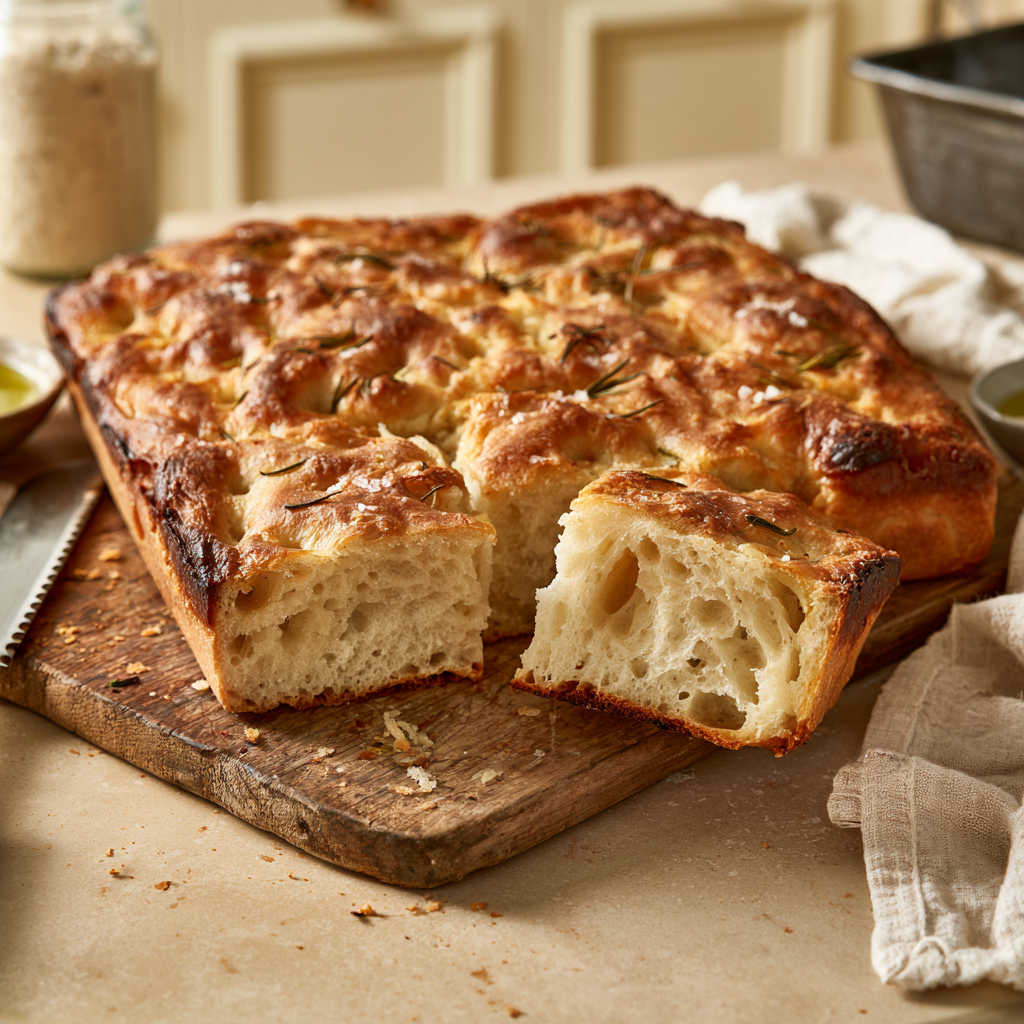
- The Origins of Sourdough Focaccia Recipe: From Ancient Italian Flatbreads to Modern Artisan Baking
- 1. Ancient Roman Origins: Where the Name Focaccia Comes From
- 2. The Ancient History of Sourdough Fermentation
- 3. Liguria, Italy: The Region That Defined Modern Focaccia
- 4. How Focaccia Became Part of Italian Everyday Life
- 5. Why Olive Oil Became Essential to Traditional Focaccia
- 6. The Origins of Focaccia's Famous Finger Dimples
- 7. How Natural Fermentation Transformed Traditional Focaccia
- 8. Traditional Focaccia vs. Sourdough Focaccia: What's the Difference?
- 9. The Evolution of Focaccia Across Italian Regions
- 10. How Sourdough Focaccia Became Popular With Modern Home Bakers
- 11. Why Sourdough Focaccia Has Such an Airy Texture
- 12. Why Sourdough Focaccia Remains a Timeless Homemade Bread
- Final Thoughts: The Timeless Origins of Sourdough Focaccia Recipe
- Health Benefits of Sourdough Focaccia Recipe: Nutrition, Natural Fermentation, and Wholesome Ingredients
- Nutritional Benefits of Sourdough Focaccia Recipe Ingredients
- 1. Natural Sourdough Fermentation May Improve Mineral Availability
- 2. Sourdough Fermentation May Affect Digestive Comfort
- 3. Extra-Virgin Olive Oil Provides Heart-Friendly Unsaturated Fats
- 4. Whole-Grain Sourdough Focaccia Can Provide More Dietary Fiber
- 5. Sourdough Focaccia Provides Carbohydrates for Everyday Energy
- 6. Homemade Sourdough Focaccia Allows Better Control Over Ingredients
- 7. Rosemary Adds Mediterranean Flavor Without Added Sugar
- 8. Sourdough Focaccia May Produce a Different Blood Sugar Response, but Results Vary
- 9. Vegetable Toppings Can Increase Nutritional Variety
- 10. Sourdough Focaccia Can Be Part of a Mediterranean-Style Eating Pattern
- Sourdough Focaccia Recipe Nutrition: What Does One Slice Contain?
- Is Sourdough Focaccia Healthier Than Regular Focaccia?
- 8 Practical Ways to Make Sourdough Focaccia Healthier
- The Healthiest Way to Serve Homemade Sourdough Focaccia
- Final Thoughts: Is Sourdough Focaccia Recipe Healthy?
- Nutritional Benefits of Sourdough Focaccia Recipe Ingredients
- Why You Should Try This Sourdough Focaccia Recipe: 12 Delicious Reasons to Bake It at Home
- 1. It Has an Irresistible Combination of Crispy Edges and a Soft, Airy Center
- 2. Natural Sourdough Fermentation Creates a More Complex Flavor
- 3. It's Easier to Shape Than Many Traditional Sourdough Loaves
- 4. You Only Need a Few Simple Pantry Ingredients
- 5. The Dough Requires Minimal Traditional Kneading
- 6. It's an Excellent Way to Use Your Active Sourdough Starter
- 7. You Can Customize It With Endless Delicious Toppings
- 8. It's Perfect for Sandwiches, Soups, Salads, and Everyday Meals
- 9. Overnight Fermentation Can Fit Conveniently Into Your Schedule
- 10. It Can Be More Economical Than Buying Artisan Bakery Focaccia
- 11. It Creates a Beautiful, Impressive Bread for Family Gatherings
- 12. Nothing Compares to the Aroma and Satisfaction of Freshly Baked Sourdough Focaccia
- What Makes This OoohDelish Sourdough Focaccia Recipe Special?
- Start With an Active, Bubbly Sourdough Starter
- Use Bread Flour for a Stronger Dough Structure
- Pay Attention to Hydration
- Develop Gluten With Gentle Stretch-and-Folds
- Don't Rush the Fermentation
- Use Generous but Measured Extra-Virgin Olive Oil
- Dimple Gently Without Destroying the Air Bubbles
- Bake Until the Bottom Is Golden, Not Just the Top
- Let the Bread Cool Briefly Before Slicing
- Store and Reheat Leftovers Properly
- Is Sourdough Focaccia Worth the Extra Fermentation Time?
- Final Thoughts: Why You Should Make This Sourdough Focaccia Recipe
The Origins of Sourdough Focaccia Recipe: From Ancient Italian Flatbreads to Modern Artisan Baking
The fascinating history of the Sourdough Focaccia Recipe brings together two of the world’s oldest and most beloved bread-making traditions: Italian focaccia and naturally fermented sourdough. With its golden, olive oil-rich crust, beautifully dimpled surface, and soft, airy interior, sourdough focaccia represents centuries of culinary knowledge transformed into a delicious homemade bread. Every bite reflects the influence of ancient Mediterranean baking, regional Italian traditions, and the natural fermentation techniques that bakers have practiced for thousands of years.
Although modern sourdough focaccia has become especially popular among home bakers, its roots reach far beyond today’s artisan bread movement. Flatbreads were prepared throughout the ancient Mediterranean, while naturally leavened doughs existed long before commercial baker’s yeast became widely available. Over time, Italian bakers developed distinctive versions of focaccia using wheat flour, water, olive oil, and salt, with the coastal region of Liguria becoming particularly famous for its golden, tender flatbread.
What makes a homemade Sourdough Focaccia Recipe different from conventional focaccia is the use of an active sourdough starter to ferment and leaven the dough. This natural fermentation contributes distinctive flavors, influences the bread’s structure, and helps create the beautiful air pockets that make sourdough focaccia so satisfying.
To understand where this irresistible bread comes from, we need to explore the ancient origins of focaccia, the history of sourdough fermentation, and how these two baking traditions came together in today’s kitchens.
1. Ancient Roman Origins: Where the Name Focaccia Comes From
The name focaccia is commonly linked to the Latin word focus, meaning hearth or fireplace. The expression panis focacius refers to bread associated with hearth baking, reflecting an older tradition of preparing flat dough near a source of heat.
In ancient Roman society, bread was an essential everyday food, and bakers produced different shapes and varieties according to available grains, equipment, and local customs.
Archaeological discoveries in the Roman city of Herculaneum provide fascinating evidence of this bread-making culture. The archaeological park documents surviving Roman breads and small focaccia-like preparations, demonstrating that flat baked breads formed part of the region’s food traditions.
However, these archaeological examples should not be confused with a documented recipe for modern olive oil focaccia. The precise ingredients, fermentation methods, and preparation techniques varied considerably across ancient societies.
These historical roots are important because they show that focaccia did not suddenly appear as a modern bakery invention.
Instead, its development belongs to a much longer history of simple breads prepared from flour, water, salt, and other locally available ingredients.
The earliest versions would not necessarily have resembled today’s thick, airy sourdough focaccia, but they established a tradition of baking flattened dough that would continue to evolve throughout Italy.
2. The Ancient History of Sourdough Fermentation
The second major influence behind the Sourdough Focaccia Recipe comes from the history of naturally leavened bread.
Long before commercial yeast was available in supermarkets, bakers relied on fermentation to produce lighter, more flavorful bread.
A sourdough starter develops when flour and water support a community of yeasts and lactic acid bacteria. These microorganisms ferment carbohydrates in the mixture, producing compounds that influence the dough’s flavor, acidity, and structure.
The yeasts produce carbon dioxide, which helps the dough rise, while lactic acid bacteria contribute organic acids and flavor complexity.
Historical and archaeological research suggests that sourdough fermentation has been practiced for thousands of years.
A scholarly overview in the Encyclopedia of Food Microbiology describes archaeological evidence of ancient sourdough bread dating to approximately 3700 BCE in Switzerland, while noting that the origins of fermented bread may be older.
Evidence from ancient Egypt and written accounts from the Roman world also demonstrate the long history of fermented doughs.
In these early baking traditions, maintaining a portion of fermented dough and using it to prepare the next batch was a practical way of continuing the fermentation process.
Modern sourdough starters follow the same essential principle.
For today’s home bakers, combining an active starter with focaccia dough reconnects the recipe with this ancient method of naturally leavening bread.
3. Liguria, Italy: The Region That Defined Modern Focaccia
Although flatbread traditions existed across the Mediterranean, the Italian region of Liguria became particularly important in shaping the focaccia recognized today.
Situated along Italy’s northwestern coast, Liguria has a strong culinary identity influenced by olive oil, wheat-based baking, aromatic herbs, and regional food traditions.
Its capital, Genoa, is famous for focaccia genovese, a thin, golden bread distinguished by its olive oil-rich surface and characteristic dimples.
According to the official tourism website of Genoa, focaccia is deeply connected to the city’s gastronomic heritage, with historical roots commonly associated with the period of the Republic of Genoa.
Traditional Genoese focaccia is made from simple ingredients, including flour, water, olive oil, salt, and a leavening agent.
Regional variations may include olives, onions, herbs, or cheese.
The bread is appreciated not only as an accompaniment to meals but also as an everyday snack, sometimes enjoyed for breakfast.
This strong local tradition helped establish focaccia as a symbol of Genoese food culture.
When preparing homemade sourdough focaccia, we borrow important characteristics from this regional style: generous olive oil, a dimpled surface, and the contrast between a crisp exterior and tender interior.
4. How Focaccia Became Part of Italian Everyday Life
Focaccia has long been more than a special-occasion bread in Italy.
In many communities, it developed as an everyday food that could be eaten on its own, served alongside meals, or carried as a convenient snack.
Its simple ingredient list made it adaptable to household and bakery preparation.
The bread could be shaped by hand, baked in a relatively shallow form, and flavored using ingredients available locally.
In Liguria, olive oil became one of its defining characteristics.
The oil contributed flavor while helping the surface develop its recognizable golden appearance.
Historical accounts also connect Genoese focaccia with communal and ceremonial occasions, including wedding traditions.
The regional tourism organization La Mia Liguria describes focaccia as a longstanding part of Genoese culture, with stories of its consumption extending back to the Middle Ages.
Over generations, bakery techniques became more refined, and individual regions developed distinctive variations.
Despite these changes, focaccia retained its essential identity as a simple, flavorful bread intended to be enjoyed fresh.
5. Why Olive Oil Became Essential to Traditional Focaccia
Olive oil is one of the most recognizable ingredients in Italian focaccia.
Its importance reflects both the agricultural traditions of the Mediterranean and the practical demands of bread baking.
Olive oil contributes richness, helps create a tender crumb, and encourages a beautifully browned surface when the bread is baked.
It also reduces sticking when spread generously across the baking pan.
For traditional focaccia, oil is not simply brushed over the finished loaf.
It is frequently incorporated into the dough and added generously to the surface before baking.
This creates the characteristic combination of a moist interior and lightly crisp exterior.
In a Sourdough Focaccia Recipe, olive oil becomes especially appealing because it complements the deeper flavors developed during natural fermentation.
A fruity extra-virgin olive oil can contribute slightly peppery, grassy, or buttery notes, depending on the variety.
Some bakers prefer a mild olive oil for a delicate flavor, while others choose a robust variety for a more distinctive Mediterranean character.
The choice is largely personal, but good-quality olive oil plays an important role in the finished bread.
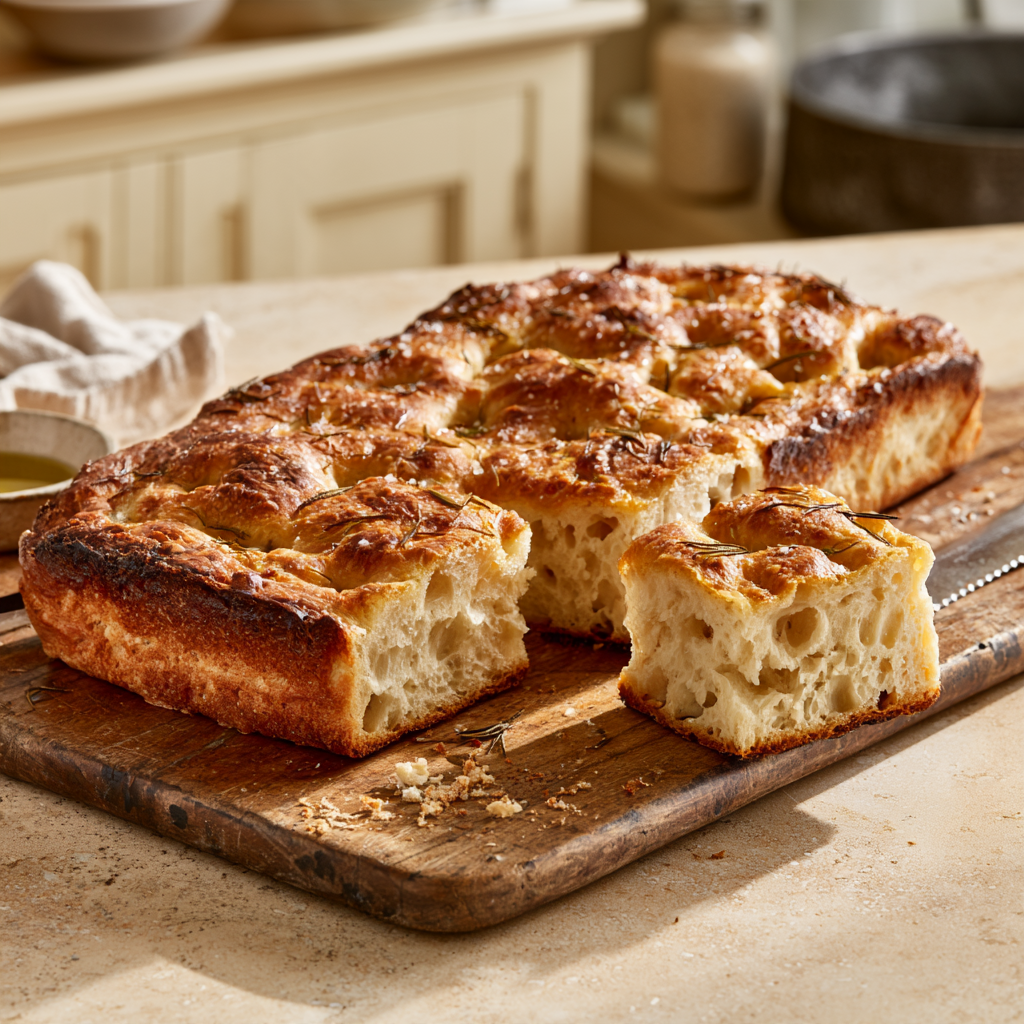
6. The Origins of Focaccia’s Famous Finger Dimples
One of the most distinctive features of focaccia is its dimpled surface.
Before baking, the dough is gently pressed with the fingertips to create small depressions across the top.
This technique helps distribute the dough within the pan while preserving much of its airy structure.
The dimples also hold olive oil, salt, and sometimes a small amount of water or brine, allowing the seasoning to settle into the bread rather than immediately sliding off.
As the focaccia bakes, these small pockets help create variations in texture across the surface.
The raised areas become golden, while the depressions retain some moisture and oil.
According to an Italian bread recipe published through the European Union’s Expo Milano materials, dimpling helps olive oil penetrate the bread and contributes to the characteristic moist texture beneath its lightly crunchy surface.
For sourdough focaccia, gentle dimpling is particularly important.
After several hours of natural fermentation, the dough may contain delicate bubbles that contribute to its light interior.
Pressing too forcefully can deflate those bubbles, while gentle, well-oiled fingertips help maintain an attractive, airy structure.
The result is the recognizable surface that makes focaccia so appealing both to eat and to photograph.
7. How Natural Fermentation Transformed Traditional Focaccia
The connection between sourdough and focaccia is particularly interesting because both traditions existed long before modern commercial yeast became common.
For much of bread-making history, natural fermentation was an ordinary way of preparing risen dough.
Commercial baker’s yeast later offered bakers a faster and more predictable leavening method, helping standardize bread production.
Today, many traditional focaccia recipes use commercial yeast, including the recognized Genoese style.
However, home bakers can also prepare focaccia using an active sourdough starter, allowing natural fermentation to provide the rise.
The process generally requires more time, but it can create a distinctive flavor profile.
During fermentation, the starter’s microorganisms produce carbon dioxide and various organic compounds that affect the dough’s aroma and taste.
These changes can contribute gently tangy notes and greater flavor complexity.
The degree of sourness depends on the starter, flour, fermentation temperature, and timing. Sourdough focaccia doesn’t need to taste strongly acidic to be properly fermented.
Importantly, the modern Sourdough Focaccia Recipe should be understood as a combination of established traditions rather than a dish with one documented inventor or a reliably established invention date.
Its defining idea is simple: apply natural sourdough leavening to the olive oil-rich, dimpled flatbread associated with Italian focaccia.
8. Traditional Focaccia vs. Sourdough Focaccia: What’s the Difference?
Although the two breads share similar ingredients and an unmistakable appearance, their leavening methods create important differences.
| Feature | Traditional commercial-yeast focaccia | Sourdough focaccia |
|---|---|---|
| Leavening | Commercial baker’s yeast | Active sourdough starter |
| Fermentation | Often relatively short | Usually longer and more variable |
| Flavor | Mild, wheaty, and olive oil-rich | Can develop deeper, gently tangy notes |
| Texture | Soft and airy when properly prepared | Soft and airy, with texture influenced by fermentation |
| Timing | Generally more predictable | Depends on starter strength and dough temperature |
| Ingredients | Flour, water, yeast, salt, olive oil | Flour, water, starter, salt, olive oil |
| Crust | Golden, often lightly crisp | Similarly golden and crisp when baked correctly |
| Best use | Snacks, sandwiches, meals | Snacks, sandwiches, meals |
Neither version is automatically superior.
Traditional focaccia offers the convenience of commercial yeast, while sourdough focaccia appeals to bakers who enjoy natural fermentation and its range of flavors.
Both can achieve a beautifully golden exterior, soft interior, and distinctive dimples when prepared properly.
9. The Evolution of Focaccia Across Italian Regions
Focaccia Genovese Liguria: Known for its golden surface, characteristic dimples, and generous use of olive oil. It is closely connected to Genoa’s everyday baking culture.
Focaccia Barese Puglia: A regional specialty often topped with tomatoes, olives, and oregano. Many preparations use a dough that includes potato, contributing to its characteristic texture.
Schiacciata Tuscany: A related flatbread tradition featuring olive oil, salt, and sometimes rosemary. The name refers to the flattened nature of the dough.
Homemade Sourdough Focaccia: A naturally fermented interpretation that often emphasizes a thicker, bubbly interior, olive oil-rich crust, and flexible toppings.
Italy’s regional bread traditions demonstrate how basic ingredients can develop into remarkably different recipes.
The breads may share flour, water, salt, and olive oil, yet regional techniques, fermentation, baking equipment, and toppings give each its own identity.
This variety is one reason focaccia continues to inspire home bakers around the world.
10. How Sourdough Focaccia Became Popular With Modern Home Bakers
In recent years, interest in homemade sourdough bread has encouraged more people to experiment with naturally fermented recipes beyond the traditional crusty loaf.
Focaccia offers an approachable alternative because it is baked in a pan and generally requires less elaborate shaping.
Unlike a freestanding sourdough boule, which often requires careful tension-building and scoring, focaccia can be gently stretched into an oiled baking dish.
The dough is usually relatively wet, allowing it to expand and develop an open, airy structure during fermentation.
Instead of complicated shaping, bakers use stretching, folding, resting, and gentle fingertip dimpling.
These methods make sourdough focaccia especially attractive to people who already maintain a starter but want a different way to use it.
Home bakers also appreciate its flexibility.
A plain version finished with olive oil and flaky sea salt is delicious on its own, while rosemary, olives, cherry tomatoes, and roasted garlic create different flavor combinations.
For bakers who enjoy experimenting with homemade bread, our 3 Ingredient Biscuit Recipe offers another approachable baking option, although its quick-bread method is very different from sourdough fermentation.
11. Why Sourdough Focaccia Has Such an Airy Texture
The soft, bubbly interior is one of the reasons this bread has become so recognizable.
Several baking principles contribute to its distinctive structure.
First, many sourdough focaccia recipes use relatively high hydration, meaning the dough contains a generous proportion of water compared with flour.
This helps create a soft, extensible dough that can expand during fermentation.
Second, an active starter supplies microorganisms that ferment the dough and produce carbon dioxide.
The gas becomes trapped within the gluten network, forming bubbles that can expand further during baking.
Third, gentle handling helps preserve these bubbles.
Stretch-and-fold techniques strengthen the dough while limiting the need for aggressive kneading.
Finally, olive oil influences the surface and eating quality, helping produce a flavorful exterior that contrasts with the soft crumb.
However, natural fermentation does not guarantee an exceptionally open crumb. Starter activity, flour strength, hydration, temperature, fermentation time, and handling must work together.
Under-fermented dough may bake into dense bread, while excessively fermented dough can lose strength and collapse.
The best sourdough focaccia balances adequate dough development with gentle handling and appropriate proofing.
12. Why Sourdough Focaccia Remains a Timeless Homemade Bread
The enduring appeal of the Sourdough Focaccia Recipe comes from how successfully it combines tradition with creativity.
At its heart, this bread relies on simple ingredients: flour, water, salt, olive oil, and an active sourdough starter.
Yet small changes in fermentation, hydration, toppings, and baking techniques produce a remarkable variety of results.
Its history connects ancient hearth-baked flatbreads with the culinary heritage of Genoa and the centuries-old practice of naturally leavening dough.
Modern home bakers continue those traditions whenever they feed a starter, stretch a soft dough, press dimples into its surface, and bake it until golden.
Sourdough focaccia is also wonderfully versatile at the table.
It can be served warm alongside soups and salads, sliced horizontally for sandwiches, used to accompany roasted vegetables, or enjoyed on its own with a little extra-virgin olive oil.
For special occasions, the dough can be decorated with cherry tomatoes, rosemary, olives, or other savory toppings.
For everyday meals, a simple rosemary-and-sea-salt version is often all you need.
Final Thoughts: The Timeless Origins of Sourdough Focaccia Recipe
The history of the Sourdough Focaccia Recipe is a beautiful meeting of two ancient baking traditions: Italian flatbread and natural sourdough fermentation.
Focaccia’s roots reach into the hearth-baking cultures of the Mediterranean, while its modern identity is especially associated with the olive oil-rich breads of Liguria and Genoa.
Sourdough fermentation, meanwhile, has been practiced for thousands of years, long before packaged baker’s yeast became available.
By combining these traditions, modern home bakers can produce bread with complex flavor, a soft, airy interior, characteristic dimples, and a golden olive oil crust.
Although there is no single historically documented inventor of sourdough focaccia, its appeal lies in that continuing tradition of adapting simple ingredients and techniques.
Whether topped with rosemary, flaky sea salt, olives, or roasted garlic, homemade sourdough focaccia celebrates the timeless pleasure of freshly baked bread.
OoohDelish Baking Secret: For a beautifully airy Sourdough Focaccia Recipe, begin with an active, bubbly sourdough starter, allow the dough to ferment until visibly expanded, and handle it gently to preserve its natural gas bubbles. Use generous olive oil in the pan and on the surface, press deep but careful dimples with oiled fingertips, and bake until the crust is richly golden and the underside is properly browned. The result is a delicious contrast of crispy edges, tender crumb, and rich Mediterranean flavor.
Health Benefits of Sourdough Focaccia Recipe: Nutrition, Natural Fermentation, and Wholesome Ingredients
A freshly baked Sourdough Focaccia Recipe offers more than the irresistible combination of a golden, crispy crust, fluffy interior, fragrant rosemary, and rich extra-virgin olive oil. Behind its delicious Mediterranean flavors lies a traditional bread-making process that can influence the nutritional characteristics of the finished loaf. Made with an active sourdough starter, flour, water, olive oil, and sea salt, homemade sourdough focaccia combines naturally fermented bread with simple ingredients that can fit into a balanced, varied diet.
One of the most interesting aspects of sourdough focaccia is its fermentation process. Unlike conventional focaccia made with commercial baker’s yeast, sourdough relies on a living culture of yeasts and lactic acid bacteria. As these microorganisms ferment the dough, they produce organic acids, influence flavor development, and modify certain compounds naturally present in flour. Depending on fermentation conditions, this process may reduce some fermentable carbohydrates and phytic acid, potentially affecting digestibility and mineral availability.
Another important ingredient is extra-virgin olive oil, which provides monounsaturated fats and contributes to the bread’s beautifully crisp, golden exterior. When combined with whole-grain flour, aromatic herbs, and nutritious toppings, a homemade Sourdough Focaccia Recipe can also offer fiber, small amounts of minerals, and additional plant-based nutrients.
However, it’s important to understand that sourdough focaccia remains a bread-based food. It provides carbohydrates and calories, and its nutritional value varies considerably according to the type of flour, amount of olive oil, salt content, fermentation time, and serving size. Natural fermentation does not automatically make focaccia low in carbohydrates, gluten-free, or suitable for every dietary requirement.
Let’s explore the genuine potential health benefits of homemade sourdough focaccia, how its ingredients contribute to nutrition, and the practical ways you can make this classic Italian-inspired bread a nourishing addition to your meals.
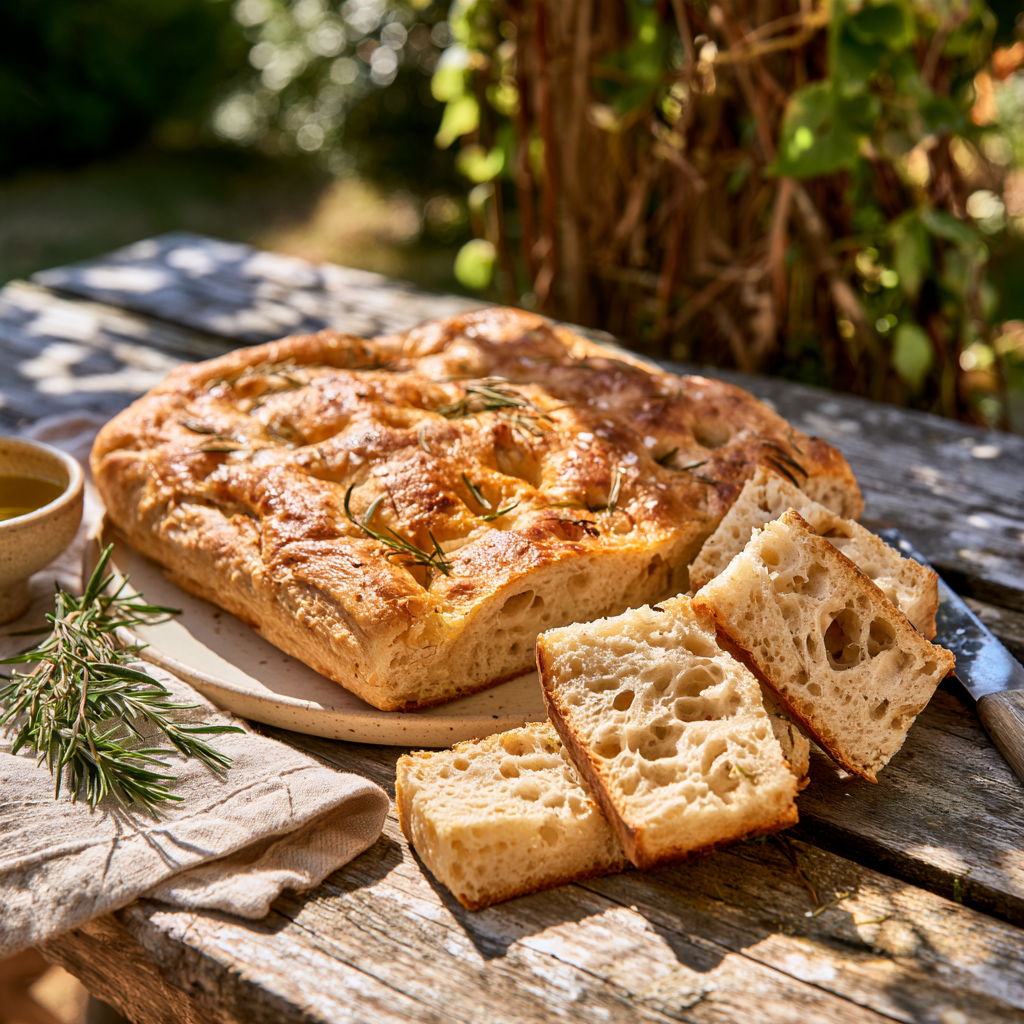
Nutritional Benefits of Sourdough Focaccia Recipe Ingredients
The nutritional profile of homemade sourdough focaccia depends on a handful of ingredients, each contributing to the flavor, texture, and nutritional composition of the finished bread.
| Ingredient | Main nutrients or characteristics | Potential nutritional benefits |
|---|---|---|
| Active sourdough starter | Naturally occurring yeasts and lactic acid bacteria | Fermentation can alter certain flour compounds and develop organic acids. |
| Bread flour | Carbohydrates, protein, some B vitamins and iron when enriched | Provides dietary energy and supports bread structure. |
| Whole-wheat flour (optional) | Fiber, magnesium, B vitamins, phosphorus | Increases whole-grain and fiber content compared with refined white flour. |
| Extra-virgin olive oil | Monounsaturated fats, vitamin E, phenolic compounds | Provides unsaturated fats and enhances flavor and texture. |
| Sea salt | Sodium | Supports flavor and dough structure but should be used in moderation. |
| Fresh rosemary | Aromatic compounds and small amounts of micronutrients | Adds flavor without substantial sugar or calories. |
| Cherry tomatoes (optional) | Vitamin C, potassium, lycopene | Introduces additional vegetable nutrients and color. |
| Olives (optional) | Unsaturated fats and plant compounds | Add Mediterranean flavor, although cured olives can be high in sodium. |
| Roasted garlic (optional) | Small amounts of minerals and plant compounds | Adds savory flavor with little additional fat. |
1. Natural Sourdough Fermentation May Improve Mineral Availability
One of the most scientifically interesting characteristics of a Sourdough Focaccia Recipe is what happens to flour during fermentation.
Wheat naturally contains minerals such as iron, magnesium, zinc, and phosphorus. However, it also contains phytic acid, a compound that can bind certain minerals and influence their availability for absorption.
During sourdough fermentation, acidity and enzyme activity can contribute to the breakdown of phytates.
This process may increase the proportion of some minerals that are potentially available for absorption during digestion.
The extent of phytate reduction depends on several factors, including the flour type, fermentation temperature, starter microorganisms, acidity, and overall fermentation duration.
A 2026 systematic review of human intervention studies found evidence that phytate reduction during sourdough fermentation can improve short-term non-heme iron availability in some settings. However, these results did not consistently translate into improved long-term iron status.
That distinction matters: improved mineral availability in bread does not necessarily mean that regularly eating sourdough focaccia will prevent mineral deficiencies.
For home bakers, the practical takeaway is that natural fermentation can change how certain nutrients interact with the dough, making it an interesting traditional preparation method.
Choosing a combination of refined and whole-grain flour can also increase the variety of minerals available in the finished bread.
2. Sourdough Fermentation May Affect Digestive Comfort
Another reason many people are interested in sourdough bread is its potential influence on digestion.
Sourdough starters contain yeasts and lactic acid bacteria that ferment some carbohydrates naturally present in flour.
These microorganisms can affect certain fermentable carbohydrates, including fructans, which belong to a group commonly known as FODMAPs.
For some individuals, fructans contribute to digestive discomfort, particularly when consumed in substantial quantities.
Under appropriate fermentation conditions, the breakdown of some fructans may change how a sourdough bread is tolerated.
However, this benefit isn’t guaranteed.
Different starters, flour varieties, fermentation methods, and baking conditions can produce breads with considerably different compositions.
A 2023 systematic review concluded that certain sourdough preparations show promise for gastrointestinal comfort, but the evidence is not consistent enough to say that all sourdough breads are easier to digest than conventionally fermented bread.
For homemade sourdough focaccia, using a properly maintained starter and allowing sufficient fermentation are important for flavor and dough quality.
Nevertheless, people with digestive sensitivities should judge tolerance individually rather than assuming that a long fermentation automatically makes bread symptom-free.
3. Extra-Virgin Olive Oil Provides Heart-Friendly Unsaturated Fats
One of the defining features of a classic Sourdough Focaccia Recipe is its generous use of extra-virgin olive oil.
Olive oil contributes the bread’s rich flavor, tender crumb, and deliciously crisp surface.
Nutritionally, it contains predominantly monounsaturated fatty acids, particularly oleic acid.
Replacing foods high in saturated fat with sources of unsaturated fat can help improve blood lipid profiles and support cardiovascular health as part of a balanced dietary pattern.
Extra-virgin olive oil also contains vitamin E and naturally occurring phenolic compounds, although amounts vary by variety, processing method, storage, and serving size.
Its role in Mediterranean dietary patterns has made olive oil an important subject of nutrition research.
However, olive oil remains calorie-dense, supplying approximately 120 calories per tablespoon.
Adding more olive oil to focaccia can enhance its flavor and texture, but it also increases the calorie content of each slice.
The goal is to use enough for a delicious crust and pleasant mouthfeel without assuming that unlimited quantities provide additional health benefits.
For a classic homemade version, spread the oil evenly across the pan and dough surface to create the characteristic golden finish.
4. Whole-Grain Sourdough Focaccia Can Provide More Dietary Fiber
Traditional focaccia is often prepared using refined wheat flour because it produces a soft, stretchy dough and a beautifully airy interior.
While refined flour supplies carbohydrates and protein, it generally contains less dietary fiber than whole-wheat flour.
Replacing a portion of the refined flour with whole-wheat flour can improve the fiber content of homemade sourdough focaccia.
Dietary fiber supports normal bowel function and contributes to an overall healthy dietary pattern.
Some types of fiber also help support cholesterol management and influence the rate at which carbohydrates are digested.
Whole-grain flour additionally provides naturally occurring minerals and B vitamins.
However, incorporating whole-wheat flour changes how the dough behaves.
Whole-wheat flour contains bran and germ, which absorb water differently and can affect the development of the gluten network.
As a result, an entirely whole-wheat focaccia may feel denser than one prepared with bread flour.
For a practical compromise, consider replacing approximately 20–30% of the bread flour with whole-wheat flour, then adjusting the water and fermentation as necessary.
This allows you to enjoy some additional whole-grain benefits while maintaining much of the soft, airy texture associated with focaccia.
5. Sourdough Focaccia Provides Carbohydrates for Everyday Energy
Bread is a significant source of carbohydrates, and sourdough focaccia is no exception.
Carbohydrates are broken down into glucose, which the body uses to support normal physiological processes and physical activity.
For people with active lifestyles, carbohydrate-containing foods can contribute to overall energy needs.
The main source of carbohydrates in a Sourdough Focaccia Recipe is wheat flour.
Sourdough fermentation consumes some of the carbohydrates present in the dough, but it does not remove most of the starch.
Consequently, sourdough focaccia is not a low-carbohydrate food simply because it has been naturally fermented.
The carbohydrate content also depends on slice size.
A small square of focaccia may fit comfortably into a meal, while several large pieces can provide a substantial amount of energy.
If you are serving focaccia as part of lunch or dinner, pairing it with vegetables and a protein source can create a more nutritionally varied meal.
For example, a slice of rosemary focaccia alongside grilled fish and a tomato salad offers carbohydrates, protein, unsaturated fats, and vegetable nutrients.
6. Homemade Sourdough Focaccia Allows Better Control Over Ingredients
One of the greatest practical advantages of baking sourdough focaccia at home is knowing exactly what goes into the dough.
A traditional recipe requires only a few ingredients: flour, water, active sourdough starter, olive oil, and salt.
You don’t need added sugar to make a flavorful focaccia, and commercial bread improvers or preservatives are generally unnecessary for a straightforward homemade version.
This simplicity allows you to choose the type of flour, amount of olive oil, salt quantity, and toppings.
You can also decide whether to incorporate whole grains, fresh herbs, vegetables, or other ingredients.
For people who enjoy making bread regularly, homemade baking provides an opportunity to understand how fermentation, hydration, and ingredients affect the finished loaf.
However, homemade bread is not automatically healthier than every store-bought option.
The nutritional profile still depends on the recipe, portion size, and ingredient proportions.
A heavily oiled homemade focaccia can contain more calories than some commercially prepared breads, while a thoughtfully formulated store-bought whole-grain loaf may provide more fiber.
The advantage of homemade preparation is greater control, transparency, and flexibility.
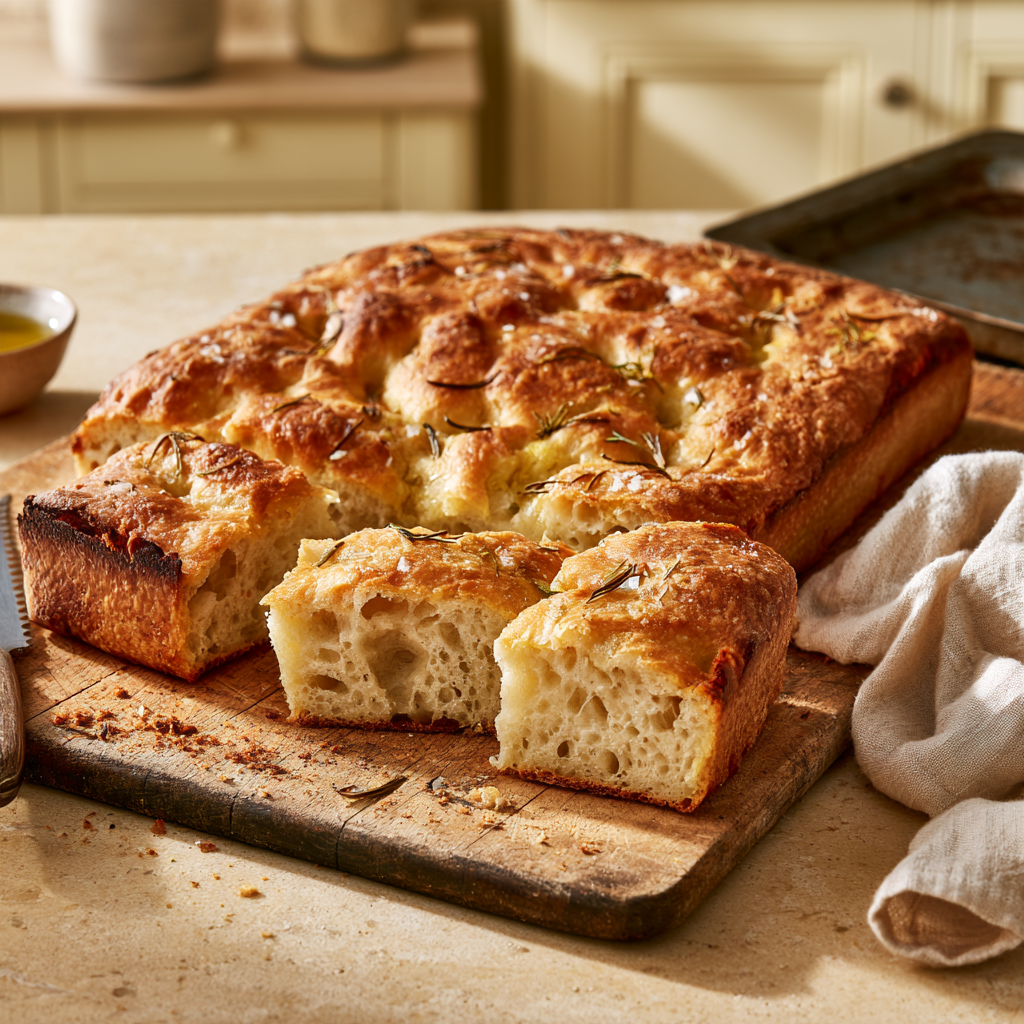
7. Rosemary Adds Mediterranean Flavor Without Added Sugar
Rosemary is one of the most traditional and recognizable toppings for focaccia.
Its fragrant, slightly pine-like aroma complements the richness of extra-virgin olive oil and the gentle acidity of fermented dough.
Rosemary contains a variety of naturally occurring plant compounds, including rosmarinic acid and other phenolic substances.
These compounds have been studied for their biological properties, but the small amount of rosemary sprinkled over a loaf of bread does not provide established medical benefits.
The primary advantage of rosemary in focaccia is its ability to add flavor without requiring extra sugar or large amounts of salt.
Fresh rosemary is especially appealing because its leaves release a warm, herbal aroma during baking.
For best results, use tender rosemary leaves, distribute them evenly across the dough, and lightly coat them with olive oil so they are less likely to dry out or scorch.
You can also experiment with thyme, oregano, or a small amount of fresh garlic for different Mediterranean-inspired flavors.
8. Sourdough Focaccia May Produce a Different Blood Sugar Response, but Results Vary
One commonly repeated claim about sourdough bread is that it always has a lower glycemic index than conventional bread.
The actual evidence is more complicated.
Sourdough fermentation changes the dough’s acidity and certain carbohydrate-related characteristics, potentially influencing how starch is digested.
However, the glycemic response to sourdough depends on flour type, bread structure, fermentation conditions, portion size, and individual physiology.
A 2026 systematic review examining sourdough and conventional yeast-fermented breads found that available evidence was insufficient to establish a consistent advantage of sourdough for post-meal blood glucose and insulin responses in healthy individuals.
This means sourdough focaccia should not be described as a guaranteed blood-sugar-friendly bread or as an appropriate treatment for diabetes.
It still contains substantial carbohydrates.
For people managing blood glucose, serving size and the overall composition of the meal remain important.
Choosing some whole-grain flour and pairing focaccia with vegetables and protein are practical ways to improve the nutritional balance of a meal.
9. Vegetable Toppings Can Increase Nutritional Variety
Cherry Tomato Focaccia: Cherry tomatoes provide color, vitamin C, potassium, and lycopene. Their natural acidity complements the richness of olive oil and bread.
Olive and Rosemary Focaccia: Olives contribute flavor and unsaturated fats. Because cured olives can be salty, consider reducing the additional flaky salt.
Roasted Garlic Focaccia: Roasted garlic adds a mellow savory sweetness and helps create a flavorful topping without needing much additional seasoning.
One of the most enjoyable aspects of homemade focaccia is the ability to use seasonal vegetables and herbs.
Thinly sliced onions, cherry tomatoes, roasted peppers, olives, and fresh herbs can transform a plain loaf into a colorful Mediterranean-style bread.
These additions introduce small amounts of vitamins, minerals, and plant compounds.
However, a few cherry tomatoes scattered over the surface won’t turn focaccia into a full serving of vegetables.
For a more balanced meal, serve the bread alongside a generous salad or cooked vegetable dish.
That approach allows you to enjoy focaccia’s rich olive oil flavor while incorporating more plant foods into the overall meal.
10. Sourdough Focaccia Can Be Part of a Mediterranean-Style Eating Pattern
The Mediterranean-style dietary pattern emphasizes foods such as vegetables, fruits, whole grains, legumes, nuts, olive oil, and fish.
Sourdough focaccia shares several ingredients with Mediterranean culinary traditions, particularly wheat flour, olive oil, and aromatic herbs.
However, eating focaccia alone does not provide the full range of benefits associated with a Mediterranean-style diet.
Those benefits are linked to the broader eating pattern rather than a single bread.
A simple way to enjoy sourdough focaccia in this context is to combine it with nutrient-rich foods.
For example, serve a moderate slice alongside grilled fish, a white bean salad, or a plate of roasted vegetables.
You can also prepare a focaccia sandwich filled with tomato, lettuce, and a suitable protein source.
These combinations add nutritional variety and help make the bread part of a satisfying meal rather than relying on it as the main source of nutrients.
Sourdough Focaccia Recipe Nutrition: What Does One Slice Contain?
The nutritional content of sourdough focaccia varies with its hydration, flour composition, amount of olive oil, and portion size.
A thick, heavily oiled slice may contain considerably more calories than a smaller piece prepared with moderate oil.
The following table provides an illustrative estimate for one medium slice of homemade focaccia, approximately 75–85 g, made primarily with bread flour, active sourdough starter, water, olive oil, and salt.
| Nutrient | Approximate amount per slice |
|---|---|
| Calories | 210–260 kcal |
| Carbohydrates | 32–38 g |
| Protein | 5–7 g |
| Total Fat | 6–10 g |
| Saturated Fat | 0.9–1.5 g |
| Dietary Fiber | 1–2 g |
| Sodium | 300–500 mg |
| Total Sugars | 0.5–2 g |
| Iron | Varies by flour enrichment |
| Potassium | Approximately 50–100 mg |
These are broad estimates for a representative recipe, not laboratory measurements or calculations from a finalized OoohDelish recipe card. Exact nutrient values should be calculated using the finished recipe’s ingredient weights, serving yield, and ingredient labels.
Is Sourdough Focaccia Healthier Than Regular Focaccia?
Sourdough and conventional focaccia share many of the same ingredients, but they use different leavening methods.
The sourdough version relies on naturally occurring yeasts and lactic acid bacteria, while conventional focaccia typically uses commercial baker’s yeast.
This difference can influence fermentation time, flavor development, dough acidity, and the breakdown of certain flour compounds.
However, both types can contain similar amounts of carbohydrates, fat, and calories when prepared using comparable recipes.
| Feature | Sourdough focaccia | Regular focaccia |
|---|---|---|
| Leavening | Active sourdough starter | Commercial baker’s yeast |
| Fermentation | Usually longer and more variable | Often shorter and more predictable |
| Flavor | Can develop gently tangy, complex notes | Typically mild and wheaty |
| Carbohydrates | Substantial | Substantial |
| Fiber | Depends primarily on flour choice | Depends primarily on flour choice |
| Mineral availability | Fermentation may influence phytate breakdown | Also affected by fermentation and processing |
| Gluten-free | No, when made with wheat | No, when made with wheat |
| Overall nutritional value | Depends on ingredients and portions | Depends on ingredients and portions |
Neither type should automatically be considered healthier.
If you enjoy natural fermentation, sourdough focaccia is a flavorful option. If you prefer a quicker preparation, conventional yeast focaccia can also fit into a balanced diet.
8 Practical Ways to Make Sourdough Focaccia Healthier
Small ingredient adjustments can improve the nutritional quality of homemade focaccia without losing the soft interior and beautifully crisp crust that make it so enjoyable.
| Adjustment | Potential benefit | Practical baking advice |
|---|---|---|
| Replace 20–30% of bread flour with whole-wheat flour | Increases fiber and whole-grain content | Adjust hydration as needed |
| Use measured extra-virgin olive oil | Provides unsaturated fat while controlling calories | Distribute evenly rather than pouring excessively |
| Reduce excess flaky salt | Helps moderate sodium intake | Use rosemary, thyme, or garlic for flavor |
| Add cherry tomatoes | Introduces plant nutrients | Press gently into the dough before baking |
| Add roasted garlic | Enhances savory flavor | Use well-drained, fully cooked garlic |
| Include fresh herbs | Adds flavor without much sugar or fat | Coat delicate herbs lightly with oil |
| Cut focaccia into moderate portions | Makes energy intake easier to manage | Serve with protein and vegetables |
| Use an active starter and proper fermentation | Supports consistent bread quality | Ferment according to dough activity, not the clock alone |
Is Sourdough Focaccia Good for Gut Health?
Sourdough fermentation is often discussed in connection with gut health because the starter contains yeasts and lactic acid bacteria.
During fermentation, these microorganisms influence the dough’s acidity and may break down certain carbohydrates.
However, baked sourdough focaccia is not generally a probiotic food. The high temperatures reached during baking kill or inactivate most of the starter microorganisms.
The potential digestive effects of sourdough therefore relate mainly to changes produced during fermentation rather than consuming living probiotic cultures in the baked bread.
If you want to support digestive health more broadly, the fiber content of your diet is especially important.
Using some whole-grain flour and serving focaccia with vegetables, legumes, and other fiber-containing foods can help create a more varied meal.
Is Sourdough Focaccia Gluten-Free?
No. A traditional Sourdough Focaccia Recipe made with wheat flour contains gluten.
Although sourdough fermentation can modify some gluten proteins, ordinary wheat-based sourdough does not become gluten-free.
People with celiac disease should not consume conventional wheat sourdough focaccia.
A gluten-free variation requires appropriate gluten-free flours, a gluten-free starter, and careful prevention of cross-contact. Because gluten-free dough behaves differently, it also requires a recipe formulated specifically for those ingredients.
Can Sourdough Focaccia Help With Weight Management?
Sourdough focaccia can fit into an eating pattern designed for weight management, but it is not inherently a weight-loss food.
Its calorie content comes primarily from flour and olive oil.
A moderate slice served with lean protein and vegetables can be part of a satisfying meal.
For example, pairing focaccia with grilled chicken, fish, beans, or a vegetable-rich salad adds nutritional variety.
Replacing part of the refined flour with whole-wheat flour may also increase fiber, which can contribute to fullness.
However, portion size and overall dietary patterns remain more important than whether the bread is naturally fermented.
Can You Eat Sourdough Focaccia Every Day?
Sourdough focaccia can be enjoyed regularly as part of a varied eating pattern, depending on your energy needs, dietary requirements, and the rest of your meals.
If you eat it frequently, consider preparing it with some whole-grain flour and a measured quantity of olive oil.
Pay attention to sodium, particularly when using flaky sea salt and salty toppings such as olives.
Alternating focaccia with other whole-grain foods can also help introduce more variety into your diet.
The key is balancing your bread intake with vegetables, fruits, legumes, protein-rich foods, and other nutrient-dense ingredients.
The Healthiest Way to Serve Homemade Sourdough Focaccia
A delicious slice of sourdough focaccia can become part of a nutritionally balanced meal with just a few thoughtful additions.
With a Mediterranean Salad: Pair focaccia with tomatoes, cucumber, leafy greens, and a light olive oil dressing. Add chickpeas or another protein source for a more substantial meal.
Alongside Vegetable and Bean Soup: Serve a moderate slice with a vegetable-rich soup containing beans or lentils for added fiber and protein.
As a Homemade Sandwich: Slice the focaccia horizontally and fill it with grilled chicken, fresh tomatoes, lettuce, and a modest amount of sauce for a satisfying lunch.
These combinations allow the focaccia to contribute flavor and carbohydrates while the rest of the meal supplies protein, fiber, and additional vitamins and minerals.
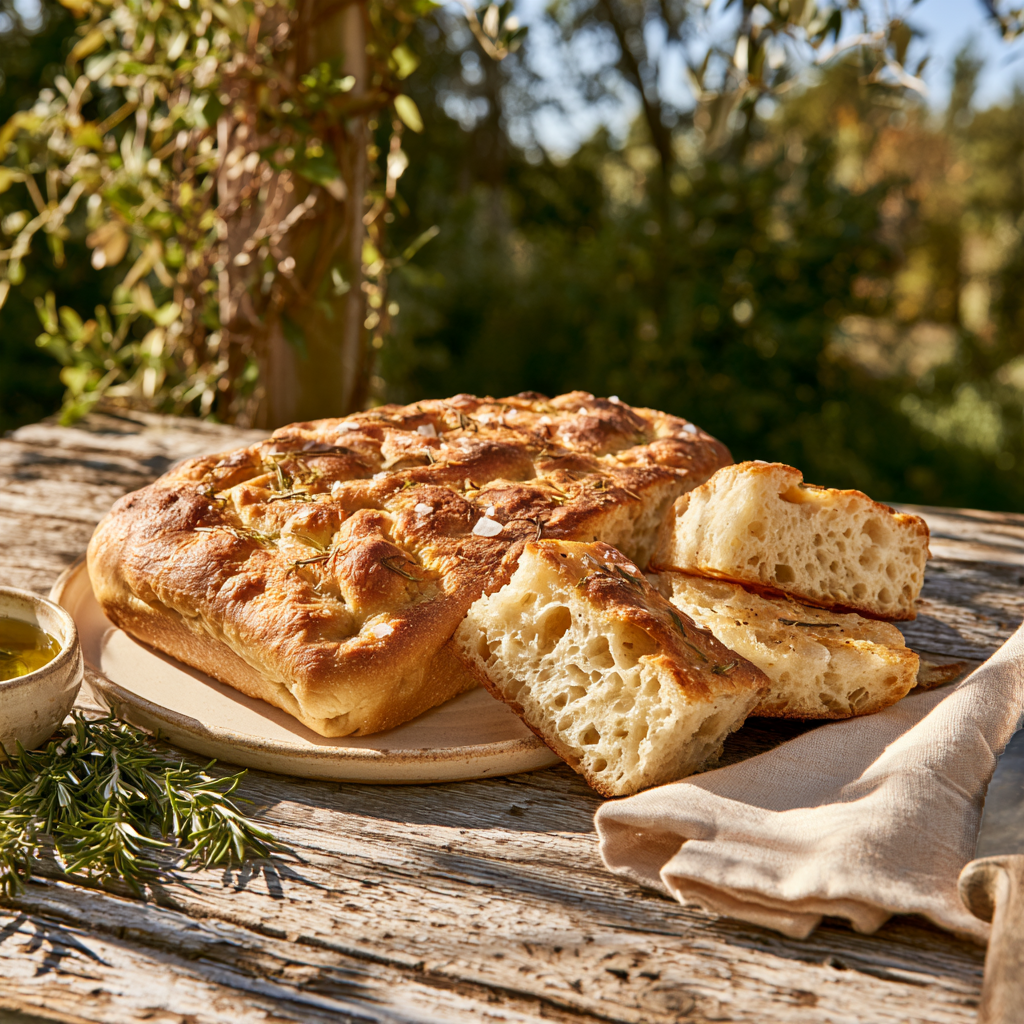
Final Thoughts: Is Sourdough Focaccia Recipe Healthy?
A homemade Sourdough Focaccia Recipe can be a delicious part of a balanced eating pattern, particularly when prepared with thoughtfully selected ingredients.
Natural sourdough fermentation changes the dough in ways that may influence mineral availability and the breakdown of certain carbohydrates, although clinical evidence does not establish that every sourdough bread provides superior health outcomes.
Extra-virgin olive oil contributes predominantly monounsaturated fats, while incorporating whole-grain flour can increase the bread’s fiber and nutrient content.
Fresh herbs, cherry tomatoes, roasted garlic, and other Mediterranean-inspired toppings provide additional flavor and some nutritional variety.
The most meaningful advantage of baking sourdough focaccia at home is the ability to control the ingredients, fermentation, olive oil, salt, and portion size.
Whether you enjoy it as a simple rosemary bread, a colorful tomato-topped focaccia, or a hearty sandwich, the best approach is to serve it alongside other nutritious foods and appreciate it as part of a varied diet.
OoohDelish Healthy Baking Tip: For a more balanced homemade Sourdough Focaccia Recipe, replace approximately 20–25% of the bread flour with whole-wheat flour, use a measured amount of extra-virgin olive oil, and flavor the surface with fresh rosemary, cherry tomatoes, and a moderate sprinkle of flaky sea salt. Allow the dough to ferment properly, bake until golden, and serve with a vegetable-rich meal and a protein source.
OoohDelish Nutrition Disclaimer: This section provides general nutritional information for educational purposes. Actual nutrient values depend on ingredients, fermentation conditions, portion sizes, and preparation methods. Sourdough focaccia is not gluten-free when prepared with wheat, and sourdough fermentation should not be considered a treatment for digestive disorders, diabetes, or other medical conditions.
Why You Should Try This Sourdough Focaccia Recipe: 12 Delicious Reasons to Bake It at Home
There’s something incredibly satisfying about baking your own Sourdough Focaccia Recipe, especially when the result is a beautifully golden loaf with crispy olive oil-soaked edges, a soft and airy interior, and the wonderful aroma of fresh rosemary filling your kitchen. Unlike ordinary sandwich bread, sourdough focaccia has a distinctive combination of textures: a lightly crunchy surface, a tender, bubbly crumb, and those irresistible fingertip dimples that hold flavorful olive oil and herbs.
What makes this homemade Sourdough Focaccia Recipe particularly special is its natural fermentation. Instead of relying on commercial yeast, the dough rises with the help of an active sourdough starter, developing a deliciously complex flavor with gentle tangy notes. The longer fermentation also gives the dough time to develop its structure, creating the beautiful air pockets that make homemade focaccia so enjoyable.
Even if you’ve never made focaccia before, this Italian-inspired bread is surprisingly approachable. There’s no need for complicated shaping, decorative scoring, or expensive bakery equipment. With a mixing bowl, an oiled baking pan, and a little patience, you can transform simple ingredients into an impressive homemade bread.
Whether you want a delicious accompaniment to homemade soup, a flavorful base for sandwiches, or a beautiful bread to share at a family gathering, sourdough focaccia offers endless possibilities.
Here are twelve reasons why this easy Sourdough Focaccia Recipe deserves a place in your homemade bread collection.
1. It Has an Irresistible Combination of Crispy Edges and a Soft, Airy Center
One of the biggest reasons to try this Sourdough Focaccia Recipe is its incredible texture.
A well-made focaccia has a beautifully golden exterior, a soft and tender interior, and a network of irregular air bubbles throughout the crumb.
The olive oil used in the baking pan helps the bottom and sides develop a lightly fried, wonderfully crisp texture.
Meanwhile, the relatively high hydration of the dough helps maintain a soft interior.
When you bite into a piece, the contrast is immediately noticeable: a delicate crunch on the outside followed by fluffy, moist bread inside.
Unlike a thin cracker-style flatbread, a thicker homemade sourdough focaccia offers a satisfying combination of chewiness and tenderness.
The secret is allowing the dough to ferment sufficiently and handling it gently once it has developed its bubbles.
Pressing the dough too aggressively after fermentation can release trapped gas and reduce the airy texture.
Baking in a thoroughly preheated oven also helps the loaf expand and develop its golden surface.
Why you’ll love it: Every bite offers a combination of crisp, olive oil-rich crust and soft, fluffy bread that makes homemade focaccia hard to resist.
2. Natural Sourdough Fermentation Creates a More Complex Flavor
One of the features that distinguishes sourdough focaccia from many quick yeast-based versions is its fermentation method.
Instead of adding packaged baker’s yeast, this bread uses an active sourdough starter containing naturally occurring yeasts and lactic acid bacteria.
As the dough ferments, these microorganisms produce carbon dioxide and organic compounds that influence the bread’s flavor and aroma.
The result can be a pleasantly complex flavor with mild tanginess, wheaty notes, and a subtle fermented character.
This flavor works particularly well with extra-virgin olive oil.
The richness of the oil balances the gentle acidity of the sourdough, while toppings such as rosemary and sea salt add aromatic contrast.
The intensity of the sourdough flavor depends on several factors, including starter activity, fermentation temperature, flour choice, and fermentation duration.
Longer fermentation does not automatically mean better flavor. Dough that ferments excessively may become overly acidic, sticky, or structurally weak.
The goal is to develop the dough until it is sufficiently risen and flavorful without allowing it to collapse.
For people who enjoy the taste of artisan bread, naturally fermented focaccia offers a wonderful alternative to conventional yeast breads.
Why you’ll love it: Sourdough fermentation introduces subtle layers of flavor that make the finished focaccia delicious even with simple toppings.
3. It’s Easier to Shape Than Many Traditional Sourdough Loaves
Many home bakers feel intimidated by sourdough bread because they associate it with complicated shaping techniques, bannetons, scoring tools, and Dutch ovens.
Fortunately, a homemade Sourdough Focaccia Recipe is often more forgiving in its shaping requirements.
Instead of forming a freestanding round or oval loaf, you gently transfer the dough into an olive oil-coated baking pan.
The pan supports the dough as it spreads, proofs, and bakes.
You don’t need to create the same degree of surface tension required for a traditional sourdough boule.
There’s also no need to score the top with a razor blade.
Instead, you create the distinctive focaccia appearance by gently pressing your fingertips into the dough before baking.
These dimples help distribute the dough across the pan and create little pockets for olive oil and seasonings.
Although proper fermentation and gluten development are still important, the pan-baking method removes some of the more demanding shaping steps associated with traditional artisan sourdough loaves.
If you’re just beginning your sourdough journey, focaccia can be an enjoyable way to practice fermentation without worrying about achieving a perfectly shaped freestanding loaf.
Why you’ll love it: You can make beautiful artisan-style sourdough bread without mastering advanced loaf shaping or decorative scoring.
4. You Only Need a Few Simple Pantry Ingredients
Another wonderful reason to try a homemade Sourdough Focaccia Recipe is its short ingredient list.
Most basic sourdough focaccia doughs require flour, water, an active sourdough starter, salt, and olive oil.
Rosemary or other toppings can be added according to your preferences.
Each ingredient plays an important role in producing the finished loaf.
| Ingredient | What it contributes |
|---|---|
| Bread flour | Helps form a strong gluten network that supports the airy crumb |
| Water | Hydrates the flour and creates the soft, extensible dough |
| Active sourdough starter | Provides natural leavening and fermentation flavor |
| Extra-virgin olive oil | Adds flavor, tenderness, and beautifully crisp edges |
| Fine salt | Balances flavor and influences dough properties |
| Fresh rosemary | Adds a fragrant, traditional Mediterranean finish |
| Flaky sea salt | Creates little bursts of seasoning on the surface |
You don’t need specialty flavorings or complicated additives.
With good ingredients and careful fermentation, a simple rosemary-and-sea-salt focaccia can be just as enjoyable as a version covered with elaborate toppings.
If you’re interested in comparing bread-making methods, our Easy and Quick Focaccia Recipe uses commercial yeast for a faster approach, while this sourdough version relies on natural fermentation.
Why you’ll love it: Everyday ingredients can become a delicious, bakery-style loaf without complicated preparation.
5. The Dough Requires Minimal Traditional Kneading
Another appealing feature of sourdough focaccia is that many recipes can be prepared without extended kneading.
Because focaccia dough is often relatively wet, bakers commonly develop its structure using a series of gentle stretches and folds.
Rather than repeatedly kneading the dough against a countertop, you allow it to rest and periodically fold it over itself.
These folds help organize and strengthen the gluten network.
As the dough rests, the flour continues absorbing water, making the mixture more cohesive and elastic.
Over time, a shaggy dough can develop into a smoother, more extensible dough that holds fermentation bubbles more effectively.
This doesn’t mean that every sourdough focaccia recipe is completely hands-off.
You still need to pay attention to dough consistency, fermentation, and handling.
However, the active preparation is often distributed across short intervals rather than one long kneading session.
For home bakers who prefer a relaxed bread-making process, this approach can be especially convenient.
Why you’ll love it: You can develop a soft, airy sourdough bread using short stretches and folds instead of strenuous kneading.
6. It’s an Excellent Way to Use Your Active Sourdough Starter
If you regularly maintain a sourdough starter, you know how rewarding it can be to find different ways to use it.
A Sourdough Focaccia Recipe provides a delicious alternative to baking traditional sourdough loaves.
Using an active, recently fed starter helps the dough rise naturally without added commercial yeast.
An established starter should show predictable activity, including visible bubbles and expansion after feeding.
For the best results, use it when it is active and near its expected peak, according to your usual feeding schedule.
A starter that is weak or underfed may produce a much slower rise and a denser loaf.
Unlike some sourdough discard recipes, a naturally leavened focaccia depends on the starter’s ability to ferment and raise the dough.
Unfed discard is not a reliable direct substitute unless the recipe also includes another leavening method.
Focaccia allows you to enjoy the flavor of naturally fermented bread while experimenting with a different texture and presentation.
It also helps you become more familiar with how your starter behaves in wetter doughs.
Why you’ll love it: Your sourdough starter becomes the foundation for a completely different bread experience, expanding the variety of homemade recipes you can bake.
7. You Can Customize It With Endless Delicious Toppings
One of the most exciting features of sourdough focaccia is the opportunity to create different flavors using the same basic dough.
A plain version with rosemary, olive oil, and flaky sea salt is a classic choice, but the possibilities extend much further.
Rosemary and Sea Salt Focaccia: The timeless classic. Fresh rosemary adds fragrant herbal flavor, while flaky sea salt enhances the richness of the olive oil and naturally fermented dough.
Cherry Tomato and Oregano Focaccia: Press halved cherry tomatoes gently into the dough and scatter oregano over the surface. The tomatoes become tender and slightly concentrated during baking, adding delicious Mediterranean flavor.
Roasted Garlic and Herb Focaccia: Add small pieces of fully roasted garlic and fresh herbs for a rich, savory variation. Use garlic that has been cooked and stored safely, and avoid leaving homemade garlic-in-oil preparations at room temperature.
Olive and Rosemary Focaccia: Scatter pitted green or black olives across the surface for a savory, Mediterranean-inspired topping. Reduce the flaky salt slightly because cured olives already contribute saltiness.
You can also experiment with caramelized onions, roasted peppers, thyme, or finely grated cheese.
When introducing toppings, remember that their moisture content affects baking.
Fresh tomatoes release liquid, while large quantities of vegetables may weigh down the surface.
For the best result, use moderate amounts and distribute the toppings evenly.
Why you’ll love it: One versatile sourdough dough can become a completely different homemade bread every time you bake it.
8. It’s Perfect for Sandwiches, Soups, Salads, and Everyday Meals
Homemade sourdough focaccia is far more versatile than an ordinary side bread.
Its sturdy but tender structure makes it excellent for sandwiches.
Slice the bread horizontally and fill it with roasted vegetables, grilled chicken, fresh mozzarella, tomatoes, or leafy greens.
The lightly crisp crust provides texture, while the soft interior makes the sandwich pleasant to bite into.
Focaccia also pairs wonderfully with soup.
Its airy structure absorbs flavorful broth, making it a satisfying accompaniment to tomato soup, vegetable soup, lentil soup, or creamy mushroom soup.
For salads, serve small squares alongside fresh tomatoes, cucumbers, lettuce, or Mediterranean-style vegetables.
Another simple serving idea is to cut the focaccia into strips and serve it with olive oil or a homemade yogurt-based herb dip.
For a hearty family dinner, offer warm slices alongside roasted chicken, fish, or pasta dishes.
The bread is also attractive as part of an appetizer board featuring vegetables, dips, and cheeses.
Why you’ll love it: Sourdough focaccia works as sandwich bread, an appetizer, a side dish, or a snack, making it useful well beyond the day you bake it.
9. Overnight Fermentation Can Fit Conveniently Into Your Schedule
Sourdough bread requires patience, but the fermentation schedule can also provide flexibility.
Depending on the recipe and the activity of your starter, sourdough focaccia may be prepared with a room-temperature fermentation followed by an overnight refrigeration period.
Cold fermentation slows microbial activity, allowing you to spread the preparation across two days.
It may also influence flavor development and make the dough easier to fit around other activities.
For example, you can mix the dough and complete the initial folds on the first day, then refrigerate it according to your recipe’s fermentation plan.
The following day, allow it to finish proofing if needed, gently dimple the surface, add toppings, and bake.
However, fermentation timing depends strongly on the dough’s temperature, starter strength, inoculation level, and flour.
A schedule that works in a cool kitchen may be too long in a warm kitchen.
For this reason, look for visual signs of proper fermentation rather than relying exclusively on a fixed number of hours.
A ready-to-bake focaccia should generally look expanded, aerated, and visibly bubbly, with a soft, slightly jiggly structure.
Why you’ll love it: A flexible fermentation schedule can make homemade artisan bread easier to incorporate into your routine.
10. It Can Be More Economical Than Buying Artisan Bakery Focaccia
Artisan bakery bread can be expensive, particularly when it is prepared with sourdough fermentation, extra-virgin olive oil, and specialty toppings.
Making sourdough focaccia at home gives you more control over ingredient costs and serving size.
A large pan of focaccia can be prepared using common ingredients, especially if you already maintain a sourdough starter.
Flour, water, salt, and olive oil form the basic dough, while herbs and other toppings can be selected according to your budget.
You can also adjust the size of the loaf to match your household.
For smaller families, a half batch may be sufficient.
For gatherings, a larger pan can be divided into generous squares.
Homemade baking also lets you choose how much olive oil and seasoning to use.
The actual cost savings depend on ingredient prices, oven energy consumption, and the bakery product you’re comparing.
Nevertheless, sourdough focaccia can be a satisfying way to prepare a substantial artisan-style bread without purchasing individual bakery portions.
Why you’ll love it: A single homemade pan can provide several servings of flavorful bread while giving you control over cost, quality, and ingredients.
11. It Creates a Beautiful, Impressive Bread for Family Gatherings
Few homemade breads look as inviting as freshly baked focaccia.
Its golden surface, glossy olive oil finish, fragrant herbs, and characteristic dimples create a naturally attractive presentation.
Even a plain rosemary focaccia looks beautiful when served on a wooden board or ceramic platter.
For gatherings, you can cut the bread into evenly sized squares and arrange them beside dips, salads, or a main dish.
If you enjoy creative presentations, add carefully arranged cherry tomatoes, thin strips of roasted pepper, or herbs before baking.
Some home bakers create decorative focaccia designs using vegetables and herbs, turning the bread’s surface into an edible pattern.
However, elaborate decorations are completely optional.
The most important qualities remain flavor, texture, and proper baking.
For a simple but attractive finish, brush the freshly baked surface lightly with olive oil and scatter a few rosemary leaves over the top.
Allow the bread to cool briefly before cutting so the interior can set without being compressed by the knife.
Why you’ll love it: Sourdough focaccia looks impressive enough for special occasions while remaining approachable for ordinary home baking.
12. Nothing Compares to the Aroma and Satisfaction of Freshly Baked Sourdough Focaccia
Perhaps the best reason to try a homemade Sourdough Focaccia Recipe is the experience of baking it.
From feeding your starter to watching the dough develop bubbles, sourdough baking offers an opportunity to appreciate how a few simple ingredients change through fermentation.
The transformation is especially satisfying with focaccia.
A sticky, relatively shapeless dough gradually becomes elastic, bubbly, and full of life.
After you transfer it into an olive oil-coated pan, its surface develops the distinctive dimples that define the bread.
As it bakes, the kitchen fills with the aroma of warm wheat, olive oil, toasted crust, and rosemary.
The bread emerges golden and fragrant, with lightly crisp edges and a soft center.
Allowing it to cool briefly before cutting reveals the airy interior and delicate crumb.
You can serve it warm alongside dinner, use it for sandwiches the next day, or freeze individual portions for later.
Why you’ll love it: Homemade sourdough focaccia offers the pleasure of traditional bread-making alongside the satisfaction of enjoying something freshly baked in your own kitchen.
What Makes This OoohDelish Sourdough Focaccia Recipe Special?
| Feature | Why you’ll love it |
|---|---|
| Naturally fermented dough | Develops flavor with an active sourdough starter |
| Golden, crispy crust | Olive oil helps create deliciously browned edges |
| Soft, fluffy interior | Proper fermentation creates an airy crumb |
| No complicated shaping | The dough is gently spread in a baking pan |
| Minimal traditional kneading | Stretch-and-fold techniques develop dough strength |
| Simple ingredients | Flour, water, starter, olive oil, and salt |
| Customizable toppings | Rosemary, tomatoes, olives, garlic, and more |
| Flexible fermentation | Suitable recipes can include an overnight cold proof |
| Excellent sandwich bread | Thick, tender slices hold a variety of fillings |
| Perfect for sharing | One pan can be divided into generous portions |
| Freezer-friendly | Properly cooled portions can be frozen for later |
| Classic Italian inspiration | Combines focaccia traditions with natural sourdough fermentation |
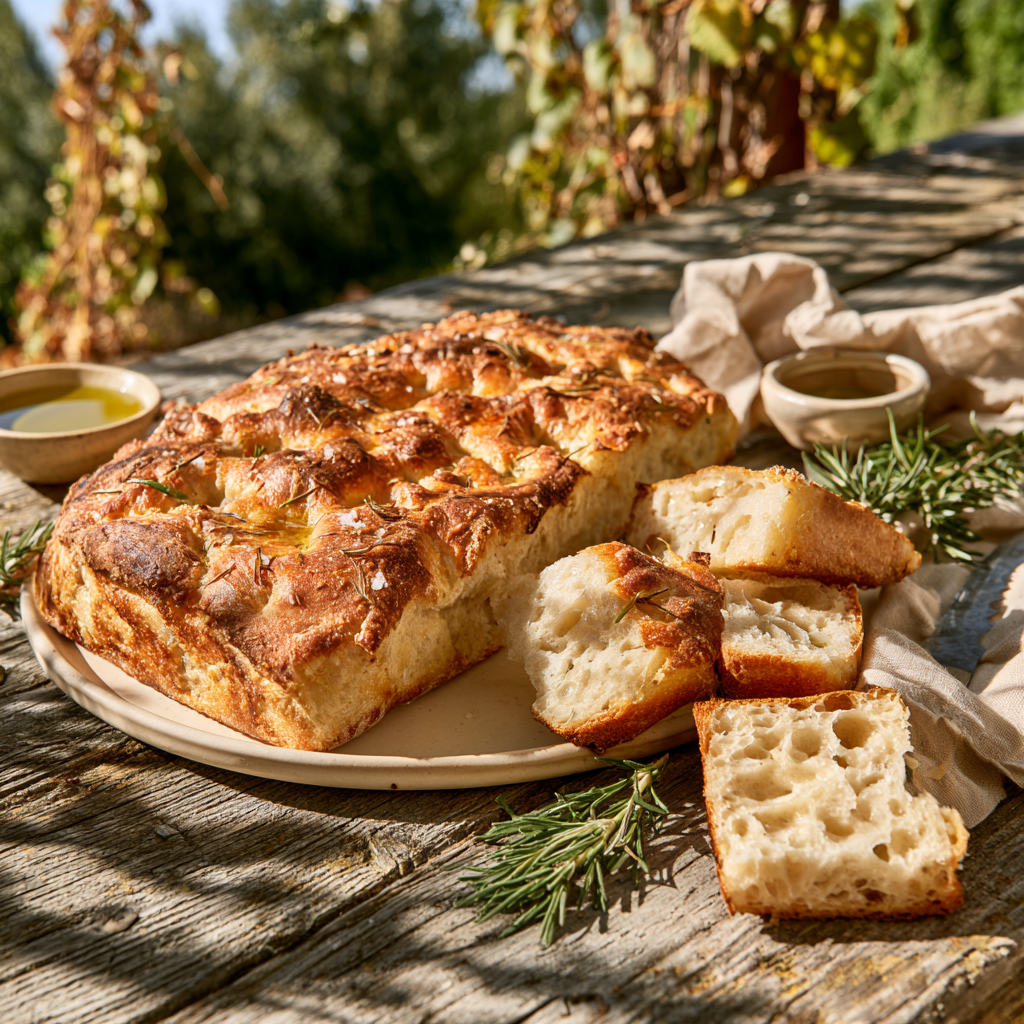
Start With an Active, Bubbly Sourdough Starter
An active starter is essential when making sourdough focaccia without commercial yeast.
Feed your starter according to its usual schedule and use it when it has visibly expanded and developed bubbles.
A starter that is weak or inactive may cause slow fermentation and produce a dense loaf.
Because starter behavior varies, use its rise and activity as your guide rather than assuming every starter peaks after the same number of hours.
Use Bread Flour for a Stronger Dough Structure
Bread flour generally contains more protein than all-purpose flour, helping develop the gluten network needed to hold fermentation gas.
This can be particularly useful for higher-hydration focaccia.
However, all-purpose flour can also work in a recipe formulated for it.
If you’re new to sourdough focaccia, begin with the flour specified in your recipe before experimenting with substitutions.
Pay Attention to Hydration
Sourdough focaccia dough is often wetter and stickier than conventional sandwich bread dough.
This moisture helps produce a soft, extensible dough and contributes to the bread’s airy texture.
Avoid adding large amounts of extra flour just because the dough feels sticky.
Instead, use lightly wet or oiled hands when handling it.
As gluten develops through resting and folding, the dough should become more cohesive.
Develop Gluten With Gentle Stretch-and-Folds
During the early stages of fermentation, gently stretch the dough upward and fold it over itself.
Repeat according to the recipe’s instructions.
These movements strengthen the dough without requiring extended kneading.
Be careful not to tear the dough aggressively.
The goal is to develop elasticity and structure while preserving the dough’s ability to expand.
Don’t Rush the Fermentation
Natural sourdough fermentation depends on starter strength, room temperature, flour, and dough composition.
Rather than following the clock blindly, observe the dough.
It should become noticeably expanded, aerated, and bubbly.
Under-fermented focaccia can bake into a dense loaf, while over-fermented dough may lose strength and become difficult to handle.
Proper fermentation is one of the most important factors in achieving a soft, airy crumb.
Use Generous but Measured Extra-Virgin Olive Oil
Olive oil is essential to focaccia’s flavor and texture.
Coat the baking pan thoroughly so the dough does not stick and the bottom can develop a golden crust.
Drizzle oil over the surface before dimpling so the fingertips move easily and the depressions hold flavorful oil.
However, more oil is not always better.
Using an excessive amount can make the finished bread unnecessarily greasy.
Follow the recipe’s measurements and distribute the oil evenly.
Dimple Gently Without Destroying the Air Bubbles
When the dough has completed its final rise, coat your fingertips lightly with olive oil and press them into the surface.
Work gently and evenly across the dough.
The goal is to create recognizable dimples without aggressively flattening the loaf.
A properly proofed focaccia should look airy and soft.
Pressing too firmly or repeatedly can release much of the trapped gas and reduce the finished bread’s height.
Bake Until the Bottom Is Golden, Not Just the Top
One common mistake is removing focaccia from the oven when the surface looks golden even though the underside remains pale.
The bottom crust is an important part of focaccia’s signature texture.
Use a metal baking pan when the recipe recommends one, since it often promotes more effective browning than a thick ceramic dish.
After baking, carefully lift an edge with a spatula to check the underside.
The bottom should be nicely golden and sufficiently firm, rather than pale or doughy.
Let the Bread Cool Briefly Before Slicing
Freshly baked focaccia smells irresistible, but cutting it immediately can compress the soft interior.
Allow the loaf to rest briefly after removing it from the oven, then transfer it to a wire rack if possible.
This helps prevent condensation from softening the bottom crust.
Once the bread has cooled enough for the crumb to set, cut it with a serrated knife into squares or rectangular portions.
Store and Reheat Leftovers Properly
Sourdough focaccia is especially delicious on the day it’s baked.
For short-term storage, allow it to cool completely and keep it wrapped or in an airtight container at room temperature for approximately one to two days, depending on room conditions and toppings.
For longer storage, freeze cooled portions in freezer-safe packaging.
Plain focaccia generally freezes well for about two to three months for best quality.
To restore some of its crispness, warm the bread in the oven until heated through.
If the focaccia contains perishable toppings or fillings, such as cheese or cooked meats, follow the appropriate refrigeration and food-safety guidance rather than treating it like plain bread.
Is Sourdough Focaccia Worth the Extra Fermentation Time?
The answer depends on what you enjoy about homemade bread.
If your priority is preparing bread quickly, a conventional focaccia made with commercial yeast may be more convenient.
For example, our Easy and Quick Focaccia Recipe is designed for a shorter preparation process and offers a useful alternative when time is limited.
Sourdough focaccia, on the other hand, rewards bakers who enjoy natural fermentation, complex flavors, and learning how dough develops over time.
| Consideration | Sourdough focaccia | Quick yeast focaccia |
|---|---|---|
| Leavening | Active sourdough starter | Commercial yeast |
| Preparation schedule | Longer, with variable fermentation | Usually shorter and easier to predict |
| Flavor | May develop gentle tanginess and complexity | Typically mild, wheaty, and olive oil-rich |
| Shaping | Simple pan shaping | Simple pan shaping |
| Baking difficulty | Requires attention to starter and fermentation | Usually more straightforward for beginners |
| Ideal for | Sourdough enthusiasts and planned baking | Faster bread preparation |
| Finished texture | Can be airy, tender, and crisp | Can also be airy, tender, and crisp |
Neither recipe is inherently better for everyone.
The sourdough version is particularly satisfying when you have an active starter and want to enjoy a naturally fermented bread with rich olive oil flavor.
Final Thoughts: Why You Should Make This Sourdough Focaccia Recipe
If you’re looking for a homemade bread that’s flavorful, versatile, beautiful, and rewarding to prepare, this Sourdough Focaccia Recipe is definitely worth trying.
Its combination of natural fermentation, extra-virgin olive oil, soft airy crumb, and crispy golden crust creates a distinctive bread that can be enjoyed in countless ways.
You can serve it warm with soup, turn it into a delicious sandwich, add seasonal vegetables and herbs, or prepare a simple rosemary-and-sea-salt version for family dinner.
Best of all, sourdough focaccia doesn’t require the complicated shaping techniques associated with many traditional sourdough loaves.
With a healthy starter, careful fermentation, gentle handling, and a properly heated oven, you can create an impressive artisan-style bread using familiar ingredients and a baking pan.
OoohDelish Baking Secret: For a beautifully airy Sourdough Focaccia Recipe, use an active sourdough starter, develop the dough with gentle stretch-and-folds, and allow fermentation to progress until the dough looks bubbly and expanded. Coat the pan with extra-virgin olive oil, dimple the surface carefully, and bake until both the top and bottom are richly golden. Let the bread cool briefly before slicing to enjoy the perfect balance of crisp edges, soft crumb, and fragrant Mediterranean flavor.
Frequently Asked Questions About Sourdough Focaccia Recipe
Want to bake homemade sourdough focaccia with a golden, crispy bottom, fluffy interior, and beautiful air bubbles? These practical answers explain everything from choosing an active sourdough starter and managing fermentation to creating those signature dimples, adding delicious toppings, and keeping your homemade Italian bread fresh.
1. What is sourdough focaccia, and how is it different from regular focaccia?
Sourdough focaccia is a traditional Italian-style flatbread made using a sourdough starter for fermentation. Unlike many conventional focaccia recipes that rely on commercial baker’s yeast, naturally leavened sourdough focaccia gets its rise from the wild yeast and bacteria in a healthy starter. This fermentation can produce a subtly tangy flavor, chewy texture, and a beautifully airy interior. Both versions typically feature olive oil, a golden crust, and characteristic dimples. If you prefer a quicker approach, explore our Easy and Quick Focaccia Recipe for another delicious homemade bread option.
2. Can I use sourdough discard instead of active starter for focaccia?
You can use sourdough discard in a focaccia recipe specifically developed for it, but discard and active starter aren’t always interchangeable. A recently fed, bubbly starter generally provides more reliable leavening for bread made without commercial yeast. Older, unfed discard may not have enough yeast activity to raise the dough effectively. Discard-based recipes often include a small amount of commercial yeast for additional lift. For naturally leavened focaccia, use a healthy starter near its peak activity and follow the recipe’s exact starter quantity.
3. How do I know my sourdough starter is ready for focaccia?
A sourdough starter is generally ready when it has risen noticeably after feeding, contains plenty of bubbles, and has a pleasantly fermented aroma. Many healthy starters approximately double in volume before reaching their peak, although the timing depends on temperature, flour type, and feeding ratio. Use the starter when it is active and near its highest rise for dependable fermentation. A starter that barely rises after repeated feedings may need more time to develop before being used for naturally leavened bread.
4. How long does sourdough focaccia take to rise?
Sourdough focaccia fermentation time varies considerably with room temperature, starter strength, dough hydration, and the recipe being used. Some active-starter recipes can complete their main rise in approximately 4–8 hours in a moderately warm kitchen, while cooler conditions or slower formulas may require considerably longer. An overnight refrigerated rise adds additional time. Instead of watching the clock alone, look for dough that has expanded noticeably, developed visible bubbles, and feels light, airy, and slightly jiggly before baking.
5. Can I make sourdough focaccia overnight in the refrigerator?
Yes! Overnight sourdough focaccia is an excellent make-ahead bread option. After the initial fermentation and folding stages, many recipes allow the dough to rest in the refrigerator for approximately 8–24 hours. This slower fermentation can help develop flavor and make the baking schedule more convenient. The next day, follow your recipe’s directions for warming, final proofing, dimpling, and baking. Avoid assuming cold dough is fully proofed just because it has spent the night in the refrigerator. It should still show appropriate signs of fermentation.
6. Do you have to knead sourdough focaccia dough?
Not necessarily. Many homemade sourdough focaccia recipes use stretch-and-fold techniques instead of traditional kneading. During the early fermentation period, gently lift one side of the dough, stretch it upward, and fold it toward the center. Rotate the bowl and repeat according to your recipe. These folds gradually strengthen the gluten network while preserving the soft, hydrated character of the dough. Some focaccia formulas do use mechanical mixing or kneading, so follow the method designed for your particular recipe.
7. Why is my sourdough focaccia dough so sticky?
Sticky dough is normal for many high-hydration sourdough focaccia recipes. A relatively high amount of water helps create the light interior and irregular air pockets associated with this bread. Rather than adding large quantities of extra flour, lightly wet or oil your hands when handling the dough. Use a dough scraper to transfer it and allow adequate resting time between folds. The dough should become more cohesive as gluten develops, although it may remain quite tacky throughout preparation.
8. Why is my sourdough focaccia dense or not rising?
Dense sourdough focaccia often results from an inactive starter, insufficient fermentation, a kitchen that’s too cool, or excessive handling after proofing. If the dough hasn’t expanded noticeably, it may simply need more time. Check that your starter rises reliably after feeding and avoid rushing the final proof. Also be gentle when transferring the dough to its baking pan. A properly proofed focaccia should feel light and puffy, rather than dense and resistant to stretching.
9. How do you get big air bubbles in sourdough focaccia?
Beautiful air bubbles develop through a combination of healthy fermentation, adequate dough hydration, gluten development, and gentle handling. Use an active sourdough starter, follow the recommended water-to-flour ratio, and give the dough enough time to rise. Perform the prescribed folds without unnecessarily deflating the dough. During the final proof, look for a puffy, slightly jiggly surface with visible bubbles. Press your fingers gently when dimpling so you don’t knock out all the accumulated gas.
10. Why do you dimple focaccia, and when should you do it?
Dimpling creates the signature uneven surface of focaccia and helps distribute olive oil and toppings across the bread. The shallow depressions allow small pools of oil to collect, contributing to a flavorful crust. Most sourdough focaccia recipes call for dimpling shortly before baking, once the dough has become airy and sufficiently proofed. Lightly oil your fingertips and press confidently but gently into the dough. Avoid aggressive handling that completely deflates its delicate air structure.
11. What flour and baking pan are best for sourdough focaccia?
Bread flour is a popular choice because its higher protein content helps support the airy structure of wet sourdough dough. All-purpose flour also works in recipes developed for it and may produce a slightly more tender crumb. For the pan, a sturdy metal baking pan is excellent for developing golden edges and a crisp bottom. A 9-by-13-inch pan is common for homemade focaccia, but the correct pan size depends on the quantity of dough. Coat the pan generously with olive oil.
12. What temperature should you bake sourdough focaccia?
Many sourdough focaccia recipes bake at approximately 425°F (220°C) for 20–30 minutes, although some formulas use higher temperatures or different timings. A shallow focaccia may bake faster than a thick loaf in a smaller pan. Look for a deeply golden top, browned edges, and a fully baked center. The bottom should also be golden rather than pale or soggy. Always follow the temperature and baking time given in your specific WPRM recipe card.
13. What are the best toppings for homemade sourdough focaccia?
Classic sourdough focaccia tastes wonderful with extra-virgin olive oil, flaky sea salt, and fresh rosemary. Other delicious toppings include thinly sliced garlic, cherry tomatoes, olives, caramelized onions, and a little Parmesan. Avoid overloading the dough with watery vegetables, which can interfere with browning. Dry fresh toppings when necessary and press them gently into the dimples. For more Mediterranean flavor inspiration, try our Italian Zucchini Scarpaccia Recipe , another rustic Italian-inspired baked favorite.
14. Can you make sourdough focaccia without commercial yeast?
Yes! Naturally leavened sourdough focaccia can be made without commercial yeast. A healthy, active sourdough starter contains wild yeast capable of raising the dough. However, fermentation may take longer than in a recipe using instant yeast. The exact timing depends on starter strength and dough temperature. Some faster sourdough focaccia recipes include commercial yeast alongside starter for a more predictable rise. Neither method is inherently wrong; follow the formulation that matches your preferred baking schedule.
15. How do you store, freeze, and reheat sourdough focaccia?
Sourdough focaccia is at its best on the day it is baked, when the crust is beautifully crisp and the interior remains soft. For plain focaccia without perishable toppings, store completely cooled bread in a suitable container at room temperature for approximately 1–2 days. To freeze, wrap individual portions tightly and place them in a freezer-safe container for up to 2–3 months for best quality. Reheat at approximately 350°F (175°C) until warmed through, allowing the crust to regain some crispness. Refrigerate focaccia containing perishable toppings promptly.
16. What should you serve with sourdough focaccia?
Homemade sourdough focaccia is delicious on its own with olive oil, but it also pairs beautifully with soups, salads, pasta, roasted vegetables, and Mediterranean-inspired appetizers. Its airy interior makes it excellent for soaking up flavorful sauces. Try serving it alongside our Easy Lasagna Soup Recipe for a cozy Italian-inspired meal. For a simple vegetable accompaniment, our Parmesan Roasted Broccoli Recipe offers crispy garlic-Parmesan flavor that complements the rich olive-oil crust of focaccia.