

What if you could turn a simple bowl of cottage cheese into golden, crispy, delicious homemade chips with almost no effort? That’s exactly what makes this Cottage Cheese Chips Recipe so exciting! With just cottage cheese, a few favorite seasonings, and an oven, you can create thin, savory cheese crisps with beautifully browned edges and a satisfying crunch. They’re wonderfully cheesy, easy to customize, and perfect for those moments when you’re craving something salty and crunchy but want an alternative to traditional potato chips. The best part? You don’t need flour, breadcrumbs, eggs, or complicated cooking techniques. A spoon, a baking sheet, and a little patience are all it takes to transform an everyday dairy ingredient into a surprisingly delicious snack.
If you’ve seen the viral cottage cheese recipes circulating on TikTok, Instagram, and Pinterest, you’ve probably noticed how this once-overlooked ingredient has become a favorite among creative home cooks. From fluffy flatbreads and creamy dips to protein-rich desserts, cottage cheese has proven to be much more versatile than its simple appearance suggests. But crispy cottage cheese chips might be one of its most surprising transformations. Instead of blending the cheese into a smooth mixture or adding it to a batter, you spread small spoonfuls into thin rounds and bake them until the moisture evaporates and the cheese begins to brown. What comes out of the oven looks remarkably different from what went in: delicate, golden cheese crisps with a savory flavor and a pleasantly crunchy texture.
The real secret to making the best cottage cheese chips is controlling moisture. Cottage cheese naturally contains a significant amount of water, which is why it has such a soft, creamy texture in the container. When the cheese is baked, that moisture gradually evaporates, allowing the remaining solids to firm up and brown. If the rounds are too thick, the outside may become golden while the center stays soft or chewy. If the cottage cheese contains excessive liquid, the rounds may spread unevenly or require additional baking time. That’s why using a relatively thick, small-curd cottage cheese, removing obvious excess liquid, and spreading each portion into a thin, even circle can make such a noticeable difference.
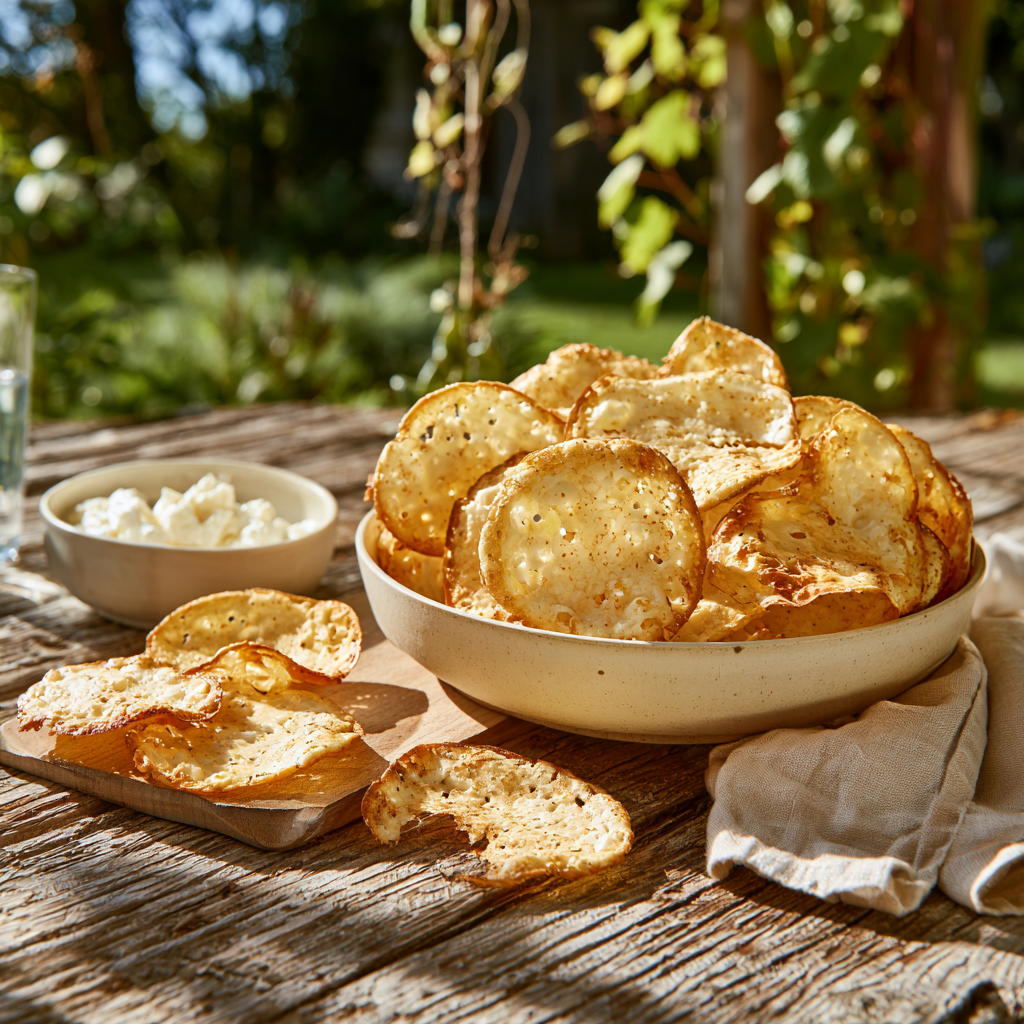
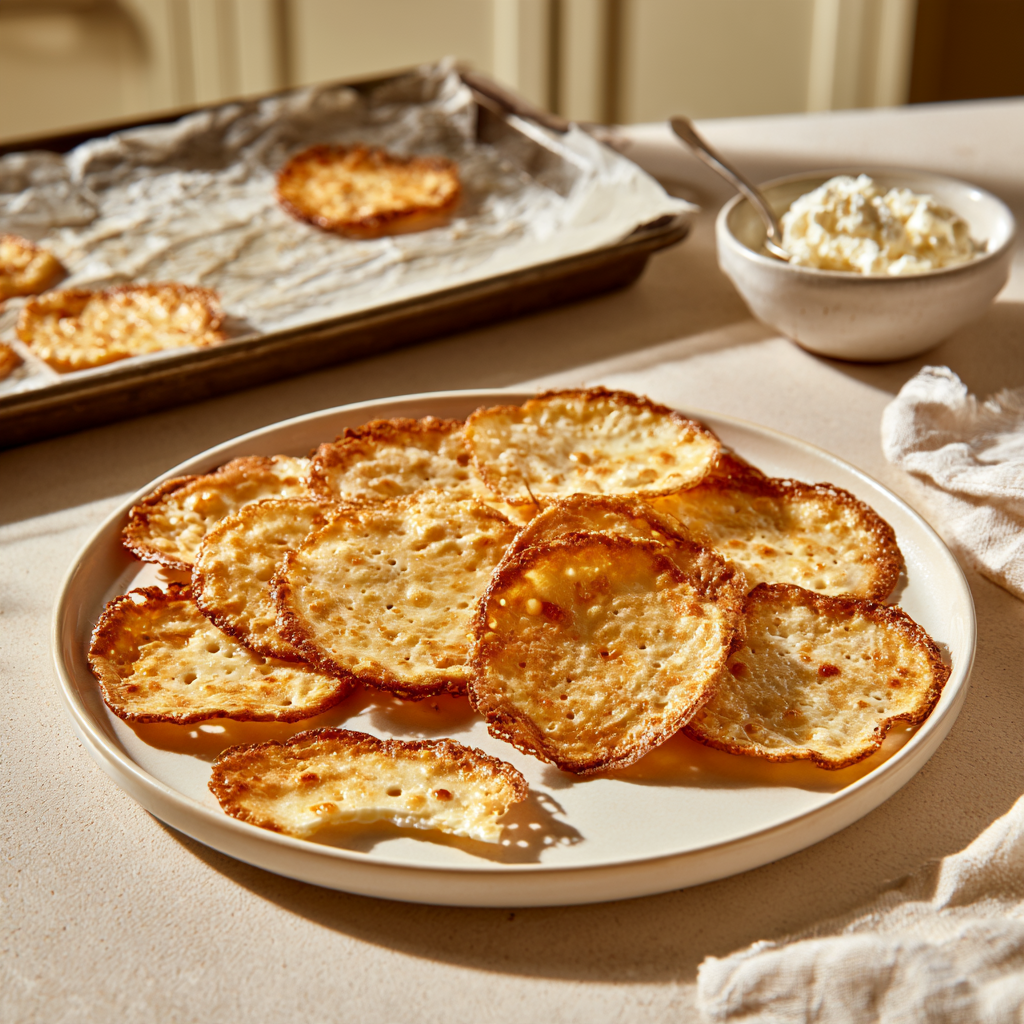
Cottage Cheese Chips Recipe
Equipment
- Large rimmed metal baking sheet (or two sheets for separate batches)
- Oven-safe parchment paper
- Tablespoon measuring spoon
- Small spoon or silicone spatula
- Fine-mesh strainer (optional, for draining excess liquid)
- Small bowl (optional, for mixing seasonings)
- Thin spatula (for removing baked chips)
- Wire cooling rack (optional)
- Oven
Ingredients
- Main Ingredient
- 1 cup 225 g plain small-curd cottage cheese, preferably thick, 2% or full-fat
- Optional Seasonings
- ¼ teaspoon garlic powder
- ¼ teaspoon onion powder
- ¼ teaspoon smoked paprika
- ⅛ teaspoon freshly ground black pepper
- ½ teaspoon Italian seasoning
- 1 tablespoon finely grated Parmesan cheese
Instructions
- Step 1: Preheat the Oven to 350°F (175°C). Begin by preheating your oven to 350°F (175°C) and positioning an oven rack near the center. Allow the oven to reach its full temperature before baking so the cottage cheese chips cook as evenly as possible. Line a large rimmed metal baking sheet with high-quality, oven-safe parchment paper to prevent the cheese from sticking as it melts, spreads, and browns. Make sure the parchment is suitable for the baking temperature and lies flat against the baking sheet. If you plan to prepare 12–14 chips, you may need two baking sheets or separate batches to give each portion enough room. Avoid using wax paper, which is not suitable for oven baking.
- Step 2: Measure the Cottage Cheese. Measure 1 cup (approximately 225 g) of plain small-curd cottage cheese and place it in a bowl. Thick 2% or full-fat cottage cheese is a practical starting point for this recipe, although the final texture will depend on the brand and moisture content. Avoid flavored or sweetened cottage cheese because the recipe is intended to produce savory crisps. Inspect the cheese before portioning it, paying attention to any liquid that may have separated around the curds. Some products contain a thicker dressing, while others have more free whey. Both may work, but particularly watery cottage cheese usually requires additional preparation or baking time to develop a firm texture.
- Step 3: Drain Any Excess Liquid. If the cottage cheese contains a noticeable pool of liquid, carefully pour away the excess or transfer the cheese to a fine-mesh strainer positioned over a bowl. Allow it to drain gently for approximately 2–5 minutes. The goal is to remove obvious free liquid without squeezing all the moisture out of the cheese. Cottage cheese should still look creamy and contain distinct curds after draining. Excess water can cause the portions to spread too much or remain soft in the center, even after their edges have browned. If your cottage cheese is already thick and contains very little visible liquid, you can skip this step and proceed directly to portioning.
- Step 4: Prepare the Optional Seasonings. If you want seasoned cottage cheese chips, measure 1/4 teaspoon garlic powder, 1/4 teaspoon smoked paprika, and 1/8 teaspoon freshly ground black pepper into a small bowl. Mix gently so the seasonings can be distributed evenly over the cheese rounds. You can also substitute 1/4 teaspoon dried Italian herbs for a different flavor. The recipe works perfectly well without any seasonings, so these additions are entirely optional. Avoid adding extra salt until you have tasted the finished chips because many cottage cheese brands already contain considerable sodium. Dry seasonings work best because they add flavor without introducing unnecessary moisture that could interfere with crisping.
- Step 5: Portion the Cottage Cheese. Using a tablespoon, place approximately 12–14 small, rounded portions of cottage cheese onto the prepared baking sheet, using the entire measured cup. Leave roughly 2 inches (5 cm) of space between portions whenever possible because the cheese may spread as it begins to heat. If all the portions cannot fit comfortably on one tray, use another lined baking sheet or prepare a second batch. Keep the portions reasonably similar in size so they bake at approximately the same rate. Perfect circles are unnecessary at this stage because each mound will be flattened before baking. The most important consideration is to avoid crowding the cheese together, which can cause individual chips to merge.
- Step 6: Flatten Each Portion Into a Thin Circle. Use the back of a spoon to press each cottage cheese mound into a thin, relatively even round approximately 1/8 inch (3 mm) thick. Depending on the size of each portion, the circles may measure roughly 2–3 inches (5–7.5 cm) across. Spread the cheese gently so the center is approximately as thin as the edges. Avoid leaving thick clumps in the middle because they can remain soft or chewy while the thinner edges become overbrowned. Do not spread the rounds so thinly that large gaps or holes form between the curds, as this can cause the chips to break apart during removal. A slightly irregular homemade shape is completely acceptable.
- Step 7: Season the Cottage Cheese Rounds. If using the optional seasoning mixture, sprinkle a small, even amount over each flattened cottage cheese round. Try to distribute the seasoning lightly across the surface rather than concentrating it in one spot. Garlic powder adds a simple savory flavor, smoked paprika creates a warm smoky note, and black pepper provides gentle seasoning. If you prefer Italian-style chips, use dried herbs instead. Avoid adding wet sauces, fresh tomato toppings, or watery ingredients before baking, since extra moisture can prevent the cheese from drying evenly. For a true one-ingredient Cottage Cheese Chips Recipe, skip the seasoning entirely and bake the plain cottage cheese rounds.
- Step 8: Begin Baking the Cottage Cheese Chips. Carefully place the prepared baking sheet in the center of the preheated oven and bake at 350°F (175°C). Begin checking the chips after approximately 20 minutes, although most batches will require around 25–40 minutes in total. During the early part of baking, the cottage cheese may bubble, spread slightly, and release visible moisture. This is a normal part of the cooking process. As the baking continues, the cheese rounds should become thinner and begin developing golden-brown edges. Avoid opening the oven unnecessarily during the first part of cooking, but monitor the chips closely as they approach the expected finishing time.
- Step 9: Monitor the Browning and Rotate if Necessary. After approximately 20–25 minutes, inspect the chips through the oven door or briefly open the oven if needed. Look for lightly golden edges and a surface that is beginning to appear drier. If your oven heats unevenly, carefully rotate the baking sheet to encourage more consistent browning. Do not remove the chips simply because the edges have become golden if the centers still look visibly wet. Continue baking in short intervals while monitoring the color. Different cottage cheese brands contain different amounts of moisture, fat, and dairy solids, so one batch may become firm earlier than another. Watch carefully during the final minutes because thin cheese rounds can darken quickly.
- Step 10: Check the Chips for Doneness. The cottage cheese chips are approaching doneness when their edges are golden brown, the centers appear dry rather than creamy, and the rounds have become noticeably thinner than when they entered the oven. Some brown spots on the surface are normal and contribute a delicious toasted cheese flavor. A small amount of bubbling may continue, but the chips should no longer look like wet cottage cheese. If the edges are becoming extremely dark before the middle has dried, remove the batch and make the next set slightly thinner and more even. Do not rely exclusively on a fixed baking time, as appearance and texture are more useful indicators for this particular recipe.
- Step 11: Cool the Cottage Cheese Chips for 5–10 Minutes. Remove the baking sheet from the oven and place it on a heat-resistant surface. Allow the chips to cool for approximately 5–10 minutes without disturbing them. This cooling stage is essential because freshly baked cheese may still feel flexible while hot. As the rounds cool, their structure becomes firmer, and the chips may develop a noticeably better crunch. Avoid peeling the chips off the parchment immediately, as they may tear or break before setting. Once cool enough to handle, gently lift the edge of one chip with a thin spatula to evaluate its texture. Remember that cottage cheese chips may have slightly chewy centers even when their edges are crispy.
- Step 12: Remove the Chips Carefully. Once the chips have cooled and firmed up, slide a thin spatula underneath each round or gently peel the parchment away from its underside. Transfer the finished cottage cheese chips to a plate or cooling rack. If one or two pieces remain slightly soft after cooling but are not excessively browned, you may return them to the oven for a few additional minutes, checking frequently. Avoid overbaking chips that are already dark because additional heating can create a burnt or bitter flavor. Handle the thin crisps gently, especially around the edges. Their final texture will vary according to the original cheese moisture, thickness, and baking time, so slight differences between individual chips are normal.
- Step 13: Serve the Cottage Cheese Chips Fresh. Arrange the cottage cheese chips on a small serving plate and enjoy them as a simple savory snack or alongside your favorite thick dipping sauce. Their rich cheese flavor pairs especially well with guacamole, hummus, avocado cottage cheese dip, thick salsa, or a creamy herb spread. The chips are generally most enjoyable shortly after baking and cooling, when their texture is at its firmest and crispiest. If desired, sprinkle a tiny amount of extra black pepper or dried herbs over the finished chips. Avoid adding wet toppings too far in advance because they can soften the cheese crisps. Divide the finished batch into four portions of approximately three or four chips each for easy serving.
- Step 14: Store Leftovers Safely and Re-Crisp if Needed. Cottage cheese chips are best eaten fresh, but leftovers may be stored in a covered, airtight container in the refrigerator at 40°F (4°C) or below. Refrigerate them promptly rather than leaving the dairy-based snack at room temperature for extended periods. For food safety, use properly refrigerated leftovers within approximately 3–4 days, recognizing that their crisp texture may decline much sooner. If the chips become soft, place them on a baking sheet and warm them in a 300°F (150°C) oven for a few minutes, monitoring them carefully to prevent burning. Allow them to cool briefly before serving so they can firm up again. Freezing is not recommended when maintaining the original crunchy texture is your priority.
Notes
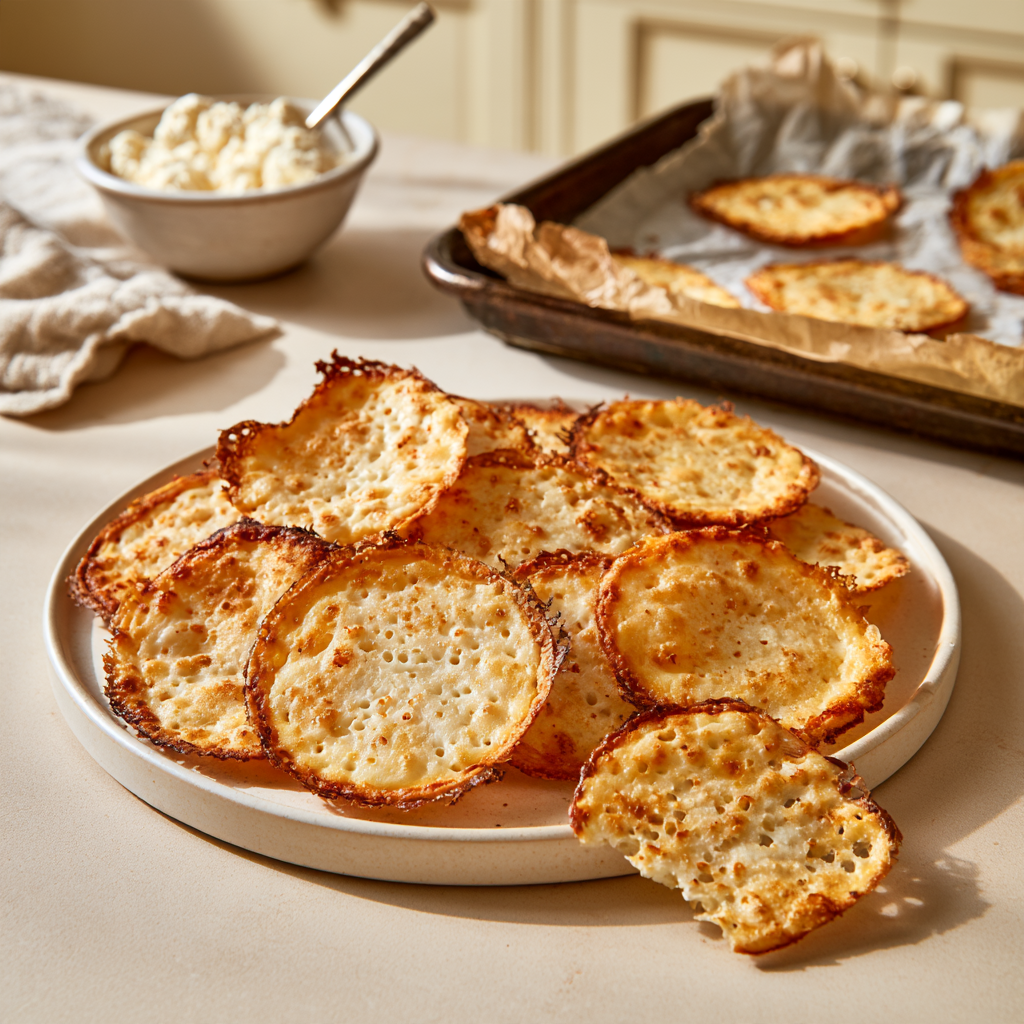
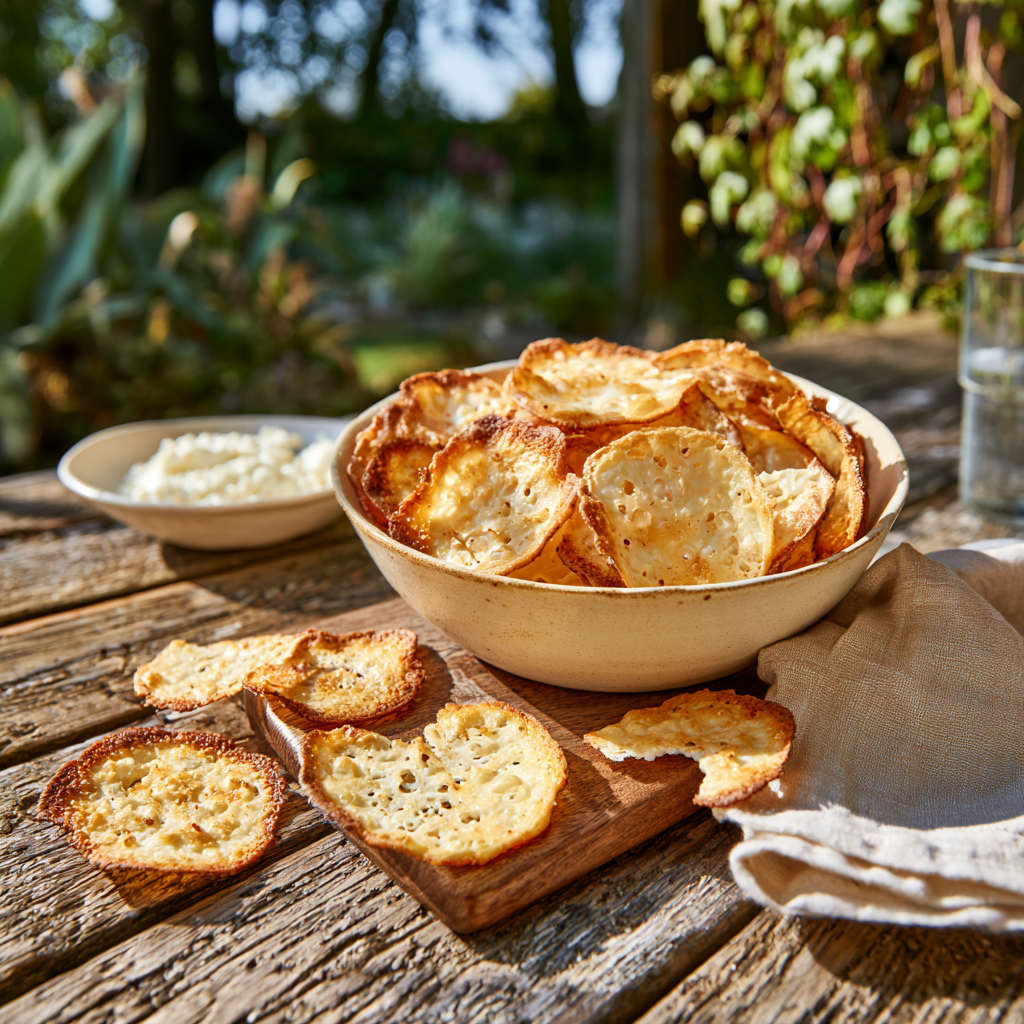
- Origins of Cottage Cheese Chips
- Health Benefits of Cottage Cheese Chips
- 1. Cottage Cheese Chips Are Naturally Rich in Protein
- 2. The Protein in Cottage Cheese Supports Muscle Maintenance
- 3. Cottage Cheese Chips Can Be a Lower-Carbohydrate Alternative to Potato Chips
- 4. Cottage Cheese Provides Calcium for Normal Bone Health
- 5. Cottage Cheese Chips Supply Phosphorus and Other Minerals
- How to Make Cottage Cheese Chips Recipe: Easy Step-by-Step Instructions for Perfectly Crispy Chips
- Ingredients You'll Need
- Step 1: Preheat Your Oven to 350°F (175°C)
- Step 2: Choose and Drain the Cottage Cheese
- Step 3: Prepare the Cottage Cheese Portions
- Step 4: Flatten Each Portion Into a Thin Round
- Step 5: Add Your Favorite Seasonings
- Step 6: Bake the Cottage Cheese Chips Until Golden
- Step 7: Cool the Chips Before Removing Them
- Step 8: Taste, Adjust, and Serve
Origins of Cottage Cheese Chips
The history of the Cottage Cheese Chips Recipe is a wonderful example of how an ordinary, familiar ingredient can be transformed into something completely unexpected. Today, these thin, golden, protein-rich cheese crisps are popular across social media, where home cooks share videos showing how a few spoonfuls of cottage cheese can become a crunchy, savory snack. But while cottage cheese chips may seem like a brand-new invention, the ingredient behind them has a much longer history, rooted in traditional dairy farming, homemade cheese production, and generations of resourceful cooking.
Unlike classic potato chips, which are made from thinly sliced potatoes, or traditional cheese crisps prepared with aged cheeses such as Parmesan, cottage cheese chips use a soft, fresh cheese that naturally contains a considerable amount of moisture. When small portions are spread thinly and baked, water gradually evaporates, allowing the cheese solids to firm up and brown. The result is a simple snack with a distinctive texture that would have seemed unlikely to anyone accustomed to eating cottage cheese straight from a bowl.
The modern popularity of cottage cheese chips is closely connected to the rise of high-protein recipes on TikTok, Instagram, and other social platforms. As more people began experimenting with cottage cheese in flatbreads, dips, pancakes, and desserts, turning it into crispy chips became another creative way to use this versatile ingredient.
However, there is no reliably established single inventor of the Cottage Cheese Chips Recipe. Several food creators helped popularize the preparation, but its underlying concept builds on much older methods of making and crisping cheese.
To understand how this simple snack became so popular, we need to explore the history of cottage cheese itself, the traditions of homemade cheese crisps, and the modern social-media movement that brought them together.
The Early History of Cottage Cheese: A Simple Farmhouse Tradition
The story begins long before the invention of TikTok, electric ovens, or modern packaged snacks.
For centuries, people in different parts of the world have made fresh cheeses by separating milk into curds and whey.
These simple cheese-making methods provided a practical way to transform milk into foods with different textures, flavors, and storage properties.
Cottage cheese belongs to the broad family of fresh, unripened cheeses.
Unlike aged cheeses such as Parmesan or Cheddar, cottage cheese does not require a lengthy maturation period.
It is typically made by acidifying milk, allowing proteins to form soft curds that separate from the liquid whey.
The curds are then cut, cooked or handled according to the chosen method, drained, and often rinsed.
Some commercial versions are finished with a cream dressing, giving them their familiar creamy texture.
Fresh curd cheeses existed in many regions before the English name cottage cheese became common.
In European farming communities, making cheese from soured or cultured milk was a familiar household practice.
Families could use milk that was not intended for immediate drinking, including skim milk remaining after cream had been separated for butter production.
Turning that milk into fresh cheese provided another useful food ingredient.
This practical approach made fresh cheese particularly suitable for households that wanted to use their dairy supplies efficiently.
Although modern cottage cheese is produced under controlled food-safety conditions, its general principle remains connected to those older farmhouse techniques.
The earliest roots of cottage cheese chips therefore lie in traditional fresh-cheese making, even though the crispy snack itself appeared much later.
Why Is It Called Cottage Cheese?
The name cottage cheese reflects the ingredient’s association with simple household and farmhouse cheese-making.
Historically, a cottage was a small rural dwelling, and fresh cheeses could be prepared with relatively basic equipment.
The familiar explanation is that families living in cottages made soft cheese from milk or skim milk available in their households.
While this association helps explain the name, the precise circumstances in which the term was first adopted are not completely established.
What can be documented is that the English expression cottage cheese was already being used in the United States by 1831.
An early published reference appeared in the July 1831 issue of Godey’s Lady’s Book, where a soft curd preparation was described using the name cottage cheese.
Other regional names for similar cheeses included terms such as smearcase, reflecting the influence of different immigrant food traditions.
By the nineteenth century, cottage cheese had become recognizable within American food culture.
However, the cheese itself was not necessarily invented in America.
Immigrants brought their knowledge of fresh-cheese making from Europe, where related dairy products had been prepared for generations.
The development of American cottage cheese represents the adaptation and popularization of these traditions rather than the invention of fresh curd cheese from nothing.
This distinction matters when tracing the history of a modern snack made from such a familiar ingredient.
Cottage Cheese in Early American Cooking
During the nineteenth and early twentieth centuries, cottage cheese became increasingly familiar in American households.
Its preparation was relatively straightforward compared with cheeses requiring long aging periods, elaborate pressing equipment, or specialized storage.
Families could prepare fresh curds and serve them with simple accompaniments.
Depending on local traditions and preferences, cottage cheese appeared alongside bread, vegetables, fruit, or other everyday foods.
Its mild flavor made it adaptable to both savory and sweet preparations.
As the American dairy industry developed, cottage cheese also became a commercially produced product.
Improvements in milk processing, pasteurization, refrigeration, and packaging eventually helped make it more widely available.
Health Benefits of Cottage Cheese Chips
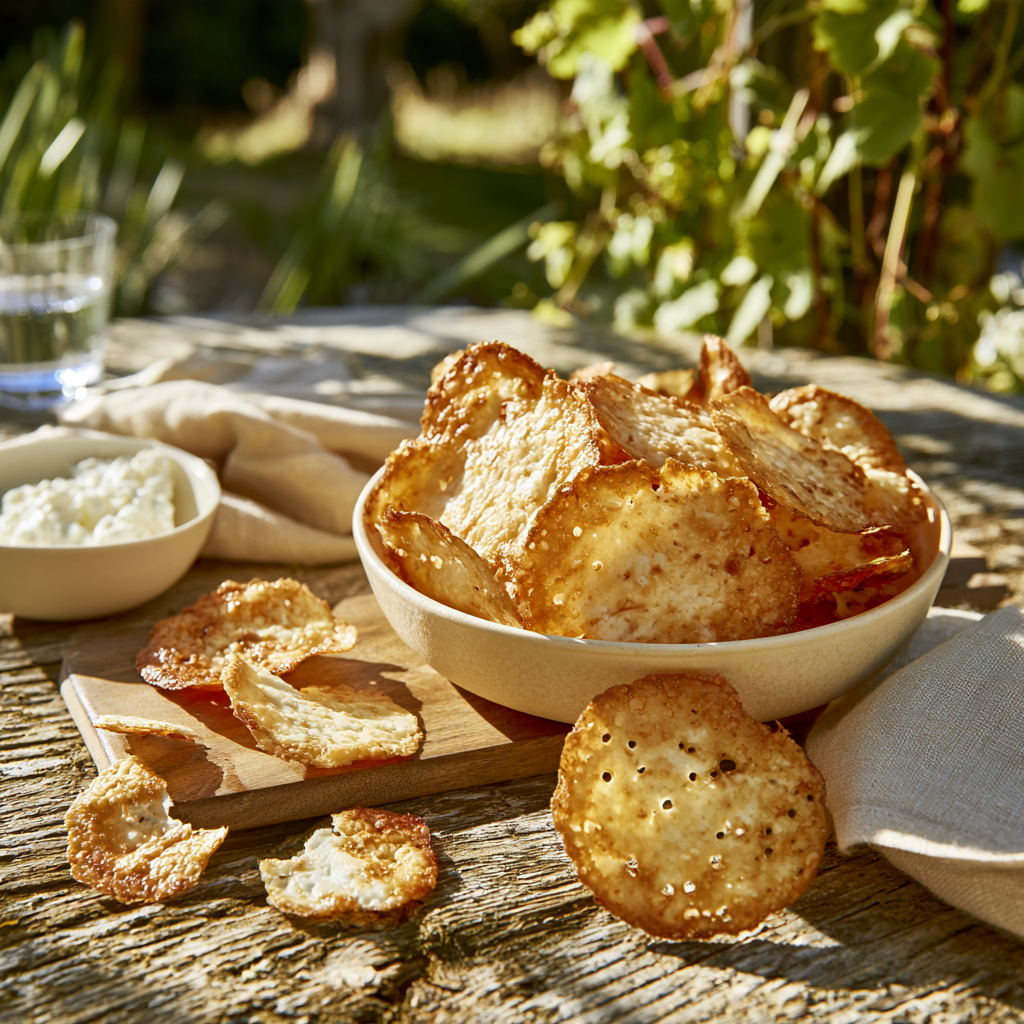
Who would have thought that a few spoonfuls of cottage cheese could turn into golden, crispy, delicious homemade chips? One of the most exciting things about this Cottage Cheese Chips Recipe is that it transforms a familiar, protein-rich dairy ingredient into a savory snack with a satisfying crunch. But beyond its surprisingly delicious texture and simple preparation, cottage cheese also provides important nutrients that make these homemade chips an interesting alternative to conventional snack foods.
Unlike traditional potato chips made primarily from potatoes and oil, crispy cottage cheese chips are prepared using cottage cheese as the main ingredient. When spread into thin rounds and baked, the cheese gradually loses moisture, allowing its proteins and other solids to create a firmer, golden-brown texture. The result is a simple snack that delivers the naturally occurring protein, calcium, phosphorus, and other nutrients found in cottage cheese.
But are cottage cheese chips actually healthy, and does baking cottage cheese change its nutritional value?
The answer depends on the type of cottage cheese, the portion size, the added seasonings, and the way the chips are prepared.
Plain cottage cheese is naturally rich in protein and relatively low in carbohydrates. It also contains several essential vitamins and minerals. However, some brands can be high in sodium, and full-fat varieties contain more saturated fat than reduced-fat options.
It’s also important to understand that baking doesn’t magically increase the amount of protein in cottage cheese or eliminate its calories. Most of the transformation comes from moisture loss, which changes the cheese’s texture and concentrates the remaining nutrients into a smaller amount of food.
The good news is that homemade Cottage Cheese Chips can provide a convenient way to enjoy dairy protein without complicated ingredients, deep-frying, or excessive preparation.
Let’s explore their nutritional benefits, what happens during baking, and how to make a batch that fits comfortably into a balanced eating pattern.
1. Cottage Cheese Chips Are Naturally Rich in Protein
One of the biggest nutritional advantages of this high-protein Cottage Cheese Chips Recipe is its protein content.
Cottage cheese is made from milk curds and naturally contains substantial amounts of protein. Unlike conventional potato chips, which are primarily a source of carbohydrates and fat, cottage cheese chips obtain much of their nutritional value from dairy protein.
A typical cup of 2% cottage cheese, weighing approximately 226 grams, provides around 24 grams of protein, although the exact amount varies by brand.
That makes cottage cheese an appealing ingredient for people who want to include more protein in their snacks.
Protein contributes to several essential functions throughout the body, including the maintenance and repair of tissues, production of enzymes, and normal immune function.
It also plays a role in preserving and developing muscle mass when combined with appropriate physical activity and sufficient overall nutrition.
The important point is that the protein comes from the cottage cheese itself.
When you bake cottage cheese into crispy rounds, the total amount of protein in the batch remains broadly similar to the amount in the original cheese, although some changes can occur during cooking.
For example, if you begin with one cup of cottage cheese containing approximately 24 grams of protein and divide the finished chips into four equal servings, each serving will provide approximately 6 grams of protein.
The baking process doesn’t turn 24 grams of protein into 40 grams.
Instead, moisture evaporates, leaving a smaller, more concentrated snack.
Why this matters: You can enjoy the familiar satisfaction of a crunchy, savory snack while including a useful amount of protein in your day.
2. The Protein in Cottage Cheese Supports Muscle Maintenance
Another reason cottage cheese has become popular in protein-focused recipes is the type of protein it contains.
Milk naturally contains two main protein groups: casein and whey.
Cottage cheese is particularly rich in casein, which accounts for most of the protein in the cheese curds.
Casein is considered a complete protein because it provides all nine essential amino acids that the human body cannot produce in sufficient quantities on its own.
These amino acids are necessary for normal tissue maintenance and protein synthesis.
One important essential amino acid is leucine, which plays a role in the biological processes involved in muscle protein synthesis.
For active individuals, consuming sufficient dietary protein throughout the day can support muscle repair and maintenance.
This makes cottage cheese a practical food to include alongside other protein sources such as fish, poultry, beans, yogurt, and nuts.
However, eating cottage cheese chips alone will not build muscle or guarantee faster recovery after exercise.
Muscle development depends on overall protein intake, adequate energy, resistance training, rest, and individual needs.
A serving of cottage cheese chips can simply contribute to daily protein intake.
For another creative preparation using the same dairy ingredient, explore our Cottage Cheese Flatbread Recipe. While flatbread provides a softer, more flexible texture, baked cottage cheese chips offer a crisp alternative for savory snacking.
3. Cottage Cheese Chips Can Be a Lower-Carbohydrate Alternative to Potato Chips
One of the most appealing characteristics of low-carb Cottage Cheese Chips is their simple ingredient composition.
Traditional potato chips contain carbohydrates primarily from potato starch.
Cottage cheese, on the other hand, contains smaller amounts of carbohydrates, most of which come from naturally occurring milk sugars, including lactose.
A typical cup of plain 2% cottage cheese provides approximately 10–11 grams of carbohydrates.
When baked into chips without adding flour, breadcrumbs, or carbohydrate-rich coatings, the recipe retains a relatively simple carbohydrate profile.
That can make cottage cheese chips an appealing alternative for people who prefer lower-carbohydrate snacks.
However, it’s important not to confuse lower carbohydrate content with being carbohydrate-free.
Cottage cheese naturally contains lactose, and the amount varies among products.
Some flavored varieties may also include additional sugars or other ingredients.
The finished chips are therefore not automatically zero-carb.
Likewise, whether they fit a ketogenic eating pattern depends on the complete recipe, serving size, and individual’s carbohydrate target.
For the simplest preparation, choose plain, unsweetened cottage cheese and season it with garlic powder, black pepper, paprika, or dried herbs.
OoohDelish Tip: Check the carbohydrate content on the cottage cheese container before baking. Products that look similar can have different nutrition profiles.
4. Cottage Cheese Provides Calcium for Normal Bone Health
Calcium is another important nutrient naturally present in cottage cheese.
Your body needs calcium for several functions, including maintaining normal bones and teeth, supporting muscle contraction, and helping nerves communicate.
Cottage cheese contains calcium because it is made from milk.
However, the exact amount varies according to the cheese-making process and commercial formulation.
For example, 100 grams of some 2% cottage cheese products provides approximately 100–110 milligrams of calcium.
That means a cup may contribute roughly 225–250 milligrams.
This can make cottage cheese a useful addition to a varied diet containing other calcium sources.
However, cottage cheese generally contains less calcium per serving than some other dairy foods, so it shouldn’t automatically be described as the richest calcium source.
The calcium contribution of cottage cheese chips also depends on the amount of cheese used.
If an entire batch contains one cup of cottage cheese, the calcium present in that batch is distributed across all the finished chips.
Baking changes the moisture content but doesn’t create additional calcium.
For everyday bone health, calcium works alongside other factors, including vitamin D, adequate protein, weight-bearing physical activity, and overall nutrition.
The practical benefit: Cottage cheese chips provide an enjoyable way to include some dairy-derived calcium in your diet.
5. Cottage Cheese Chips Supply Phosphorus and Other Minerals
In addition to calcium, cottage cheese contains several minerals involved in normal biological functions.
One particularly important mineral is phosphorus.
Phosphorus is a component of bones and teeth and is also involved in energy metabolism and the structure of cells.
Cottage cheese naturally contains phosphorus because it is a dairy product.
It also provides varying amounts of selenium, potassium, and other nutrients.
Selenium contributes to normal antioxidant defenses and thyroid function.
Potassium participates in muscle contraction, fluid balance, and normal nerve signaling.
The precise quantities vary between brands and cheese varieties.
Some products may also contribute vitamin B12 and riboflavin, both of which have important roles in normal metabolism.
These nutrients make cottage cheese more nutritionally interesting than a snack consisting almost entirely of refined starch.
However, a serving of cottage cheese chips does not necessarily contain enough of every mineral or vitamin to be considered an excellent source.
The quantity depends on how much cottage cheese you actually eat.
For readers comparing snack options, the most useful approach is to look at the overall nutritional composition rather than focusing on one isolated nutrient.

How to Make Cottage Cheese Chips Recipe: Easy Step-by-Step Instructions for Perfectly Crispy Chips
Making this Cottage Cheese Chips Recipe at home is surprisingly simple, and you don’t need any special equipment or complicated ingredients. With just one cup of cottage cheese, a baking sheet, and your favorite seasonings, you can transform soft, creamy cheese into golden, savory crisps that are perfect for snacking or dipping.
The secret to achieving the best results is understanding how moisture affects the finished chips. Cottage cheese naturally contains plenty of water, so spreading it into thin, even rounds allows the moisture to evaporate during baking. As the cheese dries and browns, it develops a firmer texture and deliciously toasted flavor.
Unlike traditional potato chips, these homemade cheese crisps may retain a slightly chewy center, depending on the cottage cheese and their thickness. However, with careful preparation and enough baking time, you can achieve beautifully golden edges and a satisfying crunch.
Follow these easy steps to learn how to make cottage cheese chips in the oven, from choosing the right cheese to serving your freshly baked snack.
Ingredients You’ll Need
One of the best things about homemade cottage cheese chips is that you can prepare the basic version using just one ingredient.
| Ingredient | Quantity | Purpose |
|---|---|---|
| Small-curd cottage cheese | 1 cup (approximately 225 g) | Main ingredient; provides protein and creates the crispy cheese rounds |
| Garlic powder (optional) | 1/4 teaspoon | Adds a mild savory garlic flavor |
| Smoked paprika (optional) | 1/4 teaspoon | Contributes a subtle smoky flavor and warm color |
| Black pepper (optional) | 1/8 teaspoon | Adds gentle seasoning |
| Dried Italian herbs (optional) | 1/4 teaspoon | Provides aromatic herbal flavor |
Recipe yield: Approximately 12–14 small chips, depending on portion size.
Preparation time: 5–10 minutes.
Baking time: Approximately 25–40 minutes.
Cooling time: 5–10 minutes.
Oven temperature: 350°F (175°C).
For your first batch, I recommend using plain, full-fat small-curd cottage cheese. Its relatively rich texture can work well for baking, although results will vary between brands. Reduced-fat varieties can also work but may require different baking times.
Additional salt is usually unnecessary because cottage cheese already contains sodium.
Step 1: Preheat Your Oven to 350°F (175°C)
Begin by preheating your oven to 350°F (175°C).
Place an oven rack near the middle of the oven to encourage even baking.
While the oven heats, prepare a large metal baking sheet by lining it with a piece of parchment paper rated for the baking temperature.
Parchment paper is especially helpful because melted cheese can stick firmly to an unlined baking tray.
It allows the chips to release more easily once they have cooled.
Make sure the parchment lies flat, without large folds that could affect the shape of the chips.
Avoid using wax paper because it is not suitable for oven baking.
A light-colored metal baking sheet is a practical option, as very dark pans may cause the bottoms of the chips to brown more quickly.
OoohDelish Tip: Allow the oven to reach its full temperature before adding the chips. Starting in an insufficiently heated oven can change how the cheese spreads and dries.
Step 2: Choose and Drain the Cottage Cheese
Measure 1 cup (approximately 225 g) of plain small-curd cottage cheese.
Before placing it on the baking sheet, check its consistency.
Some cottage cheese products are thick, with relatively little visible liquid.
Others contain a substantial amount of whey or creamy dressing.
If you notice excess liquid pooling around the curds, gently pour it away.
For particularly watery cottage cheese, place the cheese in a fine-mesh sieve over a bowl and let it drain for approximately 2–5 minutes.
You want to remove obvious excess liquid, not squeeze the curds completely dry.
This small step can help the cheese spread more evenly and reduce the amount of moisture that must evaporate during baking.
However, don’t worry if the cottage cheese still looks creamy. That’s normal.
Its texture will change dramatically as it cooks.
Why this step matters: Too much free liquid can cause the cheese rounds to spread excessively, remain soft in the center, or require additional baking time.
Step 3: Prepare the Cottage Cheese Portions
Using a tablespoon, scoop small portions of cottage cheese onto the parchment-lined baking sheet.
Aim for approximately 1 tablespoon per chip.
Leave about 2 inches (5 cm) between the portions to prevent them from running together as they heat.
Depending on the size of your baking sheet, you may need to work in two batches.
Keep the portions reasonably similar in size.
Uniform pieces are more likely to bake at the same rate, making it easier to achieve consistent crispness.
At this stage, the cottage cheese will look like small white mounds.
Don’t worry about making them perfectly round.
The goal is a simple homemade snack, so slightly irregular shapes are completely acceptable.
Just make sure the portions remain separate from one another.
Step 4: Flatten Each Portion Into a Thin Round
This is one of the most important steps in the entire crispy cottage cheese chips recipe.
Using the back of a spoon, gently press each cottage cheese mound into a thin, relatively even circle.
Aim for a thickness of approximately 1/8 inch (3 mm), understanding that the curds won’t always form a perfectly smooth layer.
Try to make each round approximately 2–3 inches (5–7.5 cm) wide, depending on how much cottage cheese you’ve used.
The center should be about as thin as the edges.
If the middle is much thicker, the edges may brown while the center remains soft and chewy.
Avoid leaving large piles of cheese curds in the center.
At the same time, don’t spread the mixture so thin that large holes form.
The finished rounds need enough connected cheese solids to hold together as they bake.
OoohDelish Tip: If the cottage cheese sticks to your spoon, lightly dampen the back of the spoon with water before flattening. Use only enough moisture to prevent sticking.
Step 5: Add Your Favorite Seasonings
Now it’s time to give your homemade cottage cheese chips a little extra flavor.
The basic recipe is delicious with cottage cheese alone, but dry seasonings make it easy to create different variations.
For a classic savory version, sprinkle the flattened rounds with a little garlic powder and freshly ground black pepper.
For a smoky version, add a light dusting of smoked paprika.
If you enjoy Italian-inspired flavors, try dried oregano, basil, or a small pinch of mixed Italian herbs.
Everything bagel seasoning is another tasty option, particularly when you want a stronger garlic-and-onion flavor.
However, use it sparingly because some blends contain considerable salt.
Avoid adding wet ingredients such as hot sauce, salsa, or liquid marinades before baking.
Extra moisture can interfere with crisping and may cause the rounds to cook unevenly.
For your first attempt, keeping the seasoning simple will also help you understand the natural flavor of baked cottage cheese.
Step 6: Bake the Cottage Cheese Chips Until Golden
Carefully place the baking sheet in the preheated oven.
Bake at 350°F (175°C), beginning to check the chips after approximately 20 minutes.
Most batches will require roughly 25–40 minutes, although particularly thin rounds may finish sooner and wetter or thicker rounds may take longer.
During the first part of baking, the cottage cheese may spread slightly and develop bubbles.
This is normal.
As baking continues, moisture evaporates and the edges begin turning golden.
If your oven browns unevenly, rotate the baking sheet halfway through cooking.
Keep an eye on the chips as they approach doneness.
Their appearance can change quickly during the final few minutes.
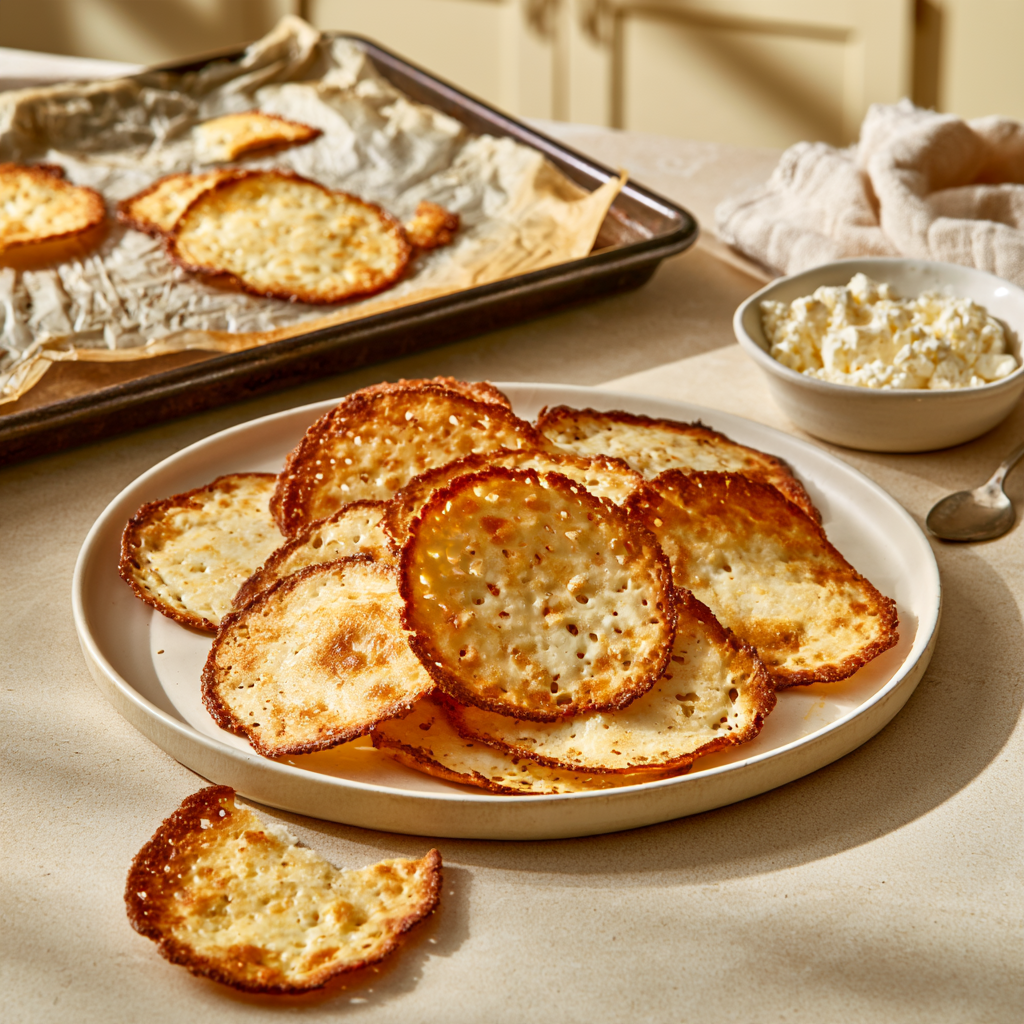
The chips are approaching readiness when:
- The edges are golden brown or slightly darker.
- The centers look dry and set rather than wet or creamy.
- The rounds appear noticeably thinner than when they entered the oven.
- The surface develops golden-brown spots.
- The chips have stopped bubbling vigorously and no longer look glossy with moisture.
Avoid removing the chips simply because the edges have browned if the centers still look visibly wet.
However, don’t leave them in the oven until they become extremely dark or burnt.
Important: Baking time is not the only indicator of doneness. Cheese moisture, round thickness, and oven performance can all affect how quickly the chips become crispy.
Step 7: Cool the Chips Before Removing Them
Once the cottage cheese chips are golden and the centers appear dry, remove the baking sheet from the oven.
Place it on a heat-resistant surface and allow the chips to cool for approximately 5–10 minutes.
This resting period is essential.
Freshly baked cheese can remain slightly flexible while hot, even when it has browned properly.
As the chips cool, their structure firms up, helping them develop a more satisfying texture.
Avoid immediately pulling the hot chips from the parchment.
They may tear or break if they haven’t had enough time to set.
Once cooled, gently lift one edge using your fingers or a thin spatula.
If the chips release easily, carefully transfer them to a serving plate or wire rack.
If they still feel slightly soft, give them a little more cooling time before deciding whether they need additional baking.
Remember that cottage cheese chips may not become as brittle as traditional potato chips.
A combination of crisp edges and slightly chewy centers can be normal.
Step 8: Taste, Adjust, and Serve
Your oven-baked Cottage Cheese Chips Recipe is now ready to enjoy!
Taste one chip and check whether its texture matches your preference.
If you enjoy a delicate crunch, serve the chips as soon as they’ve cooled and firmed up.
For a more intensely toasted flavor, aim for a slightly deeper golden color in your next batch.
If your chips remain too soft after cooling, they may need more moisture removed during baking.
Provided they’re not already excessively brown, you can return them to a moderate oven for a few additional minutes, monitoring them carefully.
Serve the finished chips plain or with your favorite thick dipping sauce.
They pair particularly well with avocado-based dips because the creamy texture creates a delicious contrast with the savory cheese crisps.
For a simple homemade pairing, try our Avocado Cottage Cheese Recipe. Its creamy avocado and cottage cheese mixture makes a flavorful accompaniment to freshly baked chips.
You can also serve them alongside salsa, guacamole, or hummus.
For a different use of the same ingredient, explore our Cottage Cheese Flatbread Recipe, which creates a softer, bread-style preparation rather than thin crispy rounds.
Frequently Asked Questions About Cottage Cheese Chips Recipe
Want delicious homemade cottage cheese chips with golden edges and a satisfying savory crunch? These helpful answers explain the best cottage cheese to use, how to prevent chewy centers, the right baking techniques, easy seasoning variations, and how to store leftovers. Whether you’re trying this popular high-protein snack for the first time or perfecting your next batch, these practical tips will help you get better results.
1. What are cottage cheese chips?
Cottage cheese chips are thin, oven-baked rounds made primarily from cottage cheese. Small portions are spread on a lined baking sheet and baked until much of their moisture evaporates. As the cheese browns, the edges become golden and the centers firm up. The finished chips have a savory, slightly tangy flavor and can range from chewy-crisp to lightly crunchy, depending on the recipe and thickness. They’re a popular alternative to conventional flour- or potato-based snacks.
2. Can you really make cottage cheese chips with just one ingredient?
Yes! You can make cottage cheese chips using only cottage cheese. Spoon small portions onto parchment paper, flatten them into thin circles, and bake until the cheese becomes golden and the centers dry. Allow the chips to cool before removing them from the baking sheet. Although no other ingredients are necessary, some recipes add Parmesan or dry spices for more flavor and a different texture. The final crispness depends heavily on moisture content, thickness, and baking time.
3. What type of cottage cheese is best for making crispy chips?
Thick, small-curd cottage cheese is a good starting choice because it’s easy to portion and spread evenly. Full-fat varieties can produce a richer flavor and satisfying texture, while 2% cottage cheese may also work well. The most important factor is avoiding excessive liquid. If the container contains a noticeable amount of loose whey, drain it before preparing the chips. Different brands behave differently when baked, so minor adjustments may be necessary.
4. Why are my cottage cheese chips chewy instead of crispy?
Cottage cheese chips often remain chewy because the portions are too thick, contain excessive moisture, or haven’t baked long enough. Spread each portion into a thin, even circle, making sure the center isn’t thicker than the edges. Drain visible excess whey before baking and allow the chips to develop golden edges and dry centers. Let them cool before judging their final texture. Even when prepared correctly, some recipes produce a chewy-crisp rather than brittle potato-chip texture.
5. What temperature should you bake cottage cheese chips?
Many homemade cottage cheese chips recipes use an oven temperature of approximately 350°F (175°C). This setting allows moisture to evaporate gradually while the cheese develops golden-brown edges. Some variations use 375°F (190°C) with adjusted baking times. Higher heat may brown the edges before thicker centers become dry. For reliable results, follow your specific recipe’s temperature, spread the portions evenly, and monitor the chips closely toward the end of baking.
6. How long does it take to bake cottage cheese chips?
At 350°F (175°C), many oven-baked cottage cheese chips take approximately 25–40 minutes, although the time can vary considerably. Thin portions with relatively little moisture may finish sooner, while wetter cottage cheese can require additional baking time. Look for deep golden edges and centers that appear dry rather than pale and glossy. Start checking before the expected finish time because cheese can brown quickly near the end. Allow several minutes of cooling so the chips can firm up.
7. Do you need to drain cottage cheese before baking chips?
Draining is helpful when the cottage cheese contains visible excess whey. Too much liquid can cause the cheese to spread, steam, and stay soft instead of developing a drier surface. If your cottage cheese looks watery, pour off the loose liquid or briefly strain it through a fine-mesh sieve. Don’t squeeze the cheese until completely dry; it still needs enough moisture to spread into thin rounds. Thick cottage cheese may not require additional draining.
8. Should I blend cottage cheese before making the chips?
Blending is optional and depends on the texture you’re trying to achieve. Blended cottage cheese produces a smoother mixture that can be spread into more uniform circles. Leaving the curds intact creates a more rustic appearance and can work in simple recipes. If you choose to blend, use short pulses rather than adding water or milk. Introducing extra liquid makes it harder for the chips to dry during baking.
9. How thin should cottage cheese chips be before baking?
For the crispiest results, spread the cottage cheese into rounds approximately 1/8 inch (3 mm) thick. The most important detail is keeping the entire circle evenly flattened, without leaving a thick mound in the middle. Use the back of a spoon to create similar-sized rounds with space between them. Thicker portions tend to develop browned edges while remaining soft or chewy inside. Even thickness also helps the chips bake more evenly.
10. Why are my cottage cheese chips sticking to the parchment?
Chips may stick when the cheese hasn’t dried sufficiently or when the baking surface isn’t suitable for the recipe. Use good-quality, oven-safe parchment paper and consider a very light coating of nonstick spray if your recipe recommends it. Don’t try to remove the chips immediately after baking. Allow them to cool and firm for several minutes, then gently lift them with a thin spatula. If they still tear easily, they may need additional baking time.
11. Can you make cottage cheese chips in an air fryer?
Yes, cottage cheese chips can be made in some air fryers, but a suitable oven-safe tray or properly secured liner is important. The cheese starts as a soft, moist mixture and may spread before setting. Use an air-fryer-specific recipe with settings suited to your appliance, and check frequently because the edges can brown quickly. Never preheat an air fryer with loose parchment inside, since circulating air may lift it toward the heating element. Oven baking is often easier for larger batches.
12. What seasonings taste best on cottage cheese chips?
Garlic powder, onion powder, smoked paprika, black pepper, and dried Italian herbs are excellent choices for cottage cheese chips. Everything bagel seasoning and a little finely grated Parmesan can also create delicious variations. Use dry seasonings whenever possible, because wet sauces and oily toppings can interfere with crisping. Taste the cottage cheese before adding salt, since many brands already contain a significant amount of sodium. For more Parmesan inspiration, explore our Parmesan Roasted Broccoli Recipe .
13. Can I add Parmesan cheese to cottage cheese chips?
Absolutely! Finely grated Parmesan can enhance the savory flavor and add more cheese solids to the mixture. Some recipes combine cottage cheese and Parmesan specifically to create firmer, more flavorful rounds. Mix in a modest amount and spread the portions thinly before baking. Parmesan can also make the chips saltier, so avoid adding extra salt automatically. Keep an eye on the baking time, since cheese-enriched mixtures may brown differently from plain cottage cheese.
14. Are cottage cheese chips healthy and high in protein?
Cottage cheese chips can be a protein-rich snack because cottage cheese naturally contains protein and calcium. They’re also generally lower in carbohydrates than traditional potato chips when made without flour or starch. However, their nutritional value depends on the brand, serving size, fat content, added cheese, and seasonings. Cottage cheese can contain substantial sodium, and these chips provide relatively little fiber. For a more balanced snack, enjoy them with fresh vegetables or a fiber-containing dip.
15. How long do cottage cheese chips last, and can you make them ahead?
Cottage cheese chips are best enjoyed on the day they’re baked, when their edges are firmest and crispiest. Unlike shelf-stable packaged snacks, homemade cheese chips should be treated as a perishable dairy food. Let them cool, then refrigerate promptly in an airtight container at 40°F (4°C) or below. For best texture, use within approximately 2–3 days. Refrigeration can soften the chips, so making them shortly before serving usually produces the most enjoyable result.
16. How do you reheat cottage cheese chips, and what should you serve with them?
To restore some of their crispness, place refrigerated cottage cheese chips on a baking sheet and warm them in a 325°F (165°C) oven for a few minutes, until thoroughly reheated and no longer soft in the center. For food safety, reheat leftovers to 165°F (74°C). Let them cool briefly again so they can firm up. Serve with hummus, guacamole, salsa, or crunchy vegetables. For more cottage cheese inspiration, try our Cottage Cheese Flatbread or Cottage Cheese Wrap Recipe .