

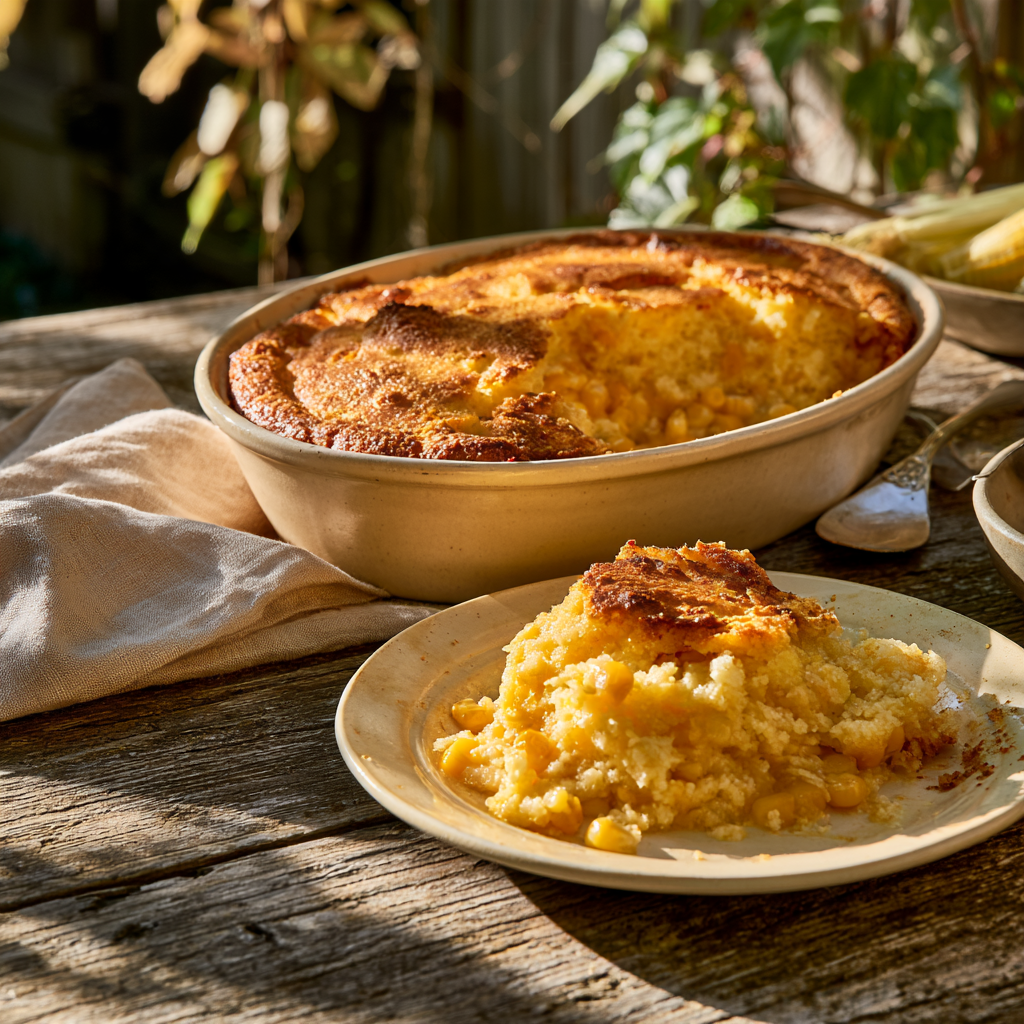
If you’re looking for a warm, comforting side dish that’s incredibly easy to make and always a crowd-pleaser, this Cornbread Casserole Recipe deserves a special place on your dinner table! Imagine a golden, lightly crisp top giving way to a soft, buttery, melt-in-your-mouth center filled with sweet corn flavor. Somewhere between classic Southern cornbread and creamy corn pudding, this homemade casserole delivers the perfect combination of sweetness, moisture, and irresistible comfort in every bite.
What makes this easy Cornbread Casserole Recipe so special is its simplicity. With familiar ingredients like corn muffin mix, sweet corn kernels, cream-style corn, sour cream, and melted butter, you can prepare a delicious casserole in minutes. There’s no complicated mixing, no special equipment, and no advanced baking skills required. Just combine everything in one bowl, pour the mixture into a baking dish, and bake until beautifully golden.
This Southern-style cornbread casserole is especially popular for Thanksgiving, Christmas, Sunday family dinners, potlucks, and holiday gatherings. Its creamy texture and naturally sweet corn flavor pair wonderfully with roasted chicken, grilled vegetables, hearty soups, and classic comfort-food favorites.
Best of all, you can customize this homemade Cornbread Casserole Recipe with shredded cheddar cheese, fresh herbs, or a little extra corn for added texture.
In this OoohDelish guide, you’ll discover how to make the best Cornbread Casserole Recipe, achieve a perfectly moist center without underbaking, develop a beautiful golden crust, and prepare a comforting side dish your family will request again and again.
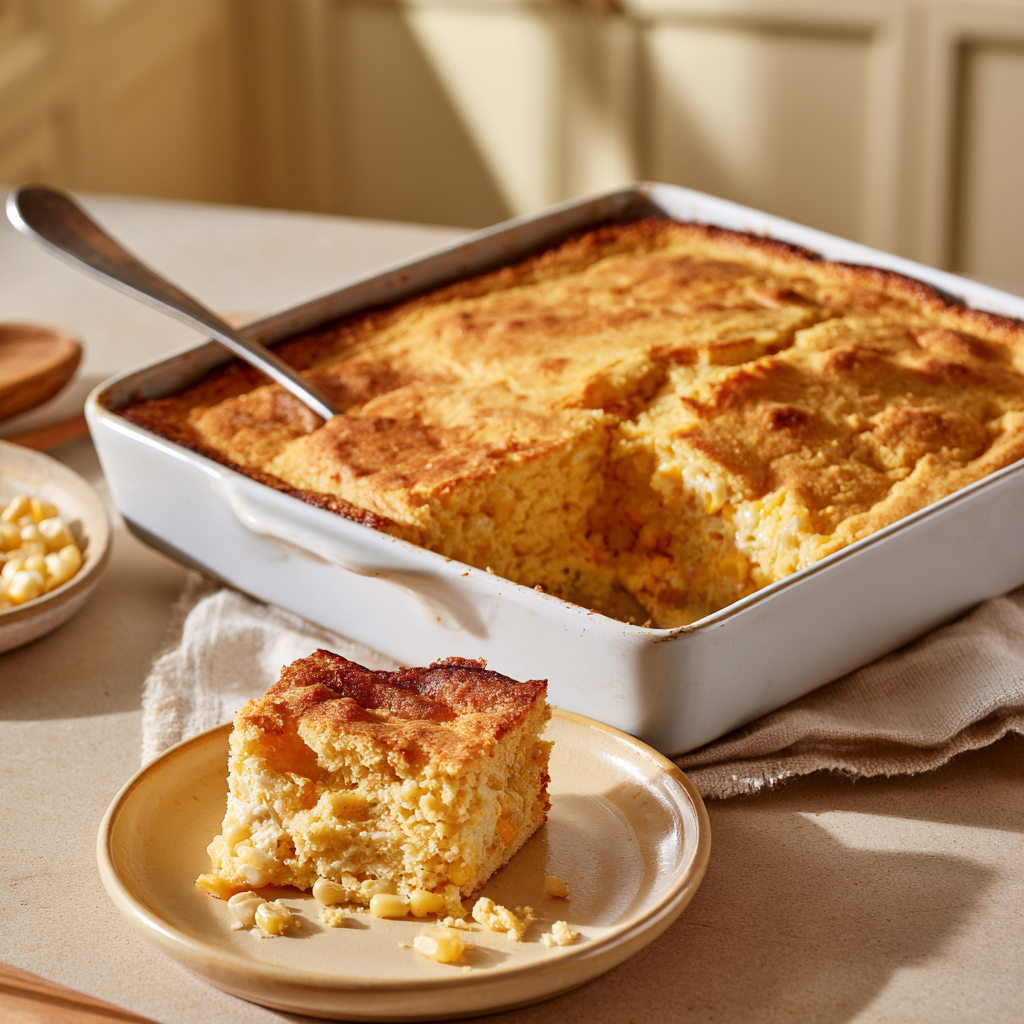
Cornbread Casserole Recipe
Equipment
- 8 × 8-inch (20 × 20 cm) baking dish, approximately 2-quart capacity
- Large mixing bowl
- Measuring cups and spoons
- Digital kitchen scale (recommended)
- Can opener
- Fine-mesh strainer or colander
- Microwave-safe bowl or small saucepan for melting butter
- Silicone spatula or wooden spoon
- Wire cooling rack
- Oven mitts
- Serving Spoon
Ingredients
- 1 box 8.5 oz / 240 g vegetarian corn muffin mix, such as JIFFY Vegetarian Corn Muffin Mix
- 1 can 15–15.25 oz / 425–432 g whole-kernel sweet corn, drained; approximately 250–270 g drained
- 1 can 14.75 oz / 418 g cream-style corn, undrained
- 1 cup 230 g sour cream, preferably full-fat
- ½ cup 113 g unsalted butter, melted and slightly cooled
Instructions
- Step 1: Preheat the Oven and Prepare Your Baking Dish. Begin your Cornbread Casserole Recipe by preheating the oven to 350°F (175°C) and positioning a rack near the center so the casserole receives even heat. Select an 8 × 8-inch (20 × 20 cm) baking dish with approximately a 2-quart capacity and lightly grease the bottom and sides with a little butter or a suitable cooking spray to help prevent sticking. Set the prepared dish aside while you organize the ingredients. Make sure your sour cream is ready to use, the butter is melted and slightly cooled, and both cans of corn are available. Using the correct dish size is important because the casserole needs enough depth to develop its signature creamy center without remaining excessively wet. Avoid a very small, deep dish, which may significantly extend baking time.
- Step 2: Drain the Whole-Kernel Sweet Corn. Open the can of whole-kernel sweet corn and pour it into a fine-mesh strainer or colander, allowing the packing liquid to drain away completely. Shake the strainer gently to remove excess liquid without crushing the tender corn kernels. You should have approximately 250–270 g of drained corn, depending on the brand and can size. This step is essential because excess liquid can make the casserole watery or prevent the center from setting properly. Next, open the can of cream-style corn but do not drain it. The creamy liquid and finely broken corn in this second can are important for creating the soft, moist texture that makes cornbread casserole different from ordinary cornbread. Keep the two varieties of corn separate until you’re ready to mix them together.
- Step 3: Melt the Butter and Let It Cool Slightly. Place ½ cup (113 g) of unsalted butter in a small microwave-safe bowl or saucepan and melt it gently using short microwave intervals or low stovetop heat. Stir until the butter is fully liquid, then allow it to cool briefly so it is warm rather than very hot. Hot butter can create an uneven mixture when combined directly with cold sour cream, so a short cooling period makes incorporation easier. The melted butter contributes richness, a tender texture, and the familiar buttery flavor of homemade cornbread casserole. Use unsalted butter so the sodium level remains more predictable, since corn muffin mixes already contain salt. Measure the butter accurately rather than adding extra, because too much fat can make the finished casserole greasy or excessively soft.
- Step 4: Combine the Whole-Kernel Corn and Cream-Style Corn. Transfer the drained whole-kernel sweet corn into a large mixing bowl, then add the entire undrained can of cream-style corn, including all its creamy liquid. Use a silicone spatula or wooden spoon to stir gently until the two corn varieties are evenly distributed. The whole kernels provide sweetness and a pleasant bite, while the cream-style corn creates the moisture and soft consistency associated with this comforting casserole. Avoid using an immersion blender or food processor because the corn should retain some of its natural texture rather than becoming a completely smooth puree. Scrape the sides and bottom of the bowl so the cream-style corn is incorporated evenly. At this stage, the mixture will appear loose and creamy, which is normal.
- Step 5: Add the Sour Cream and Melted Butter. Spoon 1 cup (230 g) of sour cream into the bowl containing the corn mixture, then pour in the ½ cup (113 g) of melted and slightly cooled unsalted butter. Stir gently until the sour cream is dispersed and the mixture looks rich and creamy, with no large pockets of unmixed sour cream. The sour cream contributes a mild tanginess and helps maintain a tender, moist interior, while the butter adds richness and a comforting flavor. The mixture should remain relatively loose at this stage because the dry corn muffin mix has not yet been added. Avoid beating aggressively or blending the mixture until smooth, since the intact sweet corn kernels are part of the casserole’s characteristic texture. Scrape down the sides of the mixing bowl before proceeding.
- Step 6: Fold in the Dry Corn Muffin Mix. Open one 8.5 oz (240 g) box of vegetarian corn muffin mix and sprinkle the dry contents evenly over the creamy corn mixture. Using a silicone spatula or wooden spoon, fold the dry mix gently into the wet ingredients until it is evenly moistened and no large pockets of dry flour or cornmeal remain. The batter should look thick, creamy, and somewhat textured because of the whole corn kernels. A few small lumps are acceptable, but avoid leaving large unmixed dry areas that might bake into floury patches. Do not add the milk or egg normally suggested on the corn muffin mix package because this specific five-ingredient casserole has its own moisture balance. Mix only until incorporated, as unnecessary overmixing can create a less tender baked texture.
- Step 7: Transfer the Cornbread Casserole Batter to the Baking Dish. Pour or spoon the prepared cornbread casserole mixture into the greased 8 × 8-inch baking dish, using a silicone spatula to scrape the mixing bowl so very little batter is left behind. Spread the mixture evenly into the corners and smooth the surface gently with the back of the spatula. Try to distribute the corn kernels throughout the dish rather than leaving them concentrated in one area. The batter should fill the baking dish comfortably without reaching dangerously close to the rim, leaving room for slight expansion as it bakes. If you’re making the classic version, no additional toppings are needed. For a cheesy variation, you may fold shredded cheddar into the batter before transferring it, but remember that extra cheese can affect the baking time and final texture.
- Step 8: Bake Until Golden and Set in the Center. Place the baking dish on the center rack of the preheated 350°F (175°C) oven and bake for approximately 45–55 minutes, beginning your first doneness check at 45 minutes. As the casserole bakes, its surface should gradually become golden, the edges should appear lightly browned, and the center should change from visibly liquid to soft but set. Gently move the dish using oven mitts and observe the middle; a slight tender movement may be acceptable, but a loose, sloshing center indicates that additional baking time is required. You can insert a toothpick or thin knife into the center, understanding that this moist casserole may leave a little creamy residue even when baked. If the top browns too quickly before the center sets, cover it loosely with aluminum foil and continue baking in short intervals. The exact baking time varies with the baking dish, oven, and ingredient temperature.
- Step 9: Allow the Casserole to Rest Before Serving. Once the Cornbread Casserole Recipe has developed a beautiful golden top and a properly set center, remove the baking dish carefully from the oven and place it on a heat-resistant surface or wire rack. Allow the casserole to rest for approximately 10 minutes before serving so the soft interior has time to settle and become more cohesive. This resting period is especially helpful because cream-style corn and sour cream create a moist texture that may seem unusually soft immediately after baking. Avoid cutting the casserole into firm squares straight from the oven, as it may break apart before it has rested. The finished dish should remain pleasantly creamy and tender rather than dry or crumbly. A short rest also makes it easier to scoop or divide into portions without disturbing the golden top excessively.
- Step 10: Serve Warm With Your Favorite Main Dishes. Use a large serving spoon to scoop the warm cornbread casserole into approximately eight portions, making sure each serving includes some of the golden surface and creamy corn-filled center. Serve immediately alongside roasted chicken, turkey, grilled vegetables, hearty soups, or your favorite family-style meals. For a slightly more savory presentation, sprinkle the finished casserole with a small amount of freshly chopped chives or parsley just before serving. If you prefer a richer variation, a modest quantity of cheddar cheese can be included during preparation, although the basic five-ingredient recipe is already buttery and satisfying. Cornbread casserole is especially suitable for Thanksgiving, Christmas, holiday potlucks, and Sunday family dinners because its mildly sweet flavor complements many savory foods. Keep the casserole warm for serving without leaving it at room temperature for extended periods.
- Step 11: Refrigerate Leftovers and Reheat Safely. After serving, allow leftover cornbread casserole to cool briefly and transfer it into shallow, airtight food-safe containers, refrigerating promptly at 40°F (4°C) or below. Do not leave the casserole at room temperature for more than two hours, or more than one hour if the surrounding temperature is above 90°F (32°C). Store refrigerated leftovers for approximately three to four days, provided the ingredients were fresh and handled safely. To reheat, transfer a portion to a microwave-safe plate and heat in short intervals, or place the casserole in an oven-safe dish, cover loosely with foil, and warm at approximately 325°F (165°C) until thoroughly heated, reaching 165°F (74°C) in the center. For longer storage, freeze cooled portions in airtight freezer-safe containers for approximately two to three months for best quality, then thaw in the refrigerator before reheating.
Notes
The Origins of Cornbread Casserole Recipe
The Cornbread Casserole Recipe has deep roots in American comfort food, inspired by Native American corn-based cooking and traditional Southern dishes like cornbread, corn pudding, and spoonbread. For generations, corn has been a staple ingredient in American kitchens, loved for its naturally sweet flavor and versatility.
The creamy cornbread casserole we know today became popular during the twentieth century, especially after JIFFY introduced its corn muffin mix in 1950. During the 1960s, the company shared a simple corn casserole recipe that combined convenient pantry ingredients into a warm, buttery side dish.
Over time, families added their own touches, including sour cream, cheddar cheese, and fresh herbs. Today, this Southern-style Cornbread Casserole Recipe is a beloved favorite at Thanksgiving, Christmas, potlucks, and Sunday dinners.
OoohDelish Secret: The magic of cornbread casserole lies in its perfect balance between a golden, lightly crisp top and a soft, creamy center filled with sweet corn goodness.
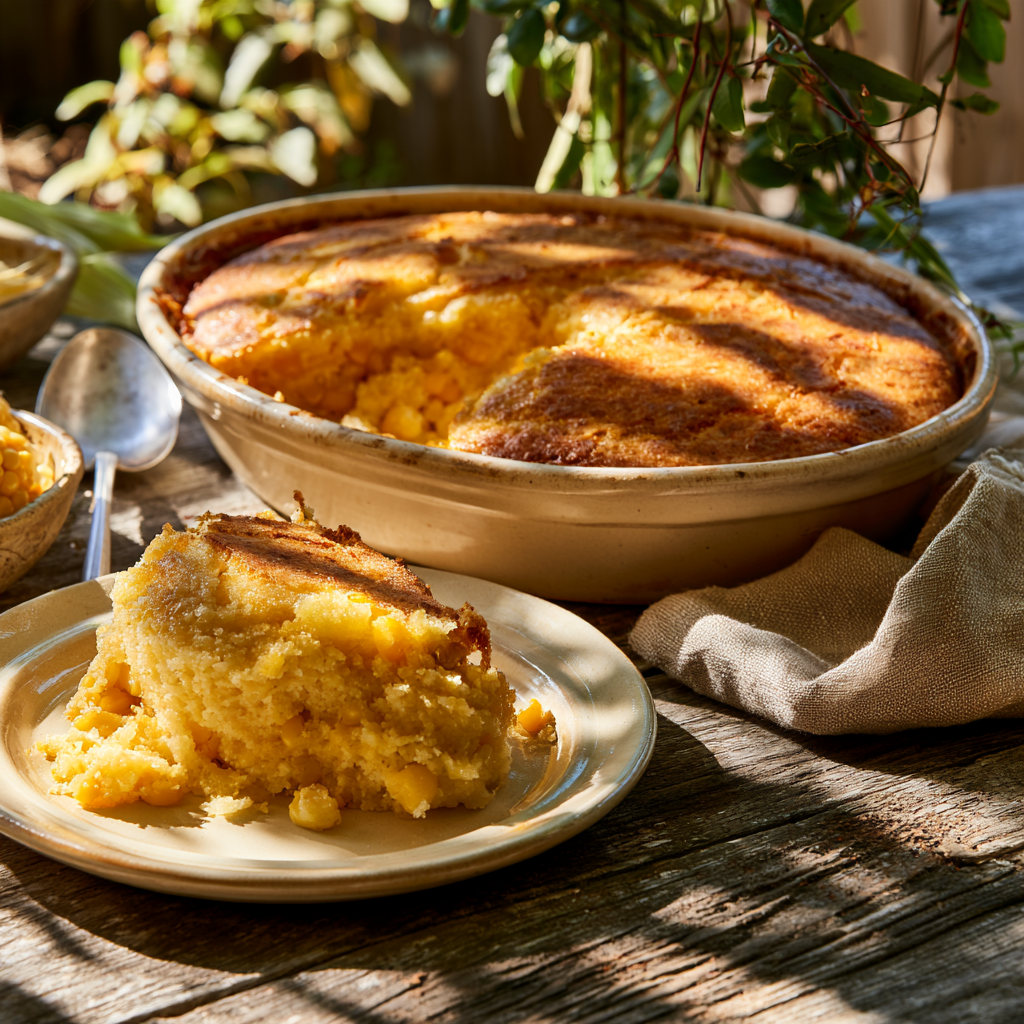
Health Benefits of Cornbread Casserole Recipe
This Cornbread Casserole Recipe isn’t just creamy, buttery, and delicious. It also provides several nutrients that can contribute to a balanced diet. Made with sweet corn, corn muffin mix, sour cream, and butter, this comforting side dish offers energy, essential vitamins, and minerals.
1. Provides Energy
Corn contains carbohydrates that supply energy for everyday activities, making cornbread casserole a satisfying addition to family meals.
2. Contains Fiber
Sweet corn provides dietary fiber, which supports healthy digestion and helps maintain normal bowel function.
3. Supplies Essential Vitamins and Minerals
Corn contains nutrients such as vitamin B1 (thiamine), folate, magnesium, and phosphorus, which contribute to normal energy metabolism and other important bodily functions.
4. Supports Eye Health
Sweet corn naturally contains lutein and zeaxanthin, two carotenoids that are found in the retina and help support normal eye function.
5. Provides Calcium
Sour cream contributes some calcium, an essential mineral for maintaining healthy bones and teeth.
6. Easy to Customize
You can make your homemade Cornbread Casserole Recipe more nutritious by adding vegetables, reducing the butter slightly, or serving it alongside lean protein and fresh greens.
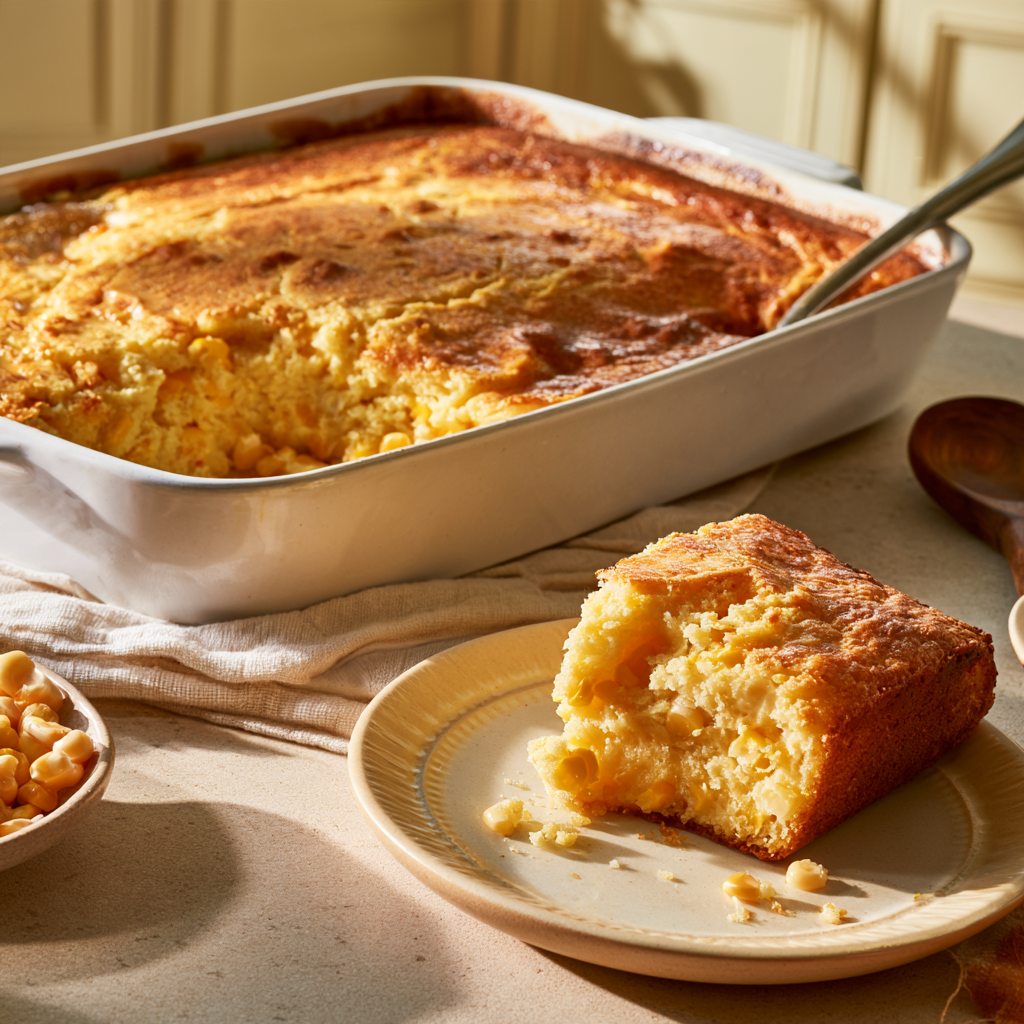
Is Cornbread Casserole Healthy?
Cornbread casserole can be enjoyed as part of a balanced diet, especially when served in moderate portions. However, traditional versions can be relatively high in saturated fat, sodium, and calories, depending on the ingredients used.
OoohDelish Healthy Tip: For a lighter Cornbread Casserole Recipe, try using reduced-fat sour cream, choose a lower-sodium corn muffin mix when available, and add extra sweet corn for texture and flavor. You’ll still enjoy that deliciously creamy center and golden crust while making a few thoughtful ingredient choices.
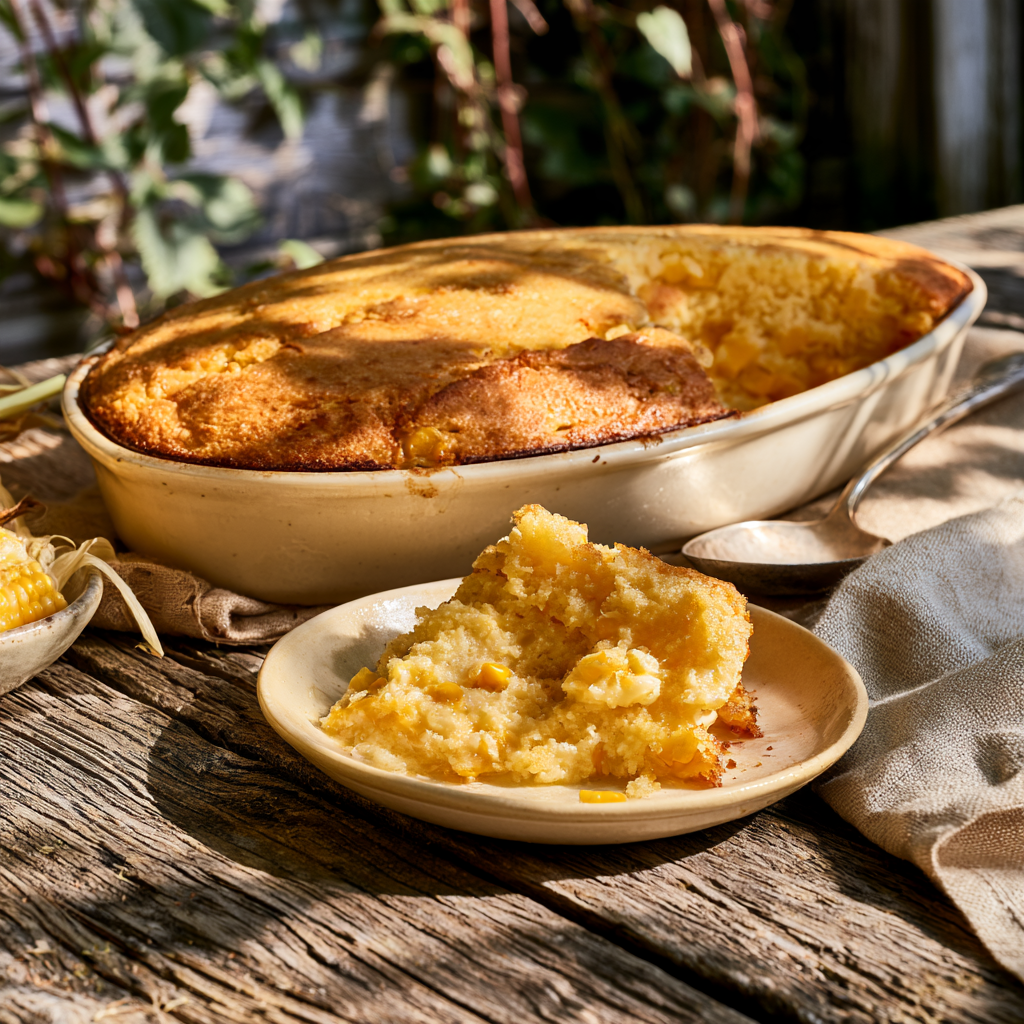
Why You Should Try This Cornbread Casserole Recipe
If you love warm, buttery comfort food, this Cornbread Casserole Recipe is a must-try With its golden crust, creamy center, and naturally sweet corn flavor, this easy homemade side dish is perfect for family dinners, holidays, and potlucks.
1. Incredibly Easy to Make
With just a handful of simple ingredients and minimal preparation, you can create a delicious casserole without complicated cooking techniques.
2. Perfectly Creamy and Buttery
Unlike traditional cornbread, this casserole has a wonderfully soft, moist center with golden edges that make every bite irresistible.
3. A Family-Friendly Favorite
Its mild sweetness and comforting texture make it a delicious side dish that both kids and adults can enjoy.
4. Perfect for Holidays and Gatherings
Whether you’re preparing Thanksgiving dinner, Christmas lunch, or a weekend family meal, this easy Cornbread Casserole Recipe is always a welcome addition.
5. Budget-Friendly Ingredients
Made with corn muffin mix, sweet corn, cream-style corn, sour cream, and butter, this recipe uses affordable ingredients available at most grocery stores.
6. Easy to Customize
Add shredded cheddar cheese, fresh herbs, or diced jalapeños to create your own delicious variation.
7. Pairs With Almost Anything
Serve this Southern-style Cornbread Casserole alongside roasted chicken, grilled vegetables, hearty soups, or your favorite comfort-food dishes.
8. Great for Making Ahead
Prepare the casserole ahead of time and reheat it before serving, making busy holiday cooking much easier.
Final Thoughts
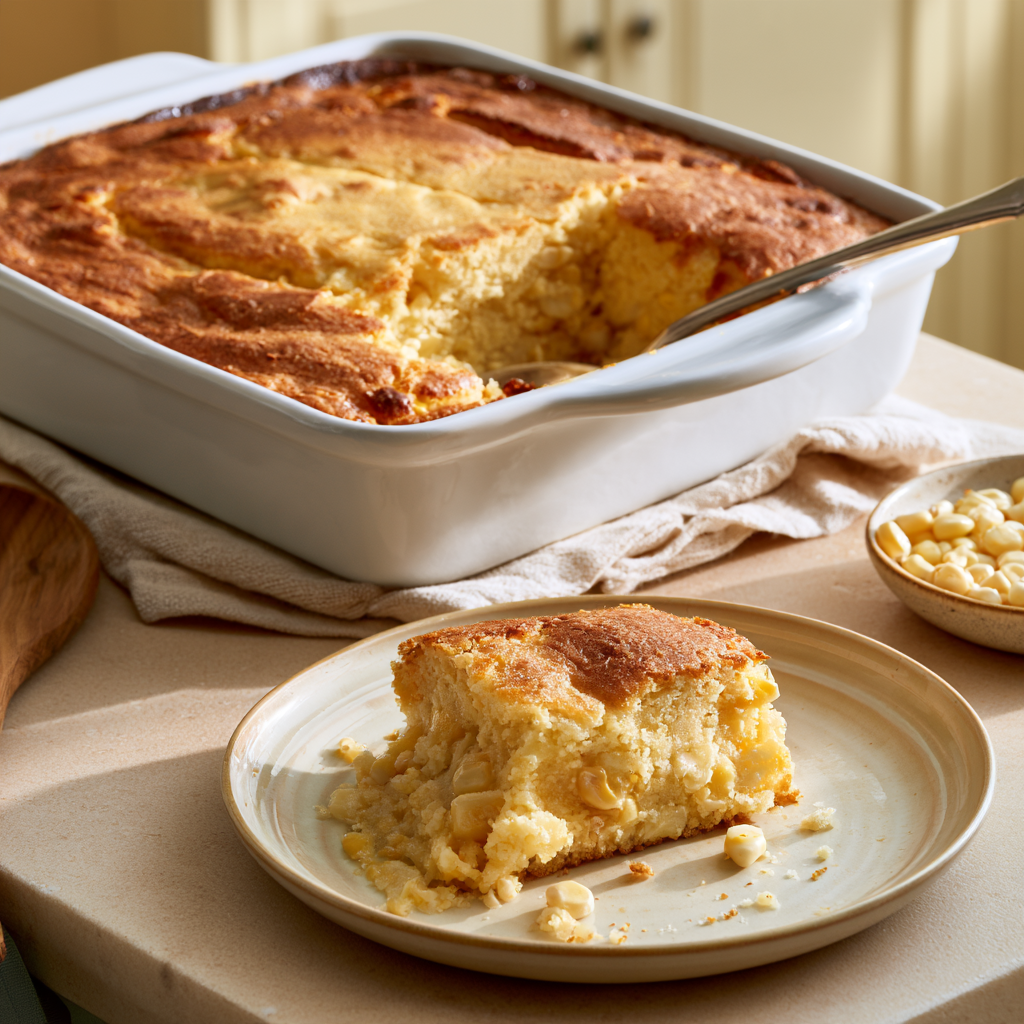
This homemade Cornbread Casserole Recipe brings together everything you love about classic comfort food: simple ingredients, easy preparation, rich buttery flavor, and a deliciously creamy texture.
OoohDelish Secret: For the best results, drain the whole-kernel corn but keep the cream-style corn undrained. Bake until beautifully golden, then let the casserole rest for 5–10 minutes before serving. You’ll get a perfectly tender, creamy center and irresistible golden edges every time.
Frequently Asked Questions About Cornbread Casserole Recipe
Want a golden, buttery cornbread casserole with sweet corn kernels, a soft creamy center, and irresistible homemade flavor? These helpful answers cover the best ingredients, Jiffy mix alternatives, baking temperatures, moisture problems, make-ahead preparation, and delicious variations. Whether you’re preparing a cozy weeknight dinner or a Thanksgiving side dish, these practical tips will help you create a comforting casserole your family will love.
1. What is cornbread casserole, and what does it taste like?
Cornbread casserole is a comforting American side dish combining the flavor of cornbread with the creamy texture of corn pudding. Many homemade versions contain corn muffin mix, sweet corn kernels, creamed corn, sour cream, melted butter, and eggs. The ingredients bake together into a golden casserole with lightly browned edges and a soft, moist interior. Its flavor is buttery, mildly sweet, and rich with natural corn sweetness. It’s especially popular for Thanksgiving, Christmas, potlucks, and family dinners.
2. What’s the difference between cornbread casserole, corn pudding, and regular cornbread?
The main difference is texture and moisture. Regular cornbread is usually firm enough to cut into neat slices and eat by hand. Corn pudding is generally softer, creamier, and more custard-like. Cornbread casserole sits somewhere between the two, with a golden, cornbread-like surface and a tender interior containing sweet corn. Recipes vary, so some casseroles resemble spoonbread while others are more structured. If you enjoy a firmer, slightly spicy cornbread, try our Jiffy Mexican Cornbread Recipe , using a pork-free vegetarian corn muffin mix.
3. What ingredients do you need for homemade cornbread casserole?
A classic cornbread casserole commonly combines corn muffin mix, whole-kernel corn, creamed corn, sour cream, melted butter, and eggs. The corn mix provides structure and a familiar cornbread flavor, while the two types of corn add sweetness and texture. Sour cream contributes richness and moisture. Some variations include shredded cheddar, jalapeños, or green onions. Choose a verified pork-free corn muffin mix and follow the ingredient quantities in your specific recipe, since the moisture balance is especially important.
4. Can I use Jiffy Corn Muffin Mix for cornbread casserole?
Yes, Jiffy-style corn muffin mix is widely used for cornbread casserole. However, there’s an important ingredient distinction: the original Jiffy Corn Muffin Mix contains lard, which is pork fat. For a pork-free recipe, choose Jiffy Vegetarian Corn Muffin Mix, made with vegetable shortening, or another verified pork-free corn muffin mix. Check your package label before baking. The vegetarian mix can be used in recipes developed for the regular Jiffy mix, although other brands may require adjustments.
5. Can I make cornbread casserole without Jiffy mix?
Absolutely! Homemade cornbread casserole doesn’t require a boxed mix. You can make a suitable dry mixture from cornmeal, all-purpose flour, baking powder, salt, and a little sugar when the recipe calls for sweetness. However, homemade substitutions must account for the fat, sugar, and leavening ingredients already included in packaged mixes. Simply replacing a box with the same weight of plain cornmeal may produce a dense, crumbly casserole. For dependable results, use a complete recipe specifically formulated for a homemade mix.
6. Should you drain canned corn before making cornbread casserole?
Drain regular whole-kernel canned corn, but don’t drain creamed corn. Whole-kernel corn usually comes packed in liquid that can make the casserole excessively wet if added without draining. Creamed corn contains a thick, starchy liquid that’s part of the ingredient and helps create the casserole’s soft, creamy texture. Pour the regular corn into a colander and allow the excess liquid to drain thoroughly. Add the creamed corn with its contents as instructed in your recipe.
7. Can I use fresh or frozen corn instead of canned corn?
Yes, fresh or frozen sweet corn can often replace drained whole-kernel canned corn. Fresh kernels provide a pleasantly crisp texture and naturally sweet flavor. Frozen corn can also work well, but thaw and drain it if your recipe calls for that step. Excess surface moisture may affect how the casserole sets. These substitutes generally replace regular corn kernels, not creamed corn, which contributes additional liquid and body. Use comparable quantities and follow the recipe’s preparation method.
8. Can you substitute Greek yogurt for sour cream in cornbread casserole?
Plain, thick Greek yogurt can be a useful sour cream substitute in some cornbread casserole recipes. It provides creaminess and tanginess, although the flavor and texture may be slightly different. Full-fat Greek yogurt tends to give a richer result, while fat-free varieties can produce a less tender casserole. Choose unsweetened yogurt without added flavors. Because yogurt brands differ in moisture, a direct substitution may change the final consistency. Avoid adding extra milk without a recipe-specific reason.
9. Can I add cheddar cheese, jalapeños, or other ingredients to cornbread casserole?
Yes! Cornbread casserole is easy to customize with savory ingredients. Shredded cheddar adds a rich, cheesy flavor, while diced jalapeños provide gentle heat and freshness. Chopped green onions, roasted green chiles, or a small amount of garlic powder can also be delicious. Drain wet additions before mixing them into the batter. Avoid overloading the casserole, since too many additions may prevent the center from setting properly. Use moderate amounts for a balanced, tender result.
10. Can you make cornbread casserole gluten-free, egg-free, or dairy-free?
These variations are possible, but each needs an appropriate recipe. For gluten-free cornbread casserole, choose a certified gluten-free corn muffin mix or a tested gluten-free cornmeal formula. Standard Jiffy mixes contain wheat. For egg-free versions, use a tested replacement that provides enough structure. Dairy-free casseroles need suitable alternatives to sour cream and butter. Because several ingredients affect moisture and binding, changing all of them at once can produce unreliable results.
11. What temperature and how long should you bake cornbread casserole?
Many cornbread casserole recipes bake at 350°F (175°C) for approximately 45–55 minutes in a suitable medium-sized baking dish. However, some recipes use 375°F (190°C), and the correct timing depends on the pan, batter depth, and ingredients. A larger, shallower dish generally cooks faster than a deep casserole dish. Preheat the oven fully and bake until the top is lightly golden and the center is properly set. Follow your finalized recipe card for exact settings.
12. How do you know when cornbread casserole is fully baked?
A properly baked cornbread casserole should have a lightly golden top, set edges, and a center that no longer looks like liquid batter. Because the interior is naturally moist, a toothpick may come out with soft crumbs rather than completely clean. A center that ripples like uncooked liquid usually needs more time. Allow the casserole to rest for approximately 10 minutes after baking. This helps the interior finish setting and makes serving easier without drying it out.
13. Why is my cornbread casserole runny, mushy, or undercooked in the middle?
A runny center can result from excess liquid, insufficient baking, or using a baking dish that’s too small and deep. Make sure whole-kernel corn is drained, measure the sour cream and creamed corn correctly, and use the recommended pan size. If the top browns before the center sets, loosely cover with foil and continue baking. Remember that cornbread casserole should remain tender and moist, but it shouldn’t contain raw, flowing batter.
14. Why is my cornbread casserole dry, crumbly, or too dense?
Dry or crumbly cornbread casserole often comes from too much dry mix, insufficient moisture, or excessive baking. Measure the ingredients accurately and avoid overmixing after adding the corn muffin mixture. A dense casserole may also result from using an unsuitable homemade mix or substituting ingredients without adjusting the recipe. The finished casserole should have a moist, spoonable interior and lightly golden edges. Rest it briefly before serving so the texture settles naturally.
15. Can you make cornbread casserole ahead of time, freeze it, or reheat leftovers?
Yes! Cornbread casserole is a convenient make-ahead side dish. For the most predictable texture, bake it in advance, cool briefly, and refrigerate promptly in a covered container. Use refrigerated leftovers within 3–4 days. You can freeze individual portions for approximately 2–3 months for best quality, although the texture may soften after thawing. Reheat leftovers thoroughly to 165°F (74°C). Preparing it ahead makes holiday entertaining much easier.
16. What should you serve with cornbread casserole for Thanksgiving or family dinner?
Cornbread casserole pairs beautifully with roasted chicken, turkey, vegetarian chili, grilled vegetables, and hearty soups. Its mildly sweet, buttery flavor balances savory and spicy dishes. For a comforting weeknight meal, serve it alongside our Vegetarian Instant Pot Chili . For a colorful holiday spread, add our Parmesan Roasted Broccoli and Turkey Stuffing Recipe . These homemade sides create a varied, satisfying menu.