

Rich with symbolism and flavor, the Charoset Recipe is one of the most meaningful and beloved dishes of the Jewish Passover Seder. Traditionally made with chopped apples, nuts, sweet wine, and spices, charoset represents the mortar the Israelites used when building in Egypt. Still, on the table, it becomes a lovely, spiced mixture that brings comfort and depth to the holiday ritual.
What makes the Charoset Recipe truly special is its adaptability. In Ashkenazi traditions, apples, walnuts, and cinnamon form the base, while Sephardic variations often include dates, figs, or raisins for a richer sweetness. This balance of fruit and spice is not unlike the cozy seasonal blends found in comforting drinks such as the Wassail Recipe (Non-Alcoholic) or the bright fruit-forward touch in the Blackberry Mojito Recipe.
Beyond symbolism, charoset is also a celebration of freshness and tradition, much like hearty cultural recipes such as the Mediterranean Lentil Soup that connect food with history and family gatherings. Served alongside matzah and other Passover staples, it remains a sweet reminder of resilience and community, enjoyed by generations and adapted to regional tastes across the world.

Origins of the Charoset Recipe
The Charoset Recipe is one of the oldest symbolic foods of the Jewish Passover Seder, dating back thousands of years. Its name comes from the Hebrew word cheres, meaning clay, a reference to the mortar the Israelites used while enslaved in Egypt. During the Seder, charoset is eaten with bitter herbs, balancing sweetness with bitterness to embody both suffering and redemption in Jewish history.
Ashkenazi and Sephardic communities developed unique interpretations of the dish based on local ingredients. Ashkenazi Jews from Eastern Europe typically used apples, walnuts, honey, and cinnamon, creating a lighter, fruit-forward mixture. In contrast, Sephardic Jews from Mediterranean and Middle Eastern regions leaned on dates, figs, raisins, and nuts, making a richer, darker paste. This variety mirrors the way regional cuisines adapt traditions, much like the cozy, spiced flavors in the Wassail Recipe (Non-Alcoholic) or the hearty cultural comfort in Mediterranean Lentil Soup.
Beyond its symbolic meaning, charoset has remained a reminder of resilience and continuity in Jewish life. Just as modern recipes like the Apple Chickpea Salad show how fruit and nuts can be transformed into nourishing meals, charoset connects generations through flavor and memory, honoring the past while being enjoyed at family tables around the world today.

Tips & Tricks for the Perfect Charoset Recipe
The beauty of the Charoset Recipe is that it’s both symbolic and flexible. While its meaning is deeply rooted in tradition, the preparation can be adapted to your taste and texture preferences. Here are some tips to help you make it just right:
- Balance Sweetness & Texture – Use a mix of crisp apples and soft dried fruits. Much like the flavor layering in the Apple Chickpea Salad, this contrast keeps each bite refreshing yet rich.
- Chop vs. Blend – For a chunky texture, hand-chop apples and nuts. For a smoother paste, pulse everything in a food processor. This choice is similar to how comfort foods like the Mediterranean Lentil Soup can be served either chunky or pureed.
- Spice it Right – Cinnamon is traditional, but adding nutmeg, ginger, or even cardamom gives a warming depth, much like the cozy spice layers in the Wassail Recipe (Non-Alcoholic).
- Sweetener Swaps – While honey is classic, maple syrup or date syrup can add unique flavors. This kind of swap is similar to adjusting natural sweeteners in recipes like the Coconut Mojito Recipe for balance.
- Nut Variations – Walnuts are the most common, but pecans, almonds, or pistachios also work beautifully, especially if you want to mirror the richness found in Middle Eastern-inspired dishes like the Blackberry Mojito Recipe, which uses fruit complexity for depth.
- Make Ahead – Charoset tastes better after resting. Refrigerate overnight to let the flavors meld, much like how the Tater Tot Hotdish Recipe develops even deeper comfort when prepared in advance.
These tricks let you honor tradition while tailoring your Charoset Recipe to your family’s taste, from texture to spice to sweetness.

Health Benefits of Charoset Recipe
While the Charoset Recipe is steeped in symbolism, it also happens to be highly nutritious. With apples, nuts, dried fruits, and spices, this sweet dish offers a natural boost of vitamins, minerals, fiber, and antioxidants; making it as nourishing as it is meaningful.
- Rich in Antioxidants – Apples, cinnamon, and dried fruits help combat oxidative stress and support overall wellness.
- Good Source of Fiber – Apples, raisins, and nuts promote digestive health and satiety, similar to the balance found in the Apple Chickpea Salad.
- Heart-Healthy Fats – Walnuts and other nuts provide omega-3 fatty acids, which help support cardiovascular health.
- Natural Sweetness – Unlike refined desserts, charoset uses fruits and honey (or syrup), which provide a more wholesome form of sweetness.
- Nutrient-Dense Tradition – Each spoonful combines essential vitamins and minerals, much like comforting yet nutrient-rich recipes such as the Mediterranean Lentil Soup.
📊 Nutrition Breakdown (Approx. per serving, 2 tbsp)
| Nutrient | Amount (Approx.) | Benefits |
|---|---|---|
| Calories | 90–100 kcal | Provides quick energy from fruit and nuts |
| Protein | 1–2 g | Supports tissue repair and satiety |
| Carbohydrates | 12–14 g | Natural sugars from apples, raisins, or dates for sustained energy |
| Fiber | 2–3 g | Improves digestion and helps balance blood sugar |
| Fat | 4–5 g | Healthy fats from walnuts or almonds aid brain and heart health |
| Vitamin C | 6–8% DV | Boosts immunity and skin health from apples and citrus |
| Potassium | 5–6% DV | Supports heart rhythm and fluid balance |
| Iron | 4–5% DV | Contributes to energy and oxygen transport |
| Antioxidants | High | Spices and fruits help reduce inflammation and oxidative stress |
In this way, the Charoset Recipe is more than symbolic, it’s a naturally balanced food that can fit into a wholesome lifestyle, delivering both meaning and nutrition.
Variations of the Charoset Recipe
One of the most beautiful aspects of the Charoset Recipe is how it has evolved across Jewish communities around the world. Though it carries the same symbolic meaning at the Passover table, its ingredients and flavors shift with regional traditions and available produce. Here are some classic and modern variations:
- Ashkenazi Charoset – The most familiar version in North America and Europe, made with chopped apples, walnuts, honey, and cinnamon. Its light, fruity flavor is refreshing and pairs perfectly with matzah.
- Sephardic Charoset – Rich and dark, this version often includes dates, figs, raisins, almonds, and a splash of pomegranate juice or date syrup. It creates a paste-like consistency that feels closer to the “mortar” symbolism.
- Mediterranean Charoset – Inspired by flavors similar to the Mediterranean Lentil Soup, this variation adds citrus zest, pistachios, or pine nuts for a bright and nutty profile.
- Middle Eastern Charoset – Uses sesame seeds, spices like cardamom, and regional sweeteners like silan (date syrup). It’s more fragrant and earthy than fruit-forward versions.
- Kid-Friendly Charoset – Sweeter and softer, with extra honey or raisins and less spice, making it appealing to children.
- Wine-Free Charoset – Traditionally made with sweet red wine, but you can replace it with grape juice or even apple juice for a non-alcoholic family-friendly option, much like the festive Wassail Recipe (Non-Alcoholic).
- Modern Charoset Twists – Some families experiment with pears instead of apples, pecans instead of walnuts, or even adding a hint of ginger for spice, showing how charoset remains alive as a tradition while adapting to new kitchens.
These variations make the Charoset Recipe not just a ritual food, but a living tradition that continues to evolve while connecting generations at the Passover table.

How to Serve and Store Charoset
One of the great things about charoset is its versatility at the table and its ability to be prepared ahead of time. Here’s how to make the most of it:
- Traditional Serving – Charoset is placed on the Seder plate and eaten with matzah and bitter herbs. However, it can also be enjoyed on its own as a sweet spread.
- Creative Uses – Many families love using leftover charoset as a topping for yogurt, oatmeal, or even toast the next morning. Its natural sweetness makes it a wholesome alternative to jams or syrups.
- Make Ahead – Charoset actually tastes better when prepared a few hours (or even a day) in advance, allowing flavors to meld together.
- Storage – Store in an airtight container in the fridge for up to 4–5 days. Sephardic-style pastes keep even longer due to the dried fruit base.
- Freezing – While Ashkenazi apple-based charoset doesn’t freeze well (it gets watery), dried-fruit-based versions can be frozen for up to 3 months.
This flexibility makes the Charoset Recipe a dish that’s not only symbolic but also practical, delicious, and versatile far beyond the Passover table.
Flavor Profile and Culinary Role of Charoset
Charoset is a uniquely balanced blend of sweet, nutty, and spiced flavors that makes it stand out among spreads and condiments. The natural sweetness of apples, dates, or raisins provides a fruity base, while nuts such as walnuts or almonds add crunch and earthy depth. Spices like cinnamon and cloves bring warmth, creating a flavor that is both comforting and bold. What makes charoset special is its versatility in texture; it can be left chunky for a rustic bite or blended until smooth for a spreadable consistency. Beyond its traditional preparation, charoset shines as a culinary companion: spread on toast, paired with cheese boards, swirled into yogurt, or spooned over roasted vegetables for a sweet-savory contrast. This adaptability makes it a star in both home kitchens and gourmet cooking.
Charoset Recipe From OoohDelish!
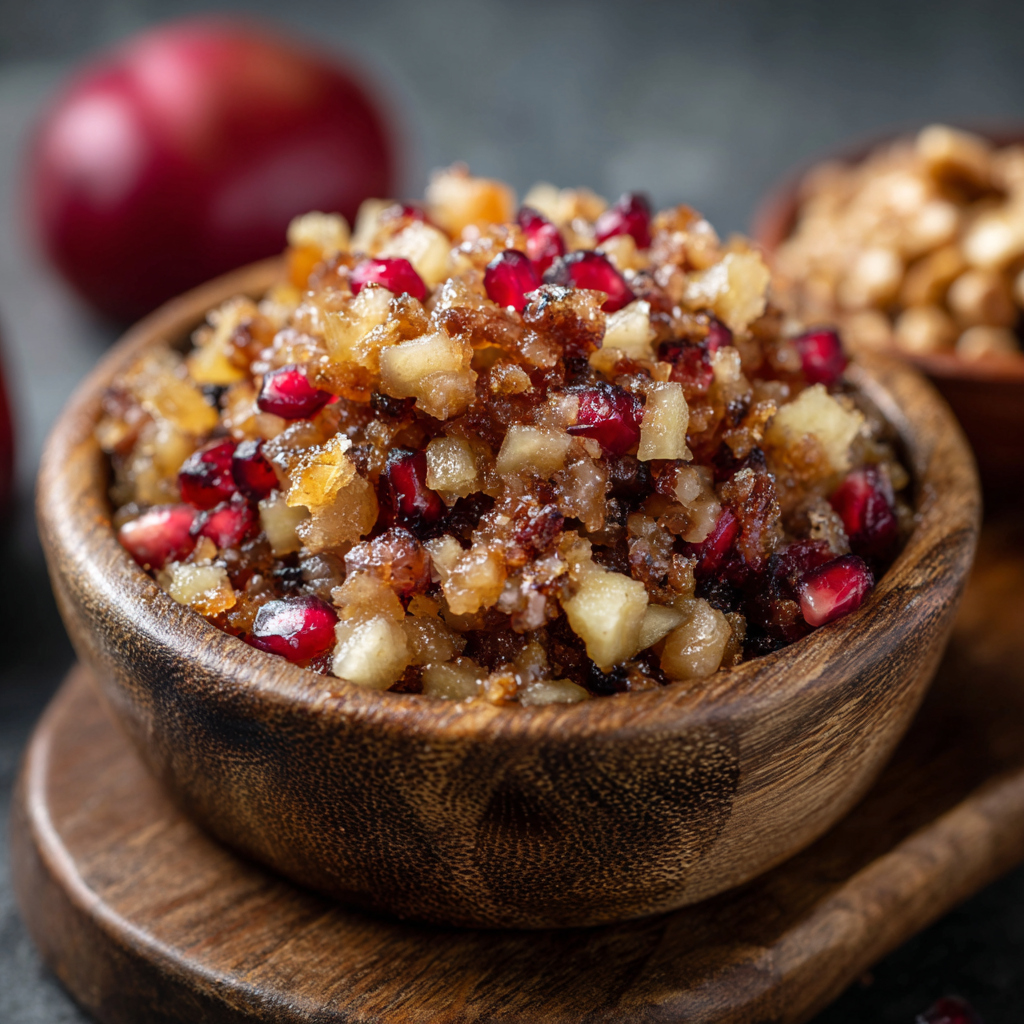
Charoset Recipe
Ingredients
Equipment
Method
- Prepare the apples: Peel, core, and finely chop the apples into small pieces.
- Mix with nuts: In a mixing bowl, combine apples with chopped walnuts (or almonds).
- Add dried fruits: Stir in raisins or chopped dates for natural sweetness.
- Flavor: Sprinkle in cinnamon and cloves, then drizzle honey over the mixture.
- Adjust moisture: Add grape juice (or apple juice) and stir well until everything is evenly coated.
- Taste & adjust: Add more honey for sweetness or juice for texture.
- Rest (optional): Let the charoset rest for 30 minutes to allow flavors to blend.
- Serve: Enjoy as a dip, spread on bread, or as a side with savory dishes.
Notes
- For a chunkier version, leave the apples and nuts in bigger pieces.
- For a smoother spread, pulse the mixture lightly in a food processor.
- Adjust the sweetness with more or less honey/maple syrup.
- Keeps well in the fridge in an airtight container for 4–5 days.


Share Your Twist
Share Your Twist on the Charoset Recipe 🍎🥄
Did you add almonds instead of walnuts? Maybe swapped honey for maple syrup, or blended it into a creamy spread? We’d LOVE to see your creative spins!
📸 Snap a photo and tag us on Instagram or Facebook using #OoohDelishTwist your version might be featured.
💌 Got a unique recipe twist? Email us at contact@ooohdelish.com and we’ll give your creation a tasty shoutout!

FAQs: Charoset Recipe
Can I make Charoset Recipe ahead of time?
Yes! Charoset tastes even better after sitting for a few hours or overnight in the fridge. The flavors blend beautifully.
What fruits can I use instead of apples in this Charoset Recipe?
You can substitute pears, figs, or even dried apricots for apples. Each adds its own sweetness and texture.
Is this Charoset Recipe vegan-friendly?
Yes, just replace honey with maple syrup or agave nectar for a 100% vegan version.
How should I serve Charoset Recipe?
It’s delicious as a spread on bread, a topping for yogurt, or as a side to savory meals.
Where can I find more healthy fruit & nut recipes?
You can explore more ideas on our Healthy Side Dishes & Salads collection.
Leave a Reply