

There’s something magical about the smell of freshly fried funnel cakes at a summer fair.
The warm vanilla aroma and the sizzle of batter in hot oil invite a closer look.
Additionally, imagine enjoying that same irresistible treat without leaving your kitchen.
This Funnel Cake Recipe brings carnival excitement home with a simple batter and everyday ingredients.
The crispy texture makes every bite special.
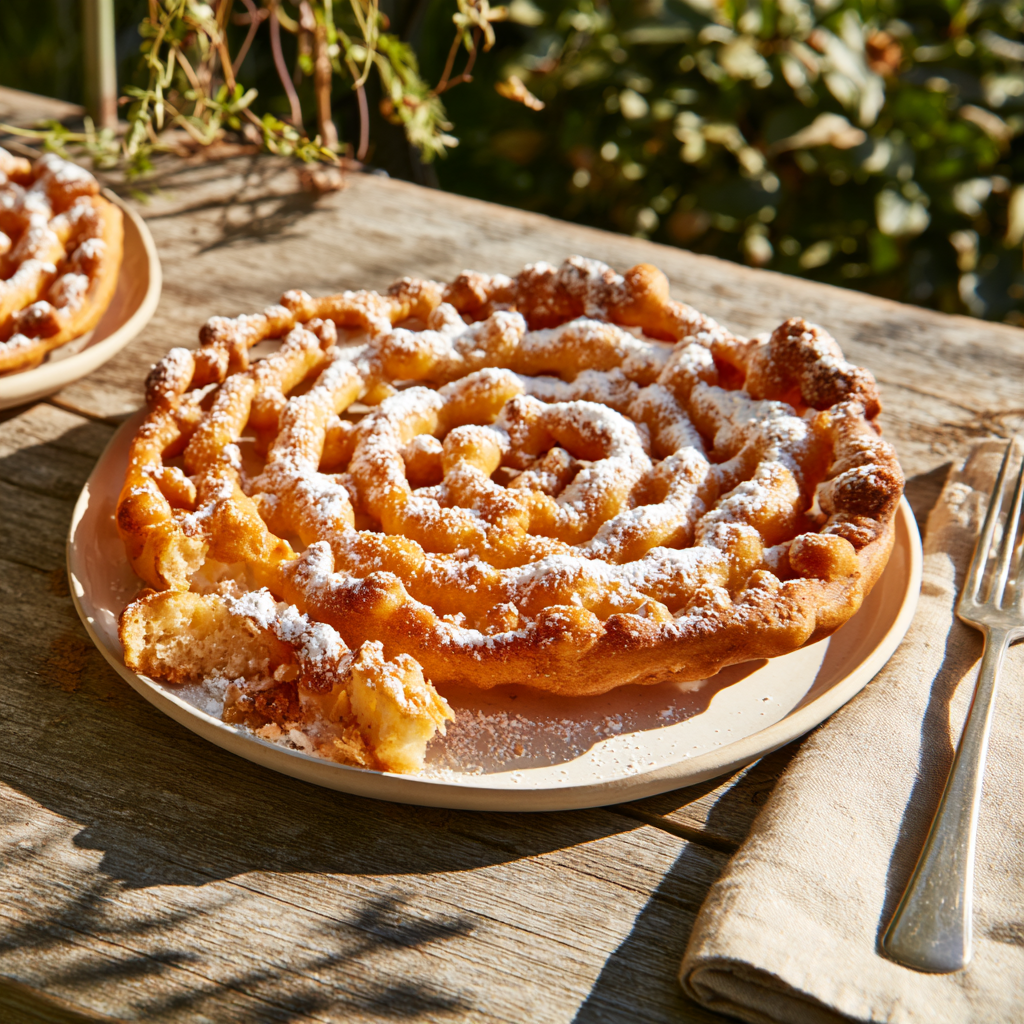
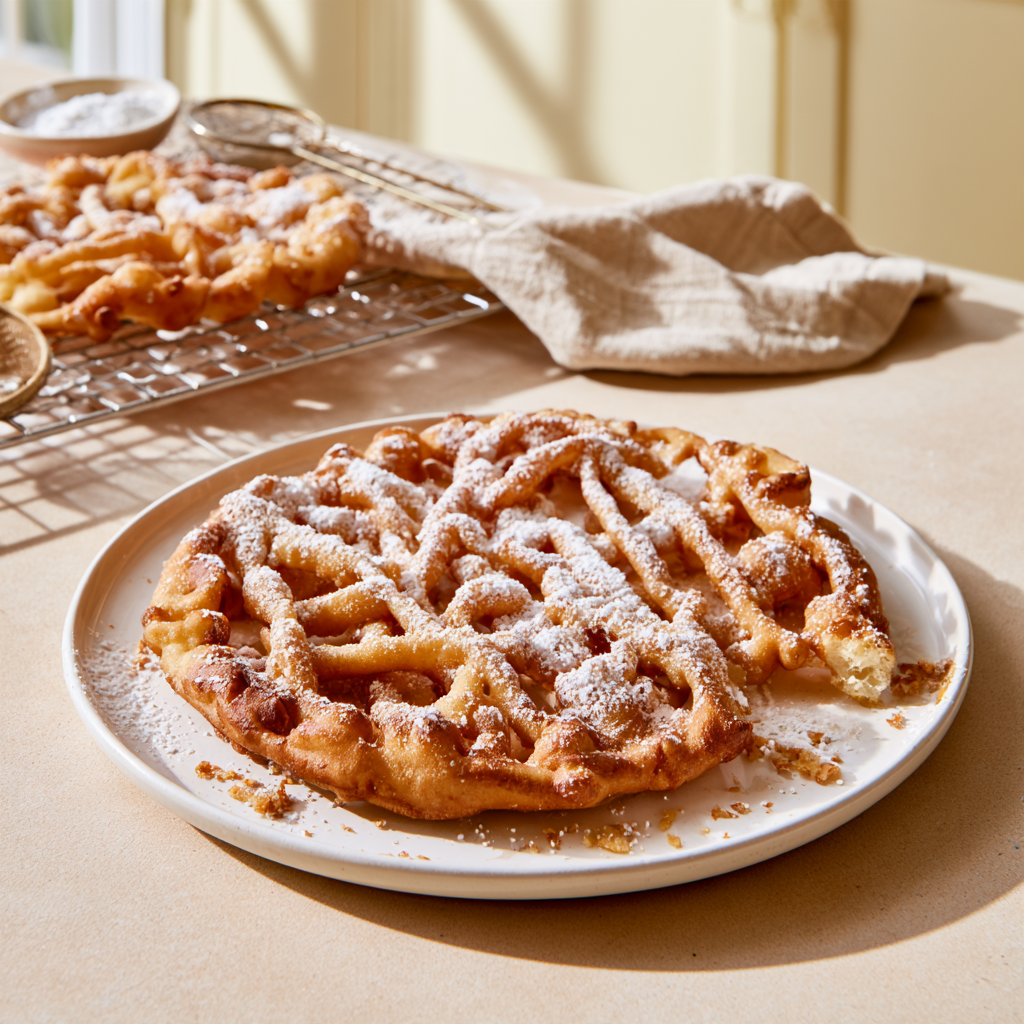
If you’ve ever visited a county fair, amusement park, boardwalk, or summer festival, you probably know how difficult it is to resist a freshly made Funnel Cake. Its delicate, overlapping ribbons of golden fried batter are lightly crisp on the outside, soft and tender inside, and wonderfully sweet when finished with powdered sugar. Unlike traditional cakes, Funnel Cake isn’t baked in an oven or prepared in a cake pan. Instead, a smooth, pourable batter is drizzled directly into hot oil in a swirling pattern, creating the beautiful, irregular shape that makes this dessert instantly recognizable.
The best part? Making Funnel Cake at home is easier than it looks. You don’t need professional baking experience, yeast, a complicated dough, or a special funnel cake machine. With all-purpose flour, milk, eggs, sugar, baking powder, vanilla extract, and a little salt, you can prepare a delicious batter in just a few minutes. A squeeze bottle, a kitchen funnel, or a measuring jug with a narrow pouring spout can help you create those signature golden spirals.
This easy Funnel Cake recipe is perfect for anyone who loves nostalgic desserts made from scratch. Whether you’re planning a family movie night, hosting a birthday celebration, preparing a weekend treat, or simply craving the delicious flavors of your favorite fairground snack, homemade funnel cakes bring a little extra excitement to the table.
And once you taste one warm, freshly fried, and generously dusted with powdered sugar, you’ll understand why this simple dessert has remained such a beloved American fairground favorite.
Funnel Cake Recipe
Equipment
- Large mixing bowl
- Medium mixing bowl
- Whisk
- Measuring cups and measuring spoons
- Digital kitchen scale (optional)
- Heavy-bottomed deep-sided saucepan or skillet suitable for frying
- Kitchen frying thermometer or candy thermometer
- Food-safe squeeze bottle with an approximately ¼-inch (6-mm) opening, or a suitable kitchen funnel
- Ladle or measuring cup for transferring batter
- Wide heat-resistant spatula
- Long-handled tongs or spider strainer
- Wire cooling rack
- Rimmed baking sheet or tray
- Fine-mesh sieve for powdered sugar
- Paper towels
- Serving plates
Ingredients
- Large mixing bowl
- Medium mixing bowl
- Whisk
- Measuring cups and measuring spoons
- Digital kitchen scale optional
- Heavy-bottomed deep-sided saucepan or skillet suitable for frying
- Kitchen frying thermometer or candy thermometer
- Food-safe squeeze bottle with an approximately ¼-inch 6-mm opening, or a suitable kitchen funnel
- Ladle or measuring cup for transferring batter
- Wide heat-resistant spatula
- Long-handled tongs or spider strainer
- Wire cooling rack
- Rimmed baking sheet or tray
- Fine-mesh sieve for powdered sugar
- Paper towels
- Serving plates
- 2 cups 240 g all-purpose flour
- 1½ cups 360 ml whole milk
- 2 large eggs at room temperature if convenient
- 2 tablespoons 25 g granulated sugar
- 2 teaspoons 8 g baking powder
- 1 teaspoon 5 ml pure vanilla extract
- ½ teaspoon fine salt
- ¼ teaspoon ground cinnamon optional
Instructions
- Step 1: Prepare Your Ingredients and Frying Station. Before making the funnel cake batter, measure all your ingredients and gather the necessary equipment. Set out the all-purpose flour, baking powder, sugar, salt, milk, eggs, vanilla extract, and optional cinnamon. Choose a heavy-bottomed, deep-sided saucepan or skillet with enough room to safely fry a 6–7-inch funnel cake. Place a wire cooling rack over a rimmed tray near the stove, keeping it away from the hot oil. Have your squeeze bottle or kitchen funnel, frying thermometer, and heat-resistant utensils ready. Prepare any toppings in advance because funnel cakes taste best when served shortly after frying. Keeping everything organized makes the cooking process easier, safer, and more enjoyable.
- Step 2: Combine the Dry Ingredients. In a medium mixing bowl, add 2 cups (240 g) all-purpose flour, 2 tablespoons (25 g) granulated sugar, 2 teaspoons (8 g) baking powder, and 1/2 teaspoon fine salt. If you enjoy a lightly spiced flavor, add 1/4 teaspoon ground cinnamon. Whisk thoroughly until all the ingredients are evenly distributed. Mixing the dry ingredients separately helps prevent uneven pockets of baking powder or salt in the finished batter. The flour provides structure, while the baking powder helps create the slightly tender, cake-like interior characteristic of homemade funnel cakes. The small quantity of sugar gently sweetens the batter without overpowering the powdered sugar topping added after frying.
- Step 3: Whisk the Wet Ingredients. In a separate large mixing bowl, crack 2 large eggs and whisk until the yolks and whites are combined. Pour in 1 1/2 cups (360 ml) whole milk and add 1 teaspoon (5 ml) pure vanilla extract. Continue whisking until the mixture looks smooth and evenly blended. The milk creates the liquid base needed for a pourable batter, while the eggs help bind the ingredients and develop structure during frying. The vanilla adds the familiar sweet aroma associated with freshly prepared fairground funnel cakes. An ordinary hand whisk works perfectly for this step, so there’s no need for an electric mixer or other specialized baking equipment.
- Step 4: Make the Funnel Cake Batter. Gradually add the dry ingredients to the wet mixture, whisking gently until combined. Continue mixing just until you have a relatively smooth batter without large pockets of dry flour. A few tiny lumps are acceptable, but avoid overmixing because excessive mixing can develop gluten and make the finished funnel cakes tougher than desired. The batter should resemble a smooth, pourable pancake batter rather than a thick dough. It needs enough body to create recognizable ribbons in hot oil while remaining fluid enough to pass easily through a squeeze bottle or funnel. If it looks unusually thick, don’t add a large amount of extra liquid immediately; check its consistency first.
- Step 5: Adjust the Batter Consistency. Lift the whisk above the mixing bowl and observe how the batter falls. It should flow back into the bowl in a steady, continuous ribbon rather than dropping in heavy clumps or running like water. If the batter is too thick, add additional milk 1 tablespoon at a time, gently mixing after each addition until it reaches the correct consistency. If it becomes too thin, stir in a small amount of flour and check again. Transfer a little batter into your squeeze bottle or funnel to confirm that it flows through the opening without clogging. An opening around 1/4 inch (6 mm) is a useful starting point for creating thin, connected ribbons.
- Step 6: Heat the Frying Oil to 375°F (190°C). Pour approximately 4–6 cups of neutral vegetable or canola oil into a suitable deep-sided saucepan or skillet, adjusting the amount to the dimensions of your cookware. Aim for approximately 1–1 1/2 inches (2.5–4 cm) of oil, but never fill the pan more than one-third full. Heat gradually over medium to medium-high heat until the oil reaches 375°F (190°C), using a frying thermometer for accuracy. Properly heated oil allows the batter to begin setting quickly and develop crisp, golden edges. Oil that is too cool can produce greasy funnel cakes, while excessively hot oil can burn the thin exterior before thicker sections finish cooking. Never leave hot oil unattended or allow water to enter the pan.
- Step 7: Fill the Squeeze Bottle or Funnel. Once the oil is almost ready, carefully transfer some of the prepared batter into a clean, food-safe squeeze bottle or suitable kitchen funnel. Fill the squeeze bottle approximately halfway rather than completely so it’s easier to control. If using a funnel, be prepared to control the flow of batter safely before positioning it near the hot oil. Check that the pouring opening is unobstructed and that the outside of the tool is dry. For medium funnel cakes, plan to use approximately 1/2–2/3 cup batter per cake. The exact amount depends on the pan’s size and the desired diameter. A controlled, narrow stream helps create the delicate, crisp ribbons associated with traditional fairground funnel cakes.
- Step 8: Pour the Batter Into Overlapping Swirls. When the oil reaches 375°F (190°C), carefully position the squeeze bottle or funnel a short, safe distance above the oil. Begin pouring the batter into the center of the pan, moving your hand in loose, overlapping circles. Gradually extend the pattern outward until you form a connected cake approximately 6–7 inches across. Add a few gentle crisscrossing lines to join the different loops together. This helps the funnel cake hold its shape when lifted and flipped. Avoid pouring the batter into one large puddle, which may create a thick, doughy center. Slightly irregular swirls are perfectly normal and contribute to the authentic homemade appearance. Stop pouring once you’ve created a connected lattice with plenty of exposed edges.
- Step 9: Fry the First Side Until Lightly Golden. Allow the freshly poured batter to fry without disturbing it immediately. The ribbons should begin bubbling and setting as soon as they enter the properly heated oil. Fry for approximately 1–2 minutes, watching as the underside gradually develops a golden color. The outer edges should become firmer, while the overlapping ribbons begin forming one connected cake. Avoid trying to lift or turn the funnel cake before the first side has set, as the delicate structure may break apart. Keep an eye on the oil temperature and make small adjustments if necessary. The goal is an even golden color rather than a dark brown exterior. Thicker intersections may take slightly longer to cook than the thinner ribbons.
- Step 10: Carefully Flip and Fry the Second Side. Once the first side is golden and the cake holds together, carefully turn it using a wide, heat-resistant spatula supported by long-handled tongs or another suitable frying utensil. Work slowly to avoid splashing hot oil. Fry the second side for approximately 1–2 additional minutes, or until both sides are golden and the thicker ribbons are cooked through. The finished funnel cake should have crisp-looking edges and a tender interior without wet, raw batter. If the edges become very dark before the center cooks, reduce the oil temperature slightly for the next cake and try pouring thinner ribbons. Use visual doneness rather than relying entirely on the timer because cake thickness and oil temperature can affect cooking time.
- Step 11: Remove and Drain the Funnel Cake. Once the funnel cake is golden and cooked through, carefully lift it from the oil using a spider strainer or suitable heat-resistant utensil. Hold it over the pan briefly so excess oil can drip away, then transfer it to the prepared wire rack. Let it drain for approximately 30–60 seconds. A wire rack allows air to circulate underneath and helps prevent the bottom from sitting in collected oil. Avoid stacking hot funnel cakes or covering them tightly, as trapped steam can soften their crisp exterior. The finished cake should look beautifully golden with slightly uneven loops, delicate edges, and a rustic fairground-style appearance. Keep it ready for topping and serving while continuing with the remaining batter.
- Step 12: Repeat With the Remaining Batter. Allow the oil to return to approximately 375°F (190°C) before starting the next funnel cake. Refill the squeeze bottle if necessary and repeat the same overlapping circular pouring technique, using approximately 1/2–2/3 cup batter for each cake. Fry one medium cake at a time unless your equipment safely accommodates more. This helps maintain the oil temperature and makes turning the delicate pastries easier. Continue until the batter is used, making approximately 5–6 medium funnel cakes depending on the amount poured per cake. If your cakes vary slightly in size or shape, that’s completely acceptable. After frying, turn off the heat and allow the oil to cool completely before handling or disposing of it.
- Step 13: Dust the Funnel Cakes With Powdered Sugar. While each funnel cake is still warm, transfer it to a serving plate and finish with a generous but controlled dusting of powdered sugar. Place a little of the measured 1/2 cup (60 g) powdered sugar into a fine-mesh sieve and gently shake it over the golden ribbons. The sugar should settle across the delicate swirls, creating the classic contrast between the white topping and golden fried batter. Add more or less according to your preference, dividing the available sugar between the finished cakes. For a traditional fairground version, powdered sugar is all you need. Add it shortly before serving so it remains visible and doesn’t completely dissolve into the warm pastry.
- Step 14: Add Optional Toppings and Serve Warm. Serve the homemade funnel cakes immediately while their edges are still lightly crispy and the centers remain tender. For a fruity variation, arrange fresh sliced strawberries or blueberries over the top. For a more indulgent dessert, add a small drizzle of chocolate sauce or a spoonful of whipped cream. You can also finish the cakes with cinnamon sugar instead of powdered sugar for a warm, comforting variation. Add wet toppings only when you’re ready to serve because sauces and fruit juices can soften the delicate fried ribbons. Funnel cakes are most delicious when freshly made, so encourage everyone to enjoy their portion while it’s still slightly warm and wonderfully golden.
- Step 15: Store and Reheat Any Leftovers. Although funnel cakes are best enjoyed immediately, leftovers can be cooled completely and stored in a covered container. For this homemade recipe, refrigerate leftover cakes promptly and use them within approximately 3–4 days for best quality. Store cakes without wet toppings whenever possible, separating layers with parchment paper if necessary. To reheat, place the cakes on a baking sheet in a preheated 350°F (175°C) oven for approximately 5–8 minutes, checking frequently until heated through and somewhat crisp again. The reheated texture may not be identical to freshly fried funnel cake. Dust with fresh powdered sugar after reheating rather than before storage. Avoid microwaving when maintaining a crispy exterior is your priority.
Notes
- Origins of Funnel Cake Recipe: From Medieval Fried Pastries to America's Favorite Fairground Dessert
- Health Benefits of Funnel Cake Recipe: Nutrition, Ingredients & How to Enjoy This Classic Dessert Mindfully
- Funnel Cake Health Benefits at a Glance
- 1. Funnel Cake Provides Carbohydrates for Energy
- 2. Eggs Contribute Protein and Essential Nutrients
- 3. Milk Adds Calcium and Some Protein
- 4. Enriched Flour Can Provide B Vitamins and Iron
- 5. Homemade Funnel Cake Allows Better Control Over Added Sugar
- 6. Choosing the Right Cooking Oil Can Improve the Fat Profile
- 7. Homemade Funnel Cake Can Be Made in Smaller Portions
- Funnel Cake Health Benefits at a Glance
- How to Make Funnel Cake Recipe: Easy Step-by-Step Instructions for Crispy Homemade Funnel Cakes
- Step 1: Prepare Your Ingredients and Cooking Station
- Step 2: Mix the Dry Ingredients
- Step 3: Whisk Together the Wet Ingredients
- Step 4: Combine the Wet and Dry Ingredients
- Step 5: Check the Funnel Cake Batter Consistency
- Step 6: Heat the Frying Oil to 375°F (190°C)
- Step 7: Pour the Batter Into a Classic Funnel Cake Shape
- Step 8: Fry the First Side Until Golden
- Step 9: Carefully Flip the Funnel Cake
- Step 10: Remove and Drain the Funnel Cake
- Step 11: Repeat With the Remaining Batter
- Step 12: Dust With Powdered Sugar
- Step 13: Add Your Favorite Funnel Cake Toppings
- Step 14: Serve Your Homemade Funnel Cake Warm
Origins of Funnel Cake Recipe: From Medieval Fried Pastries to America’s Favorite Fairground Dessert
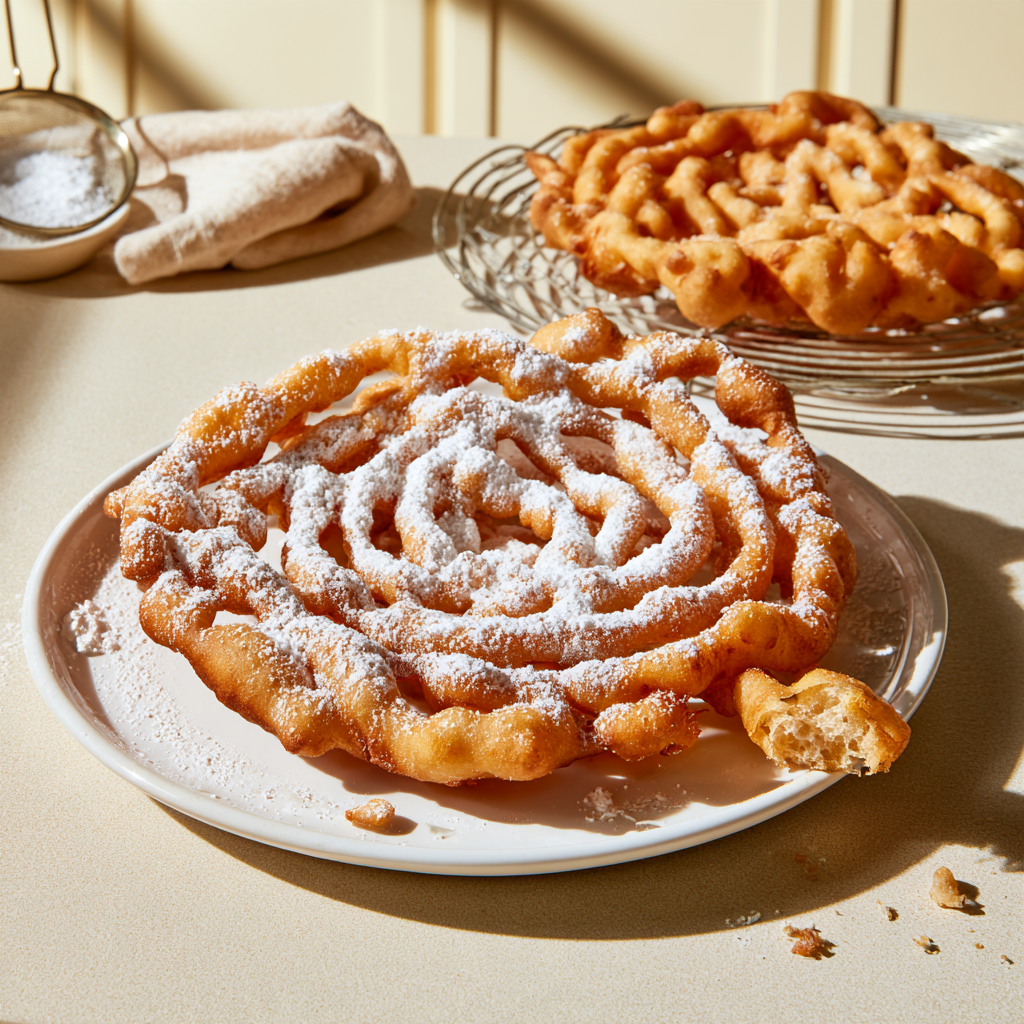
Few desserts capture the excitement of an American summer fair quite like a freshly made Funnel Cake Recipe. With its delicate golden swirls, crispy edges, soft interior, and generous dusting of powdered sugar, funnel cake has become one of the most recognizable treats at carnivals, amusement parks, and outdoor festivals. But behind this seemingly simple fried dessert lies a fascinating culinary history that stretches far beyond modern American fairgrounds.
Although funnel cakes are strongly associated with American food culture, the idea of pouring batter into hot oil to create thin, irregular pastries is much older. Similar preparations appeared in medieval European cooking, while related fried-batter traditions developed in other parts of the world.
The version most familiar to Americans is particularly connected to Pennsylvania Dutch cooking, where German-speaking communities preserved and adapted traditional fried pastries. During the twentieth century, cultural festivals helped introduce these regional specialties to a wider audience, eventually turning funnel cake into a beloved fairground classic.
What makes the history especially interesting is that funnel cake wasn’t invented at a carnival. Its story involves older cooking traditions, family recipes, changing ingredients, and the transformation of a regional food into a popular American dessert.
Let’s explore where funnel cakes came from, why they have their distinctive shape, and how a simple mixture of flour, eggs, and milk became such an iconic treat.
Where Did Funnel Cake Originally Come From?
The origins of funnel cake are best understood as a combination of older fried-batter traditions and later American culinary development.
People have prepared fried dough and batter-based pastries for centuries, using different ingredients, shapes, and cooking methods.
Food historians have identified medieval recipes in which batter was poured through a small opening into hot fat or oil. This technique allowed cooks to create strands, ribbons, or irregular patterns rather than forming a solid cake.
Some accounts trace related fritter traditions to medieval Persian and Arab cooking, where fried pastries sweetened with sugar or syrup were already familiar.
Similar preparations also appeared in medieval European cookbooks.
However, it would be too simplistic to claim that today’s American funnel cake was invented in one particular medieval country.
The available historical evidence shows that the technique of frying poured batter is much older than the modern American dessert, but it doesn’t establish an uninterrupted recipe lineage from one ancient preparation to every funnel cake sold today.
The clearest historical connection to the American version is found in Pennsylvania’s German-speaking communities.
Health Benefits of Funnel Cake Recipe: Nutrition, Ingredients & How to Enjoy This Classic Dessert Mindfully
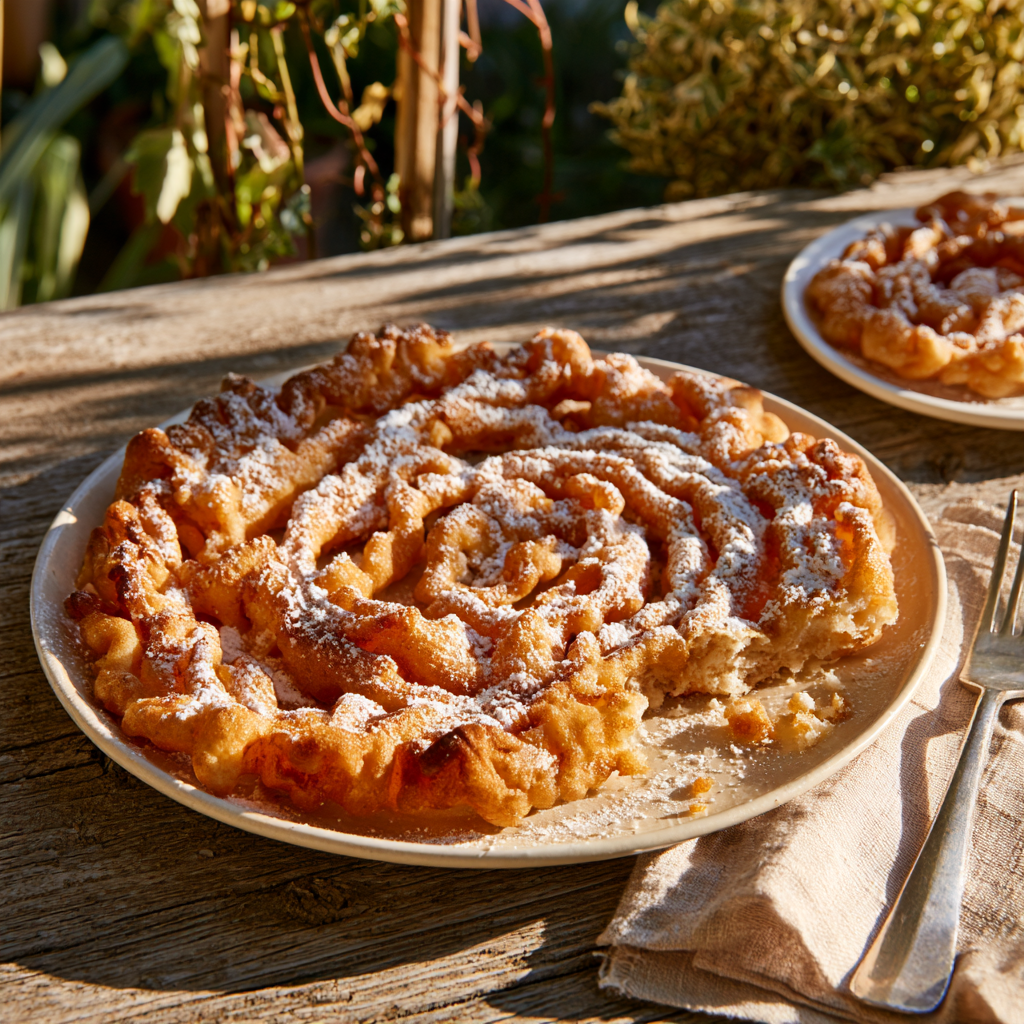
Golden, crispy, and covered in a delicate dusting of powdered sugar, a freshly made Funnel Cake Recipe is one of those desserts that instantly brings back memories of summer fairs, family celebrations, and happy afternoons spent enjoying something delicious. With its lightly crunchy edges, soft vanilla-flavored center, and irresistible sweetness, funnel cake is undeniably a special treat. But beyond its comforting flavor, what exactly does this popular fairground dessert offer nutritionally?
The answer might surprise you.
Although homemade funnel cake is primarily an indulgent dessert, its basic ingredients—flour, eggs, milk, and a little sugar—do contribute carbohydrates, protein, and small amounts of certain vitamins and minerals. These nutrients support ordinary bodily functions, but that doesn’t mean funnel cake should be considered a health food.
Unlike a bowl of fresh fruit, whole grains, or a balanced breakfast, traditional funnel cake is prepared by frying batter in hot oil. This increases its fat and calorie content, while the familiar powdered sugar topping adds sweetness without contributing substantial vitamins or minerals.
However, enjoying a funnel cake occasionally can absolutely fit into a varied, balanced eating pattern.
The advantage of preparing it yourself is that you can choose your ingredients, control the size of each cake, select an appropriate frying oil, and decide how much powdered sugar or other toppings to add.
You can also pair your funnel cake with fresh fruit, experiment with smaller portions, or keep the classic recipe simple rather than covering it in heavy sauces and multiple sweet toppings.
So, is funnel cake healthy?
It’s more accurate to describe funnel cake as a delicious occasional dessert that provides energy and modest amounts of some nutrients, rather than a food with significant or unique health benefits.
Let’s explore its nutritional characteristics, what each ingredient contributes, how frying affects the finished dessert, and how to make your easy Funnel Cake Recipe a little more balanced without sacrificing the wonderful fairground flavor everyone loves.
Funnel Cake Health Benefits at a Glance
| Ingredient | Nutritional Contribution | What It Means |
|---|---|---|
| All-purpose flour | Carbohydrates; some B vitamins and iron if enriched | Provides energy and contributes to normal metabolic functions |
| Eggs | Protein, choline, and other nutrients | Add structure while contributing modest nutritional value |
| Milk | Protein, calcium, and other nutrients | Provides moisture and some nutrients needed for normal body functions |
| Sugar | Carbohydrates | Supplies energy and sweetness but little additional nutritional value |
| Baking powder | Helps the batter rise | Improves texture rather than providing a meaningful nutritional benefit |
| Vanilla extract | Flavor and aroma | Makes the dessert more enjoyable without requiring much additional sugar |
| Cooking oil | Dietary fat | Creates the crisp texture and contributes calories |
| Fresh fruit toppings | Fiber, vitamins, and plant compounds | Can add nutritional variety and freshness |
| Homemade preparation | Control over ingredients and portions | Makes it easier to customize the dessert to your preferences |
Important: The nutritional benefits come primarily from individual ingredients. Frying and adding sugar don’t make funnel cake a particularly nutrient-dense dessert.
1. Funnel Cake Provides Carbohydrates for Energy
One of the main nutrients in a traditional Funnel Cake Recipe is carbohydrates.
All-purpose flour forms the foundation of the batter, and flour naturally contains starch.
During digestion, starch is broken down into smaller carbohydrates, including glucose, which the body uses as an energy source.
Glucose helps supply energy to the brain, muscles, and other tissues.
That’s why carbohydrate-containing foods are an important part of many balanced eating patterns.
However, not all carbohydrate sources provide the same nutritional value.
The refined flour commonly used in funnel cakes contains considerably less dietary fiber than many whole-grain foods.
The added sugar and powdered sugar topping provide additional carbohydrates but relatively few micronutrients.
That means funnel cake can provide energy without delivering the same fiber and nutritional benefits as fruits, legumes, or whole grains.
For the classic recipe, all-purpose flour remains a practical choice because it helps create a smooth batter and the familiar tender interior.
The goal isn’t to treat funnel cake as your primary carbohydrate source.
Instead, enjoy it as an occasional sweet dessert while obtaining most of your daily carbohydrates from a varied selection of nutritious foods.
2. Eggs Contribute Protein and Essential Nutrients
Eggs play an important role in traditional homemade funnel cake batter.
They help bind the ingredients together, contribute to the batter’s structure, and support the tender texture that makes the finished dessert so enjoyable.
Eggs also contain protein.
Protein is essential for normal tissue maintenance, enzyme production, and many other functions throughout the body.
In addition, eggs naturally provide nutrients such as choline, vitamin B12, and selenium.
Choline contributes to normal cell membrane structure and other important biological processes.
Vitamin B12 supports red blood cell formation and normal nervous system function.
Selenium participates in antioxidant enzyme activity and thyroid hormone metabolism.
However, a funnel cake recipe generally uses only a few eggs for the entire batch.
Once the batter is divided into individual cakes, each serving receives only part of those nutrients.
That’s why it would be misleading to describe funnel cake as a high-protein dessert.
The practical takeaway: Eggs contribute useful nutrients and improve the recipe’s texture, but funnel cake shouldn’t replace more substantial sources of dietary protein.
3. Milk Adds Calcium and Some Protein
Milk is another important ingredient in this homemade Funnel Cake Recipe.
It helps transform the flour and eggs into a smooth, pourable batter that can flow through a funnel or squeeze bottle.
Milk also contributes nutrients, including calcium and protein.
Calcium is needed for maintaining normal bones and teeth, supporting muscle contraction, and assisting with nerve signaling.
Milk naturally contains protein, which contributes to the body’s daily nutritional requirements.
Depending on the milk and its fortification, it may also provide vitamin D and other nutrients.
However, the quantity of milk used in the entire funnel cake recipe is divided among several servings.
As a result, each finished cake contains only a portion of the milk’s original nutrients.
Additionally, the dessert itself contains a mixture of flour, sugar, and frying oil, so milk’s nutritional benefits shouldn’t be used to describe the whole dessert as especially healthy.
If you want to enjoy milk’s calcium and protein more directly, a glass of milk or a serving of unsweetened yogurt would generally be a more substantial source.
In funnel cake, milk’s main culinary job is to create the right batter consistency while contributing modest nutritional value.
4. Enriched Flour Can Provide B Vitamins and Iron
Many brands of all-purpose flour sold in the United States are enriched with certain vitamins and minerals.
The enrichment process adds selected nutrients that were reduced during flour processing.
Depending on the product, these may include iron, thiamine, riboflavin, niacin, and folic acid.
These nutrients have different functions.
Iron helps the body produce hemoglobin, which carries oxygen in red blood cells.
Thiamine (vitamin B1) contributes to normal energy metabolism.
Riboflavin (vitamin B2) participates in processes that help the body use nutrients.
Niacin (vitamin B3) supports numerous metabolic reactions.
Folate is important for normal cell division and the production of genetic material.
Because funnel cake is made primarily from flour, an enriched flour can contribute some of these nutrients to the finished dessert.
However, the amounts vary depending on the flour used and the size of the serving.
Using enriched flour doesn’t transform funnel cake into a particularly nutritious food.
It simply means the dessert may contribute modest quantities of certain micronutrients in addition to carbohydrates.
OoohDelish Tip: Check the flour package if you’re interested in its nutritional composition. Enriched, unenriched, and whole-wheat flours have different nutrient profiles and can behave differently in batter.
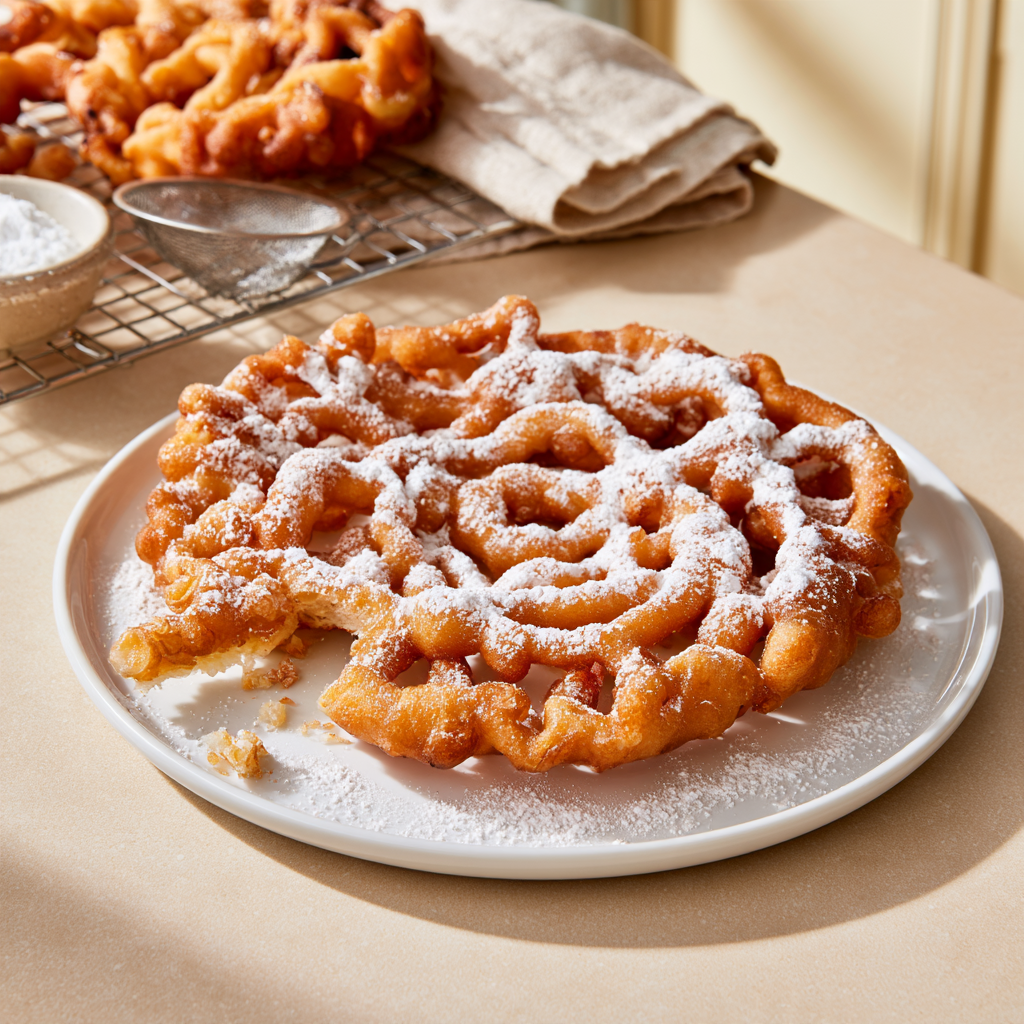
5. Homemade Funnel Cake Allows Better Control Over Added Sugar
One of the biggest advantages of making funnel cake at home is choosing how sweet you want it to be.
Traditional funnel cake recipes usually contain some sugar in the batter and additional powdered sugar after frying.
At fairs and amusement parks, desserts may be served with generous quantities of powdered sugar, chocolate sauce, caramel, whipped cream, or other sweet toppings.
These additions can make the finished dessert significantly richer.
When preparing funnel cake yourself, you can keep the batter only lightly sweetened and let the powdered sugar provide the familiar finishing touch.
You can also add flavor through vanilla extract or ground cinnamon without needing substantial additional sugar.
This doesn’t eliminate the carbohydrates naturally present in the flour.
It simply gives you greater control over the added sugar.
For example, you might enjoy a freshly fried funnel cake with a modest dusting of powdered sugar rather than covering it with several sweet sauces.
The result can still taste delicious because the golden batter, vanilla aroma, and crisp texture already contribute so much to the experience.
Remember: Lowering added sugar doesn’t automatically make a fried dessert low in calories, but it can reduce one source of extra energy.
6. Choosing the Right Cooking Oil Can Improve the Fat Profile
Traditional funnel cakes need hot oil to achieve their characteristic texture.
As the batter enters the oil, the outside begins cooking and developing a golden crust.
The thin ribbons create plenty of exposed edges, which become crisp as the cake fries.
However, some cooking oil is absorbed into the batter.
This adds fat and calories to the finished dessert.
The type of oil you use affects the balance of fatty acids.
For homemade funnel cakes, neutral oils such as canola, sunflower, or other suitable vegetable oils are practical choices.
These oils generally contain a greater proportion of unsaturated fat than butter, lard, or many solid cooking fats.
Unsaturated fats can be part of a heart-conscious eating pattern when they replace foods higher in saturated fat.
However, deep-frying is not considered a particularly health-promoting cooking method, even when using an oil that contains mostly unsaturated fats.
Fried foods still absorb oil, and the final calories depend on how the food is prepared.
For this OoohDelish recipe, keeping the frying temperature around 375°F (190°C) helps achieve the intended fairground texture.
Use a kitchen thermometer, avoid overheating the oil, and remove the cake when it becomes golden.
If the oil starts smoking or develops an unpleasant smell, stop using it.
The best approach is to use an appropriate fresh oil, fry carefully, and enjoy the finished dessert in a sensible portion.
7. Homemade Funnel Cake Can Be Made in Smaller Portions
One of the most practical ways to enjoy funnel cake more mindfully is to control the serving size.
At a fair, a funnel cake may be large enough to cover an entire paper plate.
Some versions are intended to be shared, while others are served with substantial toppings.
At home, you decide how much batter goes into each cake.
Instead of preparing one enormous funnel cake, you can make several smaller ones.
Mini funnel cakes offer the same golden ribbons, lightly crisp edges, and powdered sugar finish in a more manageable portion.
They are also convenient for families and gatherings because everyone can receive an individual dessert.
Smaller cakes may cook more quickly, so monitor them carefully rather than assuming they need exactly the same frying time as a large cake.
Portion size is particularly useful when you’re serving funnel cake after a full meal.
A small, freshly fried dessert may be just as enjoyable as a much larger portion.
You can appreciate the flavor, texture, and nostalgic experience without needing to finish an oversized plate.
How to Make Funnel Cake Recipe: Easy Step-by-Step Instructions for Crispy Homemade Funnel Cakes
Step 1: Prepare Your Ingredients and Cooking Station
Before mixing the batter, gather and measure all your ingredients.
Place the flour, baking powder, sugar, salt, and optional cinnamon near your mixing bowls. Measure the milk and vanilla extract, and have the eggs ready.
Choose a heavy-bottomed pan with deep sides, large enough to comfortably accommodate a funnel cake approximately 6–7 inches (15–18 cm) across.
Position a wire cooling rack over a baking sheet or tray and place it near the stove, but away from the hot oil.
Set out your powdered sugar and a fine-mesh sieve for dusting the cakes after frying.
Organizing everything before cooking makes the process easier because funnel cakes fry relatively quickly.
Once the batter enters the hot oil, you’ll need to pay attention to the color, shape, and cooking time.
OoohDelish Tip: Prepare your toppings before frying. Funnel cakes taste best when served immediately, so having everything ready helps you enjoy them at their crispiest.
Step 2: Mix the Dry Ingredients
In a medium mixing bowl, add:
- 2 cups (240 g) all-purpose flour
- 2 tablespoons (25 g) granulated sugar
- 2 teaspoons baking powder
- ½ teaspoon fine salt
- ¼ teaspoon ground cinnamon, if desired
Whisk the ingredients thoroughly until evenly combined.
This distributes the baking powder and salt throughout the flour, helping create a consistent batter.
Baking powder contributes to the slightly airy texture inside the fried ribbons, while the sugar adds a gentle sweetness.
Avoid adding excessive sugar to the batter.
The finished funnel cakes will receive powdered sugar after frying, so the batter itself doesn’t need to be overly sweet.
Why this step matters: Mixing the dry ingredients separately reduces the chance of having uneven pockets of baking powder or salt in the finished dessert.
Step 3: Whisk Together the Wet Ingredients
In a separate large mixing bowl, crack the two eggs.
Whisk them gently until the yolks and whites are combined.
Pour in 1½ cups (360 ml) of milk and add 1 teaspoon of vanilla extract.
Continue whisking until the mixture is smooth and uniform.
The milk provides the liquid needed to create a pourable batter, while the eggs help the batter hold together during frying.
Vanilla contributes that familiar sweet aroma associated with homemade funnel cakes.
If you enjoy a warm, lightly spiced flavor, the optional cinnamon from the dry ingredients works beautifully alongside the vanilla.
At this point, the wet mixture should be thin, pale yellow, and easy to whisk.
There is no need to use an electric mixer.
A regular kitchen whisk is all you need.
Step 4: Combine the Wet and Dry Ingredients
Gradually add the dry ingredients to the bowl containing the wet ingredients.
Whisk gently as you add the flour mixture.
Continue until the ingredients are combined and you have a relatively smooth batter.
A few tiny lumps are acceptable, but there shouldn’t be large pockets of dry flour.
Avoid mixing aggressively for several minutes.
Overmixing flour-based batters can develop too much gluten, potentially making the finished funnel cakes tougher than desired.
The batter should be smooth enough to pour steadily but thick enough to form recognizable ribbons when it enters the oil.
It will resemble a slightly thick pancake batter.
If the mixture looks unusually thick, add milk 1 tablespoon at a time, whisking gently after each addition.
If it flows too quickly and seems watery, stir in a small amount of flour.
Make adjustments gradually rather than adding large amounts at once.
OoohDelish Tip: The ideal funnel cake batter should flow in a steady, continuous ribbon. It shouldn’t fall in heavy clumps or run like water.
If you enjoy working with simple homemade batters, you’ll also love our Pete’s Pancake Recipe. Both recipes rely on familiar ingredients, but funnel cakes develop their distinctive golden crispness through frying rather than cooking on a griddle.
Step 5: Check the Funnel Cake Batter Consistency
Before heating the oil, check whether your batter is easy to pour.
Lift your whisk above the mixing bowl and observe how the batter falls.
It should flow down in a continuous stream rather than separating into thick blobs.
Next, transfer a small amount into your squeeze bottle or funnel to check that it moves through the opening without clogging.
If you’re using a squeeze bottle, avoid filling it completely.
Leaving some room makes the bottle easier to handle and helps you control the amount of batter released.
A practical approach is to fill the bottle halfway, then refill it between cakes.
If the batter is difficult to squeeze, add a little milk.
If it runs through the opening too rapidly, it may need a small amount of additional flour.
Aim for consistency rather than perfection.
A properly mixed batter will help create thin, connected loops that fry into the familiar fairground shape.
Step 6: Heat the Frying Oil to 375°F (190°C)
Pour the neutral cooking oil into a suitable heavy-bottomed, deep-sided skillet or saucepan.
The oil should be deep enough for the funnel cake to float and cook without sticking to the bottom.
Leave substantial space above the oil for bubbling, and never fill the pan more than one-third full.
Heat the oil gradually over medium to medium-high heat until it reaches approximately 375°F (190°C).
Use a kitchen thermometer to monitor the temperature.
This is one of the most important steps in the entire recipe.
If the oil is too cool, the batter may spread excessively and absorb more oil, producing a heavy or greasy funnel cake.
If the oil is too hot, the thin outer ribbons may brown or burn before the thicker intersections have cooked completely.
Try to maintain the oil near 375°F throughout frying.
You’ll probably need to make small heat adjustments between batches.
Frying Safety: Keep water away from hot oil, never leave the pan unattended, and ensure the squeeze bottle or funnel is clean and dry on the outside. Keep children and pets away from the stove while frying.
Step 7: Pour the Batter Into a Classic Funnel Cake Shape
Once the oil reaches the correct temperature, you’re ready for the most exciting part!
Hold the filled squeeze bottle or funnel a short, safe distance above the hot oil.
Begin releasing the batter slowly in a circular motion.
Start near the middle of the pan and move outward, forming overlapping circles.
Then move the stream back across the circles in a few gentle crisscrossing lines.
This helps the ribbons connect into one funnel cake rather than separate fried pieces.
Use approximately ½–⅔ cup of batter per medium funnel cake, depending on your pan size.
Aim for a finished diameter of around 6–7 inches.
The batter should begin sizzling and setting almost immediately after touching the oil.
Continue pouring until the cake has a loose, connected lattice pattern.
Don’t worry about achieving a perfect spiral.
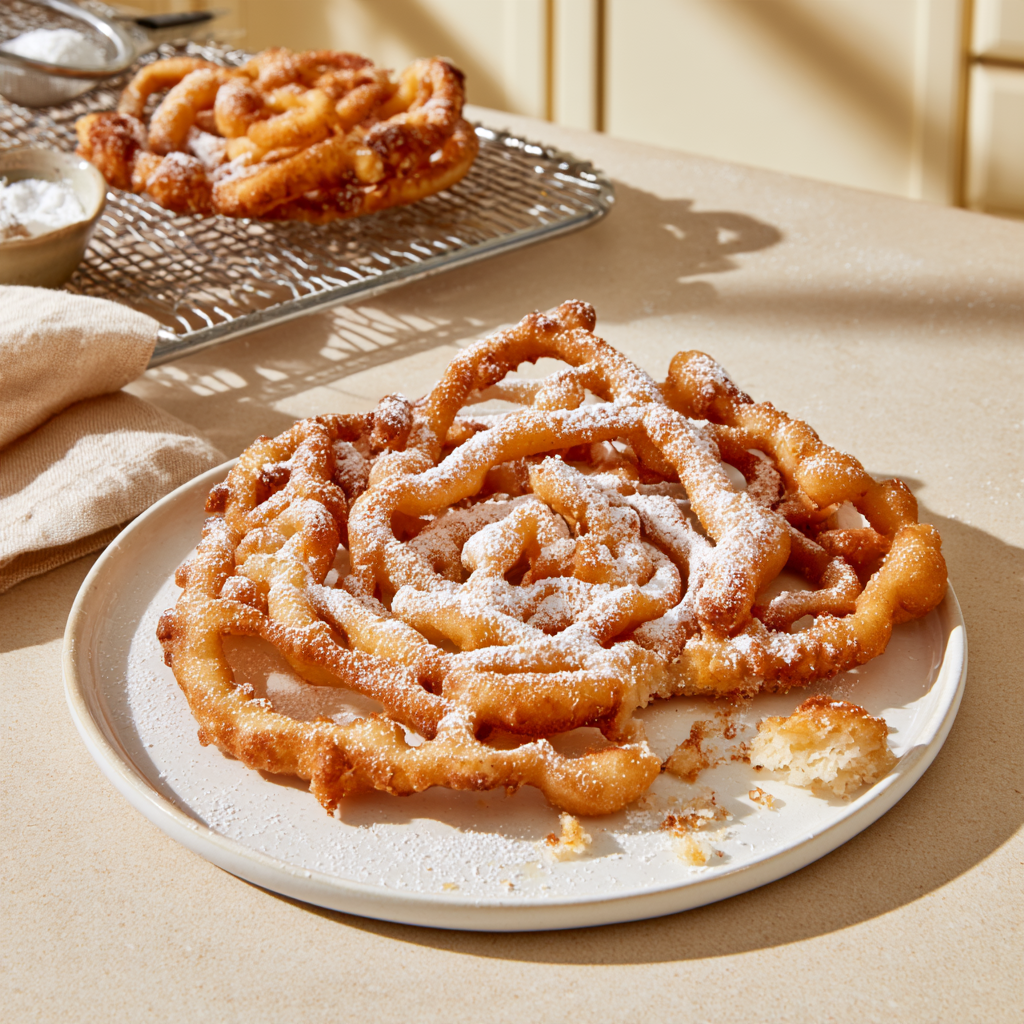
Slightly uneven circles and irregular loops are part of the traditional homemade appearance.
OoohDelish Secret: Overlap the batter ribbons several times. If you pour separate circles that never touch, the cake may break into individual pieces during frying.
Step 8: Fry the First Side Until Golden
Once the batter has formed a connected circle, stop pouring and allow the funnel cake to fry.
The oil should bubble gently around the batter as it begins cooking.
Fry the first side for approximately 1–2 minutes, depending on the thickness of the ribbons and the oil temperature.
Watch for the edges to become golden.
The batter should gradually develop a firmer structure, allowing the cake to hold together.
Avoid moving it too early.
Freshly poured funnel cake batter is delicate until the outer surface has set.
Use a thermometer to check that the oil remains reasonably close to 375°F.
If the temperature falls significantly after adding the batter, adjust the heat gently.
The goal is a light golden color rather than a very dark brown crust.
How to know it’s ready to flip: The underside should be golden and the connected ribbons should feel firm enough to turn without falling apart.
Step 9: Carefully Flip the Funnel Cake
Using a wide spatula together with a suitable slotted utensil or tongs, carefully turn the funnel cake over.
Work slowly to avoid splashing hot oil.
Because funnel cakes have an irregular shape, you may need to support the center while flipping.
Once turned, allow the second side to fry for approximately 1–2 minutes, or until golden and fully cooked.
The finished cake should have a beautifully browned exterior and a light, tender interior.
Thicker intersections may require slightly longer than the thin outer edges.
If the cake darkens very quickly, the oil may be too hot.
If it remains pale and greasy, the temperature may be too low.
Continue watching the color and adjust the heat between cakes as necessary.
OoohDelish Tip: A properly fried funnel cake should look golden and slightly crisp, not dark brown or heavily soaked with oil.
Step 10: Remove and Drain the Funnel Cake
Once both sides are golden, carefully lift the funnel cake from the oil using a spider strainer or appropriate slotted utensil.
Hold it above the pan briefly to allow excess oil to drip back into the fryer.
Then transfer it to the prepared wire cooling rack.
Let the cake drain for approximately 30–60 seconds.
This resting period helps remove some excess surface oil and allows the texture to settle slightly.
The funnel cake should still be warm when served.
A wire rack is especially helpful because it allows air to circulate underneath, preventing the bottom from sitting in oil.
A paper-towel-lined tray can work if a rack is unavailable, although the underside may soften slightly.
Avoid stacking freshly fried funnel cakes while hot.
Trapped steam can reduce their crispness.
Step 11: Repeat With the Remaining Batter
Before pouring the next funnel cake, check the oil temperature again.
Allow it to return to approximately 375°F (190°C).
If necessary, refill your squeeze bottle with batter.
Repeat the same swirling technique, using approximately ½–⅔ cup for each medium cake.
Fry one funnel cake at a time unless your equipment is large enough to accommodate multiple cakes safely.
Working individually makes turning and monitoring easier.
Continue until all the batter is used.
Depending on the size of each portion, this recipe should yield approximately 5–6 medium funnel cakes.
If some cakes are slightly smaller or larger than others, that’s completely fine.
The finished dessert should feel homemade, not factory-produced.
Once frying is complete, turn off the heat and allow the remaining oil to cool completely before handling or disposing of it.
Never pour used frying oil down the kitchen sink.
Step 12: Dust With Powdered Sugar
Now comes the finishing touch that makes funnel cake so recognizable!
While the funnel cake is still warm, place it on a serving plate.
Add a few tablespoons of powdered sugar to a small fine-mesh sieve.
Gently shake the sieve over the cake, allowing the sugar to fall across its golden ribbons.
Dust the surface evenly, adding more or less depending on your preference.
The powdered sugar will settle into the irregular loops and create that classic fairground appearance.
You can also add a very small pinch of ground cinnamon for extra warmth.
The cake itself is only lightly sweetened, so the powdered sugar contributes much of the familiar dessert flavor.
For the best results, dust the funnel cake immediately before serving. If you add powdered sugar too early, it may gradually dissolve into the warm surface.
Step 13: Add Your Favorite Funnel Cake Toppings
A classic funnel cake with powdered sugar is delicious on its own, but homemade versions are wonderfully easy to customize.
For a fruity variation, add fresh sliced strawberries and a little whipped cream.
If you love chocolate, drizzle a small amount of warm chocolate sauce over the top.
For an autumn-inspired dessert, sprinkle the funnel cake with cinnamon sugar.
You can also add sliced bananas, blueberries, or another favorite fruit.
Remember that wet or heavy toppings gradually soften the crispy ribbons.
For the best texture, add them shortly before eating.
If you enjoy nostalgic fried desserts, our Recipe for Old Fashioned Doughnuts is another wonderful homemade treat to explore. Those doughnuts offer a thicker, cake-like texture, while funnel cakes are all about delicate, golden ribbons and crispy edges.
Step 14: Serve Your Homemade Funnel Cake Warm
Your homemade Funnel Cake Recipe is ready to enjoy!
Serve the cakes while they’re freshly fried, slightly warm, and beautifully dusted with powdered sugar.
The exterior should have a delicate crunch, while the thicker overlapping sections remain soft and tender.
For a traditional fairground experience, serve each cake on a large plate with nothing more than powdered sugar.
If you’re making these for a party, arrange the toppings in separate bowls so everyone can customize their dessert.
Mini funnel cakes can also be a fun option for gatherings.
Simply use less batter and create smaller swirls.
Remember to adjust the frying time according to the size and thickness.
Most importantly, enjoy the cakes fresh.
That’s when the texture is at its best and the vanilla aroma is especially inviting.
Frequently Asked Questions About Homemade Funnel Cake Recipe
Dreaming of warm, golden funnel cakes with crispy edges, fluffy centers, and a beautiful dusting of powdered sugar? These practical answers explain how to prepare the perfect batter, create those signature swirls, maintain the right frying temperature, prevent greasy or broken funnel cakes, and enjoy classic carnival flavor right in your own kitchen.
1. What is funnel cake, and what does it taste like?
Funnel cake is a classic American fairground dessert made by drizzling a pourable batter into hot oil in overlapping circles and swirls. The batter fries into a delicate, irregular web with golden, crispy edges and a soft, slightly fluffy interior. Its flavor is mildly sweet, buttery-tasting, and reminiscent of freshly fried doughnuts or pancakes. Traditional funnel cakes are generously dusted with powdered sugar and served warm. They’re especially associated with fairs, boardwalks, festivals, and summer celebrations.
2. What ingredients do you need for a homemade funnel cake recipe?
Most homemade funnel cake recipes use all-purpose flour, milk, eggs, sugar, baking powder, and a little salt. Vanilla extract is commonly added for flavor, while a pinch of cinnamon is optional. You’ll also need a neutral cooking oil suitable for frying, such as canola or vegetable oil, plus powdered sugar for serving. These everyday ingredients create a batter that flows into thin ribbons and becomes beautifully golden when fried. Follow the exact quantities in your recipe card for consistent results.
3. Is funnel cake batter the same as pancake batter?
Funnel cake batter is similar to pancake batter, but the consistency is especially important. Both typically contain flour, milk, eggs, and baking powder. However, funnel cake batter needs to flow through a dispenser in a continuous ribbon while remaining thick enough to hold together in hot oil. Batter that’s excessively thin may form scattered droplets, while overly thick batter can clog the dispenser. For another simple batter-based breakfast, explore our Best Hotcake Mix Recipe .
4. Can you make funnel cake using pancake mix?
Yes, pancake mix can be used as a shortcut for homemade funnel cakes. Because many mixes already contain flour, leavening ingredients, and salt, they can simplify preparation. However, the amount of liquid needed may differ from ordinary pancake instructions. Adjust the batter according to a funnel cake recipe specifically designed for pancake mix, adding vanilla or a little sweetness if desired. The finished batter should flow smoothly without becoming watery. Avoid assuming every commercial mix behaves identically.
5. What should the perfect funnel cake batter consistency be?
The ideal funnel cake batter should be smooth, pourable, and thick enough to form a continuous ribbon. It should move through a funnel or squeeze bottle without excessive force or breaking into individual drops. If the batter is too thick, add a small amount of milk and mix gently. If it is too thin, add a little flour and recheck the consistency. Avoid overmixing, which can make the finished funnel cake tougher than desired.
6. How do you make funnel cakes without a funnel?
You don’t need a traditional funnel to make homemade funnel cakes. A food-safe squeeze bottle or sturdy piping bag can make the process easier and give you better control. Choose an opening suitable for a continuous stream of batter, often around 1/4 inch wide. Carefully guide the batter into the hot oil using circles and overlapping zigzags. Keep your hands safely away from splashes. A squeeze bottle is particularly convenient for beginners learning to create even swirls.
7. What is the best oil and temperature for frying funnel cakes?
Vegetable oil or canola oil at approximately 375°F (190°C) is a common choice for frying homemade funnel cakes. These oils have relatively neutral flavors that allow the cake itself to shine. A deep-frying thermometer helps maintain the correct temperature. If the oil is too cool, the cake may absorb excess grease; if it’s too hot, the outside can darken before the middle cooks properly. Use a sturdy, deep-sided pot with sufficient space above the oil.
8. How long does it take to fry homemade funnel cake?
Most medium-sized funnel cakes need approximately 1–2 minutes per side when fried at the temperature recommended by the recipe. The exact time depends on the thickness of the batter ribbons, cake size, and oil temperature. Gently turn the cake with suitable long-handled tongs or a spider strainer once the first side becomes golden and firm enough to handle. Remove when both sides are evenly golden and the interior is cooked through.
9. Why is my funnel cake greasy or soggy instead of crispy?
Greasy funnel cakes often result from oil that’s too cool, overcrowding, or insufficient draining after frying. When the oil temperature drops, the batter may absorb more cooking oil before developing a crisp exterior. Allow the oil to return to the correct temperature between batches and fry only as many cakes as your pot can comfortably accommodate. Place finished cakes on a wire rack to allow excess oil to drain without trapping steam beneath them.
10. Why does my funnel cake batter break apart in the frying oil?
Funnel cakes can separate when the batter is overly thin, the stream is interrupted, or the swirls are too far apart. Make overlapping circles and zigzags so the ribbons connect as they fry. Use a steady, manageable stream and avoid pouring from excessive height above the oil. Check that the batter has enough thickness to hold together. Keep the cake reasonably compact so it’s easier to flip without breaking.
11. How do you make funnel cake crispy outside and fluffy inside?
Balanced batter, fresh baking powder, and consistent frying temperature are the keys to the classic funnel cake texture. Whisk the wet and dry ingredients just until combined, avoiding unnecessary overmixing. Use reasonably thin batter ribbons that overlap without forming a thick, doughy mound. Fry until golden on both sides, then drain on a rack and serve promptly. For another homemade treat with a delicious golden crust, try our Apple Cider Donut Loaf .
12. Can you make funnel cake in an air fryer or bake it?
Yes, but air-fried or baked variations need a different preparation method from traditional fried funnel cakes. Conventional funnel cake batter is poured directly into hot oil, which immediately sets the flowing ribbons. In an oven or air fryer, the same liquid batter may spread before it firms up. Choose a recipe specifically designed for baking or air frying, often with a thicker dough. Expect a different texture from classic fairground funnel cake.
13. Can homemade funnel cake be egg-free, dairy-free, or gluten-free?
Yes, these variations are possible, but they require suitable adjustments to the batter. For a dairy-free option, some recipes use unsweetened plant-based milk instead of regular milk. Egg-free formulations may use alternative binding ingredients, while gluten-free versions require an appropriate gluten-free flour blend. These substitutions can change batter flow, frying behavior, and texture. Use a tested recipe for dietary adaptations rather than removing several ingredients from a standard recipe without adjusting their proportions.
14. Can I prepare funnel cake batter ahead of time?
Funnel cake batter is generally best prepared shortly before frying because baking powder begins reacting once combined with liquid. For convenience, measure and combine the dry ingredients ahead of time and refrigerate the wet ingredients separately. Then mix them together shortly before cooking. If your specific recipe permits make-ahead batter, keep it covered and refrigerated, and follow its storage instructions. Never leave batter containing eggs and milk at room temperature for extended periods.
15. What are the best toppings for homemade funnel cake?
Powdered sugar is the classic funnel cake topping, but there are many delicious ways to customize this carnival favorite. Try sliced strawberries, fresh blueberries, chocolate sauce, cinnamon sugar, caramel drizzle, whipped cream, or a scoop of vanilla ice cream. Add delicate toppings just before serving to preserve the crispy texture. If you enjoy cinnamon-sugar desserts, explore our Pumpkin Churro Cheesecake Bars for another sweet treat with irresistible warm-spice flavor.
16. How do you store, freeze, and reheat leftover funnel cakes?
Homemade funnel cakes taste best immediately after frying, when their edges are crisp and the centers remain tender. If you have leftovers, let them cool and place them in a covered container. Plain cakes can be refrigerated for short-term storage or frozen in individual portions for longer storage. Reheat in an oven at approximately 350°F (175°C) until hot and lightly crisp again. Add fresh powdered sugar after reheating. For another simple homemade dessert, explore our 3 Ingredient Sugar Cookie Recipe .