


Imagine slicing into a beautifully soft, delicate green cake with a tender, moist crumb and the unmistakable aroma of Japanese matcha. This Matcha Gateau Recipe brings together the earthy, slightly bittersweet flavor of finely ground green tea and the gentle sweetness of a homemade cake. Every bite offers a lovely balance of flavors, with matcha adding a distinctive depth that makes this dessert feel a little more special than an ordinary sponge cake. Its naturally green color creates an eye-catching presentation without requiring artificial coloring, making it a wonderful choice for birthdays, afternoon tea, family gatherings, or a relaxing weekend baking project.
If you already enjoy matcha desserts like our creamy Green Tea Ice Cream Matcha, you’ll love discovering how this wonderful ingredient transforms a simple cake into something memorable. Unlike overly sweet desserts, a well-balanced matcha gâteau allows the delicate green tea flavor to shine while remaining pleasantly sweet and satisfying.


Matcha Gateau Recipe
Equipment
- wo 8-inch (20 cm) round cake pans
- Parchment paper
- Large mixing bowl
- Medium mixing bowl
- Electric hand mixer or stand mixer
- Fine-mesh sieve
- Digital kitchen scale
- Measuring cups and spoons
- Silicone Spatula
- Wire cooling rack
- Offset spatula
- Cake turntable (optional)
- Piping bag (optional)
Ingredients
- Amount Ingredient
- 1¾ cups 220 g All-purpose flour
- 2 tablespoons 12 g Culinary-grade matcha powder
- 2 teaspoons 8 g Baking powder
- ¼ teaspoon 1.5 g Fine salt
- ½ cup 113 g Unsalted butter, softened
- ¾ cup 150 g Granulated sugar
- 3 large Eggs room temperature
- ½ cup 120 ml Whole milk, room temperature
- ¼ cup 60 g Plain Greek yogurt
- 1 teaspoon 5 ml Vanilla extract
Instructions
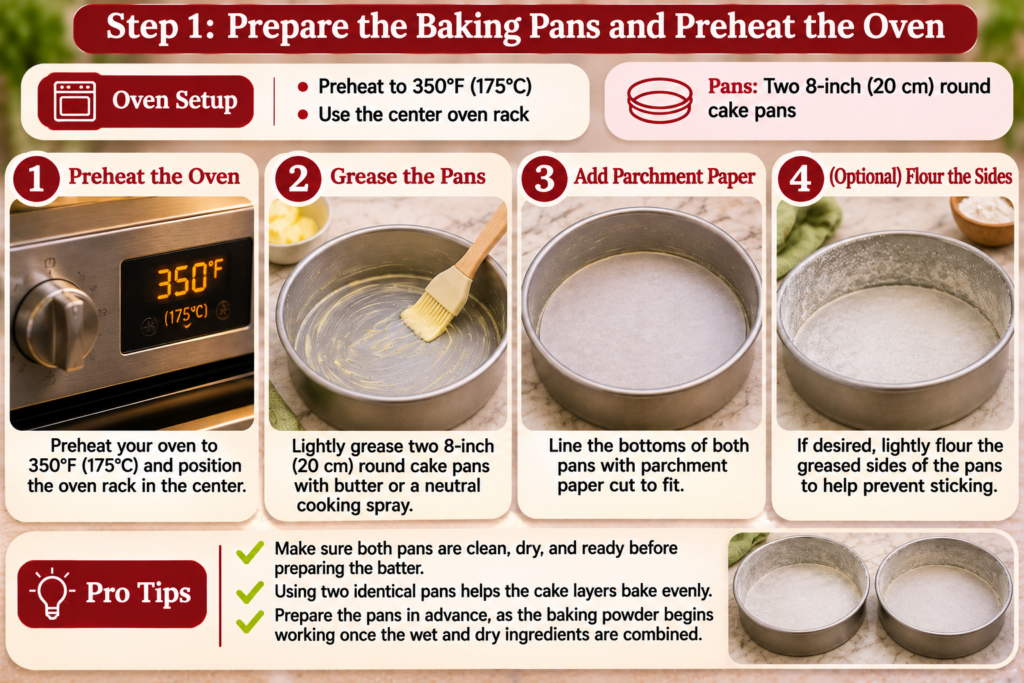
- Step 1: Prepare the Baking Pans and Preheat the Oven. Preheat your oven to 350°F (175°C) and position the oven rack in the center to encourage even baking. Lightly grease two 8-inch (20 cm) round cake pans with butter or a neutral cooking spray, then line the bottoms with parchment paper cut to fit each pan. If desired, lightly flour the greased sides of the pans to help prevent sticking. Make sure both pans are clean, dry, and ready before preparing the batter, as the baking powder begins working once the wet and dry ingredients are combined. Using two identical pans helps the cake layers bake evenly and makes assembling the finished matcha gateau easier.

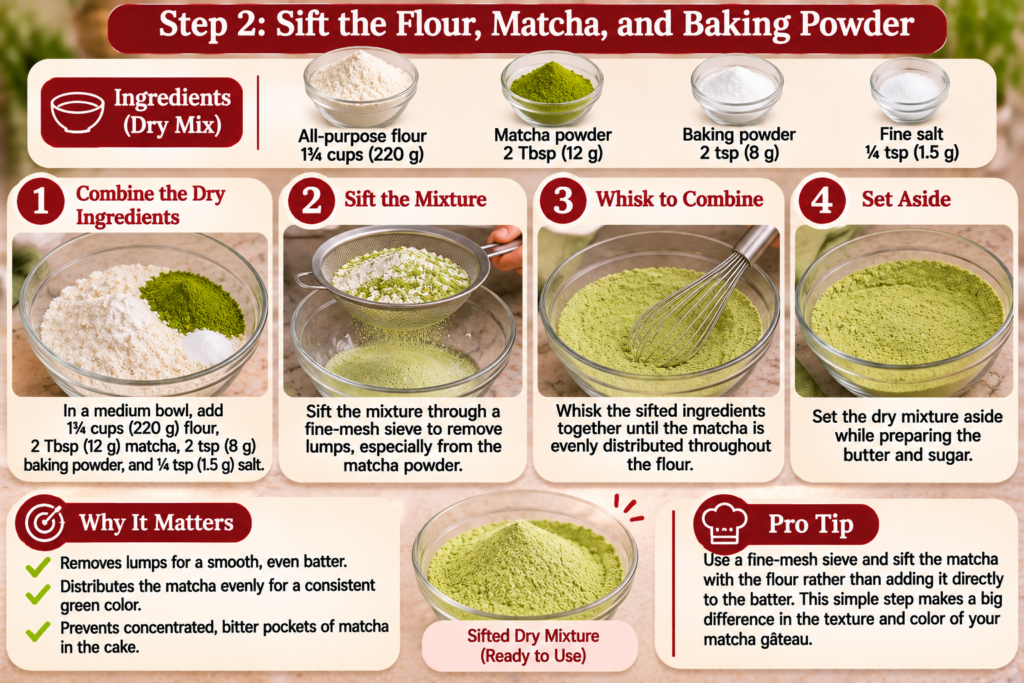
- Step 2: Sift the Flour, Matcha, and Baking Powder. In a medium mixing bowl, combine 1¾ cups (220 g) of all-purpose flour, 2 tablespoons (12 g) of culinary-grade matcha powder, 2 teaspoons (8 g) of baking powder, and ¼ teaspoon (1.5 g) of fine salt. Sift the mixture through a fine-mesh sieve to remove lumps, particularly from the matcha powder, which can clump easily. Whisk the sifted ingredients together until the green tea powder is distributed evenly throughout the flour. This step is important for achieving a consistent natural green color and preventing concentrated pockets of bitter matcha in the finished cake. Set the dry mixture aside while preparing the butter and sugar.
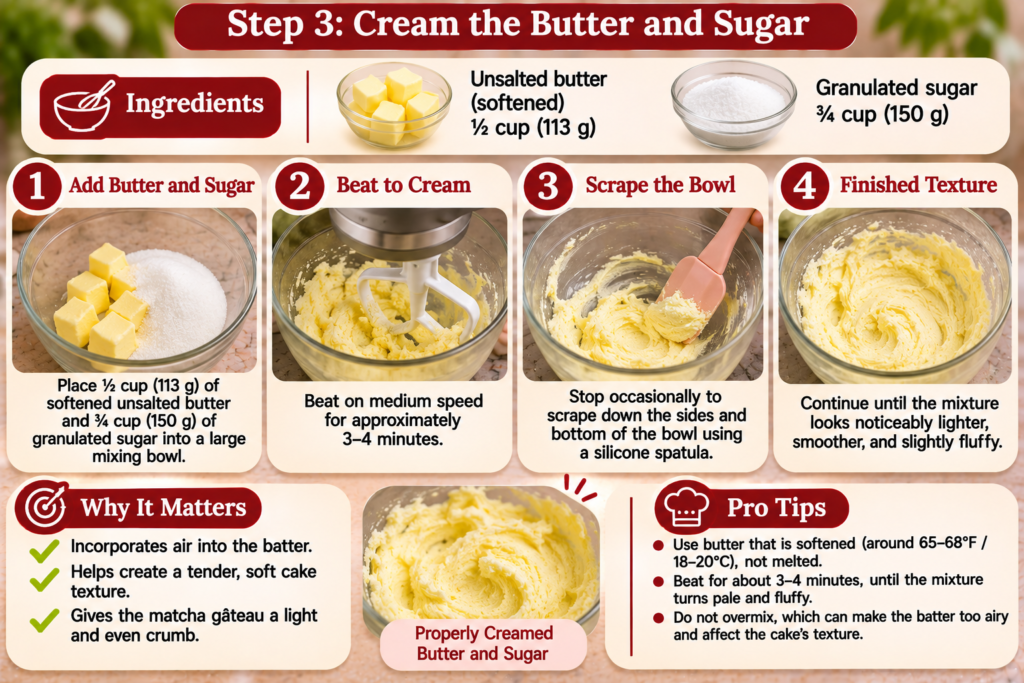
- Step 3: Cream the Butter and Sugar. Place ½ cup (113 g) of softened unsalted butter and ¾ cup (150 g) of granulated sugar into a large mixing bowl or the bowl of a stand mixer fitted with a paddle attachment. Beat on medium speed for approximately 3–4 minutes, until the mixture looks noticeably lighter, smoother, and slightly fluffy. Stop occasionally to scrape down the sides and bottom of the bowl using a silicone spatula. Proper creaming helps incorporate air into the batter, supporting a tender cake texture. The butter should be softened but not melted, since excessively warm butter may reduce its ability to hold air during mixing. Continue only until the mixture appears evenly creamed.
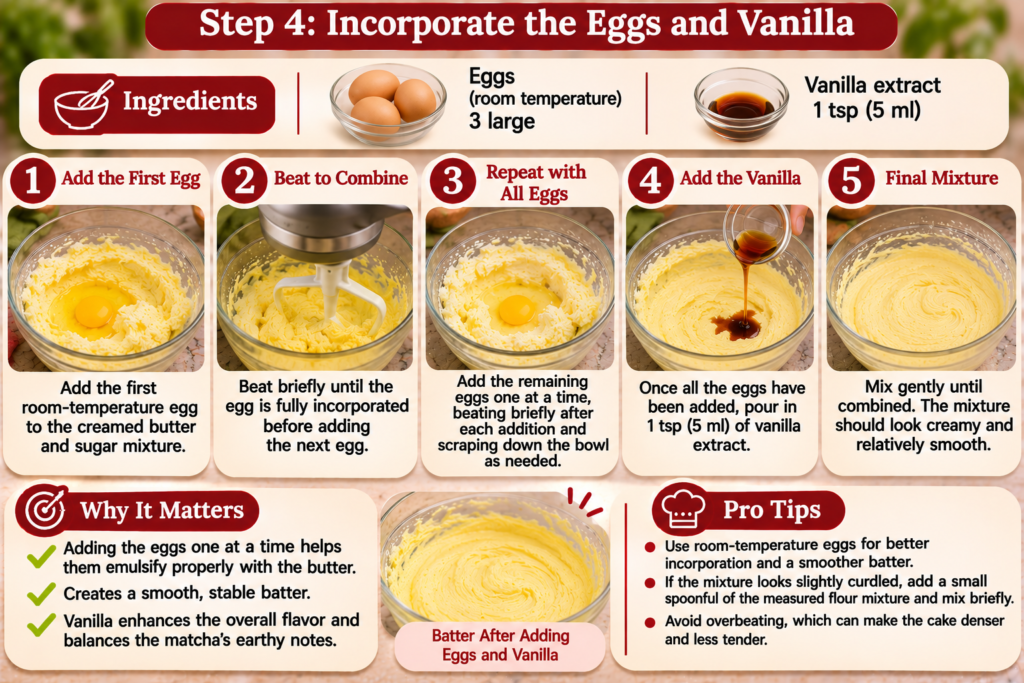
- Step 4: Incorporate the Eggs and Vanilla. Add the three room-temperature eggs to the creamed butter and sugar mixture, one at a time, beating briefly after each addition until incorporated before adding the next. Scrape down the bowl as needed to keep the batter uniform. Once all the eggs have been added, pour in 1 teaspoon (5 ml) of vanilla extract and mix gently until combined. The mixture should look creamy and relatively smooth, although slight curdling can occur if the ingredients are at different temperatures. If the batter begins to appear separated, add a small spoonful of the measured flour mixture and mix briefly. Avoid overbeating at this stage, as excessive mixing can affect the finished cake’s texture.
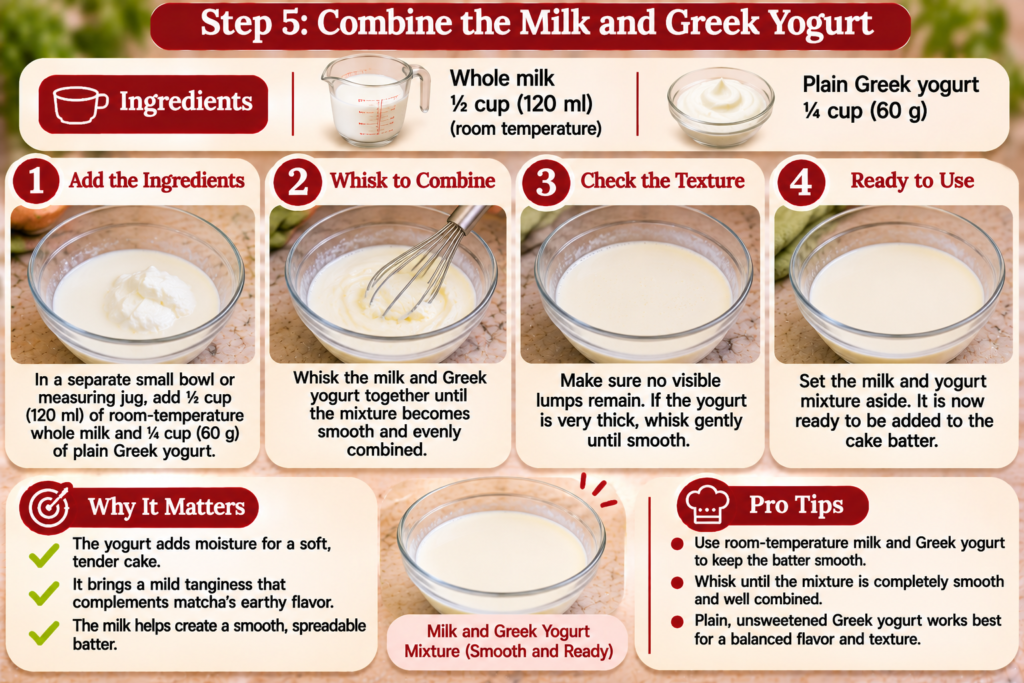
- Step 5: Combine the Milk and Greek Yogurt. In a separate small bowl or measuring jug, whisk together ½ cup (120 ml) of room-temperature whole milk and ¼ cup (60 g) of plain Greek yogurt until the mixture becomes smooth and evenly combined. The yogurt contributes additional moisture and a mild tanginess that complements matcha’s distinctive earthy flavor, while the milk helps create a cake batter that can be spread evenly into the prepared pans. If the yogurt is very thick, whisk gently until no visible lumps remain. Keeping the dairy ingredients at room temperature also helps prevent the butter in the cake batter from firming up unexpectedly when the ingredients are combined.
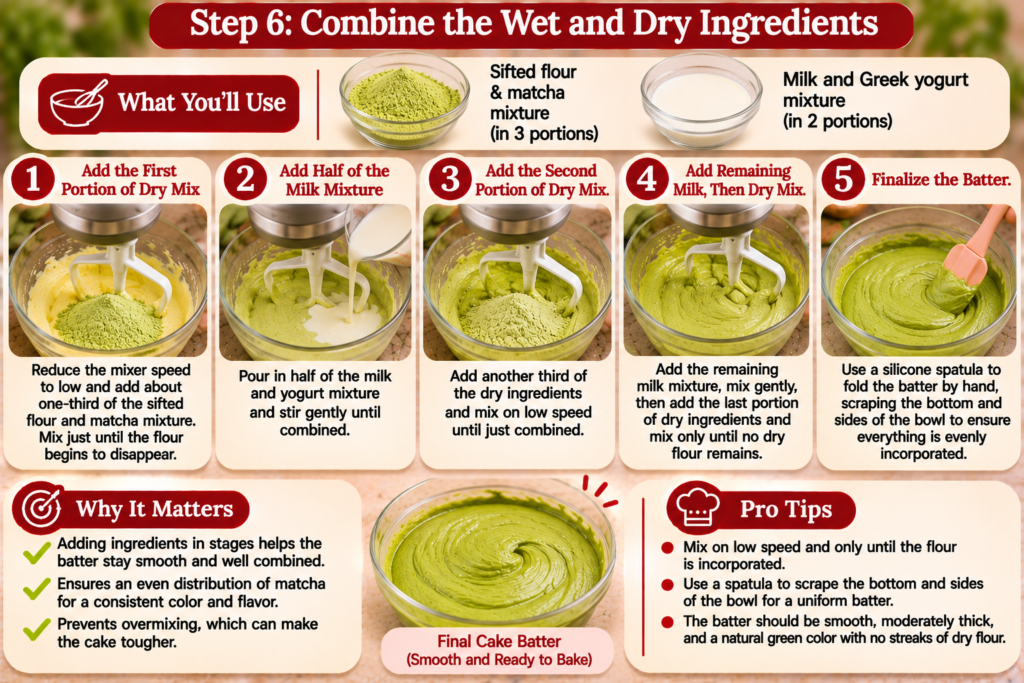
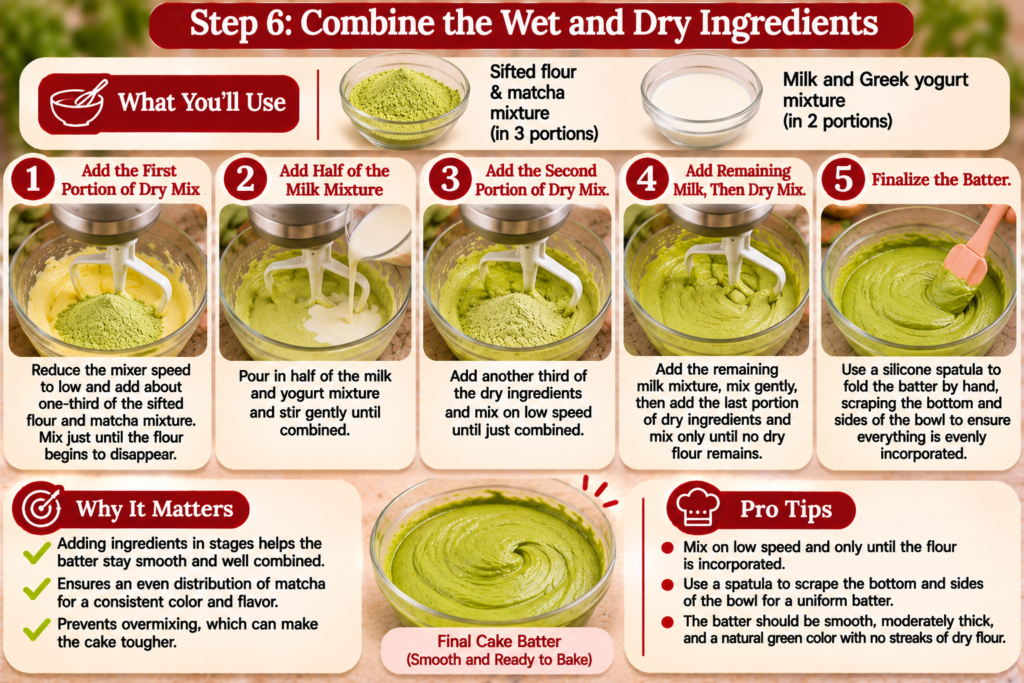
- Step 6: Combine the Wet and Dry Ingredients. Reduce the mixer speed to low and add approximately one-third of the sifted flour and matcha mixture to the butter mixture, mixing just until the flour begins to disappear. Pour in half of the milk and yogurt mixture and stir gently, then repeat with another third of the dry ingredients, the remaining milk mixture, and finally the last portion of dry ingredients. Use a silicone spatula to finish folding the batter by hand, scraping along the bottom and sides of the bowl to ensure everything is evenly incorporated. The finished batter should be smooth, moderately thick, and naturally green, with no visible streaks of dry flour. Avoid prolonged mixing once the flour is incorporated because it can develop gluten and create a tougher cake.
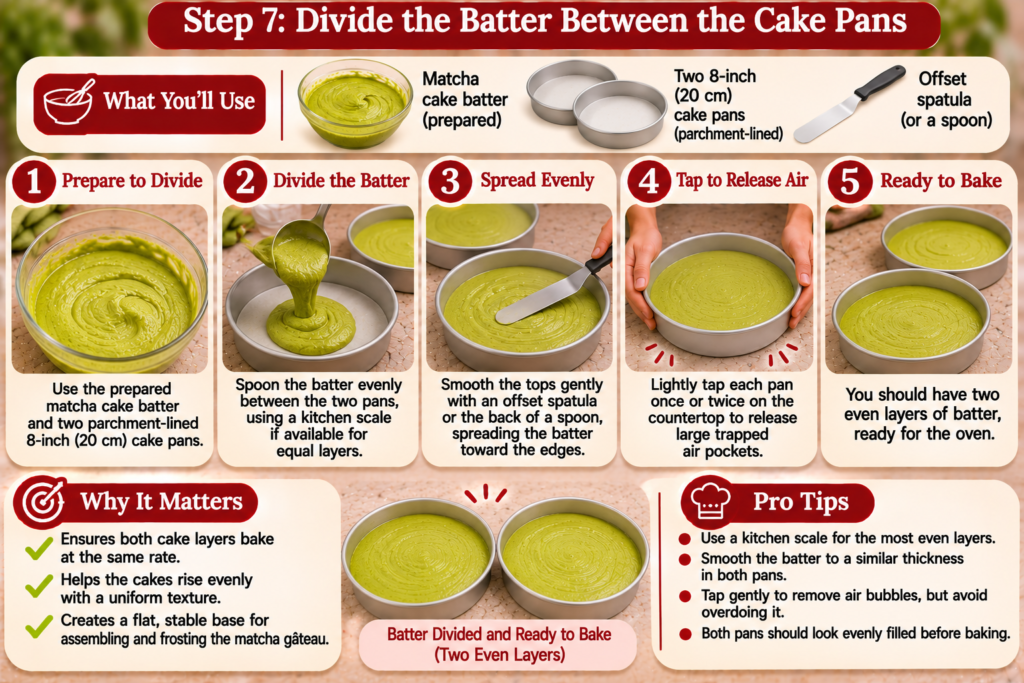
- Step 7: Divide the Batter Between the Cake Pans. Spoon the prepared matcha cake batter evenly into the two parchment-lined 8-inch (20 cm) cake pans, using a kitchen scale if available to ensure both layers contain approximately the same amount. Smooth the tops gently with an offset spatula or the back of a spoon, spreading the batter toward the edges and corners of each pan. Lightly tap each pan once or twice against the countertop to release large trapped air pockets, taking care not to deflate the batter excessively. The batter should form a relatively even layer in each pan, helping the cakes rise consistently and creating a neat foundation for the whipped cream frosting.
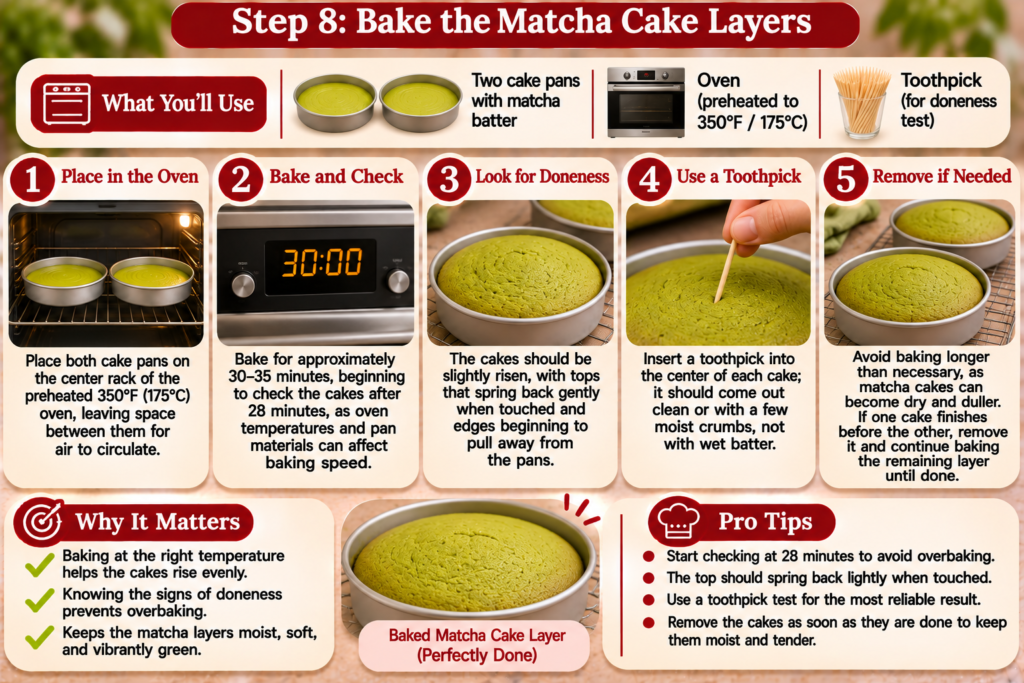
- Step 8: Bake the Matcha Cake Layers. Place both cake pans on the center rack of the preheated 350°F (175°C) oven, leaving enough space between them for air to circulate. Bake for approximately 30–35 minutes, beginning to check the cakes after 28 minutes because oven temperatures and pan materials can affect baking speed. The cakes should appear slightly risen, with tops that spring back gently when touched and edges beginning to pull away from the pans. Insert a toothpick into the center of each cake; it should come out clean or with a few moist crumbs rather than wet batter. Avoid baking longer than necessary, as matcha cakes can become dry and develop a duller color when overbaked. If one cake finishes before the other, remove it separately and continue baking the remaining layer until done.
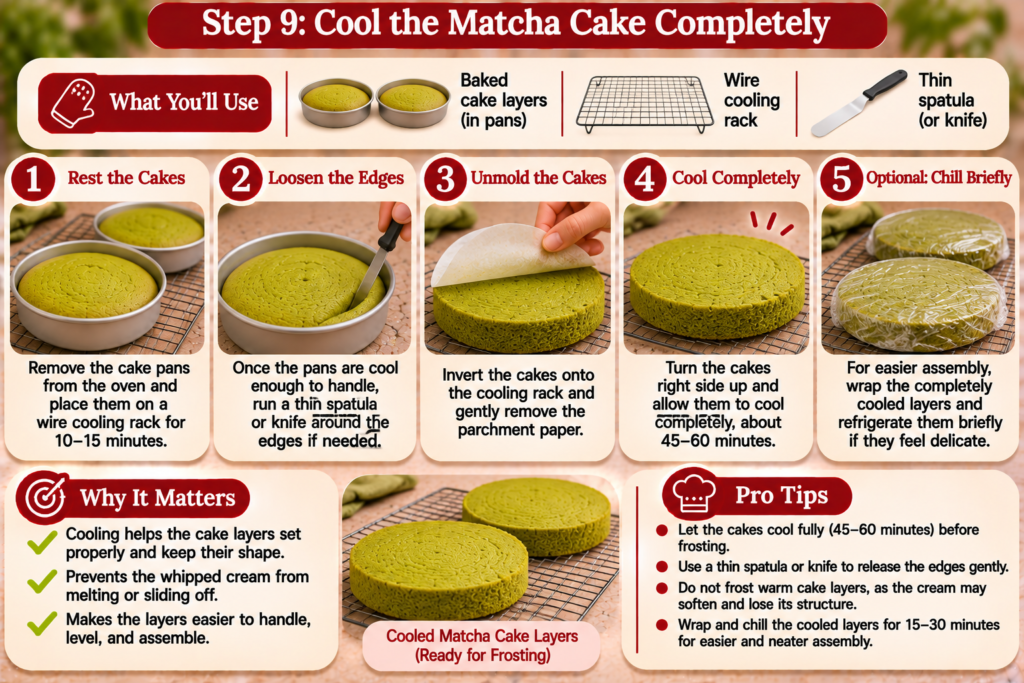
- Step 9: Cool the Matcha Cake Completely. Remove the cake pans from the oven and place them on a wire cooling rack for approximately 10–15 minutes. Once the pans are cool enough to handle, carefully run a thin spatula or knife around the edges if necessary, then invert the cakes onto the cooling rack and gently remove the parchment paper. Turn the cakes right side up and allow them to cool completely, approximately 45–60 minutes depending on room temperature. Do not apply whipped cream frosting while the cake layers are warm because the cream may soften, slide, or lose its structure. For easier assembly, wrap the completely cooled layers and refrigerate them briefly if they feel particularly delicate.
- Step 10: Prepare the Matcha Whipped Cream Frosting. Place a clean mixing bowl and the beaters of an electric mixer in the refrigerator for approximately 10 minutes before making the frosting. Pour 2 cups (480 ml) of cold heavy whipping cream into the chilled bowl, then add ½ cup (60 g) of sifted powdered sugar, 2 teaspoons (4 g) of sifted matcha powder, and 1 teaspoon (5 ml) of vanilla extract. Begin beating on low speed until the matcha and sugar are incorporated, then gradually increase to medium speed and whip until the cream forms medium-stiff peaks that hold their shape when the beaters are lifted. Stop mixing as soon as the frosting becomes thick, smooth, and spreadable, since overwhipping can make it grainy and eventually cause it to separate. Keep the frosting refrigerated until you’re ready to assemble the cake.
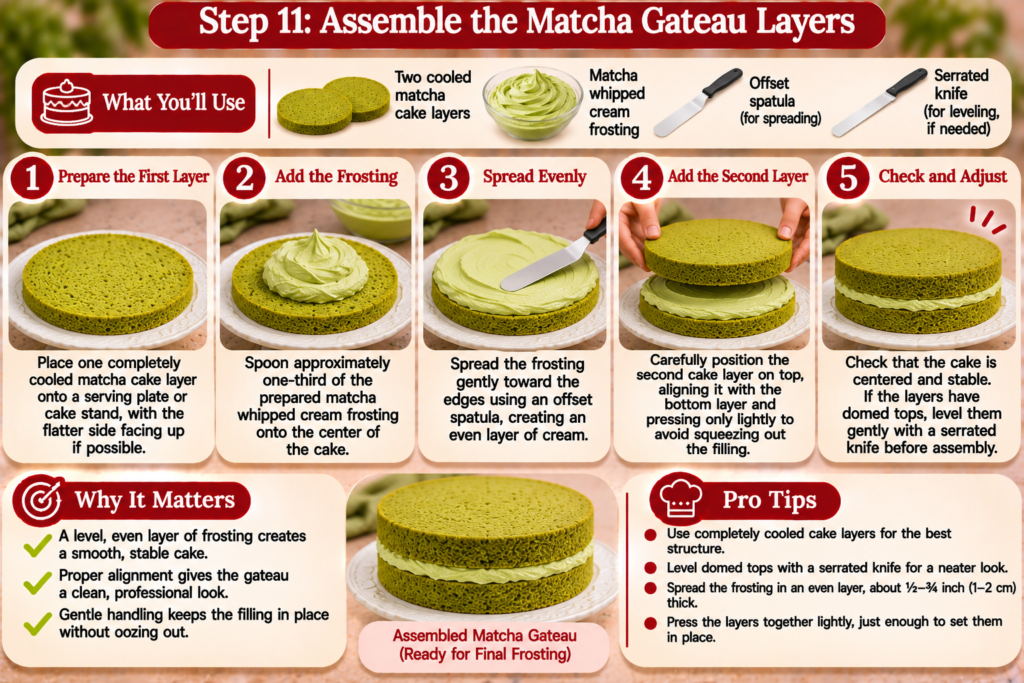
- Step 11: Assemble the Matcha Gateau Layers. Place one completely cooled matcha cake layer onto a serving plate or cake stand, positioning it with the flatter side facing upward if possible. Spoon approximately one-third of the prepared matcha whipped cream frosting onto the center of the cake and spread it gently toward the edges using an offset spatula, creating an even layer of cream. Carefully position the second cake layer on top, aligning it with the bottom layer and pressing only lightly to avoid squeezing out the filling. Check that the cake is centered and stable before continuing. If the cake layers have noticeably domed tops, level them gently with a serrated knife before assembly to help create a more even finished gateau.
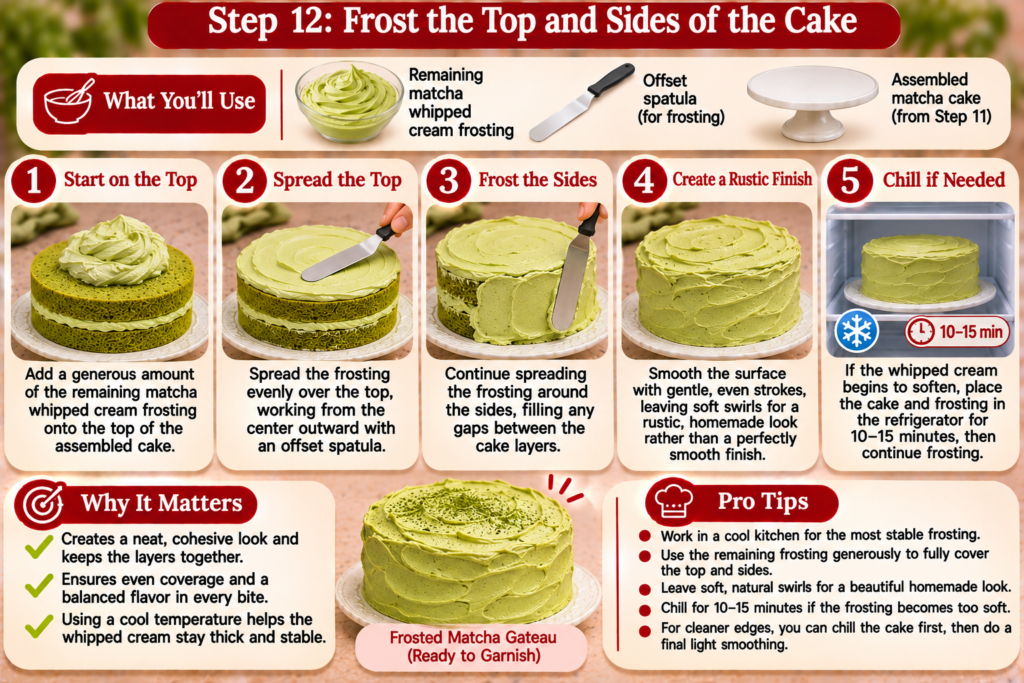
- Step 12: Frost the Top and Sides of the Cake. Using the remaining matcha whipped cream frosting, spread a generous layer over the top of the assembled cake, working from the center outward with an offset spatula. Continue spreading the cream around the sides, filling any gaps between the cake layers and smoothing the surface with gentle, even strokes. For a rustic homemade appearance, leave subtle swirls in the frosting rather than trying to achieve perfectly smooth bakery-style sides. If the whipped cream begins to soften while you’re working, place the cake and frosting in the refrigerator for approximately 10–15 minutes before continuing. Work in a cool kitchen whenever possible, as whipped cream is less stable than traditional buttercream frosting.
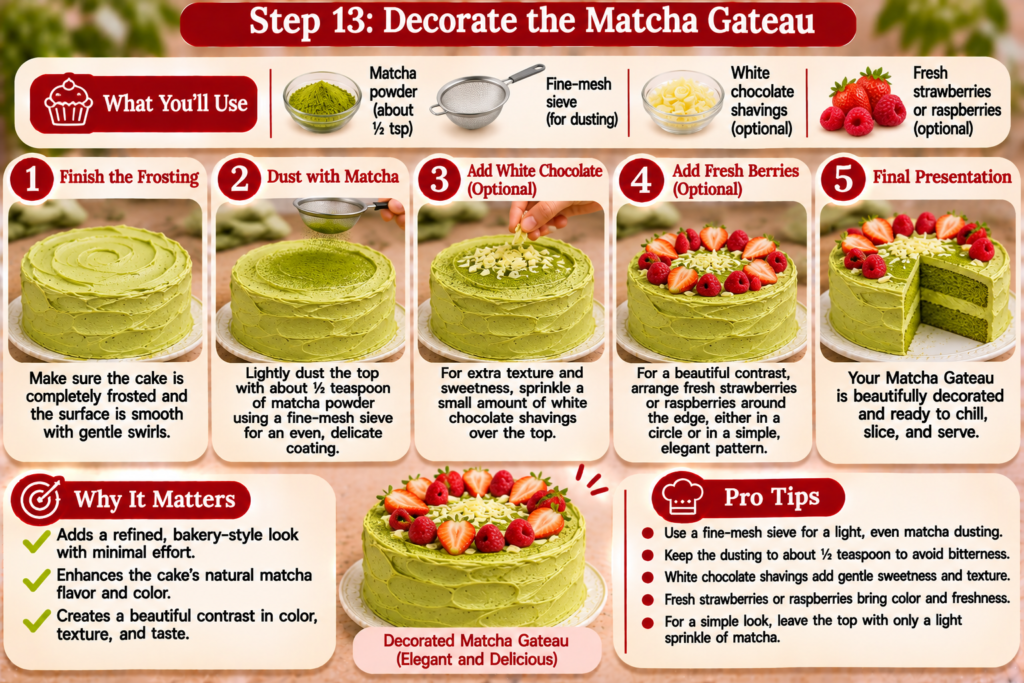
- Step 13: Decorate the Matcha Gateau. Once the cake is completely frosted, finish the surface with a light dusting of approximately ½ teaspoon of matcha powder using a fine-mesh sieve. Keep the dusting delicate, since excessive matcha powder can create a noticeably bitter coating. For additional decoration, scatter a small amount of white chocolate shavings over the top or arrange fresh strawberries or raspberries around the edge for a beautiful contrast against the natural green frosting. If you prefer a simple presentation, leave the top lightly swirled and decorated only with a small sprinkle of matcha. The goal is to highlight the cake’s natural green tea color without overwhelming its delicate flavor.
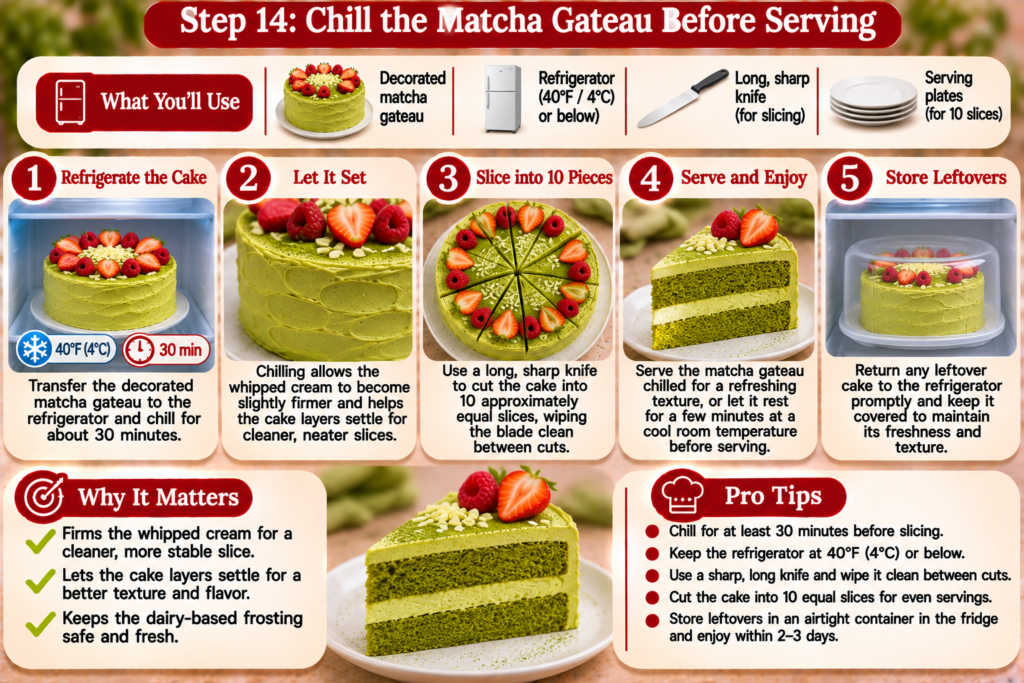
- Step 14: Chill the Matcha Gateau Before Serving. Transfer the decorated matcha gateau to the refrigerator and chill for approximately 30 minutes before slicing. This resting period allows the whipped cream to become slightly firmer and helps the cake layers settle, making cleaner slices easier to achieve. Keep the cake refrigerated at 40°F (4°C) or below until ready to serve, particularly because the frosting contains fresh dairy cream. When serving, use a long, sharp knife to cut the cake into 10 approximately equal slices, wiping the blade clean between cuts for neat layers. Enjoy the cake chilled or after a brief rest at a cool room temperature, and return any leftovers to the refrigerator promptly.
Notes
- Choosing Matcha Powder: Use good-quality culinary-grade matcha with a fresh aroma and vibrant natural green color. Avoid matcha latte mixes containing added sugar or milk powder.
- Matcha Flavor: The sponge cake uses 12 g of matcha and the frosting contains another 4 g. This provides a proposed balance of earthy tea flavor and sweetness.
- Avoiding Bitterness: Sift matcha powder thoroughly, use fresh matcha, and avoid excessive matcha dusting on the finished cake.
- Room-Temperature Ingredients: Butter, eggs, milk, and Greek yogurt should be at room temperature for easier mixing and a more uniform batter.
- Whipped Cream Stability: The frosting is made with fresh whipped cream rather than buttercream. It must remain refrigerated and may soften if left at room temperature for extended periods.
- Preventing Dry Cake: Measure flour accurately and check doneness early. Overbaking can result in a dry sponge.
- Natural Green Color: Matcha may lose some brightness during baking. A slightly olive-green cake interior is normal and does not necessarily indicate a problem.
- Cake Assembly: Make sure both sponge layers are completely cool before applying whipped cream frosting.
- Dairy-Free Alternative: Plant-based butter, milk, yogurt, and a whippable dairy-free cream may be used experimentally, but the same structure and texture are not guaranteed.
- Make-Ahead Instructions: The unfrosted cake layers can be baked one day ahead, cooled completely, wrapped tightly, and refrigerated. Prepare the whipped cream frosting closer to assembly for best quality.
- Storage: Store the assembled gateau in a covered cake container in the refrigerator at 40°F (4°C) or below and aim to enjoy it within 2–3 days for best quality.
- Freezing: Unfrosted cake layers can be wrapped and frozen for approximately 2 months for best quality. Freezing the fully assembled cake may adversely affect the whipped cream’s texture after thawing.
- Serving Suggestions: Serve with unsweetened green tea, coffee, fresh berries, or a small scoop of vanilla ice cream.


Origins of Matcha Gateau
The Matcha Gateau Recipe is a delicious example of how traditional Japanese ingredients have influenced modern Western-style baking. While gâteau is the French word for cake, matcha is a finely ground green tea powder deeply connected to Japanese culture. Bringing these two elements together creates a beautiful fusion dessert that combines the soft, delicate texture of a European-style cake with the distinctive earthy flavor and natural green color of Japanese matcha.
The history of matcha stretches back centuries. Powdered tea preparation developed in China and was introduced to Japan during the late 12th century, particularly through the Buddhist monk Eisai, who helped popularize tea drinking. Over time, matcha became closely associated with Japanese tea ceremonies, where careful preparation, simplicity, and appreciation of natural flavors played important roles. The famous tea-growing region of Uji, near Kyoto, eventually became especially well known for producing high-quality Japanese green tea.
Although traditional matcha was primarily enjoyed as a beverage, its rich flavor and beautiful color made it a natural ingredient for sweets and baked goods. As Japanese pastry-making incorporated European baking techniques, matcha found its way into sponge cakes, cheesecakes, cream-filled pastries, and elegant gâteau-style desserts. There is no single documented inventor of matcha gâteau; instead, it represents the broader evolution of Japanese-inspired modern baking.
Today, homemade matcha gâteau is appreciated for its tender texture, distinctive green appearance, and wonderful balance of sweetness and gentle bitterness. Whether served with whipped cream, fresh strawberries, or simply a dusting of powdered sugar, this Japanese-inspired cake brings together traditional tea culture and the comforting pleasure of homemade baking.

Health Benefits of Matcha Gateau
Although Matcha Gateau Recipe is primarily a delicious homemade dessert, its signature ingredient, Japanese matcha green tea, contains naturally occurring plant compounds that may offer certain health benefits. Unlike ordinary cake flavorings, matcha provides antioxidants, a small amount of naturally occurring nutrients, and a distinctive flavor that can help balance sweetness. While a slice of matcha gâteau should still be enjoyed as a treat, choosing quality ingredients can make it a thoughtful addition to a balanced diet.
1. Contains Natural Antioxidants
One of the most interesting benefits of matcha is its concentration of antioxidants, particularly catechins such as epigallocatechin gallate (EGCG). These plant compounds help protect cells against oxidative stress. Although some antioxidants may be affected by baking, matcha powder can still contribute beneficial plant compounds to your homemade cake.
2. Provides Natural Green Tea Compounds
Matcha is made from finely ground green tea leaves, meaning it contains naturally occurring compounds such as chlorophyll, polyphenols, and L-theanine. These substances contribute to matcha’s distinctive characteristics and are being studied for their potential effects on health. However, the small amount of matcha in an individual cake serving means its benefits should not be compared directly with drinking matcha tea regularly.
3. May Support Alertness and Concentration
Matcha naturally contains caffeine and L-theanine, an amino acid associated with attention and relaxation. Research suggests that these compounds may contribute to alertness and concentration when consumed in sufficient amounts. However, the quantity in a slice of homemade matcha gâteau depends on how much matcha powder is used and how the cake is divided into servings.
4. Offers a Naturally Flavorful Alternative
The slightly earthy, bittersweet taste of matcha creates a wonderful contrast with sweet cake ingredients. This distinctive flavor can make a dessert enjoyable without relying entirely on intense sweetness. You can also experiment with modestly reducing added sugar, provided the recipe’s texture and structure are maintained.
5. Can Be Enjoyed as Part of a Balanced Diet
A homemade matcha gâteau gives you control over the quality and quantity of ingredients. Using fresh eggs, carefully measured flour, good-quality matcha, and moderate amounts of sugar can help you create a satisfying dessert. Pairing a small slice with fresh strawberries, raspberries, or other fruit adds flavor, fiber, and additional nutrients.
How to Decide Which Matcha to Use
Choosing the right matcha powder is one of the most important steps in making a delicious Matcha Gateau Recipe. Matcha determines not only the cake’s beautiful green color but also its distinctive earthy flavor, gentle bitterness, and overall appearance. With so many varieties available, understanding the differences between culinary-grade and ceremonial-grade matcha can help you achieve excellent results without spending more than necessary.
1. Culinary-Grade Matcha: Best for Everyday Baking
For most homemade matcha cakes, good-quality culinary-grade matcha is the most practical choice. This type of matcha is commonly selected for baking because its stronger green tea flavor can remain noticeable when combined with flour, butter, eggs, and sugar.
Culinary matcha is generally more affordable than premium matcha intended for drinking, making it ideal for cakes, cookies, muffins, and other homemade desserts. However, quality varies between brands, so look for a powder that has a pleasant, fresh aroma and a healthy green color rather than a noticeably brown appearance.
2. Ceremonial-Grade Matcha: A Premium Alternative
Ceremonial-grade matcha is typically marketed for traditional tea preparation. It often has a smoother, more delicate flavor, with subtle sweetness and less pronounced bitterness.
You can certainly use ceremonial-grade matcha in your homemade matcha gâteau, especially if you already have some in your kitchen. However, its delicate flavor characteristics may become less noticeable after baking, making it a more expensive choice without necessarily producing a better cake.
Keep in mind that terms such as ceremonial and culinary are not universally regulated quality grades. The producer, freshness, and actual characteristics of the powder matter more than the label alone.
3. Pay Attention to the Color
The appearance of matcha powder can provide useful clues about its quality.
- Bright, vibrant green: Often indicates carefully processed matcha with good color potential.
- Natural medium green: Can be an excellent choice for everyday baking.
- Dull olive or yellowish green: May produce a less vibrant cake and can indicate differences in processing or freshness.
- Brownish powder: May indicate oxidation or aging, especially when accompanied by a stale aroma.
Remember that matcha naturally changes color when exposed to oven heat. Even high-quality matcha will not necessarily retain its original bright green appearance after baking.

4. Choose Matcha With a Fresh, Pleasant Aroma
Fresh matcha generally has a distinctive grassy, vegetal aroma with subtle sweet or savory notes. When you open the package, the scent should be clean and inviting rather than musty, stale, or unpleasantly harsh.
For the best flavor, purchase matcha in small quantities and keep it in a tightly sealed, opaque container away from heat, light, air, and moisture. Proper storage helps preserve its delicate aroma and green color.
5. Choose Pure, Unsweetened Matcha Powder
For this Matcha Gateau Recipe, choose a product containing 100% pure matcha green tea powder, without added sugar, powdered milk, artificial coloring, or flavorings.
Matcha latte mixes may contain sweeteners and other ingredients that alter the cake’s flavor, sweetness, and moisture balance. Using pure matcha gives you better control over your recipe and helps maintain consistent baking results.
If you enjoy experimenting with matcha in different desserts, our Green Tea Ice Cream Matcha is another delicious way to experience its earthy flavor alongside creamy, sweet ingredients.
6. How Much Matcha Should You Use in a Cake?
The ideal quantity depends on the size of the cake, the amount of flour, and the strength of your matcha powder. For a typical homemade cake containing approximately 150–200 g of flour, 8–12 g of matcha powder can be a reasonable starting point for a noticeable yet balanced green tea flavor.
If you prefer a more pronounced matcha taste, slightly increase the quantity, keeping in mind that too much powder can make the cake taste bitter or overly grassy. Always sift matcha with the dry ingredients to distribute it evenly and prevent green clumps in the finished cake.
Frequently Asked Questions About Matcha Gateau Recipe
Want to make a beautiful homemade Matcha Gateau Recipe with soft, delicate green tea cake layers and smooth, lightly sweetened matcha whipped cream frosting? These practical baking answers explain how to choose the right matcha powder, achieve a natural green color, prevent bitterness, create moist cake layers, and prepare stable whipped cream. Whether you’re making a matcha birthday cake, an afternoon tea dessert, or a special homemade Japanese-inspired treat, these tips will help you achieve a delicious and elegant result.
1. What is Matcha Gateau, and what does it taste like?
Matcha Gateau is a Japanese-inspired green tea cake that combines the distinctive flavor of matcha with a soft, tender cake texture. This OoohDelish version features two delicate matcha cake layers filled and covered with lightly sweetened matcha whipped cream. The flavor is gently earthy, slightly grassy, and pleasantly bittersweet, balanced by the richness of butter, milk, yogurt, and cream. Unlike chocolate cake, matcha gateau has a more delicate flavor that pairs beautifully with vanilla, berries, and lightly sweetened toppings.
2. What ingredients do you need for this homemade Matcha Gateau Recipe?
The proposed OoohDelish cake uses 220 g all-purpose flour, 12 g matcha powder, 8 g baking powder, 113 g unsalted butter, 150 g granulated sugar, 3 large eggs, 120 ml milk, and 60 g plain Greek yogurt. Add 1/4 teaspoon fine salt and 1 teaspoon alcohol-free vanilla flavoring. For the frosting, use 480 ml cold heavy whipping cream, 60 g powdered sugar, 4 g matcha powder, and 1 teaspoon alcohol-free vanilla. A little additional matcha can be sifted over the finished cake for decoration. The recipe makes approximately 10 slices.
3. What type of matcha powder is best for baking Matcha Gateau?
Good-quality culinary matcha is an excellent choice for homemade Matcha Gateau. Look for finely milled, unsweetened green tea powder with a fresh green color and a pleasant, clean aroma. Culinary matcha is designed to work well with flour, butter, sugar, and dairy ingredients. Ceremonial-grade matcha can also be used, but its delicate flavor may be less noticeable after baking. Avoid sweetened matcha latte mixes, because their added sugar and other ingredients can change the cake’s flavor and texture.
4. How much matcha powder should you use in Matcha Gateau without making it too bitter?
This recipe uses 12 g matcha powder in the cake and 4 g in the whipped cream frosting. These quantities are intended to produce a noticeable green tea flavor without overwhelming the sweetness of the dessert. Matcha naturally contains compounds that give it a slightly bitter and astringent taste. Using too much can make the cake unpleasantly sharp. For the first batch, keep the proposed matcha amounts unchanged. If the flavor seems too strong, consider trying a different matcha brand before changing the recipe.
5. Why did my Matcha Gateau turn brown or lose its beautiful green color?
Matcha can lose some of its green color during baking because its natural pigments are sensitive to heat. Overbaking, very high oven temperatures, and old matcha powder may cause a dull olive-green or brownish appearance. Use fresh, bright green matcha and follow the proposed oven temperature of 350°F (175°C). Avoid baking longer than necessary. The outer crust will naturally be darker than the interior. Finishing the cake with fresh matcha whipped cream helps give the dessert an attractive, naturally green appearance.
6. Why should you sift matcha powder before adding it to cake batter?
Sifting helps remove matcha clumps and distributes the powder evenly throughout the cake batter. Matcha is extremely fine and can form small lumps, especially when exposed to moisture. Those lumps may create dark green spots or bitter pockets in the finished cake. For this recipe, sift the 12 g matcha together with the flour, baking powder, and salt. Whisk the dry ingredients thoroughly before adding them to the butter mixture. Sift the frosting matcha separately to help prevent powdery specks.
7. Why does this Matcha Gateau Recipe use Greek yogurt and milk?
Greek yogurt and milk help create a tender, moist cake with a balanced texture. The recipe combines 60 g plain Greek yogurt with 120 ml milk. The milk supplies liquid to the batter, while yogurt adds richness, moisture, and a gentle tangy note. These ingredients work alongside butter and eggs to support a soft cake crumb. Use plain, unsweetened Greek yogurt rather than strongly flavored varieties. For the most predictable first batch, measure both ingredients accurately rather than replacing them with additional water or milk.
8. Can I make Matcha Gateau gluten-free, dairy-free, or egg-free?
Matcha Gateau can be adapted for some dietary needs, but this particular formulation contains wheat flour, eggs, butter, milk, Greek yogurt, and heavy cream. A gluten-free version requires a suitable cake-focused flour blend and careful testing for texture. Dairy-free baking would require appropriate replacements for several ingredients, including the whipped cream frosting. Egg-free substitutions are more complicated because the three eggs contribute structure. For dependable results, use a tested dietary variation rather than assuming every ingredient can be replaced one-for-one.
9. What temperature and how long should you bake Matcha Gateau?
The proposed OoohDelish Matcha Gateau Recipe uses 350°F (175°C) for approximately 30–35 minutes. Divide the prepared batter evenly between two greased, parchment-lined 8-inch round cake pans. Place the pans in the preheated oven and begin checking near the end of the proposed baking window. The exact time depends on oven accuracy, pan material, and how evenly the batter is divided. These are the established proposed recipe settings and still require kitchen testing before being presented as confirmed results.
10. How do you know when the Matcha Gateau cake layers are fully baked?
The cake layers should have set centers and spring back lightly when gently pressed. Insert a toothpick into the center of each cake. It should come out clean or with a few tender crumbs, rather than wet batter. The edges may begin pulling slightly away from the pan, but avoid waiting until the cakes become very dark or dry. If one layer needs more time than the other, continue baking it separately until done. Allow both layers to cool completely before frosting.
11. Why did my Matcha Gateau turn out dry, dense, or sink in the middle?
Dry or dense matcha cake may result from excessive flour, overmixing, overbaking, or inaccurate ingredient measurements. Weigh the 220 g flour and 12 g matcha carefully. Cream the butter and sugar until light before adding the eggs. Once the dry ingredients are incorporated, mix gently and stop when combined. A sunken center can indicate underbaking, excess leavening, or unstable batter structure. Check that the baking powder is fresh and avoid opening the oven repeatedly during early baking.
12. How do you make the best matcha whipped cream frosting for this cake?
Start with 480 ml very cold heavy whipping cream, 60 g powdered sugar, 4 g sifted matcha, and 1 teaspoon alcohol-free vanilla flavoring. Chill the mixing bowl and beaters when possible, then whip the cream until it begins to thicken. Add the sifted powdered sugar and matcha, mixing until the frosting forms smooth, medium-stiff peaks that can hold their shape on the cake. Avoid excessive whipping because the cream can become grainy or separate. Refrigerate until ready to assemble.
13. Why is my matcha whipped cream frosting runny, grainy, or not holding its shape?
Whipped cream frosting can become runny when the cream is too warm or doesn’t contain enough fat for whipping. Use cold heavy cream, preferably around 35% milk fat or higher. Chilling the bowl and beaters can help maintain a stable texture. If the cream becomes grainy or starts separating, it may have been overwhipped. Stop beating as soon as medium-stiff peaks form. Sift the matcha before adding it to prevent green clumps and uneven flavor throughout the frosting.
14. Why should Matcha Gateau cool completely and chill before slicing?
Cooling prevents the whipped cream frosting from melting, while chilling helps the assembled cake become easier to slice. After baking, allow the two cake layers to cool completely, usually taking approximately 45–60 minutes depending on room temperature and thickness. Never spread whipped cream over warm cake. Once filled and frosted, refrigerate the assembled gateau for approximately 30 minutes. This resting period allows the cream to firm slightly and the layers to settle. Use a clean, sharp knife for neat slices.
15. Does Matcha Gateau contain caffeine, and how should you serve it?
Yes, matcha naturally contains caffeine because it’s made from powdered green tea leaves. This recipe uses 12 g matcha in the cake and 4 g in the frosting, divided among approximately 10 slices. The caffeine in each portion depends on the matcha brand and the size of the slice. People limiting caffeine should consider this when enjoying the dessert. Serve Matcha Gateau chilled with fresh strawberries, raspberries, or a lightly sweetened hot drink. For another light dessert, explore our Cloud Cake Recipe .
16. Can you make Matcha Gateau ahead of time, refrigerate it, or freeze leftovers?
Yes, Matcha Gateau can be prepared ahead, but the whipped cream frosting requires refrigerated storage. Keep the finished cake covered at 40°F (4°C) or below and enjoy within approximately 2–3 days for the best texture, color, and flavor. Refrigerate promptly and don’t leave the frosted cake at room temperature for more than two hours. You can freeze completely cooled, unfrosted cake layers securely wrapped for up to 2 months for best quality. Thaw in the refrigerator and frost when ready. For another creamy dessert, try our Coconut Poke Cake or Cottage Cheese Chocolate Mousse .