


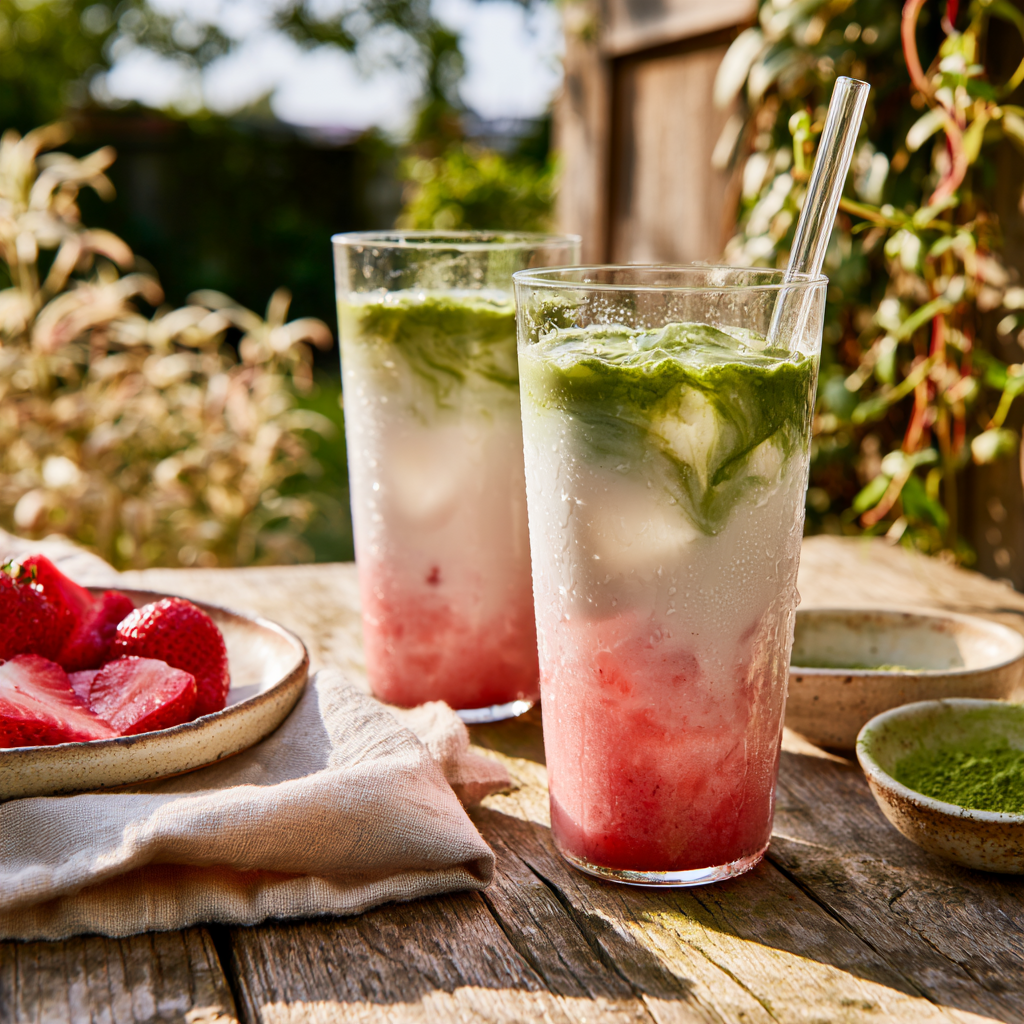
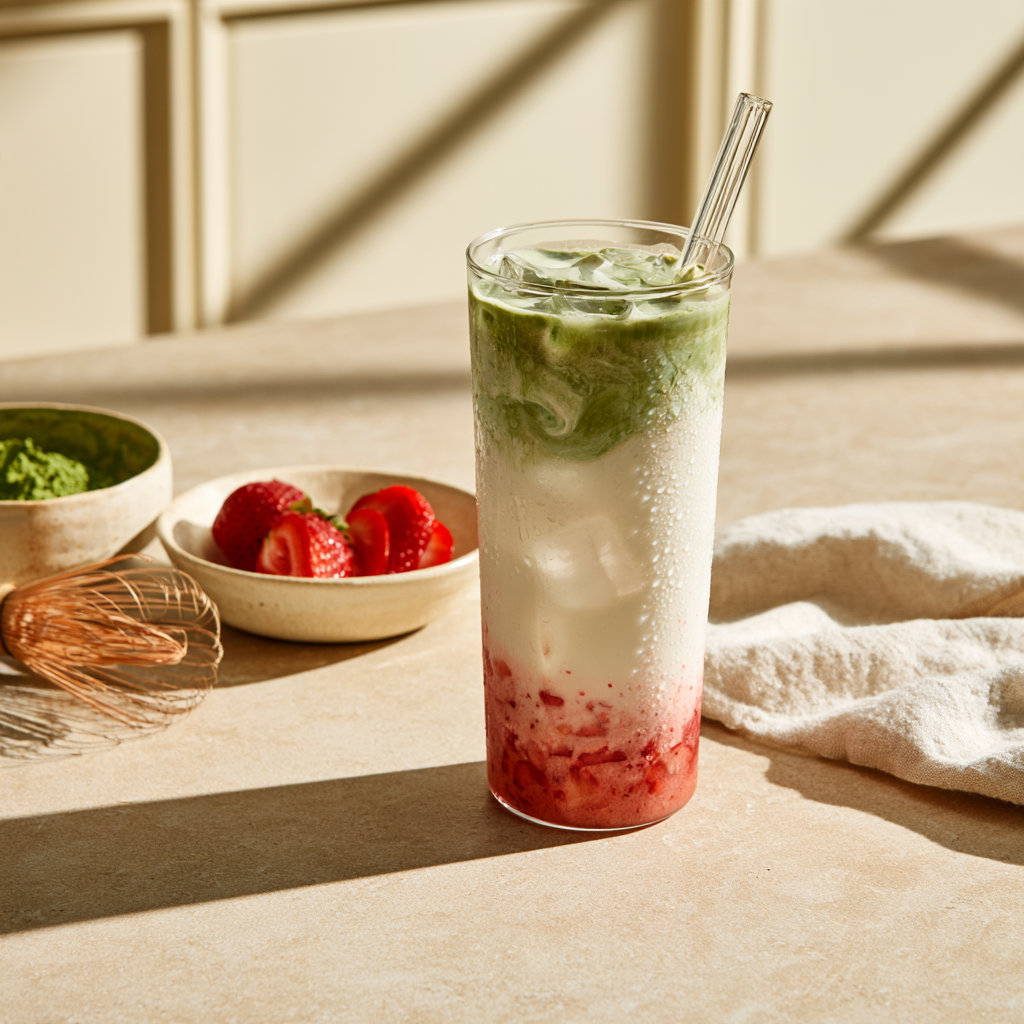
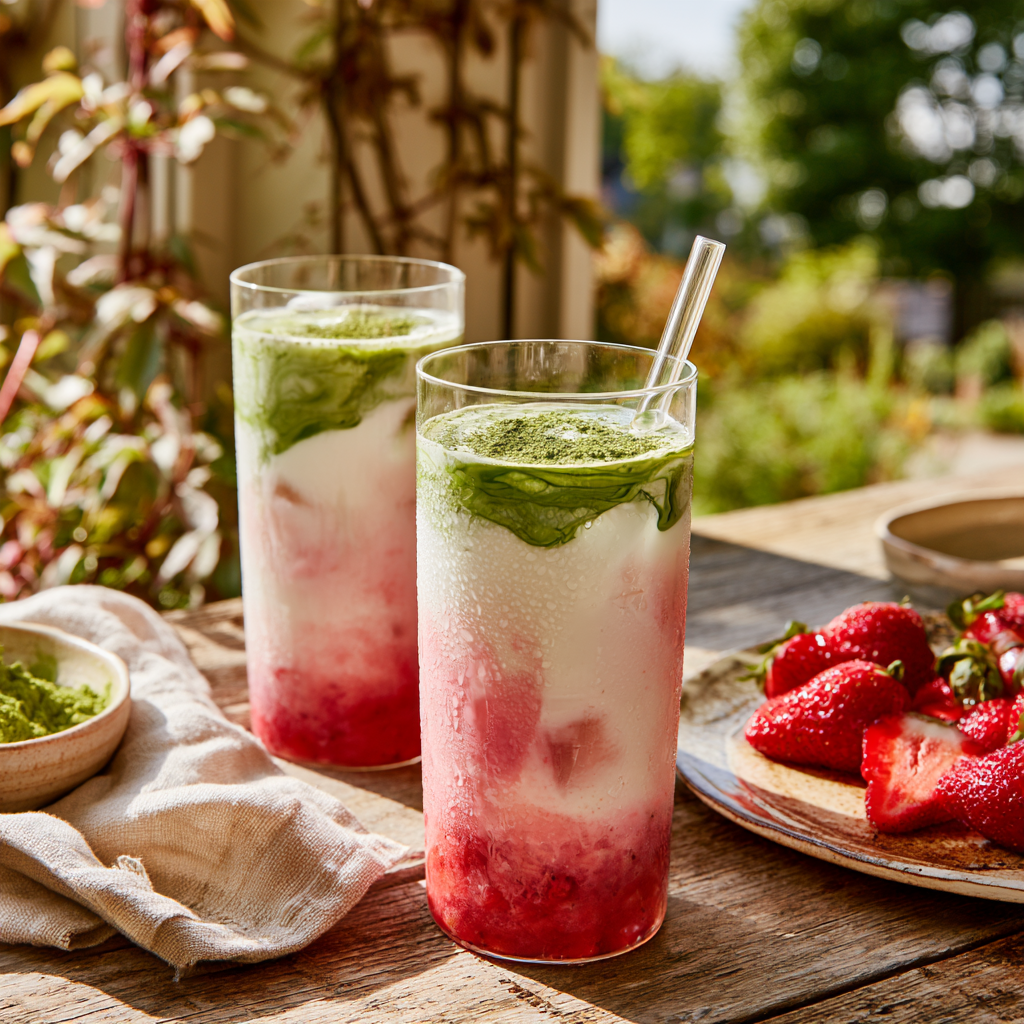
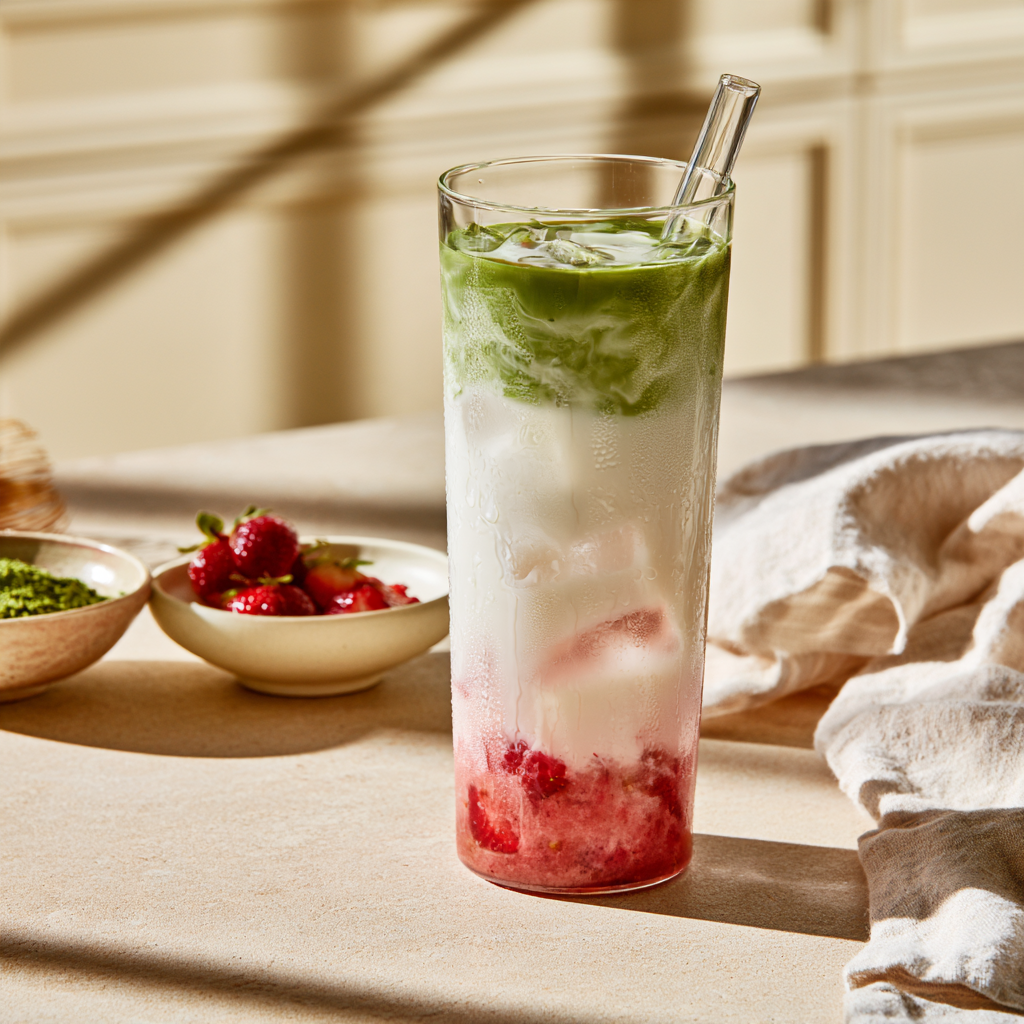
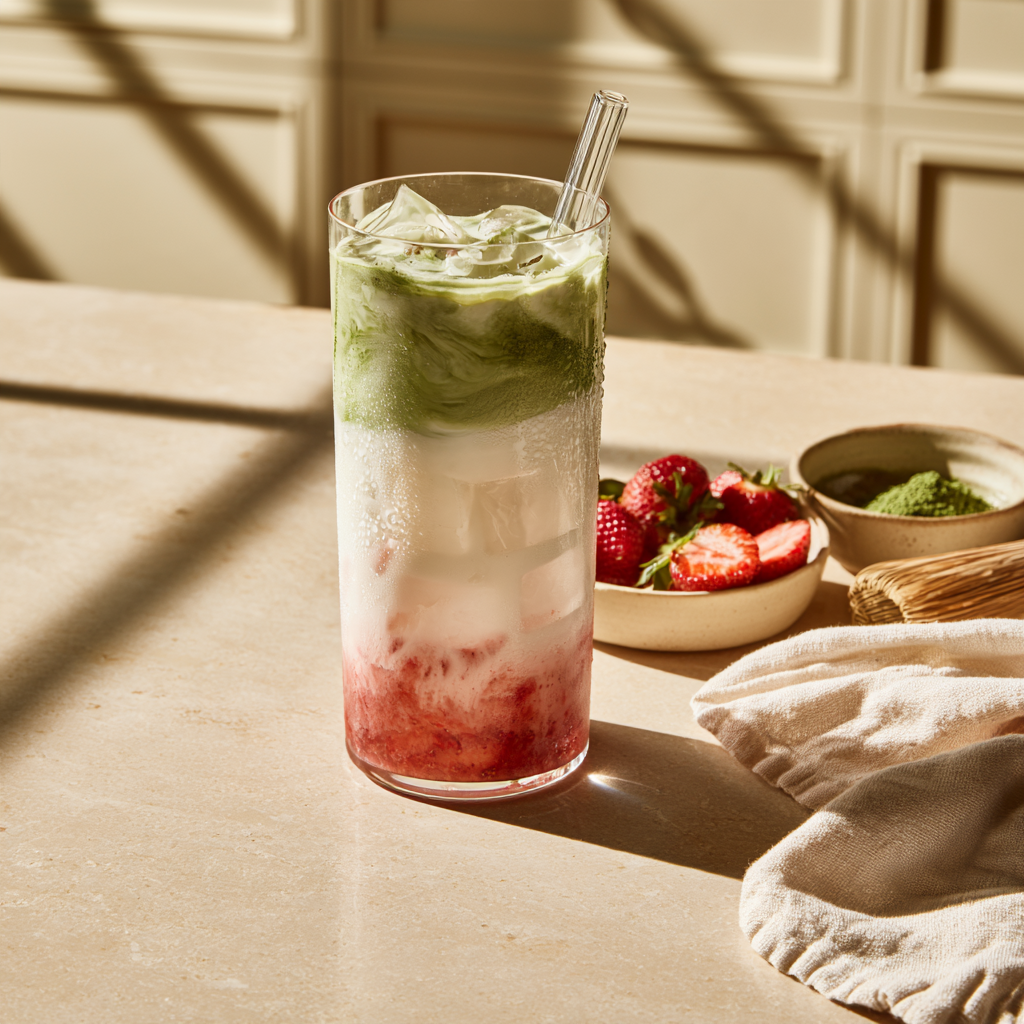
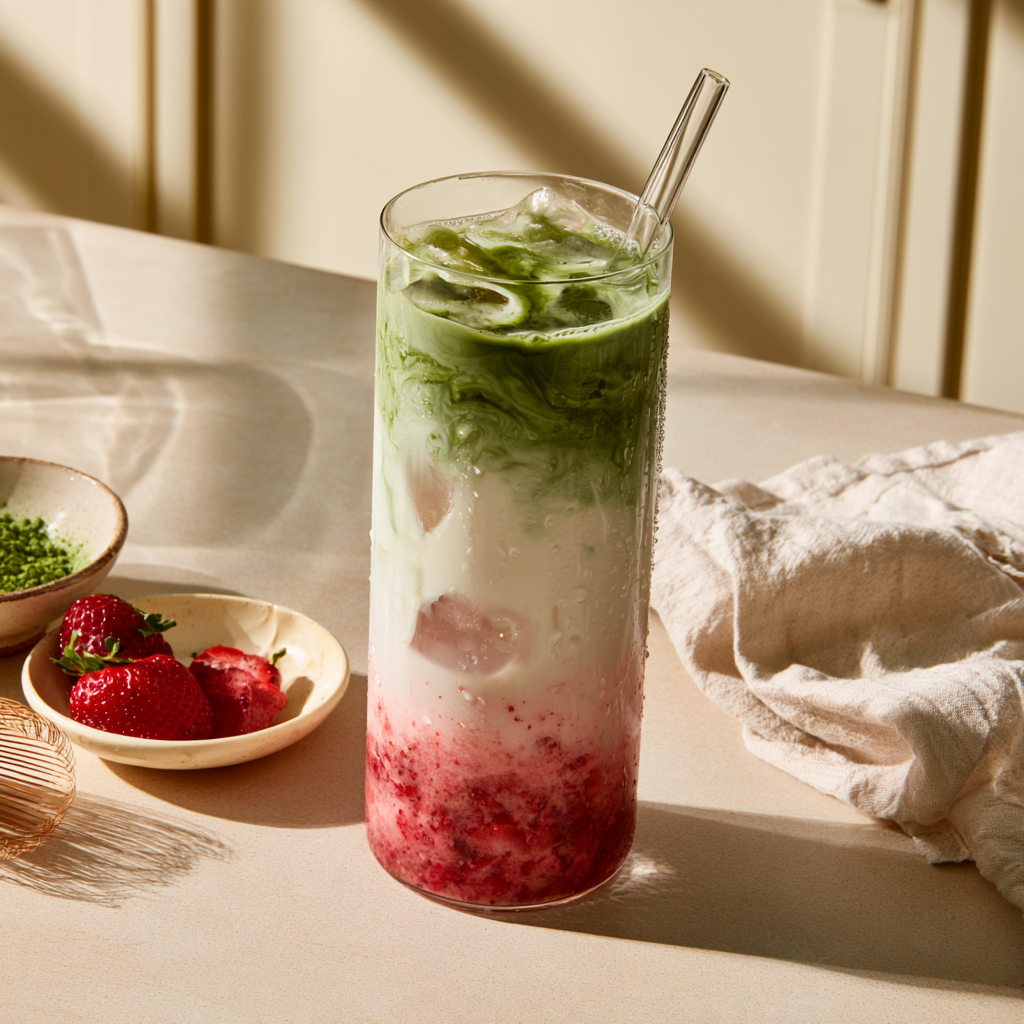
There’s something absolutely irresistible about a drink that’s as beautiful as it is delicious, and this Strawberry Matcha Recipe is the perfect example! Imagine a tall glass filled with three gorgeous layers: a vibrant red strawberry purée at the bottom, creamy white milk in the middle, and a smooth, earthy green matcha layer floating beautifully on top. It’s refreshing, naturally colorful, and bursting with the sweet flavor of fresh strawberries balanced by the delicate, slightly earthy taste of Japanese green tea. Every sip brings together fruity sweetness, velvety creaminess, and that unmistakable matcha flavor. Whether you’re a longtime matcha lover or trying it for the first time, this homemade strawberry matcha latte is a delicious way to brighten your morning or enjoy a refreshing afternoon treat.
What makes this easy Strawberry Matcha Recipe so special is how effortlessly it transforms a few simple ingredients into a café-style drink right in your own kitchen. You don’t need expensive equipment or professional barista skills to create those beautiful, Instagram-worthy layers! All it takes is fresh, ripe strawberries, your favorite milk, good-quality matcha powder, a little sweetener if desired, and plenty of ice. Start by mashing or blending the strawberries into a juicy, flavorful purée, then gently add cold milk and finish with freshly whisked matcha. The result is a wonderfully creamy iced strawberry matcha latte that tastes like a refreshing combination of strawberries and cream with a subtle green tea finish. Best of all, you can adjust the sweetness, use dairy or plant-based milk, and customize the drink to suit your taste without relying on sugary store-bought syrups.
Strawberry Matcha Recipe
Equipment
- Tall clear serving glass (approximately 14–16 oz / 415–475 ml)
- Small mixing bowl or matcha bowl
- Bamboo matcha whisk or handheld milk frother
- Fine-mesh sieve
- Measuring cups and spoons
- Digital kitchen scale
- Fork, potato masher, or small blender
- Small spoon
- Kettle or saucepan for warming water
Ingredients
- For the Strawberry Purée
- Amount Ingredient
- ½ cup 75 g Fresh ripe strawberries, hulled and chopped
- 1 teaspoon 5 ml Honey or maple syrup, optional
- For the Matcha Latte
- Amount Ingredient
- 1 teaspoon 2 g Pure unsweetened matcha powder
- ¼ cup 60 ml Warm water, approximately 160–175°F (70–80°C)
- ¾ cup 180 ml Cold whole milk or unsweetened plant-based milk
- ½ –¾ cup Ice cubes
- Optional Garnish
- Amount Ingredient
- 1 Fresh strawberry halved or sliced
- As desired Small pieces of fresh strawberries
Instructions
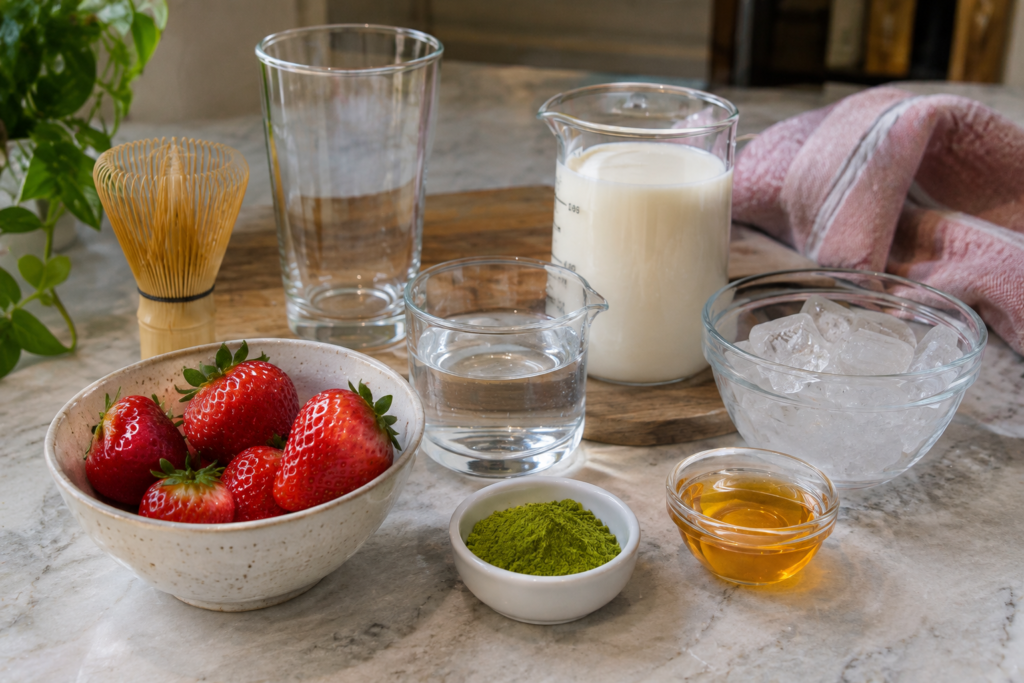
- Step 1: Gather and Prepare the Ingredients. Begin by gathering all the ingredients and equipment needed for your homemade strawberry matcha latte. Measure ½ cup (75 g) of fresh ripe strawberries, 1 teaspoon (2 g) of pure unsweetened matcha powder, ¼ cup (60 ml) of water, and ¾ cup (180 ml) of cold milk. If your strawberries are slightly tart, set aside 1 teaspoon of honey or maple syrup to adjust their sweetness. Prepare approximately ½–¾ cup of ice cubes and choose a tall, clear serving glass with enough space to display the three beautiful layers. Using thoroughly chilled milk helps create a refreshing drink and supports a more distinct separation between the strawberry, milk, and matcha layers.

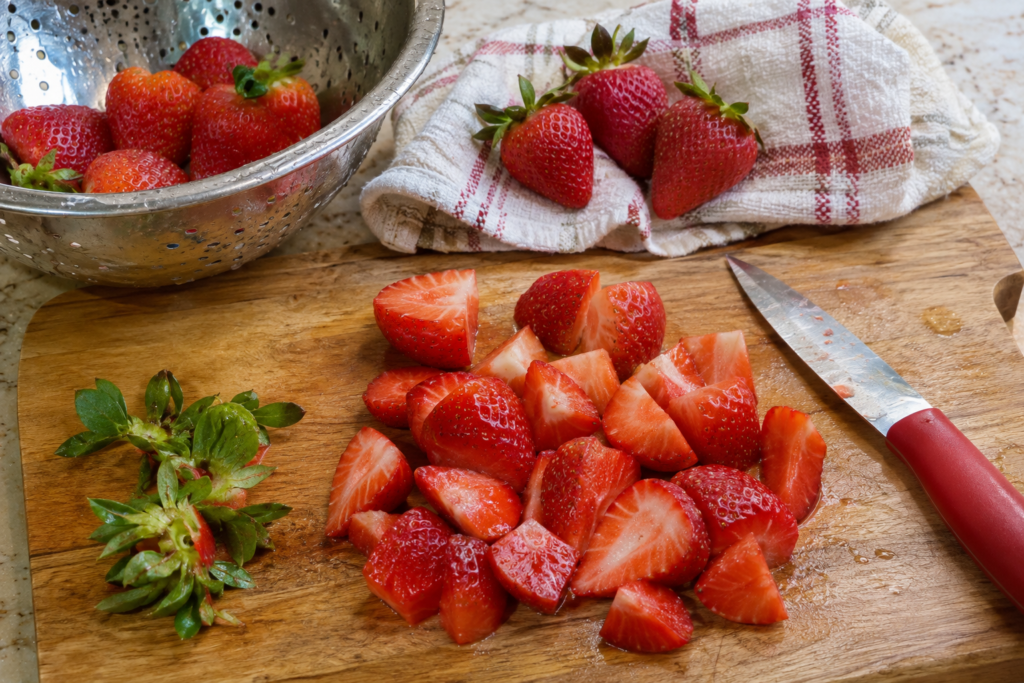
- Step 2: Wash and Prepare the Fresh Strawberries. Place the fresh strawberries in a colander and rinse them thoroughly under cool running water to remove surface dirt. Gently pat them dry with a clean kitchen towel or paper towel, then remove the green leafy tops using a small knife. Cut the strawberries into quarters or smaller pieces so they are easier to mash or blend. Choose ripe strawberries with a naturally sweet aroma and bright red color, as their flavor will form the base of the drink. If using frozen strawberries instead, thaw them in the refrigerator before preparing the purée, keeping any released juices to help create a smooth mixture. Avoid adding unnecessary water, which can make the strawberry layer too thin.
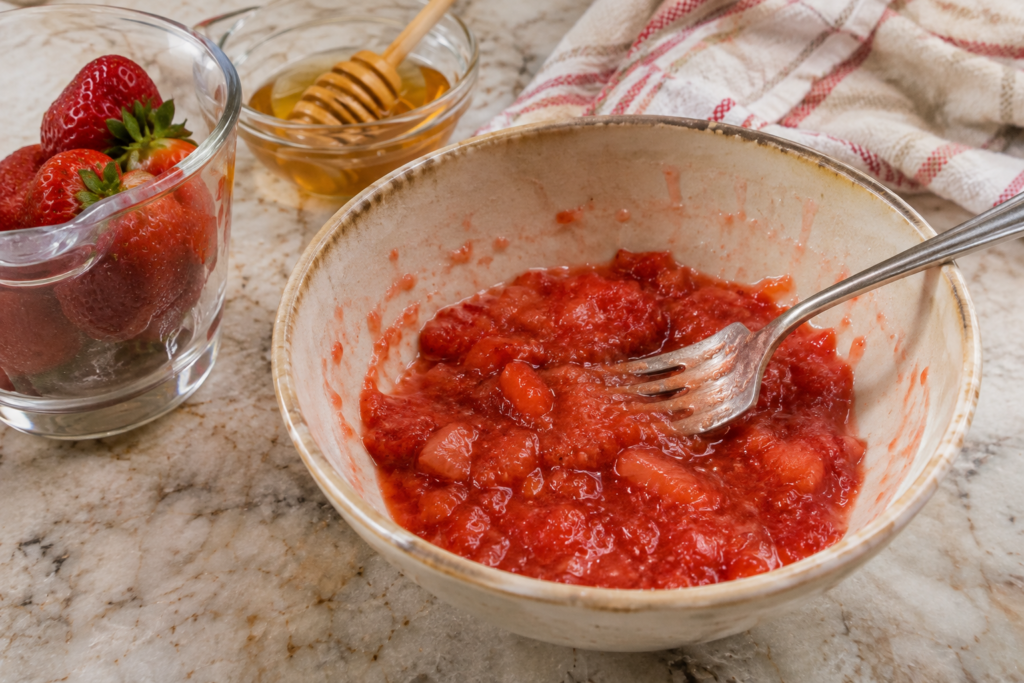
- Step 3: Make the Strawberry Purée. Transfer the prepared 75 g of strawberries to a small mixing bowl and mash them thoroughly with a fork or potato masher until they form a juicy, slightly thick purée. For a smoother café-style texture, pulse the strawberries briefly in a small blender until no large pieces remain. Taste the mixture and add up to 1 teaspoon (5 ml) of honey or maple syrup if desired, stirring until evenly incorporated. The purée should remain thick enough to settle at the bottom of the glass rather than immediately mixing into the milk. If the strawberries release excessive liquid, allow the mixture to rest briefly and stir before assembling. Avoid straining the fruit unless you specifically prefer a completely smooth texture, since keeping the pulp preserves more of the strawberries' natural fiber.
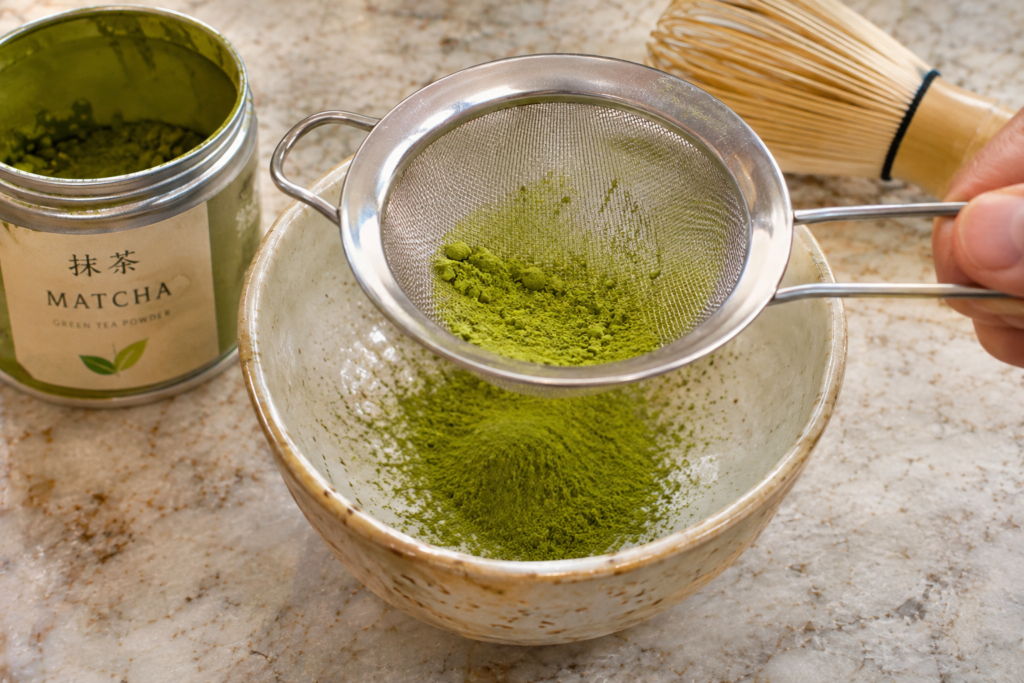
- Step 4: Prepare the Matcha Powder. Measure 1 teaspoon (2 g) of pure unsweetened matcha powder and sift it through a fine-mesh sieve into a clean matcha bowl or small mixing bowl. Sifting helps remove compacted lumps that can otherwise remain visible in the finished drink and create uneven pockets of strong green tea flavor. Choose fresh, good-quality matcha with a naturally green color and pleasant grassy aroma. Avoid using matcha powders that smell stale or have been stored for long periods in warm, humid conditions. Keeping matcha sealed away from heat, moisture, and direct sunlight helps maintain its quality and distinctive flavor.
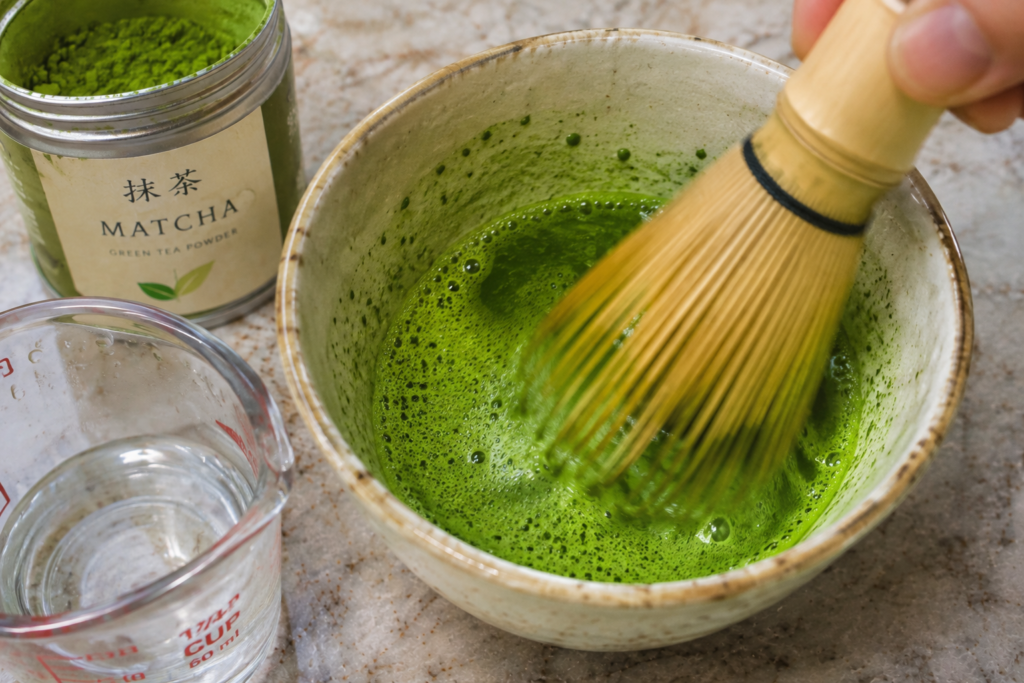
- Step 5: Whisk the Matcha with Warm Water. Warm ¼ cup (60 ml) of water to approximately 160–175°F (70–80°C), avoiding a rolling boil. Slowly pour the warm water over the sifted matcha powder, then whisk vigorously using a traditional bamboo matcha whisk or a handheld milk frother. If using a bamboo whisk, move it rapidly in a loose W-shaped motion rather than stirring in circles, continuing until the powder is fully dispersed and the surface develops a light layer of fine bubbles. This should take approximately 20–30 seconds, depending on the whisk and matcha powder. If using a handheld frother, blend until the mixture becomes smooth and slightly foamy. Allow the prepared matcha to cool for approximately 1–2 minutes before assembling the iced drink so it does not melt the ice too rapidly.
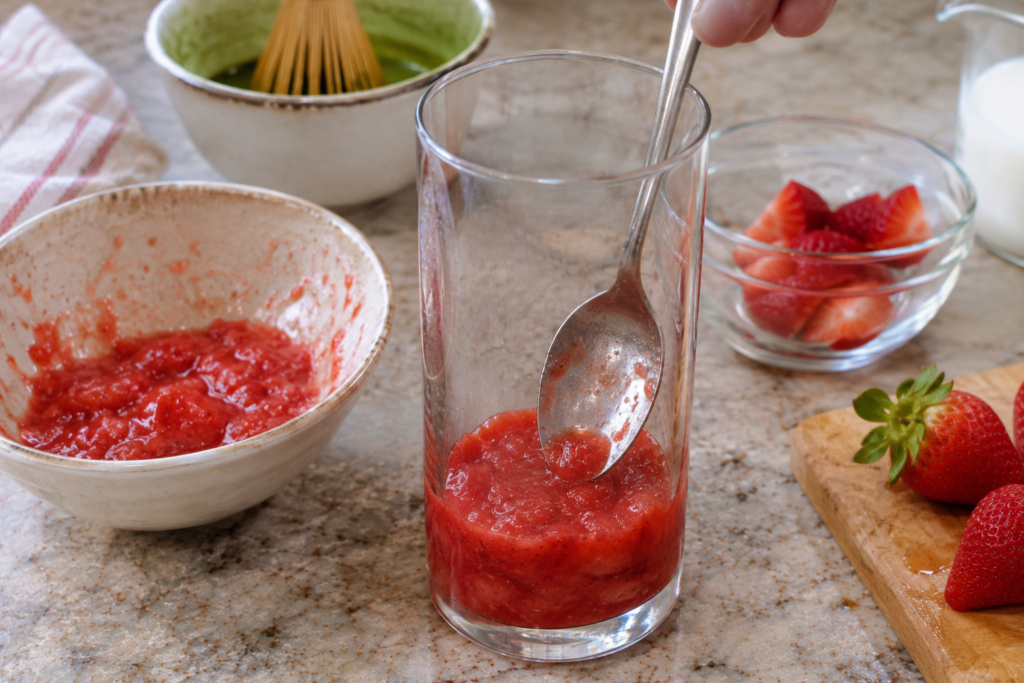
- Step 6: Add the Strawberry Purée to the Serving Glass. Spoon the freshly prepared strawberry purée into the bottom of your tall, clear serving glass, spreading it gently into an even layer with the back of a spoon. The fruit mixture should form a colorful red base approximately ½–1 inch deep, depending on the width of the glass and the consistency of the purée. Use a clean spoon to smooth the surface if necessary, but avoid spreading the purée too far up the sides unless you prefer a marbled appearance. This bottom layer provides the natural strawberry sweetness and creates the visual foundation for the finished three-layer strawberry matcha latte.
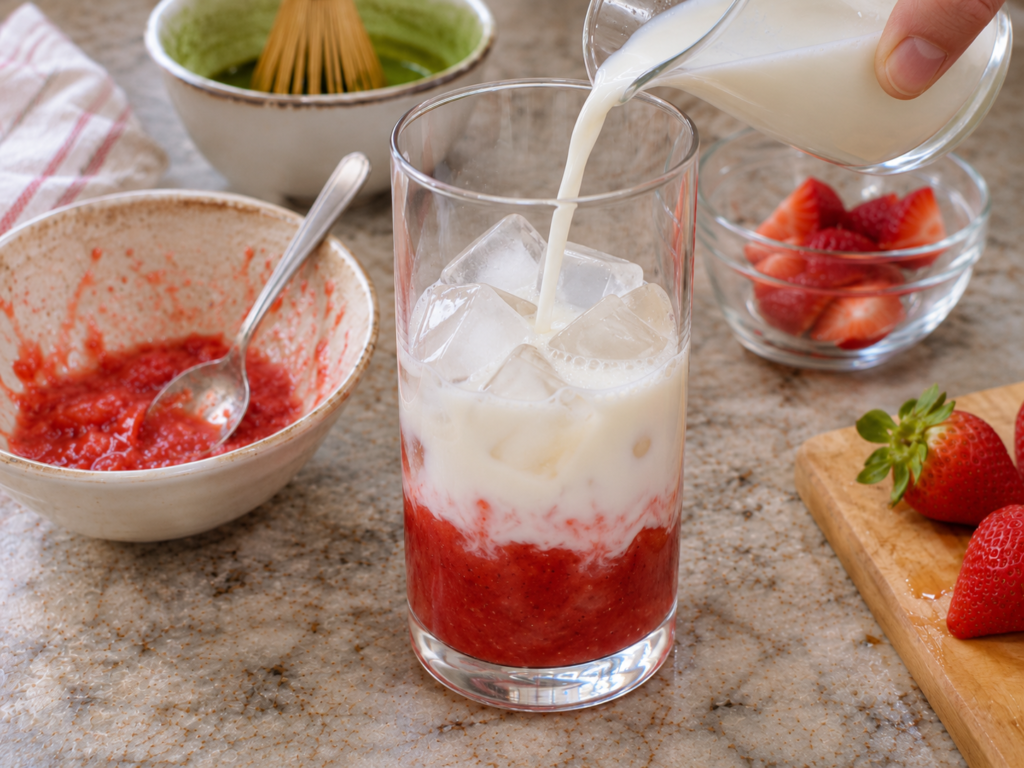
- Step 7: Add the Ice and Cold Milk. Carefully place approximately ½–¾ cup of ice cubes into the glass over the strawberry purée, adding them gently to avoid splashing or disturbing the fruit layer. Slowly pour ¾ cup (180 ml) of thoroughly chilled whole milk or your preferred unsweetened plant-based milk over the ice, directing the stream against the back of a spoon or one of the ice cubes if necessary to reduce mixing. The milk should settle above the strawberry purée, creating a beautiful contrast between the red fruit and creamy white liquid. Some natural blending around the edges is normal, especially if the strawberries are very juicy. Pouring slowly and using cold ingredients helps maintain the layered appearance long enough for an attractive presentation.

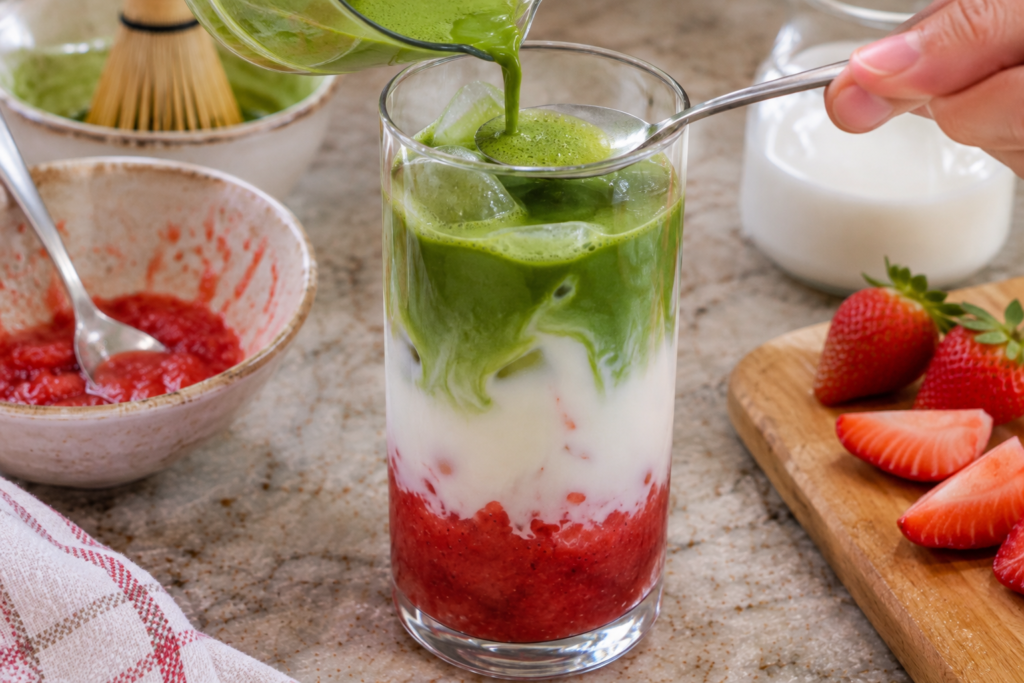
- Step 8: Pour the Matcha Layer Over the Milk. Once the strawberry purée, ice, and milk are arranged in the glass, give the prepared matcha mixture one final gentle whisk to redistribute any settled powder. Hold a spoon just above the surface of the milk or near the upper ice cubes, then slowly pour the matcha over the back of the spoon to reduce the force of the liquid entering the glass. The green matcha should form a distinct upper layer, creating the signature red, white, and green appearance of this strawberry matcha recipe. Depending on the density of your strawberry mixture, type of milk, and pouring technique, the layers may appear sharply defined or gently blended. Serve promptly because the liquids will gradually mix and the ice will begin to melt.
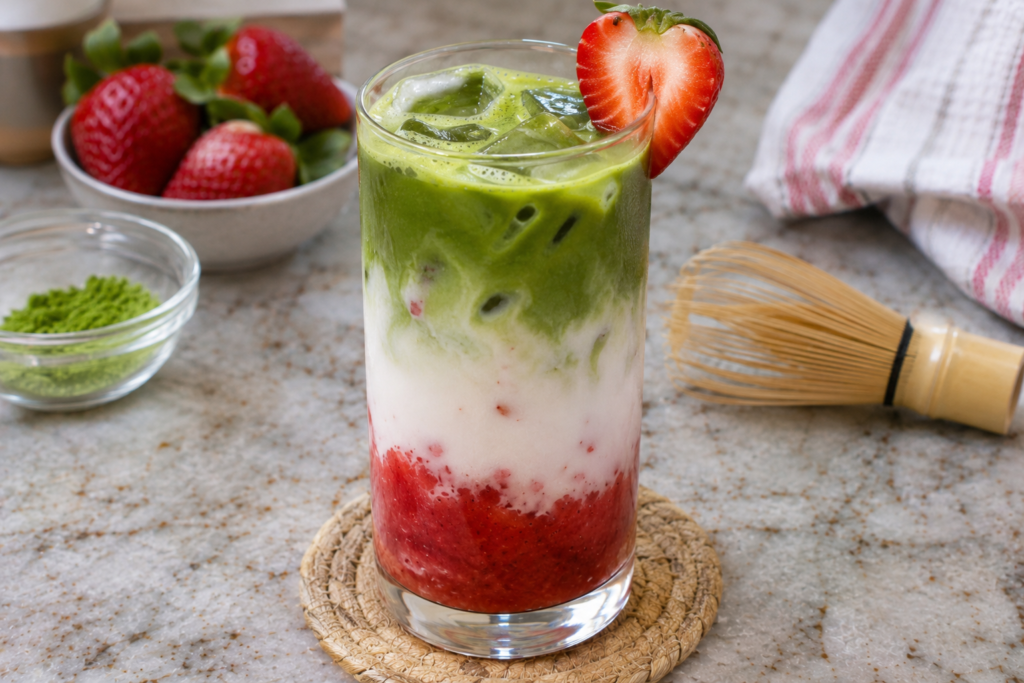
- Step 9: Garnish the Strawberry Matcha Latte. For a simple, elegant finish, garnish the prepared strawberry matcha latte with a freshly sliced strawberry placed carefully on the rim of the glass or add a few small strawberry pieces to the surface. Avoid adding too many toppings because they can disturb the delicate matcha layer and make the drink difficult to stir. If you enjoy a slightly sweeter latte, taste a small spoonful after gently combining the layers and add a little extra sweetener only if necessary. For a particularly attractive café-style presentation, serve the drink in a transparent glass without stirring immediately so the beautiful natural colors remain visible.
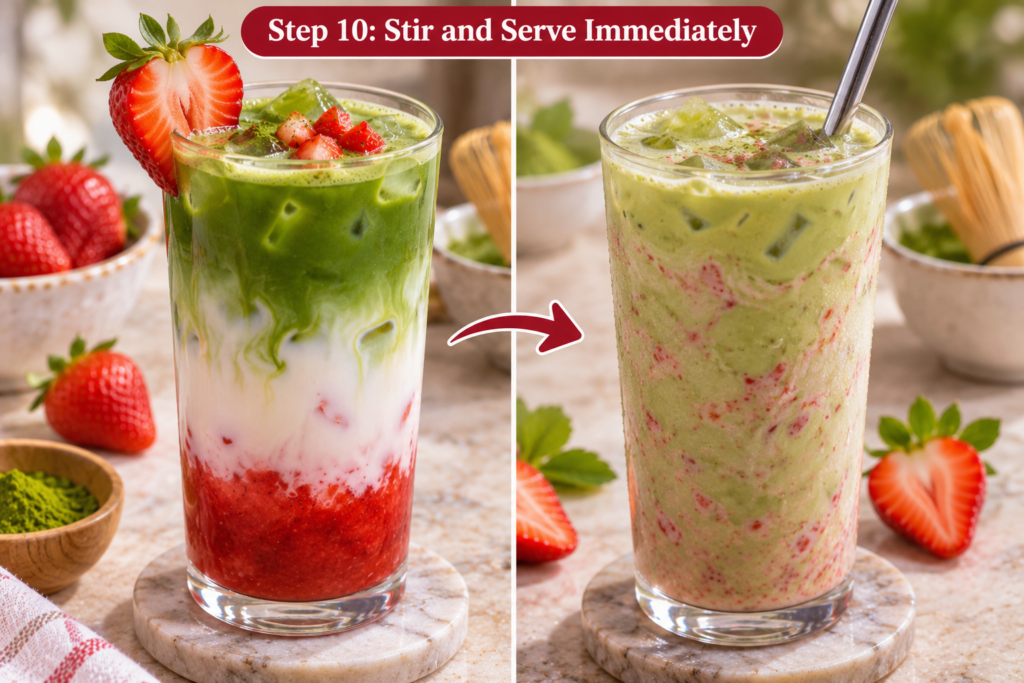
- Step 10: Stir and Serve Immediately. Serve your homemade strawberry matcha latte immediately while the milk and matcha are thoroughly chilled and the ice remains intact. Before drinking, use a long spoon or reusable straw to gently stir the strawberry purée from the bottom of the glass into the milk and matcha, combining the fruity sweetness with the earthy green tea flavor. The finished drink should become a soft pinkish-green or lightly marbled mixture, depending on how thoroughly it is stirred. Taste and adjust the sweetness if desired, keeping in mind that ripe strawberries already contribute natural sugars. Enjoy as a refreshing afternoon beverage, a café-inspired brunch drink, or a colorful homemade alternative to your usual iced latte.
Notes

- Origins of the Strawberry Matcha
- Health Benefits of the Strawberry Matcha
- Nutritional Benefits of Strawberry Matcha Ingredients
- 1. Provides Antioxidants from Matcha and Strawberries
- 2. Supports Normal Immune Function with Vitamin C
- 3. May Improve Alertness and Concentration
- 4. Can Provide Calcium and Protein
- 5. Offers a Way to Reduce Added Sugar
- 6. Contains Plant Compounds Studied for Heart Health
- 7. Offers a Refreshing Way to Enjoy Fresh Fruit
- Is Strawberry Matcha Healthy?
- How to Make Your Strawberry Matcha Recipe a Little
Origins of the Strawberry Matcha
The story behind the Strawberry Matcha Recipe brings together two beloved culinary traditions: the centuries-old Japanese appreciation for matcha green tea and the modern popularity of fresh, fruit-flavored café drinks. Matcha has a fascinating history rooted in East Asian tea culture. Powdered tea preparations developed in China before being introduced to Japan, where matcha gradually became an important part of Japanese tea traditions. During the twelfth century, the Buddhist monk Eisai helped promote tea cultivation and consumption in Japan, contributing to the development of a tea culture that would eventually become closely associated with Zen Buddhism and the Japanese tea ceremony. Over time, matcha became prized for its vibrant green color, distinctive earthy flavor, and careful preparation, traditionally involving whisking finely ground tea powder with hot water.
Strawberries, meanwhile, have their own rich culinary history. Although wild strawberries have been enjoyed for centuries, the modern garden strawberry developed in Europe during the eighteenth century through the hybridization of strawberry species originating in the Americas. Their naturally sweet, slightly tart flavor eventually made them a favorite ingredient in desserts, preserves, milkshakes, and refreshing summer beverages. As café culture evolved, strawberries became a popular addition to milk-based drinks, offering a beautiful pink color and a fresh, fruity contrast to creamy ingredients. Combining strawberries with matcha creates an especially appealing flavor pairing: the sweetness and gentle acidity of the fruit balance the earthy, slightly bitter notes of green tea.
Health Benefits of the Strawberry Matcha
Who knew that such a beautiful, colorful drink could also bring together so many interesting nutrients? This Strawberry Matcha Recipe combines the naturally sweet flavor of fresh strawberries with the earthy richness of Japanese green tea, creating a refreshing beverage that offers more than just a gorgeous appearance. Strawberries provide vitamin C, fiber, and naturally occurring antioxidants, while matcha contains distinctive plant compounds, including catechins, that have attracted considerable attention in nutritional research. When prepared with fresh fruit, good-quality matcha powder, and milk, this homemade strawberry matcha latte can be a flavorful addition to a balanced diet.
One of the biggest advantages of making an iced strawberry matcha latte at home is having control over the ingredients. Unlike some café-style drinks that contain generous amounts of flavored syrup or sweetened fruit mixtures, a homemade version allows you to adjust the sweetness, choose your preferred milk, and enjoy the natural flavors of strawberries and green tea. However, it’s important to remember that the nutritional benefits depend on the quantities used, and no single drink can replace a varied, nutritious eating pattern.
Nutritional Benefits of Strawberry Matcha Ingredients
| Ingredient or Nutrient | Potential Health Benefits |
|---|---|
| Fresh Strawberries | Provide vitamin C, dietary fiber, manganese, and naturally occurring plant compounds. |
| Matcha Green Tea | Contains catechins and other polyphenols with antioxidant properties. |
| Vitamin C | Supports normal immune function, collagen formation, and protection of cells from oxidative stress. |
| EGCG (Epigallocatechin Gallate) | A green tea catechin studied for its antioxidant activity and possible effects on metabolic health. |
| L-Theanine | An amino acid naturally found in tea that may influence attention and relaxation. |
| Natural Caffeine | Can temporarily improve alertness and reduce feelings of fatigue. |
| Milk or Fortified Plant-Based Milk | May provide calcium, protein, vitamin D, and other nutrients, depending on the product. |
| Strawberry Anthocyanins | Plant pigments associated with the red color of strawberries and studied for their antioxidant properties. |
1. Provides Antioxidants from Matcha and Strawberries
One of the most interesting qualities of this Strawberry Matcha Recipe is its combination of antioxidant-containing ingredients. Matcha is made from finely ground green tea leaves, which contain polyphenols known as catechins. One of the most widely researched catechins is epigallocatechin gallate, commonly called EGCG.
Strawberries contribute additional plant compounds, including anthocyanins, which give the fruit its beautiful red color. They also provide vitamin C, an essential nutrient that helps protect cells from oxidative damage.
Although these ingredients contain antioxidants, drinking strawberry matcha has not been shown to prevent or treat diseases. The amounts of these compounds vary depending on matcha quality, strawberry ripeness, preparation methods, and serving size.
2. Supports Normal Immune Function with Vitamin C
Fresh strawberries are a useful source of vitamin C, making them a delicious addition to your homemade strawberry matcha latte. Vitamin C contributes to normal immune system function, helps the body produce collagen, and supports healthy skin, blood vessels, and connective tissues.
It also assists with the absorption of non-heme iron, the type of iron found in plant-based foods. However, tea polyphenols can reduce non-heme iron absorption when consumed alongside iron-rich meals, so the overall effect depends on the complete diet.
Using fresh strawberries rather than relying entirely on artificially flavored strawberry syrup is a practical way to include fruit-derived nutrients in your drink.
3. May Improve Alertness and Concentration
Matcha naturally contains caffeine, which can temporarily increase alertness and help reduce feelings of tiredness. Unlike many other tea beverages, matcha is prepared by consuming suspended powdered tea leaves, so its caffeine content can be relatively substantial depending on the quantity used.
Matcha also contains L-theanine, an amino acid that researchers have investigated for its potential effects on attention and relaxation. Some studies suggest that combinations of caffeine and L-theanine may support certain aspects of cognitive performance, although results are not consistent across all studies.
This combination makes an iced strawberry matcha latte an appealing alternative to coffee for people who enjoy the taste of green tea. Keep in mind that matcha is not caffeine-free, and individuals who are sensitive to caffeine may prefer smaller servings or a lower matcha concentration.
4. Can Provide Calcium and Protein
The milk used in this Strawberry Matcha Recipe contributes to its wonderfully creamy texture, but it can also provide useful nutrients.
Dairy milk naturally supplies protein and calcium, while many fortified plant-based milks contain added calcium and vitamin D. Unsweetened soy milk generally offers more protein than almond milk or oat milk, although nutritional values vary considerably by brand.
Calcium is essential for maintaining normal bones and teeth, while protein contributes to muscle maintenance and normal tissue repair.
For a more balanced drink, choose an unsweetened milk that suits your dietary preferences and check the nutrition label for protein, calcium, and added sugar.
5. Offers a Way to Reduce Added Sugar
One of the advantages of making a homemade strawberry matcha recipe is being able to control how much sweetener goes into your glass. Ripe strawberries provide natural sweetness, meaning you may not need as much maple syrup, honey, or flavored syrup as you would in a café-style version.
To reduce added sugar, begin by blending fresh strawberries without sweetener, then taste the purée before deciding whether anything else is necessary. Unsweetened milk and pure matcha powder are also helpful choices.
Remember that maple syrup, honey, and regular sugar all contribute added sugars. Even natural sweeteners should be used in moderation if reducing overall sugar intake is your goal.
6. Contains Plant Compounds Studied for Heart Health
Both green tea and strawberries contain plant compounds that have been investigated for their potential roles in cardiovascular health.
Research on green tea consumption has explored associations with blood pressure, cholesterol levels, and other cardiovascular markers. Similarly, berries contain anthocyanins and other polyphenols that may contribute to a heart-healthy dietary pattern.
However, findings from studies involving green tea or berry consumption cannot automatically be applied to a single strawberry matcha latte. The concentration of active compounds, overall dietary habits, and individual health conditions all influence potential outcomes.
Enjoy this drink as part of a varied diet that includes fruits, vegetables, whole grains, and other nutritious foods rather than relying on it for specific heart-health effects.
7. Offers a Refreshing Way to Enjoy Fresh Fruit
A strawberry matcha latte provides an enjoyable way to incorporate fresh strawberries into your routine, particularly during spring and summer when ripe berries are widely available.
Blending whole strawberries into a purée helps retain more of their natural fiber than using strained strawberry juice, although a drink made with a small amount of fruit will still provide less fiber than a full serving of whole strawberries.
You can increase the fruit content by adding additional chopped strawberries or serving the drink alongside a balanced breakfast.
The combination of chilled milk, ice, and fresh fruit also makes this recipe especially refreshing during warm weather.
Is Strawberry Matcha Healthy?
Strawberry matcha can be a nutritious beverage choice when prepared with fresh strawberries, pure matcha powder, unsweetened milk, and modest amounts of added sugar. It provides some antioxidants and may contribute vitamin C, calcium, and protein, depending on the ingredients.
However, it is not automatically low in calories or sugar. Sweetened strawberry syrups, flavored milk, whipped cream, and excessive sweeteners can significantly change its nutritional profile.
Matcha also contains caffeine. The amount varies by product and serving size, so people who are pregnant, sensitive to caffeine, or managing certain medical conditions should consider their individual caffeine limits.
How to Make Your Strawberry Matcha Recipe a Little
If you’d like to enjoy your strawberry matcha latte with a more balanced nutritional profile, these simple adjustments can help:
- Use Fresh, Ripe Strawberries: Choose naturally sweet strawberries instead of heavily sweetened strawberry syrups whenever possible.
- Select Pure Matcha Powder: Look for unsweetened matcha rather than instant matcha latte mixes containing added sugar.
- Choose Unsweetened Milk: Dairy milk or unsweetened fortified soy milk can provide protein and calcium, while other plant-based options offer different nutritional profiles.
- Limit Added Sweeteners: Taste the strawberry purée before adding maple syrup, honey, or sugar.
- Keep the Strawberry Fiber: Blend or mash whole strawberries instead of straining away all the pulp.
- Measure the Matcha: Use a moderate amount of matcha powder and consider its caffeine content, especially if enjoying the drink later in the day.
- Skip Heavy Cream Toppings: The drink can be pleasantly creamy without whipped cream, sweetened cold foam, or additional dessert-style toppings.
- Enjoy It with a Balanced Meal: Pair your strawberry matcha with a breakfast containing protein, fiber, and other nutrients rather than treating the beverage as a complete meal.
Frequently Asked Questions About Strawberry Matcha Recipe
Want to make a beautiful homemade Strawberry Matcha Recipe with fresh strawberry purée, creamy cold milk, and a vibrant green matcha layer? This refreshing iced latte combines fruity sweetness with the delicate earthy flavor of Japanese green tea. These practical answers explain how to choose the best matcha, create smooth strawberry purée, achieve beautiful pink, white, and green layers, avoid bitter matcha, and adjust sweetness naturally. Whether you’re recreating a café-style latte or preparing a refreshing summer drink, these tips will help you make a delicious strawberry matcha at home.
1. What is a Strawberry Matcha Latte, and what does it taste like?
A Strawberry Matcha Latte is a refreshing layered drink that combines fresh strawberries, creamy milk, and finely powdered green tea. It has a distinctive balance of fruity sweetness, smooth dairy creaminess, and matcha’s naturally earthy, slightly grassy flavor. The strawberry purée creates a bright pink layer, while the milk adds a soft white center and matcha creates a beautiful green topping. Unlike a regular iced matcha latte, this version includes real fruit for extra freshness and a gentle strawberry flavor that complements rather than overwhelms the tea.
2. What ingredients do you need for this homemade Strawberry Matcha Recipe?
The OoohDelish recipe makes one serving using 1/2 cup (75 g) fresh strawberries, 1 teaspoon (2 g) pure matcha powder, 1/4 cup (60 ml) water, and 3/4 cup (180 ml) cold milk. Add approximately 1/2–3/4 cup ice cubes and, if your strawberries need extra sweetness, an optional teaspoon of honey or maple syrup. No espresso or coffee is required because matcha provides the green tea flavor. A tall transparent glass helps display the colorful layers. The recipe requires no stove or complicated equipment and can be prepared in approximately 5–10 minutes.
3. How do you prepare the strawberry layer for a Strawberry Matcha Latte?
Start with 75 g of washed, hulled, ripe strawberries and mash or blend them into a soft, spoonable purée. If the berries are naturally sweet, no extra sweetener may be necessary. For tart strawberries, stir in up to 1 teaspoon honey or maple syrup according to taste. Spoon the strawberry mixture into the bottom of a tall serving glass before adding the ice and milk. Avoid adding unnecessary water, which can make the fruit layer too thin. For another strawberry-based drink, explore our Strawberry Acai Refresher Recipe .
4. Can I use frozen strawberries instead of fresh strawberries?
Yes, frozen strawberries can be used in a homemade Strawberry Matcha Latte. Thaw approximately 75 g in the refrigerator, then mash or blend until smooth. Frozen berries may release more liquid than fresh strawberries, which can produce a thinner purée. If necessary, drain a little excess liquid before assembling the drink. Avoid using frozen strawberries packed in heavy syrup unless you want additional sweetness. Fresh ripe strawberries usually offer the best naturally sweet flavor and an attractive pink-red color.
5. What type of matcha powder is best for a Strawberry Matcha Recipe?
Choose finely ground, pure, unsweetened matcha powder with a fresh aroma and naturally vibrant green color. Good-quality matcha blends more smoothly and generally provides a more pleasant green tea flavor than stale or poorly stored powder. Both suitable culinary matcha and drinking-grade matcha can be used, depending on their quality and your budget. Avoid sweetened matcha latte mixes, which may contain added sugar or powdered milk. The OoohDelish recipe uses just 2 g matcha, allowing the strawberries and green tea to remain balanced.
6. How do you dissolve matcha powder without lumps or a grainy texture?
Sift the 2 g of matcha powder into a small bowl before adding the measured 60 ml water. Whisk vigorously using a bamboo matcha whisk, handheld frother, or small kitchen whisk until the mixture becomes smooth and evenly colored. Begin with a small amount of water to loosen the powder, then whisk in the remainder. Matcha does not dissolve completely like sugar; its fine particles become suspended in the water. Whisking properly helps reduce clumps and creates a smoother drink.
7. Should you use hot or cold water when preparing matcha for an iced latte?
Warm water is often the easiest choice for whisking matcha smoothly, but cold water can also work with thorough mixing. Water around 160–175°F (70–80°C) is a useful starting range. Avoid vigorously boiling water because excessive heat can make some matcha taste noticeably harsher. For this iced recipe, use 60 ml water to prepare the matcha mixture, then allow it to cool before pouring over the ice and milk. This helps preserve the cold temperature and attractive layers.
8. How do you create the beautiful three layers in a Strawberry Matcha Latte?
Layer the ingredients in the correct order: strawberry purée first, ice and milk second, and matcha last. Spoon the thicker strawberry purée into the bottom of a transparent glass. Add the ice gently, then slowly pour in the 180 ml cold milk. Finally, pour the cooled matcha mixture slowly over the ice or the back of a spoon. This careful pouring helps create distinct pink, white, and green sections. The layers are temporary and naturally begin blending as the drink sits.
9. Why are my Strawberry Matcha Latte layers mixing together instead of staying separate?
Layers can blend when the ingredients are poured too quickly, the strawberry purée is too thin, or the matcha mixture is too warm. Use thick, freshly mashed strawberries rather than a watery strawberry juice. Keep the milk thoroughly chilled and add plenty of ice before the matcha layer. Pour each ingredient gently to avoid disturbing the liquid underneath. Remember that layered drinks are designed for immediate presentation. Even perfectly prepared layers will gradually mix, which is completely normal.
10. Why does my Strawberry Matcha Latte taste bitter or too grassy?
Excessive bitterness may come from too much matcha, old powder, or water that is too hot. This recipe uses 1 teaspoon (2 g) matcha, which is intended to provide noticeable green tea flavor without overwhelming the strawberries. Use fresh, properly stored matcha and avoid steeping it in boiling water. If the flavor is still too strong, try a different matcha brand or slightly reduce the powder in a future batch. Sweet strawberries also help soften the tea’s bitterness.
11. How can I make Strawberry Matcha sweeter without using too much sugar?
Begin with naturally ripe, sweet strawberries before adding any additional sweetener. The fruit contributes its own sweetness, which may be enough when combined with the milk. If the strawberries are tart, start with 1 teaspoon honey or maple syrup mixed directly into the purée. Taste before increasing the amount. You can also choose a naturally sweeter milk, although sweetened products add sugar. Avoid adding large quantities of syrup because they can overwhelm the delicate matcha flavor.
12. Can I make Strawberry Matcha with oat milk, almond milk, or other dairy-free milk?
Yes, this recipe can easily be adapted with a suitable plant-based milk. Replace the 180 ml whole milk with oat, almond, soy, or another milk alternative you enjoy. Oat milk often provides a smooth, naturally mild flavor, while soy milk may contribute more protein than some other plant-based choices. Check the ingredient label for added sweeteners and allergens. For a vegan version, use maple syrup rather than honey. To create a creamier café-style variation, you can explore our Cold Foam Recipe , using a suitable dairy-free adaptation.
13. Can you make Strawberry Matcha without a blender or special matcha whisk?
Absolutely! You don’t need expensive equipment to make homemade Strawberry Matcha. Mash the strawberries thoroughly with a fork until they form a soft purée. If you prefer a smoother fruit layer, press the mashed berries through a fine sieve. For the matcha, sift the powder into a bowl and whisk with a small kitchen whisk or milk frother. A clean, tightly sealed jar can also help mix the matcha and water by shaking. Assemble in a tall glass and serve cold.
14. Does Strawberry Matcha contain caffeine, and is it healthier than coffee?
Yes, strawberry matcha contains caffeine because matcha is made from powdered green tea leaves. This recipe uses approximately 2 g matcha per serving, but the actual caffeine amount varies by brand and growing conditions. Matcha also contains naturally occurring tea polyphenols, while strawberries contribute vitamin C and other nutrients. However, neither ingredient makes the drink automatically healthier than coffee. Overall nutrition depends on milk choice, portion size, and added sweeteners. People who limit caffeine should take the matcha content into account.
15. Can you prepare Strawberry Matcha ahead of time, and how long does it last in the fridge?
Strawberry Matcha tastes best immediately after assembly, especially if you want distinct colorful layers. For advance preparation, store the washed, mashed strawberry mixture in a clean, covered container and keep the milk refrigerated at 40°F (4°C) or below. Prepare and whisk the matcha closer to serving for the freshest texture. For best quality, aim to use prepared strawberry purée within 24 hours. Don’t leave the finished dairy-and-fruit drink at room temperature for more than two hours, or one hour above 90°F (32°C).
16. What toppings, desserts, and snacks pair best with a Strawberry Matcha Latte?
Fresh strawberry slices, a light strawberry purée swirl, or a small amount of creamy cold foam make attractive toppings. For a refreshing breakfast or afternoon snack, serve the latte with toast, lightly sweetened muffins, or fresh fruit. Matcha’s earthy flavor also pairs beautifully with delicate cakes and creamy desserts. Try our Matcha Gateau Recipe for an elegant green tea pairing, or enjoy our Green Tea Ice Cream Matcha for another delicious matcha-inspired treat. Serve the drink immediately while beautifully chilled.