

Nothing beats the comforting combination of freshly baked chocolate chip cookies and a cold glass of milk! This Chocolate Chip Cookies Milk Recipe brings together everything you love about classic homemade cookies: golden, lightly crispy edges, irresistibly soft centers, rich buttery flavor, and generous pockets of melted chocolate. Whether you’re craving a nostalgic childhood treat or preparing something sweet for your family, this delicious cookies-and-milk combination never goes out of style.
The secret to perfect Chocolate Chip Cookies Milk lies in achieving the right balance of texture and flavor. Softened butter, brown sugar, vanilla extract, and quality chocolate chips create a wonderfully chewy cookie, while careful mixing and baking help maintain tender centers. Paired with refreshing milk, every bite becomes even more satisfying as the chocolate and buttery cookie soften slightly with each dunk.
If you’re passionate about homemade cookies, you’ll also love our Amish Monster Cookie Recipe, packed with oats, peanut butter, and chocolate, or our Cornflake Cookie Recipe for a delightfully crunchy alternative. For another irresistible chocolate treat, explore our Chocolate Chip Cookie Dough.
Best of all, these homemade chocolate chip cookies with milk are perfect for after-school snacks, weekend baking, holiday gatherings, or cozy evenings. In this guide, you’ll discover the ingredients, baking secrets, troubleshooting tips, and delicious variations needed to create bakery-style cookies that are practically made for dunking in milk.
Because sometimes, the simplest combination, warm cookies, melted chocolate, and cold milk is the most irresistible dessert of all.
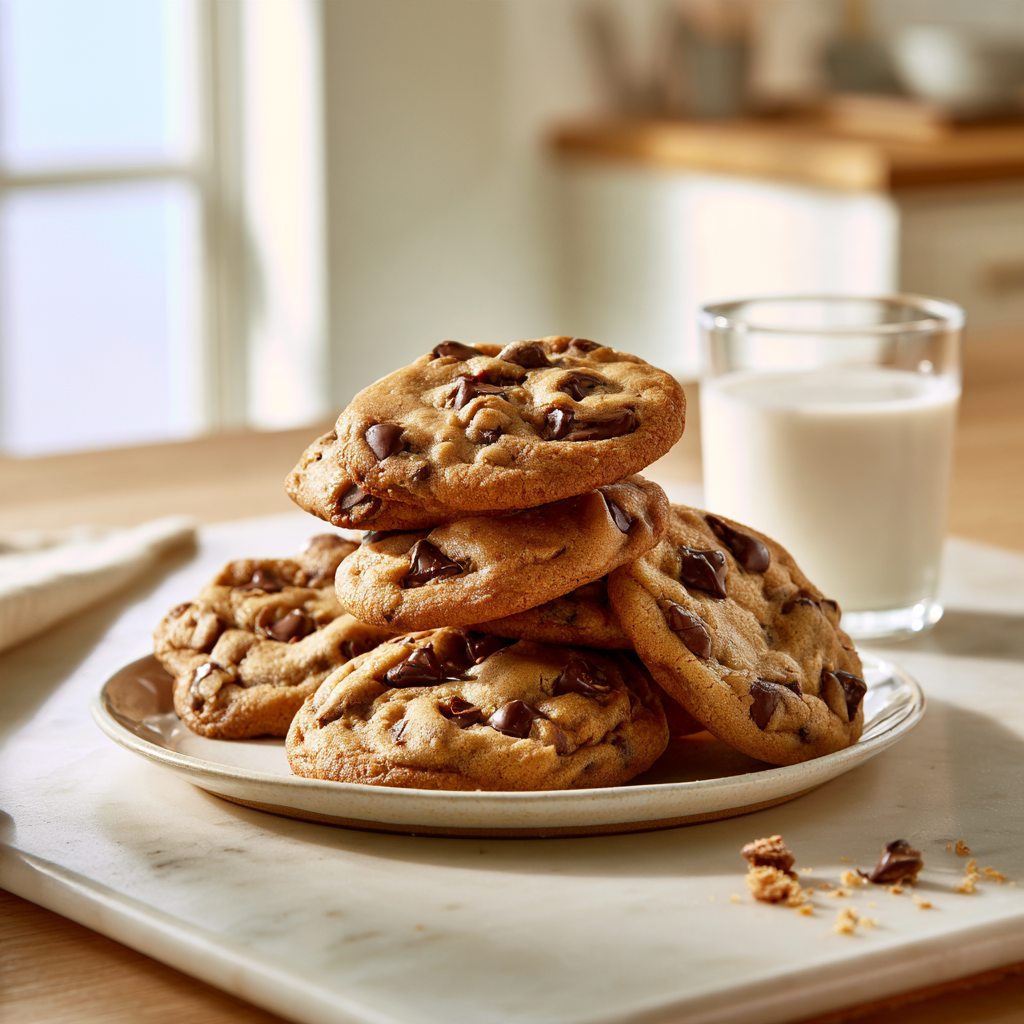
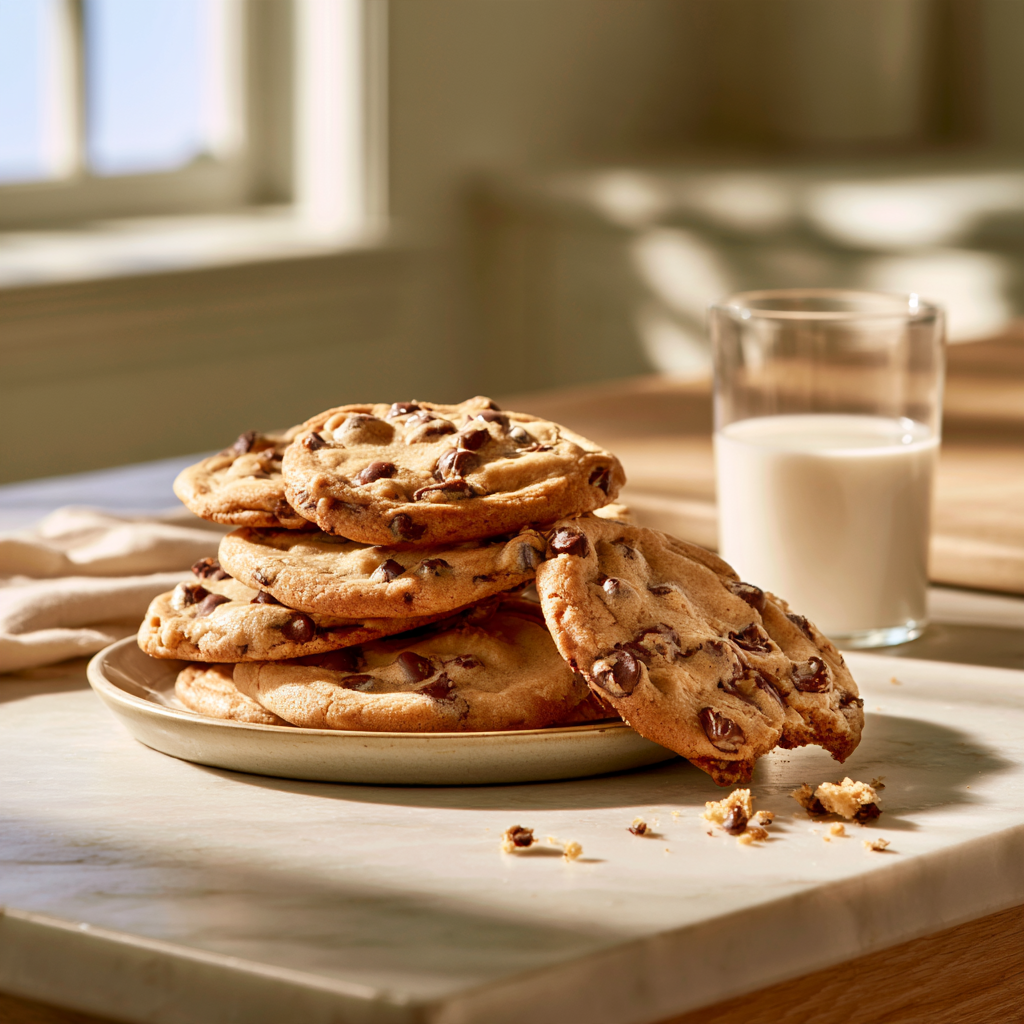
Chocolate Chip Cookies Milk
Equipment
- Large mixing bowl
- Medium mixing bowl
- Electric hand mixer or stand mixer
- Digital kitchen scale
- Measuring cups and spoons
- Rubber spatula
- Cookie scoop (approximately 2 tablespoons)
- Baking sheets
- Parchment paper
- Wire cooling rack
- Airtight storage container
- Serving glasses for milk
Ingredients
- For the Chocolate Chip Cookies
- 24 medium cookies
- Copy cookies ingredients
- 2½ cups 313 g all-purpose flour
- 1 teaspoon baking soda
- ½ teaspoon fine salt
- 1 cup 226 g unsalted butter, softened to cool room temperature
- ¾ cup 150 g packed light brown sugar
- ½ cup 100 g granulated sugar
- 2 large eggs room temperature
- 2 teaspoons pure vanilla extract
- 1¾ cups 298 g semi-sweet chocolate chips
- ¼ cup 43 g extra chocolate chips for topping (optional)
- For Serving With Milk
- Copy milk ingredients
- 12 cups 2.84 L cold whole milk, ½ cup per serving
- OR 12 cups 2.84 L lactose-free milk or unsweetened plant-based milk
- Optional: extra chocolate chips or a small pinch of flaky sea salt for garnish
Instructions
- Step 1: Prepare the Ingredients and Baking Equipment. Gather all ingredients and baking equipment before beginning so the cookie-making process is organized and efficient. Allow the unsalted butter to soften to a cool room temperature, ideally around 65–68°F (18–20°C), so it yields gently when pressed but does not appear melted or greasy. Bring the eggs to room temperature to help them incorporate evenly into the butter mixture. Measure 313 g of all-purpose flour with a digital kitchen scale for the most consistent results, and prepare your baking sheets with parchment paper. Keep the oven switched off for now, as the dough will need approximately 30 minutes of refrigeration before baking. Have a large mixing bowl, medium bowl, electric mixer, rubber spatula, and cookie scoop ready.
- Step 2: Combine the Dry Ingredients. In a medium mixing bowl, add 2½ cups (313 g) of all-purpose flour, 1 teaspoon of baking soda, and ½ teaspoon of fine salt. Whisk thoroughly for approximately 30 seconds until the baking soda and salt are evenly distributed throughout the flour. This helps the cookies rise and brown consistently without leaving concentrated pockets of leavening ingredients. For the best texture, avoid packing flour into measuring cups. If you do not have a kitchen scale, gently spoon the flour into each measuring cup and level it with the straight edge of a knife. Set the dry ingredient mixture aside while preparing the butter and sugar base.
- Step 3: Cream the Unsalted Butter and Sugars. Place 1 cup (226 g) of softened unsalted butter into a large mixing bowl, then add ¾ cup (150 g) of packed light brown sugar and ½ cup (100 g) of granulated sugar. Using an electric hand mixer or stand mixer fitted with the paddle attachment, beat the mixture on medium speed for approximately 2–3 minutes until it becomes creamy, slightly lighter in color, and fluffy. Stop the mixer once or twice to scrape down the sides and bottom of the bowl with a rubber spatula, ensuring that all ingredients are incorporated evenly. Brown sugar contributes moisture and a subtle caramel-like flavor, while granulated sugar encourages gentle spreading and golden edges. Proper creaming supports a tender cookie structure, but avoid excessively whipping the mixture, which may introduce too much air.
- Step 4: Add the Eggs and Vanilla Extract. Crack 2 large room-temperature eggs into the creamed butter and sugar mixture, adding them one at a time while mixing on low to medium speed. Allow the first egg to incorporate before adding the second, then pour in 2 teaspoons of pure vanilla extract. Continue mixing briefly until the mixture looks smooth and reasonably uniform, stopping occasionally to scrape the sides and bottom of the bowl. The eggs provide moisture, richness, and binding properties, helping the finished cookies maintain enough structure for dipping into milk. Vanilla extract enhances the warm, sweet aroma and complements the chocolate chips. Avoid beating longer than necessary once the eggs are incorporated, since excessive mixing can affect the final cookie texture.
- Step 5: Incorporate the Dry Ingredients. Add the prepared flour mixture to the wet ingredients in two or three additions, mixing on the lowest speed after each addition until most of the flour has disappeared. Stop the mixer before the dough is completely uniform, then use a rubber spatula to gently fold in any remaining streaks of flour. The finished cookie dough should be soft, thick, and slightly tacky without appearing runny or excessively sticky. Avoid overmixing after adding the flour because prolonged mixing can encourage gluten development and produce a tougher cookie rather than the desired tender, chewy texture. If the dough seems unusually soft, check that the butter was not overly warm and that the ingredients were measured correctly before adding extra flour.
- Step 6: Fold in the Semi-Sweet Chocolate Chips. Add 1¾ cups (298 g) of semi-sweet chocolate chips to the prepared cookie dough and use a rubber spatula to fold them in gently until evenly distributed. Scrape along the bottom and sides of the bowl so that no chocolate chips remain concentrated in one section of the dough. Semi-sweet chocolate chips provide rich cocoa flavor while balancing the sweetness of the brown and granulated sugars. If desired, reserve the optional ¼ cup (43 g) of additional chocolate chips for pressing into the tops of the dough balls before baking. These extra chips create an attractive bakery-style appearance with visible chocolate pieces on the surface of each finished cookie.
- Step 7: Portion and Shape the Cookie Dough. Using a cookie scoop or digital kitchen scale, divide the dough into approximately 24 evenly sized portions, aiming for about 50–52 g per cookie when using the base recipe. Gently roll the portions into rounded dough balls without compacting them too tightly, then place them on a parchment-lined tray. If using the optional additional chocolate chips, lightly press a few pieces onto the tops of the dough balls so they remain visible after baking. Avoid flattening the dough excessively because a rounded shape encourages slightly thicker cookies that are better suited to dunking into milk. Consistent portion sizes help all the cookies bake at approximately the same rate and develop a similar texture.
- Step 8: Chill the Dough to Control Spreading. Cover the portioned cookie dough loosely with plastic wrap or place it in a covered container, then refrigerate for at least 30 minutes. Chilling firms the butter and allows the flour additional time to absorb moisture, helping the cookies maintain a more substantial shape during baking. This is especially useful for chocolate chip cookies intended for dipping into milk because cookies that spread excessively may become too thin and fragile. If the kitchen is particularly warm or the dough feels very soft, extend the chilling period to approximately 45–60 minutes. While the dough chills, prepare the baking area and ensure that the baking sheets are completely cool before placing dough onto them.
- Step 9: Preheat the Oven and Arrange the Cookies. Near the end of the chilling period, preheat the oven to 350°F (175°C), using the conventional baking setting, and position a rack in the center. Line a light-colored baking sheet with parchment paper if necessary, then arrange the chilled cookie dough balls approximately 2–3 inches (5–7.5 cm) apart to allow for spreading. Bake one sheet at a time on the middle rack whenever practical for more consistent heat distribution. Keep any remaining cookie dough refrigerated until it is ready to bake. Avoid placing chilled dough onto a hot baking sheet because the butter may begin melting before the cookies enter the oven, increasing spreading and affecting the finished texture.
- Step 10: Bake Until the Edges Are Golden and the Centers Are Soft. Place the baking sheet in the preheated oven and bake for approximately 10–12 minutes, beginning to check around 10 minutes. The cookies are ready when the edges appear set and lightly golden while the centers look just set and remain slightly soft. The tops should no longer look like wet raw dough, but they do not need to become deeply browned. Because the cookies continue setting as they cool, removing them at this stage helps preserve their tender, chewy centers. Baking time depends on portion size, oven accuracy, and baking sheet material, so use the appearance of the cookies as your primary guide. Avoid overbaking, since excessively dry cookies may lose the soft texture that makes them so enjoyable with milk.
- Step 11: Cool the Cookies Before Serving. Carefully remove the baking sheet from the oven and allow the cookies to rest on it for approximately 5 minutes so their centers can firm up sufficiently for handling. Use a thin spatula to transfer them to a wire cooling rack, then let them cool for another 5–10 minutes if you plan to serve them slightly warm. This short cooling period is important for milk dipping because freshly baked cookies can be fragile and may break apart before their structure has stabilized. The finished cookies should have gently golden edges, soft and chewy centers, and deliciously chocolate-studded surfaces. If baking multiple batches, allow the baking sheet to cool before placing the next round of chilled dough onto it.
- Step 12: Serve the Chocolate Chip Cookies With Cold Milk. Pour approximately ½ cup (120 ml) of cold whole milk, lactose-free milk, or your preferred unsweetened plant-based beverage into a serving glass for each cookie portion. Arrange the slightly warm or completely cooled chocolate chip cookies on a plate alongside the milk, allowing the rich chocolate aroma and buttery flavor to complement the refreshing beverage. For a classic milk-and-cookies experience, gently dip one end of a cookie into the milk for approximately 1–3 seconds, adjusting the time depending on its thickness and your preferred softness. Remove the cookie before it becomes excessively saturated, then enjoy the contrast of creamy milk, soft cookie dough, and semi-sweet chocolate. Serve immediately for the freshest texture and refrigerate any unused milk promptly.
- Step 13: Store Leftover Cookies and Dough Properly. Once the chocolate chip cookies have cooled completely, transfer any leftovers to a clean, airtight container and store them at room temperature in a cool, dry location for approximately 4–5 days for best quality. To preserve their soft centers, avoid leaving the cookies uncovered for extended periods. For longer storage, freeze fully cooled cookies in a freezer-safe container for approximately 2–3 months, separating layers with parchment paper if necessary. Unbaked cookie dough balls can also be frozen individually on a tray before transferring them to an airtight freezer bag; they can generally be baked from frozen with a few additional minutes of baking time. Store the milk separately in the refrigerator and never leave it at room temperature for more than two hours, or one hour in temperatures above 90°F (32°C).
Notes
- The Origins of Chocolate Chip Cookies Milk: From the Famous Toll House Cookie to an American Tradition
- 1. The Birth of Chocolate Chip Cookies in the 1930s
- 2. How Toll House Cookies Became Famous Across America
- 3. Where Did the Chocolate Chip Cookies Milk Tradition Begin?
- 4. The Connection Between Cookies, Milk, and American Childhood
- 5. How Christmas Helped Popularize Cookies and Milk
- 6. Why Chocolate Chip Cookies and Milk Taste So Good Together
- 7. The Evolution From Crispy Toll House Cookies to Soft, Chewy Cookies
- 8. Chocolate Chip Cookies Milk and the Rise of Modern Dessert Culture
- 9. Why Chocolate Chip Cookies Milk Remains So Popular Today
- 10. The Timeless American Tradition Behind Chocolate Chip Cookies Milk
- Health Benefits of Chocolate Chip Cookies Milk: Nutrition, Energy, and the Benefits of Homemade Ingredients
- Nutritional Benefits of Chocolate Chip Cookies Milk Ingredients
- 1. Milk Provides Calcium for Strong Bones and Teeth
- 2. Chocolate Chip Cookies Milk Provides a Combination of Carbohydrates, Protein, and Fat
- 3. Milk Adds High-Quality Protein
- 4. Chocolate Contains Cocoa-Derived Plant Compounds
- 5. Homemade Cookies Allow Better Control Over Ingredients
- 6. Milk Can Be a Nutritious Alternative to Sugary Beverages
- 7. Chocolate Chip Cookies With Milk Can Provide a Satisfying Occasional Snack
- 8. Optional Nuts and Whole Grains Can Improve Nutritional Variety
- Nutritional Benefits of Chocolate Chip Cookies Milk Ingredients
- How Healthy Is Chocolate Chip Cookies Milk? Understanding the Nutritional Value
- Are Chocolate Chip Cookies and Milk Actually Healthy?
- Final Thoughts: The Real Benefits of Chocolate Chip Cookies Milk
- Why You Should Try Chocolate Chip Cookies Milk: 11 Irresistible Reasons to Make This Classic Homemade Treat
- 1. The Perfect Combination of Warm Cookies and Cold Milk
- 2. Soft, Chewy Centers With Golden Edges Made for Dunking
- 3. Simple Ingredients You Probably Already Have at Home
- 4. A Beginner-Friendly Recipe That Teaches Essential Baking Skills
- 5. A Nostalgic Dessert That Brings Back Childhood Memories
- 6. Perfect for Family Movie Nights, Parties, and Celebrations
- 7. Delicious With Different Types of Milk
- 8. A Wonderful Make-Ahead Dessert for Busy Days
- 9. More Affordable and Customizable Than Many Bakery Desserts
- 10. A Fun Way to Create Beautiful, Shareable Desserts
- 11. A Timeless Homemade Dessert Everyone Can Personalize
- What Makes Our OoohDelish Chocolate Chip Cookies Milk Recipe Special?
- Final Thoughts: Why Chocolate Chip Cookies Milk Is Worth Making
The Origins of Chocolate Chip Cookies Milk: From the Famous Toll House Cookie to an American Tradition
The history of chocolate chip cookies milk is a fascinating story of American baking, family traditions, and the irresistible combination of warm chocolate chip cookies with a refreshing glass of cold milk. Today, this classic pairing is enjoyed in homes, bakeries, cafés, and dessert shops around the world. But the tradition we know and love didn’t begin with a modern bakery or a popular social media recipe. Its roots can be traced to the invention of the chocolate chip cookie in Massachusetts during the 1930s, when a talented American baker created a dessert that would transform homemade cookie baking forever.
Although cookies and milk had been enjoyed separately for generations, the growing popularity of chocolate chip cookies helped establish one of America’s most recognizable dessert combinations. The rich buttery flavor of freshly baked cookies, the sweetness of chocolate, and the cool creaminess of milk complemented one another so naturally that the pairing became a familiar part of childhood snacks, holiday celebrations, and family gatherings.
Understanding the origins of chocolate chip cookies milk means exploring how the original chocolate chip cookie was invented, how the recipe spread across America, and why milk became such a beloved companion to this classic homemade treat.
1. The Birth of Chocolate Chip Cookies in the 1930s
The story begins with Ruth Graves Wakefield, an American chef, cookbook author, and restaurant owner who operated the Toll House Inn in Whitman, Massachusetts, alongside her husband, Kenneth Wakefield.
During the 1930s, Ruth developed a distinctive cookie featuring pieces of semi-sweet chocolate mixed into a buttery, sweet dough. Instead of blending chocolate completely into the batter, the finished cookies contained recognizable chocolate pieces that softened during baking.
Her creation became known as the Toll House Chocolate Crunch Cookie, the predecessor of the chocolate chip cookie we recognize today.
Wakefield’s recipe appeared in the 1938 edition of Toll House Tried and True Recipes, helping introduce the cookie to a wider audience. The original version was relatively crisp, unlike many of today’s thick, soft-centered chocolate chip cookies.
Interestingly, popular accounts sometimes describe the invention as an accidental discovery involving chocolate that failed to melt as expected. However, the precise circumstances have been described differently over time, and the accidental-invention story should not be treated as established fact.
What is firmly documented is that Ruth Wakefield developed and popularized the chocolate chip cookie during the 1930s, creating a recipe that became an enduring part of American baking history.
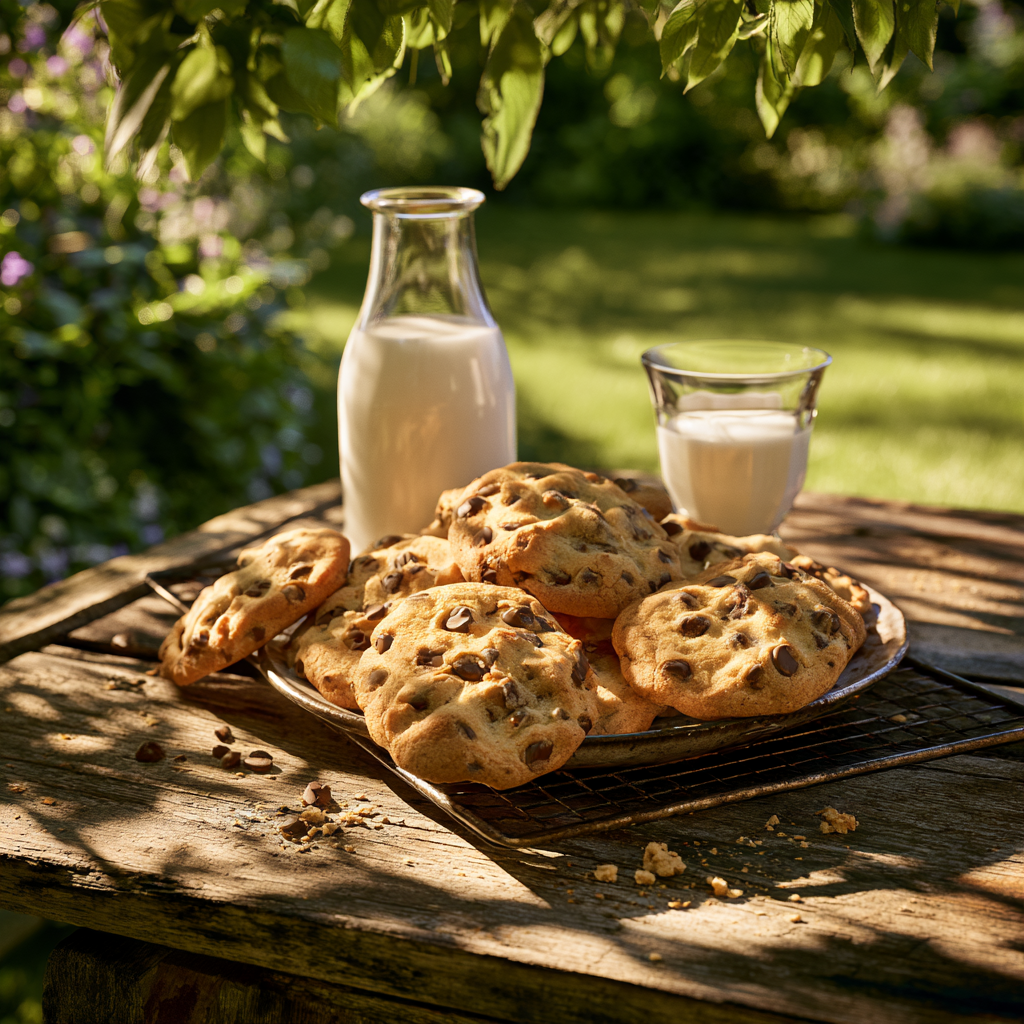
2. How Toll House Cookies Became Famous Across America
The popularity of the original Toll House chocolate chip cookies extended far beyond the Massachusetts restaurant where they were first served.
Customers enjoyed the distinctive combination of buttery cookie dough and chocolate pieces, and the recipe began circulating through cookbooks, newspapers, and other publications.
A major turning point came through Wakefield’s connection with Nestlé. As demand for chocolate suitable for cookie baking increased, the company began producing convenient chocolate morsels that eliminated the need to chop chocolate bars by hand.
Nestlé also printed the Toll House cookie recipe on its chocolate packaging, making the instructions accessible to home bakers across the United States.
During World War II, chocolate chip cookies became associated with homemade care packages sent to American military personnel. This helped spread their popularity while strengthening their emotional connection to home, family, and familiar comforts.
By the postwar decades, chocolate chip cookies had become a recognizable part of American household baking.
As these cookies became more common, enjoying them alongside a glass of milk became an increasingly familiar experience.
3. Where Did the Chocolate Chip Cookies Milk Tradition Begin?
The pairing of cookies and milk does not have one clearly documented inventor.
Long before Ruth Wakefield introduced chocolate chip cookies, people in Europe and North America enjoyed biscuits and other baked treats with beverages such as tea, coffee, and milk.
Dipping firm biscuits into liquid was a practical way to soften their texture, making them easier and more enjoyable to eat.
In American households, milk was also a familiar beverage served with meals and snacks. Combining sweet homemade cookies with milk therefore required no complicated preparation or special ingredients.
Once chocolate chip cookies became popular, their natural compatibility with milk helped establish the pairing as a recognizable everyday treat.
The buttery richness of the cookie contrasted with the refreshing creaminess of milk, while the chocolate provided additional sweetness and flavor.
Although the exact first occasion when someone served chocolate chip cookies with milk is unknown, the combination developed from existing food traditions rather than a single invention.
This distinction is important when exploring the historical origins of chocolate chip cookies milk: the chocolate chip cookie has a documented inventor, but its pairing with milk evolved through ordinary eating habits.
4. The Connection Between Cookies, Milk, and American Childhood
One reason chocolate chip cookies milk became so popular was its connection to childhood and family life.
As home baking grew more common throughout the twentieth century, chocolate chip cookies became a familiar treat prepared for children, relatives, and visitors.
The combination of cookies and milk suited casual afternoon snacks because it was simple to serve and easy to share.
For many families, the experience became associated with helping parents or grandparents in the kitchen, watching chocolate chip cookies bake in the oven, and enjoying a freshly baked cookie with a glass of cold milk.
These familiar rituals helped transform an ordinary dessert into something emotionally meaningful.
Over time, chocolate chip cookies and milk became a recurring image in American food culture, representing warmth, hospitality, and homemade comfort.
Even today, the combination often brings back memories of childhood afternoons, family gatherings, and the unmistakable aroma of fresh cookies cooling on a kitchen counter.
5. How Christmas Helped Popularize Cookies and Milk
Another interesting chapter in the history of chocolate chip cookies milk involves the American tradition of leaving cookies and milk for Santa Claus on Christmas Eve.
Although food offerings associated with winter celebrations have older origins, the familiar American custom of leaving a plate of cookies and a glass of milk for Santa gained particular prominence during the Great Depression in the 1930s.
Families used the tradition to encourage generosity, gratitude, and thoughtful gestures during a difficult economic period.
Children would place cookies and milk near the Christmas tree or fireplace, imagining that Santa would enjoy the treat during his nighttime journey.
Chocolate chip cookies eventually became one popular choice for this tradition, alongside sugar cookies, gingerbread, and other festive baked goods.
The custom reinforced the association between cookies, milk, family togetherness, and comforting holiday memories.
Today, this Christmas tradition remains one of the most recognizable cultural expressions of the classic cookies-and-milk pairing.
6. Why Chocolate Chip Cookies and Milk Taste So Good Together
The popularity of chocolate chip cookies milk is not based entirely on nostalgia. The ingredients and textures also complement one another remarkably well.
Chocolate chip cookies combine several flavors: buttery richness, caramel-like notes from brown sugar, sweetness from granulated sugar, warmth from vanilla, and the distinctive taste of chocolate.
Milk provides moisture and a mild, creamy flavor that contrasts with the sweetness of the cookies.
When a cookie is dipped into milk, the liquid begins entering small spaces within its baked structure. As moisture is absorbed, the cookie gradually softens.
This creates different textures depending on how long the cookie remains in the milk.
A quick dip can slightly soften the exterior while keeping the center chewy. A longer dip can produce a much softer cookie, although leaving it submerged for too long may cause it to break apart.
Temperature also contributes to the experience. Cold milk creates a refreshing contrast with a warm or room-temperature cookie, while its creamy texture complements the richness of butter and chocolate.
For readers who prefer thick, chewy cookies, a sturdy homemade chocolate chip cookie with lightly crisp edges can be especially satisfying when dipped briefly into milk.
7. The Evolution From Crispy Toll House Cookies to Soft, Chewy Cookies
The original Toll House Chocolate Crunch Cookies were noticeably different from some of the large, thick cookies sold in modern bakeries.
Over the decades, home bakers experimented with flour proportions, sugar combinations, butter temperature, and baking techniques to create different textures.
Some recipes emphasized crisp edges and thin cookies, while others focused on soft centers and a chewy consistency.
Brown sugar became particularly important in chewy chocolate chip cookie recipes because it contributes moisture and a characteristic caramel-like flavor.
Butter temperature also influences the finished texture. Softened butter creamed with sugar behaves differently from melted butter, while chilling the dough can influence spreading during baking.
These developments produced a wide variety of chocolate chip cookie styles, including cookies specifically suited to dipping into milk.
The ideal dunking cookie generally needs enough structure to hold together while absorbing a little liquid.
Very thin, delicate cookies may soften quickly, while extremely thick cookies may absorb milk more slowly.
Our OoohDelish approach celebrates a balance between lightly golden edges, a soft chewy center, and a generous amount of chocolate.
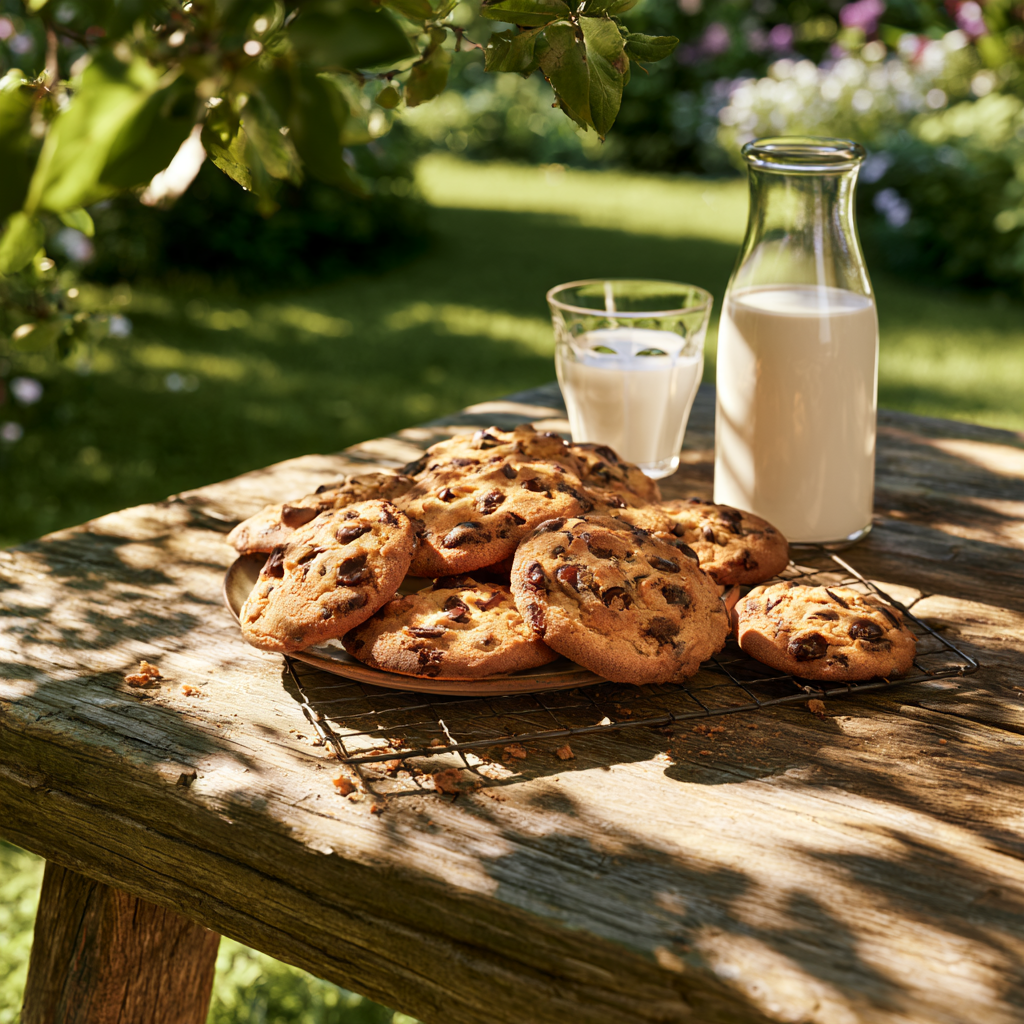
8. Chocolate Chip Cookies Milk and the Rise of Modern Dessert Culture
As chocolate chip cookies gained popularity, the combination with milk began appearing in increasingly creative dessert presentations.
Restaurants and bakeries introduced warm chocolate chip cookies served with individual glasses of cold milk, turning a familiar homemade snack into a dessert-menu favorite.
Milk-and-cookies platters also became appealing choices for birthdays, casual parties, and family celebrations.
Modern bakers have introduced exciting variations that build on the original pairing. Thick chocolate chunk cookies, miniature cookies, chocolate-filled cookie sandwiches, and cookies served with flavored milk all offer different ways to enjoy the classic combination.
Creative milk choices have expanded as well.
Whole milk provides a rich, creamy taste, while reduced-fat and lactose-free milk offer alternatives for different preferences. Plant-based beverages such as oat milk, almond milk, and soy milk can also complement homemade cookies.
The traditional flavors of butter, brown sugar, vanilla, and chocolate continue to inspire related desserts.
For example, our Chocolate Chip Cookie Dough Recipe explores a creamy, no-bake interpretation of familiar chocolate chip cookie flavors, specially formulated with ingredients suitable for ready-to-eat consumption.
Chocolate lovers may also enjoy our King Arthur Brownie Recipe, which offers a different combination of rich chocolate flavor and homemade dessert comfort.
These creative alternatives show how the original chocolate chip cookie continues to influence modern recipes.
9. Why Chocolate Chip Cookies Milk Remains So Popular Today
The popularity of chocolate chip cookies milk has endured because the combination offers something that elaborate desserts sometimes cannot: familiarity, simplicity, and an easy sense of comfort.
You don’t need specialized equipment or hard-to-find ingredients to enjoy it.
A batch of homemade cookies and a glass of milk can turn an ordinary afternoon into a small celebration.
The recipe is also adaptable to different occasions. Families can prepare cookies for school snacks, holiday gatherings, birthday parties, movie nights, or weekend baking activities.
Social media has introduced another dimension to the experience, with attractive photographs and videos highlighting cookies being broken open, melted chocolate stretching between pieces, and cookies dipping into cold milk.
These visual details emphasize what makes the dessert appealing: the contrast between a tender cookie, rich chocolate, and refreshing milk.
For home bakers, preparing cookies from scratch also offers control over ingredients, portion sizes, chocolate varieties, and baking texture.
You can choose semi-sweet chocolate chips for traditional flavor, dark chocolate for deeper cocoa notes, or milk chocolate for a sweeter result.
Each variation gives the classic pairing a slightly different personality without losing its familiar charm.
10. The Timeless American Tradition Behind Chocolate Chip Cookies Milk
Nearly a century after Ruth Wakefield developed the original Toll House cookie, chocolate chip cookies remain one of the most recognizable homemade desserts in American food culture.
Their history reflects how a relatively simple baking innovation can become part of everyday life across generations.
The pairing with milk developed from older traditions of serving baked treats with beverages, eventually becoming closely associated with family kitchens, after-school snacks, holiday celebrations, and comforting homemade desserts.
Although cooking techniques, ingredient options, and dessert trends have changed, the essential appeal remains remarkably similar.
Freshly baked chocolate chip cookies offer sweetness, buttery richness, and chocolate flavor. Milk adds a cool, creamy contrast that softens the cookies and complements their taste.
Together, they create a dessert combination that feels both familiar and special.
Whether you’re baking classic chocolate chip cookies for the first time or revisiting a childhood favorite, learning about the history behind chocolate chip cookies milk makes the experience even more meaningful.
The next time you dip a warm, chocolate-studded cookie into a cold glass of milk, you’re enjoying a combination that connects the history of American home baking with generations of family memories.
OoohDelish Baking Tip: For a wonderful chocolate chip cookies milk experience, bake your cookies until the edges are lightly golden and the centers are just set. Let them cool long enough to develop structure, then serve them with cold milk. A brief dip softens the cookie while preserving its rich chocolate flavor and pleasantly chewy texture.
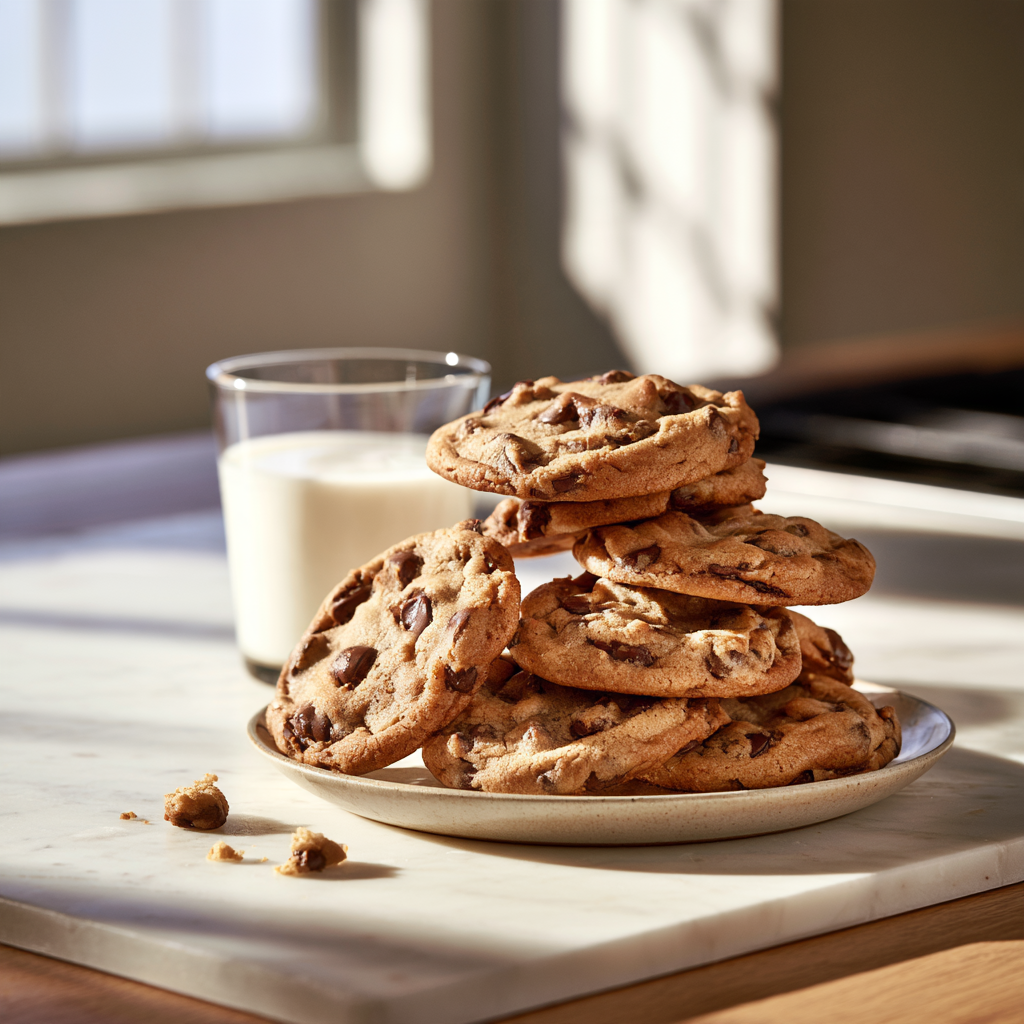
Health Benefits of Chocolate Chip Cookies Milk: Nutrition, Energy, and the Benefits of Homemade Ingredients
There’s something wonderfully comforting about enjoying freshly baked chocolate chip cookies milk that classic combination of warm, buttery cookies, rich chocolate chips, and a refreshing glass of cold milk. While most people love this timeless treat for its delicious taste and nostalgic appeal, you may also wonder whether chocolate chip cookies with milk offer any nutritional benefits. The answer lies in understanding what each ingredient contributes, how milk complements the cookies, and why homemade preparation allows you to make thoughtful choices about your favorite dessert.
Although chocolate chip cookies are primarily an indulgent treat, pairing them with milk adds nutrients that cookies alone typically provide in limited amounts. Milk naturally contains protein, calcium, phosphorus, and vitamin B12, while fortified varieties may also provide vitamin D. Meanwhile, traditional chocolate chip cookies contribute carbohydrates, fats, and small quantities of nutrients from ingredients such as eggs, flour, butter, and chocolate.
What makes homemade chocolate chip cookies milk particularly appealing is the opportunity to balance flavor, portion size, and ingredient quality. By choosing real butter, good-quality chocolate, carefully measured sugar, and milk that suits your dietary needs, you can create a satisfying homemade snack while remaining mindful of its nutritional composition.
However, it’s important to distinguish genuine nutritional benefits from exaggerated health claims. Chocolate chip cookies are generally high in added sugar and calories, while milk provides several essential nutrients. Combining the two doesn’t transform the cookies into a health food, but the pairing can be enjoyed occasionally within a varied, balanced eating pattern.
Nutritional Benefits of Chocolate Chip Cookies Milk Ingredients
The table below explains the nutritional contributions of the main ingredients used in chocolate chip cookies served with milk.
| Ingredient | Key nutrients | Potential benefits and considerations |
|---|---|---|
| Milk | Calcium, protein, phosphorus, vitamin B12 | Supports normal bone maintenance, muscle function, and other essential body processes. |
| Fortified milk | Vitamin D, calcium, protein | Vitamin D helps the body absorb calcium; amounts depend on fortification. |
| Semi-sweet chocolate chips | Small amounts of iron, magnesium, and cocoa polyphenols | Contribute cocoa flavor and some nutrients, but also contain sugar and fat. |
| Unsalted butter | Vitamin A and dietary fat | Provides some vitamin A and rich flavor but is high in saturated fat. |
| All-purpose flour | Carbohydrates, some protein, and B vitamins when enriched | Provides energy and cookie structure, although refined flour contains relatively little fiber. |
| Eggs | Protein, choline, vitamin B12 | Contribute nutrients while helping bind and structure cookie dough. |
| Brown sugar | Carbohydrates | Provides sweetness and caramel-like flavor, with negligible micronutrient benefits. |
| Vanilla extract | Aromatic compounds | Enhances flavor but contributes negligible nutrients in typical recipe quantities. |
| Walnuts or almonds (optional) | Fiber, protein, unsaturated fats, minerals | Can add nutrient variety and texture, along with extra calories. |
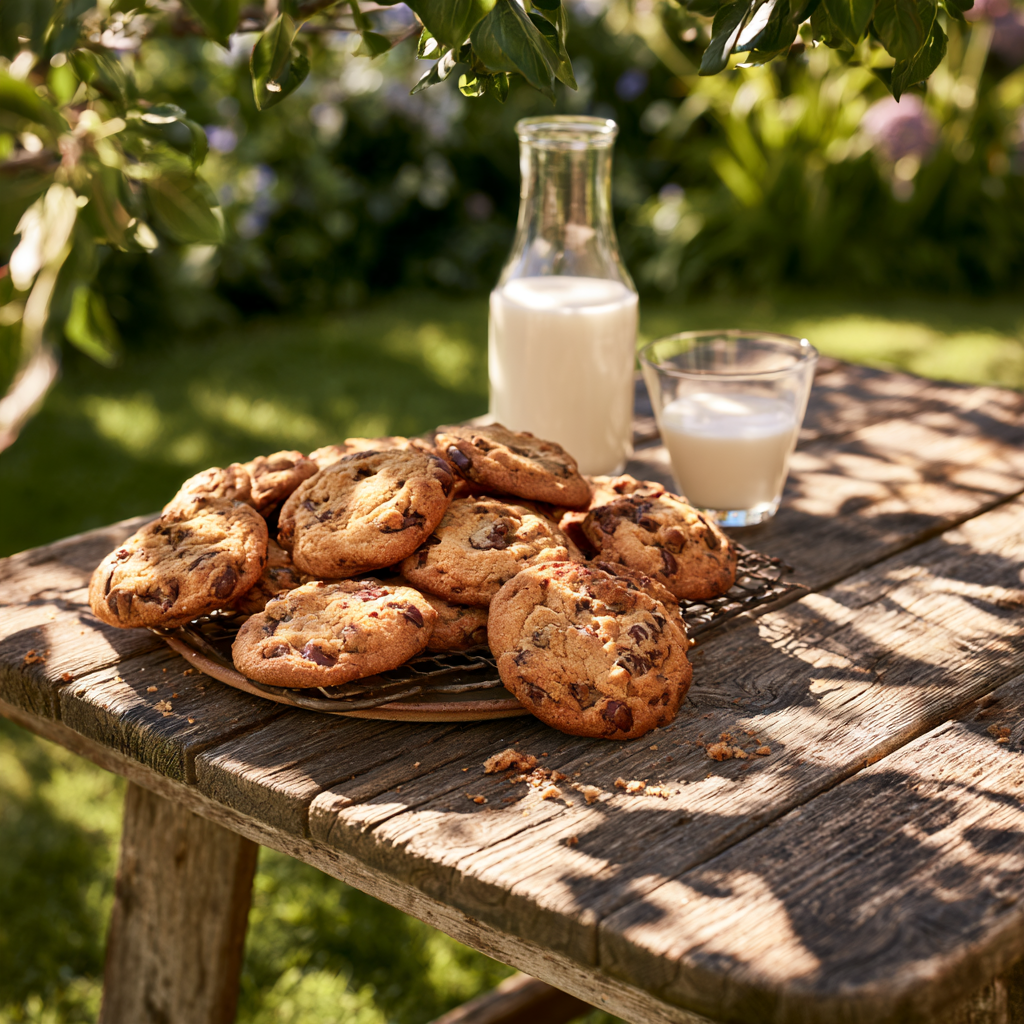
1. Milk Provides Calcium for Strong Bones and Teeth
One of the clearest nutritional advantages of serving chocolate chip cookies with milk comes from the milk itself.
Calcium is an essential mineral that contributes to the development and maintenance of healthy bones and teeth. It also participates in muscle contraction, nerve signaling, and normal blood clotting.
A typical 8-ounce (240 ml) glass of cow’s milk provides approximately 275–305 mg of calcium, depending on the type and product.
This makes milk a meaningful dietary source of calcium for many people.
When you enjoy chocolate chip cookies with a glass of milk, you receive calcium that would generally be present in much smaller amounts in the cookies alone.
If the milk is fortified with vitamin D, the combination also provides a nutrient that helps the body absorb and use calcium effectively.
However, the health benefit comes principally from the milk rather than from dunking the cookies into it. The cookies themselves are not a significant source of calcium.
For people who enjoy the traditional cookies-and-milk combination, choosing plain, unsweetened milk is a way to accompany dessert with a nutrient-containing beverage without adding extra sugar from flavored drinks.
2. Chocolate Chip Cookies Milk Provides a Combination of Carbohydrates, Protein, and Fat
Another interesting nutritional characteristic of chocolate chip cookies milk is that the pairing contains all three major macronutrients: carbohydrates, protein, and fat.
Chocolate chip cookies provide carbohydrates primarily from flour, brown sugar, and granulated sugar. They also contain fat from butter, chocolate, and eggs.
Milk adds protein, carbohydrates in the form of naturally occurring lactose, and varying amounts of fat depending on whether you choose whole, reduced-fat, low-fat, or fat-free milk.
Each macronutrient has a distinct role in the body.
Carbohydrates provide energy for physical activity and normal bodily functions. Protein contributes to tissue maintenance and repair, while dietary fat supports several physiological processes.
However, the presence of all three macronutrients does not automatically make a snack nutritionally balanced. Chocolate chip cookies can still contain substantial amounts of added sugar and saturated fat.
A serving of homemade cookies paired with plain milk may offer more protein and calcium than cookies eaten alone, but it should still be considered an occasional treat rather than a substitute for a nutrient-rich meal.
3. Milk Adds High-Quality Protein
Protein is an essential nutrient involved in maintaining muscles, repairing body tissues, producing enzymes, and supporting normal physiological functions.
Cow’s milk contains two major types of protein: casein and whey.
Both provide essential amino acids that the body cannot manufacture on its own.
An 8-ounce glass of cow’s milk generally supplies around 8 grams of protein, making it a useful protein source alongside many meals and snacks.
By comparison, a typical homemade chocolate chip cookie often contains only a small amount of protein, depending on its size and ingredients.
Serving the cookies with milk therefore increases the protein content of the overall snack.
This doesn’t make chocolate chip cookies a protein-rich food, but it explains one nutritional difference between eating cookies alone and enjoying them with milk.
If you prefer plant-based alternatives, unsweetened fortified soy milk often provides a protein content closer to cow’s milk than almond or oat milk, although the exact amounts vary between brands.
4. Chocolate Contains Cocoa-Derived Plant Compounds
Chocolate is one of the ingredients that makes homemade chocolate chip cookies so appealing.
Depending on the type used, chocolate contains cocoa solids that provide small amounts of iron, magnesium, and naturally occurring compounds known as cocoa polyphenols.
Among these compounds are flavanols, which have been studied for their potential effects on blood vessel function.
However, it’s important to understand that ordinary chocolate chips are not equivalent to concentrated cocoa products used in clinical research.
The amount of cocoa flavanols varies depending on the chocolate’s cocoa percentage, manufacturing process, and other ingredients.
Milk chocolate typically contains less cocoa solids than darker chocolate, while semi-sweet and dark chocolate may contain higher amounts.
If you want a more intense chocolate flavor, try using semi-sweet chocolate chips or combining them with small pieces of dark chocolate.
This adjustment may increase the proportion of cocoa solids in the recipe, but it does not establish that eating chocolate chip cookies prevents cardiovascular disease or provides specific medical benefits.
The main reason to choose quality chocolate remains its delicious flavor and texture.
5. Homemade Cookies Allow Better Control Over Ingredients
One of the most practical advantages of preparing chocolate chip cookies milk at home is the opportunity to choose the ingredients yourself.
Commercially produced cookies vary widely in their recipes, portion sizes, sugar content, and fat composition. Homemade preparation allows you to decide how much sugar to use, which chocolate chips to include, and whether to add optional ingredients such as oats or nuts.
You can also select unsalted butter, which makes it easier to control the quantity of salt added to the dough.
For example, reducing the granulated sugar slightly may decrease the amount of added sugar in each cookie. However, because sugar affects moisture, spreading, browning, and texture, significant reductions can change the results.
Similarly, replacing some refined flour with whole-wheat pastry flour may increase fiber, but the cookies may become denser or absorb moisture differently.
The advantage of homemade baking is flexibility, not an automatic guarantee of superior nutrition.
When adjusting your recipe, make small changes and evaluate how they affect the finished cookies.
If you enjoy experimenting with different homemade cookie textures, our Cornflake Cookie Recipe offers a crunchy alternative, while our Chocolate Chip Cookie Dough Recipe explores the familiar butter-and-chocolate combination in a no-bake dessert formulated for eating without baking.
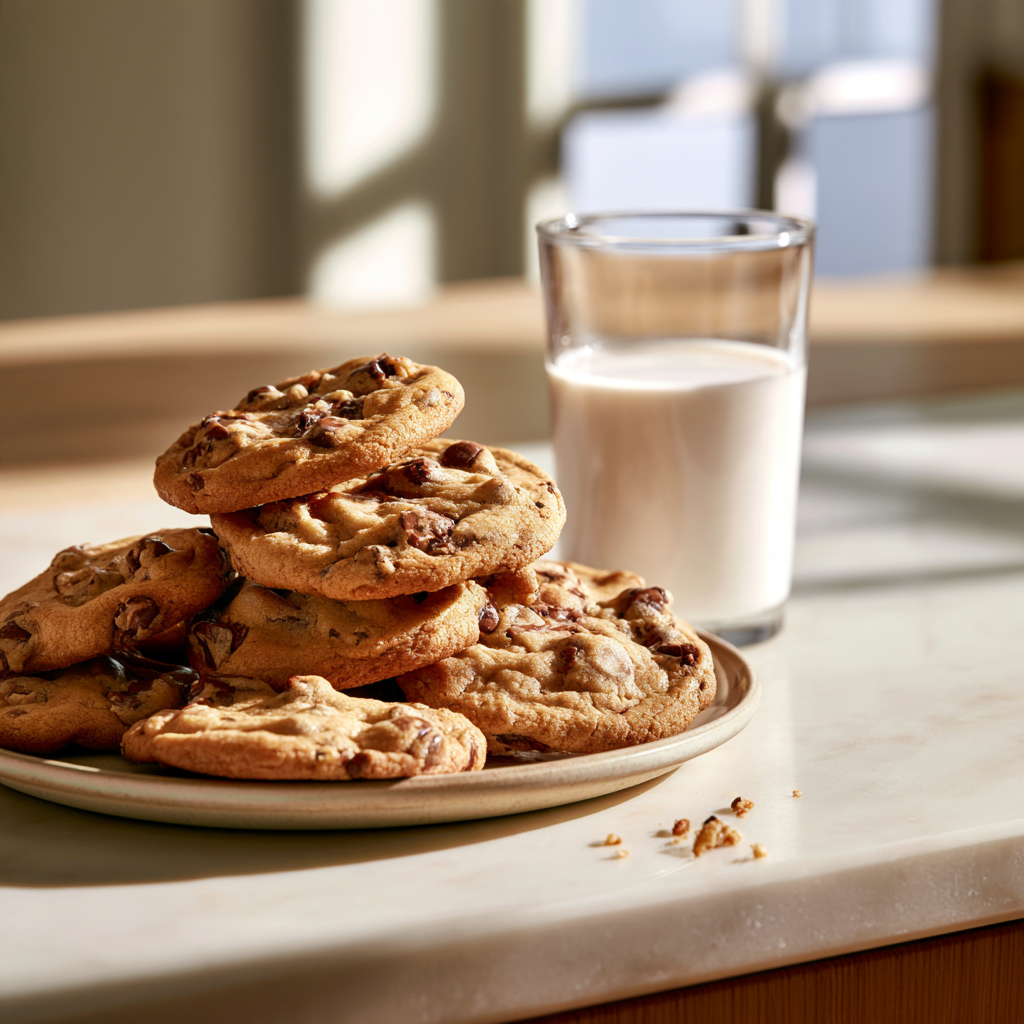
6. Milk Can Be a Nutritious Alternative to Sugary Beverages
Chocolate chip cookies are already sweet, so choosing plain milk rather than a sugar-sweetened beverage can help avoid adding unnecessary sugar to the snack.
Plain cow’s milk contains lactose, a naturally occurring milk sugar. This differs from the added sugars commonly found in sweetened drinks.
For example, chocolate milk and flavored milk products may contain added sugars, depending on the brand and formulation.
By choosing plain milk, you can enjoy its natural creaminess while limiting the additional sugar consumed alongside your cookies.
Unsweetened plant-based milk alternatives are another option, especially for people who avoid dairy.
However, their nutritional composition varies significantly.
Fortified soy milk may provide protein and calcium levels comparable to cow’s milk, while many almond milk varieties contain less protein. Oat milk often has a creamier texture but may contain more carbohydrates than unsweetened almond milk.
Reading nutrition labels helps you choose a beverage that fits your preferences and nutritional needs.
7. Chocolate Chip Cookies With Milk Can Provide a Satisfying Occasional Snack
Food enjoyment is also an important part of everyday eating experiences.
The combination of warm homemade chocolate chip cookies and cold milk offers contrasting flavors, temperatures, and textures that many people find especially satisfying.
The cookie provides sweetness, buttery richness, and chocolate flavor, while milk contributes a cool and creamy contrast.
Milk also adds protein, which may contribute to the overall satisfaction of the snack.
However, this does not mean that chocolate chip cookies with milk are inherently more filling than every other snack or that they provide a specific appetite-control benefit.
The effect depends on portion size, individual appetite, nutritional needs, and what else has been eaten throughout the day.
A reasonable serving can be an enjoyable part of a varied eating pattern without requiring you to avoid desserts entirely.
8. Optional Nuts and Whole Grains Can Improve Nutritional Variety
If you enjoy adding extra texture to homemade cookies, certain ingredients can contribute additional nutrients.
Chopped walnuts, almonds, or pecans can introduce fiber, plant protein, and unsaturated fats.
Walnuts contain alpha-linolenic acid (ALA), a plant-based omega-3 fatty acid, while almonds are known for their vitamin E content.
You can also experiment with replacing a portion of the all-purpose flour with whole-wheat pastry flour or adding oats to recipes formulated for them.
These ingredients may increase fiber and nutrient variety compared with a recipe made entirely with refined flour.
However, these additions can change the structure, spreading, and texture of the cookies.
Nuts also increase the overall calorie content and are common allergens.
For the best results, use moderate quantities and follow a recipe developed for the ingredients you choose.
How Healthy Is Chocolate Chip Cookies Milk? Understanding the Nutritional Value
The nutritional value of chocolate chip cookies milk depends on the number and size of the cookies, their ingredients, and the type of milk served alongside them.
For perspective, consider a serving of two medium homemade chocolate chip cookies and one 8-ounce glass of plain whole milk.
Illustrative estimates, not measured values from a specific recipe. Assumes two cookies at approximately 150 calories each.
| Nutrient | 2 cookies | 1 cup whole milk | Combined |
|---|---|---|---|
| Calories | 300 kcal | 149 kcal | 449 kcal |
| Protein | 4 g | 7.7 g | 11.7 g |
| Carbohydrates | 40 g | 11.7 g | 51.7 g |
| Total Fat | 14 g | 7.9 g | 21.9 g |
| Saturated Fat | 8 g | 4.6 g | 12.6 g |
| Calcium | Varies | ~276 mg | At least the milk’s contribution |
| Total Sugar | 24 g | 12.3 g | 36.3 g |
The naturally occurring lactose in plain milk is not classified as added sugar. Most of the sugar in conventional chocolate chip cookies, however, comes from added sweeteners.
The current 2025–2030 Dietary Guidelines for Americans emphasize nutrient-dense foods and limiting added sugars and refined carbohydrates. This is an important consideration when evaluating sweet desserts.
7 Practical Ways to Make Chocolate Chip Cookies Milk a More Balanced Treat
Making thoughtful ingredient and serving choices can help you enjoy the familiar combination of cookies and milk without losing the flavors that make it special.
| Simple adjustment | Potential advantage | Baking or nutrition consideration |
|---|---|---|
| Choose plain milk | Avoids added sugar from sweetened beverages | Milk still contains naturally occurring lactose |
| Make smaller cookies | Helps manage calories per cookie | Adjust baking time for smaller portions |
| Reduce added sugar slightly | Lowers added sugar content | May change spreading, browning, and texture |
| Include dark chocolate | Adds deeper cocoa flavor | Check the label; it may still contain substantial sugar and fat |
| Add chopped walnuts | Contributes fiber and unsaturated fats | Increases calories and introduces allergens |
| Try some whole-wheat pastry flour | Can increase fiber | Changes texture and moisture absorption |
| Pair with fresh berries | Adds fiber and other nutrients to the overall snack | Does not reduce the sugar already present in cookies |
Choosing the Best Milk for Chocolate Chip Cookies
The type of milk you select can influence both the flavor and nutritional profile of the snack.
Whole milk provides a creamy mouthfeel that pairs beautifully with rich, buttery cookies. It contains calcium and protein but also more saturated fat than reduced-fat varieties.
Low-fat or fat-free milk offers a similar amount of protein and calcium with less total fat. It can be a useful choice for people monitoring saturated fat intake.
Lactose-free milk provides an option for many people with lactose intolerance while preserving much of the familiar taste and nutrition of cow’s milk.
Unsweetened soy milk can provide a relatively high-protein plant-based alternative, particularly when fortified with calcium and vitamin D.
Unsweetened almond milk generally contains fewer calories than whole milk, although most varieties have substantially less protein.
Oat milk offers a naturally creamy texture that pairs nicely with cookies, but its carbohydrate and protein content varies across products.
No single milk is ideal for everyone. The best choice depends on dietary needs, allergies, nutritional goals, and personal taste.
Are Chocolate Chip Cookies and Milk Actually Healthy?
Chocolate chip cookies with milk can contribute nutrients, particularly when plain dairy milk or a nutritionally comparable fortified alternative is included. Milk provides meaningful amounts of protein and calcium, while cookie ingredients may contribute small quantities of additional vitamins and minerals.
However, chocolate chip cookies themselves are not considered a nutrient-dense food. They typically contain substantial added sugar, refined carbohydrates, and saturated fat.
Adding milk improves the nutrient variety of the overall snack but does not remove the calories or added sugar from the cookies.
Enjoying a modest portion occasionally is a more realistic approach than presenting this combination as a health-promoting dessert.
For everyday eating, prioritize foods such as fruit, vegetables, whole grains, protein-rich foods, and other nutrient-dense choices. Homemade desserts can remain an enjoyable occasional part of your overall eating pattern.
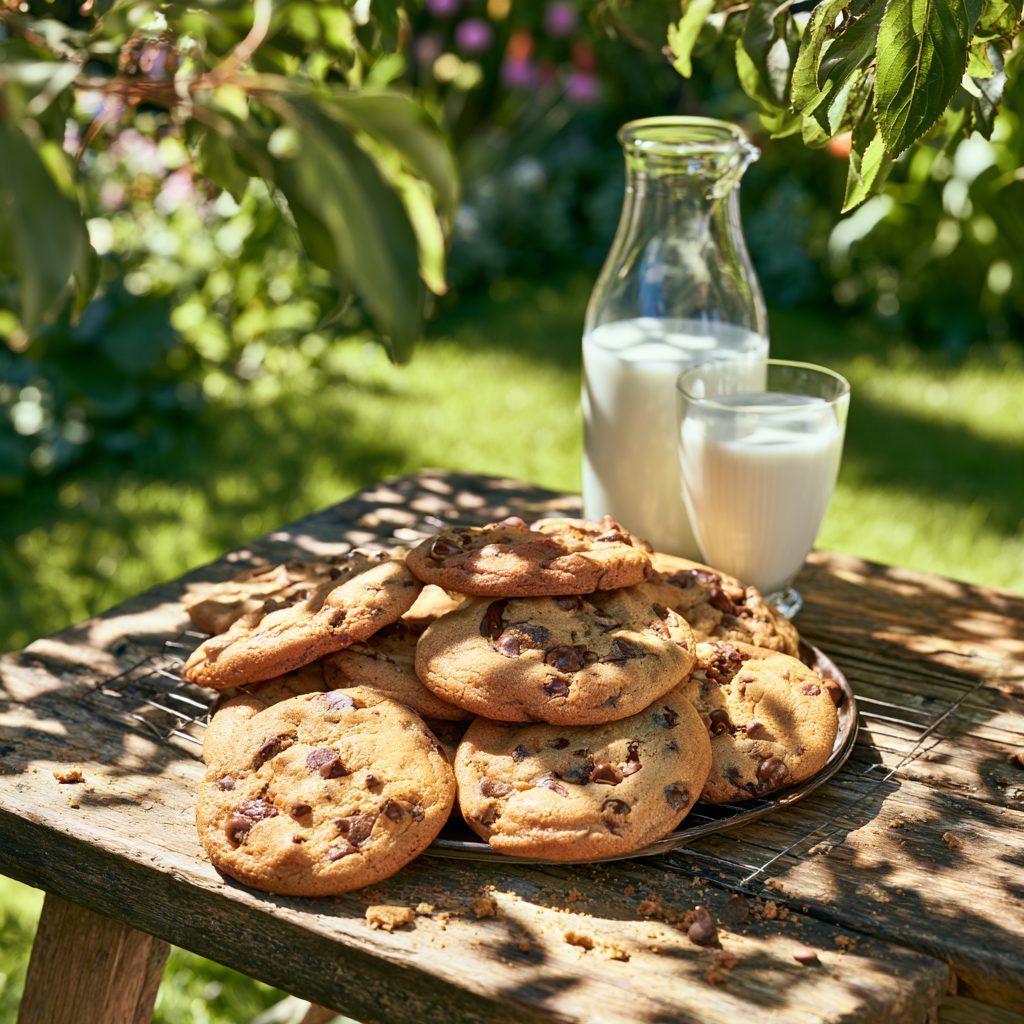
Final Thoughts: The Real Benefits of Chocolate Chip Cookies Milk
The appeal of chocolate chip cookies milk goes beyond its wonderfully comforting flavor. While freshly baked chocolate chip cookies provide sweetness and energy, a glass of milk adds protein, calcium, and other nutrients that contribute to the nutritional value of the snack.
Making this classic dessert at home gives you control over ingredient quality, cookie size, sweetness, and the type of milk you serve. You can experiment with darker chocolate, modest sugar reductions, or additional ingredients such as nuts and whole grains to create a version that better matches your preferences.
The most important principle is balance. Chocolate chip cookies and milk are best enjoyed as a delicious occasional treat rather than relied upon as a significant source of essential nutrients.
OoohDelish Nutrition Tip: For a satisfying homemade treat, serve one or two medium chocolate chip cookies with a glass of plain milk and a few fresh strawberries. You’ll enjoy the classic chocolate-and-milk combination while adding some fiber and vitamins from the fruit.
OoohDelish Nutrition Disclaimer: This section provides general nutritional information for educational purposes. Actual nutritional values depend on recipe ingredients, portion sizes, milk selection, and preparation methods. Nutrient-containing ingredients do not make chocolate chip cookies a treatment or preventive measure for any medical condition.
Why You Should Try Chocolate Chip Cookies Milk: 11 Irresistible Reasons to Make This Classic Homemade Treat
Few homemade desserts can compete with the simple pleasure of chocolate chip cookies milk. Imagine a plate of freshly baked chocolate chip cookies with beautifully golden edges, soft and chewy centers, and generous pockets of melted chocolate, served alongside a tall glass of cold, creamy milk. The moment you dip a warm cookie into the milk, something wonderful happens: the outer edges soften slightly, the buttery flavors become even more enjoyable, and the chocolate creates a rich, comforting contrast that makes every bite feel special.
But there’s much more to this classic combination than its delicious flavor. Homemade chocolate chip cookies with milk are easy to prepare, wonderfully customizable, perfect for sharing, and suitable for countless occasions. Whether you’re baking for your children, hosting a family movie night, preparing desserts for a birthday celebration, or simply craving something sweet after a busy day, this timeless treat offers the perfect combination of comfort, simplicity, and homemade goodness.
What makes our Chocolate Chip Cookies Milk Recipe particularly appealing is its focus on texture and balance. The cookies are designed to be soft enough to enjoy on their own yet sturdy enough to withstand a quick dip in milk without immediately falling apart. A carefully balanced mixture of unsalted butter, brown sugar, granulated sugar, vanilla extract, flour, and chocolate chips creates that irresistible bakery-style consistency, while a refreshing glass of milk completes the experience.
From the nostalgic flavors to the endless possibilities for customization, here are twelve reasons why chocolate chip cookies milk deserves a permanent place in your collection of favorite homemade desserts.
1. The Perfect Combination of Warm Cookies and Cold Milk
One of the most compelling reasons to try chocolate chip cookies milk is the wonderful contrast between two familiar ingredients: warm, buttery cookies and cool, refreshing milk.
Freshly baked chocolate chip cookies have a rich aroma that comes from butter, vanilla, caramelizing sugars, and chocolate. Their golden edges provide a delicate crispness, while the centers remain soft and slightly chewy.
Cold milk introduces an entirely different texture and temperature. Its smooth consistency complements the sweetness of the cookies while providing a refreshing contrast to their buttery richness.
When enjoyed together, these elements create a satisfying combination that feels more complete than either component alone.
For an especially delicious experience, allow your freshly baked cookies to cool for approximately 5–10 minutes before serving. This gives them enough time to develop structure while remaining pleasantly warm.
Pour a glass of chilled milk, dip one corner of your cookie for a second or two, and enjoy the combination of softened cookie, melted chocolate, and creamy milk.
The secret is finding the right balance between moisture and texture. A brief dip can make the cookie tender without turning it soggy.
2. Soft, Chewy Centers With Golden Edges Made for Dunking
Not every chocolate chip cookie is ideal for dipping into milk. Some cookies are extremely thin and fragile, while others are so thick that their centers barely soften during a quick dip.
The best chocolate chip cookies for milk dunking offer a pleasant balance between tenderness and structure.
Our homemade version focuses on creating cookies with lightly golden edges and soft, chewy centers that hold together during dipping.
Several baking techniques help achieve this texture.
Brown sugar contributes moisture and chewiness, while granulated sugar influences sweetness, spreading, and crispness. Unsalted butter adds richness and tenderness, and properly measured flour provides the structure needed to prevent the cookies from becoming excessively fragile.
The baking process is equally important. Removing chocolate chip cookies when their edges are set but the centers still appear slightly soft helps prevent overbaking.
As the cookies rest on the baking sheet, residual heat continues to firm their centers.
This creates a cookie that can be enjoyed warm on its own or dipped briefly into cold milk.
For readers who love experimenting with different cookie textures, our Cornflake Cookie Recipe offers a delightful contrast, combining buttery cookie dough with crispy cereal for a crunchier homemade treat.
3. Simple Ingredients You Probably Already Have at Home
Another excellent reason to try homemade chocolate chip cookies milk is that the recipe relies on common pantry and refrigerator ingredients rather than expensive specialty products.
Most traditional chocolate chip cookie recipes begin with butter, sugar, flour, eggs, vanilla, and chocolate chips.
Milk is served alongside the cookies, so there’s no need to prepare a separate sauce, filling, or complicated accompaniment.
Each ingredient plays an important role in creating the final result.
| Ingredient | Why it makes this recipe special |
|---|---|
| Unsalted butter | Creates rich flavor and a tender cookie texture |
| Light brown sugar | Adds moisture and warm caramel-like notes |
| Granulated sugar | Contributes sweetness and helps develop golden edges |
| All-purpose flour | Provides structure so the cookies hold together |
| Eggs | Help bind the dough and contribute richness |
| Pure vanilla extract | Enhances the buttery aroma and chocolate flavor |
| Semi-sweet chocolate chips | Add rich chocolate flavor in every bite |
| Baking soda | Helps influence spreading, texture, and browning |
| Salt | Balances sweetness and enhances flavor |
| Cold milk | Complements the cookies and creates the classic dunking experience |
The beauty of this combination is that every ingredient has a clear purpose.
You don’t need professional baking experience or complicated equipment to prepare something delicious. A mixing bowl, electric mixer or sturdy spatula, baking sheet, and cooling rack are enough for most home bakers.
4. A Beginner-Friendly Recipe That Teaches Essential Baking Skills
If you’re learning to bake, chocolate chip cookies are an excellent place to begin.
The process introduces several useful techniques that can help you become more confident in the kitchen.
You start by measuring the ingredients carefully, softening the butter, and creaming it with the sugars. Next, you incorporate the eggs and vanilla before gently mixing in the dry ingredients and chocolate chips.
The dough is then portioned onto a baking sheet and baked until the cookies reach the desired texture.
Along the way, you’ll discover how ingredient temperature, mixing time, and flour quantity affect the final results.
For example, butter that is too warm may encourage excessive spreading, while adding too much flour can produce dry, thick cookies.
Overmixing after adding flour can also develop additional gluten, potentially making the cookies tougher.
These small details are valuable lessons that apply to many other homemade baking recipes.
Once you understand the basics, you can confidently experiment with different chocolate varieties, cookie sizes, and textures.
The added pleasure of serving your finished cookies with milk makes the entire baking experience feel especially rewarding.
5. A Nostalgic Dessert That Brings Back Childhood Memories
One of the most meaningful reasons to try chocolate chip cookies milk is the sense of nostalgia associated with this classic combination.
For many people, chocolate chip cookies and milk bring back memories of childhood afternoons, after-school snacks, family baking traditions, and cozy evenings at home.
The familiar smell of chocolate chip cookies baking in the oven can make an ordinary kitchen feel especially welcoming.
There is also something memorable about the simple ritual of pouring a glass of milk, choosing a cookie, and enjoying that first bite.
Unlike elaborate desserts that require multiple layers, decorations, or complicated techniques, chocolate chip cookies and milk celebrate simplicity.
The experience can be shared between generations, whether you’re baking with children, preparing treats for relatives, or recreating a favorite family recipe.
Making cookies together can also become a tradition of its own.
Children can help with age-appropriate tasks such as measuring ingredients, folding in chocolate chips, or arranging cooled cookies on a plate, with adult supervision.
The result is more than a delicious dessert. It’s an opportunity to create familiar moments and lasting memories around homemade food.
6. Perfect for Family Movie Nights, Parties, and Celebrations
Chocolate chip cookies milk is wonderfully versatile when it comes to entertaining.
You can prepare a small batch for a quiet evening at home or bake a larger quantity for family gatherings, birthdays, holiday celebrations, and casual parties.
Because chocolate chip cookies are easy to portion and serve, they work especially well for informal dessert tables.
For a family movie night, arrange warm cookies on a large plate and serve individual glasses of cold milk.
For birthday celebrations, prepare miniature chocolate chip cookies and offer small cups of milk so guests can create their own cookie-and-milk pairings.
For holiday gatherings, combine chocolate chip cookies with other homemade baked treats to create an attractive dessert platter.
Our Amish Monster Cookie Recipe is a wonderful addition to this type of spread, featuring oats, peanut butter, chocolate chips, and colorful chocolate candies.
You can also prepare a dessert board with several types of cookies, small bowls of chocolate chips, fresh strawberries, and glasses of milk.
The variety makes the presentation more interesting while allowing guests to choose their favorite combinations.
rations, personal preferences, or ingredients you already have available.
7. Delicious With Different Types of Milk
While traditional chocolate chip cookies are commonly served with cow’s milk, there are several other beverages that can complement their flavor.
Whole milk provides a smooth, creamy taste that pairs especially well with buttery, chocolate-rich cookies.
Reduced-fat milk has a lighter mouthfeel while still providing protein and calcium.
Lactose-free milk can be a convenient option for people who have difficulty digesting lactose.
Plant-based alternatives introduce different flavor profiles. Unsweetened almond milk has a mild nutty character, while oat milk contributes a gentle cereal-like sweetness.
Unsweetened soy milk offers another option and often contains more protein than many almond or oat milk products.
For an especially indulgent combination, you can also serve the cookies alongside homemade hot chocolate or lightly warmed milk.
The best choice ultimately depends on personal preference.
| Milk choice | Flavor and texture | Best pairing |
|---|---|---|
| Whole milk | Rich and creamy | Classic semi-sweet chocolate chip cookies |
| Low-fat milk | Light and refreshing | Soft, buttery cookies |
| Lactose-free milk | Similar to regular milk | Traditional chocolate chip cookies |
| Unsweetened oat milk | Mild and naturally creamy | Brown sugar or cinnamon cookies |
| Unsweetened almond milk | Light and slightly nutty | Dark chocolate chunk cookies |
| Unsweetened soy milk | Creamy with a mild bean note | Classic or nutty chocolate chip cookies |
8. A Wonderful Make-Ahead Dessert for Busy Days
Another reason to try chocolate chip cookies milk is the convenience of preparing the cookies ahead of time.
Chocolate chip cookie dough can often be refrigerated before baking, allowing you to prepare the mixture when you have time and bake fresh cookies later.
Chilling the dough also helps control spreading in many recipes, although the exact effect depends on the dough formulation.
For longer storage, portion the dough into individual balls and freeze them on a parchment-lined tray. Once firm, transfer the portions to an airtight freezer-safe container.
Frozen chocolate chip cookie dough can generally be stored for approximately two to three months for best quality.
When you’re ready to bake, arrange the frozen portions on a baking sheet and allow extra baking time if needed.
Fully baked chocolate chip cookies can also be frozen after cooling completely.
This makes it easy to prepare treats for unexpected visitors, weekend gatherings, or special occasions without starting from scratch every time.
When serving, simply pour a fresh glass of cold milk and enjoy your homemade cookies.
9. More Affordable and Customizable Than Many Bakery Desserts
Homemade chocolate chip cookies can be a cost-effective alternative to purchasing individually prepared bakery cookies, particularly when you already have basic baking ingredients available.
Butter, flour, sugar, eggs, vanilla, and chocolate chips can produce a generous batch of cookies.
Buying ingredients in larger quantities may reduce the cost per cookie when you bake regularly.
Homemade preparation also gives you control over the cookie size and amount of chocolate.
Some people prefer smaller cookies with a delicate texture, while others enjoy large bakery-style cookies filled with chocolate chunks.
You can also adjust the recipe to suit different occasions.
Miniature cookies work well for parties and dessert platters, while larger cookies are ideal for serving individually with a glass of milk.
By baking at home, you can customize the finished dessert without paying separately for every variation.
Of course, actual savings depend on ingredient prices, energy costs, and the bakery products you’re comparing.
10. A Fun Way to Create Beautiful, Shareable Desserts
Chocolate chip cookies milk is particularly appealing when it comes to dessert presentation.
The combination naturally features contrasting colors and textures: golden-brown cookies, dark chocolate pieces, and creamy white milk.
These elements make it easy to create attractive dessert displays without complicated decorations.
For example, stack three freshly baked cookies beside a tall glass of milk on a wooden serving board.
Break one cookie in half to reveal the soft interior and melted chocolate.
Scatter a few chocolate chips nearby and use natural window light to emphasize the cookie texture.
You can also serve miniature cookies in small glass jars or arrange them around individual milk glasses for a party-friendly presentation.
For food photography, the most appealing details often include the golden edges, visible chocolate pieces, and the contrast between the warm cookie and cold milk.
A short video showing a cookie breaking open or dipping into milk can also communicate the texture and appeal of the recipe.
If you enjoy creative chocolate desserts, our Chocolate Chip Cookie Dough Recipe provides another visually appealing way to serve familiar cookie flavors in a creamy, no-bake dessert.
That recipe uses ingredients specifically selected for ready-to-eat consumption, unlike conventional raw cookie dough, which should be baked before eating.
11. A Timeless Homemade Dessert Everyone Can Personalize
The final reason to try chocolate chip cookies milk is its enduring versatility.
Whether you prefer soft, chewy cookies, crisp-edged chocolate chip cookies, or thick bakery-style versions, the basic pairing can be adjusted to suit your taste.
You can experiment with different chocolate percentages, cookie sizes, baking times, and serving temperatures.
Some people love their cookies warm with slightly melted chocolate, while others prefer cookies that have cooled completely and developed a firmer texture.
Milk preferences vary just as much.
One person may enjoy whole milk, another may prefer lactose-free milk, and someone else may choose a plant-based alternative.
Despite these differences, the essential appeal remains the same.
Chocolate chip cookies and milk bring together familiar flavors that complement one another beautifully.
It’s a dessert that can be prepared for a special occasion or enjoyed as a simple homemade treat after dinner.
The recipe doesn’t need elaborate decorations to feel memorable. A plate of freshly baked cookies and a glass of milk are often enough.
What Makes Our OoohDelish Chocolate Chip Cookies Milk Recipe Special?
| Feature | Why you’ll love it |
|---|---|
| Classic homemade flavor | Combines buttery cookies, chocolate, vanilla, and cold milk |
| Soft, chewy centers | Creates a tender texture that complements milk |
| Lightly golden edges | Adds a pleasant contrast to the soft interior |
| Simple ingredients | Made with familiar pantry and refrigerator staples |
| Beginner-friendly | Uses straightforward baking techniques |
| Perfect for dunking | Cookies can hold together during a brief dip |
| Customizable chocolate | Use semi-sweet, milk, or dark chocolate |
| Flexible milk choices | Enjoy with dairy or suitable plant-based alternatives |
| Family-friendly | Fun to prepare and serve together |
| Make-ahead option | Freeze cookie dough or finished cookies |
| Party-friendly | Easy to serve as individual portions |
| Beautiful presentation | Ideal for dessert boards, photography, and short recipe videos |
Expert Tips for the Best Chocolate Chip Cookies Milk Experience
Even though chocolate chip cookies and milk are simple to prepare, a few practical techniques can make a noticeable difference in flavor and texture.
Use softened butter at the correct temperature. Butter should be cool and pliable rather than melted unless your recipe specifically calls for melted butter. Properly softened butter combines smoothly with sugar and helps create a consistent dough.
Measure flour carefully. Too much flour can produce dry, dense cookies, while too little can encourage excessive spreading. A digital kitchen scale is especially useful for consistent results.
Use a combination of brown and granulated sugar. Brown sugar contributes moisture and chewiness, while granulated sugar helps influence spreading and crispness.
Choose good-quality chocolate chips. Semi-sweet chocolate chips provide a balanced flavor that works particularly well with milk. For a richer variation, combine them with small pieces of dark chocolate.
Avoid overmixing. Once the flour has been added, mix only until the ingredients are incorporated. Excessive mixing can develop gluten and affect tenderness.
Watch the cookies closely while baking. Remove them when the edges are set and lightly golden. The centers can appear slightly soft because the cookies continue firming as they cool.
Allow the cookies to rest before dunking. Freshly baked cookies can be fragile. Letting them cool for several minutes helps them develop enough structure to hold together during dipping.
Serve milk at your preferred temperature. Cold milk offers the traditional refreshing contrast, while warm milk creates a different comforting experience.
Dip briefly rather than soaking. A quick dip softens the cookie without allowing it to become excessively soggy or break apart.
Store cookies properly. Keep cooled cookies in an airtight container and follow the storage guidance for your recipe to preserve their freshness.
Final Thoughts: Why Chocolate Chip Cookies Milk Is Worth Making
If you’re looking for a homemade dessert that’s comforting, easy to prepare, customizable, and perfect for sharing, chocolate chip cookies milk is a wonderful choice.
The combination brings together everything people love about classic American baking: rich buttery flavor, sweet chocolate, warm vanilla, tender cookie centers, and beautifully golden edges.
Serving the cookies with milk adds a refreshing contrast that makes every bite feel a little more special.
Whether you’re preparing a family movie-night treat, baking for a celebration, experimenting with chocolate varieties, or simply craving something homemade, this recipe offers plenty of reasons to return to it again and again.
The greatest appeal lies in its simplicity. You don’t need complicated decorating techniques, unusual ingredients, or an elaborate presentation to create a memorable dessert.
Sometimes all it takes is a warm cookie, a glass of cold milk, and a moment to enjoy them together.
OoohDelish Baking Secret: For the ultimate chocolate chip cookies milk experience, bake your cookies until the edges are lightly golden and the centers are just set, then allow them to cool for 5–10 minutes. Serve with chilled milk and dip each cookie briefly to enjoy the perfect balance of chewy texture, buttery richness, and chocolate flavor.
Because few homemade treats can match the simple happiness of freshly baked chocolate chip cookies and a cold glass of milk.
.ood-milk-cookies-faq { –ood-red: #B4232D; –ood-dark: #842029; –ood-soft: #FFF7F7; –ood-border: #EED8DB; –ood-text: #454045; margin: 38px 0; font-family: inherit; color: #333; }.ood-milk-cookies-faq, .ood-milk-cookies-faq * { box-sizing: border-box; }.ood-milk-cookies-faq .faq-label { display: inline-block; margin-bottom: 10px; color: var(–ood-red); font-size: 12px; font-weight: 800; letter-spacing: 1.2px; text-transform: uppercase; }.ood-milk-cookies-faq .faq-heading { margin: 0 0 13px; color: #292326; font-family: Georgia, “Times New Roman”, serif; font-size: 27px; font-weight: 700; line-height: 1.35; }.ood-milk-cookies-faq .faq-intro { margin: 0 0 27px; color: #62595D; font-size: 15px; line-height: 1.85; }.ood-milk-cookies-faq .faq-item { background: #FFFFFF; border: 1px solid var(–ood-border); border-left: 4px solid var(–ood-red); border-radius: 11px; padding: 21px 23px; margin-bottom: 15px; box-shadow: 0 4px 18px rgba(90,30,35,.045); transition: border-color .2s ease, box-shadow .2s ease; }.ood-milk-cookies-faq .faq-item:hover { border-color: #D9A1A7; box-shadow: 0 6px 22px rgba(90,30,35,.08); }.ood-milk-cookies-faq .faq-item h5 { margin: 0 0 12px; color: var(–ood-dark); font-size: 17px; font-weight: 750; line-height: 1.5; }.ood-milk-cookies-faq .faq-item p { margin: 0; color: var(–ood-text); font-size: 15px; line-height: 1.85; }.ood-milk-cookies-faq .faq-item strong { color: #353035; font-weight: 700; }.ood-milk-cookies-faq .faq-item a { color: var(–ood-red); font-weight: 700; text-decoration: underline; text-underline-offset: 3px; }.ood-milk-cookies-faq .faq-item a:hover { color: var(–ood-dark); }.ood-milk-cookies-faq .faq-note { margin-top: 25px; padding: 20px 22px; background: var(–ood-soft); border: 1px solid var(–ood-border); border-left: 4px solid var(–ood-red); border-radius: 10px; color: #753039; font-size: 14px; line-height: 1.85; }.ood-milk-cookies-faq .faq-note strong { color: var(–ood-dark); }@media (max-width: 600px) { .ood-milk-cookies-faq { margin: 28px 0; }.ood-milk-cookies-faq .faq-heading { font-size: 22px; }.ood-milk-cookies-faq .faq-intro { font-size: 14px; }.ood-milk-cookies-faq .faq-item { padding: 18px; margin-bottom: 12px; }.ood-milk-cookies-faq .faq-item h5 { font-size: 16px; }.ood-milk-cookies-faq .faq-item p { font-size: 14px; }.ood-milk-cookies-faq .faq-note { padding: 16px; } }@media (prefers-reduced-motion: reduce) { .ood-milk-cookies-faq .faq-item { transition: none; } }{ “@context”: “https://schema.org”, “@type”: “FAQPage”, “mainEntity”: [ { “@type”: “Question”, “name”: “What is Chocolate Chip Cookies Milk?”, “acceptedAnswer”: { “@type”: “Answer”, “text”: “Chocolate Chip Cookies Milk refers to the classic combination of freshly baked chocolate chip cookies served with a glass of milk. The cookies typically have buttery flavor, lightly crisp edges, chewy centers, and generous chocolate chips. Milk complements the sweetness and softens the cookie slightly when dunked. It’s a nostalgic American dessert combination that’s perfect for after-school snacks, family gatherings, or cozy evenings.” } }, { “@type”: “Question”, “name”: “Why do chocolate chip cookies taste so good with milk?”, “acceptedAnswer”: { “@type”: “Answer”, “text”: “Chocolate chip cookies and milk complement each other through contrasting flavors and textures. The mild, creamy taste of milk balances the sweetness of the cookie and the richness of the chocolate. Dunking also allows some milk to soak into the cookie’s porous structure, creating a softer, more tender bite. Many people particularly enjoy the contrast between slightly warm chocolate chips and cold, refreshing milk.” } }, { “@type”: “Question”, “name”: “What type of milk is best with chocolate chip cookies?”, “acceptedAnswer”: { “@type”: “Answer”, “text”: “Cold whole milk is a classic choice because its creamy texture pairs beautifully with buttery chocolate chip cookies. However, 2% milk and skim milk also work well. For a dairy-free option, try unsweetened oat, soy, or almond milk. Oat milk offers a naturally creamy consistency, while soy milk has a relatively high protein content compared with many other plant-based beverages. The best choice depends on your preferences.” } }, { “@type”: “Question”, “name”: “What makes chocolate chip cookies perfect for dunking?”, “acceptedAnswer”: { “@type”: “Answer”, “text”: “The best dunking cookies have enough structure to hold together in milk while remaining pleasantly soft inside. Look for lightly crisp edges, a set exterior, and a tender center. Cookies that are extremely underbaked may break apart, while very thin, fragile cookies can become soggy quickly. Allow freshly baked cookies to cool briefly before dipping them to help their structure set.” } }, { “@type”: “Question”, “name”: “Should I add milk to chocolate chip cookie dough?”, “acceptedAnswer”: { “@type”: “Answer”, “text”: “Not necessarily. Many traditional chocolate chip cookie recipes don’t require milk because eggs, butter, and other ingredients already provide enough moisture. Adding milk unnecessarily may change dough consistency, spreading, and the final cookie texture. If your recipe specifically includes milk, follow its measurements carefully. Remember that serving cookies with milk is different from adding milk directly to the cookie dough.” } }, { “@type”: “Question”, “name”: “How do you make chocolate chip cookies soft and chewy?”, “acceptedAnswer”: { “@type”: “Answer”, “text”: “For soft and chewy chocolate chip cookies, use accurately measured ingredients and avoid overmixing after adding flour. Brown sugar helps contribute moisture and a chewy texture, while properly softened butter creates a rich flavor. Bake until the edges are set and the centers are no longer visibly raw, then allow the cookies to rest on the baking sheet for a few minutes. Overbaking is a common cause of dry, hard cookies.” } }, { “@type”: “Question”, “name”: “Should butter be melted or softened for chocolate chip cookies?”, “acceptedAnswer”: { “@type”: “Answer”, “text”: “Both methods can work, but they produce different results. Softened butter is commonly creamed with sugar to incorporate air and create a traditional cookie texture. Melted butter is used in some recipes to achieve a denser or chewier result. Don’t substitute melted butter into a recipe developed for creaming without adjusting the method. For more butter-baking advice, explore our Unsalted Butter for Sugar Cookies guide.” } }, { “@type”: “Question”, “name”: “Why do my chocolate chip cookies spread too much?”, “acceptedAnswer”: { “@type”: “Answer”, “text”: “Excessive spreading can result from butter that’s too warm, insufficient flour, incorrect ingredient ratios, or placing dough on a hot baking sheet. For recipes that call for refrigeration, chilling the dough helps firm the butter before baking. Measure flour carefully, preferably by weight, and use cool, parchment-lined baking sheets. Avoid adding extra milk or other liquids without adjusting the recipe.” } }, { “@type”: “Question”, “name”: “How long should chocolate chip cookies bake at 350°F?”, “acceptedAnswer”: { “@type”: “Answer”, “text”: “Many standard-size chocolate chip cookies bake at 350°F (175°C) for approximately 9–12 minutes, although the exact time depends on cookie size, dough thickness, and your recipe. Larger cookies generally need longer. Look for lightly golden, set edges and centers that are baked rather than visibly raw. Let the cookies rest on the baking sheet briefly before moving them to a cooling rack. Follow your tested recipe’s specific timing.” } }, { “@type”: “Question”, “name”: “How long should you dunk chocolate chip cookies in milk?”, “acceptedAnswer”: { “@type”: “Answer”, “text”: “Start by dipping a cooled chocolate chip cookie into milk for approximately 1–3 seconds. A brief dip softens the surface while allowing the cookie to retain some structure. Thick, crisp cookies may tolerate a longer dunk, while thin or chewy cookies can soften quickly. Experiment with the timing until you find your favorite texture. Enjoy the dipped cookie immediately for the best result.” } }, { “@type”: “Question”, “name”: “Can I serve chocolate chip cookies with dairy-free milk?”, “acceptedAnswer”: { “@type”: “Answer”, “text”: “Absolutely! Chocolate chip cookies taste delicious with oat, soy, almond, or other plant-based milk alternatives. Unsweetened oat milk is a popular choice for its creamy texture, while soy milk provides a relatively substantial amount of protein. If you’re avoiding dairy completely, remember to check the cookie ingredients too. Traditional recipes often contain butter and milk-based chocolate, so a dairy-free beverage alone doesn’t make the entire dessert dairy-free.” } }, { “@type”: “Question”, “name”: “Can I use dark chocolate instead of chocolate chips?”, “acceptedAnswer”: { “@type”: “Answer”, “text”: “Yes! Chopped dark chocolate creates rich, irregular chocolate pockets and can give homemade cookies a more intense cocoa flavor. Semi-sweet chocolate chips provide a familiar balance of sweetness and chocolate, while milk chocolate creates a sweeter result. Choose a chocolate that complements your preferred milk. For another delicious chocolate-filled cookie, try our Amish Monster Cookie Recipe, featuring oats, peanut butter, and chocolate.” } }, { “@type”: “Question”, “name”: “How should I store homemade chocolate chip cookies?”, “acceptedAnswer”: { “@type”: “Answer”, “text”: “Let the cookies cool completely before placing them in an airtight container. Plain baked chocolate chip cookies generally maintain good quality for approximately 4–5 days at room temperature in a cool, dry kitchen. Keep the container away from excessive heat and moisture. To preserve texture, store soft cookies separately from very crisp varieties. Cookies containing perishable fillings may require refrigeration.” } }, { “@type”: “Question”, “name”: “Can I freeze chocolate chip cookie dough or baked cookies?”, “acceptedAnswer”: { “@type”: “Answer”, “text”: “Yes. Portion the cookie dough into balls, freeze them on a lined tray, then transfer the frozen pieces to an airtight freezer-safe container. For best quality, use within approximately 2–3 months. Many dough recipes can be baked directly from frozen with additional baking time. Fully baked, cooled cookies can also be frozen. Thaw before serving with milk, or warm them briefly after thawing for a freshly baked feel.” } }, { “@type”: “Question”, “name”: “What other cookie recipes go well with milk?”, “acceptedAnswer”: { “@type”: “Answer”, “text”: “Milk pairs beautifully with many homemade cookie varieties. Try our Cornflake Cookie Recipe for a delightfully crisp treat, or our Amish Monster Cookie Recipe for chewy cookies packed with peanut butter, oats, and chocolate. For a fun no-bake dessert, explore our Edible Chocolate Chip Cookie Dough, specifically formulated without raw eggs or ordinary untreated flour.” } } ] }